The World Economic Forum (WEF), the International Organisation for Public-Private Cooperation, has been selected to act as the secretariat for a new G20 Global Smart Cities Alliance.
The alliance unites municipal, regional and national governments, private-sector partners and cities’ residents around a shared set of core guiding principles for the implementation of smart city technologies.
Currently, there is no global framework or set of rules in place for how sensor data collected in public spaces, such as by traffic cameras, is used. The effort aims to foster greater openness and trust as well as create standards for how this data is collected and used. This marks the first time that smart city technologies and global technology governance have been elevated to the main agenda.
The Forum will coordinate with members from the G20, Urban 20 and Business 20 communities to develop new global governance guidelines for the responsible use of data and digital technologies in urban environments. The Internet of Things, Robotics and Smart Cities team in the Forum’s Centre for the Fourth Industrial Revolution Network will take the lead and ensure accountability throughout the alliance’s members.
“This is a commitment from the largest economies in the world to work together and set the norms and values for smart cities,” said Børge Brende, President of the World Economic Forum. “We will coordinate efforts so that we can all work in alignment to move this important work forward. It is important we maximize the benefit and minimize the risk of smart city technology so all of society can benefit, not the few.”
“The advancement of smart cities and communities is critical to realize Japan’s vision for Society 5.0. It is also essential to address the world’s most pressing challenges, including climate change and inclusive economic growth,” said Koichi Akaishi, Director General for Science, Technology and Innovation for the Cabinet Office of the Government of Japan.
“The Government of Japan is proud to have championed this cause as part of our G20 presidency and was pleased to see the Business 20, Urban 20 and G20 Digital Ministers all pledge their support for the creation of a global smart cities coalition. To advance this work, we are pleased to welcome the World Economic Forum Centre for the Fourth Industrial Revolution as the global secretariat for this important initiative.”
Public-private co-operation is crucial to achieving global change. Efforts to form the Global Smart Cities Alliance have been supported by four partners of the World Economic Forum: Eisai, Hitachi, NEC and Salesforce.
The biggest names in the Chinese energy industry participated in the EG Ronda Licensing Round Roadshow in Beijing, hosted by the African Energy Chamber.
This is the first investment roadshow organized by the Chamber in China, as it pursues its strategy of channeling Africa’s global outreach to energy investors and stakeholders worldwide.
It has confirmed the appetite of Chinese companies for Africa, with the biggest public and private sector companies responding to the Chamber’s call to explore investment opportunities in Equatorial Guinea, including PowerChina, Sinohydro, Sinopec, Sinochem, Zhenhua Oil, CNOOC, CMEC, China Minmetals, Shenergy Group and CPP among others.
“This 2-day roadshow is a demonstration of what the Chamber can accomplish for African governments and private stakeholders. Our resources and reach have grown tremendously over the past few years and enabled us to position ourselves as a pillar of Africa’s global investment outreach. I am looking forward to seeing more deals being signed soon,” declared NJ Ayuk, Executive Chairman at the Chamber and CEO of the Centurion Law Group.
“We thank the government of China, the Chinese energy sector for putting their trust and funding in the Chamber to organize this very successful roadshow, which is the first of many more we will be organizing in the future in China.”
The EG Ronda Licensing Round Roadshow 2019 in Beijing is notably showcasing the 27 oil & gas blocks on offer under the country’s 2019 oil & gas licensing round, and is promoting the high-potential that Equatorial Guinea has in minerals such as gold, diamonds, base metals, bauxite and iron ore. The winners will be announced during the upcoming GECF’s 5th Gas Forum in Malabo on November 27th, 2019.
“The pro-activeness of the Ministry of Mines and Hydrocarbons to reach out to global investors is a winning strategy that should be followed by many others amidst such competitive market conditions. The Chamber will always be ready to support African governments and companies seeking to attract investors and build successful industries at home that promote local content, job creation and prosperity,” said Mickael Vogel, Director of Strategy at the Chamber.
“The Chamber’s future roadshows will be taking us back to Beijing but also to global energy centers such as Singapore, Moscow, Dubai, London and Houston. Africa is the last true global energy frontier and the time to engage with investors is now.”
APO Group, the leading media relations consultancy and press release distribution service in Africa and the Middle East, presents the inaugural APO Group African Women in Media Award set to recognise, celebrate and empower African women journalists who support female entrepreneurship in Africa.
The Award will be bestowed to the winner at the 5th Africa Women Innovation and Entrepreneurship Forum’s (AWIEF) Conference, Exhibition and Awards hosted at the Cape Town International Convention Centre (CTICC), 29-30 October 2019, with the theme ‘Enhancing impact: digitalisation, investment and intra-African trade’.
AWIEF’s prestigious annual event is a platform that sees global thought leaders, industry experts, policymakers, academics, development organisations and investors gather to dialogue, connect, network, share, collaborate and transact in a combined effort to boost Africa’s entrepreneurship ecosystem for women.
Lionel Reina, CEO of APO Group said, “We are extremely excited for the opportunity to highlight the work of female journalists sharing the stories of women entrepreneurs in Africa. The APO Group African Women in Media Award is part of our commitment to supporting the development of journalism on the continent. We are delighted to present this award with AWIEF in Cape Town as we celebrate women in journalism and entrepreneurship.”
Entries for APO Group African Women in Media Award must offer valuable insights into African female entrepreneurs while appealing to a global audience.
The award is open to African woman journalists and bloggers, whether directly employed or freelancers, working in the continent of Africa who have produced a story that has been broadcast or published in English, French, Portuguese or Arabic in the form of a printed publication, a television feature, a radio story, a website or a blog whose primary audience is based in Africa.
Stories must have been broadcast or published between 1st January and 15th September 2019.
Stories are judged on content, writing, analysis, creativity, human interest and community impact.
The deadline for entries is 15th September 2019. The finalists will be announced on 1st October 2019 while the winner will be announced on Wednesday, 30 October 2019.
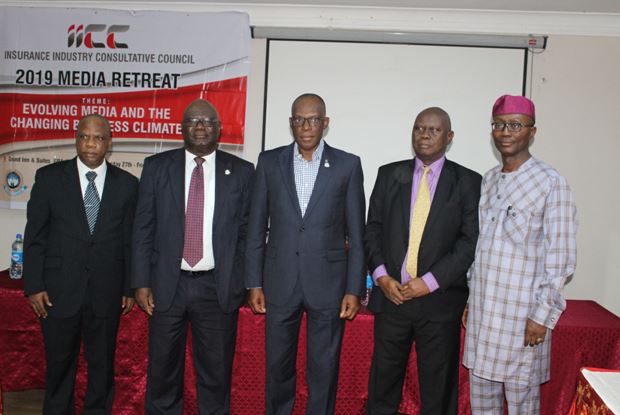
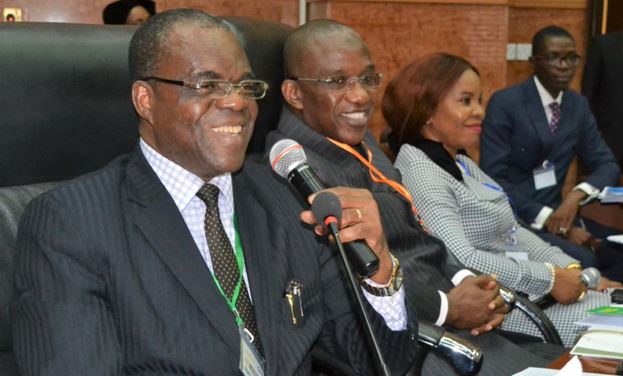
L: Mr. Richard Borokini, DG, Chartered Insurance Institute of Nigeria (CIIN); Mr. Eddie Efekoha, President, CIIN (3rd Left) and Mr. Fatai Adegbenro, Executive Secretary, NCRIB (R) at the 2019 IICC Media Retreat held at Ijebu-Ode, Ogun State over the weekend.
L: Mr. Richard Borokini, DG, Chartered Insurance Institute of Nigeria (CIIN); Mr. Eddie Efekoha, President, CIIN (3rd Left) and Mr. Fatai Adegbenro, Executive Secretary, NCRIB (R) at the 2019 IICC Media Retreat held at Ijebu-Ode, Ogun State over the weekend.
The Chartered Institute of Bankers of Nigeria (CIBN) has accredited Ecobank Nigeria Academy in recognition of its compliance with regulatory standards and best practices.
This comes after rigorous accreditation processes which included a high powered visit by the Registrar and members of the Institute’s accreditation committee that showed that Ecobank Nigeria has complied with and satisfied the provisions and requirements of the competency framework for the Nigerian banking industry as mandated by the Central Bank of Nigeria (CBN) through CIBN.
The accreditation comes at the wake of Ecobank Nigeria’s launch of the Entry Level Development Programme which is an intensive 8-week medley of learning interventions for fresh graduates. It is intended to improve the financial literacy of participants who may be coming from other disciplines, or who may have non-financial and banking related academic backgrounds.
The programme is an addition to the existing Ecobank Graduate and Management Trainee program which runs for 12 months and 21 months respectively
With this development, participants and graduates of the Academy would now be granted exemptions at the various levels of banking professional examinations.
Commenting, Managing Director, Ecobank Nigeria, Patrick Akinwuntan, described it as a welcome development, stressing that the Bank took deliberate steps to equip the academy to meet with international best standards.
He pointed out that the accreditation further underscores the importance the Bank attaches to staff’s training, skills development and capacity building, adding that the management will continue to upgrade the standard of the Academy to meet with fresh and modern day industry challenges.
According to him, “This great feat is in line with our continuous penchant to improving the employee capability and continuous learning through certification and recertification. It reinforces our people centric strategy further through this achievement. We are equipping our staff with the right skills and competence in line with global practices. Let me use this opportunity to thank members of our internal faculty for their dedicated effort toward achieving this milestone and the academy looks forward to more future partnership.”
Mr. Akinwuntan was optimistic that the Investment of Ecobank and other financial Institutions in education and training programmes, will produce the desired dividends, that would result in improving the quality of the industry’s human capital and, by extension, organizational performance
It would be recalled that the CIBN evaluation team led by Abdulrahmam Yinusa had commended Ecobank for putting in place a state-of-the-art academy targeted at enhancing training of its staff, stressing that the environment was conducive for learning.
L-R: Hon. Justice J.T. Tsoho who represented Justice A.A. Kafarati, the Chief Judge of the Federal High Court; Mr. Ahmed Lawan Kuru, Managing Director/CEO of Asset Management Corporation of Nigeria (AMCON) and Justice Ijeoma L. Ojukwu at Rose Ukeje Hall, Federal High Court Complex, Abuja…at the weeke
The Chief Judge of the Federal High Court, Hon. Justice A.A. Kafarati has again reminded the nation that the success of Asset Management Corporation of Nigeria (AMCON) in the discharge of its recovery mandates would only be enhanced if other safety net players and stakeholders, which includes the judiciary effectively play their respective roles.
AMCON is saddled with the arduous task of recovering over N5trillion owed by recalcitrant obligors. However, the management of AMCON is bent on recovering the debt especially as the sunset date of the corporation draws even closer. The development has led the management of AMCON led by Ahmed Lawan Kuru, Managing Director/CEO to switch its recovery strategy to more of enforcement.
Justice Kafarati who spoke at the weekend during the opening of the AMCON 2019 annual seminar for Hon. Judges of the Federal High Court, which was organised in collaboration with the National Judicial Institute (NJI) at Rose Ukeje Hall, Federal High Court Complex, Abuja reiterated the fact that AMCON’s success at recovering the outstanding huge debt would to a large extent depend on the corporation AMCON received from sister agencies as well as critical stakeholders especially the judiciary since most of the cases of AMCON and its obligors end up in court.
L-R: Hon. Justice J.T. Tsoho who represented Justice A.A. Kafarati, the Chief Judge of the Federal High Court; Mr. Ahmed Lawan Kuru, Managing Director/CEO of Asset Management Corporation of Nigeria (AMCON) and Justice Ijeoma L. Ojukwu at Rose Ukeje Hall, Federal High Court Complex, Abuja…at the weeke
Kafarati who was represented at the event by Hon. Justice J.T. Tsoho, said, “…AMCON is a paramount feature of the financial system stability in Nigeria. AMCON sets out to accomplish this critical objective of stabilising the macro economy by off-loading toxic assets from the balance sheet of banks.
It must be made clear that AMCON cannot be the only panacea for resolving all banks failures or all other issues in the financial system, as it is only one of the critical partners or components of the financial safety arrangement responsible for the promotion of financial system stability.
“The success of AMCON therefore in the discharge of its mandates would, to a large extent be enhanced if other safety net players and stakeholders, which include the judiciary would effectively play their respective roles. I am particularly pleased that AMCON has recognised the judiciary as an important stakeholder, which has a critical role to play in the sustenance of financial integrity in Nigeria.”
Justice Kafarati concluded by reminding the participants that the federal high court should actually do more to support AMCON recovery drive since the court has the unique constitutional responsibility and exclusive jurisdiction in respect of all AMCON matters. Again he said, “We are therefore integral and certainly indispensable to the holistic implementation, realisation and accomplishment of the AMCON mandates as provided in the AMCON enabling Act.”
Earlier in his remarks, the AMCON boss told the judges that AMCON had always emphasised that the huge portfolio of AMCON debt is not the problem of the corporation as an entity, but a national debt, which if allowed to crystalize will portend serious negative economic and social consequences for the entire nation.
AMCON he said is constantly under the observation of international monetary institutions and have entertained visits and inquiries from the World Bank and the International Monetary Fund (IMF) with respect to our strategies for resolving the over N5trillion or $14billion USD debt held in AMCON portfolio, which of course AMCON would not want to be a drain on the federal budget.
According to Kuru, “In April this year, the IMF released its Country Report No. 19/92 where it recognized the Central Bank of Nigeria (CBN) as AMCON’s main creditor and that the AMCON debt creates additional contingent liabilities for the federal government. This underscores the need for a serious concerted effort by all relevant stakeholders, especially the judiciary towards achieving the most effective loan workout option.
“As part of our renewed strategy for recovery, AMCON is focusing more on enforcement. It has become clear to us that in order to attain the target as we approach sunset of 2024, we must redouble our efforts in the area of recovery. The AMCON Act anticipated a situation where we may need to enforce if negotiations fail. Negotiations have failed us, given our sun set date. It is also clear to us that we cannot go very far without the strong support of the judiciary. My Lords would have noticed that the volume of AMCON cases have grown since June/July 2018.
“At this stage of our recovery efforts, given our experience with the traditional litigation system, it has become imperative to consider other dispute resolution mechanisms, giving the slow pace of litigation, obligors’ propensity to hide under technicalities, and AMCON’s sunset timeline,” Kuru stated.
The theme for this year’s edition of the seminar, which was facilitated by Legal Academy is “The Dynamic and Proactive Deployment of AMCON Special Powers and Alternative Dispute Resolution (ADR) in the Effective and Efficient Resolution of Troubled Assets.
It featured presentations from Justice Nnamdi Dimgba, PhD.; Justice Olayinka Faji and Mr. Chuka Agbu, PhD. There were also Justice I.N. Buba and Justice Ijeoma L. Ojukwu and Justice Binta Nyako who chaired different sessions of the seminar, among others.
NEM Insurance Plc recorded gross premium income of N15.04 billion in the 2018 financial year, an increase of 12.2 percent over the previous year’s turnover of N13.4 billion while net premium rose from N9.8 billion in 2017 to N10.7 billion in the period under review, representing an increase of 9.1 percent.
Dr. Fidelis Ayebae, the Chairman of NEM Insurance Plc said the the company’s Annual General Meeting (AGM) in Lagos that the underwriter also achieved 34.2 percent increase in investment income of N952.8 million compared to N709.9 million in 2017.
And to underscore the company’s commitment to its policyholders, NEM Insurance paid claims of N6.01 billion in 2018 representing an increase of 20 percent over the figure of N5.01 billion in 2017.
He said the Group also generated Profit before Tax (PBT) of N2.69 billion and N2.67 billion for the parent company.
Reviewing the performance of the company further, Mr. Tope Smart, the Group managing Director/CEO of NEM Insurance Plc said:
“Despite the difficult operating environment our company has maintained its focus as we continue to increase our market share. From about five percent market share, we now control close to seven percent market share of non-life business. We are determined to improve on this figure.
Our associate in Ghana Regency Nem Insurance is expanding its operations into the major areas in Ghana. This will lead to more income for the company and ultimately impact its bottom line in the nearest future.
Our company is set for new heights. With a strong reputation built over the years, coupled with a very strong brand in the insurance industry and robust financials, the future of the company looks very exciting and we are determined to take advantage of the opportunities we have in order to take our company to the next level.”
Smart added that NEM Insurance has a plan to acquire a life company while proactively raising funds for increase of its issued share capital.
NEM Insurance Plc paid total dividend of N686.4 million to shareholders.
Olaotan Soyinka
Managing Director/CEO
Sovereign Trust Insurance Plc
The Management of Sovereign Trust Insurance Plc has announced the opening of the company’s Rights Issue for existing Shareholders. The Rights Issue commenced on Monday, June 24, 2019, and will run through July 31, 2019.
The company is offering 4,170,411,648 (Four Billion, one hundred and seventy million, four hundred and eleven thousand, six hundred and forty-eight) ordinary shares of 0.50k each at 0.50k per share on the basis of one (1) new ordinary share for every two (2) ordinary shares of 0.50k each held as at the close of register on Tuesday, January 15, 2019.
In the same vein, the Management has enjoined all Shareholders of the company to take advantage of this unique opportunity by maximally taking up their rights in the Rights Issue with a view to increasing their stake in the company and as well grow their wealth in the very near future as the company is poised to moving on to the next phase of its growth stage.
Mr. Olaotan Soyinka, Managing Director/Chief Executive Officer of Sovereign Trust Insurance Plc, said the Management of the company has set a growth agenda which is aimed at positioning the underwriting firm as one of the top five in the insurance industry in Nigeria. The Managing Director’s appeal to Shareholders of the company was unequivocal.
“In achieving this aspiration, we have identified that a very robust capital base is critical to the success of the set agenda; hence the need to call on our Shareholders to fully exercise their rights by subscribing fully to the Rights Issue and ultimately grow their investments in the company.”
Olaotan Soyinka Managing Director/CEO Sovereign Trust Insurance Plc
He said Sovereign Trust Insurance Plc is working assiduously towards being one of the most preferred Insurance companies in the country for people to do business with, invest in as well as be the choice Employer of Labour.
Judging by the results of the performance of the company in the last financial year in 2018, it leaves no one in doubt that the company is set for the path of profitability. It is quite interesting to note that the company recorded a marked positive shift from what was recorded in the financial year of 2017 when compared to the 2018 financial year performance.
The company recorded a Gross Premium Written of N10.5 billion representing a 23% increase over the N8.5 billion recorded in 2017. The Net premium income equally grew by 31% to N5.5 billion over the sum of N3.85 billion recorded in the corresponding year.
In the same vein, the company recorded a Profit Before Tax of N540 million as against N202 million recorded in year 2017 representing over 167% increase. Profit after tax also stood at N344 million, a 118% increase when compared with the sum of N158 million recorded in 2017.
Consequently, the Return on Capital Employed (ROCE) recorded a positive performance of 9.29% as against 1.87% achieved in the corresponding year of 2017. Similarly, the earning per share improved by 118% from 1.89kobo in 2017 to 4.13kobo in 2018.
The company’s Total Assets rose from N10.8 billion to N11.3 billion representing 5% increase while the shareholders’ fund increased by 6% from N5.5 billion in 2017 to N5.8 billion in 2018.
Certainly, there are brighter days ahead and the opportunity for the shareholders to latch on to the bright side of life with Sovereign Trust Insurance Plc is now.
MTN Nigeria Communications Plc has launched 4G+ in Lagos, Abuja and Port-Harcourt. The enhanced service is aimed at delivering a premium experience to more people across the country.
MTN 4G+ runs on 4G LTE Advanced Technology using a combination of the recently acquired 800 MHz spectrum and 2600 MHz. The added spectrum and advanced technology extend the reach and capacity of MTN’s data network in Nigeria and enables speeds of up to 200 Mbps. This means a 30-minute HD video could take as little as three minutes to download on 4G+, while the same video would take around eight minutes to download on standard 4G.
The service is immediately available and will deliver much higher broadband speeds, a more consistent connection and significant improvement in indoor coverage.
Commenting on the new service, Mazen Mroue, Chief Operating Officer, MTN Nigeria said: “It’s about the customer. We put the customer at the heart of everything that we do.”
Noting that the launch of 4G+ represents a natural evolution from MTN’s already fast and reliable 4G network and further demonstrates the company’s commitment to continued investment in technology that caters to the present and future needs of its customers and country.
“As MTN, we believe that everyone deserves the benefits of a modern connected life. With this enhancement, our customers in covered locations can expect faster downloads and uploads, and better browsing and streaming experiences. The successful launch of our 4G+ network is a momentous occasion, which advances our quest to provide world-class service to our customers,” he concluded.
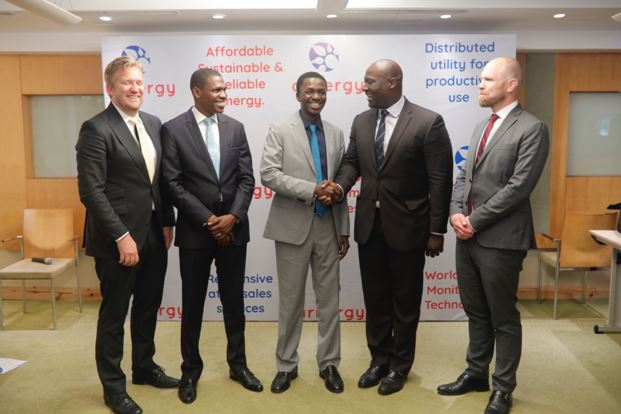
(L-R) Dr. Wiebe Boer (All On); Bunmi Adekore (Breakthrough Energy Ventures); Femi Adeyemo (Arnergy Founder); Anders Blom (Norfund); Kunle Odebunmi (Arnergy Co-Founder) at Radisson Blu Anchorage Victoria Island, Lagos.
Nigerian distributed utility company, Arnergy, yesterday announced it has raised $9 million in a Series A round of funding led by Breakthrough Energy Ventures with participation from the Norwegian Investment Fund for Developing Countries (Norfund), EDFI ElectriFI and All On.
“We are excited to enter this next phase in Arnergy’s development with investors that share our vision of tackling the most pressing energy challenges across emerging market economies, starting with Nigeria. We believe that energy needs in Nigeria have surpassed rudimentary requirements of low power utilization and our product offerings are solving for reliability and not just access,” said Femi Adeyemo, Founder and CEO of Arnergy. Arnergy’s distributed renewable energy systems harness the combination of solar power, superior storage solutions and proprietary remote management technologies to deliver scalable, reliable and affordable energy solutions that are tailored to tackle issues related to intermittency and grid unreliability.
Since launch, Arnergy has delivered over 2MW of installed capacity and over 5MWh of storage capacity to business and residential clients across Nigeria. Arnergy’s market scaling ambitions, fueled by the influx of new capital, will include new business models and partnership opportunities, as well as consumer financing and channel expansion activities.Targeted verticals for the company’s 5KW modular systems will include small businesses, healthcare, hospitality, financial services, agribusiness and education. “Arnergy inherently understands the West African market and its need for power reliability,” said Carmichael Roberts of Breakthrough Energy Ventures. “Creating accessibility to reliable renewable energy sources is paramount to economic growth in this region. With Arnergy’s technology, we can significantly decrease carbon emissions and it’s a model that can be replicated all over the developing world.” “Access to clean and stable energy is a prerequisite for job creation and development. Norfund is proud to support the expansion of Arnergy which will provide Nigerian households and businesses on a weak-grid connection with a cheaper, cleaner and more reliable power solution to meet their daily needs,” commented Mark Davis, EVP Clean Energy from Norfund. “ElectriFI, a EU-funded access to energy impact facility, is thrilled to join such a strong group of investors backing visionary entrepreneurs who will positively impact thousands of local businesses in Nigeria,” said Dominiek Deconinck, ElectriFI Fund Manager.
(L-R) Dr. Wiebe Boer (All On); Bunmi Adekore (Breakthrough Energy Ventures); Femi Adeyemo (Arnergy Founder); Anders Blom (Norfund); Kunle Odebunmi (Arnergy Co-Founder) at Radisson Blu Anchorage Victoria Island, Lagos.
Speaking on the investment, Wiebe Boer, CEO of Shell funded All On, “This is a deal that is particularly exciting to us at All On as a Nigerian impact investor because it reinforces our belief that local energy companies like Arnergy with innovative Nigerian technology and business models can attract investments from global giants like Breakthrough Energy Ventures, Norfund and ElectriFI, and are ready and able to compete on a global stage.” According to Damilola Ogunbiyi, the CEO of the Rural Electrification Agency (REA), “I am delighted that Arnergy, a home grown company and one of the market leaders for off grid energy in Nigeria, has reached this milestone to raise capital from such an impressive group of local and international investors. It is a validation of all the hard work the REA and all of our partners are doing to create an enabling environment for off grid development ”
About Arnergy
Arnergy is a distributed utility company that provides energy solutions tailored towards energy reliability in emerging markets. Our energy solutions empower businesses and residential customers through the design, sale and installation of affordable and reliable, distributed energy systems. Target business verticals include, but are not limited to healthcare, education, hospitality, agribusiness, financial services and micro businesses that are driving impact and producing positive economic outcomes in their local economies.
Nigerian state governments have proved that the returns from the usual business of budget secrecy are much more fulfilling to them than the $750 million incentive provided by the World Bank to encourage public finance transparency in Nigeria, BudgIT research has shown.
An 8-month painstaking effort, the assessment of the availability of public finance documents in state government domains reveals that only twenty-five states’ approved budgets are available online, a few of which are summarized scanned documents.
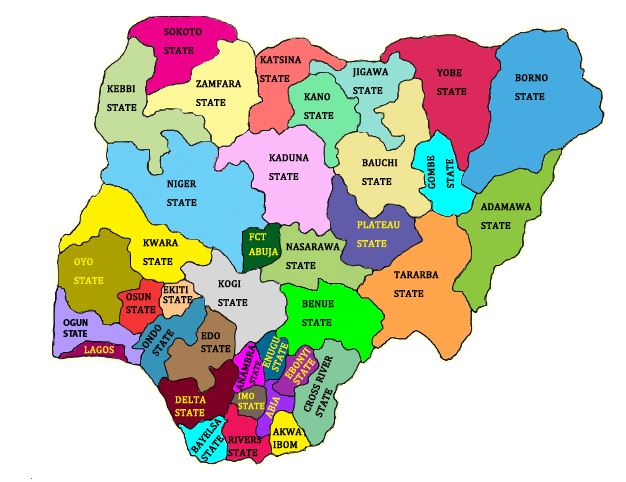
Eleven states (Lagos, Cross River, Akwa Ibom, Bayelsa, Ebonyi, Imo, Nasarawa, Oyo, Rivers, Sokoto and Zamfara) are yet to publish the details of their 2019 budget online, as of June 3rd, 2019, while Kwara state budget went missing on its website immediately after the recent transition.
This contravenes the ideals of openness and transparency in the management of public resources, which is the requisite guideline for the World Bank’s State Fiscal Transparency, Accountability and Sustainability (SFTAS) programme, a product of mutual agreement between the financial institution and the federal government to strengthen fiscal transparency, accountability and sustainability in Nigerian states as a means to turbo-charge their revenue base, increase fiscal efficiency in public expenditure while reducing debt overhangs.
The project in which all the 36 state governments submitted written expressions of interest commenced late 2018 after the endorsement by the National Economic Council in March.
It is shocking that any state would jettison the offer of a programme that was informed by serious fiscal challenges faced by states, the majority of which are still unable to pay workers’ salaries and pensions.
We must emphasise that Imo, Zamfara and Sokoto states have not published their budget documents since 2017, whereas Lagos State, which provides only a thumbnail of it, has a history of notoriously resisting attempts to uncover its financial dealings, thus embedding corruption.
“This situation notwithstanding, BudgIT will not give in on its advocacy for transparency and accountability in Nigeria. We shall look more critically at the proactiveness in the disclosure of financial information by Nigerian states as well as their compliance with the Freedom of Information Act,” affirms Gabriel Okeowo, BudgIT’s Principal Lead.
According to him, it is commendable that many other states have released full budget documents to the public. However, those documents must always be published within a reasonable timeframe in an accessible format.
This is pivotal in enabling citizens to engage legislators during budget debates. States with partially detailed budget documents – in public domains – must provide details of capital projects being executed for the fiscal year.
One of Nigeria’s leading logistics and cargo generating company, Red Star Express Plc, has ventured into the cargo General Sales Agent services (GSA) as part of its expansion drive. This was announced at an exclusive interview with some of the company’s top management staff recently.
This service which was introduced last Friday (June 14th), according to the company, will help connect passenger baggages and packages from one airport location to another at a faster rate.
According to the Group Managing Director, Red Star Express Plc, Dr. Olusola Obabori, the company is focused on growth.
“We are a company focused on growth, and part of our growth platform for the financial year is to work to a large extent with airlines on cargo consolidation both locally and internationally. With this in mind, we commenced a partnership with Aero Contractors, and we have ongoing discussions with other airlines which of course will start soon in the course of the business. We are aggressive in terms of expansion, and this is the reason we started operations in some West Africa offices few months ago, some of which are Niger Republic, Burkina Faso, Benin Republic. If we have to expand, we have to be able to connect shipments from Lagos to these countries. We are hopeful that we are going to open more offices around West Africa, as much as we do that, in the near future we are going into Aviation as a matter of fact, but for now, we are working with the operators of airlines in Nigeria to help them see how we can consolidate cargo since that’s our core business. We will consolidate locally to give to them, but we will also consolidate internationally for operators on International routes.”
“Our international business is principally done on the FedEx platform and we have Red Star Freight that does major cargo movement from here to the rest of the world and also bring in cargo into Nigeria. The GSA is a component of our expansion plan which we recently introduced. This will bring lots of help in the industry. We have opened international operations which are to show you that beyond the domestic market, there’s a lot we can do for Nigeria in the West Africa sub-region. This is why we also went into those markets. This means if you are a business man in Nigeria and need to drop shipments in those locations, it will be delivered the next day, as if you are delivering goods to Kano or Kaduna. More so, with the introduction of the GSA, we can ride behind the airline operators to get these goods delivered on time. It makes the whole process extremely seamless and of course business can go faster. Nigeria is not our only market, we have gone West African.”
Similarly, the Chief Operating Officer, Red Star Freight, Mr. Mudiaga Okumagba threw more light on the initiative. “Red Star Express is an indigenous Nigerian company owned by Nigeria and run by Nigerians. We are a licensee of FedEx, an American company. This enables us ship anything through the FedEx network. We got the GSA license about two years ago, but we just started operating with it. We have partnered with Aero Contractors, and we hope to work with other domestic airlines in a couple of months. Also for the International routes, we are hoping that before the end of the year, we will have something to do with Lufthansa Airline. Partnering with airlines, gives us an opportunity of dropping in our cargoes in spaces not occupied by passenger’s luggage. Red Star Freight also has Independent Network partners –RFLM and WCA.
These networks allow shipments to any part of the world either by air or by sea. We started as an air express delivery company, so we deal more with airlines. Red Star has a vision of not just handling cargoes on domestic and International routes; rather we are looking forward to flying our own aircraft. This is the opportunity that lies in the GSA business. Going into this will help us go deeper into the Aviation business because you cannot do GSA business if you are not operating in the Aviation territory. We have been moving our shipments through vendors to the airlines. We are looking forward to breaking the barrier and building a relationship directly with airlines.”
Okumagba who reiterated that Red Star had about 166 offices nationwide prides in the company’s capability to handle cargoes and parcels professionally, both in the number of staff and offices it has nationwide.
According to him, Red Star Freight also handle the perishable deliveries. “We also handle Red Star Agro which is merged with the Freight business. We have done lots of shipments in the perishable areas. Over time, we have successfully moved perishables (tomatoes and vegetables) to the US and UK. From time to time, we enlighten exporters on how they can overcome certain bottle necks that can hinder successful exports such as quality, price, packaging, and the proper certification of their representative at the receiving end.”
Red Star Freight is a subsidiary of Red Star Express. Red Star Express Plc is a Licensee of Federal Express (FedEx) Corporation, the world’s largest delivery solutions provider. The company has over 166 offices nationwide.
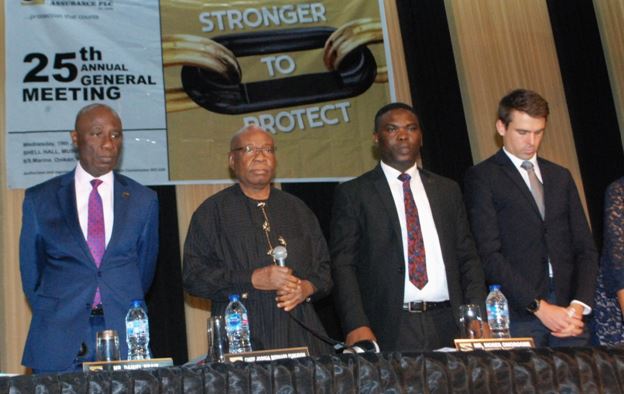
L-R: Mr. Daniel Braie, Managing Director; Chief Joshua Fumudoh, Chairman; Mr. Moses Omorogbe, Company Secretary and Mr. Bernard Griesel, Non-Executive Director, all of Linkage Assurance PLC during the 25th Annual General Meeting of the company held in Lagos.
Linkage Assurance Plc says it will take advantage of opportunities in the economy and expected stability to grow its portfolio for increased shareholder value, while focusing on profitability, customer intimacy and operational efficiency.
Chief Joshua Fumudoh, Chairman of the company made the disclosure at its 25thAnnual General Meeting held in Lagos.
Fumudoh who reviewed the company’s performance during the meeting said the underwriter in the 2018 financial year achieved 31 percent growth in gross written premium to N5.391 billion from N4.102billion in 2017 despite the tough operating environment.
According to him, the company paid out a whopping N2.71 billion on claims in 2018, which were largely from oil and gas, aviation businesses, as against N1.04 billion the previous year.
He said that insurance companies are in business to pay claims, and being able to pay this huge amount clearly underscores the financial capability of the company to meet its obligations when they fall due.
Daniel Braie, Managing Director/CEO of the company said to enable the company achieve its set goals, management is driving strategic initiates, which include reinsurance optimisation; revenue growth, brand awareness, corporate excellence and strong financial solvency
Going into 2019, Braie said the focus of the company is profitability, and we would have this in mind from the point of acceptance of business from every market segment no matter the size and exposure.
“For this reason, we would ensure effective risk management and the essence of this is to ensure adequate risk management culture within our underwriting and claims processes, Braie said.
Braie told shareholders at the meeting that the company was already generating profit and making progress in its projection for the current year to meet shareholders expectation.
As at the end of first quarter 2019, Linkage Assurance Plc’s unaudited result shows 34 percent growth in profit before tax (PBT) to N627.52 million, as against N469.19 million in 2018, while the profit after tax during the same period stood at N439.26 million, from N375.36 million in 2018, indicating a 17 percent increase.
Mr. Tope Smart
Chairman
Nigerian Insurers Association
The insurance industry in Nigeria has collectively launched ‘Live With Freedom’ project, a marketing campaign to showcase the advancements made in the insurance sector, and to encourage more Nigerians to take up insurance policies.
The core objective of the project is to redefine narratives about insurance in Nigeria and present insurance as an indispensable & desirable tool for risk mitigation.
The campaign which began effectively since June 2018 has seen several articles on the benefits of insurance published on the website and shared across various social media platforms. The educative features span the benefits of insurance, easy ways to purchase insurance and the compulsory insurance policies recognised by law in Nigeria.
The compulsory insurance policies include:
Motor Third Party Insurance
Employee Group Life Insurance
Health Care Professional Indemnity
Insurance of Public Buildings
Insurance of Buildings under Construction
Aviation Third Party Insurance
Marine Insurance (Cargo)
Mr. Tope Smart Chairman Nigerian Insurers Association
According to the campaign, ‘insurance serves an an anchor for both individuals and the economy. For the individual, insurance helps to safeguard treasured interests from loss and uncertainty, giving him/her the freedom to enjoy life to the fullest. Insurance ensures reduced risk of venture and provides succor during losses, hereby enabling businesses to thrive. It drives the key sectors of the economy. The wealth of the economy and its human and material resources are fortified when they are insured.’
Today, many Nigerians do not know that with N5, 000 they can purchase an insurance policy which proves that insurance has become affordable and easy to access in the country.
The “You are Insured” platform has also made it easy for users to access any insurance company of their choice with a simple click on their mobile devices. The platform also serves as a bank of knowledge and information for existing and prospective policyholders or buyers of insurance as it relates to insurance matters. Simply put, it is insurance made easy – a one-stop resource centre for everything insurance in Nigeria.
For instance, in its first three months, the campaign recorded a following of over 20,000 and a reach of about 8.8 million across its various social media platforms through a total of 171 videos and graphics.
For example, a total 1,694 radio spots of radio skits were aired in the second phase of the campaign, an increment from 1,415 skits aired in the first phase. Brand activation events, interviews, talk shows, etc. are also currently in the works.
The project has recorded tremendous successes so far. According to a poll conducted by Brand Sampling International, “67 percent of the people who encountered the campaign in phase 1 are now aware of compulsory insurance.”
By the end of January 2019, the campaign had also witnessed over 100 percent increased followership and engagement across its social media platforms, in comparison to when it kicked off in June 2018. The combined reach across digital media had also risen to 12.3 million.
According to experts in the market, the campaign will indeed usher in a new and improved era for the insurance industry in Nigeria.
(L-R): Kunle Afolayan, Ace Film Producer; Patrick Akinwuntan Managing Director, Ecobank Nigeria; and Alex Ekubo, Cast ‘Bling Lagosians’ at the premiere of the movie “Bling Lagosians’ in Lagos.
The Managing Director, Ecobank Nigeria, Patrick Akinwuntan says the bank is set to support the Nigerian movie industry to project everything good about Nigeria.
Akinwuntan who spoke at the premiere of the movie ‘The Bling Lagosians’ in Lagos said Ecobank is determined to support the creative industry as they are most suited in the task of reinventing the Nigeria of our dreams.
This also being in line with the Central Bank of Nigeria (CBN) vision to support the Creative Industry through a Financing Initiative
Mr. Akinwuntan said Ecobank is passionate about Africa and its cultural renaissance, and its partnership with Bolanle Austen-Peters, a renowned African culture promoter, sits perfectly with the Pan African brand.
Further he stated that the bank will continue to leverage its digital offerings to facilitate a more seamlessly connected Africa. According to the bank Managing Director, through its flagship products EcobankPay and the Ecobank Xpress ecosystem the bank will remain in the forefront as key enablers of digital payments across the continent.
As part of the partnership, Ecobank handed over the sum of N.5 million to the best dressed person at the premiere, being the climax of the ‘Eko for Show’ dress code for the event. Guests were encouraged to dress spectacularly to win cash prizes sponsored by EcobankPay.
EcobankPay, is the lifestyle digital payment and collections service of Ecobank Nigeria, had been designated the payment solution for the premiere of the much anticipated movie. EcobankPay is a convenient digital QR code that enables payments using the mobile phone, without the need for a plastic card. The uniqueness of the platform is that it has MasterPass, MVisa and Mcash embedded in the merchant identity QR Code. This enables each customer to transact across the three platforms not minding the bank cards they are holding.
‘The Bling Lagosians’ is a story that centres on the lifestyle of a Lagos family that is presently living in their past glory. Although, they are not as wealthy as they once were, they still want to live that lifestyle they once used to. They want to host the talk of the town kind of party, they want to wear the best designers and ride the fastest of cars even if they are wallowing in debt. This movie is intended to show how people go the extreme to keep up appearances in public.
‘The Bling Lagosians’ is already attracting great audience. The film stars Jide Kosoko, Elvina Ibru, Denola Grey, Monalisa Chinda, and Helen Paul among others.