Monday, December 1, 2025
26.5 C
Lagos
Home Blog Page 237

Harrison Ford: ‘Climate Change is Greatest Moral Crisis of Our Time’

0
Harrison Ford
Harrison Ford

Actor and conservationist, Harrison Ford said climate change presents humanity in the 21st century with its most urgent moral crisis in an impassioned speech at the seventh World Government Summit (WGS 2019) in Dubai yesterday.

Ford said global cities including Dubai, London, Los Angeles and Hong Kong are under threat from rising sea levels caused by warming oceans.

“75 per cent of the largest cities are on the coastline. As oceans warm, sea levels rise – endangering populations, threatening economies and their existence. All of us –rich or poor, powerful or powerless – will suffer the effects of climate change,” the Conservation International Vice Chair, 76, said in front of a packed out plenary hall at Madinat Jumeriah, Dubai.

He arguedwhen it comes to protecting oceans – the world has proved woefully inadequate, stating. “The earth and seas are the legacy we leave our children. In 10 years it may be too late.”

The UAE is the world’s first nation to have a Ministry of Climate Change and Environment, and Minister Dr. Thani Al Zeyoudi introduced Ford.

Ford warned delegates at the event: “We are facing what I believe is the greatest moral crisis of our time. We need to ask governments, businesses and communities to act, to invest in their environment and in our future. If nature is not kept healthy, humans will not survive – it’s as simple as that.”

Harrison Ford
Harrison Ford

“If we are to survive on this planet – for our climate, for our security for our future – we need nature now more than ever. Because nature doesn’t need people – people need nature.

“So let’s work together, let’s roll up our sleeves. Let’s get this thing done,” he concluded.

The three-day World Government Summit 2019 runs until February 12 at Madinat Jumeirah in Dubai. The landmark event has convened more than 4,000 participants from 140 countries, including heads of state and governments, as well as top-tier representatives of 30 international organisations.

African Airlines Report 1.3% Drop in 2018 Cargo Growth

0

African carriers saw freight demand decrease by 2.2%, in December 2018, compared to the same month in 2017. This was significantly less than the 9.4% decrease the previous month. Capacity increased by 4.9% year-on-year.

It’s worth noting that seasonally-adjusted international freight volumes, despite being 7.7% lower than their peak in mid-2017, are still 50% higher than their most recent trough in late-2015. Annual growth in freight demand among Africa carriers in 2018 decreased by 1.3% and capacity grew by 1%.

The International Air Transport Association (IATA) released full-year 2018 data for global air freight markets showing that demand, measured in freight tonne kilometers (FTKs) grew by 3.5% compared to 2017. This was significantly lower than the extraordinary 9.7% growth recorded in 2017.
Freight capacity, measured in available freight tonne kilometers (AFTKs), rose by 5.4% in 2018, outpacing annual growth in demand. This exerted downward pressure on the load factor but yields proved resilient.

Air cargo’s performance in 2018 was sealed by a softening in demand in December. Year-on-year, December demand decreased by 0.5%. This was the worst performance since March 2016. Freight capacity, however, grew by 3.8%. This was the tenth month in a row that year-on-year capacity growth outstripped demand growth.

International e-commerce grew in 2018 which was a positive factor for the year. Yet, there was a softening of several key demand drivers:

·         The restocking cycle, during which businesses rapidly built up inventories to meet demand, ended in early 2018;

·         Global economic activity weakened;

·         The export order books of all major exporting nations, with the exception of the US, contracted in the second half of 2018;

·         Consumer confidence weakened compared to very high levels at the beginning of 2018.

“Air cargo demand lost momentum towards the end of 2018 in the face of weakening global trade, sagging consumer confidence and geopolitical headwinds. Still, demand grew by 3.5% compared to 2017. We are cautiously optimistic that demand will grow in the region of 3.7% in 2019. But with the persistence of trade tensions and protectionist actions by some governments there is significant downside risk. Keeping borders open to people and to trade is critical,” said Alexandre de Juniac, IATA’s Director General and CEO.

“To attract demand in new market segments, the air cargo industry must improve its value proposition. Enabling modern processes with digitalization will help build a stronger foothold in e-commerce and the transport of time- and temperature-sensitive goods such as pharmaceuticals and perishables,” said de Juniac.

Saudi Arabia Projects $34.5bn ICT Spend in 2019

0

Overall spending on information and communication technology (ICT) in Saudi Arabia is expected to reach $34.5 billion this year, up 1.0% on 2018.

That’s according to the latest insights, trends, and predictions presented by International Data Corporation (IDC) last week as it hosted the 2019 edition of its annual IDC Directions event at The Ritz-Carlton, Riyadh.

The forum brought together more than 100 of the Kingdom’s most influential technology vendors, telecommunications operators, and IT service providers.

Running under the theme ‘Multiplied Innovation: Scaling a Technology Revolution in Saudi Arabia’ , the highly anticipated event explored the emerging trends and priorities that will shape ICT investments in 2019 and beyond. IDC’s group vice president and regional managing director for the Middle East, Turkey, and Africa, Jyoti Lalchandani, opened the event by outlining IDC’s chapters of innovation in the digital economy and contextualizing their relevance to the Kingdom’s ongoing digital transformation.

He explained that cutting-edge technologies are increasingly forming the core of modernization efforts in the Kingdom and that a wave of pan-industry digitalization is set to hit organizations of all sizes, with the future of the ICT presenting pockets of opportunity like never before.

This was followed by the event’s keynote presentation from Hamza Naqshbandi, IDC’s country manager for Saudi Arabia, during which he highlighted the critical role that digital transformation and innovation-accelerating technologies will play in shaping ICT investment decisions over the coming years.

He stressed the vital role that technology will play in enabling some of the most important aspects of the Kingdom’s National Transformation Program (NTP) and its overarching Vision 2030 strategy.

He also identified several areas of opportunity around software and IT services, with IDC anticipating these to be the fastest growing IT markets in Saudi Arabia over the coming years, expanding at five-year compound annual growth rates (CAGRs) of 7.9% and 6.0%, respectively, to reach combined spending of $6.2 billion in 2022.

“As the Kingdom further enhances its digital transformation posture, adoption and use of innovative technologies demanded by the NTP objectives will drive significant ICT spending,” said Naqshbandi.

“While traditional ICT segments like hardware, mobile phones, and telecom services will see a significant slowdown, innovation accelerators and 3rd Platform technologies such as IoT, cloud, mobility, AI, and robotics will continue to offer quick wins for the supply side.”

Naqshbandi explained that use cases around these advanced technology solutions are emerging across Saudi Arabia, reinforcing the significance of these technologies in achieving some of the key NTP and Vision 2030 goals.

He also revealed IDC’s prediction that spending on IoT solutions in the Kingdom will touch $1.5 billion in 2019, while security solutions will attract total spending of more than $400 million. Spending on public cloud, meanwhile, is forecast to cross the $250 million mark in 2019.

“Technology spending momentum will rapidly shift from traditional technologies to transformative solutions, while the ‘doing more with less’ mantra will continue to prevail,” said Naqshbandi. “The Saudi ICT market will show symptoms that are typical of a transforming economy as private sector organizations gear up to keep pace with digital transformation initiatives driven by the government. Developing an effective digital transformation platform that can sustain, advance, and scale business operations may be the most important task facing the Kingdom’s decision makers in 2019 and beyond.”

Ecobank Deepens Financial Inclusion with EcobankPay Zone

0
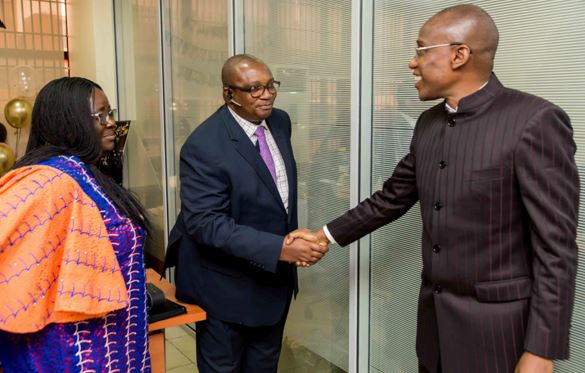
Left: Carol Oyedeji, Executive Director, Commercial Banking, Ecobank Nigeria; Ben Okolie, General Secretary, Alaba International Market Association (Electronics); Patrick Akinwuntan, Managing Director, Ecobank Nigeria; Okwelogu Romanus, Managing Director, Ajuoye Dynamic Concept, (customer of Ecobank) and Jude Esedebe, Managing Director, J-Clax International (customer of Ecobank) at the launch of EcobankPay zone at Alaba International Market by Ecobank in Lagos on Friday.

The Managing Director, Ecobank Nigeria, Patrick Akinwuntan, has launched EcobankPay zone at Alaba International Market, Lagos, and expressed the bank’s commitment to continue innovating more payment and financial solutions to best serve traders across the country.

According to Akinwuntan, the bank has designated Alaba market as an EcobankPay zone, meaning that patrons of the market, Ecobank and non-Ecobank account holders, have more easy, secure and convenient ways to pay when they visit the market. He added that  EcobankPay’s unique offering is that anyone from any bank in Nigeria can pay with MasterPass, mVISA and mCASH with any phone by scanning QR code or using USSD.

Traders, he said, can now enjoy more possibilities to grow their business as they can also sell to customers with EcobankPay in 32 countries in Africa. He added that “EcobankPay is free to set up as the shop owner only needs his/her QR code and phone for notifications to start receiving quick and easy payments.

Left: Carol Oyedeji, Executive Director, Commercial Banking, Ecobank Nigeria; Ben Okolie, General Secretary, Alaba International Market Association (Electronics); Patrick Akinwuntan, Managing Director, Ecobank Nigeria; Okwelogu Romanus, Managing Director, Ajuoye Dynamic Concept, (customer of Ecobank) and Jude Esedebe, Managing Director, J-Clax International (customer of Ecobank) at the launch of EcobankPay zone at Alaba International Market by Ecobank in Lagos on Friday.

EcobankPay, a special merchant QR Code product of the Pan African Bank, enables customers make seamless payment for goods and services across the three major payment platforms without the use of plastic cards. The uniqueness of the digital product according to the bank is that it has MasterPass, MVisa and Mcash embedded in the merchant identity QR Code. If the person that wishes to buy goods is coming from a bank that has MVisa and wishes to pay, the same QR Code would accept MVisa payment and vice versa. That creates interoperability and convenience for the merchants. The QR Code is much cheaper than having a point of sale (PoS).

For the merchants, the beauty of EcobankPay is in the cost of setting up, as the shop owner simply prints the QR Code on a paper and can stick it anywhere and do not run any risks. It is convenient and the mobile app is ubiquitous, allowing you 24/7 access and affordabl for every Nigerian.

As a merchant on EcobankPay, you automatically have a QR Code that accepts all the three payment platforms – MasterPass, MVisa and Mcash. Shoppers who used the EcobankPay QR Code are right now treated to special discount transactions at selected shops in Lagos, Abuja, Port Harcourt and Aba.

Court Restrains NAICOM over Guinea Insurance

0
Guinea Insurance Plc

A Federal High Court sitting in Abuja has restrained the National Insurance Commission (NAICOM) from restricting Guinea Insurance Plc from taking in new businesses pending the determination of the substantive suit (FHC/ABJ/CS/151/2019) filed against the insurance industry regulator by the company.

The court presided over by Hon. Justice I. E. Ekwo granted the Order of Mandatory Injunction against NAICOM last Friday when the matter came for hearing.

Marriott Hotels Fastracks Rapid Expansion in Africa

0
Marriott International

From the Forum de l’Investissement Hôtelier Africain in Marrakech, Marriott International announced three new deal signings across North and West Africa, reinforcing the company’s commitment to expanding its presence across the continent. The new deal signings highlight the company’s growth in Morocco and Ghana, while marking its debut in Liberia.
Organised by Bench Events, Forum de l’Investissement Hôtelier Africain is a gathering that unites North and West African countries in a bid to develop their economies and support hospitality investment. The forum connects business leaders from international and local markets – driving investment into tourism projects, infrastructure, entertainment and hotel development across the region.
“New and established markets across North and West Africa continue to present us with immense opportunities to further enhance and diversify our portfolio in the continent,” said Jerome Briet, Chief Development Officer, Middle East & Africa at Marriott International. “The new deal signings further strengthen our robust development pipeline, which is a result of our long-established presence in Africa and the trust owners have in Marriott International and our compelling portfolio of diverse brands.”
The three new hotel signings announced during the Forum de l’Investissement Hôtelier Africain are:

The St. Regis Marrakech Resort
Marriott International’s luxury brand portfolio in Morocco is slated to further expand with the signing of The St. Regis Marrakech Resort. The St. Regis Marrakech Resort will be a part of the Assoufid Golf Resort and will include 80 luxuriously-appointed guestrooms and villas, all offering spectacular views of the Atlas Mountains. With leisure facilities such as a spa, pool, and a state-of-the-art fitness center, The St. Regis Marrakech Resort will also feature six distinctive culinary experiences, including two specialty restaurants and the iconic St. Regis Bar inspired by the King Cole Bar at the brand’s flagship in New York. Offering the ideal escape from the city, the resort will be in close proximity to the award-winning, 18-hole Assoufid Golf Club which has established itself as one of the best courses in Africa. Anticipated to open in 2024, the resort is owned by Assoufid Properties Development SA and developed by United Real Estate Company (URC), part of the Kuwait Projects Company (KIPCO) group of companies.

Residence Inn by Marriott Accra Kotoka Airport
The company’s footprint in Ghana is expected to further expand with the signing of the Residence Inn by Marriott Accra Kotoka Airport, which will mark the debut of the extended-stay brand in the country. Projected to open in 2023, the 12-story hotel will consist of 160 spacious suites with separate living, working and sleeping zones, all equipped with fully functional kitchens. Other facilities in the hotel will include three food and beverage outlets, including a rooftop bar, a health and leisure club and a boardroom. The hotel will be strategically located in the Airport Residential Area of Accra and less than 1.5 kilometres from the Kotoka International Airport. A franchised property, the hotel will be managed by Yamusah Hotels Management Company Limited, the owner and developer of the property.

Four Points by Sheraton Monrovia
The company expects to make its debut in Liberia with the Four Points by Sheraton Monrovia. Anticipated to open in 2020, the hotel will consist of 111 stylishly appointed guestrooms and four food and beverage outlets, including a rooftop bar and lounge and speciality restaurant. The hotel will be in the heart of Monrovia’s central business district and near key governmental and ministerial buildings, diplomatic facilities and the University of Liberia. The hotel will boast Four Points by Sheraton’s approachable design and excellent service and reflect the brand’s promise to provide what matters most to today’s independent travellers. The Four Points by Sheraton Monrovia is a franchised property owned by Sea Suites Hotel LLC and will be managed by Aleph Hospitality.

Strong Growth Momentum across North and West Africa
Marriott International is on track to expand its footprint in Africa to 200 hotels by the end of 2023. The North and West Africa regions play a pivotal role in the company’s overall growth strategy for the continent.
In North AfricaMarriott International currently has 30 hotels and over 10,000 rooms in its portfolio and with a robust pipeline in place, the company expects to grow its hotel portfolio by 60 percent by the end of 2023.

Presently home to nine Marriott International brands, the company expects to introduce six new brands in North Africa – including St. Regis, W Hotels, Autograph Collection, Residence Inn by Marriott, Courtyard by Marriott and Marriott Executive Apartments.

The company anticipates the opening of four new properties across North Africa in 2019, including the debut of The Ritz-Carlton Rabat which will mark the company’s first luxury property in Morocco. Other planned openings include the launch of the St. Regis brand in Egypt with The St. Regis Cairo, the Four Points by Sheraton Setif in Algeria and the Marrakech Marriott Hotel in Morocco.
In West Africa, the company expects to grow its current footprint by 75 per cent with the addition of nine new hotels and more than 1,800 rooms by the end of 2023. Currently operating 12 properties across Nigeria, Ghana, Mali and Guinea, Marriott International plans to enter Benin and Ivory Coast as a part of its development pipeline.

In 2019, the company is on-track to open the Four Points by Sheraton Ikot Ekpene, its ninth property in Nigeria, and the Protea Hotel by Marriott Accra Kotoka Airport in Ghana.

Cadbury Partners UNHCR to Support IDPs

0
Amir Shamsi Managing Director Cadbury Nigeria Plc

Cadbury Nigeria Plc today announced a donation of Bournvita, a non-alcoholic beverage, to some internally displaced persons (IDPs) in Nigeria, in collaboration with the United Nations High Commission for Refugees (UNHCR).

In a statement, the company’s Corporate and Government Affairs Director for West Africa, Mr. Bala Yesufu said Cadbury was moved to make the donation by the plight of IDPs living in various camps in the country.

“The gesture is in line with our corporate social responsibility (CSR) agenda, which seeks to empower the less-privileged in society,” Yesufu said. “As a company, we believe that the IDPs require support in terms of a food drink like Bournvita that is rich in energy and essential micro-nutrients.”

He said the company is happy to partner the United Nations High Commission for Refugees (UNHCR) in this regard, and hopes this will help in some way to provide some succour to the IDPs.

Amir Shamsi Managing Director Cadbury Nigeria Plc
Amir Shamsi
Managing Director
Cadbury Nigeria Plc

Receiving the donation on behalf of UNHCR at the company’s head office in Agidingbi, Ikeja, Lagos, Felicia Ejike, Senior Protection Assistant (Community Based), expressed gratitude to Cadbury, and enjoined other corporate organisations to emulate the kind gesture of Cadbury.

“As the UN Refugee Agency, we are extremely encouraged to see that the private sector is joining others to support the displaced,” UNHCR said.

“It is evident to us that we cannot do it alone. We have to join hands in solidarity of the suffering displaced families.”

Cadbury Nigeria also donated products to flood disaster victims in 12 communities of Edo North, recently. Cadbury is fully involved in CSR initiatives, and is currently executing a three-year community partnership, in collaboration with Helen Keller International (HKI), to promote good nutrition and healthy lifestyle, for over 6,000 children in nine public primary schools within its host community in Lagos.

Various stakeholders have lauded the initiative, which they noted will cause positive behavioural change among the children and their parents.

About Mondelēz International

Mondelēz International, Inc. empowers people to snack right in approximately 160 countries around the world. With 2017 net revenues of approximately $26billion, MDLZ is leading the future of snacking with iconic global and local brands such as Oreo, belVita and LU biscuits; Cadbury Dairy Milk, Milka and Toblerone chocolate; Sour Patch Kids candy and Trident gum. Mondelēz International is a proud member of the Standard and Poor’s 500, Nasdaq 100 and Dow Jones Sustainability Index.

About Cadbury Nigeria

Cadbury Nigeria Plc (CN), a publicly quoted company, is the pioneer cocoa beverage manufacturer offering some of the most loved brands in the country. Cadbury Nigeria is a 74.99%-owned subsidiary of Mondelēz International, a global snacking powerhouse with an unrivalled portfolio of brands. The remaining 25.01% of shares are held by a diverse group of indigenous, individual and institutional investors. A front-runner in beverages, confectionery and gum, Cadbury Nigeria’s quality products–Bournvita, Hot Chocolate, TomTom, Buttermint, Trident and Clorets–are market leaders in their respective consumer segments.

Facebook Plans 1st Content Review Centre in Sub-Saharan Africa

0
facebook

As part of our continued investment across Sub-Saharan Africa and commitment to safety and security on our platform, we are opening a new content review centre in Nairobi, Kenya.

In partnership with Samasource – one of the largest digital employers in East Africa and a leading social enterprise — the site in Nairobi will be Facebook’s first content review centre in Sub-Saharan Africa. It will employ approximately 100 reviewers by the end of the year, and who will support a number of languages, including Somali, Oromo, Swahili and Hausa.
Fazdai Madzingira, Public Policy Associate for content said: “Over the years, we have made significant investments globally, and locally in ensuring that people see the content they want to see, and are aware of what is and isn’t allowed on the platform. That’s why we have a set of Community Standards and last year published the more detailed internal guidelines around these rules. We want Facebook to be a place where people can express themselves and freely discuss different points of view, whilst ensuring that it remains safe for everyone.”
Commenting on the forthcoming opening of the centre, Ebele Okobi, Facebook’s Public Policy Director, Africa added: “This further highlights our commitment to serving the community of people using our platforms across Africa, as well as our commitment to continuing to invest and partner locally across the continent. I am delighted that through our partnership with Samasource we will be opening our first content review centre here in Africa.”
Carolyn Komen, Samasource Program Director said, “At Samasource we believe that giving work is the most powerful solution to ending global poverty. We use technology and private sector methods to measurably improve access to work and job training. As one of the largest digital employers in East Africa, we’re excited to partner with Facebook in Nairobi to help keep people on Facebook safe and continue our mission. Our team will receive extensive training and support, benefit from industry-leading facilities, and have the opportunity to advance their careers in tech through this partnership.”

Market Statistics: Thursday, 7th February 2019

0
nse
Market Cap (N’bn)                                      11,493.9
Market Cap (US$’bn) 37.5
NSE All-Share Index 31,433.49
Daily Performance %   2.0
1 Week Performance % 2.9
YTD Performance %      0.0
Daily Volume (Million) 436.6
Daily Value (N’bn) 5.9
Daily Value (US$’m) 19.2

Domestic Bourse Sustains Bullish Streak… ASI up 2.0%
In yesterday’s trading session, bargain hunting in bellwethers sustained the positive performance on the local bourse as the NSE All Share Index (ASI) improved 2.0% on the back of gains in GUARANTY (+9.5%), ZENITH (+7.2%) and DANGCEM (+1.2%).

Consequently, market capitalization improved to N11.7tn as investors’ wealth increased by N228.1bn and Ytd returns turned positive. Activity level also improved as volume and value traded both increased 21.8% a apiece 436.7m units and N5.9bn respectively.

Banking stocks led both the top traded stocks by volume and value as UBA (136.8m), ZENITH (63.4m) and ACCESS (44.4m) were the top traded stocks by volume, while ZENITH(N1.5bn), GUARANTY (N1.2bn) and UBA (N987.1m) were the top traded stocks by value.

Banking Sector Leads Positive Performance
All sectors under our coverage closed in the green led by the Banking index up 5.8% due to gains in bellwethers – GUARANTY (+9.5%) and ZENITH (7.2%).

The Consumer Goods and Industrial Goods indices followed, rising 3.4% and 1.5% respectively as prices of NESTLE (+0.7%),DANGSUGAR (+6.3%), DANGCEM (+1.2%) and WAPCO (+2.5%) appreciated. Furthermore, the Oil & Gas index reversed its bearish performance, up 0.8% – as FORTE (+10.0%) and OANDO (+1.0%) advanced. Lastly, the Insurance index improved by 0.5% driven by AIICO (+7.1%).

Significant Improvement in Investor Sentiment 
Investor sentiment as measured by market breadth (advance/decline ratio) improved to 1.9x from 1.1x recorded yesterday as 25 stocks appreciated while 12 stocks declined. FORTE (+10.0%), UNITY (+9.8%) and GUARANTY (+9.5%) were the top performers while the worst performing stocks were TRANSEXPR (-8.7%), ROYALEX (-7.1%) and LEARNAFRCA (-6.7%).

The strengthening sentiment in the market shows buying appetite of investors which we expect to persist in the near term. Investors are thus advised to cautiously take advantage of bargains in fundamentally sound stocks.

10th Africa Peering, Interconnection Forum Set for Mauritius

0

The Internet Society and African IXP Association (AFIX) have announced that they will hold the 10th annual Africa Peering and Interconnection Forum (AfPIF) in Port Louis, Mauritius from 20-22 August, 2019 in collaboration with the local host, Rogers Capital.
AfPIF is an annual event that serves as a platform to develop the African Internet. It brings key infrastructure, service, and content providers together in order to improve network interconnection, lower the cost of connectivity, and increase the number of users in the region. First held in 2010, the event was created to address the realization that most of Africa’s Internet traffic is sourced or exchanged outside the continent.
Over 400 participants attended last year’s AfPIF in Cape Town, South Africa including providers of international, regional, and sub-regional transport, transit, and content as well as more than 20 Internet Exchange Point (IXP) operators. This year’s attendance is expected to exceed that.
“Removing barriers to content availability and distribution will have significant impacts on the Internet in Africa. It will help to make existing international content more accessible,” explained Michuki Mwangi, Senior Development Manager for Africa at the Internet Society.  “AfPIF is the only event in Africa focused on building the Internet by building relationships. It plays a key role in bringing together different parties to increase local traffic exchange across the continent,” he added.
Kyle Spencer, Co-Coordinator of the African IXP Association said “our target is to localize 80% of Africa’s Internet traffic by 2020, and I believe we’re well on our way. Packet Clearing House reports that Africa currently sees the highest growth of domestic bandwidth production in the world, registering a 92% increase from 410 Gbps to 786 Gbps within the last 12 months — and our internal industry benchmarking data corroborates this. It’s an exciting time for Africa, and we look forward to building on this momentum in Mauritius.”
We are pleased to host AFPIF 2019 in Mauritius especially with the special privilege that this year’s event will coincide with the celebration of its 10 years of existence. As a diversified and sophisticated business hub for the region, we believe Mauritius may help open new business perspectives for the AFPIF delegates. We are looking forward to welcoming the delegates in August 2019 and to providing our support for the development of Internet Infrastructure in Africa.’ – Dev Hurkoo, Managing Director, Rogers Capital-Technology

African Dev Bank Projects GDP of 4% for Africa in 2019

0
Dr. Akinwumi Adesina President African Development Bank

“The future of our continent is looking very promising indeed,” African Development Bank Group, President Akinwumi Adesina declared in the opening words of his address to diplomats yesterday in Abidjan.
Adesina referred to the Bank’s recent flagship publication, the African Economic Outlook 2019 which noted that the recovery in commodity prices is driving domestic demand and infrastructure investment, while real Africa’s GDP continued to improve in 2018 to 4.1%. The Bank expects growth of 4% this year and 4.1% in 2020.

Dr. Akinwumi Adesina President African Development Bank
Dr. Akinwumi Adesina
President
African Development Bank

Economic opportunities in Africa are generating considerable interest globally. For example, the agreement in March 2018 establishing the African Continental Free Trade Area (AfCFTA) will create the largest free trade area in the world. The CFTA will provide an unprecedented framework with the capacity to increase trade by at least 100% in Africa.
“The African Development Bank is at the centre of the actions taken to ensure the success of the continental free-trade area. We have invested over one billion dollars to support the financing of trade in Africa,” Adesina said.
The Bank, whose triple-A rating with stable outlook has been reconfirmed by the four major global rating agencies, has also invested $1 billion in Afreximbank, including $650 million in credit lines for trade finance and $350 million in insurance.
The free movement of people on the continent is another important driver of development. “We need to break down all barriers that impede the free movement of people across the continent, especially that of workers, because this is vital for promoting investment,” Adesina said.
In its report on intra-African investment the African Development Bank emphasised the significant increase incross-border investments – $12 billion last year, up from $2 billion in 2010. Under the G20 Compact with Africa, the Bank has worked with the World Bank and the IMF to provide assistance to African countries, particularly to improve company regulations and the business environment.
“Africa will not develop through aid, but through investment”, said Adesina. This is why the African Development Bank, with its partners, launched the highly successful Africa Investment Forum (AIF) in Johannesburg, South Africa last November, securing investment interest in 49 deals across Africa worth over $38 billion in just two days.
The African Development Bank continues to invest in infrastructure to connect countries and improve their competitiveness. It has provided $16 million to the Economic Community of West African States (ECOWAS) for the preparation of feasibility studies for the Lagos-Abidjan corridor. It has also funded 1000 kilometres of road between Addis Ababa and Mombasa, which has increased trade fivefold between Ethiopia and Kenya.
The Bank was the lead lender for the construction of the historic Senegambia bridge linking Gambia and Senegal, which opened on 21 January 2019. And the Bank’s investment portfolio in Côte d’Ivoire has tripled in the last three years, reaching $1.8 billion in 2018.
The Bank is taking a lead role in the “Technologies for African Agricultural Transformation” (TAAT) initiative, which seeks to accelerate the dissemination of agricultural technologies throughout the continent, not only to improve yields, but also to fight against the consequences of global warming and against pests, such as Fall Armyworm. “The crucial point for the economic development of Africa is that we have to radically transform our agriculture,” Adesina declared.
The Bank’s High 5 priorities are already producing significant impacts across the continent,” said the Bank’s President. In 2018, 4.5 million people were connected to electrical grids. Nearly 20 million more people have access to improved agricultural technologies. Industrial investments in the private sector have benefited 1.1 million people.

Some 14 million people have gained access to improved transport services, while another 8 million people have benefited from better access to water and sanitation. These impacts encourage the Bank to redouble its support for economic and social development in Africa.
“We need to achieve universal access to electricity. We need to help Africa to become self-sufficient in food. We need to achieve a fully integrated continent. We need to industrialize Africa and improve the quality of life for its people,” Adesina concluded.

AMCON, ESVARBON Partner on Sale of Assets

0
AMCON, ESVARBON Partner on Sale of Assets
R-L: Sir Roland Abonta (President MESV/Board member); Sir Nweke Umezuruike Chairman, ESVARBON); Mr. Ahmed Kuru, Managing Director, Asset Management Corporation of Nigeria (AMCON); Mr. Aminu Ismail, Executive Director, AMCON; Mr. Victor Alonge, Board Member, Estate Surveyors and Valuers Registration Board of Nigeria (ESVARBON); Dr. Eberechukwu Uneze, Executive Director, AMCON and Mr. Joshua Ikioda, Group Head, Resolution, AMCON in a group photograph when ESVARBON team visited AMCON to present the “Green Book” to the Management of AMCON….in Abuja.

The Managing Director/Chief Executive Officer, Asset Management Corporation of Nigeria (AMCON), Mr. Ahmed Kuru yesterday in Abuja pledged that the Corporation would continue to seek improved collaboration with Estate Surveyors and Valuers Registration Board of Nigeria (ESVARBON) because of the critical role they play in asset sales.

Kuru, who spoke when he received a delegation from ESVARBON led by its Chairman, Sir Nweke Umezuruike, stated that such collaboration with the sister agency is needed this time in the life of AMCON given the pile up of assets, which AMCON has to sale to meet its mandate at the end of the day.

AMCON, ESVARBON Partner on Sale of Assets
R-L: Sir Roland Abonta (President MESV/Board member); Sir Nweke Umezuruike Chairman, ESVARBON); Mr. Ahmed Kuru, Managing Director, Asset Management Corporation of Nigeria (AMCON); Mr. Aminu Ismail, Executive Director, AMCON; Mr. Victor Alonge, Board Member, Estate Surveyors and Valuers Registration Board of Nigeria (ESVARBON); Dr. Eberechukwu Uneze, Executive Director, AMCON and Mr. Joshua Ikioda, Group Head, Resolution, AMCON in a group photograph when ESVARBON team visited AMCON to present the “Green Book” to the Management of AMCON….in Abuja.

He said, “Valuers determine a lot of what we do in terms of assets sale. We therefore consider ESVARBON as key stakeholders in our recovery mandate and will always encourage this sort of interaction. That is why I have always said that conservativeness is very key in the valuation business because it is critical to how we (AMCON) go about the disposal of the assets we have in our portfolio. We have always engaged your members and we will continue to engage them to handle our valuations and the reports they come up with affect our decisions. So, we will continue to work with ESVARBON because your job as estate valuears have both negative and positive impact on AMCON.

The AMCON boss also used the occasion to express AMCON’s main concern, which has to do with quacks in the sector, which makes it difficult to get the right valuation of assets most of the time. Kuru said it would be in the interest of AMCON, ESVARBON and the public if unqualified practitioners that litter every state of the federation as members of ESVARBON were eliminated.

In his response, Sir Umezuruike said Estate Surveyors and Valuers have enjoyed treasured professional relationship with AMCON. He said ESVARBON was aware of the key role of registered estate surveyors and valuers to the successful realisation of the statutory mandate of AMCON. He argued that through ESVARBON services to AMCON, both government agencies actually work for the economic development of the country.

Addressing the issue of quackery, which Kuru mentioned in his speech, Sir Umezuruike assured the AMCON boss that ESVARBON is doing everything within its powers to ensure that only qualified and registered practitioners were allowed to practice in the country. Given instances, he said ESVARBON under his watch just introduced an improved Adhesive Stamp (AS), which he said will separate quacks from professionals. The AS, he disclosed became effective on January 1, 2019.

“The New Adhesive Stamp is personalised, with practitioners’ names and seal/registration numbers. It is easier to use, with security features to avoid cloning and counterfeiting. The new Adhesive Stamp have brighter blue colour and aesthetically well-pleasing. It does not have expiry date. The raison d’etre for the improvement in the form and its application to varied uses is to enhance better regulation and control in the overall practice of the profession,” he said.

The documents that must carry the new AS he added include, Valuation/appraisal reports – individuals and private sector organisations; Letters of offer; Arbitration, mediation and independent expert awards; property and facility management control and agreement; project management agreement and reports; Auction agreement and notices; Agency (sales and letting) agreement and Compensation indemnity certificates.

Sir Umezuruike also informed the AMCON boss that ESVARBON has also made a giant leap with its recent publication of the Nigerian Valuation Standards also known as the “Green Book,” which he described as the practice standards compendium. The publication, he said is the result of a collaboration between ESVARBON; International Valuation Standards Council (IVSC) and Royal Institution of Chartered Surveyors (RICS).

Ecobank, Terre des Hommes Launch Safe Savings Project to Empower Street Children Escape Poverty

0
EcoBank

Ecobank, the pan-African bank, is partnering with leading international children rights NGO Terre des Hommes to offer digital financial services to some of the most vulnerable children in Togo – those under the age of 18 who work or live on the streets.

Through the Safe Savings (SaVa) Project a number children in the street will be given a new, secure means to collect and bank their hard-earned income, improving their security situation as well as their own saving habits. The one-year pilot project was launched during an event held at Ecobank’s headquarters, in the Togolese capital of Lomé yesterday.
One of the greatest fears of children living and working on the streets is being robbed, particularly at night. Currently, these children use a variety of informal savings mechanisms – leaving their earnings with trusted adults, burying their money, or trying to spend it as quickly as possible. Yet none of these mechanisms are safe or reliable.
New mobile technology can provide a pathway to transform these children’s lives as they journey into adulthood. Ecobank – through its work with Terre des Hommes – is adapting its digital offerings to their needs, setting up a very simple but effective micro-savings system.
“As the leader in digital financial services in Africa, we work hard to ensure that all Africans have access to better financial services and that includes the most vulnerable members of our communities,” says Ecobank’s Group CEO, Ade Ayeyemi. “Children in the streets are often subject to abuse, neglect, exploitation, and need our protection. By offering them a reliable and secure saving mechanism we hope we can help them protect their livelihoods and build a better future.”
The first stage of the pilot project, which involves 30 children, is being rolled out in Lomé, where Ecobank is headquartered. Terre des Hommes will create a “purse” where each child can deposit their daily earnings using a mobile phone provided by the organisation. They only need to set up an Ecobank Xpress account, which can be easily done through the mobile device. Terre des Homme acts as the custodian of the children as minors are not yet eligible to open accounts.
Over the next 12 months the SaVa Project hopes to reach a minimum of 150 children. Ecobank and Terre des Homme staff will train them so they understand how to use the app correctly. The children will also be able to give feedback on how the app can be further adapted to their specific needs.
“We work closely with the children to understand the issues they face in their daily environments,” says Pierre Philippe, Director of Programmes and Technical Resources of Terre des Hommes. “As their own agents of change, we identified potential solutions together. We expect the SaVa Project will evolve over the next months to ensure we can genuinely improve the lives of children in the streets of Lomé.”

Eskom cannot be given a new licence to kill

0
Eskom

Yesterday, Greenpeace Africa submitted comments to Naledzi Environmental Consultants [1] opposing Eskom’s application for postponements and suspensions [2] from complying with South Africa’s Minimum Emission Standards (MES). The MES, which are relatively weak [3], are designed to improve air quality in the country, but this has been significantly compromised by Eskom’s almost complete reliance on coal for electricity production and repeated requests for postponements from complying.
“Greenpeace Africa is vehemently opposed to Eskom’s application for further postponements and/or suspensions from air quality legislation. In the interests of realising our constitutional right to a healthy environment, absolutely no further postponements should be given to Eskom (or, indeed, any other entity).
“Eskom should either comply with the MES or its coal-fired power stations must be retired (at an accelerated pace) because thousands of people’s lives are on the line,” said Melita Steele, Senior Climate and Energy Campaign Manager for Greenpeace Africa.
Eskom was granted a five-year postponement from compliance in 2015, and the embattled utility is now applying for yet another set of postponements and, in some cases, complete suspensions from complying.
“While we acknowledge that Eskom is in crisis, we can no longer ignore the deadly impacts of Eskom’s dirty fleet of coal-fired power stations. It is unacceptable that in Eskom’s application, the utility is significantly downplaying the health impacts and premature deaths from their coal-fired power stations.
“Eskom consistently ignores international research standards and uses outdated research, unacceptable timelines and highly exaggerated cost assumptions for retrofitting pollution abatement technology. According to international best practice, compliance with the MES is absolutely possible [4]; Eskom is simply choosing instead to seek out a new licence to kill,” continued Steele.
Air pollution, with its devastating impacts on human health and well-being, remains a critical problem in South Africa. This is particularly worrying in areas such as the Highveld, where air quality remains poor or has further deteriorated from “potentially poor” to “poor” and is out of compliance with air quality legislation. Mpumalanga province in South Africa is the largest NO2 air pollution hotspot in the World, as new satellite data assessed by Greenpeace showed for the period of 1 June to 31 August 2018 [5].
To date, Eskom’s levels of compliance have been abysmal. Between April 2016 and December 2017, Eskom’s seventeen coal-fired power stations reported nearly 3,200 exceedances of their daily Atmospheric Emissions Licenses limits for particulate matter, sulfur dioxide, and oxides of nitrogen. Eskom’s ‘Emission Reduction Plan’ would allow the company to operate its entire existing fleet without even rudimentary controls for two of the most dangerous pollutants emitted from coal-fired power plants, sulphur dioxide and mercury [6].
“As far as Greenpeace Africa is concerned, no further postponements or suspensions can legally be granted to the utility by the National Air Quality Officer and Eskom’s application should be dismissed. We take this position given the air pollution crisis in Mpumalanga, the length of time that Eskom has had available in which to prepare to comply, the flawed application, and the thousands of premature deaths that will be caused if Eskom does not comply.
“Eskom has presented no evidence in this application or otherwise that indicates its commitment to decommissioning, which makes suspensions from complying an impossible choice. We call on Eskom to abandon its renewed attempt to avoid complying with air quality legislation that has been put in place to protect people’s health,” ended Steele.

Dell Reinvents Endpoint Security Portfolio with Secureworks, CrowdStrike

0

Cyber criminals are continuously shifting their attack techniques to better target endpoints. As more than one-third (39 percent) of cyber attacks are now non-malware based adversaries can exploit gaps in traditional antimalware solutions used in isolation.

Considering 50 percent of organisations also have insufficient endpoint or network visibility during incident response engagements, it’s clear many businesses are injecting ineffective security tools into their environments, ultimately adding complexity without directly addressing the problem.

These disconnected solutions require ongoing diligence and expert resources to analyse a multitude of security alerts and identify compromised devices. Yet, with the growing cyber-security skills gap, businesses don’t have the resources needed to manage their security infrastructure effectively.

To help organisations address these challenges, Dell is introducing Dell SafeGuard and Response, a portfolio of next-generation endpoint security solutions that combines the managed security, incident response expertise and threat behavioural analytics of Secureworks with the unified endpoint protection platform from CrowdStrike.

Dell’s modern and effective approach designed to prevent, detect and respond to the shifting threat landscape makes it easy for organisations to protect their data with the industry’s most secure commercial PCs.

With AI-driven and cloud-native endpoint protection powered by CrowdStrike and expert threat intelligence and response management by Secureworks, Dell SafeGuard and Response provides customers with the essential capabilities they need to protect their PCs and data.

CrowdStrike endpoint security solutions prevent more than 99 percent of malware and non-malware-based threats, detect 100 percent of vulnerabilities4, and respond to sophisticated attacks rapidly. Secureworks’ RedCloak behavioural analytics are built into the prevention, detection and response capabilities, so customers benefit from an ever-smarter network effect of protection.

When an emerging threat is discovered in one environment, countermeasures are created and deployed to all customers who may be affected.

With Dell SafeGuard and Response, customers no longer need to worry about complex implementation involving numerous agents. Dell’s modern approach to security simplifies the buying process, allowing customers to order these new solutions alongside their new PC. Businesses will receive outstanding prevention combined with the ability to quickly detect compromised devices and remediate cyber incidents.

Customers can select from the following new Dell SafeGuard and Response solutions to meet their unique security needs:

  • CrowdStrike Falcon Prevent:This next-generation antivirus (NGAV) solution uses artificial intelligence and machine learning to stop malware and malware-free attacks, offering organisations enhanced protection without requiring signatures and the heavy updates that come with them.
  • CrowdStrike Falcon Prevent and Insight:In addition to the NGAV solution, customers can advance their threat prevention capabilities with Device Control and Falcon Insight™, the leading endpoint detection and response (EDR) solution. This enables full visibility into endpoint threat activity and real-time remediation designed to prevent, detect and investigate incidents and stop threats.
  • Secureworks Managed Endpoint Protection:Combined with CrowdStrike Falcon Prevent and Insight and Device Control, this offering provides customers with 24×7 managed services from Secureworks to monitor the state of endpoints for indications of threat actor activity. Secureworks Security Operations Center and Counter Threat Unit™ will investigate events to determine severity, accuracy and context to suggest remedial actions, giving organisations peace of mind around the clock.
  • Secureworks Incident Management Retainer:In the event of a serious security incident, Secureworks will deploy its On-Demand Incident Response Specialist Team who are highly skilled to respond to and mitigate a cyber incident at any time. Now, organisations with and without security operations centres can have the support and expertise needed in critical times. This service can also be used to build a proactive response plan for future security incidents.

“Organisations are faced with what may feel like an exponentially expanding threat landscape and a mixed bag of solutions to fix it,” said Brett Hansen, Vice President and General Manager of Client Software and Security Solutions, Dell.

“To meet the evolving needs of our customers and stay ahead of ever-evolving threats, Dell is offering organisations the tools they need to keep their devices and data secure.”

“Attacker techniques are getting more sophisticated and customers need managed solutions that are actively guarding against threat activity,” said Wendy Thomas, Senior Vice President of Business and Product Strategy, Secureworks.

“Our modern approach with Dell ensures a coordinated defence against cyber threats at the scale and speed required for any customer’s evolving security needs beyond the network.”

“Being selected by Dell is a testament to CrowdStrike’s market leadership and the proven value of our platform,” said Matthew Polly, Vice President of Worldwide Business Development and Channels, CrowdStrike.

“Together, we are equipping customers with a unique and compelling solution to deliver an end-to-end approach to endpoint security that effectively stops threats, while reducing enterprise complexity and modernising threat detection and management.”