


L-R: Mr. Akinola Taiwo (Independent Director), Mr. Ebose Augustine Osegha (Managing Director/CEO); Dr. Elijah Akpan (Chairman); Mr. Ime Umoh (Company Secretary/Legal Adviser) and Mr. Imo-Abasi Jacob (Non-Executive Director) at the 33rd Annual General Meeting (AGM) of Anchor Insurance Company Limited in Lagos.
NAICOM Chief, Sunday Thomas, Elected President of OAISA
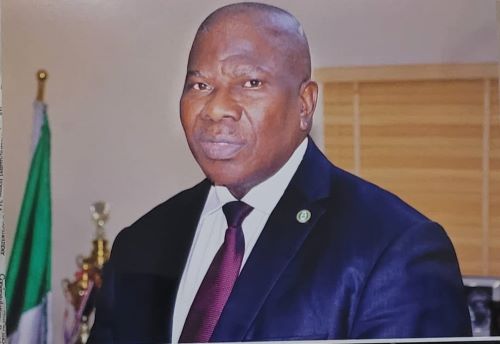
Mr. O. S. Thomas
Commissioner for Insurance/CEO
NAICOM
The Commissioner for Insurance/CEO, National Insurance Commission (NAICOM), Federal Republic of Nigeria, Mr. Olorundare Sunday Thomas has been elected the President of the Organisation of African Insurance Supervisory Authorities (OAISA).
Mr. Thomas’ election alongside his Vice-President, Mr. Issouf Traore of Cote D’ Ivoire was ratified at the General Assembly of the body at Tunis, Tunisia recently.
The OAISA is an intergovernmental organisation eligible for the rights and privileges granted by the 1961 Vienna Convention on Diplomatic Relations.
It’s an organisation saddled with the objects of promoting co-operation among African Insurance Supervisory Authorities to share experience in the effective supervision of the insurance industry in Africa for the development of insurance markets for the benefits and the protection of policyholders; contributing to capacity building and financial stability of the African Continent.
The newly elected officials of the Organisation shall serve the continent for a period of two (2) years in the first instance, renewable once.
It’s imperative to note that Mr. Thomas was the pioneer Chairman of the West Africa Insurance Supervisors Association (WAISA).
SEC Holds Awareness Campaign ‘Investor Safety’ for FRSC Officers on Capital Market

In a bid to ensure that more Nigerians are educated on the activities of the capital market and thereby developing the market and attracting more investors, the Securities and Exchange Commission is set to hold an awareness programme tagged “Investor Safety” for the Officers of the Federal Road Safety Corps across the Formation of the Corps across the Federation.
The event which was the third in the series of sensitising officers of the FRSC held on July 5th, 2023 in Enugu, Lagos, Osun, Port-Harcourt and Benin, respectively.
According to a statement by the SEC, the officers would be exposed to knowledge on investments available in the capital market, identifying and avoiding Ponzi schemes, the roles and functions of the SEC, Non-Interest Finance, and complaints management framework.
“The Commission is organising the event in collaboration with the Fund Managers Association of Nigeria (FMAN) to also expose the Officers to legitimate channels of investments and the Association of Dealing Houses of Nigeria (ASHON) to address issues that relate to investments and unclaimed dividends and other related matters.
“This enlightenment programme is part of our commitment to developing the capital market, appraising investors of the products available in the market as well as our functions and roles in restoring investors’ confidence” SEC stated.
The first tranche of the programme was held on November 30, 2022, at the SEC Head Office Abuja for the Abuja Sector Command of FRSC with over 50 officers in attendance. Participants shared experiences on their investments in the capital market pre-2008 meltdown and on Ponzi schemes.
On May 9, 2023, the second phase of the programme was organised for other officers in six (6) Formations of the Corps which are in Adamawa, Plateau, Kaduna, Sokoto, Kwara and Bauchi States.
Telecoms Investment in Nigeria now $75.6bn-Danbatta
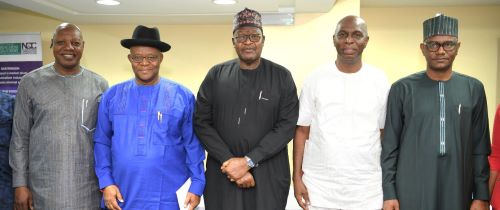
L-R: Mustapha Isa, Former President, Nigerian Guild of Editors (NGE); Ochereome Nnanna, Chairman, Editorial Board, Vanguard Newspapers; Prof. Umar Danbatta, Executive Vice Chairman/Chief Executive Officer, Nigerian Communications Commission (NCC); Sam Omatseye, Chairman, Editorial Board, The Nation Newspapers and Usman Malah, Director, Human Capital and Administration, NCC at a Media Roundtable organised by the Commission in Lagos today.
- As sector added N10.126 trillion to GDP in 2022
The Executive Vice Chairman (EVC) of the Nigerian Communications Commission (NCC), Prof. Umar Garba Danbatta, has officially announced that the investment profile in the nation’s telecommunications sector, comprising foreign direct investment (FDI) and local investment, has reached $75.6 billion as of 2021.
Danbatta disclosed this at an interactive session with stakeholders in the communications media ecosystem, in Lagos on Wednesday where he provided his scorecards and landmark developments that have shaped the trajectory of growth in the telecoms sector since he became the chief telecom regulator in August 2015.
According to Danbatta, in 2018, investment profile in the sector stood at $68 billion. This increased to $70.5 billion in 2019 and $72 billion in 2020. At the end of 2021, the figure rose to $75,560,563,417.79 ($75.6 billion). The latest figure is the current official investment profile computed in the industry up from the initial $70 billion investment in the last few years.
Investment in the telecommunications sector in Nigeria is computed from two sources: the Central Bank of Nigeria (CBN), and the financial data obtained from service providers by the Commission.
While the CBN collects and calculates an element of the telecoms sector to include FDI, portfolio and others, the Commission collects investment figures from telecom licensees described as domestic investment arising from capital expenditure (CAPEX) which form part of the total investment in the industry.
The NCC CEO said through effective regulatory environment put in place by the Commission, the telecom sector has recorded tremendous growth from an initial investment profile of $500 million as at 2001, when the sector was fully liberalised.
Similarly, Danbatta said the telecom sector has continued to be a major contributor to the Nigeria’s economy through an impressive the sectoral contribution to the nation’s Gross Domestic Product (GDP) quarterly, up from about 8.5 per cent in third quarter of 2015, contributing N10.126 trillion to the nation’s GDP in 2022 alone.
Citing data from the National Bureau of Statistics (NBS), Danbatta said the telecoms sector contributed N10.126 trillion as an aggregate quarterly contribution to GDP in 2022.
“In the first quarter, the sector contributed 12.94 per cent equivalent to N2.246 trillion while the second quarter witnessed an all-time high GDP contribution by the telecom sector to the nation’s economy, standing at 15 per cent and valued at N2.593 trillion. The sector’s contribution to GDP in the third was 12.85 per cent and in the fourth quarter, it grew to 13.55 per cent, which are valued at N2.436 trillion and N2.851 trillion respectively.
“The growth trajectory continued this year as telecommunications and Information Services sector in Nigeria delivered a handsome N2. 508 trillion in terms of financial value contribution to the nation’s gross domestic product, GDP, representing 14.13% in the first quarter 2023,” he said.
Telecoms contribution to national GDP has grown significantly since assumption of Prof. Danbatta as the EVC of NCC in August, 2015, according to available data from NBS.
From 8.50 per cent in 2015, it grew to 9.13 per cent in 2016 and to 8.66 per cent in 2017. In the last quarter of 2018, telecoms contributed 9.85 per cent to national GDP while it added 10.60 per cent in the fourth quarter of 2019.
Also in the second quarter of 2010, it added 14.30 per cent to GDP; 14.42 per cent in the second quarter of 2021. The highest quarterly contribution to GDP by the sector to the economy was 15 per cent in the second quarter of 2022.
Overall, Danbatta said the sector has become a major enabler of economic development in Nigeria, as it continues to positively impact all the facets of the Nigerian economy. “As the regulatory authority for the telecom sector in Nigeria, we are happy that the sector has recorded phenomenal growth statistics in the past two decades of the liberalization of the telecoms sector. However, we will not rest on our oars. We will continue to push upward to greater heights by encouraging expansion of frontiers to put Nigeria’s imprint on the global map of digital economy,” he said.
In addition to the growth in investment and GDP contribution, Danbatta said, “As of May, 2023, active voice subscriptions reached 221.3 million, equivalent of 115.91 per cent teledensity, while Internet subscriptions rose to 159.6 million.
According to the CEO of NCC, broadband subscriptions on Third Generation (3G) and Fourth Generation (4G) networks increased to 92.2 million, representing a 48.28 per cent broadband penetration in the country.
Also, following the issuance of 3.5GHz spectrum licences for the deployment of Fifth Generation (5G) networks in Nigeria, marked by ultra-high-speed internet, low latency and high capacity, and the subsequent commercial launch by two of the three licence holders, 5G subscriptions have grown to over 60,000 in many cities in at least 12 states of the Federation.
Danbatta assured of the Commission’s commitment to always give concrete expression to the Federal Government Executive Order 001 focused on Ease of Doing Business and other digital economy-oriented policies, by embarking on various regulatory initiatives that support a friendly investment climate for investors in Nigeria and enhance value for money for telecom consumers.
The EVC particularly commended the media as a strategic partner and enabler of growth in the telecom sector “through accurate, adequate and timely reporting of all regulatory activities of the Commission.”
Sanlam Nigeria Promotes Financial Inclusion with #ProudMoments Campaign
Sanlam Nigeria recently launched the #ProudMoments campaign to herald a fresh approach to deepening financial inclusion and aid the appreciation for Insurance services across businesses and for individuals.
The campaign, with visuals shot in location in Nigeria, centers on the need to protect the things that matter through insurance. It advocates resilience and grit as critical ingredients required to achieve success.
The creative delivery highlights a clear theme around celebrating genuine success whether personal, professional or organizational while emphasising the need to put in place adequate protection for same.
Sanlam Nigeria -made up of Sanlam Life Insurance and its subsidiary, Sanlam General Insurance- is a leading financial service powerhouse dedicated to actively seeking new and advanced mechanisms for safeguarding the hard-work and achievements of its policy holders through innovative insurance solutions, thereby enhancing its customers’ financial security that in turn assures a confident lifestyle.
During the launch in Lagos, the Managing Director/Chief Executive Officer, Sanlam Life Insurance Nigeria, Mr. Tunde Mimiko, restated the company’s unstinting commitment to promoting well-intentioned living that encourages success stories and celebrates individuals who are constantly challenging themselves to promote a healthy, vibrant and secure future.
“Success means different things to different people. For some, it is getting that new car, moving into a new home or even starting a business. With #ProudMoments, we are leading the conversation around putting adequate buffer, nay protection, around your success indicators. What we are promoting is a confident and secured future with diverse resources that covers all aspect of human living ranging from car, properties, health, education and to life itself,” Mimiko said.
He added: “Our #ProudMoments campaign therefore is an exciting creative endeavor that succinctly demonstrates how our most valuable achievements are worth protecting because they are a source of our pride, a testament to our commitment to live a more qualitative life.”
In his remarks, the Managing Director/Chief Executive Officer, Sanlam General Insurance, Mr. Bode Opadokun, reiterated Sanlam Nigeria’s continuous efforts at celebrating individuals’ achievements and successes, connecting its drive to creating an environment that appreciates lasting impact and legacy through insurance.
“Insurance is a promise; a promise to deliver stated support when pre-covered losses occur. So, for every individual who seeks success, our #ProudMoments campaign represents one of the ways by which we remind them to pitch their tent with the one insurance company that can confidently help them protect their successes come what may.”
About Sanlam Nigeria
Sanlam Nigeria, formerly FBN Insurance, comprising Sanlam Life Insurance Nigeria Limited and Sanlam General Limited, is Nigeria’s fastest growing insurance company with multiple awards and recognitions including 4-time World Finance Life Insurance Company of the year among others.
With presence in over 66 locations, the brand is easily one of the most retail-driven insurer in Nigeria boasting a sales force of over 3000 sales champions and a strong user-friendly technological support to ensure on-the-spot policy uptake.
Sanlam Nigeria is a member of the Sanlam Pan Africa (SPA), a truly pan-African brand with a rich history and heritage founded in 1918 as a life insurance company.
Headquartered in South Africa, the brand has grown to become Africa’s largest non-banking financial services group, with a strong presence in 33 countries on the African continent including Nigeria, and a niche presence in India, Malaysia, the United Kingdom and Australia. Indeed, Sanlam operates in 8 out of the 10 largest economies in Africa, with over 154,000 employees globally, delivering superior value to customers, shareholders and the broader society.
Ecobank Nigeria Gets IFC/NGX Award for Promoting Gender Balance
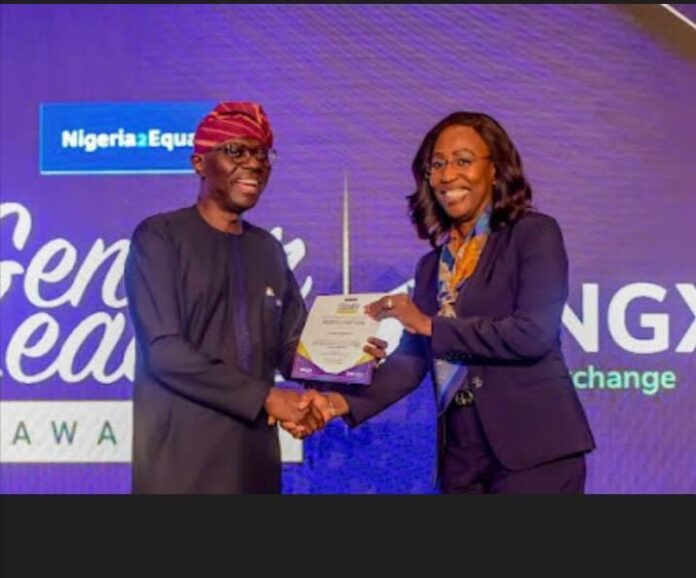
L-R: Lagos State Governor, Babajide Sanwo-Olu presenting Gender Diversity in Supply Chain to Carol Oyedeji, Deputy Managing Director, Ecobank Nigeria at the IFC/NGX event in Lagos recently.
Ecobank Nigeria limited has been recognised as one of Nigeria’s key private sector players promoting gender balance and equality in the workplace at the Nigeria2Equal Gender Leader awards organised by International Finance Corporation (IFC) and Nigerian Exchange Group (NGX Group).
The Gender Leader Awards, which is being implemented under the Nigeria2Equal (N2E) program, is designed to recognise, and celebrate private sector companies leading the way in Gender Equality Performance across a broad range of indices. Ecobank Nigeria was an awardee in the Gender Diversity in Supply Chain category at the high-level event by private sector company chief executives, business leaders and dignitaries including the Lagos State Governor, Babajide Sanwo-Olu.
Speaking during the award ceremony, IFC’s Regional Director, Central Africa, Liberia, Nigeria and Sierra Leone, Ms. Dahlia Khalifa, commended the progress of Nigeria2Equal’s participating companies in advancing the role of women in their organisations.
Khalifa said: “As we celebrate the accomplishments of these organisations who have shown outstanding leadership in closing the gender gaps within their own organisations, we acknowledge the power of collaboration and the transformative impact that specific, measurable, and time-bound commitments can have on achieving gender parity in Nigeria’s private sector. IFC remains resolute in our commitment to sustain the momentum and support the private sector to scale up its efforts for a more gender-balanced, prosperous future.”
Receiving the award, Deputy Managing Director, Ecobank Nigeria, Carol Oyedeji said Ecobank has policies and structures in place that promote gender balance in its employment, stressing that the recognitions are a testament of Ecobank Nigeria’s significant contributions to advancing gender equality within the organization and by extension, in Nigeria’s private sector.
She disclosed that the bank also has many initiatives and innovative products targeted at empowering and sustaining female entrepreneurs in Nigeria such as ‘Ellevate’ and ‘Ecobank Female Entrepreneurs Initiative (EFEI)’, which are designed to empower and support female owned small-scale businesses.
According to her, “across Ecobank, we are intent on ensuring that all women can reach their full potential and always have equal opportunities to men in advancing their careers and achieving promotion. Female staff are holding strategic leadership and management positions in the organisation. We are committed to creating a society and workplace that is free of bias and gender-based discrimination,” she said.
Insurance Meets Tech Confab 2.0 Set for Sept 28
The second edition of the Insurance Meets Tech (IMT) conference is set to take place on September 28 and 29, 2023 in Lagos, to address prevailing concerns in Nigeria’s insurance industry and on the continent.
Riding on the theme “Unlocking Policy and Tech Bottlenecks Hindering Disruptive Insurance Penetration”, IMT 2.0 will converge prominent players in government, finance, health, tech, and telecom sectors, as well as the prime sub-sectors players in insurance and insurtech, to brainstorm, untangle, and evolve viable solutions to the challenges of insurance penetration in Nigeria and across Africa.
The two-day conference will feature policymakers, regulators, keynote speakers, and sector leaders in panel discussions, exhibitions, specialised masterclasses, and product and service demos, providing a platform for stakeholders to share ideas, insights, and experiences on how to leverage technology to drive insurance penetration and improve the insurance industry’s efficiency and effectiveness, such as its use of data analytics to improve underwriting and claims management processes; cyber insurance; and the role of web aggregators in the industry’s value chain.
The conference will culminate in a gala and awards evening to recognise excellence and outstanding contributions to the industry. With the COVID-19 pandemic and enabling government policies accelerating the adoption of digital technologies, IMT 2.0 is expected to be a catalyst for the digital transformation of the insurance industry in Nigeria and across Africa.
According to the convener of the conference, Odion Aleobua, ‘IMT 2.0 will be a game-changer for the insurance industry in Nigeria and across Africa. This second edition will build on the successes of the first and provide stakeholders with more opportunities to network, collaborate, and explore innovative solutions to the challenges facing the industry.
“Since the inaugural edition of the conference in September 2022, the Nigerian insurance and insurtech sectors have made visible strides. The National Insurance Commission (NAICOM) affirmed that Nigeria’s insurance industry recorded a 36.3% quarter-on-quarter growth and a 17.8% year-on-year rise in gross premium income at N726.2 billion in the fourth quarter of 2022, compared to the previous year.
“Data provided by Statista in May 2023 revealed that the value of gross life insurance premiums written in Nigeria exceeded €600 million for the first time. In 2022, life insurance premiums amounted to €677.3 million, up from €545.2 million in the previous year. The growth margins can be attributed to various factors, including increased awareness of insurance products, the expansion of distribution channels, and insurance companies’ gradual adoption of technology.
“Statista also stated that ‘In 2022, the value of gross property and casualty (P&C) insurance premiums written in Nigeria amounted to almost 800 million euros. This figure is believed to be the highest value since 2000 as P&C premiums increased by 100 million euros between 2021 and 2022.’
“These figures are, however, dwarfed in comparison to the country’s South African counterparts, where the value of gross property and casualty insurance premiums written amounted to approximately €5 billion in 2022, and P&C premiums peaked in 2021 when they reached €9.35 billion. The gap is further broadened when considering global insurance industry figures, which, according to McKinsey and Company’s Global Insurance Report 2023: ‘Closing the Personal P&C Protection Gap’, surpassed $6.5 trillion in GWP in 2022, with P&C representing almost one-third of total revenue!
“We have thus carefully selected our speakers and panelists from industry leaders, tech giants, and government regulators to ensure that conference delegates get the best insights and experiences on how technology can unlock policy and tech bottlenecks hindering disruptive insurance penetration. IMT 2.0 promises to be bigger, better, and more impactful”, Odion added.
Wema Bank Promises N90m Reward for Customers in Season 3 of 5 for 5 Promo
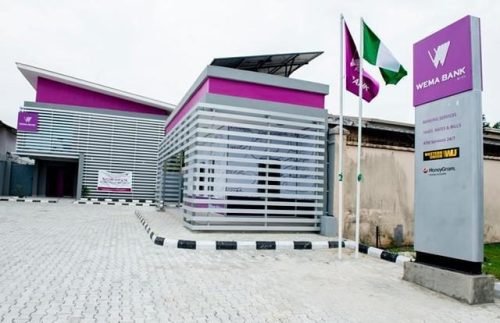
Wema Bank Plc, the leading financial institution in Nigeria and the pioneer of Africa’s first fully digital bank, ALAT, yesterday announced the launch of the highly anticipated 3rd season of the Wema Bank 5 for 5 promo. This reward program, initiated by Wema Bank, aims to recognise and reward customers across Nigeria for their unwavering loyalty to the bank.
Commencing July 1st, 2023, Season 3 of the 5 for 5 promo will distribute a total of N90,000,000 in cash prizes to Wema Bank customers throughout different regions of Nigeria over a span of 10 months.
Each month, customers will be selected in weekly giveaways and monthly draws, with cash prizes ranging from N5,000 to an impressive N1,000,000.
Furthermore, the promo draws will be hosted in various regions across Nigeria, increasing the chances of winning for customers residing in the selected cities.
Segun Adeniyi, Wema Bank’s Chief Digital Officer, emphasised the bank’s unwavering commitment to prioritise customer satisfaction, stating:
“Our customers have always been our priority and serve as the inspiration behind every decision we make. The Wema Bank 5 for 5 promo is our way of going the extra mile to provide value to each and every one of our esteemed customers. We initiated this promo to reward and show appreciation to our active and transacting customers for their loyalty to the bank. As we embark on the 3rd season, we have fine-tuned the requirements to ensure that more customers have the opportunity to win.”
In line with Wema Bank’s dedication to promoting financial inclusion, Ololade Ogungbenro, Wema Bank’s Divisional Head of Brands, People, and Culture, expressed, “For Season 3 of the Wema Bank 5 for 5 promo, we have adopted a diverse communication strategy that includes various languages such as Yoruba, Igbo, Hausa, and Pidgin. We recognize the diverse range of customers who speak different languages, and it is of utmost importance to us that inclusivity remains a top priority, ensuring that no one is left out.”
To qualify and stand a chance to win in this season of Wema Bank 5 for 5 promo, Ayodele Olojede, Wema Bank’s Divisional Head for Retail Banking, explained the simple requirements:
“There is something for everyone in the 5 for 5 promo. All you need to do is fund your Wema Bank account with a minimum of N5,000, maintain an average monthly account balance of N5,000, and conduct a minimum of 5 transactions each month on ALAT using *945# or your Wema or ALAT debit or credit card. The more you fund and transact, the higher your chances of winning and the more you can win.”
Mabel Adeteye, Head of Brands & Marketing Communication at Wema Bank highlighted the accessibility of opening a Wema Bank account, stating, “If you’re not a customer yet, opening an account is effortless. You can visit the nearest Wema Bank branch or search ‘ALAT Hub near me’ on Google to find a Wema Bank Agent near you. Alternatively, you can download the ALAT app from your Play Store or App Store and click ‘Get Started’ to set up your account. Season 3 of the Wema Bank 5 for 5 promo offers abundant opportunities for winning. Reactivate your account if you’ve been inactive and start funding and transacting today.”
The STI Bi-Annual Career Talk, Guidance Counselling at Igbobi College, Lagos

L-R: Moses Oyeyemi, Head, Claims Department, Elizabeth Bodede and Abigail Adeleye, both of the Corporate Communications & Investor Relations Department of Sovereign Trust Insurance Plc flanked by Students of Igbobi College, Lagos, at the half year edition of the Bi-Annual Insurance Career talk and Guidance Counselling hosted by Sovereign Trust Insurance Plc on June 27, 2023 at the premises of Igbobi College, Lagos.
It is an initiative of the company in catching them young as potential Insurance Practitioners in the future.
Leadway Health Emerges HMO of the Year at NHEA 2023
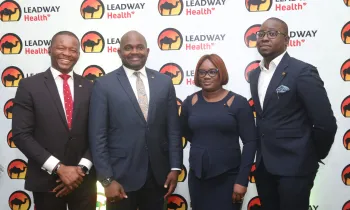
From left: Head of Operations, Dr. Gideon Anumba; Dr. Tokunbo Alli, CEO; Mrs. Oluwatoyin Ogunmoyele Head, Business Development and Sales and Dr. Temiptope Falaiye, Head, Medical Services, all of Leadway Health during the media launch of Leadway Health in Lagos.
Nigeria’s fast-growing Health Maintenance Organisation (HMO), Leadway Health Limited, a subsidiary of Leadway Holdings and a sister company of Leadway Assurance Company Limited, one of Nigeria’s foremost and largest insurers insurance companies, has emerged as the HMO of the Year at the recently held 2023 edition of Nigerian Healthcare Excellence Awards (NHEA).
Coming on the heels of the organisation’s introduction of an innovative range of superior and robust healthcare service offerings targeted at fostering access to quality health and wellbeing solutions for Nigerians, Leadway Health achieved this feat in just three years of operation, beating other HMOs that have been in operations for far longer.
Commenting on the win, the Chief Executive Officer of Leadway Health, Dr. Tokunbo Alli, said the organisation’s triumph at NHEA 2023 is a testament to the company’s commitment to providing exceptional healthcare services, embracing innovation, and improving patient access to quality healthcare in Nigeria.
“This honour is an affirmation of the Leadway Health team’s commitment to innovative excellence and demonstrates the power of collaboration to create remarkable results. We are proud to have been recognised as HMO of the Year 2023 and will continue striving for higher healthcare service standards.
“The NHEA, now in its 10th year, has become a beacon of pride and aspiration for healthcare professionals, organisations, and stakeholders across Nigeria. This established platform consistently spotlights remarkable performances, new business models, and other noteworthy milestones, contributing to the industry’s growth and development,” Dr Alli said.
He added that as Leadway Health basks in the glory of its well-deserved triumph, the company remains steadfast in its mission to revolutionise healthcare and create a lasting impact on the lives of patients in Nigeria.
“With a strong foundation built on integrity, compassion, and innovation, we are poised to lead the charge in shaping the future of Nigerian healthcare and setting new benchmarks for excellence, we acknowledge that the win would not have been possible without our shareholders, clients, providers and employees,” he concluded.
Leadway Health’s superior product offerings include advanced telemedicine, a health enrolee app that allows authorisation of care by enrolees, digital health tracking, and access to financial and family counselling.
The Enrolee app comprises innovative features such as geo-location capabilities for hospitals, and a pharmacy benefit programme that assures only genuine drugs from manufacturers are delivered to the home/office of those with chronic ailments. The features also include an employee assistance program to promote mental health, medical concierge services, preventive health programmes that have baby wellness programmes, access to fitness and nutritional stores, customised health tips, talks and newsletters across all age groups with a unique reward system to encourage and promote general wellness amongst others.
About Leadway Health
Leadway Health is proudly affiliated with Leadway Assurance, one of Nigeria’s foremost and largest insurers. Leadway Assurance was founded in 1960 and has over 50 years of experience in the insurance sector with a reputation for service efficiency and customer reliability.
Leadway Health is committed to providing innovation in equipping every Nigerian with the tools needed to mitigate risks to wellbeing whilst adopting insurance as a top choice for sustainable healthcare management and comprehensive access to universal health coverage.
Sanlam Nigeria Unveils USSD *1056# Code of Confidence for Instant Motor Claims Settlement
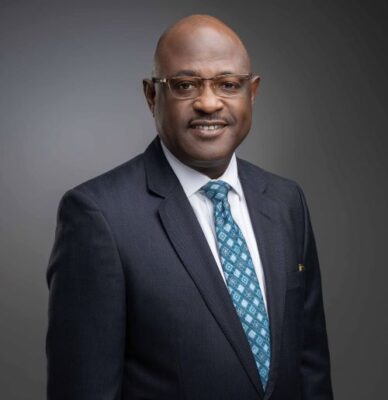
Sanlam General Insurance Nigeria Limited, is thrilled to announce the launch of *1056#; a USSD Code of Confidence that allows customers access speedy resolution of third-party insurance claims in cases of road emergencies. This cutting-edge solution is the first of its kind in Nigeria.
This Code (*1056#) is Sanlam’s way of providing a seamless and customer-centric solutions to a number of challenges customers encounter while seeking report claims in case of any eventuality. With this new feature, Sanlam aims to enhance the claims experience for its valued customers by eliminating needless paperwork and unnecessary delays.
Customers can now use the simple and user-friendly *1056# USSD code on their mobile phones to initiate instant third-party claims. The process is quick and hassle-free, ensuring that customers receive prompt assistance and support during unexpected events and accidents involving third parties.
Speaking on the development, the Managing Director/CEO, Sanlam General Insurance Nigeria Limited, Bode Opadokun expressed excitement and affirmed thus, “We are delighted to introduce this Code of Confidence which revolutionizes the way our customers can access third-party claims. At Sanlam, we understand the importance of convenience and speed in the claims process. With this innovative service, we aim to provide our customers with a seamless and efficient experience at any time of need.”
According to a statement signed by the Marketing & Corporate Communications Manager, Sanlam General Insurance Nigeria Limited, Ajibola Liyide, he stated: “The Code of Confidence service was designed to offer customers a hitch-free claims experience. By dialing *1056# on their mobile phones, customers gain access to a simple prompt that guides them through the claims process. The user-friendly interface allows customers to provide essential details and initiate their claims swiftly and conveniently, ensuring they receive timely assistance. This can be done from any MTN line.”
Sanlam’s Code of Confidence is available to all Sanlam Nigeria motor policyholders, making it accessible to a wide range of customers across the country. The service is part of Sanlam’s ongoing efforts to leverage technology and innovation to enhance the customer experience and provide timely support when it matters most.
Sanlam is a pan-African brand with a rich history and heritage founded in 1918 as a life insurance company.
The brand has grown to become Africa’s largest non-banking financial services group, with a strong presence in 33 countries on the African continent, and a niche presence in India, Malaysia, the United Kingdom and Australia.
Indeed, Sanlam operates in 8 out of the 10 largest economies in Africa, with over 154,000 employees globally, delivering superior value to customers, shareholders and the broader society.
Afreximbank, UTM Offshore Partner on 1.2m Metric Tons Floating LNG Project in Nigeria
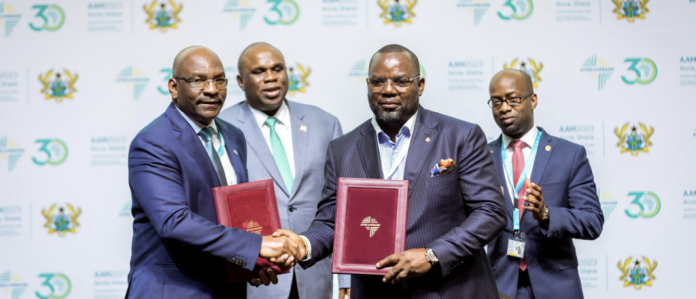
The African Export-Import Bank (Afreximbank) and UTM Offshore Limited have signed a Project Preparation Facility Agreement to develop, design, and construct Nigeria’s first indigenously-owned Floating LNG facility with a nameplate production capacity of 1.2 million metric tons per annum in Akwa Ibom State, Nigeria.
The agreement was signed on the sidelines of the 30th Afreximbank Annual Meetings (AAM2023) by Mr. Denys Denya – Executive Vice President, Finance, Administration & Banking Services and Mr. Julius Rone – Chief Executive Officer of UTM Offshore Limited and witnessed by Professor Benedict Oramah – President & Chairman of the Board of Directors of Afreximbank.
Under the agreement, Afreximbank is to part-finance project preparatory activities that will de-risk the project and advance it to bankability in a timely manner.
The Bank is leveraging its diverse product suite to provide end-to-end solutions to the project. In this regard, besides availing the project preparatory facility, Afreximbank as Lead Financier has been appointed as the Financial Advisor and is to be appointed Mandated Lead Arranger once the project attains bankability.
Through its Financial Advisory Mandate, Afreximbank has been playing an instrumental role in structuring the transaction to ensure optimal returns and debt sizing, as well as identifying equity investors to invest in the project on favorable terms.
Moreover, this project has economically transformative potential – establishing trade-enabling infrastructure which will allow Nigeria to pivot from a crude oil export-based economy to a gas-based processing industrial economy in turn unlocking significant development impacts.
The project will also contribute to the reduction of flaring of natural gas.
Post No Debit: “Dead” Customer Recants, Thanks Polaris Bank for Protecting His Funds
A Polaris Bank customer Mr. Anthony Olasele on Thursday, June 23, writing on his Twitter handle has, applauded the Bank for protecting his account.
Mr. Olasele, with Twitter handle @avogroovy, had on his last thread on May 16 alleged that Polaris Bank was “trying to steal millions from my account,” while calling out the Bank to provide a copy of the court order from Abuja saying “I am dead and a hold (PND) should be placed on my account so I can go to the same court and show proof of life or lift the inactive status on my account.”
The tweet caused an uproar on social media, leading many commentators on his thread to question the integrity of the Bank.
However, our social media tracker shows that the matter has now been resolved, with Anthony writing on Twitter to thank Polaris Bank, saying, “I am delighted to announce that the PND placed on @PolarisBankLtd account has been lifted and issues resolved amicably and I have access to my funds.”
“Kudos to the @PolarisBankLtd team that worked assiduously on resolving this matter especially the Customer Care & Legal team that handled communication professionally and with urgency – you guys are champs and a shining light within your organisation.”
He stated that the matter has since been handed over to the police with a proper investigation underway, saying, “The matter is now in the hands of @PoliceNG and a suspect has been arrested last time I checked.”
Meanwhile, Polaris Bank has responded to Anthony’s tweet via her official Twitter handle @PolarisBankLtd “Thank you, @avogroovy, for your generous words. We sincerely value your feedback. As a responsible financial institution, we remain committed to safeguarding our customers’ rights at all times. Our actions were solely aimed at ensuring the security of your funds, as this is the utmost priority for any reputable financial institution.
Even at the expense of uninformed media attacks, we consistently go above and beyond to shield our customers from any potential fraudulent activities. Thank you.”
This latest incident has been one of the many instances of people taking to social media to lodge service failure complaints quickly to resolve complaints within the service industry. Commercial Banks in Nigeria operate round-the–clock-all-week call centres where unhappy customers can voice and have their complaints amicably resolved.
While the popularity of using social media to lodge complaints may provide immediate relief for customers, it is essential to exercise caution and avoid hasty expressions of rage.
Unsubstantiated allegations can damage the reputation of brands and inadvertently harm the complaining customer’s personal brand.
Why Insurance Firms Need Branding Strategy to Scale Market Challenges
Mr. O.S. Thomas
Commissioner for Insurance/CEO
National Insurance Commission (NAICOM)
Federal Republic of Nigeria
Prince Cookey
Operators in the insurance sector in Africa are grappling with myriad market challenges ranging from low public awareness, religious beliefs, doubts about claims payment by insurance firms and low disposable income amongst citizens arising from economic condition in many African nations.
Will branding and reputation management help? Many experts say that is exactly what the industry and operators need at this time to scale most of the market challenges making it difficult for the industry to achieve its full potential.
For instance, in the first quarter of 2023, a media intelligence consultancy firm in Nigeria, P + Measurement Services Limited, analysed the perception of publishers, editors, journalists and opinion leaders on the day-to-day performance and public perception of the insurance industry and insurers in Nigeria.
The survey result gave the highest positive ranking to Leadway Assurance Company Limited and the most negative ranking to AXA Mansard Insurance Plc.
A statement by P + Measurement on the modalities that drove the survey stated in part:
“Nigeria’s insurance sector has maintained excellent media interactions, marketing and awareness since the start of 2023 despite the earlier scarcity of the Naira and its effect on business.
These were further enhanced by the remarkable data it gave the media in the first quarter of the year.
The media analysis monitored more than 1.3 million online publications from blogs, news sites, broadcasts, forums, and digital media in the local and global media space, as well as about 5,115 print publications (including daily, weekly, and monthly publications), from which different metadata were extracted, including the sentiments of reporters, editors, publishers, and opinion writers from various online and print publications, spokesperson analysis, CEOs performances, and other topics.”
The Branding Advantage
Mr. Ashley Lightfoot, writing in Latana, gave a three-part strategic roadmap for insurance firms in the area of branding:
- Why Insurance Brands Must Build Trust
It should go without saying that insurance is an industry that is built firmly on trust. While most will take out insurance policies hoping they never need to make a claim, for those consumers beset by misfortune, that policy could be the difference between two very different outcomes — one that allows them to overcome a life-changing event and one that leaves them devastated.
Despite playing such a crucial role, a survey in 2019 found that less than 30 percent of consumers from across the globe had a positive opinion of the insurance industry.
53 percent reported having had “a negative experience with their cover – most blaming claims settlement and product complexity for the hassle.”
Research shows that there are three key pillars to building trust — competency, benevolence, and honesty.
In the insurance sector, these three core values should run through every part of your brand identity and be considered in everything your business does.
- Why Insurance Brands Need to Make an Emotional Connection
Insurance is an extremely valuable and important industry, offering consumers a lifeline during times of need. But it’s not a topic that people get excited to talk about.
While it might be an essential consideration, consumers don’t think about insurance the way they do about sectors that are simply more inherently exciting — like technology, travel, entertainment, or even essentials like clothing and transportation.
Because of this, insurance brands can’t expect consumers to be automatically excited about their branding campaigns.
- Why Heavy Competition Means Your Brand Must Work Harder
One key challenge for any insurance brand looking to grow its profile is just how competitive the industry is.
This, combined with consumers’ general low interest in the industry, means that your brand has precious little time to connect with audiences and convert them.
Furthermore, whenever a consumer is on the market for insurance, you must overcome the pitches and campaigns of countless other brands looking to convert them.
The Emirates Example
A report in PRnomics details how Emirates, one of the world’s fastest-growing airlines made a profit of over $3 billion through deployment of five strong and innovative branding and public relations strategies:
- Iconic Sponsorships and Partnerships
Emirates Airlines has established an impressive portfolio of high-profile sponsorships and partnerships that have significantly contributed to its brand visibility.
It is the official sponsor of prestigious football clubs like Arsenal FC and Real Madrid CF, allowing the brand to reach millions of fans worldwide.
- Strong Visual Identity
Emirates has a distinctive and instantly recognisable brand identity, reinforced by consistent branding across all touchpoints.
- Media Relations & Social Media Power
The airline commands the highest share of industry voice as a result of its captivating social media presence and consistent media relations programs.
- Strategic Digital Marketing
Recognising the power of digital platforms, it has embraced various digital marketing initiatives to connect with its target audience effectively.
Its strong online presence allows Emirates to showcase its brand story, highlight its latest offerings, and engage with travellers in real time, further reinforcing brand loyalty.
- Cool Advertising Slogans
The airline has consistently produced captivating advertising campaigns that resonate with viewers around the world. Its commercials often feature captivating storylines and emotionally engaging narratives.
Its current slogan, “Fly Better” builds on the appeal of the previous tagline, “Hello Tomorrow.”
Looking Ahead
The African insurance sector has huge business potential given the combined population of the continent, especially the youth segment.
Its glorious future is however hampered by traditional and self-inflicted challenges.
To scale those barriers and reap the fruits of the market, the players must embrace the tenets of branding and reputation management, especially media engagement.
NB: First published in Africa Ahead!
AFC: ‘Local Impact Champion’ at Africa CEO Forum 2023
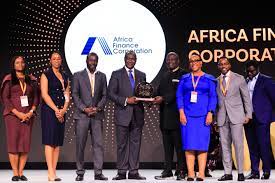
Africa Finance Corporation (AFC), the leading infrastructure solutions provider in Africa, was named ‘Local Impact Champion’ at the recent 2023 Africa CEO Forum Awards in Abidjan, Côte d’Ivoire.
The accolade recognises AFC’s commitment to create sustainable impact as a critical part of developing Africa’s economy and making a positive difference to local communities. AFC is focused on enhancing local industries by putting processing at the centre of sustainable circular economies, with projects that target value capture, beneficiation and job creation to catalyse growth. One key effect of this strategy is to eliminate emission-spewing shipments of Africa’s raw materials to other continents for processing, as set out in AFC’s 2022 white paper, A Pragmatic Path to Net Zero. Read here: https://s3.eu-central-1.amazon…
Receiving the award, AFC President & CEO Samaila Zubairu told the Forum:
“This is really exciting because we want to make our continent’s economy more sustainable, and we feel the way to do this is to move away from exporting raw materials toward value capture and retention through the production of intermediate and finished goods. With regards to climate change, we see that increasing production on the continent will reduce the volume of shipping, which is one of the big emitters of carbon dioxide. As we add more value on the continent, we subsequently reduce the emissions from shipping, and we can all achieve net zero faster.”
In the past year, AFC has advanced sustainable economic development of the continent through becoming, with its partners, the biggest investor in renewable energy in Africa; launching a US$2 billion facility to support recovery and resilience in Africa; and investing in the 60MW Red Sea Power wind power project in Djibouti.
At the event, AFC investee company ARISE Integrated Industrial Platforms was named ‘African Champion,’ an award bestowed to an organisation that contributes to African economic integration by expanding its presence into multiple African markets. ARISE IIP has developed a consistent track record of creating highly transformative special economic zones, scaling across multiple African countries including Gabon, Togo, Benin, Côte D’Ivoire, Nigeria, DRC, Chad, Sierra Leone and Rwanda. These ecosystems are central to AFC’s investment approach.
The Africa CEO Forum Awards recognise leaders, companies and investors whose performance has made a significant contribution to African development. This has been a rewarding year for AFC, with the organisation winning nine further accolades from prestigious institutions. Earlier this year, AFC was named ‘DFI of the Year-Europe & Africa’ at the IJGlobal Awards for its proven track record of developing key transformational projects on the continent, providing pragmatic solutions for Africa’s infrastructure deficit, and challenging the operating environment for over 16 years.
Last month, AFC investee company Lekela Power won ‘Equity Deal of the Year’ at the African Banker Awards, recognising the Corporation’s innovative financial structuring that led to the acquisition of AFC’s stake in Infinity Energy Africa, and Infinity’s acquisition of Lekela Power B.V.(Lekela), Africa’s largest renewable energy company. AFC was named ‘Top Treasury Partner’ at the International Islamic Trade Finance Corporation’s award ceremony during the ITFC’s recent 15th Year Anniversary Celebrations.
At the Bonds, Loans & ESG Capital Markets Africa Awards, recognising the most innovative and ground-breaking deals from sovereign, corporate and financial institution issuers and borrowers, AFC received a series of awards with its partners, including:
- Agency Bond Deal of the Year: Bank of Industry Limited (EUR 750mm 1441/Reg S Senior Unsecured Guaranteed participation notes)
- Oil & Gas Deal of the year: Sonangol EP (USD 1.3bn Senior Secured Loan)
- AFC also recently received four notable awards from EMEA Finance:
- Best supranational syndicated loan: AFC’s US$400mn syndicated loan
- Best kimchi syndicated loan in EMEA: AFC’s US$160mn Kimchi loan facility
- Best yen syndicated loan in EMEA: AFC’s US$382mn and JP¥1bn Samurai term loan
- Best financial institution syndicated loan in EMEA: Bank of Industry’s AFC-guaranteed US$1bn loan
These awards are a testament to AFC’s unrelenting goal to advance the economic growth and industrialisation of the continent, helping to transform lives and unlock Africa’s vast potential.
About AFC
AFC was established in 2007 to be the catalyst for private sector-led infrastructure investment across Africa.
AFC’s approach combines specialist industry expertise with a focus on financial and technical advisory, project structuring, project development, and risk capital to address Africa’s infrastructure development needs and drive sustainable economic growth.
Sixteen years on, AFC has developed a track record as the partner of choice in Africa for investing and delivering on instrumental, high-quality infrastructure assets that provide essential services in the core infrastructure sectors of power, natural resources, heavy industry, transport, and telecommunications. AFC has 40 member countries and has invested US$11.5 billion across Africa since inception.