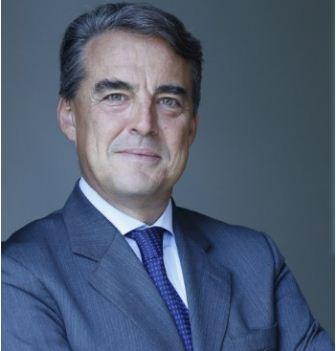
Alexandre de Juniac Takes Rein as IATA DG/CEO

The International Air Transport Association (IATA) announced that Alexandre de Juniac has officially taken on the role of Director General and CEO of the organisation. He succeeds Tony Tyler, who served as IATA DG and CEO since 2011 and had announced his retirement.

“I am excited to be taking on this great responsibility. IATA plays a critical role in facilitating safe, efficient and sustainable global air transport. Tony Tyler has raised the bar through his achievements over the last five years. With the guidance of our Board and the support of our membership, my aim is to ensure that IATA continues to deliver the value that our members and partners rely upon,” said de Juniac.

De Juniac was confirmed by the 72nd IATA Annual General Meeting this past June to be the seventh person to lead IATA. He brings diverse experience to the association, including leadership roles in the airline and aerospace sectors as well as in government.

“IATA touches almost every aspect of the air transport industry and interacts with a wide range of stakeholders—especially governments. I will call on all my experience to ensure that IATA meets the needs of our members and plays a leading role in responding to the challenges that the industry faces.

In particular, the accelerating pace of change in the world means that we must be able to move even more rapidly—as an industry and as an association. IATA’s mission is to represent, lead, and serve the airline industry with global standards. For me that means we must use change as a catalyst for innovation to please customers and contribute positively to the business of our members,” said de Juniac.

De Juniac emphasised the need for industry stakeholders, especially governments, to recognise the value that aviation creates.

“The numbers are clear. Air transport supports an impressive 63 million jobs and some $2.7 trillion in economic activity. But that’s only a part of the value that aviation creates. Our industry is in the business of freedom. We help people to explore the planet, to do business globally, to bridge cultures with friendships and understanding, and to enjoy better lives through the prosperity that connectivity creates. Aviation changes our world for the better. And as the industry’s global advocate, my mission is to rally our partners to ensure that nothing impedes the business of freedom,” said de Juniac.


spot_img
spot_img
spot_img
spot_img
spot_img

Hot this week

emPLE, Ecobank Reward Families, Promotes Financial Literacy with ‘Protecting Little Dreams’ Initiative

emPLE Nigeria, in partnership with Ecobank Nigeria, has reinforced...

IPMAN Kicks Against Issuing Licences for Petroleum Products Import

The Independent Petroleum Marketers Association of Nigeria (IPMAN) has...

Stanbic IBTC Empowers MSMEs with Business Growth Insights at Nigeria Business Summit Regional Tour in Ibadan

Micro, Small, and Medium Enterprises (MSMEs) across Oyo State...

NGX Chair: Insurance Sector Needs More Marketing, Digitalisation to Increase Penetration, Contribution to GDP

Remarks by Dr. Umaru Kwairanga, Chairman, Nigerian Exchange Group...

NAICOM Boss Charges CIIN on Professionalism, Ethics, Innovation as Jide Orimolade Emerges 53rd President

The Commissioner for Insurance/CEO, National Insurance Commission (NAICOM), Mr....

Topics

Gartner Lists Top 10 Corporate Technology Trends for 2016

Gartner defines a strategic technology trend as one with the potential for significant impact on the organisation. "Gartner's top 10 strategic technology trends will shape digital business opportunities through 2020," said David Cearley, Vice President and Gartner Fellow. "The first three trends address merging the physical and virtual worlds and the emergence of the digital mesh. While organisations focus on digital business today, algorithmic business is emerging. Algorithms - relationships and interconnections - define the future of business. In algorithmic business, much happens in the background in which people are not directly involved.

World Bank Report: Banks Provided $28bn in Climate Finance in 2014

The leaders of the powerful G7 countries made headlines in June when they committed to a low-carbon growth path and formally recognized the need to reach zero net emissions globally before the end of the century. They know it will require shifting trillions of dollars from carbon-intensive investments to low-carbon, resilient growth, and they called on the six big multilateral development banks (MDBs) to use "to the fullest extent possible" their balance sheets and their capacity to mobilize partners to increase climate finance for developing countries.

Moniepoint Strengthens Efforts to Broaden Financial Access Through Collaborative Initiatives

Africa’s fastest growing financial institution according to the Financial...

Dev Bank of Nigeria to Support MSMEs with N396.5bn

The Federal Ministry of Finance has confirmed the completion...

Guild of Editors Seek Protection for Journalists as 94 Killed in 2018

The Nigerian Guild of Editors (NGE) has called for...

Linkage Assurance Hosts NCRIB Lagos Area Committee on Feb. 11

Daniel Braie MD/CEO Linkage Assurance Plc Underwriting firm, Linkage Assurance Plc will...

CBN Reassures Public on Banking Sector Stability

The attention of the Central Bank of Nigeria (CBN)...

NDIC Reiterates Commitment to Strong Deposit Insurance Funding to Enhance Financial System Stability

L – R: Executive Director, Corporate Services, Nigeria Deposit...
spot_img

Related Articles

Popular Categories

spot_imgspot_img