Saturday, January 17, 2026
34.7 C
Lagos

The Alternative Bank Drives Catalytic Capital for Sustainable Africa

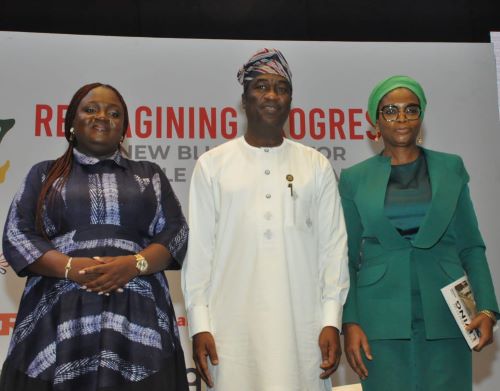
Chief Executive Officer, Sterling One Foundation, Peju Ibekwe; Representative of the Lagos State Governor/Deputy Governor, Mr Kadri Obafemi Hamzat and Korede Demola-Adeniyi, ED-South, The Alternative Bank during the Africa Social Impact Summit held in Lagos recently.

The Alternative Bank, a pioneer in ethical finance, is at the forefront of driving sustainable economic growth in Africa through its catalytic capital approach. This innovative financial model was prominently featured at the recent Africa Social Impact Summit (ASIS) 2024, hosted by Sterling One Foundation and the United Nations.

Catalytic capital, prioritising social and environmental impact alongside financial returns, is deeply ingrained in The Alternative Bank’s ethos. The bank’s interest-free financing model aligns perfectly with these principles, ensuring investments not only generate profits but also contribute to societal well-being. This approach was a cornerstone of the discussions at ASIS 2024.

The summit, themed “Reimagining Progress: A New Blueprint for Sustainable Growth in Africa,” brought together influential figures from both public and private sectors. Deputy Governor of Lagos State, Obafemi Hamzat, representing Governor Babajide Sanwo-Olu, emphasised the critical role of catalytic capital in driving sustainable development.

“ASIS 2024 must catalyse collaboration and action towards sustainable development in Africa. Public-private partnerships, fuelled by catalytic capital, are essential for attracting impactful investments,” Hamzat remarked.

Korede Demola-Adeniyi, Executive Director-South of The Alternative Bank, highlighted the transformative power of catalytic capital through flagship projects such as the Lagos Rice Mill and electric transportation for women in Kano.

“These projects exemplify the power of catalytic capital and effective partnerships. By working with partners who provide concessionary financing, training, and other resources, we are making previously unfeasible projects a reality and driving substantial social impact,” she stated.

The investment panel session she spoke on, “Scaling Catalytic Capital for Sustainable Economic Prosperity” featured distinguished speakers from leading financial institutions, including Uju Okafor from Afreximbank, Adekemi Ajayi from Acumen West Africa, and Dr. Omawumi Kola-Lawal from the IFC.

Sterling One Foundation CEO, Mrs. Olapeju Ibekwe, outlined the summit’s goals, stating, “ASIS aims to build and scale partnerships, attract increased impact investment, and advocate for supportive policies.”

Through its strategic partnership with Sterling One Foundation, The Alternative Bank has demonstrated its commitment to driving impact through sustainable development and innovative banking solutions.

By actively shaping the discourse on catalytic capital, The Alternative Bank is positioning itself as a leader in Africa’s sustainable development journey.


spot_img
spot_img
spot_img

Hot this week

State Police and the Questions Nigeria Can No Longer Avoid

By Tosin Osasona Nigeria’s post-1999 democratic era has coincided with...

NESG Hosts 2026 Macroeconomic Outlook, Highlights Growth Prospects, Reform Consolidation

L-R: Mr. Omoboyede Olusanya, Vice Chairman II, Nigerian Economic...

Rand Merchant Bank Nigeria Acts as Lead Issuing House on the N236bn PRESCO Rights Issue

Rand Merchant Bank Nigeria Limited is pleased to announce...

MTN: The Best Mobile Internet Performance in Nigeria 2025

  Analysis period: January 1, 2025 - December 31,...

Aviation: Five Key Risks That Will Shape 2026

By Marie Owens Thomsen Senior Vice President, Sustainability & Chief...

Topics

FBN Insurance, LASPEC Win Inspenonline Awards

Inspenonline Media has given awards to seven insurance firms,...

Kyari Seeks Academia-Industry Collaboration for Energy Sufficiency, Sustainability

The GCEO, NNPC Limited, Mr. Mele Kyari honoured with...

Independents to Account for 25% Oil Production by 2020

Independents are projected to account for about 500kbpd by the year 2020, representing 25% of crude oil production in Nigeria, from the current level of 10%. The development is seen as a reflection of the changing landscape of the oil and gas industry in Nigeria. Key Recommendations: • Integration of the upstream to other parts of the value chain may eventually be driven by the independents. • Challenges such as security, especially for independents operating in shallow waters. Local companies reiterated that security and community challenges have greatly altered their cost of production which cannot be fully ascertained. When coupled with Government take and interest from loans the cost per barrel increases. • Government is to ensure that an enabling environment is created - independents need to be able to deliver on capacity growth and funding.

Odimegwu Onwumere Wins 2018 Pan African Re/Insurance Journalism Award

Odimegwu Onwuwere, a journalist with Nigeria’s Africa Prime News...

IFC Invests $2bn on Power Generation in Africa

The International Finance Corporation (IFC), an arm of the World Bank Group, says it has mobilised and invested over $2 billion to support more than 1, 5000 megawatts of new generation capacity in Africa in the past two years. It says Africa needs to increase its power generation capacity by 7, 000 megawatts each year to meet rising demand for electricity in a continent where most people live without electricity lamenting that such gap hinders economic growth and deters much-needed foreign investment. It says that expanding the supply of energy has become an imperative that cannot be delayed in Africa.

AIICO Holds Board Meeting on February 20, 2020

   Babatunde Fajemirokun Managing Director/CEO AIICO Insurance Plc AIICO Insurance Plc will hold...

Linkage Assurance CFO Becomes Pioneer Chairman of ICAN-NIA Chapter

L-R: Bola Odukale, Director-General/CEO, Nigerian Insurers Association (NIA); Etofolam...
spot_img

Related Articles

Popular Categories

spot_imgspot_img