
Over the past decade to 2020, digitalisation was in full swing, transforming the way we live and interact. The coronavirus pandemic in 2020 seemed to speed up the digitisation process and has irreversibly changed the world the way we know it.
Today, the way we work, live, socialise and interact have changed completely. Now, people talk about the new normal.
At the height of the pandemic, technology held up admirably, allowing people to carry out many of their key activities seamlessly. The telecommunications industry provided the connectivity that helped drive human interactions and business transactions during this period.
Virtual meetings, remote financial transactions, healthcare delivery, and knowledge transfer were all made possible by the telecommunications industry, thus significantly boosting the industry’s contributions to the economy.
Data by the Nigerian Communications Commission (NCC) showed that the telecommunications industry contributed 12.45% to Nigeria’s GDP in 2020. In 2021, according to the National Bureau of Statistics, the information and communications sector contributed N11.23 trillion or 15.51% to the real GDP.
The industry’s contribution to the economy is expected to continue to grow, driven by a growing population and increasing use of smart devices, increasing urbanization, the rise of Internet of Things, the development and deployment of 5G network, increasing adoption of artificial intelligence, and the growth of the content ecosystem, among other key drivers.
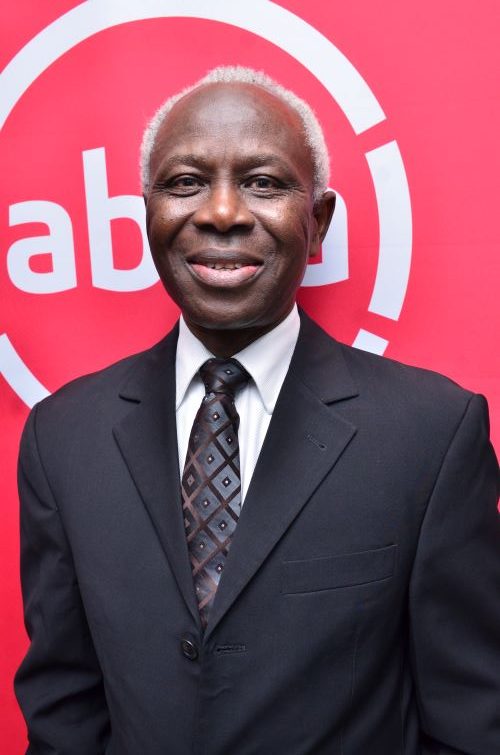
“The outlook for growth in Nigeria’s telecoms industry is strong. The gaps in last-mile telecoms infrastructure are largely untapped. The current momentum of emerging technologies and financial services delivers boundless growth horizons for telcos to upgrade their infrastructure and expand their reach,” said Sadiq Abu, Chief Executive Officer of Absa Nigeria.
The capacity for growth in the industry is huge and, according to Abu, “The telecommunications industry is generating interest from local and foreign investors. This is because the capacity for growth in the industry is limitless.”
For instance, The Rise Fund, the investing platform of leading alternative investment firm, TPG, early last year announced plans to invest $200 million (about N84 billion) in Airtel Africa’s mobile money subsidiary. Google, early this year, revealed plans to buy a 1.28% stake in Airtel Africa.
Much of these investments will be utilised by the Nigerian subsidiary of the telecoms giant, considering that its Nigerian operation is the biggest on the continent. MTN’s recent public offer was oversubscribed by as much as 139.5%, according to the telecoms company.
This renewed interest, following a lull in FDI, was no doubt mainly triggered by the industry’s strong showing during the pandemic, which highlighted its resilience. A report by Agusto & Co showed that the industry attracted about $4 billion (about N1.7 trillion) in investments in the five years to 2020.
The industry is expected to “provide recovery support to key economic sectors post-pandemic,” the Agusto & Co report showed, which will help drive investments in the sector.
In 2021, Chairman of MTN Nigeria, Dr Ernest Ndukwe, revealed that the company plans to invest over N600 billion to upgrade its network infrastructure in the next three years to enable the telecoms giant to take advantage of the growing opportunities in the industry.
To help put the growth prospect and the growing interest in the sector in perspective, the Absa banking group, which operates two licensed subsidiaries in the country, Absa Capital Markets Nigeria Limited and Absa Securities Nigeria Limited, organized a media roundtable session recently in Lagos.
The session, themed The Nigeria Telecoms Sector: Exploring the Opportunities, examined the Nigerian telecommunications sector, the trends, the opportunities for new businesses, the challenges, as well as Absa’s expertise in and contributions to the sector. Absa’s executives from South Africa and the United Kingdom joined in the session virtually to help throw more light on the sector activities across the African continent, and Nigeria in particular.
Hasnen Varawalla, the co-head of Investment Banking Origination for Absa, stated that the telecommunications’ industry in Nigeria is one of the largest in Africa, and believes it can drive a healthy foreign direct investment, wider job creation, and financial inclusion. “As of 2021, the sector reportedly contributed around 17% of the GDP,” Varawalla said.
Varawalla said the industry supports fintech activities, integrates cities, and aids the ongoing explosion in e-commerce sector. He highlighted some of the attractive propositions in the industry to include telecommunications infrastructure (data centres, fibre networks, etc) and the imminent rollout of 5G technology. Also, there is a new interest in digital work tools to meet the demands for remote work arrangements.
Abu highlighted some of the issues plaguing the smooth operations of telcos in the country to include power deficit, vandalism of transmission infrastructure assets, theft, and multiple taxation, regulatory environment, among others.
In spite of these operating challenges, Abu said the sector has enormous growth potential, particularly in relation to broadband internet, last mile connectivity and telco infrastructure (data centres, fibre optic networks, etc).
And most importantly, the broadband penetration is still very weak in the country, at about 34%, and there remains a vast and growing demand for data, despite the apparent maturity of voice revenue streams.
“Meanwhile, the various challenges that are bedeviling the smooth operations of telcos provide expansive opportunities for smart entrepreneurs who possess an innovative and unerring vision of what can be done to help the players maintain cost advantage or protect critical transmission infrastructure assets through the provision of services that hedge against disruption in the supply chains,” Abu said. According to the Absa CEO, the telcos are already strategically developing useful business vehicles to take advantage of emerging opportunities in the industry.
On the expertise and role of Absa in the industry, Varawalla said the financial institution provides support to the industry on multiple levels: as a capital provider, helping to finance some of the landmark projects; providing advisory on key industry deals, especially capital raising activities by players; and playing an active role in helping to midwife the listing needs of some of the continents big players.
“Absa is a significant capital provider to the entire telecoms sector in Africa. Our role is not limited to providing capital though. We are among the most active advisers to telco/telco infrastructure companies having led and/or participated in many landmark transactions across the continent,” Varawalla said.
Varawalla highlighted some of these deals to include the GBP 595m Airtel IPO on the Nigerian Exchange (NGX), the sale of 9mobile to Teleology, Vodacom’s IPO on the Tanzania Stock Exchange, the US$ 378 IHS IPO on the NYSE, the acquisition by IHS of MTN’s tower portfolio in South Africa, amongst others.
Foreign and local investments in the country’s telecoms industry at $107.46 million in 2021 was the lowest in the three years to 2021, driven by the uncertain regulatory environment and forex issues.
However, as more opportunities for investments and growth unfolds in the sector, Absa assured it would “continue to make available our deep telecoms sector expertise to help telcos take advantage of emerging opportunities that will fast track the timely achievement of their growth aspiration.”