
Here are five African inventions which may take off in 2017.
1: An Electricity Grid for the Whole Village
Problem: A total of 1.3 billion people worldwide currently don’t have electricity, according to Yale Environment 360. Getting people in rural areas on to the national grid is proving too difficult and traditional solar panels generate meagre amounts of energy.
Solution: Steamaco makes solar and battery micro-grids which can work for a whole village. They are small electricity generation and distribution systems that operate independently of larger grids.
How it works: Micro-grids are nothing new. The new part is that Steamaco’s technology automates the regulation of electricity.
So, if the system detects there will be a surge in demand for electricity, for example on a Saturday night when people want to start playing music for a party, or they see a dip in supply, like when the sun has gone down and so the grid is not collecting solar energy, then the grid automatically stops electricity for people it won’t affect too badly.
The system sends an automatic text to all customers on the grid saying that the electricity in houses is about to be cut off so that the hospital can keep on going.
Who is talking about this? In October they featured in the Global Cleantech 100 Ones to Watch list.
2: A Jacket that Detects Pneumonia
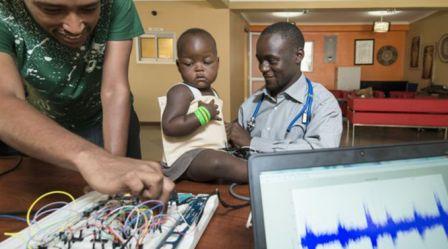
Problem: Pneumonia kills 27,000 Ugandan children under the age of five every year. Most of these cases are due to pneumonia being misdiagnosed as malaria.
Solution: Ugandan engineer Brian Turyabagye has designed a biomedical “smart jacket” to quickly and accurately diagnose pneumonia. The Mamaope jacket measures a sick child’s temperature and breathing rate. It can diagnose pneumonia three to four times faster than a doctor and eliminates most possibility for human error.
How it works: A modified stethoscope is put in a vest. It is linked to a mobile phone app that records the audio of the patient’s chest. Analysis of that audio can detect lung crackles and can lead to preliminary diagnoses.
Who is talking about this: It is shortlisted for the 2017 Royal Academy of Engineering Africa Prize.
3: A Tablet that Monitors Your Heart
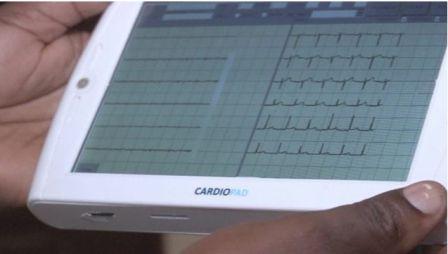
Problem: It is difficult for people in rural areas to travel to the cities to see heart specialists. There are just 50 cardiologists in Cameroon, which has a population of 20 million people.
Solution: Arthur Zang invented the Cardio Pad – a handheld medical computer tablet which healthcare workers in rural areas use to send the results of cardiac tests to specialists via a mobile phone connection.
How it works: Cardiopads are distributed to hospitals and clinics in Cameroon free of charge, and patients pay $29 (£20) yearly subscriptions. It takes a digitised reading of the patient’s heart function. In a few seconds the results of a heart test are sent to a specialist clinic in the capital.
Who is talking about this: It won the Royal Academy of Engineering award for African engineering in 2016 and the Rolex award for Entreprise in 2014. But Mr Zang told BBC Africa that these things take time to develop and it only got approval from the Cameroon authorities in October 2016.
So, it is more likely that people will actually see it in their clinics in 2017.
4: An App for Hair Inspiration

Problem: A lack of accurate information about how to achieve certain hairstyles and where to find a high-quality stylist.
Solution: Three software engineers – Priscilla Hazel, Esther Olatunde and Cassandra Sarfo – invented Tress, an app to share ideas about hairstyles.
How it works: It is described by Okay Africa as a kind of Pinterest or Instagram for hair. Once you have downloaded the app, you can follow other people who are sharing their hairstyle. You can search specifically by place, price range and the type of hairstyle your want, from relaxed hair to cornrow.
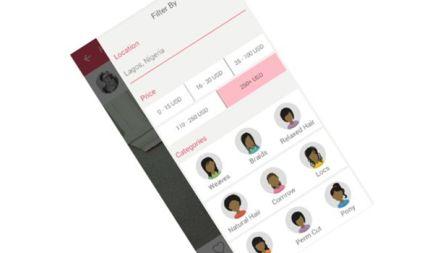
You can then scroll until your heart’s content through people who have uploaded pictures of themselves with that style, tell them how much you like their style, ask how long it took, and even arrange to meet up with someone to style your hair.
Who is talking about this: The three software engineers behind this are graduates of the Meltwater Entrepreneurial School of Technology in Accra, Ghana.
They were then selected for the Y Combinator eight-week fellowship programme for start-up companies.
Y Combinator is prestigious – business news website Fast company called it “the world’s most powerful start-up incubator”. In other words, the school is thought of as really good at finding the next Mark Zuckerberg.
5: A Currency for Paying Online Workers
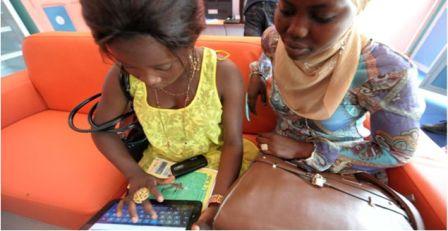
Problem: There are online workers, specifically web developers, in Africa who people outside the continent would like to employ but it is difficult or prohibitively expensive to get their wages to them. Some don’t have passports, and so don’t have bank accounts either.
Solution: Bitpesa uses Bitcoin to significantly lower the time and cost of remittances and business payments to and from sub-Saharan Africa.
How it works: Bitpesa uses the crypto-currency bitcoin as a medium to transfer cash across borders. Bitcoin is a system of digitally created and traded tokens and people keep their tokens in online wallets.
It then takes the Bitcoin tokens and exchanges them into money in mobile money wallets – a popular way of paying for things in places like Kenya and Tanzania.
BitPesa is already used to pay online workers – a company called Tunga is using it as a way of getting wages from clients abroad to web developers in Uganda.
Who is talking about it: It won an award for the best apps across Africa in November.
By Clare Spencer, BBC News