


CBN Affirms Strength of Banking Sector, Issues Routine Transitional Guidance for Select Institutions

As part of its ongoing efforts to strengthen the banking system, the Central Bank of Nigeria (CBN) introduced time-bound measures for a small number of banks still completing their transition from the temporary regulatory support provided, mostly in response to the economic impact of the COVID-19 pandemic.

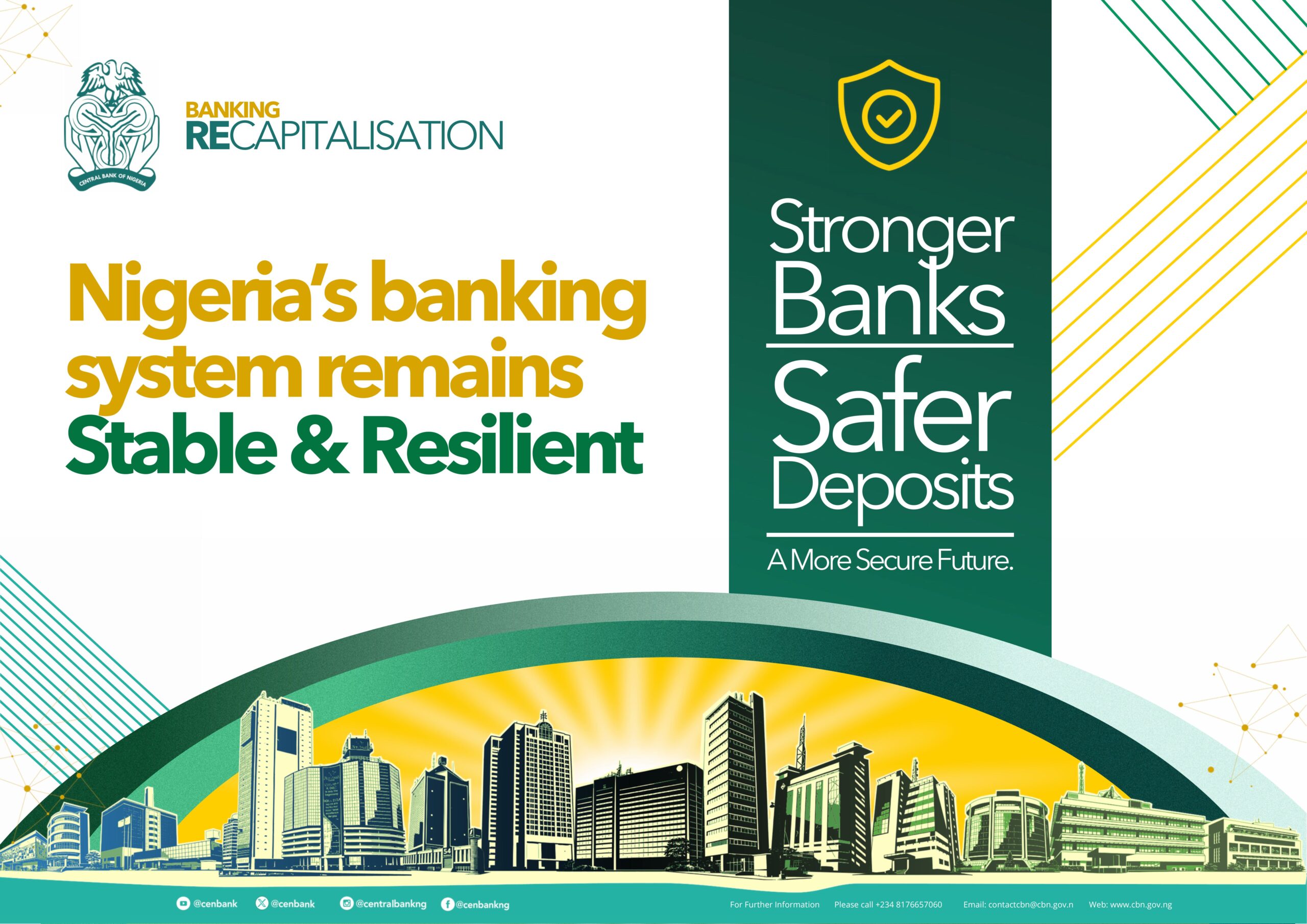
This step is part of the CBN’s broader, sequenced strategy to implement the recapitalisation programme announced in 2023. The programme, designed to align with Nigeria’s long-term growth ambitions, has already led to significant capital inflows and balance sheet strengthening across the sector.

Most banks have either completed or are on track to meet the new capital requirements well before the final implementation deadline of March 31, 2026. The measures announced apply only to a limited number of banks. These include temporary restrictions on capital distributions, such as dividends and bonuses, to support retention of internally generated funds and bolster capital adequacy. All affected banks have been formally notified and remain under close supervisory engagement. To support a smooth transition, the CBN has allowed limited, time-bound flexibility within the capital framework, consistent with international regulatory norms. Nigeria generally maintains Risk-Based Capital requirements that are significantly more stringent than the global Basel III minimums.

These adjustments reflect a well-established supervisory process consistent with global norms. Regulators in the U.S., Europe, and other major markets have implemented similar transitional measures as part of post-crisis reform efforts. The CBN remains fully committed to continuous engagement with stakeholders throughout this period via the Bankers’ Committee, the Body of Bank CEOs, and other industry forums.

The goal is to ensure a transparent, predictable, and collaborative regulatory environment. Nigeria’s banking sector remains fundamentally strong. These measures are neither unusual nor cause for concern; they are a continuation of the orderly and deliberate implementation of reforms already underway.

The CBN will continue to take all necessary actions to safeguard the sector’s stability and ensure a robust, resilient financial ecosystem that supports sustainable economic growth.


 

spot_img
spot_img
spot_img
spot_img
spot_img

Hot this week

Sub-Saharan Africa Food Import Bill to Hit $70.2bn in 2026, a Rise of 10.5%

  The UN Food and Agriculture Organisation expects sub-Saharan...

NECA to Reward Employers for Resilience, Contribution to National Development

The Nigeria Employers’ Consultative Association (NECA) says it will...

IGP, Olatunji Disu, Emerges Nigeria Judo President, Unveils Championship in Lagos

The Inspector-General of Police (I-G), Mr. Olatunji Disu and...

AI-Generated Voters Register: SERAP Sues INEC, NDPC

The Socio-Economic Rights and Accountability Project (SERAP) has filed...

Google Selects 10 Startups for Inaugural Africa Applied AI Lab Cohort

Google has selected 10 startups for the first cohort...

Topics

Lagos Launches Youth Climate Campaign, Unveils TAOOMMA as Campaign Influencer

L-R: City Adviser, Lagos, C40 Cities, Maximus Ugwuoke; Representative...

African Alliance Files Lawsuit against NAICOM over Dissolution of Board, Management

African Alliance Insurance Plc has filed a lawsuit against...

Google Slashes Political Lobbying to $3.8m

Google slashed spending on lobbying by 25.5 percent in...

Pension Industry Will Invest in Infrastructure, Real Estate to Diversify Investment

As the new Contributory Pension Scheme (CPS) continues to celebrate its runaway successes, Mrs. Chinelo Anohu-Amazu, Director General, National Pension Commission (PenCom) speaks on the challenges of the scheme and the way forward. Review of Pension Industry in 2014 The activities in the Pension Industry were guided by the need to ensure sustainability and safety of pension funds as well as payment of retirement benefits. In the course of the year, and in line with the dynamics of the operating environment, some of the supervisory and regulatory frameworks were modified.

NCDMB Identifies Key Skill Areas for Capacity Building as AEW Holds in Cape Town

The Nigerian Content Development and Monitoring Board (NCDMB) on...

Union Bank, PAPSS Simplify Cross-Border Transactions

To deliver simpler, smarter banking solutions, Union Bank of...

Expanding Africa’s Insurance Sector

  By Mikir Shah CEO Africa Specialty Risks Africa’s insurance market is poised...
spot_img

Related Articles

Popular Categories

spot_imgspot_img