
BudgIT, a prominent civic-tech organisation promoting transparency and accountability in Nigeria’s public finance, has raised significant concerns over the Federal Government’s 2025 Budget, describing its formulation as legally questionable and lacking adequate disclosure, particularly regarding its revenue framework.
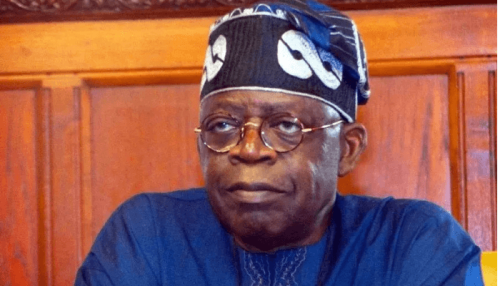
Recall that the Presidency initially submitted a proposed expenditure of N47.9 trillion, which President Bola Ahmed Tinubu later revised to N54.2 trillion through a presidential letter citing increased revenue expectations. The National Assembly further increased this figure to N54.9 trillion, without publishing any accompanying macroeconomic or fiscal analysis to justify the additions.
These changes fall short of the requirements of the Fiscal Responsibility Act (FRA) of 2007, which mandates that aggregate expenditure must not exceed estimated aggregate revenue plus a deficit of no more than 3% of the Gross Domestic Product (GDP).
Specifically, section 12 stipulates that: “Aggregate expenditure and the aggregate amount appropriated by the National Assembly for each financial year shall not be more than the estimated aggregate revenue plus a deficit not exceeding 3% of the estimated Gross Domestic Product or any sustainable percentage as may be determined by the National Assembly for each financial year.”
Based on the Budget Office’s GDP projection of N338 trillion, total spending should not have surpassed N51.95 trillion. The current appropriation exceeds that limit by more than N3 trillion, raising concerns about fiscal discipline and legal compliance.
Equally troubling is the government’s continued refusal to publish a detailed revenue breakdown for the 2025 fiscal year. While references have been made to certain revenue sources, no comprehensive data has been released to allow for independent scrutiny. Compounding the opacity is the fact that the latest available federal Budget Implementation Report covers only the second quarter of 2024, despite formal requests made to the Budget Office of the Federation for more recent updates.
Commenting, BudgIT’s Group Head of Research and Policy Advisory, Vahyala Kwaga, stresses that these patterns signal a regression from the standards of fiscal transparency and accountability that Nigeria has worked to establish over the past decade.
“Transparency is not a favour to citizens; it is a constitutional and moral obligation of the government. The 2025 budget, as it stands, fails the basic tests of legality, transparency, and economic prudence. At a time when Nigeria faces rising debt, inflationary pressures, and critical development challenges, the importance of fiscal clarity cannot be overstated. Citizens have the right to know how public funds are sourced and allocated, and the government has the duty to provide such information,” he said.
These concerns are far from trivial; they point to a worrying shift towards arbitrariness and opacity in the presidency’s fiscal conduct. If left unchecked, such actions risk undermining Nigeria’s significant gains in institutionalising transparency and compliance within its public finance framework.
BudgIT, therefore, calls on the Presidency to uphold the principles of transparency, due process, and legal compliance in the management of public funds. We also urge citizens, civil society organisations, the private sector, and the international community to collectively demand the immediate publication of the full revenue framework underpinning the Federal Government’s 2025 Budget.