

Charging to drive someone around Lagos was chiefly a cash-in-hand job before Uber launched in Nigeria two years ago. To this day, the rest of the transport industry remains largely informal, with no clarity on how much money is made and only negligible tax contributions to the state.
Uber is different. Every naira is electronically recorded and accounted for. And because we insist that all drivers using Uber must be registered with the tax authorities, the potential to transform the informal sector into an important contributor to the country’s finances is significant.
As Uber becomes more popular, more people want to earn by using the app. But many of these new driver-partners are figuring out how to pay taxes for the first time. And it can be complicated. That’s why Uber has partnered with PricewaterhouseCoopers (PwC) Nigeria.
Together with the Federal Inland Revenue Service (FIRS) and the Lagos State Internal Revenue Service (LIRS), guidance has been developed to help demystify tax for potential drivers. Every person that chooses to partner with Uber and qualifies to drive using the app will receive this information so they can easily understand what they have to do and how. All driver-partners are still advised to seek their own tax advice.
Taiwo Oyedele, a Partner in PwC’s tax practice, says: “For many driver, this is the first time they are registering for tax and paying taxes, so having clear guidance on what to do is important. Further, as individuals succeed and begin to grow their own business, their tax obligations change, and this is where we find a lot of challenges.”
“Being able to bring some of the informal sector into the tax net will help government realise part of the potential NGN 4 trillion tax revenue that could be generated from the sector assuming the same level of tax contribution as the formal sector,” Oyedele adds.
Ebi Atawodi, General Manager for Uber in Nigeria, says: “The drivers using Uber know how important it is to pay the right amount of tax. We are proud to say all driver-partners are required to sign up for Uber with their Tax Identification Number (TIN), showing they have registered with the authorities. With the recent passing of the resolution on ridesharing by the Federal House of Representatives, Uber’s new partnerships will help all Nigerians embrace a sharing economy that can be a valuable contributor to the country.”
Mr. Bamidele, Co-ordinating Director of FIRS, says: “We are seeing new business models that are based on digital solutions developing in Nigeria. As we also move to upgrade our own systems, we are excited to collaborate with companies like Uber and PwC to offer a service that makes paying taxes easier for entrepreneurs. It is our duty to educate the general public on tax matters and we look forward to working closely with the private sector to create reliable and efficient solutions.”
Mr. Ogunsanwo, Executive Chairman of the LIRS, shares Bamidele’s sentiments: “We commend Uber and PwC for this initiative and their positive attitude towards tax compliance especially bringing the informal sector into the tax net which is a major area of focus for us in Lagos State.”
Both Uber and PwC are also discussing ways of simplifying the reporting and paying of tax in the transport sector.
PwC, Uber Close Transport-Industry Tax Gap in Nigeria
AfDB Funds Platform to Support Women Empowerment in 36 African Countries
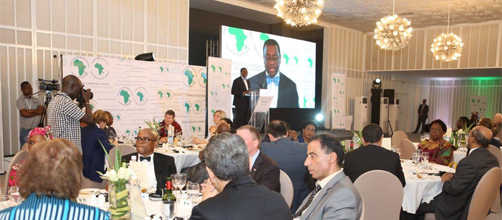
On 15th of July 2016, the African Development Bank (AfDB) approved $12.4 million grant for a project called “50 Million Women Speak” to create a networking platform dedicated to sub-Saharan women entrepreneurs.
The grant will be spread between the Common Market for Eastern and Southern Africa (COMESA), the East African Community (EAC) and the Economic Community of West African States (ECOWAS).
The project is an innovative social media platform to enable women to start, grow and scale their business through the dynamic exchange of ideas. According to Geraldine Fraser-Moleketi, the AfDB’s Special Envoy on Gender this digital/virtual marketplace will connect business-women to encourage peer-to-peer learning, mentoring, and information and knowledge sharing.
The platform will cover 36 countries and will be accessible on mobile phones. It will enable women to access business training, mentorship, financial services and locally-relevant business information, while building their own networks of contacts.
The project will be implemented within a period of three (3) years starting from 2017. The number of monthly platform user could reach 50,000 women in 2022, and by developing their businesses they expected to create 10% more jobs.
In Africa like in many parts of the world, women business owners continue to face gender-specific barriers such as lower levels of education and business training, weak property rights that deprive them of collateral and tangible assets, legal barriers that impede their economic activities and cultural barriers that discourage women from thriving as entrepreneurs.
The consequence is that women have challenges accessing financial and non-financial services and so the size and growth of their businesses suffer. In Sub-Saharan Africa, the financing gap for women is estimated at over $20 billion and is likely to be more acute among younger and upstart women.
“Platform users will learn about their rights and the way to obtain financial support,” said Salieu Jack, Chief ICT Engineer & Project’s Team Leader at the AfDB. In the concerned countries, the rate of women entrepreneurs with access to banking loans could jump from 4% to 10% by 2022. The launch of the regional platform will be coordinated with the creation of Country Teams which will include Regional Economic Communities (RECs) specialised institutions for content gathering and dissemination, publicity, outreach, and advocacy, targeting women entrepreneurs in their respective member states.
Hosted by COMESA and co-piloted by EAC & ECOWAS, the platform will also provide an opportunity to capture important statistics on financial inclusion in Africa. Its related statistical database should be able to provide sound and accurate data both on SMEs led by women and Financial Institutions products by country.
It should hence contribute to generating and sharing knowledge on women’s access to financial and non-financial services in Regional Member Countries.
The “50 Million Women Speak” project will form part of the Innovation Lab, one of the Pillars of the Affirmative Finance Action for Women in Africa (AFAWA) program that was launched by the President of the Bank at the Annual Meeting in Lusaka, Zambia in May 2016.
World Pension Summit Innovation Award 2016
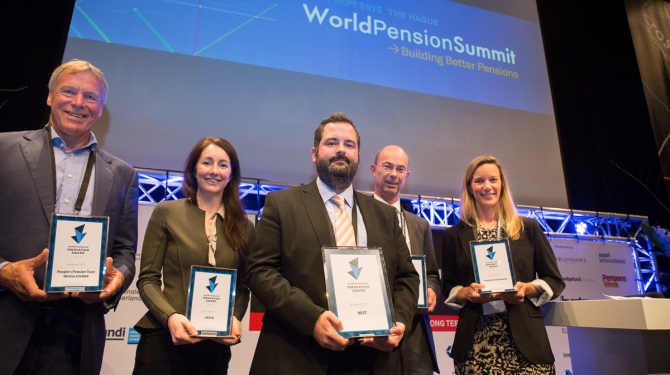
The World Pension Summit and Pensions & Investments are once again honouring great initiatives and proven solutions in pensions with the 2016 Innovation Awards.
“We are seeking pension funds who are using innovation to drive their pensions forward through investment, design, innovation, participation or any way that may help drive successful outcomes for the fund participants.”
The Innovation Awards have no predetermined categories; the possibilities are endless. We wish to highlight innovation and excellence and provide inspiration. Past winners were selected for their cutting-edge ideas in plan design, investing, technology, driving employee participation and engagement and more.
Entries are encouraged from organisations around the world.
The winner will be announced and recognised at the Pensions & Investments WorldPensionSummit to be held on 9-10 November 2016 in The Hague, The Netherlands.
The deadline for application is September 9.
IATA, FIATA Unveil New Air Cargo Program
The International Air Transport Association (IATA) and the International Federation of Freight Forwarders Associations (FIATA) are pleased to announce that an agreement has been signed by Tony Tyler, IATA’s Director General and CEO and Huxiang Zhao, President of FIATA, to implement the IATA-FIATA Air Cargo Program (IFACP) to replace the existing IATA Cargo Agency Program.
Over the decades that the IATA Cargo Agency Program has operated; IATA Cargo Agents (freight forwarders) have evolved from being “selling-agents” for airlines to being their “purchasing-customers.”
In consideration of this evolution, in 2012 IATA and FIATA joined forces to review, refine and re-engineer the existing Agency Program. The new program moves decision-making on the rules governing the airline-forwarder relationship away from an airline-led conference to a governance body – the IATA-FIATA Governance Board (IFGB) – jointly managed by forwarders and airlines, which reflects today’s market conditions.
“IATA and FIATA have reached an important agreement on a new jointly-managed air cargo program. This is the result of four years of hard work to modernize the relationship between freight forwarders and airlines. The IFACP also provides a framework to ensure that industry standards are relevant, pragmatic and fit for purpose. These standards cover the endorsement of freight forwarders and more broadly the safe, secure and efficient transportation of air cargo shipments”, said Aleks Popovich, IATA, Senior Vice President, Financial and Distribution Services.
“The Cargo Agency Program has long needed updating. I am really pleased that FIATA and IATA have joined forces to provide our industry with a new, modern program and a framework for operation that benefits both airlines and freight forwarders. IFACP will eliminate unnecessary administrative procedures and costs as well as free up valuable resources to tackle the complex challenges that today’s global trade presents. These include regulatory compliance, safety and security and the introduction of new technologies. This agreement paves the way for a more successful future for the fastest and most fascinating mode of international transport”, remarked Mr. Rudi Sagel, Chairman of FIATA’s Airfreight Institute (AFI).
The phased rollout of IFACP will begin in early 2017 with Canada as the pilot country. It is anticipated that full global rollout will be completed by end of 2018. The public signature with the common endorsement of the agreement will take place at the October FIATA World Congress which will be held in Dublin, Ireland.
Q&A
What are the benefits of the new IATA-FIATA Air Cargo Program (IFACP)
The structure of the new agreement better reflects the new business models and the buyer-seller relationship that exists today between forwarders and airlines.
With the establishment of a global IATA-FIATA Governance Board (IFGB), the industry will be better equipped to achieve key goals including: e-cargo priorities of greater efficiency and shared values, clarification of supply chain liability, improved compliance with safety and security standards through a more coordinated and concerted industry approach.
The IFGB governance structure will reduce the administrative burden in managing the program as it includes the involvement of forwarders as equal partners in the decision making process which now correctly reflects the Principal-to-Principal relationship existing today between Freight Forwarders and Airlines.
What is the impact on the current IATA Cargo Agents
There is no immediate impact on the current IATA Cargo Agents as the current participants of the IATA Cargo Agency/ Intermediary Program will be provided with a new IATA-FIATA Air Cargo Program Agreement when the program implementation process begins in their country.
Upon execution and receipt of the completed Agreement, the Endorsed Freight Forwarder will join the new program.
No further assessment will be required. New entrants shall be granted access to the IFACP in accordance with the program’s rules, which are designed to be more reflective of how the air cargo business functions in today’s market. It is anticipated this process will be completed by end of 2018.
‘Forex Trading: Great Opportunity to Earn Sustainable Income’
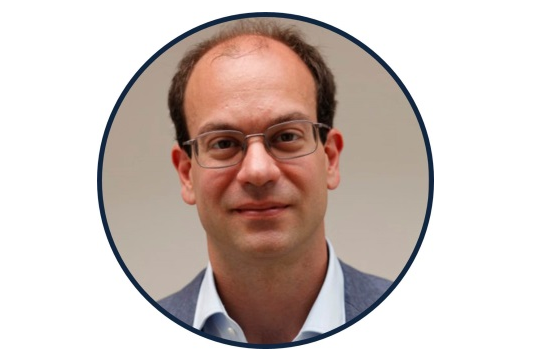
In this Special interview, Dr. Corvin Codirla of FX MasterClass, addresses the ABC of forex trading and the great opportunity of generating sustainable income.
What is Forex Trading
My definition of Trading is: “The act of sequential decision making under uncertainty with the goal of extracting value out of the market.”
You see, like almost every decision in life, the act of putting on a position, of buying or selling an asset involves uncertainty about the future. You just don’t know if it will pay off or not.
A very pertinent example of this kind of uncertainty occurred on the 24th June this year: the UK referendum. Right into the night of the vote, the majority of market participants were convinced that the UK would vote to remain, pushing the price of the British Pound higher and higher as the evening progressed.
Once the vote counts came in and the actual outcome became clear, the British Pound lost 4% in the first five minutes, and continued to lose another 7.5% in the following four hours. This is a phenomenal move for currencies.
People on the wrong side of this one trade lost a lot. And these were the majority.
You see trading is not about getting one decision right. It is about identifying underlying factors that continue to pay you, and taking the right risk size to continue to survive another day.
This is true for any trading strategy as well as any asset class, be it equities, commodities, fixed income, as well as Foreign Exchange.
What is the Forex Market
The Forex Market concerns itself with the exchange rate of the cash between two countries. It is the purest form of Macro Trading available. It concerns itself with the relative economies between two countries, their economic and political policies, and future outcomes of these policies.
You can split the currency market into those currencies that belong to the “developed” economies. These currencies tend to be called the G10 currencies and are: the US Dollar (USD), the Euro (EUR), the Japanese Yen (JPY), the British Pound (GBP), the Swiss France (CHF), the Australian Dollar (AUD), the New Zealand Dollar (NZD), the Canadian Dollar (CAD), and the two Scandinavian currencies also knows as the Skandies: the Swedish Krona (SEK), and the Norwegian Krona (NOK).
The volume traded on these currencies tends to be the highest on a daily basis.
You also have emerging market currencies, which are classified by region. For instance in Africa, you have the South African Rand (ZAR). In the Americas, you have the Brazilian Real (BRL) and the Mexican Peso (MXN). Within Eastern Europe, you have the Polish Zloty (PLN), and the Romanian Leu (ROL).
Within Asia you have the Indian Rupee (INR), the Malaysian Ringgit (MYR). Of course, there are many others.
These are classified as emerging market currencies primarily due to the volume traded in them, as well as the ease or lack thereof in trading them, for instance due to restrictions on taking money out of the countries, leading to on-shore as well as off-shore markets.
Emerging market currencies are also much more volatile. A very recent example is the impact of the news of a military coup in Turkey on the 15th July, which sent the Turkish Lira (TRY) falling by 3% in 10 minutes.
Regardless the background of the currency, there are some fundamental factors that drive its value with respect to other currencies:
1) Interest Rates. Traders always look for high yielding opportunities. If your country has low interest rates, but a neighbouring country has high interest rates, it makes sense to borrow in your domestic currency and invest in the foreign currency.
2) Value: market currency prices, like the price of any other asset can be out of sync with the underlying value it represents. For instance was the British Pound in 2007 really worth 2.1 US Dollars, given it collapsed to 1.34 dollars only one year later? It is unlikely that the relative economies changed so drastically.
3) Momentum: market crowd behaviour. Market shocks can lead to major moves that last and last. The UK referendum is such an example.
4) Mean-Reversion: currencies aren’t like Yahoo stock that goes from $5 to $100 and back. They tend to oscillate around an average. This is true over various timescales.
Ultimately, currency trading means taking these four factors, which have provided profits for decades, and constructing portfolios that extract value out of them.
Many People Believe that Forex Trading is a Huge Risk. What are the Gains
The risks that people talk about result from the high leverage that most Forex brokers offer.
Let me give you an example. If a broker offers a 1: 500 leverage, it means that with $200 you could hold a $100,000 position.
Of course, if the position goes against you by 50 pips (which is half a typical daily move in the currency market) you lose everything. In essence, high leverage allows people to gamble: nobody can predict with 100% accuracy what the market will today.
BUT, just because you can use up the full leverage DOESN’T MEAN you should! Leverage therefore can be seen as a financing cost. Let’s say that you have $10,000 at your disposal. And that you are willing to take up to three times leverage. That means taking a position that isn’t bigger than $30,000. In this case the amount the broker will take as a deposit to secure this position will be $150.
Therefore the possible leverage a broker offers DOES NOT mean actual risk! However, this kind of leverage becomes really useful when you use the right kind of money-management.
You see, trading is not about being right. It’s about making significant amounts of money when the trade goes in your favour, and losing little when it doesn’t.
The methodology that allows you to achieve that is called Kelly-betting. Something that we cover in great detail in the FX Trading Master course, and a methodology used by the best hedge funds out there.
How Does Currency Fluctuations Impact Traders / Solution
Of course, currency fluctuations affect the real economy. If you are an exporter and your local currency has lost value compared to your neighbouring countries, the amount of profits in your own currency will go up from the exports you make. So real businesses have to take into account what they believe their currency will do in the future.
For instance, in the case of the UK referendum, many US business men made 10% profits overnight on the goods they were importing from the UK, since they had to pay 10% less in US Dollars, as the British Pound devalued.
Of course, for a trader, these fluctuations are the source of opportunity! It’s just like buying and selling a stock at the right time.
To be able to determine which currencies to buy and sell, you need to have a thorough understanding of the four factors listed above.
This is what the FX Trading Master Course is all about.
What is the Minimum Investment for a Successful Trading
$10,000 is a good starting point. You can start with less, but there are certain crucial challenges you need to overcome: since you are aiming to produce consistent long-term results, it means that your risk taking will be constrained.
So even if you are targeting 100% returns a year, starting out with $1,000 will only provide you with $1,000 returns in one year. This is psychologically not engaging.
When it comes to trading, you need to view it as a business that demands your full engagement and discipline. This means maintaining the right psychology. It is very difficult to be disciplined and psychologically engaged, when the rewards are not in line with your expectations.
Therefore a good yardstick would be to ask yourself, how much money a year would youlike to make and then work backwards to the amount that you should invest.
What % of Income Should a Beginner Invest in Trading
There is an age old breakdown that says saving 10% of your income is one of the first steps to riches. The problem with saving is that most people have a strange idea of what to do with that money. They save it for a rainy day, or for buying a car, or other items, which lose value.
The purpose of saving is to have capital which you can set to work so that it increases. Remember the saying “make your money work.”
It’s the same with your savings. The whole purpose of saving is to invest in assets which will increase your wealth.
The other truth is that you shouldn’t invest all your eggs into one asset basket. If you take the approach of Risk Parity, this would imply taking 80% of your saved assets and putting them into bonds, which are low risk investments. The other 20% should be allocated among risky investments such as equities, commodities, and of course Foreign Exchange.
So,in a nutshell, 2% of your income is a good reference point.
How Long Does it Take to Make Profit in Forex Trading
With the methods that I teach in the FX Trading Master-class, the expected time to doubling your money is one and a half years.
How can we be so sure?
You will learn portfolio and risk management strategies in the FX Trading Master Class. It relies on being able to test the methods I teach in a black-and-white fashion, with historical data, going back decades.
Using this data and using Kelly-betting, we can use some straightforward portfolio analysis to determine the expected time range to doubling your capital.
However, the key point here is expected. As with anything in trading, we can determine an expectation, and then measure the risk we face in actually achieving that outcome.
Again, we cover the details within the FX Master Class.
This is crucial. Unlike most other educational programs, I give my students the tools to actually monitor their performance and use that information to adapt their trading to ensure longevity of their capital. This is a key ingredient to developing a successful trading business.
Which Body Regulates Forex Trading / In the Event of Dispute, What Resolution Mechanisms are Available
The international Foreign Exchange markets are actually unregulated. The reason is the decentralised nature of Foreign Exchange trading. Every trade you execute is done with an individual counterparty. In the case of retail trading, the counterparty is a retail broker. It is the retail broker who ultimately is responsible for ensuring that they pay you your profits (or take the resulting losses) from the account you hold with them.
Now in most countries, retail brokers are regulated. The regulation tends to be imposed and exercised by an independent body.
In the United Kingdom it is the FCA, which is independent of the government. In the US, it is the CFTC and the SEC, which are both government agencies.
This means that retail brokers have to abide by the rules of these bodies if they want to provide certain services, and if they don’t, they will face punishment, usually in the form of fines, sometimes imprisonment as well, depending on the severity of the misdemeanour.
Within Nigeria, the Association of On Line Forex Trading Agents, the SEC (Securities and Exchange Commission) and the CBN (Central Bank of Nigeria) are looking for ways to formalise and regulate the interaction between brokers and retail clients and create confidence in Forex Trading.
When will the FX Trading Master Course Run Again in Lagos
The current FX Trading Master Course will run on the 9th and 10th September of 2016 at the Four Points Sheraton Hotel, on Victoria Island in Lagos.
How will Participants Benefit from the Lagos FX Trading Master Class Course
Let’s go back to the definition of trading: “The act of sequential decision making under uncertainty with the goal of extracting value out of the market.”
The FX Trading Master Class will show you exactly, step-by-step, how to extract value out of the FX Markets in the same way the big Hedge Funds, Asset Managers, and Investment Banks extract value out of the Foreign Exchange markets.
The content is unique and gives you an institutional insight into how real trading professionals make money trading.
Attending the class will give you the confidence to take trades and know that you will achieve measurable outcomes, based upon economic and market rules that have been tested and are used by the best professionals in the field.
By the end of the course, you will have a solid foundation in trading, the Foreign Exchange markets, and strategies that have been proven to generate consistent long-term profitability.
The course also covers what it means to set up a Hedge Fund and how to go about doing that.
You will also belong to the FX Trading Master Course community, which involves on-going support in your trading, provides questions to any answers you may have, and allows you to follow the strategies that you learn.
You can register here: http://fxmastercourse.com/landing/lagos-fx-trading-master-course-september-2016/.
About Dr. Corvin Codirla
I started my career in the City of London in 2001, after completing my PhD at the University of Cambridge in Theoretical Physics in Stephen Hawking’s group.
Since then I have worked at various Hedge Funds and Investment Banks developing trading strategies.
From 2010 to 2015 I ran my currency hedge-fund, CCFX, with $50 mm assets under management.
It delivered 73% since inception, with a Sharpe Ratio of 2, and was awarded a Top 10 Award by BarclayHedge in 2015.
Great Nigeria Insurance: ‘Nigerians Should Adopt Insurance as Culture’

Great Nigeria Insurance Plc has called on Nigerians to adopt the culture of insurance now more than ever before. This advice is coming at the heels of the various incessant cases of road accidents across the country, collapse of buildings especially those under construction, fire outrage and other eventualities which have destroyed properties worth millions of Naira.
The Chief Technical Officer of the company, Mr. Folusho Alliyu said this is the time Nigerians need to consciously educate themselves on the benefits they are bound to derive in taking up an insurance policy. He said there are various insurance products that have been designed to protect lives and properties, noting that the most essential thing is for the insuring public to willingly open their minds in accepting the fact that insurance is a very important aspect of their lives.
“Nigerians have waited too long in recognising and accepting the reality that without insurance, one is like building a House without a foundation and in no time, it could come crashing; and when that happens, you will have to start from the scratch again with even more funds than you initially expended.”
He said that insurance gives one the promise of a safe and comfortable future. The earlier we disabuse our minds of the old notion that insurance does not work, the better it will be for all of us, he concluded.
Also commenting, the DGM/ Head of Marketing and Business Development of the underwriting firm, Mr. Toyin Alonge, attributed the low patronage of insurance in the country to the fact that Nigerians lack the basic insurance knowledge to fully appreciate the benefits inherent in it.
According to him, “there’s a willing suspension of acquiring basic knowledge about insurance products and how it works by majority of Nigerians which must be dispelled.”
Experience has shown that an individual who took out one policy or the other in the past but with awry experience along the line was largely due to the inability of perusing their insurance contract or policy as the case may be. Such an individual is capable of giving wrong information or misrepresentation of ideas to would-be customers out there who would have taken one policy or the other.
In the same vein, the Managing Director/CEO, Mrs. Cecilia O. Osipitan equally mentioned that low awareness remains one of the major reasons why a very large percentage of the Nigerian populace is not insuring as they ought to considering the population and the level of commercial activities in the country. She also emphasised the need to positively influence the perception of the insuring public to engender greater patronage as the negative notion that most people have against this very noble profession is adversely affecting the performance of the industry. She conclusively charged practitioners of the business to ensure the effective sensitisation of people around them on the need to embrace insurance as an integral part of their lives because we all are confronted with different kinds of risk as we go about our daily businesses.
As part of the sensitisation effort, Great Nigeria Insurance Plc recently launched a live radio programme titled “GNIONGO” to extensively discuss the import of insurance with the different products and services available under the stable of the company.
“GNIONGO” is a weekly radio programme which airs live on Fridays between 12:15 pm and 12:30 pm on Traffic Radio 96.1FM with a call-in segment where listeners can call to ask questions and seek clarifications.
Great Nigeria Insurance Plc remains resolute in delivering on all promises made.
Group Proposes October as National Cybersecurity Awareness Month

A media stakeholder group has called on the federal government, through the office of the National Security Adviser to adopt October as the Nigerian National Cybersecurity Awareness month as being done globally.
The group justified its position on the increasing threats of cyber-attacks to national security, economic crimes, political instability and social insecurity as a result of the vulnerability of national, corporate and private databases via identity theft.
In a statement by Mr. Olubayo Abiodun, Director of Communications, the Centre for Cyber Awareness and Development (CECAD), a non-governmental organisation (NGO), said it is set to work and collaborate with the Office of theNSA to President Muhammadu Buhari in order to raise the bar on the multi-stakeholders awareness across government, corporate institutions and private citizens through the principles of the Public Private Partnership (PPP).
The month-long series of activities would be delineated to accommodate sectorial weekly emphasises on every facets of the lives of the nation and its people. And this among others will include weekly awareness focus on government and its agencies, banks and financial institutions, education, health, tourism, transport, military/security communities. The central theme would be on how to enhance safer connections to the Internet without compromising corporate and individual safety. Families will also enjoy primary attention in the course of the awareness programme in order to ensure the safety of all and sundry, particularly children from dangers inherent in the uncontrolled access.
According to the media stakeholders, criminals, terrorists, and countries with the intent to harm have found the information superhighway a veritable platform to execute their attacks.
As more sensitive data is stored online, the consequences of those attacks grow more significant each year. And by this implication, the group stated that E-fraud is now the fastest growing crime in Nigeria.
With this alarming threat to the corporate and financial health of the nation and its citizens, the media stakeholders have expressed the strong need for the Nigerian government to play in the global league of awareness community by adopting October as the cyber security awareness month as is the practice in the United States of America, South America, many European countries and other parts of the world. This has become imperative, particularly in Nigeria because of the multilayer national databases spread across various agencies like the Nigerian Immigration Services (NIS), banks, Police, Federal Road Safety Corp (FRSC), Mobile Network Operators (MNOs), which government has directed to be harmonised by the National Identity Management Commission (NIMC).
The media group said that it would roll out its national network to facilitate a robust month-long awareness campaigns for the public and private institutions in order to mitigate the dangers lurking in the cyberspace with the activities of the cyber criminals.
As the largest economy on the continent, Nigeria must take the lead by showing the way for other African nations to emulate in the protection of its national assets and citizens from cyber vulnerability. Nigeria must lead for others to follow.
Global Confidence Survey of Airline CFOs, Heads of Cargo
When surveyed in early-July, airline CFOs and heads of cargo reported that they do not expect profits to improve over the next 12 months;
· July’s survey results also indicate that industry profitability fell slightly in year-on-year terms during Q2 2016, reflecting the impact of recent terrorist attacks and wider pressure on yields;
· On the demand side, July’s survey results were consistent with the robust start to the year for air passenger volumes – albeit with an easing in recent demand conditions – and were in line with the subdued Q2 for air cargo;
· Expectations for growth over the coming 12 months remain positive for both passenger and cargo businesses. But while the latter stabilized in July’s survey, the outlook for cargo continues to be held back by structural headwinds;
· Despite the rally in oil prices since the start of the year, the majority of survey respondents expect operating costs to fall further or to remain unchanged over the next 12 months. This relates to hedging practices in the industry, but also in part to the partial recovery in most currencies against the US dollar over recent months;
· That said, in a reflection of strong competition in the passenger market, airline CFOs expect yields to fall by slightly more than input costs over the year ahead. On the freight side, ongoing increases in freight capacity are also expected to continue to weigh heavily on freight yields over the year ahead;
· Airline employment activity increased for the sixth consecutive quarter in Q2 2016. The forward-looking indicator dropped back from April’s survey, but remains consistent with airlines adding more staff over the next 12 months.
Pension Industry Grew 15% to N5.3tr at End 2015

The aggregate assets under the Contributory Pension Scheme [CPS] grew by 15% from N4.61trillion as at end of December 2014 to N5.3 trillion as at the end of December 2015 with over 7 million contributors at the same period.
Mr. Eguarekhide Longe, President, Pension Fund Operators Association of Nigeria [PENOP] painted the picture of the industry at its recent Annual General Meeting [AGM] in Lagos.
Longe noted that compliance with regard to remittances of pension contributions from the Public Sector at both the Federal and State levels have lagged notably while remittances from the Federal Government through the National Pension Commission (PenCom) were last received for September 2015.
“Some states have outstanding remittances dating back over two years. Private sector remittances, though impacted by the adverse economic environment, have been more consistent. In January 2016, the industry leaders assembled to deliberate on desirable strategies to consolidate the gains the industry had made to date and to evolve new thoughts on how to grow the industry and make a greater impact on the society which essentially serves as its base.”
The PENOP President said the Association also took some key decisions and action steps for the next 8 years – up to 2024 on moving the industry forward. He listed the highlights of the agreements as follows
· Expanded and Inclusive Coverage
· Excellence In Service Delivery
· Low Cost & Efficient Industry Positive Real Return
· Visible Impact Improvement in Industry Skill Sets
· Activity teams have set to work on these themes and momentum is developing daily in the direction of the set vision.
On the raging issue of investing pension funds in the development of infrastructure, Longe warned that
The current pension assets of N5.3trillion, grown over an 11-year period, could be wiped out through careless deployment in an instant.
“On the contrary, if looked at as a constituent part of National Economic Strategy, the focus will switch to how we can support the industry to grow beyond N20 trillion, describing broader coverage so that a National Savings Pool effectively utilised will always be available to kick-start properly conceived, internally consistent, national development initiatives. This is the conversation I believe the pension industry needs to be afforded with government and governance at all levels in our dear nation.”
He also emphasised on the importance of pension operators to maintain high standard of professionalism in conduct as individuals and within organisations to etch ever stronger the Oasis of Sanity as the pension industry has come to be in the Nigerian Financial Services landscape.
“Unprofessional and unfair competitive practices should really have no place in the pension industry. As leaders, it is important that we take a firm stance on this. It is also very important that we foster unity amongst ourselves as operators.”
S&P Issues Red Alert on Nigerian Banking Sector
US rating agency, Standard & Poors revised its counter-party credit ratings for Skye Bank.
The new analysis released on July 12, 2016, lowers the ratings of the banking group to CCC- on the long term and C on the short term.
S&P’s decision occurred after the Central Bank indicated that the bank failed to meet requirements of its regulatory prudential ratios.
In this context, Skye Bank’s Board and Management have been revoked; however there is still no clear plan as to how the bank will turn around.
The situation, according to S&P, should worsen the bank’s inability to pay its short-term debt and lead to default in the next six months.
Now, observers fear a domino effect in the Nigerian finance chain. In March 2016, S&P issued a negative outlook for six other local banks.
This fear is not shared by all as some believe that the regulator should have been more accommodating to the sector which is facing lots of troubles. Others welcome the Central Bank’s decision, saying it should put some order in the sector.
On the Nigerian Stock Exchange where it is listed, investors did not wait and Skye Bank’s share plunged 72% since its 12-month peak on 1 September, 2015 (N2.67). On July 13, it traded at 70 kobo (N0.70) after dropping by about 30% since Monday.
This is its lowest level since 2006, according to data provided by Bloomberg.
—Idriss Linge
African Union, IATA Sign MoU on Air Transport
The International Air Transport Association (IATA) and The African Union Commission (AU) signed a Memorandum of Understanding (MoU) to expand strategic cooperation to further the continent’s economic and social development with the benefits of safe, efficient and sustainable air transport in Africa.
The MoU was signed by Tony Tyler, IATA’s Director General and CEO and AU’s Commissioner for Infrastructure and Energy, Dr. Elham Mahmoud Ahmed Ibrahim.
The MoU focuses on the exchange of information, expertise and capabilities in a number of areas including:
· Enhancing security through intelligence-driven, risk-based measures
· Enhancing safety
· Reducing accident rates in line with global levels of performance
· Promoting connectivity
· Facilitating collaborative decision making in air traffic management
· Improving the passenger experience through the deployment of IATA’s Fast Travel Program, a suite of projects designed to give passengers more control over their journey through a range of self-service options.
“Africa is set to be one of the fastest-growing aviation regions with 5% annual growth forecast over the next 20 years. Achieving this potential will not happen by chance; strong partnerships are key. This MoU will help ensure that global standards and best practices form the backbone of Africa’s growth as well as position the continent’s 54 nations to promote economic and social development by unleashing the full power of aviation. I congratulate Dr. Ibrahim for her leadership, vision and foresight in driving aviation development in Africa,” said Tyler.
“IATA is a strategic partner in the growth of African aviation. This MoU will commit our two organisations to even closer cooperation on the priorities for African aviation. In particular, we count on IATA to partner with us by providing the requisite technical support in the establishment of the Single African Air Transport Market as part of our long-term vision in the context of the AU Agenda 2063. We are, indeed, dedicated to global best practice as a fundamental for sustained growth in aviation in Africa,” said Dr. Ibrahim.
The MoU paves the way for further development in African aviation. The industry already supports 6.8 million jobs and generates $72.5 billion of economic activity on the continent.
Africa Insurance Market: Low Commodity Prices, Political Uncertainty as Challenges

For almost two decades, growth in the insurance markets of Sub-Saharan Africa has been buoyed by the continent’s economic boom.
With average growth in gross domestic product (GDP) across the region far outpacing much of the developed world, the African continent has presented an extremely attractive environment for domestic, regional and international investors seeking to enhance returns.
However, the fallout from low commodity prices, the slowdown of China’s economic activity and the impact of monetary tightening by the U.S. Federal Reserve are just a number of global issues that threaten to stall growth and stability, and in turn, likely will compromise the development and financial strength of insurance markets across the continent.
In its new Best’s Special Report, “Africa’s Insurance Market Prospects Threatened by Low Commodity Prices and Political Uncertainty,” A.M. Best believes that the balance sheets of (re)insurers are exposed to material volatility arising from the uncertain landscape.
Standard Bank Leads in Africa with Digital Innovations

Standard Bank is on a committed journey of rapid digitization across the continent, offering its customers more convenient ways to interact with their personal banking services.
The latest innovation in this digital transformation journey is the expansion of the existing Standard Bank banking app to four additional African markets simultaneously, namely Uganda, Namibia, Ghana and Botswana with plans to roll it out to Nigeria, Kenya, Zambia and Zimbabwe by the end of 2016.
The Banking App already enjoys high usage amongst Standard Bank’s South African and Offshore customers.
Rapid developments in Standard Bank’s drive to enhance its digital customer interface in Africa and simultaneous multi country enablement on the continent have been combined with extensive customer testing and prototyping, to deliver a consistent customer experience which is locally relevant to users in each of the four additional markets.
The release of the app is a demonstration of Standard Bank’s significant investment in an enterprise technology framework that is reusable in all its markets, providing a world-class and a consolidated view of banking portfolios within the Group from a single mobile interface.
Through the single interface customers will enjoy a seamless integration of their personal and business banking profiles, with a singular view of all their accounts across multiple geographies, as well as single sign-on capability from anywhere in the world – all from the convenience of their smart phone.
“Essentially this is one of the first mobile banking interfaces in Africa that allows our bank customers access to their accounts across multiple countries within the Standard Bank Group,” says Adrian Vermooten, Head Customer Channels Africa, Standard Bank.
“It is particularly important to us to ensure we continue to leverage and build banking solutions that ultimately make the lives of our customers easier and more convenient – enabling customers to bank on their terms whenever they want,” he adds.
The app offers a richer and intuitive customer experience as it takes advantage of smartphone sophistication such as biometrics for secure access, access to device contacts, and social networks for sharing of information.
Future releases of the app in late 2016 will include additional features such as Real Time Payments, Online account opening and numerous other value-added services for individuals and businesses.
“The introduction of this app is a further step in Standard Bank’s drive to build a universal bank for its customers across the continent. As a bank that operates in 20 markets across the continent and has a deep understanding of our customers in diverse markets, we are committed to delivering services that are aimed at meeting the needs of our customers and enhancing their banking experience. Africa is our home, we drive her growth” says Mr. Vermooten.
Emirates Named ‘World’s Best Airline 2016’
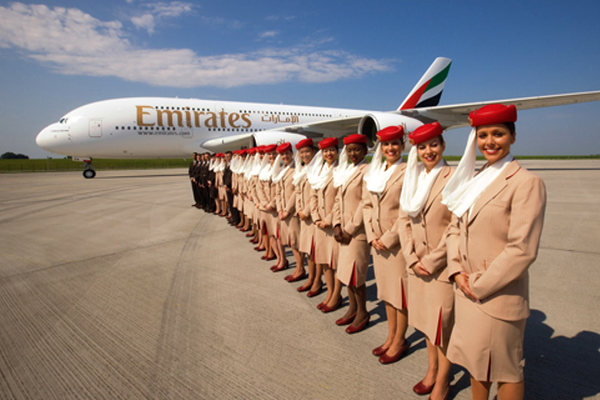
Emirates was named the World’s Best Airline 2016 at the prestigious Skytrax World Airline Awards 2016, in addition to scooping up the awards for World’s Best In-flight Entertainment for a record 12th consecutive year, and Best Airline in the Middle East.
Based on the results of the largest airline passenger satisfaction survey in the industry, the World’s Best Airline Awards are considered a global benchmark of airline excellence.
This year’s Skytrax awards were based on a total of 19.2 million completed surveys covering 280 airlines, by customers hailing from more than 104 countries. The Skytrax survey measures quality standards across 41 key performance indicators of front-line products and services in the airline industry.
This is the fourth time Emirates has won the top accolade since the airline awards were introduced 15 years ago; the airline won the first ever Skytrax World’s Best Airline in 2001, again in 2002 and in 2013. In total, Emirates has won a total of 20 Skytrax World Airline Awards since 2001.
Sir Tim Clark, President Emirates Airline, said: “We are honoured to be recognized by the prestigious Skytrax awards. Emirates has always put our customers at the heart of what we do, and we work hard to deliver the very best experience possible to our customers at every touch point, every day, all around the world. We constantly invest in our product and services, both on the ground and in the air. We listen carefully to our customers, and then relentlessly challenge ourselves to deliver and exceed expectations. The fact that these awards are based on the direct feedback from passengers is gratifying and wonderful recognition for all of the hard work that’s gone into creating the Emirates experience.”
Commenting on the Award, Edward Plaisted, CEO of Skytrax said: “This fourth World’s Best Airline title for Emirates is a fantastic achievement and true testament to the airline’s popularity. To satisfy customers from such a wide and diverse passenger base is not an easy task, but Emirates continues to gain superlative feedback from customers for its product and service offering from the front to the back of the aircraft. The IFE that Emirates provides is a continued focal point for passenger praise and it is important to note that customers were not only impressed with the programming but also the superior hardware standards, particularly for the A380 fleet.”
Forex MasterClass Course Opens in Lagos Sept 9
For Participation: Contact: Lagos Capital Group: Phone: 234(0)8035180508 or 234(0)9096438474: Email: [email protected].
A forex trading course-FX MasterClass is set to open in Lagos on September 9 and 1O, 2O16 at Four Points Sheraton Hotel, Victoria Island, Lagos. The Nigerian partner is Lagos Capital Group.
Anchored by Dr. Corvin Codirla, a world-renowned physicist and forex expert, the FX Master Course is everything every forex investor needs to create an iron-clad trading method that creates confidence in trading decisions and allows him to focus on those tactical strategies that add value to his bottom line.
“While everyone else is trying to sell you the latest EA or technical trick or tactic, I give you a simple yet comprehensive foundational framework that has proven itself for traders like you for more than a decade.”
Codirla, whose FX strategy has generated over $1 billion in 15 years of forex business, described the course as an opportunity to discover a system proven over decades by some of the best fund managers in the industry worldwide.
He added: “Discover the underlying factors that drive the FX market consistently to produce great returns. Discover how to create a truly great FX benchmark that will keep on generating consistent growth, allowing you to focus on tactical short-term profits.
The FX Master Course is really exactly what it says on the tin: a master-class in foreign exchange trading presented by an active fund manager with experience at the highest level in the industry globally.”
The FX trading framework for the MasterClass course has been proven in 3O solid years of trading and data by some of the best trading experts around the world.
Objectives
Key benefits of the FX MasterClass course include:
• A system that tells you how the FX market is primed
• A system that uses fundamental and quantitative inputs and provides objective, unambiguous readings of the market pulse
• Using factors that have been around for decades and are pegged to the fundamental macro policies of every developed nation to generate consistent returns
• Having stability in your trading approach, so that you can experiment with tactical strategies which before would have left you scared witless
• Having a sound trading strategy, that you know will continue to perform over the years, and provide consistent returns
• A straight-forward system that cuts through all the noise and hype and provides with clear steps and facts that allow you to make consistently profitable trades
Cordirla said the course is divided into 6 strategic modules thus:
• Step 1: Understand the Business of FX Trading
• Step 2: How to Determine Your Performance Measured Against Your Competition and the Market
• Step 3: Really Understanding the FX Market
• Step 4: Stable Long-Term Returns from FX Benchmarks
• Step 5: Focusing on Tactical Trading: Your Real Strength
• Step 6: The Right Money Management
Participation:
Contact: Lagos Capital Group
Phone: 234(0)8035180508 or 234(0)9096438474
Email: [email protected]