Saturday, April 25, 2026
30.8 C
Lagos
Home Blog Page 219

N400m Debt: AMCON Takes Over Doggi Group Assets in Abuja

0

Following the order of Honourable Justice A.I. Chikere of the Federal High Court, Abuja division, the Asset Management Corporation of Nigeria (AMCON) has taken over assets belonging to Alhaji Umaru Baba Abdullahi, the Chief Promoter of Doggi Group Limited over an indebtedness of over  N400 million. Justice Chikere gave the order on June 5, 2020.

In compliance to the enforcement order, AMCON on Thursday June 18, 2020 took effective possession of the two properties through its Receiver – Mrs. Juliet Benson of Benson Reeds Legal Practitioners, which include properties situate at Plot 3810, Cadastral Zone A04, Asokoro District, Federal Capital Territory (FCT), Abuja and Plot 1274, Cadastral Zone B07, Katampe Hills, Katampe District, Abuja.

The case of Doggi Group Limited and its promoter have been a protracted issue because the loan was purchased during the first phase of Eligible Bank Assets (EBA) purchase from Union Bank Plc way back in 2011.

Since then, AMCON has offered the obligor a good measure of olive branches and explored all avenues to resolve the matter amicably, but the obligor, and his companies, Doggi Group Limited have remained recalcitrant and unwilling to repay the huge debt to the Corporation.

Confirming that AMCON had enforced on the assets in line with the order of the court, Jude Nwauzor, Head of Corporate Communications Department of the Corporation said, “Yes, we enforced on the properties today as ordered Justice Chikere’s court, and are grateful to the Federal High Court for working on behalf of Nigerians to recover some of the debts owed the country by a few individuals despite the challenges posed by the dreaded Coronavirus (COVID-19) pandemic to institutions including the judiciary.

“Like we have always said in the past, our priority at AMCON has never been to take over anybody’s properties or assets. Our mandate is to recover Nigeria’s money in the hands of these obligors. Overtime however, we have observed that the obligors enjoy hiding under some legal technicalities to delay even the repayment arrangement they negotiated and signed. When you have held several meetings and arrived at an agreement but the obligor decided to make a U-turn by reneging, it leaves AMCON with no other option than to approach the court. In the case of Doggi Group Limited and its promoter, AMCON did everything any responsible and law abiding organistaion ought to do to help the promoter and his business continue to no avail.”

From all indications, the enforcement on the properties of Doggi Group Limited and Alhaji Umaru Baba Abdullahi is one of the many others that would take place in the coming days, despite the interference in business activities by COVID19.

Recall that President Buhari last year signed the 2019 Amended AMCON Act into law, which gives AMCON additional powers to go after all obligors of the Corporation who for years have refused to repay their debt.

The Corporation led by Ahmed Lawan Kuru (ALK) as Managing Director/CEO, is firing on all cylinders and, descending hard on its obligors irrespective of their political or social status in the country. AMCON is chasing to recover over N5trillion in the hands of a few highly sly and uncooperative individuals. Sadly, a good number of them occupy public offices as well as positions of influence in the country.

Ecobank is Supporting Financial Inclusion via Xpress Points

0

Ecobank Nigeria says its agency banking scheme, also known as Xpress Points, is building entrepreneurs and pushing financial inclusion to the large unbanked and under-banked population in Nigeria.

The lender says its Xpress Points enables eligible Agents to carry out financial transactions on behalf of the bank and earn commission on every transaction processed. The consumer experience is very good as customers can do simple deposits, payments and transfers in their own neighbourhood rather than travel for hours to a bank branch said Nike Kolawole, Head, Agency Banking, Ecobank Nigeria.

According to her, the aim of the Xpress Point is to let every Nigerian household have access to Ecobank services within their neighbourhood to provide easy banking services.

Further, Kolawole, noted that unemployed and retired persons should avail themselves with the opportunity to earn extra income by keying into services offered by the bank as Xpress point agents. According to her, the Ecobank Xpress point which are in various neighbourhoods across the country, are well-positioned to facilitate basic financial transactions, with the process and services simplified to attend to a broad spectrum of the society.

She disclosed that agency banking in general brings about economic and youth empowerment by way of job creation and earning extra income, adding that small savers can easily do their savings at home or near their home. This leads to financial inclusion of the under-banked in the country.

In her words “Ecobank currently has over 43,000 agents across Africa. The agents carry out financial transactions on behalf of Ecobank and earn commission per transaction processed. Xpress Points can also be used as channels for the deployment of national social intervention programmes, especially at this time that we are fighting the impact of lockdowns due to the COVID-19. Services offered by the Xpress point agents includes cash in, cash out, fund transfer, bills payment, airtime recharge, remittance and account opening, among others. these services are available for “sole proprietors, partnerships, co-operative societies, microfinance banks, companies with large distribution network – like petrol stations, FMCGs, telecommunication companies, super agents, aggregators and unregistered businesses such as petty traders, hair salon and others.’’


Custodian & Allied Insurance keen on Customer Satisfaction

0

Custodian & Allied Insurance (CAIL) is keen on developing and delivering innovative insurance products that best satisfy customer needs, the Managing Director of the company, Mr. Toye Odunsi has said.

Odunsi in a statement stated that the company has also been operating a highly profitable, efficient, resourceful and ethical organisation that will survive well into the future and be a valuable asset to its shareholders.

He stated that the company has been able to achieve an efficient service to the insured because of its strong Board which comprises individuals who have proven track records in their various fields of endeavour, thereby bringing several years of experience to bear upon the Board.

He said: “Our vision is to be Africa’s insurer of choice. We also aim to develop, and deliver innovative insurance products that best satisfy customer needs, whilst operating a highly profitable, efficient, resourceful and ethical organisation.

“We position ourselves strategically in the market to be perceived as a modern, dynamic and resourceful underwriter, while we strike a fine balance between the businesses of sound underwriting, cost control and service on one hand and investment on the other”, he added.

Leveraging Technology in the Wake of Coronavirus

0

While the novel coronavirus brought about physical confinement of human activities in many parts of the world, interestingly countries and businesses that have infused digital and innovative technology in their operations have continued to relatively thrive amid the worldwide pandemic.

These countries and businesses are deploying emerging technologies to help curb the spread of the virus as well as finding medication-both preventive and curative. Pending the time the world gets successful with discovering a vaccine or cure, people across the globe are increasingly leveraging technology to continue their lives while the fight against the coronavirus persist.

Today our new normal includes ‘work from home’ and ‘stay at home’ – the COVID-19 mantra. However, the adoption of technology has made the new normal a lot more feasible for the tech savvy majority, while the erstwhile technology-shy people have had to adapt involuntarily.

For instance, businesses have moved meetings online. Practically all business meetings including those with teams and clients are held virtually. Microsoft Teams reported a 500% increase in usage, Zoom and other conferencing tools have all reported increase in usage. Learning and knowledge sharing sessions online have increased. Consultants, teachers and subject matter experts have taken to these technology tools to ply their trade. Anti-epidemic Robots are being deployed for faster and safer health service delivery.

More people are signing up on Apps to socialize, exercise, shop and even access healthcare. The value of digital channels, products and offerings has become glaring to both individuals and companies alike. As these tech tools continue to shape the way we live in the new normal in spite of the constraints of the pandemic, one thing that has remained a common denominator has been the need to make payments. Whether people are shopping, checking on loved ones, downloading Apps, meeting clients or have training sessions, they all need to make payments, one way or another. It is therefore no wonder that the digital payment tools remain some of the most embraced technology tools across the world.

Payments being a recurring activity with every human endeavour has an opportunity to transform faster and be easily adopted. Incidentally, we have seen the significant increase from cash payment to digital payments. Reports have it that banks have to enhance their digital payment options; deploying more ATM, PoS, App, agents banking etc.

Beyond the banks, integrated digital payment service providers such as Interswitch Group have enhanced their platforms to ensure that Nigerians can make safe payments faster and more conveniently while trying to keep safe amidst the scare of the coronavirus. Across the Interswitch networks, Nigerians can make payments using ATM, PoS, credit/debit cards, Apps etc.

As a payment technology company, the Interswitch Group realised that payment will constitute one of the pain points for Nigeria during these trying times. It has further enhanced its digital payment platform – Quickteller, to allow for people to make payments for goods and services, collect payments and transfer funds.

In leveraging its technology competencies with its partners across the financial and digital payment space, Interswitch has ensured that their support to these partners are continually functional so their customers can seamlessly transact across platforms, apps, PoS and ATM. This means that businesses and households can transact seamlesslyanywhere.

In another partnership, Interswitch through its card scheme subsidiary – Verve International leveraged its alliance with PAX International to leverage the partners’ technology competencies in combating the virus. Both parties committed to promote the adoption of contactless point-of-sale (POS) payment solutions across the West African market.

Both partners underscored the realisation that the widespread adoption of contactless payment solutions has great propensity to better mitigate the spread of COVID-19. These contactless payment solutions include payments with contactless-enabled credit and debit cards, as well as QR codes. Other contactless solutions the company is persuading its customers to adopt is the use of USSD codes.

Through its health-tech subsidiary, e-Clat Healthcare Limited, Interswitch is building and activating user-friendly, locally-nuanced software platformfor state governments across Nigeria. With the software, members of the public can assess their individual risk and pre-disposition to the novel coronavirus as a first-line intervention.

The software platform analyses users’ information provided from answers to a series of questions around risk factors, recent exposure, observed symptoms, health and travel history. This in turn reduces the risk from contact spread and undue exposure to the overstretched medical facilities.

As our lives begin to return to what we used to know it to be, it is undisputed that a lot will remain changed. The new ways that we have adopted may continue with us for a very long time and perhaps open the way for new discoveries and technological advancement.

A critical part of our lives that will remain changed will be our payment pattern. More people will come onto the digital payment space, financial service providers will offer more digital solutions. Fintech, TechFin and digital platforms will become more integrated.

Owing to the importance of payments and settlements for trade and economic growth, the need to adopt digital payment cannot be over-emphaisesd. In our new normal, travels will be limited but cross border trade will continue. The rails that will ensure the seamless facilitation of these economic activities will be payment leveraged by technology-digital payment and Interswitch will be there to facilitate these payments.

Despite the limited extent of technology advancement and adaptation in Nigeria and the Africa continent, it is important that the governments, businesses and households continue to seek technology solutions that will not only help fight the coronavirus, but help us thrive in the new normal.


Sanofi Unveils 5 Winners of AfriTech 2020

0

Sanofi, a bio-pharmaceutical company, has announced five winners in the finals of AfricaTech Healthcare Challenges 2020. The finals held online on Thursday, June 11 and saw Mobihealth International, a Nigerian startup and telehealth platform, emerge as winner in its category of challenge.

The challenge on ‘How to help healthcare systems leapfrog from manual to smart logistics solutions at point of care’ was aced by Mobihealth International which is Africa’s first fully integrated telehealth electronic medical records and video app. Its mission is to use telemedicine to provide people in developing countries with access to quality healthcare services in the most cost and time effective way, anytime, anywhere.

A total of 11 startups pitched their projects before an online jury and audience at the live virtual event. Early in the year, Sanofi called on startups and techpreneurs across Africa to submit applications to its four healthcare challenges. 268 applications were received from 34 African countries, based on five criteria: project maturity, early results, relevance of the solution, market potential and business model, as well as the skills and expertise of the team.

At the end of the finals, the jury, composed of experts internal and external to Sanofi, announced the 5 winning startups:

The first challenge was ‘How to support patients with a digital health book in order to access information and make decision’ was won by EYONE, a Senegalese startup whichoffersasharedmedicalfilewherepatientshaveaccesstotheirmedicalrecords in real time everywhere and are connected to 35 online health professionals that have partnered with the startup.

Kenya’s MamaPrime won the third Challenge titled‘ How to improve financing and impact of innovative health solutions in Africa’. MamaPrime is a health fintech company that enables mothers and their families to prepay for their prenatal and postnatal care and child wellness services in installments throughout their pregnancy.

Two winners emerged from the ‘ Sanofi Espoir Foundation: How to improve maternal and neonatal health in sub-Saharan Africa’ challenge. They were Teheca, a Ugandan startup which connects new and expectant mothers to qualified nurses for at home post- natal checkups and supports by using low cost and low-tech solutions; and the University Agency Innovation (from Cameroon) which is a hub of scientific, technological and enterprise-based innovations.

AfricaTech is a commitment by Sanofi to encourage and accelerate innovation in Africa, improve access to healthcare and transform the health ecosystem throughout the continent.

CSR: GNI Partners Ogun State Security Trust Fund

0

Mrs. Cecilia O. Osipitan

Managing Director/CEO

Great Nigeria Insurance Plc 

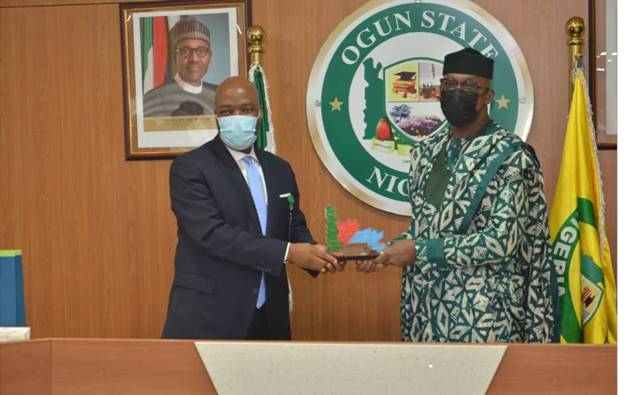
One of the foremost underwriting firms in the country, Great Nigeria Insurance Plc partnered with Ogun State Security Trust Fund as part of its strategic Corporate Social Responsibility (CSR) initiatives.

The company supported the Ogun State Security Trust Fund (OSTF) through donations in discharging its duty of securing the lives and properties of indigenes and residents of the state.

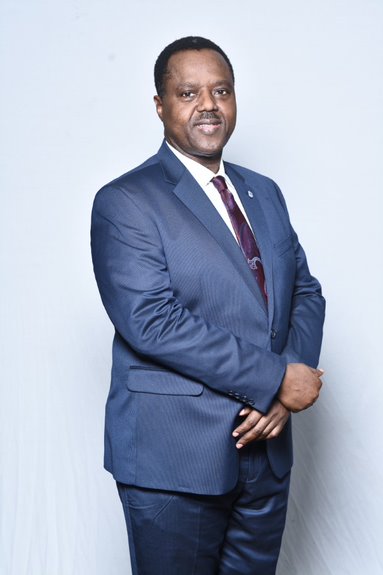
The Managing Director/CEO of the company, Mrs. Cecilia O. Osipitan while commenting, mentioned that as a socially responsible corporate entity, the company’s donation was the fulfillment of the organization’s resolve to support causes that will help create a safer and better society.

She stated that the partnership with the government is focused on ensuring that the desired security stance is maintained within the state and its environs. She also said that the donation was informed by the need to boost the Security Fund’s operation, as security is very essential to economic development; considering the fact that no investor will commit funds into an unstable economy characterized by lawlessness, disorderliness and chaos.

She reaffirmed continuous support to the Ogun State Security Trust Fund (OSTF) in actualizing its main objective which is to maintain the security and welfare of citizens in building a safe community.

Mrs. Cecilia O. Osipitan commended the Government of Ogun State under state Governor, Prince (Dr.) Dapo Abiodun for encouraging an enabling environment for businesses in the State, particularly pointing out the remarkable improvement in security across the state.

According to Mrs. Osipitan, the Ogun State Security Trust Fund has witnessed great re-engineering by Governor Abiodun which will greatly impact the operations of the security initiative. She thus encouraged other private sector stakeholders to increase their contribution in funding the state’s security initiative.

While stating the improved security situation in Ogun State, Mrs. Cecilia O. Osipitan lauded the leadership style of Governor Abiodun, likening the state to a business enterprise being efficiently managed by its Chief Executive Officer, in this case, Executive Governor, Prince (Dr.) Dapo Abiodun.

The Ogun State Security Trust Fund was established in 2011 by the Ogun State Government as a public-private partnership for the improvement of security in Ogun State and refined in 2019 by Governor, Prince (Dr.) Dapo Abiodun.

Since October 2019, Great Nigeria Insurance Plc has supported the Ogun State Security Trust Fund in line with fulfilling its obligation to support its host community.


CRC Credit Bureau Unveils Data Submission API

0

CRC Credit Bureau has launched its Data Submission Application Programming Interface (API) that enables institutions access and submit data on their credit customers online real time.

This innovation in Nigeria, the first in the industry, is an automated medium that enables institutions, provide CRC with information on credits  immediately they are booked on the system and update existing credit records as soon as repayments have been made by their customers. The API also enables them to access relevant information about their customers through live connections.

Traditionally, lenders submit credit data once or twice a month which leaves some customers who have paid, in between this cycle, either waiting for an update to be done, while others are not able to build a credit history especially if they have taken and repaid the loan before the information is provided to the credit bureau.

An example of these are short-tenured facilities e.g. 24 hours, 7-day facilities etc. The traditional reporting often causes a delay for borrowers who want to access new loans immediately after they pay off outstanding facilities or for those who want to build credible profiles to access loans/postpaid products thereby improving their standard of living.

On the lenders side, they spend additional man hours updating information manually thereby increasing their operational cost and negatively impacting efficiency.

By adopting this technological advancement in data reporting, institutions can eradicate these challenges, as their customers begin to build credible profiles and histories immediately facilities are taken. Instant updates are conducted on loans and postpaid products as repayments happen and are fully made. Therefore, by taking advantage of this API, lenders assist all their customers to continuously build accurate and reliable credit profiles that enable them to enjoy additional opportunities.

This solution completes the operational reporting cycle for lenders to CRC Credit Bureau, as now they can automate both the generation of credit information for decision making and the submission of data on their credit customers. Lenders can reduce their loan processing costs and increase efficiency emanating from the challenges associated with the manual reporting of credit files, ultimately scaling up their business and increasing profitability.

Even though the Federal Government of Nigeria, has eased the lockdown significantly in order to kick-start economic activities, the use of online mediums or Electronic-Channels for digital lending will continue to be the most favorable method of initiating credit requests and CRC’s API is a welcome innovation in the credit bureau sub-sector which will benefit lenders and borrowers alike.

According to the Managing Director/CEO of CRC Credit Bureau Limited, Dr.‘Tunde Popoola‘ “We are always listening to our customers, individuals and institutions alike, and during the restriction of movement one overarching challenge was the need to have an automated means of accessing and submitting data 24/7. As a data company, we should ensure that beyond just providing credit data, our customers are able to access and submit data as efficiently as possible. We know that timely data reporting is essential to the quality of data which ultimately increases access to finance and postpaid products for consumers and businesses. Consequently, our Data Submission API makes this process more efficient and effective for all parties involved’’

Lenders can have access to CRC’s API solutions in 4easy steps: Request for the API Integration Kit, Implement API, Test and Go Live. Further information can be obtained by sending CRC Credit Bureau an email to [email protected] or [email protected].

CRC Credit Bureau provides a nationwide repository on credit profiles of corporate entities as well as consumers, thus improving the ability of credit providers and borrowers to make informed lending and borrowing decisions. The bureau’s database covers the credit industry which includes commercial banks, non-bank institutions, retailers, utility service providers and fintechs.

High Cost: Major Reason for Protein Deficiency in Nigeria

0

Nutritionists and public health experts have identified high cost as the major reason for protein deficiency in Nigeria.

Speaking during a webinar on Nigeria’s Food Culture and the Challenge of Protein Deficiency, Dr. Omadeli Boyo, Medical Director of Pinecrest Specialist Hospital lamented that carbohydrates such as rice and garri constitutes the most commonly consumed food in the country mainly because many families cannot afford such protein foods such as egg and beans regularly.

Boyo, who is also a public health expert, described protein as the building block of the human body system. He traced a link between low consumption of protein foods and malnutrition. He identified four major types of malnutrition as iron deficiency anaemia, protein-energy deficiency, vitamin A and iodine deficiency disorder.

As a solution, Boyo called for dietary diversification in Nigeria in form of healthy diet by families as follows:

  • Eating balanced diet that contains a variety of nutritious foods
  • Prepare such foods using the best cooking methods
  • Eating in the right proportion
  • Limit total fats consumption, especially saturated fats
  • Increased consumption of fruits and vegetables, legumes, whole grains and nuts
  • Limit intake of sugar

Boyo tasked the government on the challenge of malnutrition by sensitizing communities and attitudes, running awareness campaigns regarding the benefits of meals rich in proteins and ensuring buy-in by stakeholders such as women, farmers, traditional institutions, labour unions and the media.

He also called on the government to educate communities on the danger and causes of malnutrition, explain the link between malnutrition and disease/growth disorders and also enact acceptable policies to address the situation.

Mr. Ezekiel Ibrahim, President, Poultry Association of Nigeria (PAN) described chicken as the cheapest source of animal protein in the country. He decried the high cost of poultry production in Nigeria, lamenting that the country effectively abandoned agriculture because of oil, even when the agric sector employs about 60 percent of Nigerians who reside in rural areas.

On his part, Mr. Lanre Fasakin, the Managing Director of CMRG, a leading research firm, said a survey conducted by his firm concluded that Nigerians appreciate the essence of protein and its nutritious impact.

Fasakin said: “High cost is the major hindrance to protein consumption in Nigeria. The issue of double AA (availability and affordability) is key.”

He recommended that people should go for protein foods that are readily available and affordable, rather asking families to eat what they cannot afford to buy.

The Protein Deficiency Awareness Webinar was designed to create awareness on the importance of consuming foods rich in protein to effectively tackle the growing problem of malnutrition in the country.

Stanbic IBTC Holdings Tasks Employees on Digitization, Upskilling

0

Stanbic IBTC Holdings PLC, a member of Standard Bank Group, has urged employees to embrace digitization and build career resilience through diversity and upskilling in order to be outstanding in the workplace.

Olufunke Amobi, Country Head, Human Capital, Stanbic IBTC Holdings PLC, gave this advice  during a Virtual Learning Series themed “Building Career Resilience.”

Mrs Amobi revealed that forces of change such as globalization and rapid technological advancements such as Artificial Intelligence, Robotics, cognitive technologies and crowdsourcing, amongst others, are the rationale for the evolution of careers and their shift from traditional to contemporary.

She noted that the traditional career path was defined in terms of linear progression up the firm’s hierarchy while seeking to obtain greater extrinsic rewards. The contemporary career trajectory, on the other hand, focuses on experiences and competencies that exist across firms, driven by values that are more flexible and dynamic.

The Stanbic IBTC Holdings PLC Country Head of Human Capital encouraged participants to build contemporary careers as well as a strong network to enable them attain success in their professions. She also advocated the need for workers to invest in technology and exploit various websites for free online courses to develop their digital literacy skills.

Mrs Amobi further stated that the COVID-19 pandemic has changed the workplace culture, emphasizing that workers that would survive these times are those that can easily adapt in the rapidly changing world. She counselled employees to acquire various skillsets to enable them to respond to changes in the workplace, noting that “we are in a Volatile Uncertain Complex Ambiguous (VUCA) world.”

According to her, the internet age bordered on contemporary career, which is self-directed and non-linear. “Building diversity and depth of skill are key in multiplying knowledge and skillset and making them future proof. That is the reality of the 4th industrial revolution that sees a rise of the internet age” she said.

She cited how most jobs during the lockdown were done remotely and online, adding that the dexterity in such times will be considered during recruitment processes. She however encouraged workers to build their careers based on their passion as that is a sure way to build their network faster while on the job.

She also urged workers to respond to the new normal by being proactive and not reactive. “There is the need to be creative, innovative and knowledgeable about digitization and the wave of change” she said.

Pantami Tasks Danbatta, NCC on Digital Economy

0

Following the reappointment of Prof. Umar Garba Danbatta as the Executive Vice Chairman (EVC)/CEO of the Nigerian Communications Commission (NCC) for another five-year term, the Hon. Minister of Communications and Digital Economy, Dr. Isa Ali Ibrahim Pantami, has charged the EVC and the entire Management of the Commission to redouble their efforts towards actualising the digital economy agenda of the Federal Government.

The Minister spoke when the Executive Management of the Commission led by Prof. Danbatta paid him a courtesy visit on Monday.

According to the Minister, the proactive decision to recommend Danbatta’s reappointment to the President for approval was “to ensure stability in the telecommunications industry and consolidate on the gains and successes already recorded in the industry in the last five years of Danbatta’s leadership as the EVC of NCC.”

Pantami, however, emphasised the need for Danbatta-led NCC Management to work more harmoniously with the Ministry and Agencies towards ensuring effective implementation of the National Digital Economy Policy and Strategy (NDEPS) as well as thorough implementation of the new National Broadband Plan (NBP), 2020-2025.

“The success of the Commission is our collective responsibility. While we, as a Ministry, do our best to formulate general industry policy and supervise the activities of the Commission, I will urge the NCC family to be united, remove all lines of demarcation, ensure justice, fairness in all decisions and above all, ensure harmonious relationships. This task lies on the table of the EVC,” he pointed out.

Speaking further, Dr. Pantami reminded the EVC that the focus of President Muhammadu Buhari is currently to boost digital economy, which, he said, has become even more important following the experience of COVID-19 pandemic that has left many individuals and organisations relying more on digital platforms for work and collaboration.

“So, we expect the NCC, as the telecoms Regulator, to take the issue of digital economy very seriously and give it all the attention it deserves within Commission,” he said.

Speaking earlier, the EVC appreciated the Minister’s role in his reappointment and reiterated his commitment to taking the Commission to greater heights.

“I consider my reappointment as the EVC of NCC for another five years as an honour and a show of the confidence the Hon. Minister and the President have in our efforts at NCC in the last five years. We would like to assure the Hon. Minister of our commitment, as a Commission, to work with the Ministry and other Agencies under the Ministry’s supervision towards advancing the frontiers of digital economy in Nigeria,” the EVC said.

Those who accompanied the EVC during the visit include the Executive Commissioner, Technical Services, Engr. Ubale Maska; the Executive Commissioner, Stakeholders Management, Barr. Adeleke Adewolu;  Secretary, Universal Service Provision Fund (USPF), Shu’aibu Ayuba; and Director, Legal and Regulatory Services, Mrs. Yetunde Akinloye.

Others are the Director, Compliance Monitoring and Enforcement, Mr. Efosa Idehen; Director, Public Affairs, Dr. Henry Nkemadu: Director Licensing and Authorisation, Mohammed Babajika and Director, Human Capital and Administration, Barr. Usman Malah,  among other management staff.


Emirates Resumes Flights to 29 Cities via Dubai

0
emirate

Following the UAE Federal Government’s announcement to lift restrictions on transit passenger services from 15th June, Emirates will offer passenger services to 16 more cities on its Boeing 777-300ER aircraft. With travel restrictions remaining in place in most countries, customers are reminded to check entry and exit requirements before their journeys.

Flights to the following cities will be available for booking in your GDS: Bahrain, Manchester, Zurich, Vienna, Amsterdam, Copenhagen, Dublin, New York JFK, Seoul, Kuala Lumpur, Singapore, Jakarta, Taipei, Hong Kong, Perth and Brisbane.

In addition, from 8 June Emirates will offer flights from Karachi, Lahore and Islamabad for travellers from Pakistan who wish to connect onwards to other Emirates destinations.

With this latest announcement, Emirates will be offering flights for passengers on the back of its scheduled cargo operations from Dubai to 29 cities, including existing flights to London Heathrow, Frankfurt, Paris, Milan, Madrid, Chicago, Toronto, Sydney, Melbourne and Manila (from 11 June).

Customers can book to fly between destinations in the Asia Pacific and Europe or the Americas, with a convenient connection in Dubai, as long as they meet travel and immigration entry requirements of their destination country.

Working closely with the UAE authorities, Emirates continues to take a measured and phased approach to flight resumption and rebuilding connections between Dubai and the world.

Health and safety first: Emirates has implemented a comprehensive set of measures at every step of the customer journey to ensure the safety of its customers and employees on the ground and in the air, including the distribution of complimentary hygiene kits containing masks, gloves, hand sanitiser and antibacterial wipes to all customers.

Travel restrictions: Customers are reminded that travel restrictions remain in place, and travellers will only be accepted on flights if they comply with the eligibility and entry criteria requirements of their destination countries. 

Residents returning to the UAE can check the latest requirements at: Flying you back to Dubai.


Sanofi to Host 2-Day Virtual Summit for Healthcare Practitioners

0

Sanofi, a global biopharmaceutical company, is set to host a live virtual scientific and educational summit where healthcare practitioners from Nigeria and Ghana will update their knowledge about evolving issues in patient care in the face of the COVID-19 pandemic. Dedicated scientific sessions will provide new insight on treatment of COVID- 19 patients who live with other disease conditions.

The two-day summit will include a plenary session on the first day, June 10, 2020 at 14:00 WAT and clinical breakout sessionsonthesecondday, June11, 2020 at 14:00 WAT and 15:30.Attendance is open only to healthcare professionals through registration.

The capacity building session will accommodate up to 10,000 doctors, pharmacists, nurses and other health practitioners in Nigeria andGhana.

Speaking during the buildup to the summit, Folake Odediran, General Manager, General Medicines, Nigeria & Ghana and Country Lead, Nigeria stated that “Sanofi has been at the forefront of initiatives that could have both immediate and lasting impact in the fight against COVID-19. As a global healthcare leader, Sanofi will continually support healthcare practitioners with up-to-date knowledge to effectively manage patients with improved outcomes. This is in line with our purpose of Empowering Life.”

The plenary session will focus discussions on the journey so far in the fight against COVID-19 pandemic in Nigeria and Ghana and examine challenges and future prospects in both countries. It will also provide  update on the global collaborative efforts at finding a treatment for the disease, as exemplified bySanofi.

The clinical breakout meeting, which will comprise of eleven separate scientific sessions each of one-hour duration, will hold in two parts. Each session will focus on a specific healthcare or disease management topic and healthcare practitioners will be able to attend a session of their choice. Each session will be followed by a Q&A session moderated by healthcare experts.

During the first part which will start at14:00WAT, healthcare experts will lead discussions on six topics related to COVID-19 infections. This includes clinical management of neonates and young children, hypertension, diabetes, pneumonia, immunisation as well as clinical and community pharmacy practice. The second part will start at 15:30 WAT and will examine peculiarities and challenges of managing diabetes in hospitalized patients.

Stanbic IBTC Supports Akwa Ibom State in Combating Covid-19

0

As the need arises for the establishment of additional testing centres across the country, Stanbic IBTC Bank PLC, a subsidiary of Stanbic IBTC Holdings PLC, has partnered Inoyo Toro Foundation, a Non-Governmental Organisation, to support the fight against the Coronavirus (Covid-19) pandemic.

The leading full services financial institution has donated the sum of N20 million towards the set up of certified testing centre in the State.

Speaking on the rationale behind the donation, Yinka Sanni, Chief Executive, Stanbic IBTC Holdings PLC said: “Now more than ever before, the country needs every available resource to fight this pandemic. In recent times, the country has experienced an increase in the number of confirmed Covid-19 cases. This is one of the reasons we decided to donate to the state towards fighting this pandemic. We have no doubt that the the establishment of the centre will help in diagnosis of the virus, which would then form the basis for treatment.”

Responding on behalf of the AkwaI bom State government, Dr. Domic Ukpong, Health Commissioner, AkwaI bom State said:“Akwa Ibom State Government is grateful to Stanbic IBTC Bank, a subsidiary of Stanbic IBTC Holding PLC, who in partnership with Inoyo Toro Foundation, a Non-Governmental Organization focused on human capital development, has committed to extending support in laboratory equipment to the state for the establishment of a testing center. This will ensure early testing of suspected cases and accurate diagnosis of Covid-19.”

Stanbic IBTC Holdings PLCalso donated the sum of N250 million to the Central Bank of Nigeria led organised private sector driven initiative to combat the Covid-19 pandemic. The organisation is also supporting other initiatives towards fighting the Covid-9 scourge.

Employment in Nigeria Decreased Marginally – PMI Report

0


Despite predictions of a huge rise in unemployment due to the negative impact of the coronavirus pandemic (COVID-19) on businesses in the country, the Nigeria Purchasing Managers’ Index (PMI) report has revealed that employment in Nigeria decreased marginally as about 98% of companies kept their workforce numbers.

The report also showed that new orders, output, employment level, suppliers’ delivery, and stock purchases rose to 40.7 index points in May 2020, a 3.6 increase from 37.1 index points recorded in April 2020.

The Nigeria PMI survey report, a property of Stanbic IBTC Holdings PLC, is a collection of economic indicators obtained from monthly surveys of Nigeria private sector companies. The sectors covered by the survey include agriculture, mining, manufacturing, construction, wholesale, retail and services. The indices vary between 0 and 100, with a reading above 50 indicating an improvement in business conditions compared to the previous month.

According to the PMI report, the Nigerian private sector remained in a deep downturn during May, with rates of decline in output and new orders only slightly softer than the unprecedented falls recorded in April 2020.

Furthermore, the rate of purchase cost inflation hit a record high for the second month running, with the scarcity of materials, currency weakness and higher costs relating to logistics leading to higher purchase prices.

The report further stated that due to the lockdown and restrictions on operations, firms experienced delays to orders received which resulted in an increase in backlogs of work for the second month running. While suppliers’ delivery times shortened slightly, reduced activity requirements led to a second successive decline in input buying while inventory holdings fell.

The Nigeria PMI report is a weighted average of the following five indices: New Orders (30%), Output (25%), Employment (20%), Suppliers’ Delivery Times (15%) and Stocks of Purchases (10%).

It showed an increase in companies’ selling prices at a marked pace in May as a result of the higher purchase costs and the rate of output price inflation accelerated to a new record level.

Although business confidence dropped to a 29 month low in May, the rate of contraction is easing slightly as a result of relaxing the lockdown restrictions.

Linkage Assurance Assures Shareholders of Meeting New Capital Requirement

0


Daniel Braie

Managing Director/CEO

Linkage Assurance Plc

Linkage Assurance Plc has assured shareholders that despite the challenges posed by the impact of Covid-19, the Company is on course to meeting the recapitalization requirements.

The Company disclosed that it is concurrently exploring all available options including Rights Issue, private placement, and internal capital sourcing to raise the required funds.

Insurance companies in the country have been in the process of raising capital as required by the National Insurance Commission (NAICOM) before the Covid-19 pandemic, which did not only affect the economy but disrupted the exercise as expected investors from both local and outside the shores of the country were affected.

The industry recapitalisation exercise, which commenced on 20th  May 2019 and to end 31 December 2020, requires that life companies increase their paid-up share capital from N2 billion to N8 billion; General Business from N3 billion to N10 billion; Composite Business from N5 billion to N18 billion; and Reinsurance companies from N10 billion to N20 billion.

The Managing Director/CEO of Linkage Assurance Plc, Daniel Braie had assured the brokerage fraternity earlier in the year that his company will meet the new capital base of N10 billion.

Linkage Assurance Plc at the close of business in 2019 posted a Gross Written Premium (GWP) of N6.52 billion as against N5.39 billion during the same period in 2018, indicating a 21 percent increase.

From the business generated in 2019, the company also recorded a Profit Before Tax (PBT) growth of 909 percent, moving from N135 million in 2018 to N1.36 billion during the review period.

Profit After Tax (PAT) also grew to N1.3 Billion, a 553 percent increase from a loss position of N290 million during the same period in 2018.

Underwriting profit rose by 153 percent to close at N409 million during the review period, as against loss position of N773 million the previous year, while investment also grew by 10 percent,  moving from N2.46 billion in 2018 to N2.71 billion in 2019.