

The National Pension Commission (the Commission) wishes to inform all
stakeholders and the general public, especially Retirement Savings Account
(RSA) holders under the Contributory Pension Scheme, that the Commission has
concluded arrangements for the take-off of RSA Transfers. Accordingly, RSA
holders may transfer their accounts from one Pension Fund Administrator (PFA)
to another once in a year, in line with Section 13 of the Pension Reform Act 2014.
The launch date for the RSA Transfer System is scheduled for Monday 16
November, 2020. This will signify the official opening of the RSA Transfer Window.
Prior to this launch, the Commission had successfully developed the RSA Transfer
Application, a robust electronic platform that would enable seamless RSA
transfers. In addition, the Commission had conducted extensive workshops for
licensed Pension Operators and State Pension Bureaus in readiness for this
epoch-making event.
The activation of the RSA transfer process will engender competition and improve
service delivery in the pension industry, while asserting the right of RSA holders to
determine which PFA manages their pension contributions and retirement
benefits.
PenCom: RSA Transfer Window to Open Nov 16

NTITA: NCC, Danbatta Bag Fresh Awards for Broadband Development

L-R: Akin Naphtal, Chief Executive Officer, InstictWave; Prof. Umar Danbatta, Executive Vice Chairman/Chief Executive Officer, Nigerian Communications Commission (NCC); Dr. Ikechukwu Adinde, Director, Public Affairs, NCC and Olusola Teniola, President, Association of Telecoms Companies of Nigeria (ATCON) during the 2020 Nigeria Tech Innovation and Telecoms Awards held at the NAF Conference Centre in Abuja.
The critical role being played by the Nigerian Communications Commission (NCC) under the leadership of its Executive Vice Chairman, Prof. Umar Danbatta, in advancing the frontiers of broadband development has been recognised at this year’s edition of the Nigeria Tech Innovation and Telecoms Awards (NTITA), 2020.
Regarded as the Oscars of Nigeria’s telecoms industry, the awards, powered by InstinctWave, Africa’s leading business-to-business event organizer in collaboration with the Association of Telecoms Companies of Nigeria (ATCON) in Abuja at the weekend, saw the Commission and other industry stakeholders, including the Hon. Minister of Communications and Digital Economy, Dr. Isa Ali Ibrahim Pantami, carting away distinguished awards.
Danbatta was honoured with the “Broadband Oxygenator of the Year” for his remarkable role and commitment to the development of broadband infrastructure to support the country’s digital economy drive while NCC, as a corporate organisation received the “Outstanding Contribution to Driving Greater Broadband Penetration Award of the Year.”
Through the articulation of a Strategic Vision Plan (SVP) for the fiscal years 2015-2020, which symbolises the focused leadership Danbatta brought on board as the chief telecoms regulator in the country, broadband penetration increased from 6 percent in 2015 to 45.43 in September, 2020.
Also, basic active internet subscription grew from 90 million to 143.7 million while active voice subscription increased from 151 million to 205.25 percent during the same period with teledensity also reaching 107.53 percent as at end of September, 2020.
The last five years have seen the number of licensed Infrastructure Companies (InfraCo) increasing from two in 2015 to six currently. The InfraCos are to deploy broadband infrastructure, on a wholesale basis in the 774 Local Government Areas in Nigeria.
The Commission is currently reviewing the framework for the licensing of InfraCo to ensure sustainable funding options for effective implementation of the proposed national fibre project towards increasing broadband penetration to 70 percent target, as set in the new national broadband plan by 2025.
The on-going review of the InfraCo framework is to cater for the delays in take-off, change in exchange rate, supply chain and other challenges imposed by the COVID-19 pandemic with respect to InfraCo implementation.
NCC and Danbatta’s recognitions at the NTITA 2020 were also hinged on the increase in the contribution of the telecom sector the Gross Domestic Product (GDP) from 8.5 percent in 2015 to 14.30 percent as of the second quarter of 2020, translating to N2.272 trillion in financial value.
In the last five years, under Danbatta leadership, telecoms investment grew from around $38 billion to over $70 billion currently with appreciable remittances in spectrum fees and operating surplus by the NCC into the Federal Government’s Consolidated Revenue Fund (CRF).
Increased e-commerce services, other digital services and more access to financial inclusion were also enabled through increased deployment of broadband infrastructure being promoted by the telecoms regulator through a number of regulatory initiatives.
Speaking on the significance of the NTITA, President of ATCON, Olusola Teniola, said: “Our thinking is that if we decide to ignore the contribution that our sector has made to the development of Nigeria by not recognizing the actors that made it possible, what we are saying invariably is that we are unappreciative of their concerted efforts in changing the story of our industry.”
2020 FMDQ Gold Awards: Crown Flour Mill Most Active Corporate in FX Futures Market

Crown Flour Mill Limited an Olam Group company, has emerged the Most Active Corporate in the FX Futures Market, in the domestic (non-bank) category, at the 2020 Financial Market Dealer Quotation (FMDQ) Gold Awards announced on Friday, November 6, 2020. The wheat milling firm and makers of a rich portfolio of food brands beat two other contenders to the award.
Currently in its third year, the FMDQ Gold Awards recognises principal market participants who have demonstrated excellence and diversity in the fixed income, foreign exchange and derivatives markets; driving development through their activities and raising the standards of the domestic integrated financial market.
Kaodi Ugoji, Group Chief Operation Officer at FMDQ Group said: “The FMDQ has an agenda which is an acronym for global competitiveness, operational excellence, liquidity and diversity. Those four words are pretty much how FMDQ measures the work being done in the financial market, and how it intends its stakeholders approach the market to be able to compete in the international market.”
Speaking on the significance of the award, Sudhir Goenka, Chief Financial Officer, Crown Flour Mill said: “The FMDQ Gold award underlines our commitment to the Nigerian market and similarly, Crown Flour Mill’s commitment to operational excellence which is a key enabler delivering top quality and affordable food products for Nigerian households and the economy at large.”
He further stated: “We are truly honoured by this recognition and more so, for this award for excellence at the FMDQ Gold Awards. Such a noteworthy award will in no small measure motivate us to raise the bar even higher and trigger the appetite for more successes in the coming years.”
Niraj Shah, Head of Treasury, Olam Nigeria Limited also commenting on the feat said: “The award is a testament to the commitment of Olam Group to the Nigerian market and our intent of fostering development across the nation’s food and agricultural value chain, while also contributing to the growth of the economy.
Crown Flour Mill Limited is a subsidiary of the Olam Group, an agro-allied business. Through its wheat milling plants located in Apapa, Tincan Island, Beachland, Ikorodu, Ilorin, Warri, Calabar, Port Harcourt and Kano, the firm produces a rich portfolio of consumer food brands comprising Crown Premium Pasta, Supreme Semolina, Crown Tuwovita and Mama Gold Flour. It also supplies flour to bread bakeries, confectioneries, and noodle makers as part of its Business to Business portfolio.
‘Ecobank Has Best Digital Touch Points in Nigeria’ – Digital Jurist Awards

Ecobank Nigeria has once again proved itself to be a clear industry leader in the digital banking space amongst the commercial banks in the country as it emerged as the bank with “Best Digital Touchpoints” in Nigeria at the virtual Digital Jurists (formerly Web Jurist) 2020 awards, held during a breakfast session of the Nigeria – South Africa Chamber of Commerce Webinar last week in Lagos.
Ecobank also beat other nominees from among 22 commercial banks to win the “Best Web Portal” in the Commercial Banks category. The pan African bank website was also nominated for the “Best Website award.”
The annual prestigious awards which started in 2001 is being organized by Phillips Consulting. The Digital Touchpoints award which is a combination of Web Portal, Social Media and Mobile App are assessed against six criteria including User Interface, Performance, Security, Customer Experience, Customer Engagement and Content.
According to the organizers, the “Digital Jurist” is an assessment tool created by digital experts at Phillips Consulting to evaluate the effectiveness and performance of digital platforms. The criteria were developed by deep research into best practice and evolving user experiences on digital platforms in line with developments in digital technology and practices.
The tool establishes a barometer for assessing digital activities, aligning global best practices and digital standards. The assessment covers websites, web portals, mobile Apps and social media across commercial banks, investment banks, merchant banks, insurance companies, telecommunication, airlines, state governments and federal government parastatals.
Commenting, Dr. David Isiavwe, Group Head, Operations & Technology, Ecobank Nigeria, said the double awards are welcome, stressing that Ecobank is using its wide and versatile digital infrastructure to transform payments and collections in the country.
While commending the organizers of the awards, he submitted that digital banking is the new normal and must be embraced by all.
“As a bank, we are highly impressed with this award for the fact that it is coming from a trusted organization like Philips Consulting, which I have personally followed over the years. Digital Jurist has positioned itself for the future by transiting from Web Jurist to Digital Jurist. They are indeed, doing an excellent work. The reality is that digital banking is the new normal and the way of the future and Ecobank has long embraced that. We appreciate the fact that organizations across the world are looking at the way we do business. We will continue to focus on the key aspects of digital engagement with our clients and customers to give them the best experience.”
Further, Dr. Isiavwe disclosed that Ecobank has an array of digital products and services tailored to satisfy the diverse needs of our customers especially in the areas of convenience, affordability, accessibility and ease of use.
He further stated that the evolution of digital banking is expressed in various forms including the use of Automated Teller Machines (ATM), Point of Sales Services (PoS), Mobile banking services, Unstructured Supplementary Service Data (USSD) amongst several others.
He listed some of the digital products and services of the bank as Ecobank Mobile App, Ecobank Online, Ecobank Pay, Cards, *326#, Omni Lite and Omni Plus as well as Rapid Transfer among others.
NCC: Broadband Plan Key to Digital Economy
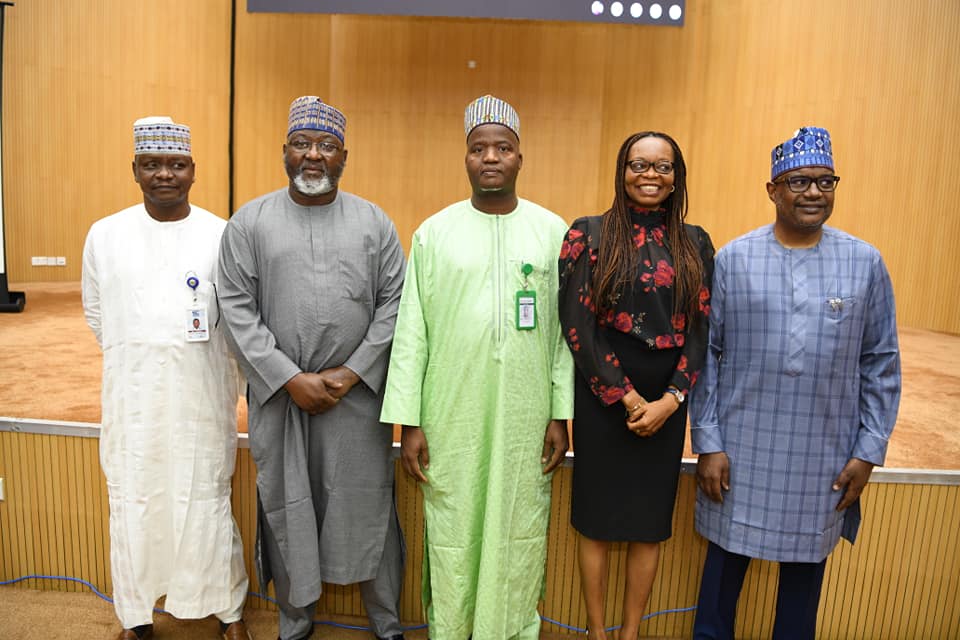
L-R: Abubakar Maina, Project Director, Broadband Implementation Steering Committee (BISC); Ubale Maska, Executive Commissioner, Technical Services, Nigerian Communications Commission (NCC) and Chairman, BISC; Dr. Usman Abdullahi, Director, Information Technology (IT) Infrastructure, National IT Development Agency (NITDA) and Vice-Chairman, BISC; Kelechi Okonta, Managing Director, Zinox Technologies Limited; Ibrahim Dikko, Managing Director, Backbone Connectivity Limited at the stakeholder consultation forum
The Executive Vice Chairman of the Nigerian Communications Commission (NCC), Prof. Umar Danbatta, has said that government is putting greater emphasis on continuous engagement of different stakeholders to secure their buy-in towards achieving the targets of the Nigerian National Broadband Plan (NNBP), 2020-2025.
Danbatta stated this at the first stakeholder consultation with telecommunication industry players on the implementation of the new national broadband plan held at the NCC’s Communications & Digital Economy Complex in Abuja on Tuesday, November 3, 2020.
Represented by NCC’s Executive Commissioner, Technical Services and Chairman, Broadband Implementation Steering Committee (BISC), Engr. Ubale Maska, Danbatta said the Ministry and its agencies, as well as the industry must work together towards the attainment of the set goals.
At the event, which is the second of the multi-stakeholder consultation process by the BISC, Danbatta noted that the 30 percent broadband targets set in the previous NNBP 2013-2018 were met and surpassed due to “our collective efforts, policy direction, regulation and financial commitment by industry players.”
He said there were, however, some targets that were not met in the previous plan because of various challenges that are presently being addressed.
“The NNBP 2020-2025 has, once again, identified initiatives to be implemented by different stakeholders in order to achieve the set objectives of the plan. The importance of broadband to our Gross Domestic Product (GDP), socio-economic development, and especially the digital economy, cannot be over-emphasized,” he said.
In his welcome address, the Vice Chairman of BISC, Dr. Usman Abdullahi, said the forum was to avail the industry players and representatives of government a veritable platform to collaborate, and discuss ways to accelerate broadband implementation for sustainable development of the telecommunications sector and advancement of the digital economy.
Project Director, BISC, Abubakar Maina, made a presentation providing information to stakeholders on previous and new targets, timelines, milestones, strategic pillars, initiatives in the pillars, as well as governance structure in the new broadband plan.
The forum was well attended by industry operators, especially the Infrastructure Companies (InfraCos) both physically and virtually, who gave useful inputs for steering the course of implementation of the new broadband plan to success.
It would be recalled that President Muhammadu Buhari unveiled the new broadband plan on March 19 2020, following the development of the plan by a committee, set up by the Minister of Communications and Digital Economy, Dr. Isa Ali Ibrahim Pantami on December 16, 2019.
As a follow-up, on July 9, 2020, the Minister inaugurated the BISC, which is primarily saddled with the responsibility of ensuring effective monitoring of the implementation of the new broadband plan.
NCC: Inside the N345bn Revenue Haul in 5 Years

L-R: Hon. Unyime Josiah Idem, Deputy Chairman, House Committee on Telecommunications; Hon. (Prince) Akeem Adeyemi, Chairman, House Committee on Telecommunications; Prof. Umar Garba Danbatta, Executive Vice Chairman/CEO, Nigerian Communications Commission (NCC), during the Committee’s oversight visit to the Commission Headquarters recently in Abuja
The Executive Vice Chairman of the Nigerian Communications Commission (NCC), Prof. Umar Garba Danbatta, has told the House Committee on Telecommunications how the telecoms agency contributed to the revenue drive of the Federal Government by generating and remitting N344.71 billion to the Consolidated Revenue Fund (CRF) in the last five years.
Danbatta stated this while briefing the Committee members, led by their Chairman, Hon. (Prince) Akeem Adeyemi, during a legislative oversight function on the Commission in Abuja recently.
The EVC, who attributed the successes of the Commission in the last five years to the harmonious relationship between the Commission and the National Assembly, said such relationship, the diligent oversight by the lawmakers and necessary legislative support have brought forth a lot of dividends for the industry.
“Through the support of the lawmakers, especially the House of Representatives Committee on Telecommunications, which the NCC leadership has worked with in the last five years, the Commission has been able to generate and remit N344.71 billion to Federal Government Consolidated Revenue Fund (CRF) from spectrum fees and operating surplus,” he said.
Danbatta stated that telecoms sector’s contribution to Gross Domestic Product (GDP) increased from 8.5 percent in 2015 to 14.30 percent as of the second quarter of 2020. In financial value, the 14.30 per cent translates to N2.272 trillion in Q2. He also said that telecoms investment grew from around $38 billion in 2015 to over $70 billion currently.
Speaking further, Danbatta said the NCC is promoting financial inclusion by encouraging the Mobile Network Operators (MNOs) to actively participate in providing financial services towards actualising FG’s 80 per cent financial inclusion target by 2020.
According to him, through the collaboration of critical stakeholders as the National Assembly, the NCC has been able to increase broadband penetration from 6 percent in 2015 to 45.43 per cent as of September, 2020 while basic active internet subscription grew from 90 million to 143.7 million.
“Between 2015 and September, 2020, active voice subscription has increased from 151 million to 205.25 million with a teledensity standing at 107.53 percent as at end of September, 2020. We are also empowering and protecting the consumers and ensuring we are able to sanitise the industry of improperly-registered Subscriber identification Module (SIM) cards through our impartial regulatory approach,” Danbatta said.
To continue to collaboratively advance the development of the industry, Danbatta listed key areas of collaboration with the House Committee, going forward. These, according to the EVC, include speedy passage of the Commission’s budget, enhancing mutual working relationship and knowledge transfer sessions/capacity building for Committee members for better understanding of the workings of the Commission and the industry.
Meanwhile, Hon. Adeyemi, in his address, said the over sight function was in line with relevant sections of the Nigerian 1999 Constitution, as amended, which empowers the House to carry out its role of checks and balances on the executive arm of government under which the NCC, as a Federal agency, falls.
The committee commended the leadership of the Commission for its transparency in ensuring remittances to CRF of the Federal Government, considering the current revenue drive of the government.
The committee urged the NCC to sustain its current template of ensuring effective regulation of the telecoms sector in a manner that would be more mutually beneficial to the industry players, the consumers of the telecoms services and to the Nigerian government.
Ecobank Named ‘Best Retail Bank in Nigeria 2020’ – Asian Banker Awards
Ecobank Nigeria has been named the Best Retail Bank in Nigeria by Asian Banker.
This was announced at its Middle East and Africa Regional 2020 Awards virtual ceremony on Thursday. The event attracted thought leaders and decision makers across continents of the world.
Emmanuel Daniel, Chairman, The Asian Banker, said the annual awards are designed to identify emerging best practices in retail financial services, technology implementation and innovation. The annual awards also identifies implementation goals and challenges from which other financial institutions and technology companies could learn.
While congratulating the winners of the prestigious awards in the various categories, he stated that the process for selection was rigorous, transparent and conducted with the highest level of integrity.
Specifically, the organisers said Ecobank was selected as the Best Retail Bank in Nigeria for its deployment of digital solutions to meet the needs of its customers even during the covid-19 pandemic lockdown, adding that the bank also enhanced its customer experience through culture transformation across the various touch points.
“Ecobank encouraged its customers to avoid non-essential contact in achieving their banking needs by utilising digital solutions to access their account, make contactless payments, transfer funds and carryout other banking transactions from the comfort of their home and offices without visiting the bank. The winning bank enhanced its customer experience through culture transformation across all Ecobank Affiliates”.
Patrick Akinwuntan, Managing Director, Ecobank Nigeria described the award as a worthy recognition of Ecobank’s digital transformation landmark initiatives targeted at providing tailored solutions to payments and collections. “We are pleased to be recognised as ‘Best Retail Bank of The Year’ in Nigeria. This confirms the strength of our brand in innovative banking products and digital solutions to deliver services to our teeming customers across the various segments.”
He disclosed that the bank provided uninterrupted services to its customers during the covid-19 pandemic lockdown through its 24/7 digital self-service solutions via Ecobank Mobile App, Ecobank Online, EcobankPay, Ecobank OmniPlus, Omni Lite and the RapidTransfer App. He thanked the Asian Banker Award Team for creating an opportunity to celebrate innovative ideas by members of the banking community, assuring that Ecobank will continue to deploy its robust digital platforms and enhance customer experience at every touch point.
Korede Demola-Adeniyi, Head, Consumer Banking, Ecobank Nigeria; while receiving the award said, “I feel honored to receive this prestigious award for the Best Retail Bank in Nigeria for Ecobank. My appreciation goes to the organisers, the Asian Banker, for their support of the financial service industry in Africa. This award further underscores our commitment to providing practical financial solutions to the retail segment by making banking available and affordable to every Nigerian and generally across Africa.”
She added that “We believe in Ecobank, that Africans should have access to basic financial services irrespective of their social or economic status and it is indeed encouraging that our efforts are recognized and acknowledged. Our digital platforms enable you to bank 24/7 without visiting the bank and our award-winning mobile app is available round the clock for your needs. Thanks once again for the award, I also thank my colleagues across the bank for their commitment in making us serve our customers seamlessly. “
Why Protein Deficiency Persists in Nigeria

Professor Henrietta Ene-Obong of the University of Calabar says protein deficiency persists in Nigeria due to entrenched behavioural, socio-economic, political and environmental decay which failed to address the many multi-factorial causes of malnutrition in the country.
Delivering a paper on: Protein Deficiency: Bridging the Knowledge Gap at The Protein Challenge Webinar Series 5, Ene-Obong listed some of the factors for persistent protein deficiency in Nigeria to include poor infant and young child feeding in terms of exclusive breastfeeding, inadequate complementary foods; poor utilisation of available food resources, poor uptake/adoption of technology and low dietary diversity (monotonous diets, mono-staples).
Others are:
- Poverty and low level of education, including nutrition education
- Household food insecurity
- Failure to pay attention to ethnic differences in food habits and choices as well as lack of access to culturally acceptable food
- Lack of safe water and proper hygiene
- Political instability and insecurity
She lamented the lack of nation-wide quantitative studies on the nutrient intake of Nigerians just as available data are qualitative, limited in scope/sample size or outdated.
“The adequacy of protein intake among Nigerian infants, children, adolescents and women was reviewed by de Vries-ten Have et al. [2020] and it showed that apart from adolescent girls, pregnant and lactating women, the Nigerian population had mostly adequate protein intake when compared with the most recent protein recommendation by FAO (2003) and WHO/FAO/UNU (2007). This is contrary to a recent study by the Japan International Cooperation Agency (JICA, 2017) which showed that about 76 percent of children in the Study sites (Federal Capital Territory) did not meet their requirement for protein and most key nutrients, even though the sample size was small. From available data, we still record high prevalence of acute malnutrition and stunting among infants and young children. Is this a matter of quality? “
Ene-Obong stated that protein deficiency could manifest in Protein-Energy Malnutrition (PEM), which is very common in children of less than five years old just as it is the 10th leading cause of cause of death in the Nigerian population, accounting for 2.5 percent of total deaths.
“According to the most recent 2018 NDHS report, 37 percent and seven percent of children less than five years are stunted and wasted, respectively. Although wasting seems to have decreased from 18 percent in 2013 to seven percent in 2018, stunting has not really changed.”
To effectively curtail the problem of protein deficiency in the country, the don called for adequate nutrition in the first 1000 days of life, adequate adolescent and maternal nutrition, promotion and support of exclusive breastfeeding and continued breastfeeding for two years, and promotion of adequate complementary food: Plant protein alone cannot be adequate to support maximum growth and development in infants and children. Plant proteins should be supplemented with ASFs (fish, eggs, milk, etc.).
Other critical measures she suggested include:
- Dietary diversification: ensuring that infants and young children consume foods from at least four food groups. These groups include) Grains, roots & tubers) Legumes & nuts;) Dairy products) Flesh foods; Eggs) Vitamin A-rich fruits and vegetables; 6) Other fruits & vegetables. This will ensure that some ASF will be included in the diet.
- Aggressive promotion of high-quality protein sources (Soybean and other indigenous legumes like the African yam bean, cowpea, etc.)
- Production of low-cost, affordable soybean-based products
- Protein complementation (called mutual supplementation), e.g., “rice and beans” dish. One exception is combination of milk with legume.
- Increased food production even at household level
- Nutrition education; nutritional benefit of soybean, usage pattern, preparation and storage
- Empowering women
- Good governance
- Treatment strategies
In conclusion, Ene-Obong affirmed that the prevention of malnutrition using the food-based approach is and has been recognised as the most cost-effective development strategy.
“There are many therapeutic means to solve the malnutrition challenges, and a lot of resources have been devoted to them. It is my humble opinion that we need knowledge and the capacity to apply what we know in order to face challenges and overcome them. Bridging this knowledge gap and providing the capacity to bridge it, puts the knowledge into action, which should be focused on the right decisions. More focus should also be given to prevention strategies by appropriately utilising indigenous food resources, which Nigeria is naturally endowed with.”
‘Insurance Sector Needs Govt Support–Mutual Benefits Chairman

Dr. Akin Ogunbiyi
Chairman
Mutual Benefits Assurance Plc
Dr. Akin Ogunbiyi, Chairman, Mutual Benefits Assurance Plc has called on government at all levels in Nigeria to support and patronize the Nigerian insurance industry to achieve its objective, support the nation’s economy, ensure returns on investments as well as achieve capital adequacy.
Ogunbiyi made the call at the 2020 National Conference of the National Association of Insurance and Pension Correspondents (NAIPCO), with the theme ‘Promoting Bankable Investments Portfolio for Insurance and Pension Sectors’ in Lagos.
He said the insurance industry can achieve adequate return on investment and capital adequacy ratio through support and patronage of the Nigerian Insurance industry by government at all levels and also by ensuring reduction of sharp practices to its barest minimum.
While noting that the industry can accumulate retain earnings and shareholders’ funds on a sustainable basis through good corporate governance and adaptive leaders that recognize and respond to insurance needs and relevant adjacencies, he said the industry also requires commitment and dedication from all of us to achieve survival, growth and profitability.
Ogunbiyi who was the NAIPCO website Chief Launder, said the financial assets such as debt and equity instruments as well as money market and equity funds are returning low yield, adding that as a result of the prevailing not too favourable investment climate, capital preservation yields are not as profitable as before.
He noted that though inflation at 13.9 percent, one loses money in real terms as fixed income may guarantee cash flows, but with negative profitability.
“I want to submit that we can achieve adequate return on investment and capital adequacy ratio through support and patronage of the Nigerian insurance industry by government at all levels and reduction of sharp practices to its barest minimum. We can accumulate retain earnings and shareholders’ funds on a sustainable basis through good corporate governance and adaptive leaders that recognise and respond to insurance needs and relevant adjacencies. We require commitment and dedication from all of us to achieve survival, growth and profitability,” he pointed out.
Stanbic IBTC: Business Conditions Improve as Demand Strengthens

The Nigerian private sector experienced a positive start to the final quarter of 2020 with output and new orders both rising at a robust and accelerated pace. Firms continued to expand purchasing activity and employment in line with higher levels of new work. Sufficient capacity and higher staffing numbers led to another decline in the level of incomplete work. Companies remained optimistic about output in the year ahead, with many firms hoping to expand operations.
On the price front, input costs rose, with higher wage and material costs linked to the latest uptick. Cost burdens were passed on to customers which led to a robust rise in selling prices.
The headline figure derived from the survey is the Purchasing Managers’ Index™ (PMI®), a property of Stanbic IBTC Bank PLC. Readings above 50.0 signal an improvement in business conditions on the previous month, while readings below 50.0 show a deterioration.
The headline PMI registered at 53.5 in October, up from 52.5 in September, signalling a solid expansion in business activity at Nigerian private sector firms.
Higher customer numbers and easing restrictions associated with the coronavirus disease 2019 (COVID- 19) were widely reported by panelists helping lead to stronger growth of both output and new orders. In both cases, continuous expansion has been recorded for four consecutive months.
Employment continued to rise modestly, with the rate of job creation in line with that seen in the previous survey period. Efforts to keep on top of workloads were largely successful as outstanding business decreased at one of the fastest rates since the start of the survey almost seven years ago.
Purchasing activity also rose sharply in line with higher output levels, contributing to a substantial accumulation of inventories. Despite rising demand for inputs and political unrest, competition among suppliers and prompt payments meant delivery times shortened to the greatest extent in 30 months.
The rate of purchase cost inflation slowed slightly from the previous survey period but remained solid overall. Respondents often linked the latest rise to unfavourable exchange rate conditions and rising raw material prices. Meanwhile, staff costs increased modestly. Firms reportedly passed on higher costs to customers resulting in an accelerated rise in selling prices.
Looking ahead, businesses continue to foresee a rise in output levels over the year ahead with plans to expand operations and implement marketing strategies. That said, sentiment was below the series average as a number of firms mentioned uncertainty surrounding COVID-19developments.
Ecobank CEO: ‘Fintech, Banks, Telcos Should Partner for Economic Growth’
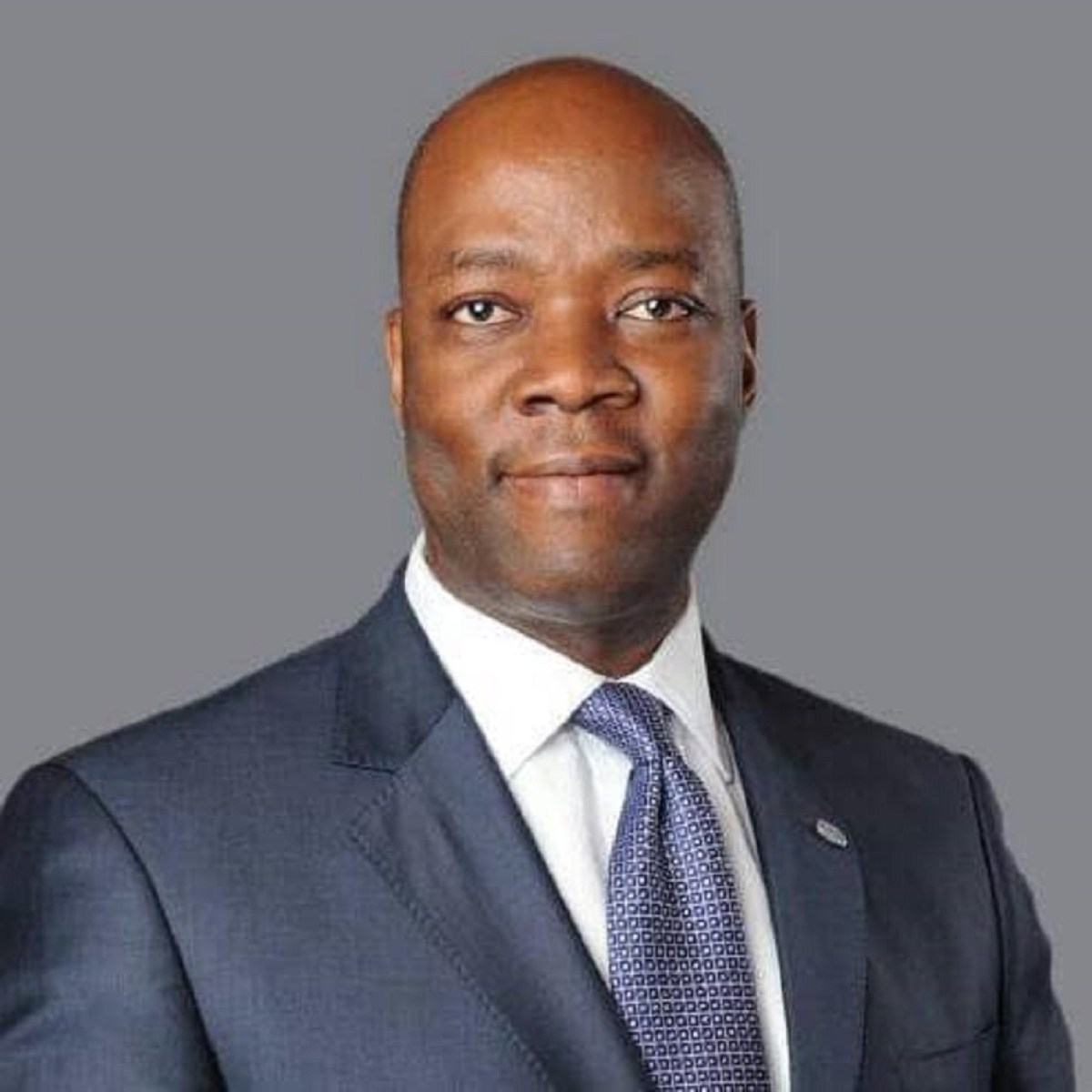
Patrick Akinwuntan
Managing Director
Ecobank Nigeria
Patrick Akinwuntan, the Managing Director, Ecobank Nigeria, says more collaboration is needed between Fintech, banks, and telecommunications companies to spur markets in health, agriculture, education, transportation, fashion and creative industry, commodities, and capital markets.
Akinwuntan, who stated this in his keynote address at the on-going Nigeria Fintech Week maintained that for Nigeria Fintechs to accelerate positive disruption for value, there is a strong need to develop talents, solve problem beyond payments, monetise data and challenge the status quo.
Specifically, he made a case for the establishment digital school of Fintech to groom talents, deepen skills for businesses and grow knowledge of the financial services industry. He added that the industry is sitting on a trove of data as big data can be leveraged to create values for customers including adopting superior user experience, and Interface for affordable payment and improved credit access.
According to him “we must take the lead to introduce a continent-wide Bank Verification Number (BVN) and Global Standing Instruction (GSI) for Africa under the African Continental Free Trade Area (AfCTA) Agreement, champion blockchain for cross-border payments in agriculture, education, and the government i.e. leveraging technology for better productivity.”
He also emphasized that we must look at ways to improve cyber-security & defense.
Further, the Ecobank Managing Director stated that with a Pan African reach, award-winning capabilities, and a customer base of over 25 million, Ecobank is enabling and partnering with Fintech platforms across the continent.
He noted that Ecobank’s flagship pan African switch connects countries where it operates across Africa. This centralized switch allows easy integration, enabling instant transfers between 33 African countries, while offering real-time settlement across Africa in 18 local currencies.
In his opening remark President of the Nigeria Fintech Association, Dr. Olusegun Aina stated that with the economic vulnerability following the COVID-19, Fintechs are undoubtedly the solution to the current disruptions. He said we must as a country position digitally, as digital readiness will spur our recovery in 2021 and beyond.
According to Dr. Aina, businesses and stakeholders in general must appreciation changes in the customers’ behavior, which is the main thing that determines a company’s success. He reiterated that regulation and funding is the main challenge hindering Fintechs from occupying their space fully, as they are fully adapted to the need of customers in the present generation.
The Nigeria Fintech Week with the theme “Evolving Economic Disruptions; Fintech as a Solution” has participants from all over the world. According to the Nigeria Fintech Association, with the evolving global economic disruption, the Nigeria Fintech Week (NFW) 2020 aims to discover, launch and bring to limelight the new Fintech solutions that can be leveraged in key important but neglected sectors such as health, agriculture, education, ecommerce, logistics amongst others.
The weeklong event would feature 20-product pitches/launches, 10-keynotes, 15-panels/presentations, 70+ speakers, 2000+ attendees, would promote solutions for health, education, agriculture and advance insights around customer experience, digital skills, future of fintech, blockchain amongst others.
Some of the speakers include Patrick Akinwuntan, Managing Director & Regional Executive, Ecobank Nigeria , Dr Chikwe Ihekweazu, DG, NCDC, Oremeyi Akah, Chief Core Officer, Interswitch, Sitoyo Lopokoiyit, Interim, CEO, M-PESA, Ebenezer Onyeagwu, GMD, Zenith Bank, Alan Sinfield, CEO, 9mobile, Jay Alabraba, Co-Founder, Paga, Ade Bajomo, ED, IT & Operations, Access Bank, Dr. Segun Aina, President, FintechNGR and several others.
NSITF Chair, Isire, Seeks New Economic Strategy for Nigeria
Mr. Austin Enajemo-Isire, Chairman, Nigeria Social Insurance Trust Fund (NSITF) says there is urgent need to consider alternative strategies to retool the economy for survival and growth even as he called for the review of the Pension Reform Act (PRA) to enable those in Real sectors of the economy have access to Insurance and Pension fund to finance their operations.
Enajemo-Isire, made the call while speaking at the 5th National Conference of the National Association of Insurance and Pension Correspondents (NAIPCO), themed “Promoting Bankable Investments Portfolio for Insurance and Pension Sectors, in Lagos as Chairman of the occasion.
NSITF boss who identified the effect of the ravaging COVID-19 pandemic and wanton destruction of life and properties across the country caused by the ‘#EndSARS Mayhem, among many others on the economy, noted that the impact of these crisis have resulted into the Nation GDP declining from a growth of 2.2% in 2019 to about -4% by year end.
He said as a result of this, the Government, Private sector Institutions and individuals have continued to search for economic survival strategies to change the narratives and create new normal.
Mr. Austin Enajemo-Isire advocated for a deliberate policy by the authorities, in addition to what is currently obtainable, directly or through moral suasion to invest Insurance and Pension Fund in sectors such as Manufacturing, Agriculture and Aviation, etc with an inbuilt safety net.
“In furtherance to the foregoing, the current restrictive nature of insurance and Pension Funds investment outlets calls for review of the legislations guiding investment of Insurance and Pension Fund. The yelling and plea from the Organised Private sector of Nigeria (OPSN) to create more access to investible FUNDS deserves attention.
“It is worthy to note and be reminded that Insurance and Pension funds are subject to regulatory guidelines as provided in section 25 of the Insurance Act 2003 as amended and Sect 86 of the PRA 2014, for the purpose of safety and Returns.
“However, a consideration for review of these legislations to enable some special and Real sectors of the economy have access to Insurance and Pension fund to finance their operations, will be most beneficial to the growth and development of the Nation’s Macroeconomic activities. A deliberate policy by the authorities, in addition to what is currently obtainable, directly or through moral suasion to invest Insurance and Pension Fund in sectors such as Manufacturing, Agriculture and Aviation, etc with an inbuilt safety net, will be a welcome development,” he suggested.
NSTIF boss who stressed the important role of insurance as a catalyst to nation building and risk transfer mechanism, commended underwriters for rising to their responsibility, noting that “some operators, in recent times have given assurances to the insuring public that reported claims emanating from the EndSARS protest, among others, will be promptly honored, particularly policies with extension that cover Strike, Riot and Civil Commotions (SRCC). This is cheering news for the Industry and the Nation in general.”
Standard Bank Returns to 3rd China Int. Import Expo
Standard Bank is participating in the China International Import Expo (CIIE) this year for the third time, as it proves to be an invaluable platform for exposing African client businesses to opportunities in the world’s largest consumer markets.
The third rendition of CIIE, to be held between November 5 and 10 in Shanghai is one of the few international conferences to physically take place this year following the outbreak of COVID-19.
“This sends a strong signal that China’s recovery is underway and reaffirms its position of open trade, which benefits the African continent, and is critical at a time when geopolitical uncertainty and pandemic disruption are impacting global trade,” said Philip Myburgh, Head of Africa China Banking at Standard Bank
China is Africa’s largest trading partner, and the facilitation of trade between the two in the post-pandemic world is key to bringing investment into African economies, and to help them recover and grow. Also, shift in preference among Chinese consumers is spurring a new demand for products from Africa.
The Standard Bank exhibition stand in the Food and Agriculture Hall will allow clients from African countries showcase and promote their products to Chinese buyers. This year, the stand is heavily focused on exhibiting agricultural products and commodities such as wines, fruits, nuts, seafood, coffee, tea, frozen avocado, timber and cotton.
Standard Bank clients in the wine industry will benefit from this year’s collaboration with the Wines of South Africa (WSA) China office In China. South African wines are becoming increasingly popular among consumers.
Standard Bank is also working closely with the International Trade Centre (ITC) at the 2020 CIIE. The ITC is linked to the United Nations and focuses on helping clients in markets like Kenya and Mozambique with agri-processing and accessing new markets for export.
The bank’s clients will participate in a face-to-face matchmaking event within the CIIE venue facilitated by Standard Bank’s strategic partner, the Industrial and Commercial Bank of China (ICBC) and will get to interact with potential Chinese buyers with an interest in their products.
A wider customer cohort will attend Standard Bank and ICBC’s virtual matchmaking sessions, allowing for the same interaction with potential Chinese importers but without having to travel to China. This year, Standard Bank clients from across the continent are participating in this customized virtual event, partnering with selected ICBC clients via digital introduction and with the assistance of a translator.
“Our efforts at the CIIE are bolstered by our strategic partnership with the Industrial Commercial Bank of China (ICBC), which is aimed at expanding the import and export value chains between Africa and China. Together with the ICBC, we have been building an effective trade corridor between China and Africa over 10 years,” says Mr. Myburgh
He adds that Standard Bank’s participation in the CIIE over the past three years demonstrates the group’s strong commitment to China as a trade partner. “China remains a crucial trade partner for African economies, and its trade ties with the region have increased significantly in recent years. We want to continue to unlock the growth of this economic corridor and that is why we have participated in the CIIE since its inception.
“As Africa’s largest financial services company, we have a responsibility to play a leading role in facilitating trade and capital flows between Africa and the wider world, and in particular with China. The CIIE provides an invaluable platform to strengthen ties, deepen connections and form mutually beneficial agreements that encourage trade flow and economic growth.”
5 WAYS TO KEEP YOUR SANITY IN STORMY TIMES

Globally speaking, we live in a dispensation where socio-economic crisis has taken sway in several nations of the world. The year 2020 has been quite a tempestuous year. It all started with the outbreak of covid-19 and then followed by a series of demonstrations, protests and civil unrest rocking a number of countries.
The attendant crises have been job losses, high unemployment rates and shrinking consumers’ purchasing power. To avoid being caught up in a web of disillusionment, we have advanced five (5) critical steps that can help you keep your sanity in these perilous times.
- BE DISCREET ABOUT YOUR SOURCE OF INFORMATION
There are so many sources of information; some are credible and a lot are not. With the advent of social media, the peddling of fake news has become common place especially since there is absence of censorship. So, to protect your mental sanity, it is advisable to identify and stick to reliable sources of information. And even when you identify them, it is also important that you regulate the amount of time you devote to them. Having a fair idea of goings-on around you might just be enough. Minute details could be mind-boggling and even depressing.
- DO NOT BE IMPULSIVE IN EXPENDITURE
Impulsive buying is cash-decimating and in the long run, creates a big hole in your pocket. In difficult times, you put a check on your quests and desires. Remember, there is a difference between your needs and your wants. In hard times, you pay more attention to your needs than your wants and this will help you avoid being impulsive in purchases.
- BUY IN BULK
It makes a lot of economic sense to buy in bulk than in singles or units. Bulk-buying saves money. It might be time-consuming and a bit demanding but in the long run it is worth the while. Buying in bulk allows you an opportunity to negotiate for discounts which you may not get if you buy in units or singles. Bulk-buying is a sure way to keep your head above water in times of socio-economic crisis.
- USE DIGITAL WALLET FOR YOUR TRANSACTIONS
In times of crisis, especially when there is restriction of movement, your digital wallet comes in handy to enable you make transactions from the comfort of your home or wherever you may be. Apart from being convenient, it also helps you regulate your expenses as opposed to when you have physical cash at your disposal. It also helps you not to be impulsive. Your best digital wallet is the WayaPayChat. It is a safe and secure payment platform that in addition, offers you an opportunity to socialize with family & friends, share personal moments, chat and call for free! You can download the WayaPayChat app for free from Google Play and App Store.
- KEEP A POSITIVE MIND-SET
One of your most invaluable and intangible assets in times of distress is positive mindedness. Without this, it becomes difficult to cope. It becomes difficult to endure; patience eludes you and hopelessness creeps in. Keeping a positive disposition means being optimistic that the situation is a passing phase. It means keeping hope alive. Refuse to dwell so much on the prevailing circumstance. Learn to counter every negative thought with a positive one. Surround yourself with positive-minded people.
Remember to take advantage of WayaGram, the Instagram of Nigeria to socialize with friends and families and share positive thoughts and moments. Yes, you can keep your sanity in stormy times.
Contact: www.wayapaychat.com & [email protected].
CTO Appoints 1st Female Secretary-General in 120 Years

|