Saturday, December 27, 2025
33 C
Lagos
Home Blog Page 164

AEDC Unveils Victor Osadolor as Chairman, Bada now Interim MD

0

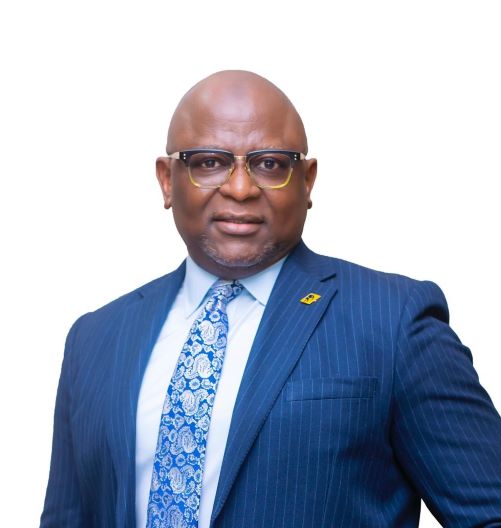
Victor Osadolor

The Abuja Electricity Distribution Company (AEDC) now has a new Board and interim management to run its day-to-day operations.
The Board is made up of Victor Osadolor as Chairman. Osadolor is currently Chairman of UBA Pensions, a Non-Executive Director of African Finance Corporation (AFC), and former Deputy Managing Director of the United Bank for Africa (UBA).
He is a seasoned finance and business turnaround expert with over three decades of corporate experience. He is a Fellow of the Institute of Chartered Accountants of Nigeria (ICAN), and an honorary life member of the Chartered Institute of Bankers of Nigeria (CIBN).
Alex Okoh is also a Member of the Board, and is currently the Director General of the Bureau of Public Enterprises (BPE). He is currently a member of the Presidential Economic Advisory Council, and has over three decades of corporate experience in general management, leadership, banking and organisational development.
During his career in the banking sector, he served in a variety of leadership roles, including corporate banking, operations, treasury, as well as initiating and designing transformative projects and processes.
Other members of the board include Atiku Abubakar Tambuwal, Sam Adikamkwu; a legal practitioner and former Chief Legal Adviser at the United Bank for Africa (UBA); and Muyiwa Akinyemi, seasoned accountant and a current Group Executive at the United Bank for Africa (UBA).
The Interim Management is led by Bada Akinwumi, who will serve as the Interim Managing Director. Other members of the interim management are: Sani Usman, Interim Chief Business Officer; Babajide Ibironke, Interim Chief Finance Officer; Donald Etim, Interim Chief Marketing Officer; and Femi Zacheus Interim Chief Technical Officer.
Addressing the staff earlier in the day, the Chairman, Victor Osadolor reiterated: “I want to assure you that the new Board of Directors is committed to the well-being of our employees. May I please request that all employees and stakeholders remain steadfast and support the interim management as they embark on the transformation of the business for our collective benefit. I thank you all for the sacrifices and commitment thus far as we begin this refreshing chapter of our corporate journey.”
We gather that these appointments follows approval by the Nigeria Electricity Regulatory Commission (NERC) and the Bureau of Public Enterprises (BPE) conveyed on December 9, 2021, confirming the interim management as fit and proper to provide leadership to Abuja DISCO.

NAICOM, STI Communication Managers Win 2021 NAIPCO Award

0

Mr. Rasaaq Salami, Head, Corporate Communications and Market Development of the National Insurance Commission (NAICOM) has emerged as 2021 Corporate Communications Manager of the Year.
Similarly, Mr. Segun Bankole, Assistant General Manager, Sales and Head, Corporate Communications of Sovereign Trust Insurance Plc equally emerged as 2021 Corporate Communications Manager of the Year.
Salami and Bankole both emerged winners in the annual award organised by the National Association of Insurance and Pension Correspondents (NAIPCO), to recognise excellence in the insurance and pension sectors.
Speaking at the presentation of the awards to the winners at the end of year party/annual thanksgiving of NAIPCO held at the premises of NEM Insurance Plc at the weekend, the Chairman of NAIPCO, Mr. Chuks Okonta said, the award is part of moves to appreciate NAIPCO’s partners in progress.
Okonta said: “Today, we appreciate our partners in progress that have stood by us over the years. The awardees have distinguished themselves and that is why they are being recognized today. We really thank them for standing by us over the years and we appeal to them to continue the good work they have been doing. The awards were instituted to appreciate those who have distinguished themselves in ensuring the establishment, growth and success of NAIPCO.”
The annual award, which is in its second edition, is awarded to the best Public Relations practitioners in the insurance and pension sectors, looking at impact, co-operation, support, and strong relationship with journalists covering both sectors of the economy.
However, the award committee chooses them because of their relentless support to the journalism profession and generating editorial materials that made journalists’ work easier and seamless.

PenCom: Why Micro Pension Adoption is Slow in Nigeria

0

Mr. Dauda Ahmed, Head of Micro Pension at the National Pension Commission (PenCom) says lack of sufficient awareness is the major reason behind the slow pace of micro pension adoption in the country.
Ahmed said at a media retreat organised by the Pension Fund Operators Association of Nigeria (PenOp) that only 72, 856 persons have signed on for the micro pension plan as at November 30 2021. He equally lamented that only 10 percent of coverage has been achieved so far by the existing pension system in Nigeria.
He said the Micro Pension Plan (MPP) is a unique opportunity for the self-employed and persons in the informal sector to participate voluntarily in pension.
“The MPP was introduced to ensure that informal sector workers who constitute about 65 percent of the working population have an opportunity to save for retirement.
Ahmed listed four key benefits of the MPP as:
• It will improve the standard of living of the elderly as nit provides a regular stream of benefits at old age
• It will provide access to other incentives
• It secures financial autonomy and independence of retirees
• Contributions will be passed to the nest of kin in case of contributor’s death
The theme of the retreat was: Micro Pension: Challenges & Opportunities.

HOW TO ACCESS FEDERAL MORTGAGE LOANS IN NIGERIA

0

By Dennis Isong
Housing being one of the most crucial components of human life leaves everyone with no choice but to have a roof over their heads, thus everyone requires a place to call home. In essence, the Federal Mortgage Bank of Nigeria (FMBN) was founded to ensure that Nigerians had reliable and inexpensive access to homeownership. Many Nigerians, however, fail to take advantage of this opportunity, as the Federal Mortgage Bank of Nigeria makes it easy to become a property owner with the necessary information and strategy fix in place.
Meanwhile, in this article, we’re going to discuss extensively how you can get access to Federal Mortgage loan in Nigeria, the steps and procedure to it.

Details About the Federal Mortgage Loans in Nigeria
Let’s start by knowing the meaning of Mortgage Loan:
Mortgage Loan is a loan that can be used to purchase or refinance a home. “Mortgage loans” is another term for mortgages. Mortgages allow you to purchase a home without having to pay in full but as time proceeds. It’s mostly granted to individuals who are interested in owning a house but don’t have the total cost of the house available at the moment. Let’s discussed the Federal Mortgage Loans;
The Federal Mortgage Bank of Nigeria (FMBN) is an institution that was established in the year 1956 with the aim of lessening the burden of Nigerians in some certain projects. It became Nigeria’s apex mortgage institution in 1994. Since then, it has maintained and overseen the National Housing Fund, a contributing savings system (NHF).
The NHF is a social savings project that aims to raise long-term money in order to provide contributors with low-interest loans.It is one of the FMBN’s main responsibilities. The National Housing Fund Act governs federal mortgage bank loans in Nigeria (1992).
The Federal Mortgage Bank of Nigeria has its main purpose: that’s to improve the availability of inexpensive and easy-to-acquire homeownership in Nigeria. The organization accomplishes this primarily through long-term liquidity and creation of new products and services.

The Decree
According to the Federal government of Nigeria, there are various decree guiding the organization to ensure it functions according to its main goal. They include:
• Collect and administer the National Housing Fund according to the NHF Act’s stipulations.
• Provide Nigerian mortgage institutions with long-term credit facilities.
• Encourage the establishment and growth of viable main and secondary mortgage institutions to meet the demand for housing in Nigeria’s various regions.
• Do anything and engage in any transaction that, in the Board’s opinion, is required to guarantee the appropriate performance of the FMBN Act’s functions.
• Investing both domestic and international funds in the housing market.
• Connect the stock market to the housing market.
• Create and run a thriving secondary mortgage market.

Who is Eligible to Apply for a Federal Home Loan?
You must be a Nigerian who is at least 18 years old. They had to have made a six-month contribution to the National Housing Fund. Applicants must also show that they have a consistent source of income.

How Do I Apply for A Federal Home Loan?
It is common knowledge that you must apply for a loan before receiving one. All you have to do when you require a loan is apply for one. The following is the procedure for applying for a Federal Mortgage Loan in Nigeria:
Institutional borrowers can apply for the loan directly through the Federal Mortgage Bank of Nigeria (FMBN).
Individuals can only apply through a fully regulated Primary Mortgage Bank (PMB) of their choice. However, you will not be able to apply for the loan through FMBN.
The loan applications must be obtained from the same Primary Mortgage Institution.
You must have registered your principal mortgage institution with FMBN in order to access the national housing fund service.

What Documents Do I Need to Apply for a Loan from the Federal Mortgage Bank of Nigeria?
In general, the following documents are required:
• The application form has been completed.
• Title papers photocopied
• Current value report for the house you want to buy or bills of quantities for the house you want to build.
• Certificate of tax clearance for three years.
• Evidence of NHF involvement
• Paystubs for the preceding three months, copied
• Depending on the loan amount requested, an equity investment or personal ownership may be required.

The Steps for Registering a Federal Mortgage Loan?
All Nigerians in employment, whether self-employed or employed, are required to contribute 2.5 percent of their basic salary/income to the fund under the NHF Act No.3 of 1992.
The registration procedure is as follows:
• The Federal Mortgage Bank of Nigeria will send an Employer Registration Form (NHF1) to employers (FMBN).
• Employers must complete Form NHF1 and deliver it to their local Federal Mortgage Bank of Nigeria office.
• The Employer will be registered with the Federal Mortgage Bank of Nigeria and given an employer registration number.
• Employers will be given form NHF2 by the Federal Mortgage Bank of Nigeria, which employees would fill out. Alternatively, you can directly contact self-employed or individual consumers.
• The employee will complete and deliver the NHF2 form to the employer.
• The employer or self-employed persons will submit completed form NHF2 to the Federal Mortgage Bank of Nigeria.
• Employees will be registered on Form NHF2, and each employee/self-employed individual will be assigned a participation number.
Each registered employee will receive a passbook from the Federal Mortgage Bank, in which the employer will record the monthly deduction of his or her 2.5 percent basic income.
Contributions will be deducted at the source by the employer. They will then submit such deductions/contributions to Nigeria’s Federal Mortgage Bank. It will be accompanied by a payment schedule that details the amount each employee contributed as well as the quantity of time covered
Self–employed individuals’ contributions will be remitted to FMBN on a monthly basis.
Contributions will be accepted and payment receipts will be issued by the Federal Mortgage Bank of Nigeria.

What is the maximum amount you can apply for?
You may be eligible for a maximum loan of N15 million, or as the bank may advise. However, no one should be given credit for more than 90% of the value of the mortgaged property.

Dennis Isong Helps Individuals Invest Right In Real Estate.For Questions On This Article Or Enquiring About Real Estate. Follow him on Youtube https://www.youtube.com/LandPropertyNG/ or Whatsapp/Call +2348164741041

N69.4bn Debt: AMCON Floors Jimoh Ibrahim at Appeal Court

0

At long last, the Court of Appeal Lagos Division has dismissed an appeal by the Chairman of Global Fleet Group, Barrister Jimoh Ibrahim, challenging the Asset Management Corporation of Nigeria (AMCON)’s seizure of his 12 assets and freezing of all his accounts over his alleged N69.4billion debt.
The latest development was contained in a press release issued immediately after the appellate court’s decision by Jude Nwauzor, Head, Corporate Communications Department of AMCON. He described the ruling as ‘another victory for AMCON and the needed good news’ to the recovery drive of the government recovery agency.
Recall that the appellate court had upheld the November 18, 2020, order of Justice Rilwan Aikawa of the Federal High Court, Lagos, which authorized AMCON to take over Barrister Ibrahim’s assets over his huge debt to AMCON, which the businessman has been contesting in court. Following AMCON enforcement of Ibrahim’s assets and businesses, the embattled businessman has been fighting AMCON in court and claiming in the contrary in the media.
However, the development may have taken another turn today because the Justices upheld the arguments of AMCON’s lead counsel, Dr Kemi Pinheiro SAN, who prayed the court to dismiss Ibrahim’s application. Chief Niyi Akintola, SAN, is the counsel to the 1st defendant Jimoh Ibrahim while chief Bolaji Ayorinde SAN is for 2nd Defendant, Global Fleet Group.
AMCON, following Justice Aikawa’s order, took effective possession of all 12 properties through its Debt Recovery Agent – Pinheiro Legal Partners. The assets include the building of NICON Investment Limited at Plot 242, Muhammadu Buhari Way, Central Business District, Abuja; NICON Hotels Limited building at Plot 557, Port-Harcourt Crescent, off Gimbiya Street, Abuja, and the building of NICON Lekki Limited also at No. 5, Customs Street, Lagos.
Other properties are the building of Abuja International Hotels Limited located at No. 3, Hospital Road, Lagos; another Property at Plot 242, Muhammadu Buhari Way, Abuja; the former Allied Bank Building on Mile 2, Oshodi Express Way, Apapa Road, Lagos; Energy House located on No. 94, Awolowo Road, Ikoyi, Lagos; NICON Building at No. 40, Madeira Street, Maitama, Abuja; a Residential Apartment at Road 2, House A14, Victoria Garden City, Lagos; NICON Hotels Building at Plot 3, Road 3, Victoria Garden City, Lagos as well as the NICON Luxury Hotel’s Building, Garki I, FCT, Abuja.
In addition to the takeover of the properties, the court also ordered the freezing of all accounts belonging to Ibrahim and his companies including Global Fleet Oil & Gas Limited and NICON Investment Limited all of whom are defendants in the suit No. FHL/L/CL/776/2016. AMCON in November 2020 following a court order seized the properties of the barrister Jimoh Ibrahim over an alleged debt of N69.4billion, which was sold to AMCON by Union Bank as a non-performing loan in the early days of AMCON.
AMCON had sometime on November 4, 2020 through their lawyers Kemi Pinheiro SAN obtained an ex-parte order (Under Sections 49 & 50 of the AMCON Act as amended) against NICON Investment Limited, Global Fleet Oil & Gas Limited and Jimoh Ibrahim freezing their accounts in various banks as well as attaching various properties of the Companies, which properties included: NICON Investment Limited’s Building at Plot 242, Muhammadu Buhari way, Central Business District, Abuja, NICON Hotels Limited’s Building, Plot 557, Port-Harcourt Crescent, off Gimbiya Street, Abuja, NICON Lekki Limited’s Building, No. 5, Customs Street, Lagos, Abuja International Hotels Limited’s Building – No. 3, Hospital Road, Lagos, Residential Apartment, at Road 2, House A14, Victoria Garden City, Lagos, NICON Hotels Building, Plot 3, Road 3, Victoria Garden City, Ajah, Lagos and NICON Luxury Hotel’s Building, Garki 1, Abuja.
Following the execution of the order, NICON Investment Limited, Global Fleet Oil & Gas Limited and Jimoh Ibrahim through their lawyers Chief Adeniyi Akintola SAN filed a motion dated November 19, 2020, seeking to discharge/set aside the order, which was made by Justice R.M. Aikawa of the Federal High Court sitting in Lagos. Some other entities, which AMCON alleged was linked to Jimoh Ibrahim to wit: NICON Insurance Limited, Nigerian-Re-Insurance Limited, Abuja Hotel Limited and NICON Hotels Limited also filed an application to discharge the said order of 4th day of November 4, 2020. After hearing the two applications and the arguments canvassed by parties through their respective counsel, Hon. Justice R.M. Aikawa proceeded to dismiss both applications by his ruling of February 16, 2021.
As a follow up to that decision, both sets of Applicants filed independent appeals in the Court of Appeal, Lagos division. AMCON was represented in the appeals by Kemi Pinheiro SAN, while the first set of Appellants were represented by Chief Adeniyi Akintola SAN and the second set by Chief Bolaji Ayorinde SAN. At the hearing of the appeals on September 30, 2021, Kemi Pinheiro SAN for AMCON raised a preliminary objection to the appeal contending that the appeal was incompetent because the Appellants failed to seek leave prior to the filing of the appeal.
In a unanimous decision today December 10, 2021, the Court of Appeal upheld the preliminary objection of AMCON and accordingly dismissed both appeals. The implication of this is that AMCON remains in possession of the properties attached by the order of Hon. Justice R.M. Aikawa on November 4, 2021.
The matter between Barrister Jimoh Ibrahim and AMCON has been interminable since the loan was purchased by the government debt recovery agency during the first phase of Eligible Bank Assets (EBA) purchases from Union Bank in the early days of AMCON. AMCON is however not deterred to recover the nearly N70billion owed it by Barrister Ibrahim and his companies in the interest of the Nigerian economy and the public in general.

Danbatta: NCC has Powers to Make e-Waste Regulation for Telecom Sector

0

2021 ITREALMS E-Waste Dialogue …From left: National President, National Association of Telecoms Subscribers (NATCOMS), Chief Adeolu Ogunbanjo, Very Rev. Fr. Augustine Ebido of Dominican University, President, Guild of Corporate Online Publishers and Publisher/Editor Realnews, Ms. Maureen Chigbo, host of 2021 ITREALMS E-Waste Dialogue, Group Executive Editor-in-Chief ITREALMS Media Group, Mr. Remmy Nweke; Head, Online Media, Public Affairs Department, Nigerian Communications Commission, Dr. Omoniyi Ibietan who represented EVC Danbatta at the event; Teach/Admin Officer, E-Waste Producer Responsibility Organisation Nigeria (E-PRON), Ms. Mofesayo Oyedeji and Executive Director, DigitalSENSE Africa, Mrs. Nkem Nweke, at the 2021 ITREALMS E-Waste Dialogue on “E-waste in Nigeria Consumer as a Key to Circular Economy and 20 years of GSM” in Lagos.

The Nigerian Communications Commission (NCC) has powers under Section 70 of the Nigerian Communications Act (NCA2003) to develop an E-waste Regulation for the telecommunications sector in the country.
This declaration was made by the Executive Vice Chairman and Chief Executive Officer of NCC, Prof. Umar Garba Danbatta in his keynote address at the 2021 ITREALMS E-Waste Dialogue in Lagos with the theme: E-Waste in Nigeria: Consumer as key to Circular Economy & 20 years of GSM.
Danbatta, represented by the Head of New Media, Dr. Ominiyi Ibietan, said that as at March 5, 2019, based on the Commission’s participatory rule-making procedure, came up with a draft of the E-waste Regulations and Disaster Recovery Guidelines which were hitherto published on its website for comments from the general public, especially telecommunications operators and other stakeholders.
“As required by law, a Public Inquiry on the E-waste Regulations and Disaster Recovery Guidelines was scheduled for March 5, 2019 and a Notice of the Public Inquiry was published in Daily Trust and New Telegraph Newspapers on Monday February 11, 2019,” he said.
The public inquiry, he also disclosed had over Sixty-one (61) persons representing telecommunications operators, interested stakeholders and the media in attendance, which offered him the opportunity to explain the importance of having a proper legal framework to regulate e-waste in the telecommunications sector.
“Considering that e-waste is the fastest growing waste stream in the world and a recent report by the World Economic Forum (WEF) estimated that this waste stream increased by about 48.5 million tonnes in 2018,” he said.
Prof. Danbatta defined e-waste as “electrical or electronic equipment that is waste, including all components, sub-assemblies and consumables that are part of the equipment at the time the equipment becomes waste.”
In addition, based on the WEF, over 75% of electronics imported into Nigeria were irreparable and toxic junk, which means that this menace remained rampant due to the low Gross Domestic Product (GDP) per capita/low income and the desperate quest for information by Nigerians.
The prevalence of e-waste, he said, raised a lot of pollution issues which should be managed, because of the resultant effects on humans and the environment.
Further, NCC, in line with its commitment to sustain phenomenal successes recorded in the sector in the past 20 years, also developed the ‘Disaster Recovery Guidelines’ to mitigate disasters that might affect business continuity in the industry and jeopardise the incredible success already recorded.
The Guidelines, Danbatta said, was introduced as part of the Commission’s wider risk management initiatives, aimed at protecting telecoms companies from the threat of emergencies in their operations.
The Commission, he equally said, in developing robust regulations and guidelines are to enhance development of the industry and the entire economy.
In giving general overview of NCC’s e-Waste regulations, Prof. Danbatta said it is made up of 31 regulations structured into Sixteen (16) parts.
Also included in the Regulations, he said, are one (1) Schedule, nine (9) Forms and four (4) Tables, stressing that the Regulations outlined the responsibilities and obligations of stakeholders in the e-waste value chain, such as the manufacturer, collection and disposal facilities agent, vendors, consumers or bulk consumers, recyclers, importers and transporters.
Notable, the EVC said, is that the Regulations applies to all type-approved Electrical and Electronic Equipment and activities carried out by any person in relation to Electrical and Electronic Equipment used in the telecommunication industry in Nigeria.
Meanwhile, NCC bagged the 2021 ITREALMS Telecom E-Waste Regulator Award in recognition of the Commission’s commitment in the regulation of Waste Electrical and Electronic Equipment (WEEE) in Telecom Sector, according to the Executive Editor-in-Chief of ITREALMS Media, Mr. Remmy Nweke.
The award was received on behalf of the Commission by the Head of New Media, Dr. Ominiyi Ibietan, who represented the EVC and was presented by the National President, National Association of Telecom Subscribers (NATCOMS), Chief Deolu Ogunbanjo at the 2021 edition.

Sovereign Trust Insurance Targets Sustainable Growth in 2022

0

L-R: Olaotan Soyinka, MD/CEO, Sovereign Trust Insurance Plc; Kayode Adigun, GM, Finance & Corporate Services; Ugochi Odemelam, Executive Director, Marketing & Business Development and Jude Modilim, Executive Director, Technical at the 2022 Budget Setting and Strategy Session for Sovereign Trust Insurance Plc held in Lagos recently.

Stanbic IBTC: ‘Most Outstanding Commercial Bank Brand in Nigeria’

0

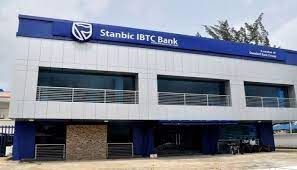
Stanbic IBTC Bank PLC, a subsidiary of Stanbic IBTC Holdings PLC, was named the “Most Outstanding Commercial Bank Brand in Nigeria” at the 2021 edition of the BrandCom Awards which was held recently.
The awards, organised by Brand Communicator Magazine recognised brands, organisations and personalities. It took cognisance of their outstanding contributions to the growth and development of the Nigerian economy.
Wole Adeniyi, Chief Executive, Stanbic IBTC Bank, appreciated the organisers for the award, and noted that Stanbic IBTC Bank has over the years provided unparalleled services and designed products tailored explicitly towards meeting the needs of its customers.
Wole noted that the award would spur the organisation to continue providing excellent services to its clients. The awards reaffirm the organisation’s commitment to providing world-class financial services to its network of clients.
The Stanbic IBTC Bank Chief Executive said: “We are delighted to have emerged the “Most Outstanding Commercial Bank Brand” at the BrandCom Awards. This award confirms that we prioritise our customers’ interests because they are the reason we are in business. We pledge to continue developing innovative products and services that are customer-centric, just as we are committed in our quest to continue fulfilling the financial needs of our customers at all times.”
Wole added that Stanbic IBTC would strive to continue exceeding its customers’ expectations.
Stanbic IBTC remains committed to providing a simplified customer-friendly experience that enhances customer satisfaction and exposes them to new trends in the financial services industry.

CIIN Tasks Insurance Professionals on Industry Revolution, Business Landscape

0

Sir Muftau Oyegunle, President, Chartered Insurance Institute of Nigeria (CIIN) says the insurance industry in Nigeria is undergoing a revolution, meaning that industry professionals must be ready to scale the challenges of the operating environment to remain in business.
Speaking at the 2021 induction ceremony of the CIIN in Lagos, Oyegunle said:
“The insurance industry is undergoing a revolution and our ability to dig in and dig deep during this defining period will ensure that we are not swept away by the turn of events. We aware of the ever-changing demands of the dynamic business environment and I can assure you that considerable effort is being put in by the Institute to remain relevant to the modern-day professional as a leading light to insurance practitioners in the country and beyond it. Ultimately the goal is to ensure that insurance practitioners retain the competitive edge that will see them perform at optimal levels in order to tackle the current challenges in the business landscape and to stand out successfully. In all we do, our job is to bridge the divide and make a difference in our industry for the growth of our country.”
The CIIN President said the Institute’s professional examinations since inception have served as a springboard for outstanding practitioners to launch and distinguish themselves into the core of the insurance industry.
“It is extremely important to point out that by attaining our professional qualification, you have become custodians of the ethics and codes of practice of our noble profession. The purpose of the Institute’s code of ethics is to set forth the values, principles and standards that will guide the conduct of all insurance practitioners.”
He urged insurance practitioners in the country to act as lifetime ambassadors of the industry by upholding the creed and replicate all that it represents in their endeavors.
“Who you are and the principles you uphold are some of the things that make you stand out as a leader and a truly successful professional.”

CIIN: 7 Fellows, 245 Associates Inducted, 10 Graduands from Cameroon, Rwanda, The Gambia

0

Mrs. Joyce Odiachi, Head, Technical Division, Fin Insurance Limited being decorated as a Fellow by Sir Oyegunle at the CIIN Induction event today in Lagos

ADDRESS BY SIR MUFTAU OYEGUNLE, PRESIDENT/CHAIRMAN OF COUNCIL, CHARTERED INSURANCE INSTITUTE OF NIGERIA DURING THE INSTITUTE’S 2021 GRADUATION AND FELLOWSHIP AWARDS CEREMONY HELD ON WEDNESDAY, 8TH DECEMBER, 2021 AT THE COLLEGE OF INSURANCE AND FINANCIAL MANAGEMENT.

PROTOCOLS
Ladies and gentlemen, captains of industry and distinguished stakeholders of the insurance industry. It is with a deep sense of pride and fulfillment that I welcome you all to the 2021 Graduation and Fellowship Awards Ceremony of our great Institute.
Since its conception, the Institute’s professional examinations have served as a springboard for outstanding practitioners to launch and distinguish themselves into the core of the insurance industry.
On behalf of the Members of the Governing Council and the Institute’s Secretariat, I would like to say congratulations to the inductees and awardees here present and also our international graduands, we have six (6) from Cameroon, three (3) from the Gambia and one (1) from Rwanda.
This is no mean feat and should give you joy and a sense of achievement. The professional qualifications are a source of pride to the Institute and all its members. Today, I welcome you to the prestigious club of Insurance Professionals.
It is extremely important to point out that by attaining our professional qualification, you have become custodians of the ethics and codes of practice of our noble profession. The purpose of the Institute’s code of ethics is to set forth the values, principles and standards that will guide the conduct of all insurance practitioners. As lifetime ambassadors of the Insurance practice, I urge you to uphold this creed and replicate all that it represents in your endeavors. Who you are and the principles you uphold are some of the things that make you stand out as a leader and a truly successful professional.
The completion of the Institute’s examination and your induction as an Associate of the Institute is actually the beginning of your quest for knowledge. To be successful, you have to use each day as an opportunity to improve, to be better, and to get a little bit closer to your goals. It might sound like a lot of work, but the best part is, the more you accomplish, the more you’ll want to do more and the higher you’ll want to reach. In the words of Ralph Waldo Emerson “Do not follow where the path may lead. Go, instead, where there is no path and leave a trail”. As long as you have the hunger for success, you will always have the power within you to achieve it. I urge you not to relent in developing yourselves in order to stay relevant in the dynamic business world of today and in the future. Ensure that take advantage of the Mandatory Continuous Professional Development (M.C.P.D) programmes offered by the Institute in addition to other post-qualification training courses.
Please note that that all certificates issued by the Institute remain the Institute’s property and could be withdrawn from the holders if the Institute has good reasons to do so. Please note that a further reason for such withdrawal of certificates could emanate from acts unexpected of a holder of the Institute’s professional qualification and unethical behavior. This policy remains in force. It is my hope that there will not be an occasion where the institute is required to do so.
We aware of the ever-changing demands of the dynamic business environment and I can assure you that considerable effort is being put in by the Institute to remain relevant to the modern-day professional as a leading light to Insurance practitioners in the country and beyond it. Ultimately the goal is to ensure that Insurance practitioners retain the competitive edge that will see them perform at optimal levels in order to tackle the current challenges in the business landscape and to stand out successfully.
The coming April 2022 diet will see the complete transition into the New Syllabus all the examination stages has been completely on boarded and revised. The goal is to ensure that Insurance practitioners retain the competitive edge and are well equipped to perform to optimal levels in order to tackle the current challenges in the business landscape and to stand out successfully.
We aware of the ever-changing demands of the dynamic business environment and I can assure you that considerable effort is being put in by the Institute to remain relevant to the modern-day professional as a leading light to Insurance practitioners in the country and beyond it. Ultimately the goal is to ensure that Insurance practitioners retain the competitive edge that will see them perform at optimal levels in order to tackle the current challenges in the business landscape and to stand out successfully.
Ladies and Gentlemen, in all we do, our job is to bridge the divide and make a difference in our industry for the growth of our country. The Insurance industry is undergoing a revolution and our ability to dig in and dig deep during this defining period will ensure that we are not swept away by the turn of events.
I would like to appreciate and welcome our guests who have made great efforts to be with us for the duration of this ceremony and once again I would like to convey the warmest wishes and the congratulations of our Council to all awardees and graduands.
Thank you for your attention.

SIR MUFTAU O. OYEGUNLE ACII, FIIN
President/Chairman of Council
CHARTERED INSURANCE INSTITUTE OF NIGERIA

Organic Solutions Trains 4,000 Skin-Care Givers on Formulation, Business Growth

0

R-L: Mr. Agudiegwu (seated), Chairman and Mrs. Gloria Agudiegwu (3rd seated), Managing Director/CEO, all of Organic Solutions Nigeria Limited with Staff and some participants at a recent training session in Abuja.

Organic Solutions Nigeria Limited has trained over 4,000 skin-care givers on the basics of skin-care product formulation and how individuals can organically formulate their own products from start to finish.
Mrs. Gloria Agudiegwu, Managing Director/CEO of Organic Solutions Limited said in Abuja that the firm, which specialises in skin-care products in terms of formulation, marketing and training, has been in the business for over 10 years cumulative and going very strong.
Mrs. Agudiegwu said: “We are specialists in skin-care products for over 10 years and have trained more than 4,000 existing and potential skin-care givers in both product formulation and business growth strategies through online platforms and physical one-on-one classes. We are into the manufacturing and marketing of natural and organic skin and hair-care products for all classes of individuals and corporate clients.”
She listed some of the company’s natural and organic skin/hair-care products to include:
Skin Care:
• Creams
• Lotions
• Body Scrub
• Body Nourishing/Lightening Oils
• Shower Gels
• Body Perfumes
• After Shave
• Hand Sanitizers and Lots More
Hair Care:
• Hair Shampoo
• Hair Conditioner
• Hair Creams
• Hair Oils
• Hair Relaxer
Soaps Products:
• Laundry Bar Soap
• Bathing Soaps- Milk Soap, Transparent Soap, Organic tablet
• Anti-bacterial Hand Wash
Others:
• Antiseptics
• Disinfectants
• Bleach
• Essential Balm
The CEO added: “Organic Solutions promises to be your number one-stop shop for organic and beauty solutions, which we are striving to achieve daily. To get updates about our products, pls follow us on Facebook: Organic Solutions and Instagram: Organics_Solutions.”

NCC, ALTON Back 2021 ITREALMS E-Waste Dialogue

0

The apex telecommunications regulator, the Nigerian Communications Commission (NCC) and the Association of Licensed Telecommunications Operators of Nigeria (ALTON) have drummed support for the 2021 edition of the ITREALMS E-Waste Dialogue scheduled for Welcome Centre Hotels, International Airport Road, Ikeja, Lagos by 9am this Thursday.
Just as experts from the Nigerian Content Development and Monitoring Board (NCDMB), National Environmental Standards and Regulations Enforcement Agency (NESREA), Environmental Health Officers Registration Council of Nigeria (EHORECON) and E-Waste Producer Responsibility Organisation of Nigeria (EPRON) to name a few, have lined up to dissect the theme of the dialogue “e-Waste in Nigeria: Consumer as key to Circular Economy & 20 years of GSM.”
Confirming these at the weekend, the editor-in-chief, ITREALMS Media group, Mr. Remmy Nweke, said that the ITREALMS E-Waste Dialogue, slated for Thursday, December 9, 2021, at Adams Hall, Welcome Centre Hotels, Lagos would have the Executive Vice Chairman (EVC) of NCC, Prof. Umar Garba Danbatta deliver a keynote address to the occasion.
Danbatta’s keynote, Nweke revealed would focus on “20 years of GSM and e-Waste in Nigeria” while ALTON chairman, Engr Gbenga Adebayo would share insight on “ALTON: 20 years of GSM and e-Waste in Nigeria.”
Nweke noted that the importance of tackling electronic waste in the country cannot be over-emphasised, as the nation celebrates 20 years of Global System for Mobile Communications (GSM) which made it easier for inflow of electronic devices and usage in the most populated African nation.
Pointing out that the Waste of Electrical and Electronic Equipment (WEEE) emanates from the likes of mobile phones, computers, TV-sets, and fridges among other electronic devices have become a set of fastest growing waste streams across the globe.
Nweke also noted that Professor Danbatta as the Chief Executive Officer of NCC is serving a second term of five years in office, following the approval of President Muhammadu Buhari in 2020.
Danbatta earned his BEng, MSc degrees from the Technical University of Wroclaw in Poland and received his PhD from the University of Manchester Institute of Science and Technology (UMIST).
As a multiple award-winning professor, Danbatta successfully spearheaded the attainment and surpassing of Nigeria’s national broadband target in 2018, and he is currently among those leading the charge for the realization of the new national broadband target of 70 per cent by 2025, after the country achieved and surpassed its earlier national target of 30 per cent penetration in 2018.
In no small measure, Danbatta has strengthened the role of the telecommunications sector as a major contributor to the country’s Gross Domestic Product (GDP) growth, and boosted telecoms investment inflows from $36 billion to over $70 billion since 2015, among others.
Prior to his appointment as EVC/CEO of NCC in 2015, Danbatta, was a professor of telecommunications engineering, who worked in academia as lecturer where he supervised over 60 PhD, MEng and BEng projects in diverse areas of telecommunications, rising to the position of Acting Vice-Chancellor in a Nigerian university.
He was the Vice-President of the Digital Bridge Institute (DBI), an international centre for advanced communications studies established in 2004 by the Commission (NCC) for capacity in diverse areas of Information and Communication Technology (ICT).
Further, Nweke said that ALTON is a body corporate, duly registered in Nigeria and recognized by the government of and NCC as the official industry body for all providers of telecommunications and subsidiary services in Nigeria.
ALTON is ably led by Engr. Gbenga Adebayo, the Chairman and Group Chief Executive Officer of Communication Network Support Services Limited Group of Companies, whose operations cuts across Telecommunication Network maintenance, Call and Contact Centre Service, Media, Broadcasting, Agriculture, Hotels and Hospitality Services, Medical and Hospital Services.
ITREALMS Media, he said, in commemoration of the International E-waste Day (IeWD) 2021, has advanced plans to host a day discourse on e-Waste in Nigeria: Consumer as key to Circular Economy & 20 years of GSM under its flagship ITREALMS e-Waste Dialogue scheduled for Thursday, December 9, at the Welcome Centre Hotels, International Airport Road, Ikeja, Lagos.

NCC Debunks Allegation of Extending 5G Deadline When Only MTN Submitted Bid

0

The Nigerian Communications Commission (NCC), in the course its routine media review, became aware of the front-page headline of the BusinessDay newspaper of Thursday, December 2, 2021 with the title “How NCC moved 5G deadline after only MTN submitted bid.”
The publication alleged that “the Commission was forced to move the November 24 deadline for the submission of the bid and payment of the ten percent fee of $20 million after it emerged that only MTN Nigeria had complied with the requirement.”
It is pertinent to state that the Nigerian Communications Commission maintains an unimpeachable record and reputation based on precedents of open and transparent spectrum auctions over the years, which had earned it both local and international recognition.
For proper guidance of our stakeholders and the general public, it should be recalled that as part of the regulatory processes leading to the auction of the 3.5GHz spectrum, the Commission had carried out the following activities:
▪ October 7, 2021, the Commission exposed the Draft Information Memorandum (IM) on the auction of the 5G spectrum on its website (www.ncc.gov.ng) and issued a public notice in major media channels, including print, electronic and broadcast media. Comments on the draft IM were received by the Commission up until October 28, 2021.

▪ On November 3, 2021, the Commission held a stakeholders’ engagement forum in Lagos at which comments received from a broad segment of stakeholders, including the major operators were exhaustively discussed and considered.

▪ On November 10, 2021, the Commission published the Final IM, and Stakeholders’ comments thereon on its website and national dailies, and set the deadline for the submission of bids on Wednesday, November 24, 2021.

▪ On November 23, 2021, just a day before the deadline for the submission of bids, Air Traffic Controllers went on strike, disrupting flights operations in Lagos.

▪ As a responsive regulator, and following concerns expressed by industry stakeholders and potential bidders for the 5G Spectrum, including MTN, about the possibility of meeting the deadline in light of the flight disruptions, the Commission, relying on the provision of the IM, announced an extension of the deadline from Wednesday, November 24, 2021 to Monday, November 29, 2021.

▪ Indeed, on November 23, 2021, MTN had communicated to the Commission via email, asserting its concerns about the air traffic controllers’ strike and how it is likely to impede timely submission of their bid.

▪ On December 1, 2021, the Commission announced that at the close of the bid submission date of November 29, 2021, three companies, namely MTN Nigeria, Mafab Communications Ltd and Airtel Networks Ltd had successfully submitted their bids in line with the requirements of the IM.

▪ The public must also be aware that all three bidders are existing licensees of the Commission under different license categories.

The Commission would like to state that the Business Day story is replete with misinformation, which is capable of misleading industry stakeholders, the general public and undermining the integrity of the ongoing process for the auction of the 5G spectrum.
For instance, the publication alleged that Mafab Communications is a relatively unknown operator in the industry, suggesting that it was not eligible to bid for the spectrum. The IM has clearly stipulated that new entrants into the industry can participate in the bid and if they are successful, the Commission will issue the entity an operating license in line with the extant provisions of the Nigerian Communications Act (NCA) 2003 and its licensing regulations.
The Commission is consistently guided by its well-established principles of fairness, firmness and forthrightness and wishes to assure Nigerians that it is determined to ensure the successful implementation of the 5G Auction spectrum, which is set to take place on December 13, 2021.

NCC’s Oshadami Receives the Prestigious CIO Awards

0

Abraham Oshadami
Deputy Director, Head, Spectrum Database Management, NCC

The status of the Nigerian Communications Commission as a flagship public sector brand, got another fillip recently as Engr. Abraham Oshadami, a Deputy Director at the Commission and Head of Spectrum Database Management, was declared winner of the CIO OF THE YEAR AWARD for Ministries, Departments and Agencies (MDAs), a nomenclature for one of the awards to the public sector group.
The Award, conferred on Oshadami in Lagos, “celebrates and honours successful and outstanding individuals and organisations that are using digital innovation and information technology systems to bring about real growth and transformation to businesses.”
Oshadami was Head of NCC’s Information Technology Department since 2016 until 1st September, 2021 when he was reassigned to Spectrum Administration Department in keeping with Commission’s strategic realignment.
Organised annually by Edniesal Consulting Limited – an enterprise governance and corporate services firm – the Chief Information Officer (CIO) award is given in both public and private sector categories to Nigerian or African citizens or persons eligible to work in Nigeria. Such persons/executives must be serving in the capacity of senior Information Technology Executives, Chief Technology Officers, Chief Digital Officers or Chief Information Officers, and their entities must have been registered and doing business for at least two years by July 31 when entries are submitted for assessment annually.
The CIO Award by Edniesal Consulting Limited is the “Largest CIO Awards in Africa”. The awards are in different categories, namely: MDAs, banking, telecoms, insurance, technology, energy and so on.
Participants, who are usually persons primarily responsible for IT operations in the organisations they work, officially submit applications,Wow which are reviewed by a project team. The reviews are forwarded to an interim jury which undertakes the first major assessment. The Interim Jury then presents three top nominees in each category to a Grand Jury for assessment. The grand jury conducts assessment and presents a list of final winners to an Independent Assurance Team for a final review and submission of report.
This is the process Engr. Oshadami’s application passed through and he’s adjudged the best CIO in all Ministries, Departments and Agencies of government as the best of the public sector executives supervising Information Technology operations where they work. The NCC website, one of the items in the purview of the IT Department of the NCC which Oshadami supervised for 5 years, is been serially referred to as a forest of resources, due to the volume and quality of resources therein and its reliability as a source of credible information to journalists, other communication professionals and several close and far-flung stakeholders seeking information about Nigeria’s telecom sector.
In 2018, the Nigerian Communications Commission’s website was adjudged the Best Website of the Year in the MDAs’ Category by the Nigerian Online Merit Awards (NIOMA). The award particularly noted NCC website as the most “interactive, current, relevant and error-free” among all MDA websites assessed.
Same year, the NCC also received the best awards for use of social media to disseminate information and to promote visibility on Facebook, Twitter, Instagram, LinkedIn, and YouTube to promote visibility and interaction. The social media handles are solely in the purview of the Public Affairs Department of the Commission, while the Information Technology Department and the Public Affairs Department collaborate in administering some aspects of the Commission’s website.
Oshadami, a first-class graduate of electrical and electronics engineering from the University of Ibadan, has worked in different capacities and mostly in Management positions since September 2004 when he joined the Nigerian Communications Commission.

ITU: 3bn People Lack Internet Access Worldwide

0

An estimated 37 per cent of the world’s population – or 2.9 billion people – have still never used the Internet.
New data from the International Telecommunication Union (ITU), the United Nations specialized agency for information and communication technologies (ICTs), also reveal strong global growth in Internet use, with the estimated number of people who have used the Internet surging to 4.9 billion in 2021, from an estimated 4.1 billion in 2019.
This comes as good news for global development. However, ITU data confirm that the ability to connect remains profoundly unequal.
Of the 2.9 billion still offline, an estimated 96 per cent live in developing countries. And even among the 4.9 billion counted as ‘Internet users’, many hundreds of millions may only get the chance to go online infrequently, via shared devices, or using connectivity speeds that markedly limit the usefulness of their connection.
“While almost two-thirds of the world’s population is now online, there is a lot more to do to get everyone connected to the Internet,” said ITU Secretary General Houlin Zhao. “ITU will work with all parties to make sure that the building blocks are in place to connect the remaining 2.9 billion. We are determined to ensure no one will be left behind.”
The unusually sharp rise in the number of people online suggests that measures taken during the pandemic – such as widespread lockdowns and school closures, combined with people’s need for access to news, government services, health updates, e-commerce and online banking – contributed to a ‘COVID connectivity boost’ that has brought an estimated 782 million additional people online since 2019, an increase of 17 per cent.

What it means for sustainable development
The 2021 edition of Facts and Figures, ITU’s annual overview of the state of digital connectivity worldwide, shows the number of Internet users globally growing by more than 10 per cent in the first year of the pandemic – by far the largest annual increase in a decade.
Strong growth since 2019 was largely driven by increases in developing countries, where Internet penetration climbed more than 13 per cent. In the 46 UN-designated Least Developed Countries (LDCs), the average increase exceeded 20 per cent.
“These statistics show great progress towards ITU’s mission to connect the world,” said Doreen Bogdan-Martin, Director of ITU’s Telecommunication Development Bureau, which oversees ITU’s data and analytics work. “But a vast ‘connectivity chasm’ remains in the LDCs, where almost three quarters of people have never connected to the Internet. Women in LDCs are particularly marginalized, with roughly four out of every five still offline.”
Many of these ‘digitally excluded’ face formidable challenges including poverty, illiteracy, limited access to electricity, and lack of digital skills and awareness.
“Digital solutions would be needed to re-energize sustainable development and help put countries back on track to meet the UN Sustainable Development Goals (SDGs) for 2030,” Bogdan-Martin added.
“Unfortunately, the communities identified in the 2030 Agenda as most at risk of being left behind are the very same communities now being digitally left behind.”

Key report findings

The digital gender divide is narrowing globally, but large gaps remain in poorer countries.
• Globally, an average of 62 per cent of men use the Internet compared with 57 per cent of women.
• Although the digital gender divide has been narrowing in all world regions and has been virtually eliminated in the developed world (89 per cent of men and 88 per cent of women online) wide gaps remain in Least Developed Countries (31 per cent of men compared to just 19 per cent of women) and in Landlocked Developing Countries (38 per cent of men compared to 27 per cent of women).
• The gender divide remains particularly pronounced in Africa (35 per cent of men compared to 24 per cent of women) and the Arab States (68 per cent of men compared to 56 per cent of women).
The urban-rural gap, though less severe in developed countries, remains a major challenge for digital connectivity in the rest of the world.
• Globally, people in urban areas are twice as likely to use the Internet than those in rural areas (76 per cent urban compared to 39 per cent rural).
• In developed economies, the urban-rural gap appears negligible in terms of Internet usage (with 89 per cent of people in urban areas having used the Internet in the last three months, compared to 85 per cent in rural areas), whereas in developing countries, people in urban areas are twice as likely to use the Internet as those in rural areas (72 per cent urban compared to 34 per cent rural).
• In the LDCs, urban dwellers are almost four times as likely to use the Internet as people living in rural areas (47 per cent urban compared to 13 per cent rural).

A generational gap is evident across all world regions.
• On average, 71 per cent of the world’s population aged 15-24 is using the Internet, compared with 57 per cent of all other age groups.
• This generational gap is reflected across all regions. It is most pronounced in the LDCs, where 34 per cent of young people are connected, compared with only 22 per cent of the rest of the population.
• Greater uptake among young people bodes well for connectivity and development. In the LDCs, for example, half of the population is less than 20 years old, suggesting that local labour markets will become progressively more connected and technology-savvy as the younger generation enters the workforce.

ITU continues monitoring the world’s evolving digital divide.

• ITU figures also point to a glaring gap between digital network availability versus actual connection. While 95 per cent of people in the world could theoretically access a 3G or 4G mobile broadband network, billions of them do not connect.
• Affordability of devices and services remains a major barrier. The widely accepted target for affordable broadband connectivity in developing countries sets the cost of an entry-level mobile broadband package at 2 per cent of gross national income (GNI) per capita. Yet in some of the world’s poorest nations, getting online can cost a staggering 20 per cent or more of per capita GNI.
• Lack of digital skills and an appreciation of the benefits of an online connection is another bottleneck, compounded by a lack of content in local languages, as well as by interfaces that demand literacy and numeracy skills that many people do not possess.