Wednesday, April 1, 2026
27.3 C
Lagos
Home Blog Page 148

Ebi, Marwa, Ipinmisho, Adedeji, Ndionuka for Realnews 10th Anniversary Lecture

0

Mrs. Elizabeth Ngozi Ebi,

Group Managing Director of Futureview Financial Services Limited

Prominent Nigerians have confirmed their participation in the Realnews 10th Anniversary Lecture.

They include Elizabeth Ngozi Ebi, Group Managing Director of Futureview Financial Services Limited, Otunba Lanre Ipinmisho, former director general and member of the Presidential Committee on Eradication of Drug Abuse (PACEDA), Dr. Dokun Adedeji, director general, Christ against Drug Abuse Ministry (CADAM) and Dr. Nkemakolam Ndionuka, consultant psychiatrist and medical director, Tranquil & Quest Behavioural Health.

Ebi, will chair the lecture, which will be delivered by His Excellency, Brig. Gen. Buba Marwa, Chairman and Chief Executive Officer, National Drug Law Enforcement Agency, NDLEA, and also moderate the discussion session featuring Ipinmisho, Adedeji, and Ndionka as discussants.

Confirming her participation in her acceptance letter dated June 22, 2022, Ebi expressed “the hope to contribute her quota as well as her depth of experience and knowledge in business and economy towards the overall success of the lecture.”

The Management of Realnews Magazine and Publications Limited, publishers of Realnews Magazine Online, had announced that the lecture on “Drug Abuse among Youths in Africa: Implication for Nigerian Economy and 2023 Elections” will hold at the Sheraton Hotel, Lagos, on Thursday, November 17, 2022, by 12noon prompt.

Maureen Chigbo, the Publisher of Realnews, said there will be an investiture of all the speakers into The Realnews Hall of Fame immediately after the Lecture. Chigbo explained that the Realnews Hall of Fame was established to honour only those who played key roles during the anniversary lectures.

Realnews, a general interest magazine, is an online publication that thrives on investigative journalism. We have expertise in reporting the oil and gas sector with its attendant environmental challenges. We aim to unearth exclusive stories about real people and the challenges they are facing in their day-to-day activities. We do this bearing in mind that government can only act to influence the lives of people positively if they are aware of their true situation. Hence, our objective is to use our investigative skills to ferret out information in the sectors we focus on and produce an unbiased report which will actually influence the government and decision-makers to take actions that will make society better.
Realnews is populated by seasoned journalists who believe strongly in the tenets and ethics of the profession. The online publication believes that journalism as the fourth Estate of the Realm can contribute its quota towards building a fair and just society where fundamental human rights are respected and citizens have the freedom to pursue their interests anywhere in the world without hindrance. Its editors have a combined experience of several decades in active journalism practice and are highly dedicated to serving humanity. Hence its motto: “For God and Humanity.”

Realnews Anniversary Lecture Series was established to commemorate the best minds in our society and to tap from them to enrich the discourse in our national development.

The  9th Anniversary Lecture of Realnews in 2021 was delivered by Engr. Simbi Kesiye Wabote, Executive Secretary of the Nigerian Content Development and Monitoring Board on “Nigeria in the Unfolding Integration of the African Market: The Oil and Gas Perspective”; 2020 Eighth Anniversary Lecture of Realnews was delivered by Boss Mustapha, Secretary to the Government of the Federation and Chairman of the Presidential Taskforce on COVID-19 on Managing COVID-19 Pandemic in Africa: The Nigeria Experience; Former President John Dramani Mahama of Ghana gave the 2019 Lecture on Beyond Politics: An Economic Narrative for West Africa while Prof. Mahmood Yakubu spoke on Political Transitions and Africa’s Economic Development: Preparations for Nigeria’s 2019 General Elections at the 2018 Lecture. The 2017 Fifth Anniversary Lecture on African Leadership in a Turbulent Era was delivered by Dr. Oby Ezekwesili, former minister of Education and former World Bank Vice President. The 2016 Fourth Anniversary Lecture on Security and National Development in Plural Democratic Society was delivered by Dr. Mohamed Ibn Chambas, former United Nations Secretary General’s Special Representative to West Africa and Sahel; the 2015 Realnews Third Anniversary Lecture was delivered by Professor Chukwuma Charles Soludo, former Governor of the Central Bank of Nigeria (CBN) on November 19, 2015, under the theme: It’s The Nigerian Economy, Stupid? The Second Realnews Anniversary Lecture on Nigerian Democracy: Getting it Right in 2014 was delivered by Professor Maurice Iwu, former Chairman of the Independent National Electoral Commission (INEC).
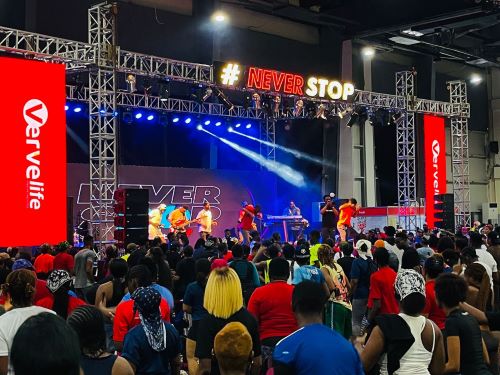
Verve Life: Fitness Enthusiasts Enjoy Electrifying Performance at Africa’s Biggest Fitness Party

0

In a bid to continue to blaze the trail and inspire Nigerians to a lifestyle of fitness and wellness, Africa’s leading payment technology and card brand – Verve, organised the grand finale of Africa’s biggest fitness event on Saturday, November 5, 2022 to meet the lifestyle aspirations of its customers.

Introduced in 2017, the VerveLife fitness event which is organised annually has grown into a thriving platform, attracting thousands of fitness enthusiasts from Nigeria and beyond.

According to the firm, the event is held to stimulate in Nigerians the need to keep a healthy lifestyle through fun and engaging activities.

Speaking on the Verve Life fitness event grand finale, Cherry Eromosele, Group Executive Vice President, Marketing and Communications at Interswitch Group, said that the Verve Life initiative is a testament to the brand’s long-term commitment to fitness, wellness, and healthy living.

“We have run the VerveLife Fitness event for the past 5 years with this being the fifth edition. Each edition has been an improvement of the previous one. The events have grown bigger and better each passing year, evolving from one event in Lagos to several events across the country. This year, we had nine satellite events across Nigeria and debuted in Nairobi. Today, we are all here to witness the biggest VerveLife Fitness event yet. Just like we keep innovating on the payment solutions we provide, we will keep improving on the VerveLife events. Sustaining the event this long confirms Verve’s commitment to supporting the healthy lifestyle habits of its cardholders while also providing innovative payment solutions to our cardholders and Nigerians in general.”

This year’s grand finale featured some of Africa’s biggest musical acts, Niniola, Crayon, and the dance queen, Kaffy, alongside other Nigerian celebrity fitness experts such as Kemen, Isoken Uwaifo, Ihuoma Nwigwe, Enoyong and Trebla.

Kenyan fitness coach, Alvin Lee, and South African favourite, Queen Fitness, among others, were also in attendance to thrill fitness enthusiasts to invigorating exercises, alongside the music performances by Alternate Sound.

Apart from invigorating warm-up routines, and exciting workout sessions led by fitness experts, exciting gifts were also handed out.

Fitness apparel, healthy meal options and snacks were also made available at discounted prices for attendees who paid with their Verve cards.

Eromosele said; “Other than meeting the payments needs of our customers, this fitness event is aimed at motivating Nigerians to push themselves, work out regularly, keep fit and refuse all excuses that people often give for keeping sedentary habits.

Partners of this year’s edition include global sportswear brand, PUMA, Amstel Ultra, Techno Gym, Hygeia HMO and Aquafina.

With VerveLife, the goal is to never stop taking fitness to the next level.

Stanbic IBTC Bank Partners WellaHealth, Provides Digitised Health Insurance for Customers

0

Stanbic IBTC Bank, a subsidiary of Stanbic IBTC Holdings has reaffirmed its commitment to the growth of Nigeria’s health sector by partnering with WellaHealth, a micro-healthcare solution company, to provide quality and affordable healthcare to Nigerians.

WellaHealth, a smart health solution company, provides affordable and accessible high-quality coverage for healthcare. The organisation partners healthcare providers, businesses, and insurance suppliers to provide financing at low costs for people seeking medical care in Nigeria.

Speaking on the partnership, Olu Delano, Executive Director, Consumer and High Networth Clients, Stanbic IBTC Bank stated that the partnership is in line with a key objective of the bank centered around enabling their clients live better. In this case, the objective is being accomplished through provision of affordable health insurance instantly accessible digitally through the Stanbic IBTC mobile app. He said: “Healthcare is a vital need for everyone and in Nigeria, funding medical bills is a real challenge for many individuals and families. Therefore, Stanbic IBTC has partnered with WellaHealth to help bridge the healthcare accessibility and affordability gap.”

Olu highlighted that one of the measures the Bank has taken to further ease access to quality health services is to make the solution available digitally such that individuals who have the Stanbic IBTC @ease wallet can access the solution seamlessly from the Stanbic IBTC mobile app in the palm of their hands.

“We want to provide accessible health insurance to everyone; therefore, we have added the WellaHealth insurance subscription functionality to our @ease module on the Stanbic IBTC Mobile App. This allows Stanbic IBTC @ease wallet holders, to access health insurance cover with premiums from as low as ₦600 monthly”, he added.

Stanbic IBTC remains laser-focused on delivering value to its numerous customers, and the WellaHealth partnership is just one of the ways the organisation is living up to this commitment. More details on the end-to-end financial solutions accessible to Nigerians from the financial services giant can be accessed on the company’s website at www.stanbicibtc.com.

According to the Founder and CEO of WellaHealth, Dr Neto Ikpeme, “WellaHealth is a patient-first healthcare technology startup, which continues to pursue all avenues to get healthcare to Nigerians across the country.  We believe that by actively working with organisations like Stanbic IBTC, WellaHealth will deliver on its mission to reach millions of Nigerians monthly and reduce out-of-pocket spending on tropical illnesses in Nigeria”.

WellaHealth was recently featured at the Times Square and named one of the most impactful companies of 2022 by the Norrsken Foundation, in recognition of its role in building a digital health space to increase access to affordable healthcare with low-cost health plans. This partnership continues that trajectory to reach even more Nigerians and Stanbic IBTC Bank is a strategic partner to WellaHealth helping to drive these benefits to end users. “Our goal is to work with Stanbic IBTC Bank in its effort to reach Nigerians with quality healthcare and affordable health plans via its @ease wallet offering, which is aligned with our vision for Nigerians”, the Marketing and Communications Lead for WellaHealth, Joseph Okoroafor added.


2023: Atiku Condemns Tinubu for Ignoring Lagos Chamber of Commerce Invitation

0

The Atiku Business Support Group (ABSG) has criticised the presidential candidate of the All Progressives Congress (APC), Asiwaju Bola Ahmed Tinubu for ignoring invitation of Chambers of Commerce to address them on his agenda for the business sector.

Reacting to the recent private sector forum hosted by the APC presidential candidate in Lagos in a statement by its interim Publicity Secretary, Oluniyi Isamotu, the ABSG said the refusal of Senator Bola Tinubu to honour invitation of the oldest Chamber of Commerce in Nigeria, the Lagos Chamber of Commerce is “a direct insult on the over 80 Chambers of Commerce and Industry in Nigeria.

“We find it surprising that the APC candidate is scared of facing the business associations. Instead, he assembled billionaires and his friends who can’t critique his agenda and who being already made, are less concerned about the plight of millions of small businesses all over the country. How can Asiwaju Tinubu appreciate the state of MSMEs in Nigeria when he is running away from meeting leaders of MSMEs?

“Nigeria deserves a president who is ready to engage on critical issues facing the economy. Business associations form the main building blocs of the national economy. Any presidential candidate who ignores the Chamber movement in Nigeria does not deserve their votes.

“We therefore call on Chamber leaders in Nigeria to reject the APC candidate at the polls. We urge Chamber leaders to punish the APC candidate by mobilising massively and by financially supporting Alhaji Atiku Abubakar who has demonstrated his pro-business stance.

While commending the PDP candidate for directly engaging business associations across the country, the ABSG described Waziri Adamawa as “a truly pro-business candidate in the 2023 race” who will address the concerns and aspirations of MSMEs in Nigeria.

“Let business leaders rally round Alhaji Atiku Abubakar. His speech at the Lagos Chamber of Commerce and Industry remains the best blueprint for reviving the Nigerian economy. We must make our voices heard as business leaders”, the statement concluded.


NCC to Accelerate Deployment of Emerging Technologies

0

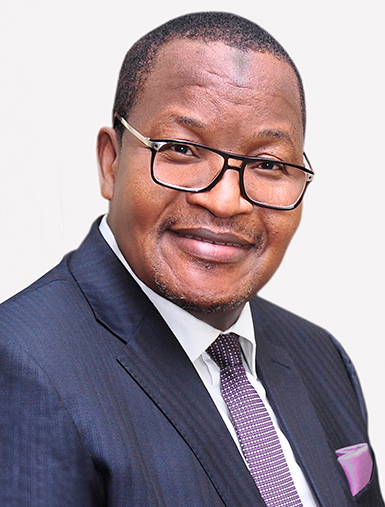
The Executive Vice Chairman (EVC) of the Nigerian Communications Commission (NCC), Prof. Umar Danbatta, has stated that NCC will not relent in the promotion of latest and emerging technologies to energize business and the sector in Nigeria for the benefit of the country and its citizens.

Speaking to a cross section of stakeholders at the just-concluded Cyberchain Abuja 2022, Danbatta said the telecom sector has been a key booster of the Nigerian economic activities, transforming the way people live and work as well as increasing efficiency in other sectors of the economy.

Danbatta said the Commission is committed to driving the deployment and adoption of emerging technologies such as Internet of Things (IoT), utilisation of value of Big Data, Blockchain, Robotics and Virtual Reality, FINTECH, Artificial Intelligence (AI), and Telemedicine, among others, to stimulate greater contribution of the sector to the economy.

He said it is also gladdening that telecoms has been an enabler of Nigeria’s economic growth and development as it contributes substantially to the Gross Domestic Product (GDP).

“From $500 million investments in the sector as at 2001, the telecommunications industry has recorded over $70 billion investment till date, while the growth in the sector has been phenomenal, from some 400,000 functional phone lines in 2001 to over 209 million active mobile subscriptions, achieving a teledensity of 110 per cent, as at August 2022.

“The sector has provided over 500,000 formal and informal jobs for Nigerians. From an insignificant contribution to GDP in 2001, telecoms sector, as at the last quarter of 2021, contributed 12.61 per cent to GDP, while the Information and Communications Technology (ICT) sector as a group, has also contributed 18.44 per cent to GDP as at the second quarter of 2022”, he said.

“For us as a country to reap the full benefits of all these emerging technologies in ways that further spur growth in our national economy, NCC prioritises the need to improve and expand broadband infrastructure and the deployment of new technology such as the Fifth Generation of Mobile Communication (5G). Our efforts in diligently driving this will facilitate the actualization of the set targets in the Federal Government’s digital economy policy,” he said.

Danbatta noted that with the rapid digital transformation happening through telecommunication sector, the country will be in a better position to create alternate economy for diversification, innovation and creativity in e-commerce and digital entrepreneurship, thus empowering a significant number of the populace to become self-reliant and self-employed.


2023 Anzisha Prize Fellowship: Opportunity for 30 Young African Entrepreneurs 

0


  • 30 entrepreneurs will be selected to join the fellowship program and businesses must be operational in Africa
  • Past participants have created more than 2500 jobs, raised capital, and won numerous industry awards
  • The deadline to apply is 27 November 2022.

The Anzisha Prize is a leading venture-building program championing young African entrepreneurs between the ages 15 and 22.

The initiative has officially opened applications for the 2023 cohort and can be accessed on anzishaprize.org/apply. African changemakers who are under 22 years old and are running businesses and creating employment opportunities for their peers are encouraged to apply.

Thirty fellows will then be selected for a three-year fellowship and receive business consulting support, over $5000 in cash stipends and coaching services from a team of experts.

“Application season is always an exciting time for the program because we get to see how Africa’s youth are thinking innovatively to solve some of our pressing issues. For the past few years, we’ve seen an increase in Agri-Tech and Fin-tech businesses that are reshaping how we do business on the continent,” says Selection Lead, Suzan Kibirige for The Anzisha Prize. “What I enjoy most about this work is seeing how tenacious young people are. They never take no for an answer and that is what we need.”


  • The Three-Year Fellowship at a Glance 

The fellowship supports the growth of young entrepreneurs and recognises and incentivises their achievements – big and small. Through an individual and collective entrepreneurial development journey, the fellowship focuses on key areas of support: Business Development and Personal Leadership. During the fellowship, entrepreneurs will have access to a plethora of tools, resources, and experiences, and access to a dynamic entrepreneurial ecosystem. Every six months, entrepreneurs will unlock key features such as cash stipends or experiential learning workshops and courses based on predetermined milestones they have achieved. At the end of the second year, entrepreneurs will pitch their improved business and plans for a chance to win their share of grand cash prizes valued at over $50 000.

Since 2011, Anzisha Prize, a partnership between Mastercard Foundation and African Leadership Academy, has supported and celebrated the entrepreneurial endeavours of very young people.

The program alumni network includes 202 entrepreneurs who have gone on to create businesses that have transformed their communities. To date, just 130 of these fellows have created 8708 employment opportunities and have raised over $6 million in investments.

The Fellowship has been an integral program in ensuring that young African entrepreneurs are celebrated and nurtured on their path to creating sustainable futures for those around them. “We encourage young job creators to apply for this opportunity and we are looking forward to championing their efforts, as creating clear pathways for young people to succeed is a core goal for Mastercard Foundation,” says Didi Onwu, Managing Editor of the Anzisha Prize.

Some of the entrepreneurs include alumni Joan Nalubega, a Ugandan entrepreneur who has proven that social entrepreneurship can be profitable. Having grown up as an orphan and battling Malaria-related illnesses as a young woman, Nalubega established Uganics – a company that produces anti-Malaria products to combat Malaria in the country.

Another notable entrepreneur is South African Karidas Tshintsholo. Tshintsholo’s business, Khula!, is one of the most admired African startups among investors.

The startup’s business-to-business (B2B) marketplace helps small-scale farmers bring their products to formal markets, by offering them cost-effective logistics services. The company has signed up more than 3000 farmers, and over 100 suppliers now work with the company.

Those selected as Anzisha Prize fellows will become members of an active and dynamic community of changemakers across Africa who are exploring how to drive, scale, and make positive and lasting change in their communities through entrepreneurship.

The Anzisha Prize program is open to young people who are running businesses operating in any sector on the continent. Prospective applicants are encouraged to apply before the closing date of 27 November 2022.

Entrepreneurs are advised to download the application guide and apply for the prize at anzishaprize.org/apply.


Gambian Minister Applauds Nigeria’s Strides in Telecom Regulation

0

The Gambian Minister of Communications and Digital Economy, Ousman Bah, at the weekend in Abuja, said Nigeria’s giant strides in telecom regulation are the reason that the nation’s telecoms development has become a reference point.

Bah, who led a Gambian delegation, including industry regulators on a courtesy visit to the management of the Nigerian Communications Commission (NCC) in Abuja, said the visit was prompted by the success, which Nigeria has witnessed in the sector, and the need for The Gambia to follow the same path of success.

He said it is for this reason that the West African nation has completed arrangements to establish an independent regulatory commission for its telecommunications industry like the NCC of Nigeria.

“The current industry statistics is proof that Nigeria is achieving her goals of digitisation of its economy,” he said.

He sought the Commission’s advisory support and strategic collaboration to accelerate economic growth and improve efficiency in both countries and strengthen all sectors across the African continent.

Director of Legal and Regulatory Services at NCC, Josephine Amuwa, who received the delegation on behalf of the Executive Vice Chairman of NCC, Prof. Umar Danbatta, highlighted the impact of the Nigerian Communications Act (NCA) 2003.

She said the NCA 2003 empowers the Commission to effectively carry out its regulatory mandate, one of which is to create an enabling environment for competition among operators in the industry, as well as provision of qualitative and efficient telecommunications services throughout the country.

Amuwa spoke about the Commission’s role in ensuring that the mandate of the Universal Service Provision Fund (USPF), is accomplished, and that has led to implementation of various programmes to the benefit of Nigerians.

“The USPF was also established by the NCA 2003 to ensure that services are extended into the rural communities to ensure that telecoms services are available in unserved and underserved areas, even in the urban areas, to meet government objectives,” she said.

Amuwa also cited the consultative and collaborative approach to telecom regulation as one of the factors for Commission’s successes.

“The Commission adopts a participatory rule-making process where key players in the industry are invited to a public hearing for further deliberations to ensure that the stakeholders’ views are considered in establishing these regulatory guidelines,” she said.

Amuwa encouraged the delegation to visit the Commission’s website to study published regulatory guidelines on all necessary matters. She explained that the guidelines give full effect to the provisions and administration of the NCA 2003.


NAICOM: Insurance Firms Will Settle Claims of Flood Victims

0

The National Insurance Commission (NAICOM) has pledged that operators in the Nigerian insurance sector will settle claims arising from the flooding across the country that has displaced more than 1.4 million people and killed over 600 Nigerians across eight states: Kogi, Rivers, Benue, Bayelsa, Akwa Ibom, Anambra, Cross River etc.

In a statement, the Commission said:

“NAICOM sympathises with victims of recent flood disasters across the country and want to assure all those insured against such misfortunes of the Commission’s commitment towards ensuring prompt settlement of their claims by insurance companies.”

NCDMB Boss, Kesiye Wabote, Commissions GIL Automation’s Factory

0

The Executive Secretary of the Nigerian Content Development and Monitoring Board (NCDMB), Engr. Simbi Kesiye Wabote in Lagos performed the commissioning of GIL Automation’s cable tray and switchgear factory and the opening of its new building.

The company offers an array of services in electrical and automation services, switchgear manufacturing and panel solutions as well as process management and flow control.

The Executive Secretary lauded the company for expanding from the provision of service to manufacturing, noting that such progression shows that Nigerian oil and gas service companies are taking up the challenge to grow their outfits and contribute to the development of in-country capacities and capabilities, providing key services for the sustenance and growth of the industry and its linkage sectors.

He said: “The business shift from service to manufacturing of electrical and automation components under your leadership is a very strategic move that we are very excited about.”

He remarked that GIL Automations had developed capacity to provide world class services across the oil, gas, manufacturing and power industries, and created a niche for industrialautomation, instrumentation, electrical, control, communication and safety systems. The extension of the company capacities to other sectors helps to meet the strategic initiatives established under the Nigerian Content 10-year Strategic Roadmap, he said.

He added that “as an ISO9001 certified local manufacturer of low voltage Electrical products in line with international standards, the products are not only meant for local market, but also in high demand within the regional and continental markets.”

Speaking further, Wabote emphasized the need for Nigerian oil and gas service providers to widen the application of their services to other sectors of the economy instead of solely relying on the oil and gas sector. He noted the cyclical nature of the oil and gas industry, stressing that every discerning service company needed to have a model to adapt to any prevailing circumstance.

He said the ongoing energy transition further underlined the necessity for companies to think differently and acquire new capabilities, to enable them operate successful in the energy transition environment, without being unduly worried about their survival.

He recalled that companies converted their factories at the peak of COVID-19 to produce some of the needed items at that time, adding that “this same ingenuity is required of the service companies to take a look at their service equipment, modelling software, personnel and other assets to check the opportunities they are over-looking due to being fixated on contracts from the oil and gas industry.

If they don’t meet these criteria, they would not have partnership with Siemens. The association is not by compulsion, it is not by provisions of the Act. They see a mutually beneficial relationship in the type of service they provide.


Linkage Assurance Celebrates CSW 2022

0

Linkage Assurance Plc has celebrated its Customer Service Week (CSW) 2022 with reward for customers amongst other activities.

Stanbic IBTC Bank PMI – Business Conditions Continued to Improve in October

0

Output and new orders continue to expand, albeit at softer rates Purchasing activity increases at sharp and accelerated pace Inflationary pressures cool, but remain historically strong.

The start of the fourth quarter revealed a solid improvement in the health of Nigeria’s private sector. Output and new orders rose sharply while purchasing activity increased at an accelerated pace. At the same time, backlogs increased for the second month in a row, with sustained accumulation of outstanding business suggesting that hiring activity could continue in the months ahead.

On the price front, price pressures showed further signs of abating with the overall rate of input cost inflation the weakest for three months, but still marked by historical standards. Selling prices were also raised, albeit at a softer rate than that seen in September.

The headline figure derived from the survey is the Purchasing Managers’ Index™ (PMI®). Readings above 50.0 signal an improvement in business conditions on the previous month, while readings below 50.0 show a deterioration.

The headline PMI posted at 53.6 in October, little-changed from 53.7 in September, indicating a solid improvement in the health of the private sector.

A key driver of growth was a sharp rise in new orders following reports of favourable and improving market conditions.

In turn, firms raised their output levels and for the fourth month in a row. Moreover, the rate of increase was quicker than the long-run series average. Manufacturing firms registered the strongest increase in output, followed by services, wholesale & retail and finally agriculture.

Backlogs increased for the second month in a row during October, but the rate of increase eased from that in September. Firms subsequently continued hiring activity, but the rate of growth was mild, and the joint-weakest in the current 21-month sequence of job creation.

Sustained expansions in new orders led Nigerian private sector firms to raise their purchasing activity, with the rate of growth quickening on the month. Pre-production inventories also rose robustly, with the rate of growth quickening to a three-month high amid firms’ efforts to boost their stockpiles.

Supply-chain performance improved, with lead times now shortening in each month for the last five years. Meanwhile, prices data revealed another month of overall input price inflation. Higher purchase and staff costs underpinned the latest rise which eased from September, but was sharp and historically elevated, nevertheless. Selling prices also rose, but at the weakest pace for almost two years.

Whilst firms maintained an optimistic view towards output in the next 12 months, the degree of positivity was the second lowest in the series history, with that only recorded in September 2020 weaker.

Sovereign Trust Insurance Felicitates with ISAN on Confab

0

LR: Segun Bankole, DGM, Corporate Communications & Investor Relations, Sovereign Trust Insurance Plc, Prince (Dr) Anthony Omojola, National Coordinator, Independent Shareholders Association of Nigeria, (ISAN), and Oby Chiki-Ijegbulem, MD, Greenwich Registrars & Data Solutions at the Gala Night of the 7th Triennial Delegate Conference of Independent Shareholders Association of Nigeria, (ISAN) held at Lagos Airport Hotel, Lagos.

NLNG: No Flood Impact on Operations Nationwide

0

The attention of Nigeria LNG Limited (NLNG) has been brought to media reports, following the issuance of a statement declaring Force Majeure on Monday 17th October 2022, that operations at its facilities have been shut down due to flood. 

NLNG will like to clarify as follows: 

  • The Company’s plant is in operation though at a limited capacity, due to reduced gas supply from some of its upstream gas suppliers. 
  • None of NLNG’s assets on Bonny Island or in any of its host communities are impacted by the flood. The Force Majeure is as a consequence of a similar notice by Upstream Gas Suppliers due to the impact of flood in their production facilities. 
  • NLNG is working with all critical stakeholders on mitigating the impact on product deliveries.  
  • NLNG continues to supply LPG to the domestic market for now from the limited production. 

A statement by Mr. Andy Odeh, the General Manager, External Relations and Sustainable Development at NLNG says the NLNG continues to monitor the situation with Upstream Gas Suppliers and is evaluating the impact of the flood on its business.


Dangote Cement: N32bn FX Loss, 43% Profit Decline, Stock Down 14.2%, Sales Dim 4.3% in Q3

0

Dangote Cement (DANGCEM) recently released its Q3 22 unaudited results showing that the Group reported an EPS decline of 54.0% y/y in Q3 22.
Analysis by Coronation Research indicates that the earnings slump was mainly driven by cost pressures and foreign exchange losses. Consequently, when annualised, the achieved EPS is below forecasts by 43.3% and below consensus forecasts by 63.2% for FY 22. Year-to-date, the stock is down 14.2%.

The Group’s revenue grew by 11.3% y/y in Q3 22, driven by growth in both Nigeria (+13.7% y/y) and Pan African operations (+4.1% y/y). The achieved revenue, when annualised, is below our forecasts for FY 22 by 6.0%.
Nigerian revenue was mainly driven by price increases (the average price per tonne rose by 17.4% y/y) which offset a decline in volumes (-3.2% y/y to 4.14Mt) in the period. According to management, its national consumer promotion “Bag of Goodies – Season 3” improved market share during the quarter and cushioned the impact of: (1 ) continued disruptions in energy supply as witnessed in Q2 22; (2) rising inflation, and; (3) the effects of unusually heavy rainfall and flooding on cement demand.
In the Pan-African region, price increases were also implemented (the average price per tonne rose by 12.0% y/y) which offset the substantial volume decline (-7.0% y/y to 2.51Mt). According to management, volumes declined becausee of disruptions of global supply chains, rising commodity prices, the extended shut down of its Congolese plant due to maintenance, and extended power plant maintenance in its Senegalese operation.
Overall, the group’s sales volume declined by 4.3% y/y to 6.59Mt in Q3 22, driving the overall 9M 22 volume down by 6.2% y/y to 20.8Mt.

The Gross margin shrank by 533bps to 56.3% in Q3 22, a seven-quarter low, owing to rapid Cost of sales growth (+26.8% y/y). Growth in Cost of Sales was driven mainly by the surge in the cost of Fuel & Power consumed (+59.4% y/y), which reflects the increased price of Automotive Gas Oil (AGO).

In addition, Material Consumed (+19.1% y/y) and Other Production expenses (+49.9% y/y) contributed to pressure Cost of Sales as a result of FX rate deterioration inflating some imported input components. Gross Profits themselves managed to grow by 1.7% y/y thanks to the above-mentioned price increases.

EBITDA declined by 12.6% y/y in Q3 22, driven by a 39.3% y/y rise in Operating expenses. As is the case with production costs, the rise in AGO prices was the primary driver of elevated Haulage expenses (+61.2% y/y), making up over 82% of Selling and Distribution Costs. Management also highlighted substantial freight costs in Cameroon, Ghana, and Sierra Leone, causing volatility in the landing cost of cement and clinker.

In addition, there was an unusual rise in Advertisement and Promotions, by 486.9% y/y, owing to the 3rd season of the company’s National Consumer Promotion “Bag of Goodies 3” in efforts to drive consumer engagement.
Consequently, the EBITDA margin shrank 1,056bps to 38.6%, the lowest level since Q319. Nonetheless, in management’s efforts to combat the menace of ever-rising energy costs, the company renewed its efforts to ramp up the usage of alternative fuels, co-processing 101,553 tonnes of waste representing a 77% increase over 9M 2021. Elsewhere, the company is also ramping up investment in Compressed Natural Gas (CNG) to offset AGO usage, having commissioned a power plant at its Okpella plant.
Further down the P&L, the group recorded Net finance cost of N44.49bn, up 220.2% y/y in Q3 22. The company incurred a significant N31.73bn foreign exchange loss due in part to the FX crisis impacting imported input components and well as depreciation in some Pan-African currencies i.e. CFA and Ghanaian Cedi, severely eroding the group’s bottom line.
Consequently, Profits Before Tax declined by 42.8% y/y. Despite the decline in tax expense in Q3 22 (-20.2% y/y), Net Income fell by 52.7% y/y.


AN EXPOSE ON THE IMPACT OF CLIMATE CHANGE IN NIGERIA- Effects and Preventions-

0

By Esohe Braimah

Africa is the most vulnerable continent to climate change impact despite its low contribution to global greenhouse gas emissions-so says the African Development Bank (AfDB). Unlike other continents, Africa isn’t well equipped or prepared to protect itself from the approaching disaster that is looming.

Climate Change is Goal 13 of the United Nations’ 17 Sustainable Development Goals (SDG) that came to force in January 2016 following its adoption in September 2015. Members are expected to achieve these goals by 2030.

The mission statement for Goal 13 is to take urgent action in combating climate change and its impact. Countries that have signed to the SDGs are to mobilise efforts to end all forms of poverty, fight inequalities and tackle climate change, while ensuring that no one is left behind.

The UN describes Climate Change as a long-term shift in temperatures and weather patterns. Human actions are considered the major cause of climate change. Scientists and NGOs have not relented in creating awareness and drawing attention to the fact that there has been an abrupt change in biodiversity loss, rising sea levels, melting ice sheets and higher temperatures amongst others.

Most of these complaints have fallen on deaf ears. The world is slowly crawling into exceeding the global warming of 2°C deleterious temperature. They have warned about the risks to our climate of a rise in global temperatures of 2C over pre-industrial levels could make life unbearable for millions of people.

The intergovernmental panel on climate change (IPCC) sixth assessment report chapter nine on climate change in Africa made several points on the impacts Africa will face in the nearest future. From the look of things, it seems that most of these impacts are manifesting already.

The IPCC report showed that limiting global warming to the safe zone of 1.5°C will substantially reduce damage to Africa’s human health, economies, agriculture, and ecosystems. The report also confirmed that exposure to climate change makes the continents very vulnerable. This is because a good percentage of its workforce is employed in the agricultural sector and the impacts of climate change always affect agriculture.

In addition, the report also stated that Africa is predicted to experience a loss of crops, livestock and fisheries which will then in turn lead to famine and widespread hunger. It also stated that climate change is the major cause of reduced economic growth across African countries.

The impacts of Climate Change also negatively affect the health sector in Africa. It is predicted millions of Africans will get climate-related diseases due to exposure to non-optimal temperatures and extreme weather conditions. The mobility and mortality rate is also feared to see an increased percentage.


Impacts of Climate Change in Nigeria

Over the years Nigeria has experienced the negative impacts of climate change. From the increase in temperature in the 80s to the massive flooding in 2012 and 2022, the nation has been able to identify six key hazards. They are

  1. Flood
  2. Drought
  3. Epidemic
  4. Landslide
  5. Extreme temperature
  6. Storm


Flood is one of the major impacts of climate change in Nigeria. In recent weeks Nigeria has experienced its most damaging flood incident which currently affects 31 out of the 36 states, 21 states out of the 31 are severely impacted.

The recent flooding has not only resulted in the loss of lives and properties, but its negative effect is also creeping into the agricultural, health, infrastructural and economic sectors. A report released by the local news showed that about one million Nigerians have been displaced and more than 300 lives have been lost due to the flooding.

The national emergency management agency termed this recent flooding the worst in decades and has warned that the situation could deteriorate further. It is also expected to see an increase in waterborne diseases in those areas due to the crisis.

One of the major causes of excessive flooding is a result of a general rise in sea levels. The rise in sea levels is another impact of climate change. Sea levels have been on the rise in the coastal part of Nigeria which is resulting in the loss of villages and farmlands.

The riverside areas of Nigeria are getting the major blow from this negative impact. Scientists estimated that a one-meter rise in sea levels could cause about 75% of the land in Niger Delta to be lost.

It is to be noted that the recent flooding in Nigeria correlates with the opening of the Lagado Dam in Cameroon, the overflowing of two of the country’s dams and excessive rainfall.

Nigeria has also been experiencing severe drought in parts of the country which is leading to the loss of crops and livestock. The major causes of drought in Nigeria are all man-made causes. It is caused by deforestation, overgrazing, poor cropping method and bush burning.

According to a report released by the federal ministry of environment in 2018, droughts occurred in Nigeria from the early 90s to the late 90s. The international monetary fund also confirmed that Nigeria and several other African countries experience 33% of the world’s drought due to their rain-fed agriculture.

The global disaster alert and coordination system (GDACS) has alerted drought for Nigeria in 2022. According to the summary, the drought lasted for one month and the drought indicators suggested anomalies typical of mild to severe events.

One of the worst drought incidents was recorded in the Lake Chad basin incident. Lake Chad basin is one of the largest freshwater sources and it has link with four African countries including Nigeria. It is recorded that the lake has shrunk by 90 per cent in the last 60 years and this is due to climate change.

Epidemic being one of the major key hazards of climate change impact in Nigeria is no surprise. Nigeria has been left in a vulnerable position which leaves it open to disease outbreaks. Over the last few years, Nigeria has recorded a huge influx of disease outbreaks in several parts of the country.

Diseases ranging from Yellow Fever, Malaria, Typhoid, Covid-19, Lassa fever, Ebola and Monkeypox. The weak ecosystem has left the body’s immune system fragile and unable to properly protect itself from diseases and sickness.

Landslide is a major climatic condition that occurs due to a lack of sheer strength in the composition of the soil. It is the mass movement of rock, debris or earth down a slope. Landslides have both natural and man-made causes.

The man-made cause is due to mining, construction, quarrying and excavations.

This climatic condition is very common in the southeastern part of the country and is a menace to people leaving in those parts. It has resulted in the loss of lives, and deaths and has left several other people injured.


Reasons why Nigeria isn’t properly protected against the impacts of climate change

Several problems pose reasons why Nigeria isn’t properly protected against the impacts of climate change and they are not without blame.

  1. Climate-related researches in the country face severe data constraints.
  2. The country lacks adequate funding in carrying out detailed and comprehensive research.
  3. The lack of proper weather forecasting stations in the country.
  4. Poor allocation of budgetary funds to the ministry of environment.
  5. Very few climate-related publications to spread the news far and wide on the issues the country faces with climate change.


Preventions and Mitigations of climate change in Nigeria.

There are so many bold steps the Nigerian government and its citizens can take in other to impede this looming peril.

  1. Put a price on carbon; Adaptation of carbon tax will limit the emission of greenhouse gases into the ecosystem.
  2. Reduce the use of fossil fuels; switching to more sustainable means of energy will benefit the nation.
  3. Implement climate smart structures; the government of the nation should put infrastructures in place to prevent causes like excessive flooding and land sliding.
  4. The government should allocate more funding in the budget to fuel research and proper forecasting in the coming future.
  5. The farmers should implement a more sustainable way of practicing agriculture.
  6. The government should create a one-stop shop where people can read up and learn about climate issues without being misled.


In conclusion, it is never too late to start putting measures in place to mitigate the impacts of climate change in Nigeria, and also prevent deleterious situations.


Esohe is an undergraduate at the Department of Finance, University of Lagos.