Saturday, January 24, 2026
23.2 C
Lagos
Home Blog Page 145

NCC, NIRSAL, NCDMB, NNPC, NLNG to Lead Partners @GOCOP Conference

0

The sixth annual conference of the Guild of Corporate Online Publishers (GOCOP) has continued to gain traction across sectors with partnerships being forged among key institutions in the country.

Chairman, 2022 Conference Committee, Mr. Ken Ugbechie, disclosed that some notable institutions have firmed up their partnership for this year’s conference slated to hold on Thursday, October 6 at Sheraton Hotel, Ikeja-Lagos.

He listed some of the key institutions to include the Nigeria Incentive-Based Risk Sharing System for Agricultural Lending (NIRSAL Plc.), Nigerian Communications Commission (NCC), Nigerian Content Development & Monitoring Board (NCDMB), and Nigerian National Petroleum Company Limited (NNPC).

Others are First Bank Plc, the Nigeria Liquefied National Gas (NLNG) Limited, The Presidency, Wema Bank, Zenith Bank, Nigeria Ports Authority (NPA, etcetera.

A press statement by GOCOP Publicity Secretary, Remmy Nweke, also quoted Ugbechie as saying that this year’s theme is “2023 Elections: Managing the Process for Credible Outcome” and will feature prominent stakeholders in the polity, civil society organisations, security, judiciary and media, to name a few.

Ugbechie also noted that this year’s conference will be holding barely five months to the 2023 general elections and one week into the official commencement of campaigns by political parties, thus it provides a roadmap for political actors and the various publics on the need to play by the rules and conform to acceptable electoral behavior.

He further highlighted that this year’s conference will be heralded by a business luncheon with GOCOP partners and other media stakeholders on Wednesday, October 5, at the same venue.

It could be recalled that previous speakers at GOCOP conferences include Rev. Matthew Hassan Kukah, the Bishop of the Catholic Diocese of Sokoto who took to the podium in 2019 to speak on “Economy, Security and National Development: The Way Forward”. In 2021, Mr. Boss Mustapha, Secretary to the Government of the Federation keynoted the Conference in his capacity as Chairman of the Presidential Task Force on Covid-19. He spoke on: “Post Covid-19 Pandemic: Recovery and Reconstruction in Nigeria.”

He recalled that “The Guild was established to ensure that online publishers uphold the tenets of journalism in doing their jobs and our membership is a constellation of Editors and senior journalists who, having distinguished themselves in their various stations, ventured into online publishing which is both the present and future of journalism globally.”

“The conference is therefore a fitting platform for the distillation and sharing of ideas from a carefully chosen array of resource persons cutting across the entire socio-political ecosystem. GOCOP intends to use the opportunity of the conference to moderate the already tense political climate as well as to proffer solutions to current and anticipated challenges arising from the elections,” the statement said.


NCC to NSSB: Create Awareness on Research, Digital Literacy Projects

0

L-R: Haruna Sani, Senior Special Assistant to Nasawara State Governor on Information and Communication Technology; Dr. Beluchi Nwanisobi, Head, Knowledge Management, Nigerian Communications Commission (NCC); Sani Jibrin, President, Nasawara State Students Association; Saadatu Yahya, Executive Secretary, Nasawara State Scholarship Board (NSSB); Dr. Austine Nwaulune, Director, Digital Economy, NCC; Freda Bruce-Bennett, Head, Digital Services and Skills, NCC; Edoyemi Ogoh, Head, Quality of Service and Interconnect, NCC, during a courtesy visit of the NSSB to the Commission in Abuja.

The Nigerian Communications Commission (NCC) has urged the Nasarawa State Scholarship Board (NSSB) to support the NCC in creating awareness about the intervention projects of the Commission concerning research and digital literacy in order to provide more opportunities for the citizenry.

Director of Digital Economy at the Commission, Dr. Augustine Nwaulune, who hosted a delegation of the Board, led by the Board’s Executive Secretary, Hajia Saadatu Yahya, on behalf of the Executive Vice Chairman of the Commission, Prof. Umar Danbatta, recently, recalled that Nasarawa State is one of the beneficiaries of NCC’s Information and Communication Technology (ICT) intervention projects such as the Digital Awareness Programme (DAP) for secondary schools, the Advanced Digital Appreciation Programme for Tertiary Institutions (ADAPTI), the Wireless Cloud, as well as the E-Health programme.

“While we don’t give scholarship to students, the NCC has continued to give research grants to lecturers and students in the universities, and provided additional opportunities including sponsoring competitions involving students, as well as endowing professorial chairs in universities across the country. In the last seven years, the financial value of the endowments and grants is more than N500 million.

“Therefore, I will appeal to NSSB to create awareness about these initiatives of the NCC among stakeholders in the academia, particularly the research grants to enable stakeholders to leverage such opportunities offered by the Commission to scholars interested in carrying out telecommunications-based research,” he said.

Nwaulune said the NCC has been upbeat in ensuring implementation of the National Digital Economy Policy and Strategy (NDEPS), 2020-2030, in which one of its eight pillars, rests on digital literacy, while the Digital Economy Department has been set up and equipped by the Commission with the human resources required to coordinate its programmes in concrete terms.

Yahya, whose delegation visited to discuss areas of collaboration for deepening digital/technical training and skills acquisition in Nasarawa State, commended the Commission for the central role it has played in promoting digital awareness and skills across the country, and pleaded that Nasarawa State should be given more opportunities to  benefit from NCC’s social investments and other digital economy-focused interventions, being the closest State to the Federal Capital Territory, the base of the Commission.

“The purpose of our visit is to seek collaboration with the NCC in whatever ways possible, especially in the areas of scholarship, and ICT skills and literacy for our people. The ICT is, today, the engine room of global economy and we do not want to lag in this new digital order, hence, our decision to seek collaboration with organisations in the ICT space such as yours to work which, especially because you are contiguous to our State,” Yahya, the NSSB Executive Secretary said.

Other members of the delegation, including Senior Special Assistant to Nasarawa State Governor on Information and Communication Technology, Haruna Sani; and the President, Nasarawa State Students Association, Sani Jibrin, spoke in favour of a greater collaboration with the NCC which would add the needed impetus to the current efforts by the state government to leverage ICT for economic development.


SMEDAN: 100 Small Businesses for 2022 MSME Fair in Lagos

0

Mr. Olawale Fasanya

Director-General

SMEDAN

Over one hundred micro small and medium enterprises MSMEs are expected to participate in the 2022 MSMEs Fair to be held in Ipodo, Ikeja, Lagos State next Monday.

The Fair which is organised by the Small and Medium Enterprises Development Agency of Nigeria, SMEDAN is the second in the series and it is expected to last five days. The fair has as its theme, “Competing for Market.”

Described as one of the fastest growing MSME fairs in Lagos. This year’s MSMEs fair Ipodo would afford exhibitors the opportunity to showcase their wares as well as enjoy business advisory services from SMEDAN on how to upscale their businesses.

The Director-General of the Small and Medium Enterprises Development Agency of Nigeria, SMEDAN, Olawale Fasanya in a statement heralding the commencement of the MSMEs Fair in Ipodo said that MSME Fairs are veritable ground to promote Made in Nigeria products.

He said that fairs such as the MSMEs fair in Ipodo were designed to provide opportunities for exhibition of Made in Nigeria goods by MSMEs. The fair he also said offers MSMEs a real-life platform to hook up to not only market opportunities but also to network with relevant agencies in the MSME ecosystem.

Fasanya noted that the Agency has come to embrace the Ipodo fair because of the success recorded in the maiden edition. And we shall continue to support MSMEs as they are the backbones of any thriving economy.

The Agency according to the Director-General recently organized a successful opportunity fair in collaboration with the Edo State Government in Benin City adding next week we shall also be organising another opportunity fair in Jos; all these are targeted at encouraging our MSMEs and boosting Made in Nigeria goods.

Fasanya further said that the Agency would continue to step up sustainable programmes to boost the capacity of MSMEs in Nigeria. He said sustainable initiatives and organization of Trade fairs and Expos as well as sensitisation would boost patronage of Made in Nigeria goods.

“The Mass of the people are ignorant of the fact that quality and durable products are also produced by MSMEs in Nigeria” he said.

Fasanya added that the Fairs such as MSMEs Fair Ipodo would show that Nigeria MSMEs can produce good thing and this will make the people to have a rethink and improve on the patronage of locally made product.

The Director -General equally stated that the Agency was planning to host an opportunity fair for the people with disability in the near future.

Stanbic IBTC Rewards More Nigerians with Cash Prizes at Monthly Draws

0

L-R: Vincent Okereke, Portfolio Manager, Blue Segment, Stanbic IBTC Bank; Maureen Eyeta, Winner of the N100,000 Reward4Saving promo monthly cash prize and Sadiya Ojo, Head, Consumer Clients, Stanbic IBTC Bank at the Reward4Saving promo Season 2 cheque presentation which held at the Stanbic IBTC Head Office in Lagos State recently.

Stanbic IBTC Bank, a subsidiary of Stanbic IBTC Holdings, has rewarded more customers in its on-going Reward4Saving Promo Season 2, with 70 Nigerians from different regions winning ₦100,000 each in its monthly draws, which held recently in Lagos State.

The Reward4Saving promo is a nationwide campaign aimed at rewarding customers with cash prizes monthly and the second season aims to give out ₦156 million to almost 900 Nigerians within a 12-month period. The goal of the campaign is to encourage and promote a healthy savings culture among Nigerians and is open to new and existing customers who save a minimum amount of ₦10,000 monthly.

Speaking at the August live draw where various 70 individuals were rewarded, Omiyi Eromosele, Head, Consumer Client Coverage, Stanbic IBTC Bank, stated that customers who qualify to participate in the monthly draws, also stand a chance of winning ₦1 million in the quarterly draws.

On his part, Emmanuel Aihevba, Head, Main Markets Clients, Stanbic IBTC Bank noted that the promo is the bank’s way of giving back and empowering its loyal customers. He said, “to deliver on our promise to continually reward our customers for their loyalty, we have created this platform which will run till March 2023, and have so far given away ₦42 million to deserving savers”.

Emmanuel further encouraged customers to continue to top up their savings accounts in multiples of ₦10,000 monthly to increase their chances of winning, while prospective customers should download the Stanbic IBTC Super App, visit the web portal or any Stanbic IBTC bank branch or @ease banking agent to open an account, or an e-wallet and start saving immediately.


HEREL Partners Africa Creative Market to Empower African Creatives

0

L-R: Olaposi Lawore, Yetty D Ogunnubi, Deola Aromiwura, and Bisola Odesanya at the African Creative Market

HEREL, a premium real estate development and investment company, partnered with the Africa Creative Market Global for the Africa Creative Market, which was held in September 2022.

According to HEREL, this partnership has allowed them to upscale and upskill creative entrepreneurs by positively impacting them with the skills they require to thrive. Creatives were able to physically access opportunities, display their craft, and attend the most enlightening panel sessions kudos to Africa Creative Market.

At the core of our existence is making a positive difference in lives, spaces, and the economy. Being a very young and versatile team, we have recently been exploring ways to make an impact on the lives of youths. Creating the HEREL Circle, a network of young professionals who come together to network, sell real estate, and make EXTRA money, all while enjoying special benefits, was done in reference to this. Olaposi Lawore Managing Director, HEREL, stated, “Partnering with ACM is a major achievement for us because we were able to have an impact on young creatives.’’ He added.

Speaking during a panel session, Deola Aromiwura, Executive Director, Marketing and Partnerships, HEREL, highlighted the various tactics required to develop a creative brand and how marketing affects our way of life. She adviced creatives on how to market and brand their businesses. Other knowledgeable panelists included, Dupe Sanni, Agbons Igiwe, and Mabel Adenusi Adeyeye.

“We also have spaces that help creatives express and show off their creativity. Boardroom apartments is a HEREL development that has 13 accommodations, a spa, rooftop restaurant, a café, meeting rooms, and an in-dining lounge located in the heart of Lekki’’ said Deola Aromiwura.

Concluding, Olaposi Lawore said: “Empowering individuals with the resources and spaces they need to achieve their goals is at the heart of what we do as a firm.” As a result, this partnership was an excellent fit to assist us in providing young creatives with the necessary structure and tools for growing Africa’s creative economy.

P + Measurement Partners PR Experts to Discuss Industry Issues

0

In a bid to fully evaluate and sustain communication and public relations best practices around the globe, as well as offer solutions to persistent problems in the PR industry, P+ Measurement Services, a leading media intelligence agency, will be hosting the 21st edition of #EvaluatePR, welcoming all communications and public relations stakeholders from around the world.

#EvaluatePR is an enlightening, interactive, and informative event featuring communications, public relations, and media intelligence practitioners who will be sharing their experiences, advice, and insights on Media Intelligence, Monitoring, Research, Performance audit, Measurement and Evaluation in an interactive session.
Chineze Amanfo, Lead, Public Relations, 9Mobile; Sean Williams, Assistant Professor of Media and Communication at Bowling Green State University, Ohio; Maya Koleva, Head of Research and Insight at Commetric, London and David Olajide who is a Consultant at Curzon PR, Nigeria, are the panelists lined up for this edition. The theme for this event is “Advancing the synergy between public relations and measurement practitioners.”

The event will be held virtually via the Google Meet platform on Friday, September 23rd, 2022 at 12:00pm (West African Time).

NCC Deploys 84 IT Projects to Support Persons with Disabilities

0

L-R: JohnMichaels Mbanefo, Head, Media and Publicity, National Commission for Persons with Disabilities (NCPWD); Soji Adewale, Director, Planning, Research and Statistics, NCPWD; Usman Malah, Director, Human Capital and Administration, NCC; James Lalu, Executive Secretary, NCPWD; Hafsat Lawal, Head, Human Capital, NCC and Mohammed Baba, Director, Accessibility, NCPWD during a courtesy visit by the NCPWD Management to NCC in Abuja recently.

The Nigerian Communications Commission (NCC) has deployed 84 assistive Information Technology projects at different locations in Nigeria to support people with special needs while supporting policies that enable disadvantaged members of the society to live a more qualitative life.

“The E-Accessibility project seeks to meet the ICT needs of persons living with disabilities in Nigeria by providing ICT tools, assistive technologies, training, and Internet provision in the identified locations. Between 2012 to 2020, the NCC has deployed the E-Accessibility Projects in, at least, 84 locations nationwide.”

The Executive Vice Chairman (EVC) of the Commission, Prof. Umar Danbatta, disclosed this during a courtesy visit by a delegation from National Commission for Persons with Disabilities (NCPWD) to the NCC over the weekend in Abuja, where the EVC also restated NCC’s commitment to continually support people with special needs across the country.

Danbatta, while receiving the NCPWD team led by its Executive Secretary, James Lalu, said the telecom regulator has always implemented initiatives aimed at ensuring digital inclusivity for all Nigerians regardless of their circumstances.

Represented by the Director, Human Capital and Administration at NCC, Usman Malah, the EVC said telecoms sector has become the backbone of the national economy and has recorded tremendous growth from 400,000 telephone lines on the eve of sectoral deregulation in 2000 to over 208 million active telephone lines now, just as active Internet subscription rose to 156 million in the last two decades.

The EVC stated that the Information and Communication Technology (ICT) Industry’s contribution to the Gross Domestic Product (GDP) currently stands at 18.44 per cent, going by the data released by the National Bureau of Statistics (NBS) as at the second quarter of 2022. Additionally, Danbatta said that NCC has continue to ensure quality of service delivery to the consumers and digital inclusion for all.

Accordingly, Danbatta said the NCC recognises and aligns with the noble objectives behind the establishment of NCPWD as enabled by the Discrimination Against Persons with Disabilities (Prohibition) Act of 2018.

The NCC Chief Executive stated that in addition to implementing the five per cent inclusiveness of persons with disabilities in NCC’s staffing efforts in accordance with the law, the telecom regulator, through the Universal Service Provision Fund (USPF), has executed many projects within the framework of its E-Accessibility Programme in last 10 years that targets the challenged members of the society.

“In other words, the project provides ICT tools and Assistive Technologies (ATs) to the blind, the deaf, dumb, crippled, cognitively impaired, and other categories of people living with disabilities. As disadvantaged members of society, the project is designed to assist in improving the quality of life of people living with disability,” he said.

In his remarks, the NCPWD’s Executive Secretary, Lalu, said the purpose of the agency’s visit was to keep the NCC management abreast of its mandates and activities, and to seek greater collaborations with NCC for the benefits of estimated 35.5 million persons with disabilities in Nigeria.

He commended the NCC for the “wonderful work it has been doing through various projects in support of people with disabilities in the country.” Lalu slso appealed to the NCC to help in creating awareness among telecoms service providers to comply with the legal requirement to dedicate five per cent of their employment quota to persons with disabilities. He said this category of Nigerians are ‘smart, professional and intelligent’ and can make significant contribution to the growth of the respective organizations employing them, despite their disabilities.

“What we want to achieve is to make Nigeria a country that is comfortable for PLWD by ending discrimination and providing adequate reporting system and we have seen NCC as a strategic and important partner in this journey,” Lalu said.

The NCPWD was established, pursuant to section 31 of the Discrimination Against Persons with Disability (Prohibition) Act 2018, to promote, protect and prioritise the rights of persons with disabilities, and to further enhance their productivity through education, health, and other socio-economic activities and programmes.


CBN: RT200 FX Policy Drives Rapid Increase in Export Remittances

0

The introduction of the “Race to $200 Billion in FX Repatriation” (RT200 FX) by the Central Bank of Nigeria (CBN) has spurred significant improvement in the country’s export remittances, the apex bank has revealed.

The   Principal Manager, Trade and Exchange Department, CBN, Mrs. Anne Nnenna Ezekhennagha, disclosed this at the recently concluded Finance Correspondents Association of Nigeria (FICAN) 2022 annual conference with the theme “Boosting domestic capacity for sustainable export earnings”, held in Lagos.

The CBN introduced the RT200 policy in February this year to reduce the country’s exposure to volatile sources of foreign exchange and improve sustainable forex inflow by giving rebates to exporters who repatriate their proceeds within a specific period of time.

The policy seeks to raise $200 billion in the next five years in forex earnings from non-oil sources by giving N35 for every dollar repatriated through the Investors ‘and Exporters’ Forex window.

Ezekhennagha said the CBN had paid rebates to exporters who have taken the opportunity of the RT200 scheme in the first two quarters of the year and will commence another series of examinations and verification exercises so that the third quarter rebates would be paid.

“We have seen significant improvement, not just in the figures that have been repatriated, but also in the number of exporters that are now willing to come to the formal sector. A lot of our exports have been happening informally, but with this scheme, we have found that a lot more players in the export sector are willing to come to the formal sector.” she asserted.

She added that there has also been a significant increase in the number of commodities that are exported from Nigeria, saying for instance, “regarding the solid minerals, we are seeing more and more players in that sector coming into the formal sector to report their exports and participate in the RT200 FX scheme. So, I would say it has been very successful so far.”


NEXIM: Sealink Project Set for 1st Qtr 2023 to Counter Foreign Domination

0

Abubakar Bello

Managing Director/CEO

Nigerian Export-Import Bank (NEXIM)

Mr. Tayo Omidiji, the Deputy General Manager (DGM), Strategic Planning and Corporate Communications at the Nigerian Export-Import Bank (NEXIM), says that plans are at advanced stage by NEXIM to float a regional shipping line to address the challenges associated with relying on foreign ships.

Omidiji made the disclosure at the 2022 Annual Conference of the Finance Correspondents Association of Nigeria (FICAN) in Lagos with the theme “Boosting Domestic Capacity for Sustainable Export Earnings.”

Omidiji noted: “In order to have an efficient port operation, there has to be a regional shipping/carrier so that we do not continue to rely on foreign ones. Hence, the need for us to have our own shipping line. That is why we are working on our own shipping line called the Sealink Project.

He said by the first quarter of 2023, the Sealink Project will be in operation, adding that there is a huge need for more players to come into the domestic shipping sector.

“The idea was to raise funds but a series of things happened, first it was Ebola, we could not find a partnership agreement apart from their contribution in conceiving the idea. In terms of credit, we are quite advanced. We later thought of further expanding the scope of the project in addition to having a shipping project that allows moving our goods on international water.  We also felt that we should find adequate scope in inland waterways for the project,” Omidiji further explained.

Meanwhile, an Assistant Director at the Nigerian Shippers Council (NSC), Mrs Adaora Nwonu, has stressed the need to fast-track the full automation of the country’s ports, explaining that this is crucial to boost its export.

She maintained that the cumbersome manual processing of export documents has been having negative impact on Nigeria’s export business, thereby inhibiting its forex inflow from non-oil exports.

According to her, there has been a significant improvement in the country’s ports with the introduction of the electronic call-up system by the Nigerian Ports Authority (NPA), which has reduced the gridlock that usually characterised Apapa Port and its environs and has reduced export time by almost 50 percent.

“We have advocated that we must automate. Automation is the key. When you automate, it takes care of all the arbitrary manual processes. So, we cannot run away from it” she said.

She added that the reduction in the number of government agencies physically present at the ports has also contributed to the current improvement in the country’s ports, noting that automation would further reduce the number of agencies needed at the ports, though the agencies at the ports have been reduced from 14 to 8.

Nwonu argued that the port clearing processes could be streamlined manually with the use of scanners at the ports and address the long manual processes, thereby shortening the time exporters and importers spend clearing their goods.

“We can’t run away from the fact that we need to automate our ports, our processes. We have been doing that to ensure port processes are seamless operations. We ensure documents are exchanged remotely in an automated manner. Every operator at the port right now must automate their processes. We can tell you that as at today, we are at about 60 percent completion. If we have the scanners for example, in less than five minutes, we scan and the data is shared with every other agency. That is what a scanner does.”

She urged the government to build hard and soft infrastructure at the country’s ports to make them competitive and to attract more foreign earnings into the country.

“We at the Shippers Council know that if we don’t export, we will perish. The more trade we facilitate, the more trade that will happen. So- having this at the back of our mind means that we are doing everything within our purview to ensure that we facilitate trade. The more trade we do, the more economic prosperity for us,” the NSC Assistant Director added.

NEM: ‘The Most Media-Friendly Insurance Company of the Decade’

0

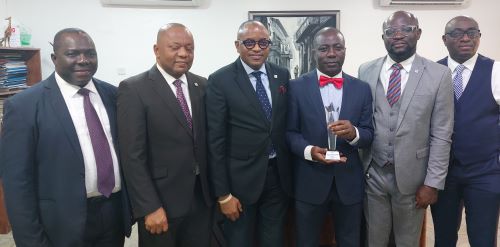
L-R: Mrs. Moji Teluwo, DGM, Corporate Affairs, NEM Insurance Plc receiving the NEM award: ‘The Most Media-Friendly Insurance Company of the Decade’ from Mr. Tim Akano, Managing Director/CEO, New Horizons Limited at the Business Journal Newspaper Public Presentation ceremony in Lagos recently. Mrs. Teluwo represented the GMD/CEO of NEM Insurance Plc, Mr. Tope Smart at the event.

NEM Insurance Plc was honoured with ‘The Most Media-Friendly Insurance Company of the Decade’ award at the recent public presentation of Business Journal Newspaper in Lagos in recognition of its timeless and unwavering support for the media.

Commenting on the development, Prince Cookey, Publisher/Editor-in-Chief of Business Journal said:

“NEM Insurance Plc under the distinguished leadership of Mr. Tope Smart is without doubt one of the most media-friendly insurance companies in the country today. In the past decade and more, NEM has carved a niche as a beacon of hope and pillar of support for media professionals, especially the insurance media in the area of business support and respect for professionalism. NEM is always there for us at all times and in every season. We are deeply grateful to NEM Insurance Plc and Mr. Tope Smart for being such a great friend of the media in Nigeria.”

NAICOM Honoured with Award at Business Journal Newspaper Presentation

0

L-R: Mrs. Adeola Olagoke, representative of the Lagos State Commissioner for Information & Strategy presenting the NAICOM Award to Mr. Rasaaq Salami, Deputy Director, Corporate Communications & Market Development at the National Insurance Commission (NAICOM) at the Business Journal Newspaper Public Presentation ceremony in Lagos recently. Salami represented the CFI/CEO of NAICOM, Mr. O. S. Thomas at the event.

The National Insurance Commission (NAICOM) was honoured with award at the recent public presentation of Business Journal Newspaper in Lagos as ‘The Most Media-Friendly Regulator of the Decade’ in appreciation of its legendary support for the media in Nigeria.

Commenting on the development, Prince Cookey, Publisher/Editor-in-Chief of Business Journal said:

“NAICOM remains one of the most media-friendly regulators in Nigeria today. Over the years, the Commission has impacted positively on media professionals in terms of recognition, business support and capacity building. More importantly, the Commission recognises the key importance of the media in all of its programmes and strives as much as possible to carry members of the media along. We remain indebted to the Management of NAICOM for such deep support running from one administration to another.”

NCC, Danbatta Honoured with Awards at Business Journal Newspaper Presentation

0

L-R: Mr. Rasaaq Salami, Deputy Director at the National Insurance Commission (NAICOM) presenting the NCC Award to Mrs. Nnenna Ukoha of NCC at the Business Journal Newspaper Public Presentation ceremony in Lagos recently. Salami represented the CFI/CEO of NAICOM while Ukoha represented the EVC/CEO of NCC at the event.

The Nigerian Communications Commission (NCC) and Professor Umar Danbatta, Executive Vice-Chairman/CEO of NCC were honoured with awards at the recent public presentation of Business Journal Newspaper in Lagos.

While the NCC received the award of ‘The Most Media-Friendly Regulator of the Decade’ in appreciation of its legendary support for the media in Nigeria, Danbatta was honoured as the ‘Telecom Development Man of the Decade’ as a recognition of his giant strides in telecom development in the country.

Commenting on the development, Prince Cookey, Publisher/Editor-in-Chief of Business Journal said:

“The NCC remains one of the most media-friendly regulators in Nigeria today. Over the years, the Commission has impacted positively on media professionals in terms of recognition, business support and capacity building. More importantly, the Commission recognises the key importance of the media in all of its programmes and strives as much as possible to carry members of the media along. We remain indebted to the Management of NCC for such deep support running from one administration to another.”

SEC, BOI, UBA Pledge Commitment to Growth of Non-Oil Sector

0

The Securities and Exchange Commission (SEC) has reiterated its commitment to developing the commodities ecosystem in Nigeria to boost its non-oil sector.

The Director-General of SEC, Lamido Yuguda, stated this at the 2022 annual conference of the Finance Correspondents Association of Nigeria (FICAN), held in Lagos over the weekend, with the theme ‘Boosting Domestic Capacity for Sustainable Export Earnings’.

Yuguda who was represented by the Director, Lagos Zonal Office of the Commission, Hafsat Rufia, noted that development of the commodities ecosystem would help the country achieve its quest for sustainable foreign exchange earnings and economic development.

The Commission’s boss said, “We believe that implementation of the roadmap for a vibrant commodities’ trading ecosystem in Nigeria by the Commission will support development of the agricultural sector and diversification of the Nigerian economy and, ultimately, advance the country towards attaining sustainable foreign exchange earnings.”

He added that it is imperative that the country focuses on all the sustainable foreign exchange earning avenues of the capital market for support over the medium to long term.

“We must, therefore, leverage on the capital market through the commodities ecosystem, the equity and bond markets to develop and exploit all the potential sources of forex.”

According to data from the National Bureau of Statistics, the total value of capital importation into Nigeria in the second quarter of 2022 stood at $1.535 billion. The largest amount of capital importation was received through portfolio investments, which accounted for 49.33 per cent ($757.32 million). Foreign Direct Investments (FDI) accounted for 9.58 per cent ($147.16 million) while Other Investments stood at 41.09 per cent ($630.87 million).

The largest amount of portfolio investment went to money market instruments – 55.8 per cent ($422.56 million). Bonds followed with 42.5 per cent ($322.04 million) and Equities accounted for 1.68 per cent ($12.72 million) of portfolio investment in Q2 2022.

The SEC DG stated that the Securities and Exchange Commission continues to advocate for a unified foreign exchange rate in order to attract more foreign portfolio investments into the country, adding “We appreciate the efforts of the Central Bank of Nigeria in exchange rate management and will support in whatever way we can to enable achievement of the objective of exchange rate stability.”

Representing the Managing Director and Chief Executive Officer of Bank of Industry (BoI), Mr. Olukayode Pitan, the Project Officer, Ominiaboh Uyoyou Jermila, said the national budget is heavily reliant on the revenue generated from the oil sector, lamenting that since the 70s, the focus on oil as a major source of foreign exchange has negatively impacted growth in the non-oil sector and has led to decline in its contribution to foreign exchange earnings.

He noted that, nonetheless, the non-oil sector contribution to GDP has been significant, pointing out that during the 2008 global financial crisis the non-oil sector helped to absorb extra natural shocks caused by the declining oil revenue.

He explained that sectors such as telecommunications, ICT, trade, industry and agriculture were critical to the economic recovery from the 2008 financial crisis and have remained so following the twin economic recession in 2016 and 2020.

Pitan said this has highlighted the need for economic diversification, which has become a significant point in national and policy-making imperatives, though with varying degrees of success.

He added that boosting exports earnings has become more important given the naira devaluation and shrinking foreign exchange reserves.


As a result of this, he said the government has made more concerted efforts to focus on the non-oil sector for the increase and efficient collection of customs duties and other taxes.

Pitan noted that while there have been a lot of government policies and initiatives to encourage non-oil exports, especially among small and medium scale industries, the performance of the sector is still likely to be below par due.

He attributed this to the challenges of low inputs, dependencies on primary inputs and entrepreneurial nature of basic industry, policy inconsistencies, insufficient skilled manpower, high lending rates, among others. He added that BoI has provided financial assistance for the establishment of large, medium and small projects, as well as expansion, diversification and modernisation of existing enterprises.

The Deputy Managing Director, United Bank for Africa, Muyiwa Akinyemi, in the same vein, noted that the discovery of crude oil brought a shift that has made the country to majorly depend on the oil sector to the neglect of other sectors.

According to him, this made the economy susceptible to fluctuations in revenue, occasioned by the usual instability associated with the prices of crude oil in the international market.

“Successive governments have made differing efforts at diversifying the revenue sources of the economy by promoting non-oil export trade which cumulatively impacts on overall economic growth”, Akinyemi said.

On some of UBA’s key interventions to facilitate export, he mentioned that the bank had developed a $200 million non-oil export trade financing programme to bridge working capital requirements of SMEs/commercial exporters at concessionary interest rate and favourable collateral structure and provided project and structured trade financing to enhancing export capacities of manufacturing.


NCC, NAICOM, LASG, Experts Identify Importance of Media in National Development, Seek Adoption of AI

0

L-R: Maureen Chigbo, President, Guild of Corporate Online Publishers (GOCOP); Mrs. Adeola Olagoke, rep. Lagos State Commissioner for Information & Strategy; Dr. Biodun Adedipe; Prince Cookey, Publisher/Editor-in-Chief, Business Journal; his wife, Mrs. Perpetua Cookey; Mr. Rasaaq Salami, Dep. Director, rep. CFI/CEO of NAICOM; Mrs. Nnenna Ukoha, rep. EVC/CEO of NCC and Tim Akano, MD/CEO, New Horizons Limited at the official launch of Business Journal Newspaper in Lagos over the weekend.

Experts who gathered at the public presentation of Business Journal Newspaper over the weekend in Lagos have identified the important role of the media in national development, urging media practitioners to adopt Artificial Intelligence (AI) to enhance their capacity for sustainable growth and profitability.

The Keynote Speaker, Prof. Umar Danbatta, the Executive Vice Chairman/Chief Executive Officer, Nigerian Communications Commission (NCC), in delivering the theme of the event, “The Media in National Development: Successes, Challenges & Prospects” highlighted the importance of the media and its contributions to national development.

Danbatta said: “The media no doubt has been the bastion of entrenching good governance and promoting development in the country.  The media in Nigeria has principally played the protagonist role to midwife the path of the liberalisation of the telecom sector in Nigeria. We cannot, for instance, forget the contribution of the Nigerian media which includes the dedicated information and communication and technology pages in our national dailies and numerous related programmes of the electronic media which comprises the radio and television. The media have indeed paid their dues in initiating government policies in support of the growth of the sector.”

Danbatta who was represented by Mrs. Nnenna Ukoha, Head, SIM Registration Project at the NCC, noted that “the objective of development communication entails the media to carry out development tasks within the ambit of the society as well as advocating the essence of why the society should develop.”

The media, he said, “will continue to remain a veritable channel for the wide range of development campaigns which the NCC has effectively used. The media has also facilitated the achievement of government developmental goals and kept the public abreast of the state of development in the society.

The practitioners, therefore, must maintain ethics, standard, integrity, and ensure that professionalism and development guide editorial policy and conduct. The media has always played a double-edged role which will either enhance or derail national development.”

Danbatta enjoined the Nigerian media “to continue to carry out positive development tasks in line with national established policies and national ethics which are discipline, integrity, dignity of labour, social justice, religious tolerance, self-reliance and patriotism as stipulated in Sections 23 and 24 of the 1999 Constitution as amended,” adding that  “the media should be socially responsible in carrying out developmental tasks in a manner that fosters national development and such developmental goals should be based on a bottom-top approach,” aimed at improving quality of all aspect of peoples’ lives ranging from economic, political, socio-culture and even technological strength.

In carrying out national development initiatives, the NCC boss charged that “the media shall at all times be free to uphold fundamental objectives contained in the Constitution by holding the government responsible and accountable to the people.”

Speaking on the topic “AI In Journalism: Where Is The Media Headed & What Becomes of Journalists?, Mr Tim Akano, Managing Director/Chief Executive Officer, New Horizons Limited, emphasised the need for media practitioners to take advantage of the opportunities offered by Artificial Intelligence (AI) to remain relevant even as he called for the immediate establishment of www.Journalism AI.ng immediately with a view to making the benefits of AI more accessible and counter inequalities in the global news media.

Artificial intelligence (AI), according to him, is the simulation or hacking of human intelligence processes by machines, especially computer systems, noting that as of 2020, over 40 percent of the top 70 news organisations worldwide used AI in the media.

Akano said: “Artificial Intelligence is the biggest disruptor of the Creation, Production, Distribution, Consumption, and Archiving of news Products and Services.

The functions of AI, according to Akano, include monitoring, discovering, predicting, interpreting and interactions while the benefits amongst others include improvement of the quality of engagement and programming based on customer interest, trends, and scenarios; Machine Learning can recommend personalised content based on user data on preferences. Matchmaking the right content with the right audience; Cognitive AI can help increase customer engagement and satisfaction; AI applied to video content helps to conduct visual analysis that tracks & captures emotions instantly and facilitates content; AI facilitates accuracy, speed, and efficiency Real-time analytics determine the ideal advertisements for the audience.

He said the new curriculum for Journalism that mirrors today’s realities is required urgently in schools, urging that publishers should embrace Platforms by “meet your audience where they are.”

He enjoined publishers to ‘publish at the convenience of the readers, not the newsroom; convert casual free readers to loyal partners who pay and recommend your content to others; experiment with different monetization strategies; embrace diverse strategic partnerships; integrate and encourage Mobile Journalism; be Data-Driven in your Decision-making; marry the AI Beast before it pushes you to join the rank of useless humans whose population is presently estimated at three (3) billion worldwide by the World Economic Forum (WEF).”

Earlier in his remarks, the Chairman of the Occasion and Commissioner for Insurance/Chief Executive Officer, National Insurance Commission (NAICOM), Mr. Olorundare Sunday Thomas, represented by Head, Corporate Communication and Market Development, NAICOM, Mr. Rasaaq Salami, said Business Journal coming out as a tabloid is going to add value to the system.

“We know that information is key and when we have a credible medium through which we disseminate this information, the people are better informed. Beyond the traditional role of the media which is to entertain and educate, I believe Business Journal has served this purpose in the past and I believe it can improve on whatever they have been doing,” Rasaaq added.

While congratulating Prince Cookey for achieving this feat, he said Business Journal has done well from being a magazine at inception, adding an online version and now creating a tabloid segment. He promised the Commission’s support for the success of the publication.

Earlier in his remarks, the Commissioner of Information and Strategy, Lagos State, Mr. Gbenga Omotosho who was represented by the Assistant Director, Public Affairs, Mrs. Adeola Olagoke, commended the publisher of Business Journal Newspaper, Prince Cookey, for the publication which she said will bridge the gap of information dissemination in Lagos State and the country at large and pledged government’s readiness to support the publication.

In his opening remarks, the publisher of Business Journal Newspaper, Prince Cookey, said the vision of the newspaper is to be the largest media outfit in Africa, delivering value to readers, advertisers and other key stakeholders through both online and print services.

“We started off in 2018 as a magazine, added the online platform and today, we are showcasing the tabloid as a newborn baby. We have already started and no matter the challenges and obstacles, with God on our side, we believe strongly that we shall achieve our dream,” Cookey said.

While thanking all the companies and individuals that supported the company so far, he appealed to them for more support.

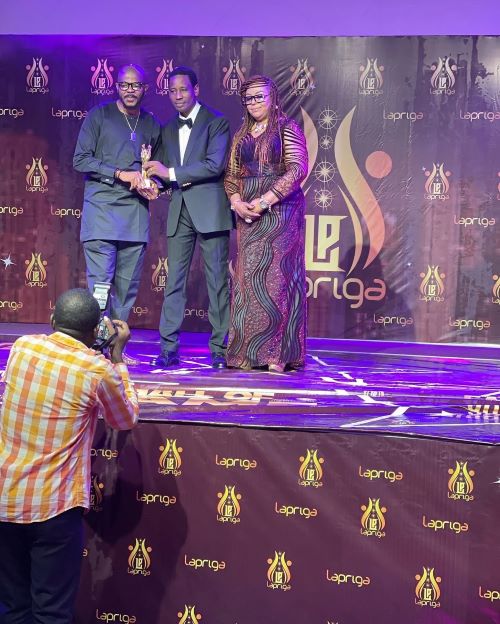
NCC Commits to Bridging Digital Gender Divide, Danbatta Bags ‘Icon of Digital Revolution Award’

0

The Nigerian Communications Commission (NCC) has reiterated its unwavering commitment to bridging growing gender-oriented digital divide to accelerate inclusive economic prosperity for all Nigerian citizens.

Executive Vice-Chairman of the Commission, Prof. Umar Garba Danbatta who restated this commitment in Lagos at the 2022 Nigerian Women Entrepreneurs and Executives in Tech Summit (WEETS) where he was conferred with the ‘Icon of Digital Revolution Award’ for his role in stimulating digital connectivity in Nigeria, said promotion of gender equality is a major component of ICT development.

He noted that the gender dimensions of ICT, manifests in access and use; capacity-building opportunities; employment and potential for empowerment, and that all these dimensions need to be explicitly identified and addressed, to leverage on technology and communication as powerful catalysts for political, economic, and social empowerment of women, and the promotion of gender equality.

Speaking to the theme of the event, “Reskilling Women and Girls to Thrive in the Digital Economy”, Danbatta, who was represented by NCC’s Head, Digital Media Management, Nafisa Usman Rugga, said the theme resonates deeply with the drive by the Federal Government to ensure an all-inclusive digital economy that drives the strategic vision plan of the Commission.

He expressed his appreciation to organisers, Techlife Media and Communications Limited, a Lagos-based media organisation, for the iconic recognition for his contribution to Nigeria’s digital progression which is an encouragement that he would dedicate to the entire NCC team of professionals that are dedicated to the digital revolution in the country.

Danbatta commended the organisation for holding forth its annual gathering that pivots discussions on promotion of digital access, skills and knowledge among the women and girls in Nigeria.

He indicated that one of the ways through which the Commission strives to achieve an inclusive growth, is through increased digital connectivity to all, regardless of gender and other accidental circumstances, and that the Commission has continued to play a front-seat role in driving the implementation of the National Digital Economy Policy and Strategy (NDEPS), 2020-2030; the Nigerian National Broadband Plan (NNBP), 2020-2025; and related policies aimed at deepening connectivity for all citizens, thereby bridging digital gender disparity.

“The NCC has put in the front burner the need to expose girls and young women to more opportunities in the digital ecosystem, in line with the International Telecommunications Union (ITU) resolution 70, which advocates gender mainstreaming and promotion of gender equality, as well as the empowerment of women through information and communications technology (ICT), and we are fully committed to this,”, Danbatta said.

The organisers, while justifying the reason for conferring the award on Nigeria’s chief telecom regulator, stated that after“ reviewing the criteria set for the award, we reckon that Prof. Danbatta deserves the award for blazing the trail in accelerating digital revolution in Nigeria, especially with the historic auction of 3.5 GHz spectrum in a fair, transparent, and credible manner, and considering the various initiatives embarked upon by the Commission under his leadership, to inspire girls and women to play active roles in the evolving global digital economy.”