
The failure of many airlines in Nigeria and why those that are still operational are struggling for survival is attributable to a litany of peculiar Nigerian problems including greed exhibited by airline owners; financial rascality, overbearing charges and taxation by regulatory agencies; unpredictable and unstable forex; non-existent good corporate governance principles; lack of due diligence procedure and other associated risks as well as over invoicing among other challenges.
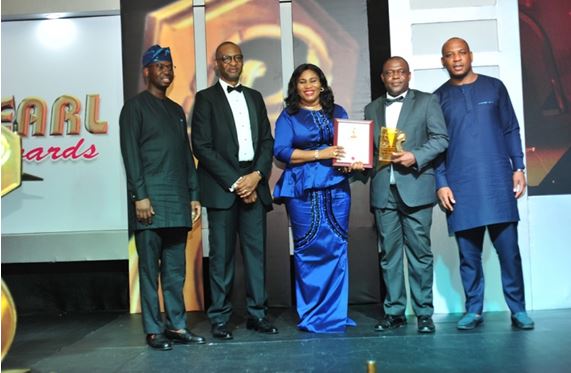
Managing Director/Chief Executive Officer, Asset Management Corporation of Nigeria (AMCON), Mr Ahmed Kuru who made this submission in Lagos at the weekend also heaped further blame on banks who rush into the business of funding aviation without the requisite knowledge or understanding of the aviation business. He was speaking at the Aviation Leadership CEO’s Roundtable to commemorate the 10th anniversary of Aviators Africa magazine in Lagos.
Delivering the keynote address at the event in a paper titled “Aircraft Financing: The Issues & Challenges of Asset Management Corporation of Nigeria (AMCON), “ the AMCON boss, who was represented by Mr. Tajudeen Ahmed, a top official of AMCON also called on the federal government and indeed all stakeholders to take a wholistic review of the business of aviation in Nigeria because of the critical role the sector plays in the growth of any economy.
He said: “In my opinion, the aviation sector, which is a critical component of the transport, is perhaps one of Nigeria’s most challenging sectors; especially in the light of the massive need for infrastructure development in air, rail, road and sea transport to ensure seamless movement of people and cargo. Regardless of the mode of transport – the aviation sector has proved to be a catalyst for the economic development of nations. It is the wheel that drives economic activities. The air transport sector facilitates trade, tourism; boosts productivity in the economy; improves efficiency in the supply chain; it is an enabler for investments; can spur innovation, facilitate commerce and provide fast and reliable delivery of cargoes and services.”
According to him, a sector as strategic as aviation must be given all the necessary policy backings by the government to enable the sector to take its pride of place in Africa. He disclosed that AMCON’s experience with its intervention in aviation has made it clear to him that there was need for a total overhaul of the modus operandi in the sector.
In a passionate submission, the AMCON CEO, who was a former managing director of a bank, said, “From what we now know, there are serious issues in aircraft financing because our people dabble into the business of aviation with the wrong capital mix. On the other hand, the banks who are the primary source of funding also have short term views about the business. Banks that have attempted to fund the business in the past neither had the deep expertise nor carried out proper due diligence before committing their funds. Banks lack both the financial capacity as well as the expertise in personnel to critically analyse the business and its associated risks before throwing their money into aircraft/aviation financing.
“Because the banks do not understand the business, it is easy for any ‘sharp businessman’ with dubious intentions to approach them with dodgy proposal to float an airline just to get loans that will go bad shortly after. Such cases abound in the industry. No wonder Nigerian banks, having watched the trend of the short lifespan of aviation investment shy away from further funding. The previous management of Arik without carrying out serious feasibility studies some years back bought two A340 planes for $260million dollars and within four years, it was discovered that the planes are commercially obsolete. So even with that huge capital outlay, the two planes were not able to operate to generate the money to service the huge debt, not to talk of making profit. This is just one of many.
“In such a situation, in as much as we blame the investor for not knowing the right planes to buy, the banks also have a share of the blame. If they had expertise, they would have guided against the purchase of commercially obsolete planes. The $260million dollars, Arik management ‘wastefully’ spent buying the two aircraft at that time was enough to buy telecommunications operating licence like MTN, Globacom and others did. If due diligence was carried out, that money would have been enough to buy four or five of other specification of commercially viable aircraft that would still be flying today and making money for the company, meaning that the loan would also not have gone bad and thus end up at AMCON. But as I speak with you, the multimillion-dollar investments are parked at the airports and could be regarded as scrap.”
He further stated that since convincing the banks to invest in aviation has become difficult, the CBN should consider incentives that will encourage banks to fund aviation in Nigeria because it is such a critical sector of any economy.
The apex, the AMCON CEO said should also motivate banks to go into airline asset securitisation, just as the government should create the enabling environment that would enable airlines to set up leasing companies in a well-tenured manner. The government can consider the idle pension funds for this venture so that operators will enjoy long-term credit.
In conclusion, Kuru said airlines in Nigeria indeed find it extremely difficult to survive, which is why it is not surprising that a look at what he called ‘Nigeria’s aviation burial ground,’ reveals a long list of defunct airlines most of whose lifespan did not exceed 10 years. He described this as a negative business trend that must be arrested if Nigeria is to be taken seriously.