Tuesday, December 9, 2025
31.5 C
Lagos

Stanbic IBTC: Most Outstanding Bank Supporting Women-Owned Businesses

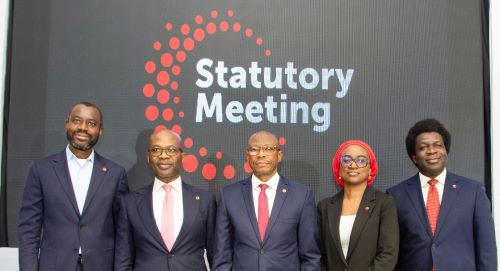
Stanbic IBTC Bank Limited, a subsidiary of Stanbic IBTC Holdings has been recognised as the Most Outstanding Bank Supporting Women-Owned Businesses at the Women in Marketing and Communications Award (WIMCA) held in Lagos, Nigeria recently.

WIMCA is the largest gathering of female professionals in brand, marketing and communications in Nigeria and Sub-Saharan Africa. The event celebrates outstanding women and corporate organisations for their contributions to the growth of their industries and the country.

Receiving the award, Olajumoke Bello, Head of Enterprise Banking at Stanbic IBTC Bank, expressed profound appreciation to the organisers for the honour, promising that the bank remains committed to supporting every woman whether in career or business through its Blue Blossom community curated specifically for women.

Olajumoke said: “We believe that women’s activities are pivotal to the development of any economy, and we are committed to providing them with the support they need to succeed.”

She added that the move has been welcomed by women in the business landscape, who see it as a significant step towards achieving gender equality in the financial sector. The initiative will create more opportunities for women entrepreneurs and executives to succeed in their businesses and achieve their financial goals.

Stanbic IBTC Bank has created a healthy environment that breaks down barriers for talented, qualified women to achieve their career aspirations, own their businesses, and make demonstrable differences in their various industries.

Knowing that inclusive leadership is the game changer for bridging gaps in an unpredictable business environment like ours, this award celebrates Stanbic IBTC Bank’s contribution towards supporting women-owned businesses in Nigeria.


spot_img
spot_img
spot_img

Hot this week

CBN Grants Licence to 82 BDCs under Revised Guidelines

The Central Bank of Nigeria (CBN) in exercise of...

NGX Chair: Media Coverage of Capital Market Key to Sustainable Growth

OPENING REMARKS BY THE CHAIRMAN, NIGERIAN EXCHANGE GROUP (NGX)...

Stanbic IBTC Bank Champions Economic Growth Through Strategic Partnership with AfDB

Stanbic IBTC Bank, a subsidiary of Stanbic IBTC Holdings...

UBA Group Dominates 2025 Banker Awards, Emerges Africa’s Bank of the Year, For Third Time in Five Years

Africa’s Global Bank, United Bank for Africa (UBA) Plc,...

Wines of Canada Debuts in the Nigerian Market

Carl DIB Merchandising Limited, a leading company in the...

Topics

Stanbic IBTC Unveils Flex Border to Ease Cross-Border Transactions

Stanbic IBTC Bank Plc, a subsidiary of Stanbic IBTC...

CBN, AfDB, Dangote Supports Power Nigeria 2019

One of the primary challenges Nigeria is seeking to...

ATCON: ‘No Comment’ on $3. 9bn NCC, MTN Saga

The Association of Telecommunications Companies of Nigeria has...

Headline Inflation Tops 18.3% in October 2016

The National Bureau of Statistics (NBS) released the inflation...

NIMC Partners RH-NHGSF to Deliver Effective School Feeding Program

In alignment with the Renewed Hope Mandate of President...

Stanbic IBTC Insurance Unveils Manifold Endowment Plan to Redefine Financial Security

Stanbic IBTC Insurance, a subsidiary of Stanbic IBTC Holdings...

IMF Seeks Increase in Banks’ Capital Requirement in West Africa

Citing rising level of non-performing loans at 15.7 per cent and commercial banks’ borrowing from their central banks at nine per cent of liabilities in the West African Economic and Monetary Union (WAEMU), the International Monetary Fund (IMF) has strongly advocated increase in banks’ capital adequacy requirements to maintain sound financial stability for regional economic growth. The Fund observed that while the average capital adequacy ratio of banks (9.3 percent) was above the minimum required (8 percent) at the end of June 2014, it was however lower than the minimum required in half of the countries in the region, just as the level of non-performing loans reached 15.7 percent of total loans.
spot_img

Related Articles

Popular Categories

spot_imgspot_img