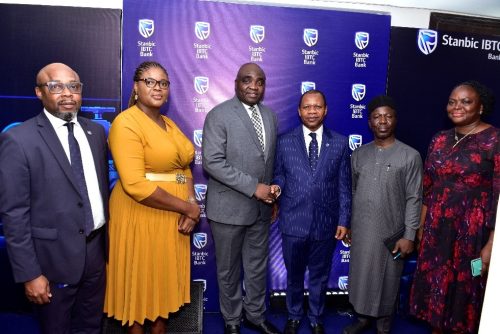

L-R: Umah Imoh, Acting Sector Head, Energy, Client Coverage, Stanbic IBTC Bank; Joyce Dimkpa, Head, Client Coverage, Stanbic IBTC Bank; Dr. Jobson Ewalefoh, Director General, Infrastructure Concession Regulatory Commission (ICRC); Wole Adeniyi, Chief Executive, Stanbic IBTC Bank; Engr. Joseph Musa, Deputy Director, Nigeria Midstream and Downstream Petroleum Regulatory Authority (NMDPRA) and Bassey Efemona, Deputy Director/Head Services and Administration, Lagos Regional Office, NUDPRC.
Stanbic IBTC’s Corporate and Investment Banking (CIB) division recently concluded its high-level Gas and Infrastructure Conference. Industry leaders, policymakers, and financial experts converged to explore integrated solutions for investing in sustainable economic growth.
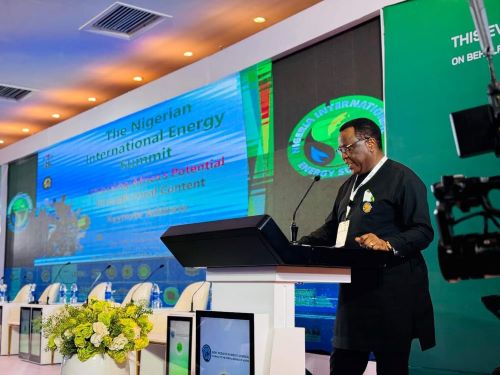
The conference themed ‘Driving gas and infrastructure opportunities in Africa (Focus on Nigeria)’ featured robust discussions on maximising Nigeria’s vast energy potential across multiple streams, including oil and gas, power generation, renewable sources, and emerging technologies. Industry leaders emphasised the critical role of diverse energy investments in driving economic growth and industrial development.
During their opening and closing remarks, Kunle Adedeji, Acting Chief Executive, Stanbic IBTC Holdings, and Wole Adeniyi, the Chief Executive of Stanbic IBTC Bank, emphasised the pivotal role that the gas and infrastructure sectors play in the growth and development of Nigeria’s economy. They pointed out that these sectors are vital for the country’s economic landscape and future sustainability and prosperity.
While giving his keynote speech, Dr. Jobson Ewalefoh, Director General, Infrastructure Concession Regulatory Commission (ICRC), explained that Nigeria is at a crucial juncture in its journey towards national development, with immense potential. “The government is committed to expanding infrastructure and fostering strategic partnerships for sustainable growth.”
Joyce Dimkpa, Head of Client Coverage at Stanbic IBTC Bank, moderated a panel session featuring several distinguished speakers: Dr. Jobson Ewalefoh, Director General of the Infrastructure Concession Regulatory Commission (ICRC); Engr. Ahmed Farouk, Chief Executive Officer of the Nigerian Midstream and Downstream Petroleum Regulatory Authority (NMDPRA); Yetunde Taiwo, General Manager of Integrated Gas Development at First E&P; Adesuwa Ladoja, Managing Director/Chief Executive Officer of Lagos Free Zone; and Jonathan Muga, Sector Lead for Infrastructure Sector Client Coverage at Standard Bank Group.
Joyce noted that the conference’s quality of dialogue and engagement reflects the market’s readiness for transformative investments in energy and infrastructure.
“The insights shared will shape investment strategies and foster partnerships that drive comprehensive economic development,” she emphasised.
Yetunde Taiwo, the General Manager of Integrated Gas Development at First E&P, highlighted the significance of the value chain. “It is widely understood that for this to impact the economy positively, it must traverse a complete value chain, starting with the upstream sector.”
Speaking at the panel discussion, Jonathan Muga, Sector Lead, Infrastructure Sector Client Coverage, Standard Bank Group, maintained that providing a regulatory framework for public-private-partnership (PPP) initiatives is key to attracting the right investments. “When we invest in infrastructure, we invest in Africa’s prosperity. This creates a chance for all of us to share knowledge and learn from one another”.
Distinguished speakers from Standard Bank Group’s global Energy and Infrastructure teams shared insights on international best practices and investment trends. The discussions highlighted opportunities in gas monetisation, power sector reforms, energy distribution networks, and infrastructure development across transportation, healthcare, and telecommunications sectors.
The event concluded with key stakeholders identifying significant opportunities for collaboration, particularly in energy infrastructure development, cross-sector investments, and innovative project financing.
Discussions were framed around six critical themes – Concession, Industrialisation, Regulation, Funding, Privatisation, and Collaboration – which further reinforce Stanbic IBTC’s commitment to driving strategic investments that enhance Nigeria’s energy security and contribute to sustainable economic growth.