Tuesday, April 7, 2026
26.1 C
Lagos

FOR THE RECORD: Weakening Growth in Sub-Saharan Africa Calls for Policy Reset

Growth lowest in 15 years, with significant variation across region
Severe shocks: weak commodity prices, tight external financing, drought
Urgent need to reset policies to secure growth

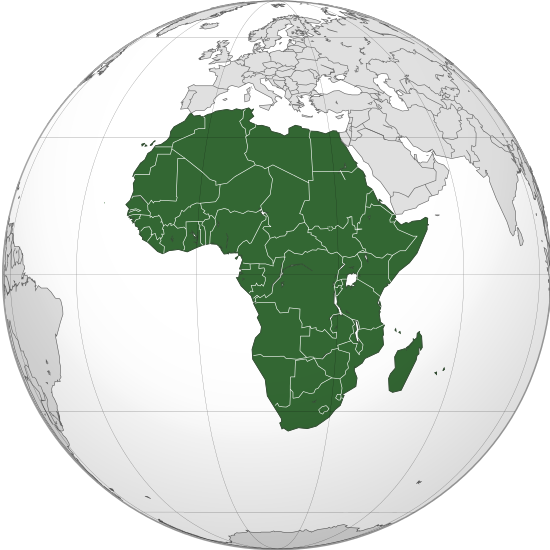
After a prolonged period of strong economic growth, sub-Saharan Africa is set to experience a second difficult year as the region is hit by multiple shocks, the IMF said in its latest Regional Economic Outlook for Sub-Saharan Africa

The steep decline in commodity prices and tighter financing conditions have put many large economies under severe strain, and the new report calls for a stronger policy response to counter the effect of these shocks and secure the region’s growth potential.

The report shows growth fell to 3½ percent in 2015, the lowest level in 15 years. Growth this year is expected to slow further to 3 percent, well below the 6 percent average over the last decade, and barely above population growth.

Hit by several shocks
The commodity price slump has hit many of the largest sub-Saharan African economies hard. While oil prices have recovered somewhat compared to the beginning of the year, they are still more than 60 percent below 2013 peak levels—a shock of unprecedented magnitude.

Monique Newiak
IMF African Department

spot_img
spot_img
spot_img

Hot this week

APC National Chairman, Nentawe Yilwatda, Donates N15m to Jos Attack Victims, Vows End to Killings in Plateau State

The National Chairman of the All Progressives Congress (APC),...

PR Industry Leaders Hail Adejumoh’s Book, Advocate Strategic Shift in Practice

L-R: Chief Yomi Badejo-Okusanya (YBO), Chairman, Board of the...

Beta Glass Reports Revenue of N149.1bn in Audited Results for 2025

Beta Glass Plc, the leading glass container manufacturer in...

Stanbic IBTC Sets Sustainable Growth Agenda for Key Sectors at Inaugural Nigeria Business Summit

Stanbic IBTC, a leading financial services provider in Nigeria,...

Ecobank Nigeria Assures Customers of Uninterrupted Banking Services During Easter Public Holidays

Ecobank Nigeria, a member of Africa’s leading pan-African banking...

Topics

Fidelity FNITCC Atlanta: Exhibitors Laud Event as Game-Changer for Non-Oil Export Growth

Exhibitors at the recently concluded Fidelity Nigeria International Trade...

Nigeria Drives 23m Units African Smartphone Market in Qtr3

While market saturation and U.S.–China tensions are placing the...

Africa Mobility Spend to Top $185bn by 2019

Annual spending on mobility across the Middle East, Turkey,...

ALTON Hails NCC Chief, Umar Danbatta, for Quality Regulation of Telecom Sector

The Chairman of the Association of Licensed Telecoms Operators...

Heirs Insurance Group Posts N20bn in Revenue for FY2022, Cements Position in Sector

  - N2.7bn underwriting profit and N849.4m PBT in FY2022 -...

The PenCom 2019 Journalists’ Workshop in Benin-City

Mr. Abisola Onigbogi (ED Technical, ARM Pension Managers), Mr....

Nigeria’s 2015 Appropriation Bill: Legislators Adopt the Ostrich Strategy

A week after the House of Representatives passed the 2015 Budget, the Upper Chamber fulfilled its part of the Appropriation process by passing a N4.5tn budget. This is N134.4bn in excess of the N4.4tn submitted by the Executive arm late 2014. Meanwhile, recurrent expenditure was reduced slightly by N0.5bn to N2.6tn while capital expenditure was scaled down by additional N85.9bn to N557.0bn from N642.8bn proposed by the Executive arm. Effectively, this implies that recurrent expenditure is approximately five times the capital expenditure.

Stanbic IBTC Insurance Highlights Benefits of Life Insurance Policy

  Stanbic IBTC Insurance Limited, a subsidiary of Stanbic IBTC...
spot_img

Related Articles

Popular Categories

spot_imgspot_img