| Bank Group Governors for Central Africa came to attend a consultative meeting during which they had fruitful discussions with the senior management |
| ABIDJAN, Ivory Coast, February 27, 2019/ — “Your presence at the Bank’s headquarters matters. So is your voice. It is encouraging hearing you,” says Akinwumi Adesina, President of the African Development Bank (www.AfDB.org), addressing the institution’s Governors for Central Africa, on 26 February in Abidjan.
Like their West Africa counterparts on Monday, Bank Group Governors for Central Africa came to attend a consultative meeting during which they had fruitful discussions with the senior management. They came from all parts of the central African region: Cameroon, Congo, Gabon, the Democratic Republic of the Congo (DRC), the Central African Republic (CAR), Chad and Equatorial Guinea, to review national and regional projects and, with the Bank’s leaders, to lay the foundations for further development of their region. African Development Bank Vice-President and Chief Economist, Célestin Monga gave an economic overview of the continent and more specifically of Central Africa, highlighting the main challenges to inclusive growth, peace and security, sound macroeconomic management and stability, the development and strengthening of basic infrastructure, and effective regional integration. He also emphasised the need for the States of the region to diversify their economies through agribusiness, fisheries and livestock. Gabon’s Governor, Hilaire Machima echoed this view: “This policy is already bearing fruit, since the government of my country has been working for several years on processing wood within the country. There are currently some 80 wood-processing companies in Gabon.” The Bank’s Director General for Central Africa, Ousmane Doré, spoke of the significant impact Bank-financed projects have on people’s lives. “The Bank’s commitments in the region totalled $13 billion in 2018, through 531 operations in all,” he said, adding that 2019 would be a year of even deeper cooperation with the region and citing several major projects financed by the Bank. Thanks to the African Development Fund, four of the seven countries of the region – Cameroon, the CAR, Republic of Congo, and Chad – have been connected by a road corridor in under ten years. These links have enabled a fivefold reduction in transport costs between production and consumption areas. Another example is the programme to facilitate transport between Douala (Cameroon), Bangui (CAR) and Ndjamena (Chad), allowing trade to develop in the area and outside the CEMAC zone, and further improving the efficiency of the transport logistics chain. In the energy sector, two projects have come to fruition, one in Kribi in Cameroon and the other, the interconnection of power grids between the CAR and the DRC. The ‘Central African Backbone’ fibre optic project in Cameroon, DRC and CAR aims to improve connectivity, e-banking and the information provision on markets and the business climate. The Bank has also financed a project to improve the drinking water supply in the city of Libreville, Gabon. During the Africa Investment Forum last year, the African Development Bank, Africa50 and other partners concluded a $500 million funding agreement for the construction of the first road-rail bridge to connect two Congolese neighbours, Republic of Congo, and the DRC. To highlight the importance to the Bank of a general capital increase, Vice-President for Finance, Swazi Tshabalala cast her mind back to the strategic focus of the first Governors’ meeting held in Rome last year. “The Bank’s ‘High 5’ priorities are at the very heart of Africa’s development programme,” she reiterated. The Governors unanimously gave the African Development Bank their support. “We have a Bank that innovates. We need significant resources to take Africa and our region forward,” said the Bank Governor for Cameroun, Alamine Ousmane Mey. Bank Governor for Equatorial Guinea, Lucas Abaga Nchama stressed the continent’s enormous development needs, saying that “the [Bank’s] capital increase is important. Our future lies in regional integration”. The Bank Governor for Chad, Issa Doubragne [MOU1] added, “We have every reason to be hopeful.” Concluding, President Adesina said: «We will continue to work hard for the Africa you want. » |

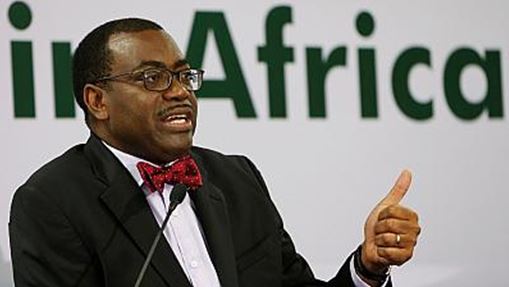
“Our future lies in regional integration. We need resources to move forward,” say Central Africa Governors







Popular Categories


Previous article
Next article