
KEYNOTE ADDRESS BY THE COMMISSIONER FOR INSURANCE, MR OLUSEGUN AYO
OMOSEHIN, AT THE 2ND EDITION OF THE AFRICAN TAKAFUL AND NON-INTEREST
(ISLAMIC) FINANCE CONFERENCE, HELD IN LAGOS ON 12TH NOVEMBER 2024
Protocol
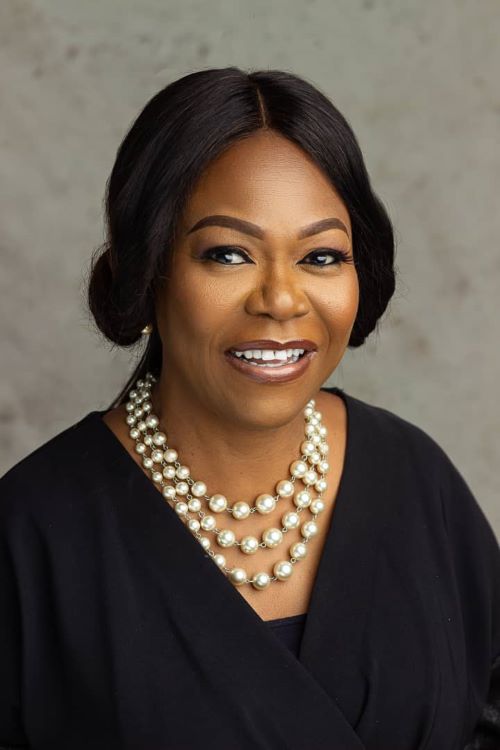
I am honored to represent the Commissioner for Insurance, Mr. Olusegun Ayo Omosehin,
who is unavoidably absent due to a prior engagement. He extends his sincere apologies and warm greetings to all participants at this conference.
It is also my privilege to deliver this keynote address at the 2nd Edition of the African Takaful and Non-Interest (Islamic) Finance Conference, themed: “Islamic Finance and Takaful; Building Resilience in a Volatile World.”
I extend my gratitude to Noor Takaful for organising this significant event.
As we continue to navigate an era marked by economic volatility, environmental challenges, and social upheavals, the need for innovative solutions is paramount.
While conventional financial systems often fall short in addressing the multifaceted risks faced by individuals and communities, Islamic finance offers a unique perspective rooted in ethical principles and social responsibility.
Islamic finance is not merely a set of financial products; it is a comprehensive system promoting fairness, transparency, and risk-sharing. At its core, it encourages investors to consider the social, ethical, and environmental implications of their financial decisions.
This holistic approach is particularly relevant today, where the consequences of financing extend beyond mere profit and loss.
Driven by increasing demand for Shariah-compliant financial services, Islamic finance in Nigeria is growing rapidly. The sector accounts for approximately 2-3% of Nigeria’s total financial market, valued at $3.8 billion.
Sukuk dominates the market at 59.3%, followed by non-interest banks at 39.8%, and Islamic funds and Takaful at 0.9%. The Islamic financial industry comprises four non-interest finance banks, five Takaful companies, 15 micro-finance institutions, and 10 non-bank financial institutions.
Central to Islamic finance is the concept of Takaful, or Islamic insurance. Unlike conventional insurance, which often involves risk transfer and interest, Takaful is a Shariah-compliant form of insurance based on mutual cooperation and shared responsibility. Participants contribute to a common fund, which is used to support those in need, fostering a sense of community and solidarity.
In a world where climate change, health crises, and economic instability threaten our livelihoods, Takaful offers a resilient framework that provides not only financial protection but also a safety net that empowers individuals and communities to recover from adversities.
By promoting risk-sharing and collective responsibility, Takaful helps mitigate the impact of unforeseen events, enabling families and businesses to bounce back more effectively.
The principles of Islamic finance and Takaful are especially pertinent in enhancing resilience
through risk mitigation, social justice and sustainable development. Permit me to briefly re-emphasise the three key ways they contribute:
Risk Mitigation: Islamic finance encourages diversification and ethical investment, reducing
exposure to high-risk ventures. Takaful, specifically, spreads risks among participants, making it easier for individuals to access necessary financial support during crises.
Social Justice: The emphasis on fairness and equity in Islamic finance ensures that even the
most vulnerable members of society are protected. Takaful promotes inclusivity, allowing individuals from various socioeconomic backgrounds to participate in risk-sharing, thereby fostering social cohesion.
Sustainable Development: Islamic finance aligns closely with the principles of Sustainable Development Goals. By prioritising investment in ethical and socially responsible enterprises, it contributes to economic stability while addressing environmental and social challenges.
The National Insurance Commission has been instrumental in promoting the growth of the
Takaful industry in Nigeria through several initiatives. Since issuing the Takaful Operational
Guidelines in 2013, the Commission has licensed five Takaful operators, with the concept
gradually gaining acceptance.
Although Takaful currently represents 1-2% of the insurance market, the future outlook is promising, considering the average annual growth rate of over 34% in contribution generation recorded by the industry in the last four years.
The Commission has undertaken several initiatives to support the Takaful industry. The initiatives include the application of risk-based capital system which affords takaful operators a more relaxed minimum capital requirements, the proportionate qualification requirements, which facilitate new entrants into the Takaful market in Nigeria, and most importantly, the Market Conduct and Enterprise Risk Management Guidelines for Takaful and Retakaful operators which were issued to ensure best practices and effective risk management.
Furthermore, several stakeholder engagements and sensitisation workshops have been conducted to raise awareness and educate the public about Takaful and its benefits.
We have and continue to collaborate with international standard setting organisations like the Islamic Financial Services Board, and Accounting & Auditing Organisation for Islamic Financial Institutions to provide requisite regulatory guidelines, technical training and support for the industry, among other initiatives.
Additionally, the Commission is working with other regulators in Nigeria to develop more Shariah-compliant investment opportunities for Takaful and other non-interest financial institutions in the economy.
As we face global challenges such as pandemics, environmental hazards, and geo-political uncertainties, the resilience offered by Islamic finance and Takaful becomes increasingly vital.
The recent pandemic has highlighted the fragility of our existing systems and has shown that sole reliance on conventional models may not suffice in times of crisis. The Islamic financial sector has the potential to innovate, adapt and create products that cater to emerging needs.
In conclusion, as we look to the future, let us leverage on the principles of Islamic finance and Takaful to build a more resilient world. Together, we can create a financial system that not only withstands volatility but also promotes prosperity for all.
Let us support policies that will foster partnerships that drive innovation, and educate our communities on the benefits and growth of Takaful and Islamic finance.
I wish you fruitful deliberations and action points that will enthrone a very resilient Islamic
finance and Takaful sector in Nigeria.
Thank you.