Monday, December 1, 2025
25.1 C
Lagos
Home Blog Page 269

Landmark Africa, Marriott Sign Renaissance Lagos Hotel Deal

0
Marriott

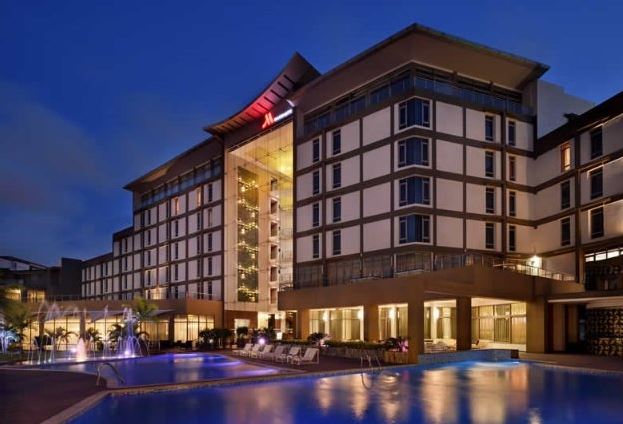
Marriott International and Landmark Africa Group yesterday announced the signing of Renaissance Lagos Hotel and Marriott Executive Apartments deal. 

Slated to open in 2020, the hotels will be located within the Landmark Village precinct, a premier mixed-use, business, leisure and lifestyle development along the Atlantic Ocean waterfront in Victoria Island, the central business district of Lagos.
“We are excited to partner with the Landmark Africa Group on this project. With the rapid pace of urbanisation more and more guests are looking for the value, the convenience and the vitality that mixed-use provides. The Renaissance Lagos Hotel and Marriott Executive Apartments will be a significant addition to our strong Nigeria portfolio. There is a growing need for high caliber short and extended stay lodging in Nigeria and we believe the two hotels together will help bridge this gap,” said Alex Kyriakidis, President and Managing Director Middle East and Africa, Marriott International.
The 25 floor hotel will feature the 216 room full service Renaissance Lagos Hotel and 44 room Marriott Executive Apartment offering extended stay apartments with space, ambience and the privacy of residential living.

The hotels will offer a wide range of amenities, including local and international restaurants, spa facilities, a fitness center, and an infinity pool with access to a 100-meter-long boardwalk overlooking a vibrant beach club offering exciting watersports.
“Marriott International is synonymous with quality and unique lifestyle experiences globally, which we, at the Landmark Africa Group continuously strive to align ourselves with. We look forward to bringing Marriott’s hospitality and passion for excellence to the Landmark Village setting a new benchmark for mixed-use developments in the region,” said Paul Onwuanibe, Chief Executive Officer Landmark.
Designed to be the first Lagos equivalent of the Rockefeller Centre in New York, Canary Wharf in London, Rosebank in Johannesburg and Victoria & Alfred Waterfront in Cape Town, the Landmark Village features office spaces, luxury apartments, high end retail as well as international restaurants. It is rapidly emerging as a leading mixed-use development on the West African Coastline.

Market Statistics: Wednesday, 15th November 2017

0
NSE
Market Cap (N’bn)                12,673.2
Market Cap (US$’bn)                   41.4
NSE All-Share Index              36,617.45
Daily Performance % (0.9)
Week Performance % (1.4)
YTD Performance %                  36.3
Daily Volume (Million)                  184.2
Daily Value (N’bn)                      3.3
Daily Value (US$’m)         10.9


Market Extends Losses as MSCI Reviews Index Constituents… NSE ASI down 91bps
The Nigerian Equities market extended losses at the close of trade as the Morgan Stanley Capital International (MSCI) released the results of its semi-annual index review in which FORTE (0.0%), FBNH (-2.5%), GUINNESS (+1.0%) and PZ (-8.9%) were removed from its Main Frontier Markets Index which tracks large- and mid-cap stocks in the frontier universe. All, bar FORTE (0.0%), were reclassified into its MSCI Frontier Small Cap Index. Additionally, CADBURY (0.0%), DIAMOND (-1.8%), FCMB (-1.8%), GLAXOSMITH (0.0%), SKYE (0.0%) and STERLING (-2.0%) have been deleted from the MSCI Frontier Markets Small Cap Index.

All changes will be implemented as of the close of market on November 30, 2017. Relatedly, the local Bourse continued its descent as the All Share Index fell 91bps to settle at 36,617.45 points while market capitalization pared N116.3bn to N12.7tn.

Accordingly, YTD return moderated to 36.3%. The day’s negative close was primarily due to price depreciation in DANGCEM (-2.8%). Similarly, activity level softened with value and volume traded declining 2.7% and 22.7% to N3.3bn and 184.2m units respectively.

Industrial Goods Index Leads Losers
Sector Performance was largely negative as 3 of 5 indices closed the trading session in the red wile 1 closed flat and the other gained on previous close. The Industrial Goods index lost the most, down 1.5% on account of selling pressures in DANGCEM (-2.8%).

Similarly, the Insurance index shed 1.0%, dragged by losses in MANSARD (-2.4%), NEM (-4.8%) and LINKASSURE (-4.8%), while the Consumer Goods index lost 0.9% following price depreciations in PZ (-8.9%), UNILEVER (-5.0%) and NIGERIAN BREWERIES (-0.5%).

On the flipside, the Banking index, up 1.0%, was the day’s lone gainer due to bargain hunting in GUARANTY (+2.3%) and ZENITH (+1.1%) whereas the Oil & Gas index closed flat.

Investor Sentiment Improves
Investor sentiment improved as market breadth, albeit still negative, increased from 0.3x at previous close to 0.6x (15 advancers/ 25 decliners) today. The day’s top gainers were AGLEVENT (+8.5%), REDSTAREX (+5.0%) and LEARNAFRCA (+4.1%) while CILEASING (-9.0%), PZ (-8.9%) and UNILEVER (-5.0%) led laggards.

Although we expect the MSCI index review outcome to weigh on stocks which are being deleted or reclassified, we do not rule out the potential for bargain hunting on some large cap stocks which have dragged market performance in prior trading sessions.

Investors Lost N124.2bn as Stock Market Tumbles

0
Oscar Onyema CEO The Nigerian Stock Exchange

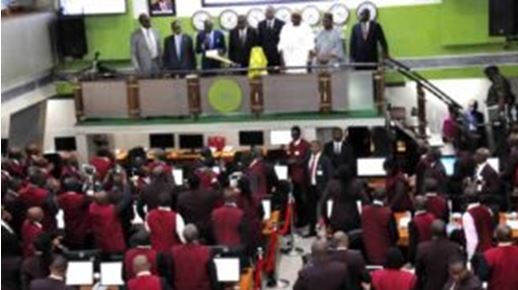
It was a sad day yesterday on the floor of the Nigerian Stock Exchange (NSE) as investors lost N124.2 billion as the stock market recorded its largest decline in seven weeks with the All Share Index (ASI) losing 96bps to close at 36,953.41 points while YTD return declined to 37.5%. Market capitalisation also tumbled down to N12.8trillion.

The trading session’s negative close is majorly attributable to losses in NESTLE (-3.1%), ZENITH (-4.7%) and DANGCEM (-0.6%).

Likewise, activity level weakened as volume and value traded fell 29.1% and 88.6% to 238.6million units and N3.4 billion respectively- due to high base of yesterday’s trading activity following a one-off cross deal of DANGCEM valued at N27.0 billion

Bearish Sector Performance
Sector Performance was largely negative with the Oil & Gas index emerging the lone gainer. The biggest losers were the Industrial and Banking indices, down 1.4% apiece, owing to price depreciations in ZENITH (-4.7%), GUARANTY (-0.3%), DANGCEM (-0.6%) and WAPCO (-2.8%).

The Consumer Goods index trailed, down 1.3% following losses in NESTLE (-3.1%) and UNILEVER (-5.0%). Similarly, depreciations in LINKASSURE (-4.6%) and AIICO (-3.6%) dragged the Insurance index 0.1% lower. The day’s lone gainer- the Oil & Gas index- was driven by buying interest in FORTE (+1.4%).

Market Breadth Declines Further  
Market Breadth declined further from 0.6x recorded yesterday to 0.3x (11 advancers/31 decliners). The top performing stocks were VITAFOAM (+5.0%), NAHCO (+4.8%) and NEM (+4.3%) while the worst performers were CAVERTON (-9.4%), CILEASIN (-8.8%) and UNILEVER (-5.0%).

Following the day’s unprecedented loss, Afrinvest Research says it expects bargain hunting to drag market performance positive in subsequent trading sessions.

Market Statistics: Tuesday, 14th November 201

Market Cap (N’bn)                12,789.5
Market Cap (US$’bn)                   41.8
NSE All-Share Index              36,953.41
Daily Performance % (1.0)
Week Performance % (0.2)
YTD Performance %                  37.5
Daily Volume (Million)                  238.6
Daily Value (N’bn)                      3.4
Daily Value (US$’m)         11.2


AMCON Empowers IDPs in Borno State with Relief Materials

0
AMCON officials, some district/village heads, officials of USAID-Education Crisis Response and some of the benefiting children and families in a group photograph at the event

The Asset Management Corporation of Nigeria (AMCON) yesterday in Biu Local Government Area of Borno State commenced the second tranche of the distribution of educational materials for children; foods and other support items for families of Internally Displaced Persons (IDPs).

The programme is part of on-going AMCON intervention exercise to three northeastern state that were worst hit by the activities of insurgence.

Some of the AMCON-donated items distributed at Central Primary School, Biu, Borno State

Addressing the host community at the Central Primary School, Biu, during the flagging-off of the presentation of the items to beneficiaries in Biu area, Mr. Usman Abubakar who led the team of AMCON officials to Borno State said AMCON was in the state to show support and assist in whatever way it can to the affected children and families that were traumatised and distabilised by insurgence in the northeast, where violent attacks by extremists forced more than 2.2 million people to flee their homes including over one million children who are presently out of school.

Usman who called on the benefitting children and families to make judicious use of the items said this kind gesture by AMCON led by Mr. Ahmed Kuru has demonstrated that the society has not abandoned the IDPs in their times of trouble.

He also called on well-meaning individuals, corporate and government organisations to come to the aide of the affected children and families in the northeast, which he said would greatly ameliorate their suffering.

While praying for the end to insurgence not only in the northeast but all over Nigeria, Usman also commended the management of the Nigeria Education Crisis Response (ECR), whom AMCON is using to ensure effective and equitable distribution of the donated items in Biu and other locations in Borno State.

AMCON officials, some district/village heads, officials of USAID-Education Crisis Response and some of the benefiting children and families in a group photograph at the event

According to him, the ECR programmes are engaging communities and officials in the localities to get out-of-school children between the ages of 6 to 17 into formal and non-formal learning centres, as well as providing the psychosocial support required to start the emotional healing process.

Usman said it was these outstanding qualities of ECR led by Mr. Ayo Oladini that convinced AMCON to select ECR who is also in partnership with USAID, as the appropriate channel for the distribution of the items in Borno State from a host of other Non-Governmental Organisations operating in the areas.

The items that were distributed include scholastic materials to Mainstreamed Learners and Parents Caregivers; starter packs for small scale businesses as well as food items such as rice, beans, semovita, groundnut oil, cooking utensils and salt, among others. The AMCON team also paid a courtesy visit on Emir of Biu, Alhaji Umar Mai Mustapha Aliyu.

AMCON began the distribution of the IDP relief materials in Yola, Adamawa State on November 2, 2017 across the seven local government areas of the state. The benefited LGS include Girei, Fufore, Shelleng, Song, Numan, Yola North and Yola South where over 3,000 individuals directly benefited from the items.

Farmcrowdy Unveils Agritech Mobile App in Nigeria

0
Farmcrowdy

Farmcrowdy, Nigeria’s first and leading digital agriculture platform has introduced a new category of funding small scale farming in Africa by allowing Nigerians to venture and sponsor agriculture; and today, announced the launch of its first app for Android, iOS and Windows mobile devices.

Techstars Atlanta alumnus, Farmcrowdy is reshaping the way in which people participate in farming and food production, through using their online platform to source funds from sponsors, whose money is used to secure land, plant crops and meet the funding needs of boosting food production with small scale farmers. Farm Sponsors can expect to see returns after harvest of 6-25% between a 3-9 month period, depending on what farm type they choose.

Since the launch of its website 12 months ago, Farmcrowdy has recorded close to 1,000 unique farm sponsors, aggregated a combined 4,000 acres of farmland in Nigeria for farming purpose and grown over 150,000 organic chickens to date. Having worked with close to 2,000 small scale farmers in Nigeria already, the vast majority of Farmcrowdy sponsors are based in Nigeria, whilst 10% are located in the US and UK.

With another 6,000 Farm Followers visiting their website every week, the launch of the Farmcrowdy mobile app will provide a more accessible platform for agriculture enthusiasts to experience, learn and appreciate agriculture practice first-hand.

Farmcrowdy currently provides regular updates, images and videos from the farmers as they work on the sponsored farms, providing an opportunity for their sponsors and farm followers to digitally track the journey of their sponsored farm through regular updates.

Onyeka Akumah, Co-Founder and CEO of Farmcrowdy says “We have launched the Farmcrowdy app to provide an accessible, real-time platform for people on the go, who do not want to miss out on empowering their own communities.

In the past month alone, we have witnessed over 500 farm units of poultry – 25,000 chicks – sell out in a few hours to engage farmers who would have found it difficult accessing loans in the banks; so it’s super fast-paced. People are equally excited about creating impact in the lives of our farmers while earning a decent return.

Nigeria is a mobile-first society and we had feedback from our sponsors who said they wanted improved access to our farms. They spoke, we listened, and we have now built a platform that suits Nigerians’ preferred means of doing business. – a mobile app. We expect that with this move, we would continue to stay at forefront of innovation in Agritech across Nigeria and scale our activities into more states in Nigeria while attracting more farm followers and sponsors to engage our farmers”.

“By effectively placing farms in the pockets of Nigerians globally, we are collectively impacting national food production and food security. This is our way of creating impact and return model for everyone sponsoring small scale farmers with Farmcrowdy.”

Currently operating in eight states across Nigeria, farm sponsors can choose to sponsor a variety of farm types including cassava, maize, rice, soya beans and poultry (broiler chickens for meat); with cycles lasting between 3 to 9 months depending on the farm.

Farm sponsorships start from N96,000 [$270], and Farmcrowdy coordinates pre-arranged buyers to sell the farm harvest when the cycle is complete. The farm profit from the harvest is then split between the sponsors who receive 40% of the harvest profits plus their original sponsorship, while the farmers receive returns of 40% and Farmcrowdy gains 20% of the profits.

More than 80% of farmers in Nigeria operate on a small-scale level and it is currently estimated that 38 million of them are unbankable. Farmcrowdy, through pairing farmers with sponsors to effectively manage the farming cycle with training in smart farming techniques, supply of equipment and technical support, has over the last 12 months, ushered close to 2,000 small scale farmers into the financial ecosystem, making them financially inclusive.

The app, which is now available for download in Google Playstore, with Apple and Microsoft following suit soon, will through an accessible information feed and push notifications, allow users to view available farms, follow existing farms, provide ease of communication with farm account officers and allow the facilitation of easy feedback and comments.

Onyeka Akumah adds, “This app provides a safe and reliable platform for agriculture enthusiasts to participate in this growing sector from a knowledge stand-point to making informed decisions about exploring opportunities in farming. So, we are looking forward to partnering with more Nigerians locally and globally as we continue to work towards building this community model for Nigerians to empower Nigerian farmers, produce Nigerian food and boost food production in the region while impacting positively on farmers’ lives and families. This kind of community model will be scaled into other regions as keep learning and improving our processes with the application of technology.”
About Farmcrowdy

Farmcrowdy is an agric-tech platform that gives Nigerians the opportunity to participate in agriculture by selecting the kind of farms they want to sponsor.

Farmcrowdy uses the sponsor’s funds to secure the land, engage the farmer, plant the seeds, insure the farmers and farm produce, complete the full farming cycle, sell the harvest and then pay the farm sponsor a return on their sponsorship.

While this farm process is ongoing, the farm sponsors are able to keep track of the full-cycle by getting updates in text, pictures and videos.

Since its launch Farmcrowdy has been adjudged “Agro-Innovator of the Year 2016/2017” by the Nigerian Agriculture Awards as well as listed as one of the top innovative companies and institutions in Nigeria; cementing their place as game-changers within the agricultural sector.

Nigeria Tops WA Hotel Projects with 77%

0

West Africa has been at the heart of the continent’s growth and economic transformation in recent years. Notwithstanding the sharp slowdown experienced in 2016 and 2017, the region’s economy is expected to rebound in 2017 onwards.

Commodity-based economies, like Nigeria, are slowly recovering from the fall in oil prices and oil production, while countries like Côte d’Ivoire, Mali, and Senegal have shown economic resilience and sustained growth.

As many of the countries continue to stabilize – politically and economically – the region will be better integrated from a local and international context. This increased integration raises the need for quality travel and accommodation infrastructure.
The growth of the hotel sector is an important indicator of how well a market is developing its travel infrastructure, and the indicators for West Africa are mixed. According to W Hospitality Group’s 2017 Hotel Chains Pipeline report, West Africa has a pipeline of 114 hotels and 20,790 rooms, accounting for 42% of the Sub-Saharan African hotel pipeline.

However, of these hotel deals signed and planned, only approximately 9,875 rooms, or 48% have moved to construction. In addition, projects in the region have longer than average development periods at approximately six years, compared to the two- to three-year development program that is usually planned.

Some of the reasons for these delays are high capital investment required, lack of access to adequate financing options, limited access to raw materials, high construction and material costs, a heavy reliance on importation, inadequate technical capacity to manage the development program, and other barriers to entry.
Of the hotel pipeline for West Africa, Nigeria contributes 49.6% or more than 10,000 hotel rooms (in 61 hotels).  Nigeria is also the top market in Africa for planned rooms.
The other substantial markets in West Africa include Cape Verde with 11 hotels and 3,478 rooms, and Senegal with 14 hotels and 2,164 rooms. These three markets contribute a total of 15,955 hotel rooms, or 77% of the West African hotel pipeline.

Approximately 57% of the pipelines in these countries have moved to site, however some of these projects have been stalled for some time.

In a country, like Nigeria, this can be significant. For instance, 40% of Nigeria’s pipeline was signed between 2009 and 2014, and as the chart above illustrates, a large portion of these projects is still in the “planning” phase. In Senegal only approximately 44% of the deals signed have moved to site.

Although the pipeline of hotels to the sub-region is encouraging and indicative of strong investor interest, the low completion rate of projects could be troubling for the development of the hotel sector. It is also difficult for the hotel chains whose expansion plans in these markets rely on partnerships with local and foreign investors to develop these hotels. All the major global hotel chains have strong expansion plans to increase their operating presence on the continent, and in West Africa.
The growth strategy for these hotel chains have traditionally relied on their development teams signing deals for new build hotels, primarily with their flagship brands, with local owners. However, more chains are adopting creative expansion strategies, such as conversions and rebranding of existing properties, acquisition of existing local hotel operators, effecting growth through the franchise model, or developing owned hotels first.
Senior representatives from major hotel groups such as Hilton, Carlson Rezidor and Mangalis, and other key hotel experts will be discussing growth strategies in the ever-changing West African economic environment at the upcoming West Africa Property Investment (WAPI) Summit to held on November 28 & 29 at the Eko Hotel, Lagos Nigeria.
Hilton recently announced a plan to support the conversion and rebranding of 100 existing hotels through its Hilton Africa Growth Initiative, by committing US$ 50 million to supporting these conversions. Commenting ahead of the conference, Mike Collini, Vice President Development Sub-Saharan Africa, Hilton, remarked on the opportunities presented by the inadequate hotel supply. He said: “to overcome this we are looking at rolling our focused service brands in key markets with a focus on our Hilton Garden Inn product. We are also pioneering the use of modular construction with a new Hilton Garden Inn in Accra, which is a fast and cost-effective build model for owners and developers.”
Andrew McLachlan, Carlson Rezidor’s Senior Vice President Africa & Indian Ocean for Development, said in a direct comment to Estate Intel, “Today we have 17 hotels open or under development in the region and in our new 5-year development strategy we have identified five Tier 1 Cities in West Africa (Lagos, Abuja, Accra, Abidjan and Dakar) where we see scaled growth opportunities…across the luxury to midscale hotel segment.”

McLachlan also commented on the model of conversion of existing hotels, saying that the group sees an opportunity to adopt this model to reposition the hotel under its management, particularly in cases where the existing hotel may not be performing to its full potential.
Newcomer and regional hotel chain, Mangalis Hospitality Group, intends to increase its presence in West Africa, in the next five years. Wessam Oshaka, in a statement to Estate Intel reiterated the group’s “ambition to operate at least 13 hotels by 2020 in West Africa.”

The group had initially focused development on owned hotels in core markets such as Cote d’Ivoire and Senegal, but the second phase of development will now focus on management agreements, resulting in a portfolio that will comprise 75% owned hotels and 25% managed hotels.

Oshaka explains: “Africa as we know, suffers from a lack of properties responding to the needs of modern travelers. The region comes with its challenges especially in terms of financing, logistics and skilled workforce. Taking all these factors into account, we adopted the most suitable approach for a healthy growth plan.”

The hotel sector discussions at WAPI will expand on these topics, highlighting the success cases and the more challenging markets. The discussions will also center on key indicators of hotel performance in West African markets.

Greater PH, Masta Services to Build Airport City Housing Project

0

L-R: EMMA OKAS WIKE – CHAIRMAN, BOARD COMMITTEE ON INVESTMENTS REPRESENTING BOARD CHAIRMAN, CHIEF FERDINAND ALABRABA MAKING HIS OPENING ADDRESS WHILE AMB. DESMOND AKAWOR, ADMINISTRATOR, GREATER PORT HARCOURT CITY DEVELOPMENT AUTHORITY WATCHES.

With a strong resolve to ensure that one of the core focus of the Greater Port Harcourt City Development Authority (GPHCDA) of reducing Urban slums by mitigating the housing needs of Port Harcourt residents is realised, the Greater Port Harcourt City Development Authority has signed a Public Private Partnership deal with Masta Services Company Limited, a major wholly indigenous building, construction and engineering company to kick-start the construction of 2000 Units of Modern, Smart Residential Buildings within the proposed PH AIRPORT City.

At a brief signing ceremony at the Authority’s head Office, the Administrator of Greater Port Harcourt City Development Authority, Amb. Desmond Akawor, emphasized that the significance of the signing of the deal will rather be seen as a challenge to ignite the New Rivers vision coming on the heels of a recent award to the governor.

He also reiterated that one of the priorities of the Administration of Governor Nyesom Ezenwo Wike is to provide quality yet affordable shelter for the citizens in line with the United Nations Habitat Agency Charter which recently earned the governor a recognition award in the United States for his outstanding contribution in a category named Sustenable Cities and Human Settlements Awards (SCAHSA) which was given in recognition of Governor Wike’s outstanding achievements in the area of Urban Renewal, Sustenable Cities and provision of basic amenities to the residential areas of low-income earners.

He also promised the Authority will ensure total cooperation in providing enabling environment necessary for the realization of the delivery of the project within its scheduled time-frame.

Similarly, Mr. Emma Okas Wike, Chairman, Board Committee on Investments who represented the GPHCDA Board Chairman, Chief Ferdinand Alabraba also assured the investor that Rivers State in general and particularly the areas already designated as the PH AirportCity located near the International Airport is a safe haven for investors contrary to perceptions of insecurity held about the state.

He therefore lauded Masta Services for its confidence in the vision of Greater Port Harcourt City Development Authority and the Rivers State government while also encouraging other investors to leverage the opportunities for investment across various areas within the Greater Port Harcourt City.

In his response, Managing Director and Chief Executive Officer of  Masta Services Company Ltd, Bldr. Ugo Ohuabunwa, thanked God for this epoch making event and expressed his delight with the formal signing of the deal while assuring that every segment of Residents of Rivers state and the host community in particular irrespective of social and economic status have been factored into the overall project as it will accommodate from the High low- income to High High- income earners to own affordable modern Apartments within the PH AIRPORTCITY which will invariably guarantee a sense of belonging to all stakeholders.

Ohuabunwa also assured that the project targets to provide over 3000 employment opportunities during the construction period and after, thereby boosting and transforming the Economy of the adjoining communities and the State in general.

According to the Director of Communications and Marketing of the Greater Port Harcourt City Development Authority, Adebayo Adeoshun, the deal signed between the Greater Port Harcourt City Development Authority (GPHCDA) and Masta Services Co. Limited is aimed at boosting provision of modern and affordable housing stock in Port Harcourt.

The Project which will be delivered in phases of 500 Units each, shall be Built on 85 hectares of land which has been delineated for this purpose shall comprise of detached duplex 4Bedrooms Duplex and Terraced Houses, 1, 2 and 3-Bedroom Apartment Buildings.

The PH AIRPORTCITY shall also provide logistic Services base to Support the nearby International Airport Businesses including Tourism facilities.

The entire PH AIRPORTCITY is planned to be fully self reliant in Power, Water and Waste Management Facilities serviced with Schools, Medical, Fire Fighting, Police Posts and other Security systems, wide bodied Asphalt roads with sufficient provision for Greens and recreation Parks.

The PH AIRPORTCITY is located near the International Airport and within the PHASE 1A Area of the Greater Port Harcourt Development Area which covers an area of 2, 500 hectares.

Editors Decry Recurrent Expenditure in 2018 Budget

0

The Nigerian Guild of Editors has expressed concern over the 2018 budget proposal currently before the National Assembly in terms of the size of the recurrent as against the capital expenditure. This trend,   which is inimical to any country’s development, has continued for so long.  We urge prudence and innovative budgeting in order to achieve a reversal in the nearest future.

On the state of the media, the Guild is worried that inspite of the country exiting economic recession, the media industry is mired in distress. We recommend that stakeholders should come together to seek the way forward.

In a communiqué issued after its Standing Committee Meeting in Katsina, the editors also worry over the threat by the Niger Delta Avengers to resume attacks on oil facilities in the oil-rich Niger Delta region.

The Guild calls on the Avengers to drop the threat and embrace dialogue in resolving their grievances.

The Guild also urges the Federal Government not to resort to the use of force in resolving the matter, stressing that the use of force has never solved any problem. As stakeholders in the task of nation-building, the Guild is worried by the recent show of military force in the quest to neutralise the threat of the militants. This move has done little to calm the tension, instead it has aggravated it. We urge caution and restraint.

The Guild urges the government to dialogue with all stakeholders, including the aggrieved militants to resolve the problems in the region, insisting that the only path to peace is dialogue. The Guild notes that renewed hostilities in the Niger Delta will reduce Nigeria’s daily oil output, which will in turn deny the country the benefits of the current marginal increase in the price of crude. Anything that’s capable of returning Nigeria to economic recession should be avoided.

We seize this opportunity to appeal to traditional rulers in the region to use their offices and goodwill to call the Avengers and any other militant group in the region to order. As royal fathers and leaders of thought, we urge them to play a leading role in the resolution of any breakdown in communication between the Federal Government, oil majors and the militants. We cannot afford another bout of force majeure by oil majors on account of insecurity in the region.

The Guild also notes the increasing crime rate in the country, especially kidnappings and communal clashes and calls on security agencies to rise to the occasion. The Guild urges the Federal Government to deploy the relevant security agencies to check the pervasiveness of these crimes.

The widening spread and growing frequency of kidnappings and allied criminal acts do not only threaten the nation’s socio-political stability, they also rob Nigeria of income as potential investors are scared of coming into the country while in some instances, existing investors are being forced to leave the country. Either way, the nation loses.

Senate to Empower AMCON for Better Operations

0

L-R: Executive Directors, Asset Management Corporation of Nigeria (AMCON), Mr. Kola Ayeye, Dr. Eberechukwu Uneze; Managing Director/Chief Executive Officer, Mr. Ahmed Kuru; Chairman Senate Committee on Banking, Insurance and other Financial Institutions, Senator Rafiu Adebayo Ibrahim and Mr. Aminu Ismail, AMCON Executive Director at the just concluded retreat of the Senate Committee at the NAF Conference Centre…Abuja.

The Chairman, Senate Committee on Banking, Insurance and other Financial Institutions, Senator Rafiu Adebayo Ibrahim, has disclosed plans by the 8th Senate to do everything it takes to empower the Asset Management Corporation of Nigeria (AMCON) realise the tough mandate given to them by the government and people of Nigeria.

The Senator who spoke yesterday at the opening of the Committee’s retreat at the NAF Conference Centre, Abuja stated that the Upper Chamber, as part of its oversight function, has decided that AMCON requires more support from the legislature if indeed Nigerians expect the Corporation to succeed in line with its sunset clause.

Reading from the keynote address he delivered at the commencement of the retreat titled, “AMCON as a catalyst for Economic Recovery,” Sen. Ibrahim said the upper chamber is intent on having serious discussions as soon as possible, which would AMCON further enhance its recovery mandate.

The Senator, who said there was no better time to redress the issue than now that the country is technically coming out of recession added, “Since inauguration, AMCON has been a key stabilizing and re-vitalizing tool in the Nigerian financial system and requires more support from the legislature to achieve its statutory objectives. This is the main reason why this retreat has been convened with the Senate Committee on Banking, Insurance and other Financial Institutions.

“In this retreat, we hope to make a case for AMCON to take on a larger and more proactive economic responsibility especially given its special place in the economy. To this end, serious conversation needs to occur on how best AMCON can intervene in the current economic situation of Nigeria beyond asset recovery.”

He further disclosed that the fall out of the discussion at the end of the retreat would lead to pronouncements from the 8th Senate, which would comprehensively empower AMCON to better carry out its functions. Again he affirmed, “…this subject of expanded functions presents an opportunity to further strengthen collaboration and align the objectives of AMCON to the pressing demands of the country.”

He stated that it was safe to say that AMCON has drawn from its proactive and interventional roots in a time of economic crisis for it to take on this new expanded economic role that transcends the banking sector, and seek to revitalize an entire economic system in recession.

He said the 8th Senate is heavily interested in the activities of AMCON because the leadership of the current Senate from inception conceptualized and mapped out its legislative agenda with economic recovery bill as top priority. According to him, such bills would help the country to raise credit availability and quality risk assets, which is in line with the job AMCON is doing for the nation.

While commending the Management of AMCON led by Mr. Ahmed Kuru, Managing Director/Chief Executive Officer, for the work done so far despite the challenges that confront them, Senator Ibrahim added, that all stakeholders should indeed support the Senate because the nation’s economy would be rebuilt as a result of key resolutions that would be adopted and decisions that would be made to empower AMCON.

Earlier in his address, Kuru reminded the Senate Committee that having fully harvested the low hanging fruits in the first and second stages of AMCON operations, the success or failure of the Corporation at this stage would be heavily dependent on the legislature as well as the judiciary because most obligors of AMCON are employing different antics in law to tie up the Corporation in different courts.

He stated that since AMCON is a creation of the Federal Government through the Act of the National Assembly, the Senate must find a way to encourage the judiciary to apply wisdom on AMCON related cases by focusing on substance rather the current diversionary tendencies that are stalling recoveries and destabilizing the Nigerian economy.

The AMCON CEO said, “There is need for a change of strategy. This job is not an easy assignment by any definition because every obligor has a perception of AMCON and is willing to tie us up in court. That is why you see that every week we have fresh enemies. Therefore we need very strong legislative framework, which would for instance make it possible for all AMCON cases to terminate at the Appeal Court.”

According to him, if the 8th Senate allows the current legal processes on AMCON-related cases to drag-on as it is presently, he said he does not see AMCON meeting its obligation before its sunset in the next five years.

Market Statistics: Thursday, 9th November 2017

0
 

Market Cap (N’bn)

               12,823.4
Market Cap (US$’bn)                   41.9
NSE All-Share Index              37,051.54
Daily Performance % (0.2)
Week Performance % 0.5
YTD Performance %                  37.9
Daily Volume (Million)                  175.8
Daily Value (N’bn)                      3.5
Daily Value (US$’m)         11.5

DANCEM Drags Benchmark Index … NSE ASI down 24bps
The Nigerian Bourse bucked a 2-day consecutive gain as the All Share Index fell 24bps to close at 37,051.54 points whilst YTD return moderated to 37.9%. Similarly, market capitalisation lost N30.3bn to close at N12.8tn.

Today’s negative performance was consequent on profit taking in DANGCEM (-0.9%), ex-DANGCEM market would have closed 4bps northward. However, activity level was mixed as volume fell 9.2% to close at 175.8m units while value traded rose 94.9% to settle at N3.5bn

Mixed Sector Performance
Sector performance today stayed mixed as 3 of 5 indices under our coverage closed in the green, while 2 trended southwards. The Banking index (-0.3%) led losers against the backdrop of losses in ZENITH (-1.9%) and UBA (-1.0%) while a decline in DANGCEM (-0.9%) pulled the Industrial Goods index 0.5% lower.

On the contrary, the Oil & Gas index appreciated the most, up 1.2% on account of gains in MOBIL (+7.8%) and FORTE(+5.0%). The Insurance index trailed, gaining 0.3% due to price appreciation in CONTISURE (+4.4%). Similarly, an uptick in INTBREW (+8.4%) pushed the Consumer Goods index to close 0.1% higher.

Investor sentiment Remains Unchanged
Investor sentiment stayed flat today as market breadth (advancers/decliners ratio) closed at 0.9x relative to 0.9x recorded in the previous session. Leading the gainers’ chart were CAVERTON (+9.5%), INTBREW (+8.4%) and MOBIL (+7.8%) while LAWUNION (-4.6%), NPFMCRFBK (-4.6%) and FIDELITY (-4.1%) were today’s worst performers.

While we attribute today’s performance to profit taking in DANGCEM, the relatively unchanged market breadth suggests investors are still sourcing for bargains. Accordingly, we expect a positive close for the week.

Ericsson Report: 310m LTE Subscriptions in Sub-Saharan Africa by 2023

0
  • LTE subscriptions will expand by 47 percent from 30 million in 2017 to 310 million by 2023 in Sub-Saharan Africa. 
  • Sub-Saharan Africa mobile broadband subscriptions are forecasted to grow by 16 percent from 350 million in 2017 to 880 million by 2023. 
  • The first 5G subscriptions in the Middle East and North Africa are expected from 2020, reaching around 17 million subscriptions by the end of 2023.

The latest regional appendix to the upcoming Ericsson Mobility Report forecasts that LTE subscriptions will expand by 47 percent from 30 million in 2017 to 310 million by 2023 in Sub-Saharan Africa.
The report also announces that mobile subscriptions in Sub-Saharan Africa are expected to grow by six percent, between 2017 and 2023, from 700 million mobile subscriptions in 2017 to 990 million subscriptions by 2023.
Moreover, mobile traffic in the Middle East and Africa (MEA) will increase at a compound annual growth rate (CAGR) of 49 percent while mobile subscriptions for the total MEA region are expected to grow at four percent CAGR between 2017 and 2023, from 1.59 billion in 2017 to 2.03 billion by 2023. This equates to three percent growth in the Middle East and North Africa, from 890 million mobile subscriptions to 1.04 billion subscriptions between 2017 and 2023.
On the other hand, mobile broadband subscriptions are forecast to grow by 15% for the MEA region from 820 million in 2017 to 1.85 billion by 2023. This is broken down into a 13 percent increase for the Middle East and North Africa from 460 million mobile broadband subscriptions in 2017 to 980 million by 2023. Similarly, Sub-Saharan Africa mobile broadband subscriptions are forecasted to grow by 16 percent from 350 million in 2017 to 880 million by 2023.
When it comes to LTE subscriptions, the MEA region is expected to grow by 29 percent from 190 million to 860 million by 2023. This means that LTE subscriptions in the Middle East and North Africa will grow by 23 percent from 160 million in 2017 to 570 million by 2023. For the Sub-Saharan Africa region, LTE subscriptions will expand by 47 percent from 30 million in 2017 to 310 million by 2023.
Rafiah Ibrahim, Head of Ericsson Middle East and Africa, said: “Total mobile traffic for the region is forecasted to grow by around 49 percent annually between 2017 and 2023. This rapid growth is seeing operators increasingly exploring methods of optimizing their networks with more capacity and coverage. We are supporting operators across the region throughout the different phases of the network evolution, enabling best performing networks and differentiated customer experience.”
Finally, the report mentions that in the Middle East and North Africa, strong growth is forecasted for both WCDMA/HSPA and LTE during the period. Combined, these technologies will see a rise from 50 percent to over 90 percent of total subscriptions by the end of the period.
The first 5G subscriptions in the Middle East and North Africa are expected from 2020, reaching around 17 million subscriptions by the end of 2023.

Further highlights from the regional appendix of the Ericsson Mobility Report include:
The Internet of Things (IoT) is facilitating the digital transformation of industries, and providing mobile operators in the Middle East and Sub-Saharan Africa with opportunities to explore new revenue streams.
Cellular IoT subscriptions in the Middle East and Africa are expected to grow from 35 million to 159 million between 2017 and 2023 – a compound annual growth rate (CAGR) of around 30 percent.

Exploring new digitalisation revenues 
For mobile service providers, traditional revenue sources are shrinking, and so new revenue streams are being explored. As the world becomes more connected, industries are experiencing an ICT-driven transformation. Industry digitalization revenues for ICT players come from adopting or integrating digital technologies into a specific industry. 5G-enabled industry digitalization revenues for IoT in the Middle East and Africa are predicted to reach $242 billion through 2026.
5G will be an important technology in growing industrial digitalization, particularly for use cases dependent on extra-low latency and high reliability. This presents an opportunity for service providers that are ready to explore smart revenue streams addressing B2B2X industry players.

IoT and 5G serving communities 
Even though IoT is still in its infancy throughout most parts of the Middle East and Africa, there are still examples of how it has helped improve the livelihood of communities and industries in the region.
For example, in South Africa, Narrowband-IoT (NB-IoT) is being introduced to address the utilities sector, enabling tools for energy efficiency such as smart meters.

The global edition of the Ericsson Mobility Report will be released later this month.

Orange Unveils Winners of 7th Social Entrepreneur Prize

0

Yesterday, Orange announced the winners of the 7th Orange Social Entrepreneur Prize 2017 in Africa and the Middle East during the AfricaCom Awards in Cape Town, South Africa.
Each year this Prize rewards innovative projects based on Information and Communication Technologies (ICT) which help improve the living conditions of local people through digital, in fields such as education, healthcare, farming, mobile payments or sustainable development.
A new feature in this year’s 7th edition was a national phase during which each of Orange’s 17 subsidiaries [1] in Africa and the Middle East taking part in the contest studied the projects submitted in their country and appointed local winners. These 49 local winners were entered into the international contest.
Open from February to June 2017, the call for applications received nearly 1,200 innovative project entries, which was 60% more than 2016. These projects illustrate the diverse ideas from local entrepreneurs and the potential of ICT in the development of Africa and the Middle East. Amongst the 49 local winners, 11 projects were selected and submitted to a jury made up of professionals, investors, external organisations and Orange organisations.

The three winners will receive bursaries of €25,000, €15,000 and €10,000 and the Special Content Prize winner will receive €5,000. The finalists of the Orange Social Entrepreneur Prize will also enjoy priority support for six months from the NGO Grow Movement Orange experts.
Bruno Mettling, Deputy CEO of the Orange Group and Chairman and CEO of Orange MEA (Africa and the Middle East) stated that “The Orange Social Entrepreneur Prize is now a staple part of the entrepreneurial ecosystem in Africa and the Middle East. It is a great example of our contribution to digital transformation on the continent, a transformation which we would like to be inclusive and sustainable. Congratulations to these entrepreneurs and particularly the winners, I wish them every success in their professional endeavours. ”

The winning projects this year were:

1st prize was awarded to Manzer Partazer in Madagascar 
The objective of the Malagasy start-up is to reduce food waste by sharing excess food from restaurants, hotels or supermarkets with partner organisations such as orphanages and disadvantaged populations. A collaborative platform will allow direct communication between different stakeholders.

2nd prize was awarded to City Taps in Niger
CityTaps has developed a solution which bridges the gap between water services and the most disadvantaged citizens: a pre-payment service which includes a smart water meter and billing software.
The beneficiaries use their mobile to prepay for running water with any mobile phone, at any time, for any amount, which improves their household budget.

3rd prize was awarded to eFret.tn in Tunisia 
eFret.tn is a website based on the freight exchange principle. It links up senders, whether private individuals or companies, with transport and transit professionals in Tunisia. The senders publish adverts describing their needs and receive free quotations from carriers, movers, and international transport companies and customs forwarding agents.
Furthermore, this year a Special Content Prize was added, which was awarded by Orange Content.

The Special Orange Content Prize was awarded to: Génie Edu in Cameroon 
This is an e-learning platform which aims to help students having problems by providing online video courses. The startup wants every student, including those in remote areas, to have access to high-quality courses at a very low cost, anytime and anywhere.
Internet users were also invited to choose their “User Favourite” project. This project automatically qualified for the international final.
This was the Malgasy project, Majika which received over 2,800 votes out of 12,242 votes online. Majika is a social company aiming to facilitate economic development conditions in rural zones. It is based on two areas: access to renewable electricity and support for rural entrepreneurship. Majika works on an autonomous and ecological power plant in the village of Ampasindava.

Success stories from previous winners:

  • MedTrucks (2016) supports healthcare players with the deployment of smart trucks which use remote medicine to provide medical treatment in remote areas.
  • Bassita (2015) invents clickfunding: companies submit their social, cultural or environmental project on its platform. If it reaches its click target after being shared on social networks, the project obtains a donation from a sponsor.
  • Station Energy (2014), between a service station and African grocery store, provides access to energy via franchises on a large scale and at an affordable cost.

[1] Botswana, Cameroon, Côte d’Ivoire, Egypt, Guinea Bissau, Guinea Conakry, Madagascar, Mali, Morocco, Niger, Central African Republic, Democratic Republic of the Congo, Senegal, Tunisia, Jordan, Liberia and Burkina Faso.

Global Airlines Financial Monitor: October 2017

0
China Southern Airline
  • The initial financial data for Q3 point to a healthy industry EBIT margin of 16.3%, down only slightly on a year ago. European airlines posted the widest profit margin on this occasion, overtaking their North American counterparts.
  • Having trended downwards between late-2014 and late-2016, underlying industry-wide passenger yields are now broadly unchanged from their level a year-ago.
  • Global airline share prices rose by 1.7% in October, driven by gains for European and Asia Pacific airlines. Airline shares have outperformed the broader market over the past year.
  • Oil prices rose through the US$60/bbl mark during October, amid signs that OPEC-led production cuts could be extended until end-2018, and rising tensions between Saudi Arabia and Iran.
  • Passenger and freight volumes both grew robustly in year-on-year terms in September, although the seasonally-adjusted (SA) upward trends in both series eased between Q2 and Q3. The passenger load factor remains at an elevated level by historical standards, while the SA freight load factor is currently at a level last seen in late-2014.
  • There is a wide spread in premium-class performance at a route level, but the pick-up in global trade conditions is helping to support demand on some of the key markets to, from, and within Asia.

‘OML 29 Is Not For Sale’–Aiteo

0

Below is an official statement from the Aiteo Group in respect of recent media reports on OML 29.

It has come to our notice that some fraudsters running a reports-for-cash syndicate, about whom we raised alarm so very recently, are suggesting that a portion of the shareholding of the company that holds the asset, OML 29 had been put up for sale to repay a loan.
For the avoidance of doubt, Aiteo has neither considered, initiated, nor announced the commencement of any plans to sell off ANY of its stake in OML 29. The reasons are patently clear.

First, since the takeover of the asset we have successfully quadrupled production that it would be commercially inept to consider a disposal of any sort, now. Second, there are several legitimate entities that constitute ownership of the oil block, such that it would be practically impossible for us to unilaterally consider disposing of the asset. As such, we urge the public to summarily disregard these unsavoury and fabricated reports in their entirety.
The claim that Bruce Burrows’ recent appointment as our Chief Financial Officer is aimed at finding a buyer for part of Aiteo’s assets is spurious and demonstrates that the publishers’ understanding of the commercial realities in the operation of assets such as OML 29 is shallow. All of our stakeholders familiar with our strategic vision can attest that Aiteo continues to invest in the right people to deliver on that vision. Mr. Burrows’ appointment is simply to further strengthen our financial discipline as one of the most innovative, reliable and diverse oil and gas companies operating in Nigeria today. Mr Burrows joins a team of highly trained, experienced and world-class talent that currently guide the day to day activities of Aiteo.
For the record, OML 29 was indisputably, legitimately and transparently secured in an internationally conducted divestment by the private entity, Shell. The funding of this acquisition was made possible through a syndicated loan involving several Nigerian banks. Since then, we have continued to meet our financial obligations as and when due, like every other responsible, global conglomerate of our stature.
Aiteo is professionally run with strong corporate governance practices very actively in place and within a structure that insulates the company from the vagaries that typify the Nigerian one-man entity. As we have repeatedly asked, we wish to be allowed to continue to prosecute the drive and vision that we have committedly pursued to place ourselves and the country at the cutting edge of the Oil Industry, worldwide. Those who seek to distract us from this objective will find that we will defend our position and integrity with the same application and commitment as we continue to demonstrate in the success we have achieved!