Monday, December 1, 2025
32.2 C
Lagos
Home Blog Page 254

Sovereign Trust Insurance Celebrates Children’s Day with School Kids

0
Sovereign Trust Insurance Plc, Segun Bankole poses with one of the Nursery Section recipients of school bags and exercise books
The Head of Corporate Communications and Brand Management of Sovereign Trust Insurance Plc, Segun Bankole poses with one of the Nursery Section recipients of school bags and exercise books in the school premises.

As part of the activities marking the 2018 Children’s Day Celebration and in line with its Corporate Social Responsibility (CSR), Sovereign Trust Insurance Plc paid a visit to Kuramo Nursery & Primary School in Victoria Island, Lagos and gave out branded school bags, exercise books and pens to a host of the pupils who had distinguished themselves academically and in other areas of behavioural conduct.

Kuramo Nursery & Primary School, Victoria Island
The pupils of Kuramo Nursery & Primary School, Victoria Island, Lagos being flanked by the Head of Corporate Communications and Brand Management of Sovereign Trust Insurance Plc, Segun Bankole in a group photograph with members of the teaching Staff in the school.
Sovereign Trust Insurance Plc, Segun Bankole poses with one of the Nursery Section recipients of school bags and exercise books
The Head of Corporate Communications and Brand Management of Sovereign Trust Insurance Plc, Segun Bankole poses with one of the Nursery Section recipients of school bags and exercise books in the school premises.

Sustained Sell Offs Pull YTD Return into Negative Region… NSE ASI Down 1.3%

0
nse

Sustained sell offs in the local bourse, which have persisted for 11 days, pulled the All Share Index (ASI) 1.3% lower to 38,104.54 points, its lowest in 5 months while YTD return fell to a deficit of 0.4%.

Consequently, investors lost N181.8bn as market capitalization fell to N13.8tn dragged majorly by NESTLE (-4.4%), DANGCEM (-1.0%) and INTERBREW (-4.8%). Activity level strengthened as volume and value traded inched 39.2% and 108.0% higher to 476.2m units and N9.9bn respectively.

ZENITH (127.2m units & N3.3bn), GUARANTY (74.0m units & N3.0bn) and UBA (65.6m units & N700.8m) were the top traded by volume and value respectively.

Relatedly, Stanbic IBTC Holdings Plc yesterday announced a share acquisition by its parent company, Stanbic Africa Holdings, which would increase its shareholding in the Nigerian bank to 64.4%.

Largely Bearish Sector Performance
Sector performance maintained its bearish trend as 4 of 5 indices we cover closed southwards. The Consumer and Industrial Goods indices lost 2.6% and 2.1% respectively on account of continued selloffs in NESTLE (-4.4%), INTERBREW (-4.8%), NIGERIAN BREWERIES (-1.9%), DANGCEM (-1.0%) and WAPCO (-4.9%).

Similarly, the Banking index declined 1.1% as we saw price depreciation in GUARANTY (-1.2%) and ACCESS(-4.6%) while the Oil & Gas index waned 0.3% due to profit taking in FORTE (-9.1%).

On the flipside, the Insurance index gained 0.2% as price appreciations in LINKASSURE (+1.2%) and MBENEFITS  (+2.8%) buoyed the index.

Investor Sentiment Weakens
Investor sentiment as measured by market breadth (advance/decline ratio) declined to 0.8x from 0.9x as 21 stocks advanced against 26 stocks that declined.

Yesterday’s top gainers were CCNN (+10.1%), FCMB (+8.1%) and FBNH (+5.7%) while INTERBREW (-9.6%), FORTE (-9.1%) and OKOMUOIL (-5.9%) were yesterday’s top losers.
Despite the negative performance, we noticed some bargain hunting in small and mid-cap stocks; hence market performance could improve in the final trading session.

Our view is further buttressed by the fact that the Relative Strength Index of the market is currently at 12.55 points, which is in the oversold region and this is also an indicator of a reversal.

Nigeria, SA Lead April Air Traffic in Africa

0

The International Air Transport Association (IATA) announced global passenger traffic data for April 2018 showing that demand (revenue passenger kilometers or RPKs) rose by 6.2% compared to April 2017, which was down from a 12-month high of 9.7% in March.

African airlines’ had a 5.1% traffic increase in April. Capacity rose 4.6%, and load factor edged up 0.4 percentage point to 72.8%. The upward demand trend remains strong, helped by continuing signs of improvement in the region’s largest economies: Nigeria and South Africa. This is only the fourth time in the past 41 months that both economies have been on an upward trajectory at the same time

Comparisons with the year ago period are impacted by developments a year ago – including the comparatively late timing of Easter in 2017, which boosted April traffic. April capacity (available seat kilometers or ASKs) increased by 5.9%, and load factor climbed 0.2 percentage point to 82.3%, which was a record for the month of April, surpassing last year’s record of 82.1%.

“Demand for air transport continues to be above the long-term trend. However, increases in airline cost inputs, most notably fuel prices, means that we are unlikely to see increased stimulation from lower fares in 2018, compared to previous years,” said Alexandre de Juniac, IATA’s Director General and CEO.

April 2018
(% year-on-year)
World share¹ RPK ASK PLF
(%-pt)²         
PLF
(level)³
Total Market 100.0% 6.2% 5.9% 0.2% 82.3%
Africa 2.2% 0.9% 0.9% 0.0% 73.1%
Asia Pacific 33.7% 10.9% 9.2% 1.3% 82.8%
Europe 26.5% 3.7% 4.1% -0.3% 84.1%
Latin America 5.2% 5.5% 5.8% -0.3% 81.1%
Middle East 9.5% 3.9% 2.8% 0.8% 77.1%
North America 23.0% 3.7% 4.8% -0.9% 83.3%

¹% of industry RPKs in 2017   ²Year-on-year change in load factor   ³Load factor level


International Passenger Markets

April international passenger demand rose 4.8% compared to April 2017. All regions recorded year-over-year traffic increases but all were behind the pace of growth reported in March. Total capacity climbed 4.9%, and load factor slipped 0.1 percentage point to 81.4%.

Asia Pacific carriers posted an 8.5% traffic rise in April, strongest among the regions. It was the first time since December 2017 that Asia-Pacific airlines led in growth. Passenger traffic has continued to trend upwards at an annualized rate in the region of 10%, supported by robust regional economic expansion and ongoing growth in the number of flight options, which translates into time savings for passengers. Capacity rose 7.6% and load factor improved 0.6 percentage point to 81.0%.

Middle East carriers saw demand rise 4.1% in April. Capacity climbed 3.2% and load factor rose 0.7 percentage point to 77.2%. The seasonally-adjusted upward trend in traffic has strengthened since the start of the year, aided by healthy growth on the key routes to/from Asia and Europe, as well as continuing signs of recovery on the market segment to/from North America. Annual comparisons are likely to become more favorable in coming months, owing to the disruptions caused by the proposed travel bans to the US and the since-lifted ban on large portable electronic devices in the year-ago period.

European airlines’ April traffic increased 3.4% compared to the year-ago period. While this was down compared to the 9.8% year-over-year growth recorded in March, demand picked up in April in seasonally-adjusted terms. Capacity rose 4.0%. While load factor dipped 0.5 percentage point to 84.6%, it still was highest among the regions.

North American airlines posted a 0.9% demand increase compared to April a year ago, which was sharply down compared to the 9.5% growth experienced in March. Comparisons to the year-ago period are distorted by the huge pick-up in traffic in April 2017. A bounce back is expected in May, supported by the relatively strong economic backdrop in the US. Capacity climbed 2.4%, and load factor fell 1.2 percentage points to 80.7%.

Latin American airlines experienced a 6.4% rise in April demand compared to the same month last year. Capacity rose 7.5% and load factor slipped 0.8 percentage point to 81.4%. While the year-over-year traffic increase in April was roughly half that of March, the bigger picture remains bright, with seasonally-adjusted traffic volumes having grown at double-digit annualized rates over the past six months.

Consolidated Hallmark Insurance Reports Total Assets of N9.5bn

0

L-R:  Eddie Efekoha, Managing Director/CEO, Consolidated Hallmark Insurance Plc; Obinna Ekezie, Chairman, and Rukevwe Falana, Company Secretary, during the company’s 23rd Annual General Meeting (AGM) in Lagos.

Consolidated Hallmark Insurance Plc has reported total assets of N9.49 billion for the year ended December 31, 2017. This compares with the figure of N7.44 billion in the same period of 2016. The company also paid out claims amounting to N3.3 billion to underline its commitments to policyholders.

Mr. Obinna Ekezie, the Chairman of Consolidated hallmark Insurance Plc said at its 23rd Annual General Meeting (AGM) that the company is paying out over N140 million as dividend to shareholders as proof of its financial strength and profitability in the insurance industry.

“It is gladdening to note that the Profit Before Tax recorded a 76 percent leap from N368.1 million to N641 million in 2017. This trend also impacted positively on the Profit After Tax which grew by 108 percent from N194.9 million in 2016 to N406.2 million in 2017.”

Mr. Eddie Efekoha, the managing director of the company said the insurer will continue the implementation of its corporate strategic plan which will enable “us to position ourselves as leaders in the insurance industry.”

Efekoha added that Consolidated hallmark Insurance “shall invest in new product development to adequately exploit the opportunities in the retail market segment.”

East African Banks Dominate 2018 African Banker Awards

0
US banks

Winners of the 2018 African Banker Awards have been announced at a prestigious Gala Dinner in Busan, South Korea. The Awards, held annually on the fringes of the Annual Meetings of the African Development Bank, celebrate excellence in banking and finance on the African continent.
East Africa dominated the awards this year. The CEO of Equity Group Holdings Plc in Kenya, James Mwangi, won Banker of the Year. His bank has seen impressive growth through a series of innovations and diversified investment channels away from consumer loans. Kenya’s Equity Group also beat off strong competition from four other shortlisted nominees to win the coveted ‘African Bank of the Year Award’.

Tanzania’s Dr Benno Ndulu, former central bank governor who finished his second term last year won Central Bank Governor of the year for his work in pushing for financial inclusion as well as for sound macroeconomic management. CRDB, also from Tanzania was named the ‘Best Regional Bank in East Africa’.
South African banks dominated the investment banking and deals of the year categories. Standard Bank Group swooped three awards, including the one for ‘Investment Bank of the Year’. Standard Bank and Rand Merchant Bank in South Africa took the ‘Infrastructure Deal of the Year’ for the $5bn Nacala corridor rail and port project in Mozambique and Malawi, one of Africa’s largest private sector funded infrastructure projects.

The project covers 912km of railway running from the Tete province in western Mozambique to Nacala port on the east coast through a section of Malawi. A deep sea port at Nacala also features in the project. Rand Merchant Bank in South Africa was also recognized for the listing of Steinhoff Africa Retail that took place last year. Veteran South African banker, Stephen Koseff, won the Lifetime Achievement Award. As the co-founder of Investec he has built a global leader in banking and asset management.

The ‘Socially Responsible Bank of the Year’ title went to BMCE Bank of Africa Group in Morocco. The bank is widely regarded as a leader in sustainable finance and le Credit Agricole du Maroc won the award for financial inclusion. Ecobank won the award for innovation and also for Retail Bank of the year largely for the way it has integrated technology to considerably widen its products and reach.

Commenting on the ceremony, Omar Ben Yedder, Publisher of African Banker, commented on the impressive achievements of the banks shortlisted for the 2018 awards: “The winners of the African Banker Awards reflect the innovation and energy within Africa’s banking market. The categories that most catch my eye are the Deals of the year and the ones on innovation. They reflect the true energy and vigour of the banking sector. I cannot stress enough though the important role financial services have to play to drive the development of the continent.”

This is the first time the African Banker Awards take place in South Korea, more precisely in the port city of Busan. As a shareholder in the African Development Bank, the South Korean government offered to host this year’s Annual Meetings aiming to strengthen its long-standing relationship with Africa.

The 12th edition of the African Banker Awards, hosted by African Banker magazine and BusinessinAfricaEvents took place at the Paradise Hotel Busan. The awards which are held under the high patronage of the African Development Bank are sponsored by the African Guarantee Fund as Platinum Sponsor, the Bank of Industry as Gold Sponsor and Banco Nacional de Investimento, Mozambique as Silver Sponsor. Other sponsors include Afreximbank and Credit Agricole du Maroc.

THE 2018 AFRICAN BANKER AWARD WINNERS

African Banker of the Year
James Mwangi, Equity Group Holdings Plc, Kenya

Lifetime Achievement Award
Stephen Koseff, co-founder Investec

African Bank of the Year
Equity Group Holdings Plc, Kenya

Best Retail Bank in Africa
Ecobank

Investment Bank of the Year
Standard Bank

Award for Financial Inclusion
Groupe Crédit Agricole (Morocco)

Socially Responsible Bank of the Year 
BMCE Bank of Africa Group (Morocco)

Innovation in Banking
Ecobank

Deal of the Year – Equity
Steinhof Africa Retail Listing – Rand Merchant Bank (South Africa)

Deal of the Year – Debt
$300m Diaspora Bond, Nigeria
Standard Bank / FBNQuest Merchant Bank (Nigeria)

Infrastructure Deal of the Year 
Nacala Railway and Port Corridor
Standard Bank / Rand Merchant Bank (South Africa)

Best Regional Bank
East Africa – CRDB (Tanzania)
West Africa – BDM (Mali)
North Africa – CIB, Egypt
Southern Africa – State Bank Mauritius (SBM)
Central Africa – BGFI, Gabon

Facebook, CcHub Launch NG_Hub in Lagos – its First Hub Space in Africa

0
facebook

As part of its commitment and ongoing investment in Africa, Facebook has unveiled NG_Hub in Lagos, Nigeria – its first flagship community hub space in Africa, in partnership with CcHub.

In a week-long celebration which will bring together developers, start-ups, and the wider tech community across Lagos and Nigeria, the launch will showcase the new multi-faceted space which aims to bring together communities to collaborate, learn, and exchange ideas.
With creativity and excellence existing across all of Nigeria, Facebook also announced partnerships with seven other hubs across the country including in Abuja (Ventures Platform), Jos (nHub), Kaduna (Colab Hub), Kano (DI Hub), Uyo (Start Innovation Hub), Enugu (Roar Hub) and Port Harcourt (Ken Saro Wiwa Hub).

These will serve as centres of excellence and will feature dedicated Facebook spaces, where many of Facebook’s training sessions will take place, and a space where creatives and developers can book to help them advance their skills.
Featuring bespoke works of art from local artists in Nigeria, the NG_Hub space, which includes workspaces, meeting rooms, games and chill out room, an event space and a well catered café, will also be the focal point for a number of training programmes.

Aimed at attracting the best talent and driving innovation in Nigeria’s tech ecosystem, these are all designed to equip Nigerian SMEs, tech entrepreneurs and the next generation of leaders to better understand and utilise the power of digital tools for economic growth. Training programmes include:

The Fb Start Accelerator programme – a research and mentorship-driven programme aimed at empowering start-ups and students with technical & business support and funding to optimize their product for growth – focused on those building solutions using advanced technology, with a focus on Artificial Intelligence (AI), Machine Learning, Augmented Reality (AR) and Virtual Reality (VR).

Digify Pro Nigeria – a two-month intensive boot camp  where 20 aspiring digital professionals will learn what it takes to have a career in digital marketing. The programme is designed to fit the specific needs of industry, covering a range of topics including community management, content and e-mail marketing, brand online reputation management, UX design and more.

Boost Your Business – Made especially for micro, small and medium sized businesses owners, Boost Your Business is a one-day training that teaches digital marketing for business growth.

 #SheMeansBusiness – the first to launch on the continent, #SheMeansBusiness is a one-day training workshop and networking experience for female entrepreneurs, offering a mix of business and digital marketing training for women led businesses, along with additional opportunities to network with fellow female entrepreneurs.

Ime Archibong, Facebook’s Vice President of Partnerships said: “Technology provides expansive opportunities to engage young, creative and resourceful Nigerians, especially in delivering solutions to challenges across communities here in Nigeria. Our mission is to build community and bring the world closer together, NG_Hub provides that physical space that will serve as a centre of learning and skills development in Lagos, and I’m excited about the possibilities that this will create.”

Commenting on the partnership Bosun Tijani, Founder/CEO of CcHub, added: “Our aim has always been to provide a viable platform for creatives and innovators to express their talent and create solutions to the myriad of social and economic challenges faced by countries across the continent. Partnering with Facebook on NG_Hub enables us to achieve our objectives at scale and make the desired impact in the tech ecosystem here in Lagos.”

As part of a week-long of celebrations, Facebook will host a number of events from May 21 – 25, 2018 aimed at engaging the different communities in Lagos, and across Nigeria. This includes:

  • Community roundtable – aimed at bringing together Community Groups from across Lagos
  • DevC meetup – with Nigeria being home to the largest number of Developer Circles across Sub-Saharan Africa (over 8,800), this event will bring together DevC members in an afternoon of networking
  • VC & Policy Roundtable – aimed at spearheading vital conversations and helping to bridge the gap between tech entrepreneurs and VCs and policy makers in Nigeria
  • She Means Business/Women in Tech – a special SheMeansBusiness training offered especially for female entrepreneurs working in Lagos’ technology ecosystem
  • SMB Boost Your Business Training – a four-hour training session for SMBs aimed at equipping them with vital digital skills to help grow their businesses
  • Facebook and Instagram for Creatives – an inspirational hands-on session led by Creative Shop for Creatives building for Facebook and Instagram
  • Fintech SMB Training –  a training session for SMBs in Fintech

“The NG_Hub highlights our ongoing commitment to supporting local talent in Nigeria. We’re delighted to be partnering with CcHub here in Lagos, as well as with many other hubs across Nigeria to deepen our engagement, increase skills development and support the next set of innovators, tech entrepreneurs, start-ups, and others in our collective bid to change the face of technology and grow the economy,” said Ebele Okobi, Director of Public Policy, Africa.

AMCON Takes over Senator Stella Oduah’s Assets

0
Stella Oduah

Stella Oduah

Hon. Justice M.S. Hassan of the Federal High Court, Lagos Division has granted an injunction against Sea Petroleum Oil & Gas Limited, whose chief promoter is former Minister of Aviation, Senator Princess Stella Oduah-Ogiemwonyi on the application of Asset Management Corporation of Nigeria (AMCON).Princess Oduah-Ogiemwonyi, a serving member of the 8th Senate of the Federal Republic of Nigeria has been having a running battle with AMCON over her inability to settle her huge debt of nearly N20billion. AMCON purchased the Eligible Bank Assets (EBAs) of Sea Petroleum & Gas Limited from Union Bank Plc sometime in 2012. But despite the overtures and genuine efforts made by AMCON to reach an amicable settlement, the Senator and her co-promoters have remained recalcitrant.

Having exhausted all avenues of peaceful resolution of the humongous debt, AMCON had no other choice than to refer the matter to court. The order also affects Princess Stella Oduah’s other business interests for which AMCON has since appointed Moyosore Jubril Onigbanjo, SAN as Receiver over the assets of Princess Stella Oduah-Ogiemwonyi; Sea Petroleum Oil & Gas Limited; Sea Petroleum and Gas FZE as well as Star Tourism and Hotels Limited.

The court also ordered the freezing of the funds of Sea Petroleum & Gas Limited and its affiliated companies and principal promoters held anywhere by any entity or persons in Nigeria; authorised AMCON and its Receiver, Moyosore Jubril Onigbanjo, SAN, to take over all assets pledged as collateral for the facility by Sea Petroleum Oil & Gas Limited.

Justice Hassan specifically ordered Sea Petroleum Oil & Gas Limited and its affiliated companies to hand over the company’s business, which sits on over 9000 square kilometres of land in the fastest developing area of Lagos State along the Lekki-Epe Express Way; two Tank Farms of 500 metric tonnes capacity; a property at Maiyegun Tourism Zone, Lekki Peninsula Scheme 11, Lagos Island and a filling station complex at kilometre 14, Lekki Epe Expressway, Ikota, Lagos State.

The court order also listed a host of other assets across the country including Plot 2, block 12C, Babafemi Osapa Crescent Lekki, Lagos State; Block 5, house 4A Mobolaji Johnson Estate, Lekki, Lagos State; Office/filling station at Jakande, Lekki, Lagos State; Office complex 1,2 and 3 km 14, Lekki-epe Expressway , Ikota, Lagos State; Filing station Complex at km 14, Lekki Epe Expressway, Ikota Lagos State; Staff residential Quarters, Ikota Lagos State; E25-E36, Gat Oboh Drive, Millennium Estate, Oniru, Lagos State and F3-F5, SPG Road, Millennium Estate, Oniru, Lagos State. The rest include, SPG Agungi 2 Lekki Lagos State; Office/Filling station complex at Funmilayo Ransome Kuti, FCT, Abuja; Gas plant at Karu, FCT, Abuja; Filing station Complex, Lugbe, FCT Abuja and Agriculture Farm at Kuje, FCT Abuja.

In compliance with the order of the court, AMCON through its Receiver, Moyosore Jubril Onigbanjo, SAN, at about 11:00am on Friday May 18, 2018, simultaneously took possession of the assets of Sea Petroleum & Gas Limited and its affiliated companies.

The Court in granting the injunction ordered the Inspector General of Police, Assistant Inspectors General of Police, and the Commissioner of Police in charge of Lagos State, their deputies and all other police officers under them to assist Moyosore Jubril Onigbanjo, SAN, the Receiver and the Bailiffs of the Federal High Court in the enforcement of the orders.

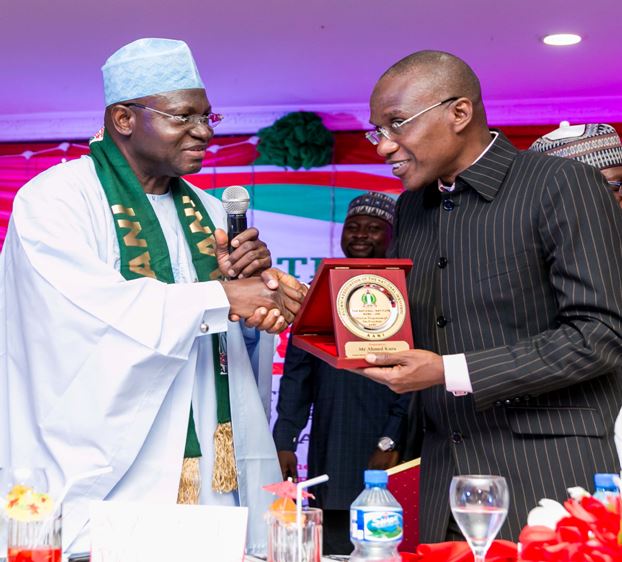
AMCON under Ahmed Kuru, Managing Director/Chief Executive Officer has maintained that there will be no sacred cows in its bid to recover the huge debts in the hands of a few Nigerians.

To deal with the situation however, AMCON has in recent times increased the tempo of its recovery activities using firmer negotiation strategies as well as utilizing the special enforcement powers vested by the AMCON Act to compel some of its recalcitrant debtors especially those that are politically exposed and business heavyweights to repay their debts.

Linkage Assurance PAT up 431% to N2.9bn in 2017

0
Dr Pius Apere MDCEO Linkage Assurance Plc
Dr Pius Apere (PhD/FCII) (Actuarial Scientist and Chartered Insurer)

Dr. Pius Apere
MD/CEO
Linkage Assurance Plc

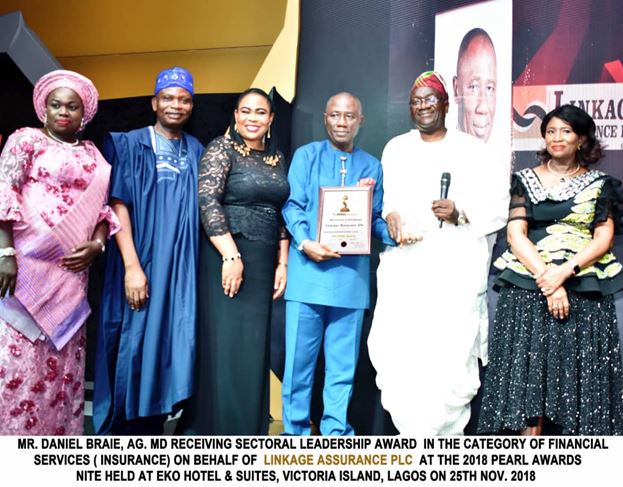
Linkage Assurance Plc has recorded a 431 percent growth in profit after tax (PAT) for the financial year ended 31stDecember 2017. The figure grew from N544.6 million in 2016 financial year to N2.891 billion in the review under period.

The profit before tax (PBT) also appreciated by 218 percent, from N942.65 million in 2016 to N2.996 billion at the end of 2017.

Linkage Assurance also boosted its bottom-line from investment income, which grew significantly by 260 percent, from N951.349 million in 2016 to N3.426 billion in the review year. This according to the Company came from the 2015 and 2016 dividend income from Stanbic IBTC Pension Limited which was received during the year and that led to a significant growth of 2,616 percent in the dividend income to N3.2 billion from N116million in 2016.

In the Company’s full year financial result submitted to the Nigerian Stock Exchange (NSE), Linkage Assurance Plc achieved gross premium written of N4.102 billion as against N4.032 billion, indicating a 2 percent increase, while the gross premium income inched 6 percent to close at N4.186 billion at the end of 2017, as against N3.966 billion the previous year.

Just as the insurance business remains volatile with high level of claims hitting the industry, Linkage during the year under review paid out claims amounting to N1.038 billion, as against 613.196 million in 2016.

This therefore impacted on underwriting profit which dropped 53 percent to close at N456.86 million, as against N980.79 million in 2017.

The company also grew its total assets to N23.308 billion at the end of 2017, moving up by 15 percent from N20.331 billion in the previous year.

Management said it will continue to refine its strategy in line with the political, economic, sociological and technological changes in the industry.

“Also we will continue to develop innovative products, alternative channels of distributions and strategic initiatives that will enable us achieve our corporate goals and objectives. With a medium-to-long term perspective, we believe that we will benefit from growth in these initiatives.”

During the 2017 financial year, Linkage developed array of retail products targeted at deepening penetration and increase revenue. These include the Linkage Third Party Plus, which is a budget friendly motor insurance that provides not only the compulsory Third party protection but an additional Own damage protection to the tune of N250,000, and is only available in the company”.

Other products launched by the Company are the Linkage SME Comprehensive, Citadel Shield (which provides compensation as a result of injuries from accident for pupils and students in recognized academic establishments); Linkage Events Xclusive Insurance, Linkage Shop Insurance, Purple Motor Plan (comprehensive motor cover exclusively for women), and the Linkage Estate Insurance.

“We have already deployed our online portal to make our products and services available to our customers especially the digital savvy customers and enterprises.

The Company also said it will consolidate on new initiatives to improve operational efficiency so as to reduce the cost of doing business, improve business processes, eliminate wastages and achieve higher margins in her core business.

The Nigerian Guild of Editors Mourns Tukur Abdularahman

0
nigerian guild of editors

On behalf of the Nigerian Guild of Editors (NGE), we write to express our deep sense of loss and sadness over the death of a quintessential and amiable Nigerian Journalist, Alhaji Tukur Abdulrahman, Managing Director, New Nigerian Newspapers Limited, who passed on after a brief illness on Thursday, May 17, 2018.
He was buried in his home town of Daura, Katsina state on Friday, May 18, according to Islamic rites. He was aged 58.
We are greatly saddened by his untimely passing and sincerely convey deep sympathies to members of his family, professional colleagues and friends who are devastated by his demise.
Alhaji Abdulrahman until his sudden exit was an invaluable and respected Member of our prestigious association who contributed immensely to the growth of the Guild and development of the media industry in Nigeria, Africa and the whole world.
He joined the NGE in 2000 and was elected as the Vice President-North in 2005 and again as Deputy President in 2008. He gave meritorious and impeccable service in both capacities.
Loved and respected by all, he was amiable, jovial and kind-hearted. To others who worked closely with him, he was a true leader, a fine gentleman and a reliable and supportive friend indeed.
Born on December 12, 1960 in Daura, Katsina State, North-west Nigeria, the late Abdulrahman attended Government College, Kaduna, graduating in the Class of 1977. He then proceeded to Bayero University, Kano, for his tertiary education and graduated in 1981.
In 1983, he joined the New Nigerian Newspapers as a proofreader, then became a reporter and was assigned as the paper’s State House Correspondent in 1997.
His proficiency in that task saw him elevated and appointed in January 2000 to the position of Editor of Gaskia Tafi Kwabo, a Hausa paper from the NNN stable.
Six years later in March 2006, he was named the Editor of Daily New Nigerian and in March 2011, he was appointed the Managing Director of the New Nigerian Newspapers Limited, a position he occupied until his death.

The NGE joins the entire community of Editors in Nigeria to mourn one of its own and commiserates with his family, friends and colleagues in the New Nigerian Newspapers.
Undoubtedly, Alhaji Abdulrahman will be greatly missed but we take solace in the knowledge that he has gone to a better place, to the maker of all and to whom all must return. May Allah grant him forgiveness, mercy and a place of honour in Jannatul Firdaus.
He is survived by his wife, Jamila, and children.

Ecobank Wins Best Digital Strategy Award

0
ecobank

Ecobank won the Best Digital Strategy Award at the Retail Banker International’s prestigious awards ceremony held at the Waldorf Hilton Hotel in London last week.

Ecobank’s digital strategy leverages digitalisation for scale and ubiquity and is the key plank in its ambition to be the top consumer financial services franchise in Africa and to achieve its target of serving 100 million customers.

The Ecobank Mobile App, which has already been downloaded by over 5 million people, is a unified banking app serving 33 African countries, enabling 24/7 banking services and transactions in 18 different currencies and in four major languages: English, French, Portuguese and Spanish.
Ade Ayeyemi, CEO of Ecobank said: “This award is a real vote of confidence for the hard work of everyone at Ecobank and the massive strides that we have made in meeting the changing ways that consumers are demanding to engage with their bank. I’m delighted that Ecobank has achieved this recognition and rest assured that it will strengthen our determination to be the bank of choice for Africa by further developing our products and services to meet our customers’ needs.”

“Ecobank’s digital strategy leverages innovative technology to give Africans the convenience of 24/7 banking wherever and whenever they want. As a pan-African bank we’re absolutely committed to meeting the rapidly changing demands for convenience and functionality that Africans need and demand. It’s part of our ethos and it is also a major step towards eradicating financial exclusion from the continent.”

Ecobank was also shortlisted at the Retail Banker International awards for:

  • Best Payment Innovation for its Ecobank Xpress Cash which is a card-less withdrawal solution which is integrated in the Ecobank Mobile App and available in all 33 African countries where Ecobank operates; and for

Product Innovation of the Year for its ground breaking Ecobank Mobile App.

Law Union & Rock Insurance Reports N4.2bn Premium in 2017

0
Law Union & Rock Insurance Plc

Law Union & Rock Insurance Plc, one of the leading general insurance companies in Nigeria held her 49th Annual General Meeting in Lagos. Despite the fragility of the economy in 2017, the company was able to break through all hurdles to pay dividend to its shareholders.

The Chairman of the Company, Mr. Remi Babalola, said the company’s profitability grew by 66.8%.

According to him, the company recorded good performance in 2017 with 8% growth in its top line over the figure from the previous year. A significant contribution to the profit came from the Company’s investment income.

The Gross Premium Written stood at N4.252billion compared to N3.936billion recorded in 2016. The Profit before tax of N1.099billion was achieved compared to N659million recorded in 2016 which indicates a steady performance improvement of our Company. Total assets grew by 16.9% to N10.031billion from N8.58billion posted in 2016 financial year with a 28.6% growth in Shareholders’ Funds from N5.03billion to N6.47bilion.

The company also recorded a giant feat in its general reserves with retained earnings of N704 million from accumulated loss of N24 million recorded in 2016. In recognition of this performance, the Company declared a cash dividend of 4Kobo per share for the financial year.

Babalola said the company is stronger, better, bigger and more than ever before; with one of the highest ratings in Claim Paying Ability (CPA) in the industry. The Chairman also presented the new Executive Director, Technical/Operations Mr. Olasupo Sogelola and Mr. Kunle Aluko (non-executive director) to the shareholders. Both appointments have been approved by the NAICOM.

The Managing Director of the Company, Mr. Jide Orimolade in his speech said that the Company will not relent in delivery of the best service to the customers. According to him, the loyalty of the customers were very instrumental to the consistent growth of the Company’s top-line in the past few years which has enable the company to eliminate its accumulated loss and able to cross to a positive retained earnings in 2017.

The Shareholders present at the event were in happy mood as three retiring directors -Mr.Remi Babalola (Board of Directors Chairman), Mr. Obinna Onunkwo and Mrs. Funmi Ekundayo were re-elected for another three years.

West Africa CIO Summit 2018 Warns Against Digital Deadlock

0

International Data Corporation (IDC) hosted the sixth annual edition of its West Africa CIO Summit in Lagos, Nigeria.

Running under the theme ‘Enabling a Blueprint for Thriving in the Digital Economy’, the Summit attracted more than 100 of the region’s most prominent ICT leaders and showcased innovative strategies for embracing the disruptive power of digital transformation.

Targeted exclusively at C-level executives and above, the event combined thought-provoking presentations with interactive workshops, panel discussions, and case studies, all while facilitating one-to-one meetings between the providers of cutting-edge technology solutions and the influential decision makers responsible for driving their implementation.

“As the digital revolution continues to gather pace, traditional business models are undergoing unprecedented levels of disruption,” said Mark Walker, associate vice president for Sub-Saharan Africa, as he opened the day’s proceedings. “This has triggered a wave of digital transformation across the region, and we are delighted to be here in Lagos today to provide West Africa’s ICT leaders with the expert guidance required to navigate the numerous challenges and roadblocks that lie in wait.”

The Summit’s agenda had been tailored to help CIOs rethink the way they leverage information, implement emerging ICT solutions, and facilitate organisation-wide innovation, with the ultimate aim of making their enterprises more agile, efficient, and productive than ever before. The rise of disruptive automation featured prominently, while in-depth insights were provided into a broad range of pressing issues such as driving digital business at scale, harnessing the power of enterprise mobility, building a resilient cybersecurity strategy, and empowering innovation with cloud.

Delivering the Summit’s keynote address, IDC’s group vice president and regional managing director for the Middle East, Turkey, and Africa, Jyoti Lalchandani, offered compelling advice on breaking through the digital deadlock and identifying inherent organisational weaknesses.

“By 2018, 75% of CIOs will put experiential engagement, data monetisation, or digital business at scale at the top of their agenda,” he said. “However, some 59% of organisations are at a digital impasse today, either running ad hoc digital transformation initiatives or — if they have gained traction in their efforts — the changes are not universally applied across the enterprise. Various factors are holding these companies back, including ineffective organizational models, underdeveloped digital capabilities, outdated KPIs, overly tactical digital roadmaps, and the sheer absence of an enterprise digital platform.”

As well as the numerous ICT industry experts speaking at the event, a number of respected end-user thought leaders were on hand to provide invaluable demand-side perspectives on the latest technology trends that are transforming the region’s organizations. These included the likes of Uchechi Edosomwanhead of IT services at the Nigeria Airtime Management Agency; Esomchi Nwafor, chief technology officer at Custodian & Allied Insurance; Oladimeji Kazeem, general manager of ICT at Pal Pensions; and Samuel Menyah Asah-Kissiedu, head of IT at Millennium Insurance.

IDC’s valued partners for the West Africa CIO Summit 2018 included CSEAN as Affiliate Partner; FABS, VMware, and Schneider Electric as Platinum Partners; Veeam and Fortinet as Gold Partners; and BlueSPACE Africa as Exhibit Partner.

Siemens takes Digital Solutions of the Year Award

0
Siemens

Siemens wins the Digital Solutions of the year award for its Siemens South Africa Head Quarters Micro Grid Project at the Africa Utility Week Industry Awards evening which took place in Cape Town.

Why Microgrids are the future of Energy Management
The traditional power grid provides reliable power most of the time. But when natural disasters or security breaches threaten the grid, the ensuring blackouts can be catastrophic and costly.
It is for this reason that organisations and utilities are working together to build resilient, flexible power systems called microgrids. Operating either as part of traditional grid or independently (or both), mircogrids are revolutionizing the way we manage our energy resources.

Why do Microgrids matter?
A microgrid is a scaled-down version of the centralized power system. It can generate, distribute, and control power in a campus setting or small community.

  • They are reliable and flexible
  • They are resilient
  • They more secure
  • They save money
  • They store and incorporate renewable energy

Siemens provides a comprehensive portfolio of products, solutions, and services to help build and operate microgrids of any size. We provide generation and distribution of electrical energy as well as monitoring and controlling of microgrids.

The Commonwealth ICT Awards 2018

0

The second biennial Commonwealth ICT Awards 2018 will take place in the evening of 18 June 2018, the first day of the Commonwealth ICT Ministers Forum to take place on 18 – 20 June 2018 in London.

Organised by the Commonwealth Telecommunications Organisation, the Commonwealth ICT Awards are intended to recognise major achievements in ICTs by member countries and organisations and to share knowledge amongst stakeholders in key areas.

This year, we welcome submissions in the following categories:

Country Awards:

  • Universal access initiatives
  • Broadband access initiatives
  • ICT policy and regulatory initiatives
  • Cybersecurity initiatives
  • Spectrum management initiatives
  • Applications (e-health, e-education, e-agriculture and e-commerce)

Industry Awards:

  • Universal access initiatives
  • Broadband access initiatives
  • Cybersecurity initiatives
  • Applications (e-health, e-education, e-agriculture and e-commerce)
  • Corporate social responsibility

Submissions and requests for more information should be sent to [email protected]

Submissions should be received no later than 1 June 2018

About the Commonwealth Telecommunications Organisation

Established in 1901, the Commonwealth Telecommunications Organisation is the oldest and largest Commonwealth intergovernmental organisation in the field of information and communication technologies.

With a diverse membership spanning developed and developing countries, small island developing states, and more recently also non-Commonwealth countries, the private sector and civil society, the CTO aims to become a trusted partner for sustainable development for all, including beyond the Commonwealth, through ICTs.

‘Buhari Administration is Pro-Private Business’

0
Buhari

The Minister of Information and Culture, Alhaji Lai Mohamed has declared that the administration of President Muhammadu Buhari is pro-private business and is keen on providing the enabling environment for the private sector to meaningfully participate in the development of the Nigerian economy.

The Minister who stated this at the formal inauguration of the Stakeholders Engagement Committee (SEC) of the National Council on Privatisation (NCP) in his office in Abuja on May 15, 2018, noted that the inauguration of the Committee was yet another opportunity to enforce the integrity of the present administration by ensuring that privatisation was carried out with transparency. He added that the administration recognises the role of the private sector in the Nigerian economy.

Mohammed who is the Chairman of the Committee enjoined the members to ensure that the Committee lives up to its responsibilities by identifying and maintaining contacts with the various stakeholders and opinion leaders to be able to advise the Council on their concerns and interests on the privatisation programme.

The Minister noted the poor perception by many Nigerians of the privatisation programme and said the members had the task to change the perception.

He commended the quality of members on the Committee especially the inclusion of the private sector, stressing that there would be no virile and robust stakeholders’ engagement on the privatisation programme without the engagement of the private sector.

The Chairman said that given the crucial role of the Committee, its members must ensure that it delivers on its assigned mandate of reaching out to all the stakeholders of the privatisation programme.

Earlier, Director General of the Bureau of Public Enterprises (BPE), Mr. Alex A. Okoh had called on the Committee to correct the erroneous impression that privatisation is unmindful of the interest of the general public.

He urged the Committee to reverse the development through a process of robust stakeholder engagement and “to help harmonise the public enterprise reform agenda under the supervision of the NCP, whilst also promoting a favourable perception and application of the privatisation programme in the mind of the public as well as local and international investors”.

Okoh noted that the benefits of privatisation have not been universally acknowledged or appreciated in Nigeria in the court of public opinion where it is believed that privatised enterprises may have been sold for far less than their actual market value; and that the enterprises may be under performing.

However, he maintained that in the 30 years of the enterprise reform journey in Nigeria,  out of the 140 public enterprises across  the various sectors   of the economy that have been privatised, a high percentage  have achieved a good level of performance.

“It can thus be seen that there is something of a mismatch between public perception of privatisation and the reality of its value and contribution to the economy. Accordingly, the importance of an effective stakeholder engagement strategy cannot be overemphasized. There is a clear and present need to build support and understanding for the Federal Government’s reform agenda by effectively communicating the considerable benefits of privatisation”, he stated.