Thursday, January 15, 2026
32.5 C
Lagos
Home Blog Page 246

Senate Expresses of Commitment for Speedy Amendment NDIC Act

0
Umaru Ibrahim MD/CEO NDIC

The Senate Committee on Banking, Insurance and Other Financial Institutions has expressed a strong Commitment for the accelerated amendment of the Nigeria Deposit Insurance Corporation (NDIC) Act, 2006, to eliminate the gaps that have hindered the full realization of the public policy objectives of the implementation of the Deposit Insurance System (DIS) in Nigeria.

This made known in a statement signed by Mohammed Kudu Ibrahim, head, Communication & Public Affairs of NDIC

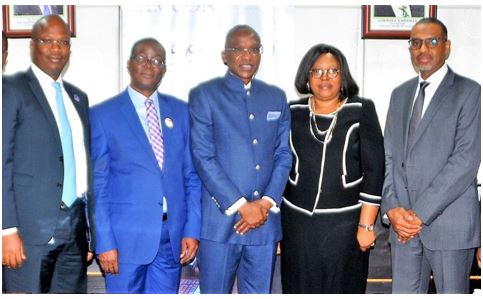
He stated that the Chairman of the Committee, Sen. (Dr.) Rafiu Adebayo Ibrahim, made the remark when he led his team on an oversight visit to the Corporation on Tuesday, this week. The Committee was warmly received by the MD/CEO of the Corporation, Umaru Ibrahim, along with members of his management team.

The MD/CEO according to the statement updated the Committee on the recent activities of the Corporation including the response of the NDIC to the revocation of the licences of 153 Micro-Finance Banks (MFBs) and 6 Primary Mortgage Banks (PMBs), by the Central Bank of Nigeria (CBN).  Members of the Committee were informed that the Corporation had already commenced the payment of depositors of 25 MFBs and the deposits verification of 50 others.

He listed the challenges encountered by FMBs in particular to include non-performing loans, insider credit and abuse, non-compliance with extant regulations on their establishment and the overbearing indulgence in other fringe operations, along with poor earnings.

“The NDIC boss further used the opportunity to inform members of the Committee of the strong resolve and commitment of the Corporation to assist in the investigation and prosecution of all those who contributed to the collapse of the defunct Skye Bank”, he said.

“On the issue of the long suffering depositors of Savannah Bank, Fortis MFB, Aso Savings and Union Homes, the MD/CEO expressed the view that unless the enabling Act of the Corporation was speedily amended, the Corporation was handicapped in acting to end the plight of depositors of the institutions”, he stressed further.

Using the case of Savannah bank as an example, the MD/CE added that the NDIC Act, as presently enacted, inhibits the Corporation to reimburse depositors since their bank licences were yet to be revoked due to protracted litigation. The NDIC boss thereafter made appealed to the Committee to amend the NDIC Act.

Responding, the Chairman of the Committee commended the Corporation for the excellent quality of its reports on the supervision of banks which have become the benchmark in the industry.

The chairman however expressed concerns over the recent policy of the CBN which raised the minimum capital requirements for Microfinance Banks in Nigeria from N20 million to N200million, and N100 million to NI billion, andN2 billion to N5 billion for unit, state, and national MFBs respectively, adding that the policy will be inimical to the objectives of the financial inclusion strategy.

The meeting ended with both institutions pledging to work harmoniously to confront emerging issues in the industry such as Block-chain Technology, Financial Inclusion, Cyber Crime, Digital Banking, Consumer Protection and the provision of credits to MSMEs.

– By Simon Ugwu

TOTAL Reiterates Commitment to Providing Clean Energy

0

Total Exploration and Production Nigeria Limited has reiterated its commitment to proving more reliable, affordable and clean energy in Nigeria in particular and the world in general.

The Managing Director/Chief Executive, Total E&P Nigeria Limited, Mr. the Nicolas Terraz, made this known at the Management Session of the 36th Nigerian Association of Petroleum Exploration (NAPE)  Annual International Conference and Exhibitions, held in Lagos.

The CEO who was represented by Olatunji Akinwunmi, Executive General Manager, GSR& Planning, Total E&P Nigeria Limited  stated that he was honoured to address the   management session on: Organic Growth in Nigeria Oil & gas Industry: Next phase, where and how can it be achieved”.

He said, Total is very proud to be associated with the Nigerian Association of Petroleum Exploration (NAPE) and as Nigeria’s only fully integrated and gas company, we are certainly involved in the growth of all streams of the industry: upstream, midstream and downstream”.

“Our ambition is to become the <Responsible Energy Major>. And this is the meaning of our motto <Committed to Better Energy>energy to the world growing population. Reliable, affordable and clean energy  The ambition challenges us to provide more reliable, affordable and clean are all three  words of equal importance”, he stressed.

“Reliable, simply because everybody energy to be readily and continuously available in their daily life; Affordable, because cheap energy is necessary to spur the economic development of billions of [people seeking better living conditions; and all polls indicate that it is the clear priority of all customers around the world; clean of course; because we need to reduce our environmental footprint and CO2 emission”, he added.

He stated that the IOC has been present in Nigeria for more than 60 years as a group, in partnership with the Nigerian government and in different equity association with other private companies.

The MD/CEO maintained that the growth opportunities abound in Nigeria and all stakeholders need to come together to achieve and sustain this growth.

Speaking further, he said, “In our upstream activities, run by our exploration and production affiliate, like most of the other IOCs in Nigeria, we moved from the predominantly land based production in the 60s to offshore in the 80s and then deep offshore in 2005 , developing a technically skilled industry workforce in the process”.

“Over the years, despite various challenges n the industry, total has added over 3 billion barrel of oil equivalent to Nigeria’s production and with our Egina project coming on stream in the coming weeks, we will add another 200, 000 barrels per day  which is approximately 10 percent of Nigeria’s oil production”, he added.

In the mid stream sector of the industry, we have 15 percent interest in Nigeria LNG, which currently operates 6 LNG liquefaction trains on bonny island. Indeed, 40 percent of our production in Nigeria is also gas. This is bound to increase in the coming years as total looks to expand its gas business. And as part of our objective to provide more reliable, affordable energy to Nigeria’s growing population, Total is also currently developing a 100MW Katsina Solar Farm project in Katsina.

Our downstream affiliate is a market leader in Nigeria with over 550 service station spread across the nation. In 2014, total pioneered the first solar powered station in West Africa, the Onigbagbo station in Ikeja Lagos, and since then, we have built over 15 solar stations in Nigeria. Our global target is to reach 5,000 solar stations by 2020.

Total downstream activities are also number one in Africa with over 4,300 service stations in the continent offering a one-stop shop experience. For our customers, we aim to become providers of integrated solutions, delivering customers services shaped by closeness and innovation. This involves in particular transforming our service stations into community hubs with local and mobility-related services, as part of a multi-energy network.

– By Simon Ugwu

‘Nigeria Must Invest In Human Capital Development’ –AMCON MD

0
Ahmed Kuru MD/CEO AMCON

Managing Director/Chief Executive Officer, Asset Management Corporation of Nigeria (AMCON) Ahmed Lawan Kuru has reiterated the need for the government and institutions at all levels to pay more attention to human capital development, which he described as the key to the paradigm shift the country is clamoring for.

Kuru who was special guest of honour at the 2018 edition of the annual Presidential Dinner for the graduating Senior Executive Course 40 Participants of the National Institute for Policy and Strategic Studies, organized by the Alumni Association of the National Institute (AANI), said no country in the world has been able to attain change without a strategy that supports consistent investment in the development of its human capital.

He said, “It is not easy to have a paradigm shift in two, three or even eight years the way most of us are demanding for change in this country. Institutions and governments at all levels must ensure consistent and sustained investment in the development of human capital, which in turn will gradually change the narratives of development in our dear country. I believe the National Institute for Policy and Strategic Studies is strategically positioned to achieve this because of the caliber of people that are privileged to attend the course.

“To achieve that however, we must invest in research especially in the area of education. So if we must have a country of our dream, we must invest and develop our human capital but above all, we have to critically study those policy decisions that brought us where we are today as a nation and strive to correct wherever we may have made mistakes. However, we cannot achieve any of these if we are not patriotic citizens.”

The AMCON boss argued that his interaction with the cream of the Nigerian public sector including the military, police, banking, labour and other strategic institutions, has revealed that, members of the National Institute, have occupied enviable positions of heads of state, governors, senators, ministers, captain of industries and head of traditional institutions amongst others meant that they have the powers to make the desired changes in the country.

Adding, “This role no doubt signifies how important the society views each and every one of you. It is therefore incumbent on you to demonstrate high sense of leadership and responsibility that is devoid of any form of parochialism and sentiment.

The fast pace of change and national development in countries across the world, especially in past decades, has been driven by a paradigm shift towards thinking globally and acting locally. Successful national growth and development have therefore been accomplished under inherently deft, visionary and people oriented national policies and strategies.

“As you are well aware, the National Institute was conceived as a high-level institute with the primary objectives of serving as the nation’s foremost policy think-tank, developing top-class technocrats of high intellectual capacity like you who are expected to conceptualise and lead the implementation of dynamic policy initiatives and strategies for national development. This narrative therefore put a heavy burden on you to sustain the momentum by impacting positively towards a better society,” Kuru concluded.

MTN, Orange Launch Mobile Money Services Across Africa

0
mtn

Two of Africa’s largest mobile operators and mobile money providers, Orange Group and MTN Group recently announced a joint venture, Mowali (mobile wallet interoperability), to enable interoperable payments across the continent. Mowali makes it possible to send money between mobile money accounts issued by any mobile money provider, in real time and at low cost.

Mowali will immediately benefit from the reach of MTN Mobile Money and Orange Money (OrangeMoney.orange.fr), bringing together over 100 million mobile money accounts and mobile money operations in 22 of sub-Saharan Africa’s 46 markets.

Mowali is ready to enable interoperability between digital financial service providers beyond MTN and Orange operations and markets, to support the existing 338 million mobile money accounts in Africa.
Mowali is a digital payment infrastructure that connects financial service providers and customers in one inclusive network. It functions as an industry utility, open to any mobile money provider in Africa, including banks, money transfer operators and other financial service providers.
The objective of Mowali is to increase the usage of mobile money by consumers and merchants.  Mowali enables money to circulate freely between mobile money accounts from any operators in all countries. From the customer’s point of view, this means “I can pay or receive money anywhere from my mobile account regardless of my operator”. The system will unlock further innovation in the digital financial space within the continent.
For Stéphane Richard, Chairman & CEO of Orange, “by providing full interoperability between platforms, Mowali will provide an important step forward that will allow mobile money to become a universal means of payment in Africa. Increasing financial inclusion through the use of digital technology is an essential element in furthering the economic development of Africa, particularly for more isolated communities. This solution embodies Orange’s ambition to be a leading player in the digital transformation of the continent. By joining forces with another of Africa’s market leaders, MTN, we aim to accelerate the pace
of this transformation in a way that will change the lives of our customers by providing them with simpler, safer and more advantageous services. “
“One of MTN’s goals is to accelerate the penetration of mobile financial service in Africa, Mowali is one such vehicle that will help us achieve that objective. Furthermore, co-operation and partnerships that help us accelerate the pace of development and overcome some of the scale, scope and complexity of challenges that society faces are key. This partnership with Orange is therefore an important step in helping us play a meaningful role in supporting the United Nations’ Sustainable Development Goals related to eliminating extreme poverty and enhancing socio-economic development in the markets we operate in and beyond. Thus giving our customers access to a bright, digital future.” said Rob Shuter, Group President and CEO of MTN.
The GSMA supports the Mowali initiative as interoperability at this scale is a key accelerator for both financial inclusion and Mobile Money usability across Africa.
“Today, there are over 690 million mobile money accounts around the world. Mobile money services have become an essential, life-changing tool across Africa, providing access to safe and secure financial services but also to energy, health, education and employment opportunities.

The creation of Mowali will help to further transform mobile financial services throughout the African region. It demonstrates the mobile industry’s continued leadership and commitment to driving financial inclusion and economic empowerment through industry collaboration. The GSMA is proud to support its development,” said Mats Granryd, Director General, GSMA.
“Interoperability of digital payments has been the toughest hurdle for the financial services industry to overcome, in support of financial inclusion. With Mowali, Orange and MTN deliver a solution that will enable them, and other companies, to scale digital financial services across Africa, faster, to everyone—including the poor,” said Kosta Peric, deputy director of Financial Services for the Poor, at the Bill & Melinda Gates Foundation.

“This is a signal that a new wave of innovation, which can help alleviate poverty and drive economic opportunity, is coming. We’re pleased to see an implementation of Mojaloop—an open source payment platform available to operators across the sector—help achieve that.”

Akinwumi Adesina: Leading Agricultural Innovation and Economic Growth of Africa

0
Akinwumi Adesina President African Development Bank

As an agricultural economist, Dr. Akinwumi Adesina has been a leader in agricultural innovation for over 30 years. He has contributed greatly to food security in Africa, aimed at improving the lives of millions currently living in poverty, throughout the African continent.

The Sunhak Committee acknowledges Dr. Akinwumi Adesina’s achievements in promoting Good Governance of Africa, which boosts Africa’s capacity to feed itself and transform its total economies for generating wealth for millions of rural and poor African farmers.
At the Cape Town International Convention Center, the Sunhak Peace Prize Committee announcedthat the 2019 Laureates for the Sunhak Peace Prize would be Waris Dirie, 53 year-old world-class supermodel and anti-FGM activist, and Dr. Akinwumi Ayodeji Adesina, 58 year-old president of the African Development Bank Group.
Dr. Akinwumi Adesina has been a leader in agricultural innovation in Africa for over 30 years, bringing great improvement to Africa’s food security. contributing to Africa’s dynamic growth. His leadership is building stepping-stones for Africa’s dynamic growth.
Dr. Akinwumi Adesina pioneered major transformations in the agricultural field, including expanding rice production by introducing high yielding technologies, designing and implementing policies to support farmers’ access to technologies at scale, increasing the availability of credit for millions of smallholder farmers, attracting private investments for the agricultural sector, rooting out the corrupt elements in the fertilizer industry, and assisting in establishment of major agricultural policies for Africa’s green revolution.
The “Africa Fertilizer Summit,” which he organized in 2006, was one of the largest high-level meetings in Africa’s history that had a focus on solving Africa’s food issues. During this Summit, Dr. Adesina was instrumental in developing the “Abuja Declaration on Fertilizer for the African Green Revolution,” whereby the participants stated their commitment to the “eradication of hunger in Africa, by 2030.”
Dr. Adesina worked with various banks and international NGOs in order to create an innovative financing system, providing loans to small farmers, providing a way for them to rise out of poverty. This move leveraged $100 million in loans and provided opportunities for small farmers to increase their agricultural productivity, and their income.
Dr. Akinwumi Adesina currently serves as the president of the African Development Bank Group which plays a central role in Africa’s development. As an “economic commander” of Africa, he promotes the “High 5 Strategy” that includes: light up and power Africa, feed Africa, industrialize Africa, integrate Africa and improve the quality of life for the people of Africa. As a result of his work, the lives of millions of people throughout Africa have been improved.
Chairman of the Sunhak Peace Prize Committee, Dr. Il Sik Hong, stated that “the Sunhak Peace Prize was established based upon the vision of “One Family Under God.” The 2019 Sunhak Peace Prize gives special attention to peace and human development in Africa.”
Dr. Hong added “in order for us to build an era of peace and coexistence in the 21st century, we want to encourage continuous development in Africa. Africa is a rising star and its growth will contribute global progress and development throughout the 21st century.”
The Sunhak Peace Prize honors individuals and organizations who have made significant contributions to the peace and the welfare of the future generations. The Sunhak Peace Prize includes a cash prize totaling one million dollars. The 2019 Sunhak Peace Prize Award Ceremony will take place in February, 2019 in Seoul, Korea.

‘No Silicon Valley for Africa’

0

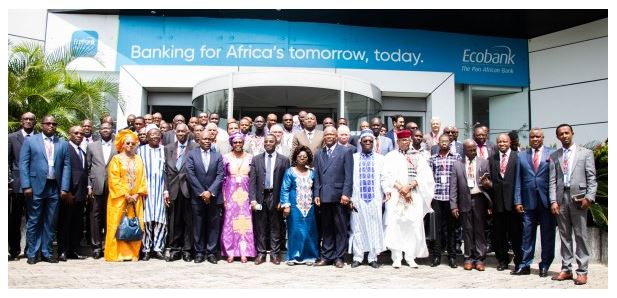
Recently, the city of Cape Town, South Africa welcomed over 300 active and aspiring investors representing Africa’s early stage investing ecosystem for last week’s two-day Africa Early Stage Investor Summit organized by VC4A and ABAN.

Celebrating its fifth year, the summit attracted the highest ever number of early stage African investors from 35 different countries, and more specifically 25 African nations representing 110+ investor organisations to share expertise, experiences, and fostering collaborations to bolster the ecosystem of capital provision for African entrepreneurs.

Key takeaways from the two days included:

  • Silicon Valley will not be replicated in Africa. Though there are lessons to be learned from the Valley, African VC faces unique constraints in scale, capital and exit opportunities. Rather than spend time ‘unicorn hunting,’ investors should push founders to build profitable, sustainable, and locally-adapted businesses.
  • Collaboration is required to build a thriving industry.Investors must be activists in attracting more capital and resources into African markets, especially from larger corporates, growth equity investors and development finance institutions (DFIs). More collaboration is needed in designing instruments and financing structures tailored to African ventures.
  • Human capital and diverse teams will be a key to success. In the coming decade, Africa will hold the majority of the global youth population, bringing a wealth of opportunity and innovation. Yet accessing strong talent and building diverse teams remains a stark challenge for most ventures. Investors want to see more female and locally-led organizations with thoughtful human capital strategies.

As Keet van Zyl from Knife Capital expressed during the opening panel discussion: “It is easy to invest money in Africa right now, but it is hard to make money in investing here. The key is to be exit centric – we only invest in entrepreneurs who are focusing on building sustainable businesses that can exit.” Ben White, CEO of VC4A says, “This conversation succinctly captures the challenges venture capital faces in Africa and why we need to keep working to strengthen and support the entire African venture ecosystem.”
One key announcement at the Summit came from Nikunj Jinsi from IFC Venture Capital: the World Bank Group has launched L’Afrique Excelle, a post seed stage acceleration program and showcase of the best startups from Francophone Africa. The program, following the first XL Africa cohort, will target and select high growth business in order to provide much needed support to the region’s nascent ecosystem. “With the conversations around the current lack of resources availed to Francophone Africa, and the importance of public-private partnerships, having frequently surfaced in the Summit sessions, this news was highly welcomed and appreciated by all in attendance,” says White.
While still in the early days, angel investors are experimenting across the continent and seeking ways to professionalize within their home markets. ABAN president Tomi Davies presented “Finding Product/Market Fit: The State of Angel Investing in Africa” (- a first ever scoping study by ABAN in partnership with infoDev / The World Bank Group on angel investing in Africa. The ABAN network has grown from 5 to 80 active networks and it is important to now have research that captures this emerging investor segment.
Babajide Sodipo, Regional Trade Adviser with the African Union (AU), announced a new partnership between the AU and ABAN formalizing their joint ambition in supporting entrepreneurs and SME’s across the continent. David van Dijk, ABAN Executive Director: “It’s great to see so many connections being made. More importantly we are excited by the level of engagement. Now is the time to take an active role and to be part of the next great African success story. We invite all actors and stakeholders to join the conversation.”
“It was the largest and most successful summit we have run with over 60 speakers participating in 7 panels, 4 investor masterclasses, 3 keynotes, 2 roundtables and 1 fireside chat. It’s amazing to see this industry rise in Africa. The passion and commitment shown by speakers and participants alike to partner with entrepreneurs to unlock the continent’s opportunities demonstrates how much there is to still achieve and I have no doubt that this ecosystem will prosper”, concludes White.

Dell Technologies Gen Z Research Reveals: ‘We Haven’t Raised a Generation of Robots’

0

Generation Z is entering the workforce, bringing with it a tech-first mentality that will propel businesses further into the digital era while potentially deepening the divide among five generations in the workplace. According to global research commissioned by Dell Technologies, post-millennials – those born after 1996 and known as Gen Z – have a deep, universal understanding of technology and its potential to transform how we work and live.

“It’s almost a given that these digital natives have advanced technology and data science skills, but what is surprising is the level of digital maturity they are bringing to the workplace,” said Danny Cobb, corporate fellow and vice president of Technology Strategy, Dell Technologies. “Yet we haven’t raised a generation of robots. Gen Z sees technology not only as a tool for enabling human progress, but also as a means for leveling the information empowerment playing field. Their combination of vision and optimism is remarkable.”

The survey of more than 12,000 high school and college students in 17 countries reveals the younger generation’s outlook on technology and future jobs. Specifically:

         98% have used technology as part of their formal education

         91% say the technology offered by an employer would be a factor in choosing among similar job offers

         80% want to work with cutting-edge technology; of those 38% are interested in IT careers, 39% want to work in cybersecurity and 46% aspire to do technology research and development

         80% believe technology and automation will create a more equitable work environment by preventing bias and discrimination

An overwhelming 89% recognize that we are entering the age of human-machine partnerships: 51% of those surveyed believe that humans and machines will work as integrated teams, while 38% see machines as tools for humans to use as needed.

While most Gen Zers are confident with their technical prowess, they also worry about having the soft skills and experience that employers are seeking. Seventy-three percent rate their technology literacy as good or excellent and 68% say they have above-average coding skills. Even more telling, 77% are willing to mentor an older coworker who may be less experienced with technology. Yet nearly all new grads (94%) have some concerns about future employment.

         Only about half (57%) rate their education as good or excellent in preparing them for their careers

         52% are confident they have the tech skills employers want but not necessarily the non-tech skills

At the same time, senior professionals are concerned they are being outpaced and that a majority of leadership roles in the future will be filled by digital natives. According to previous Dell Technologies research, 87% of business leaders fear that their organizations will struggle to offer equal opportunities across generations.

With up to five generations now in the workplace, businesses must help workers find common ground as they push to create a digital-first culture. Cross-functional teams with complementary skillsets can encourage knowledge exchange and a fresh approach to problem-solving. Internships, rotation programs and other early-career development opportunities can help young professionals gain experience and develop soft skills on the job. And reverse mentorship programs can enhance technical competencies throughout an organization, with Gen Z leading the way.

“At Draper, we thrive on cross-discipline collaboration. It’s not unusual for us to bring together military experts, rocket scientists and students from area universities to solve some of the world’s most complex challenges,” said Mike Crones, CIO at Draper. “In these scenarios, the student provides a unique perspective to solution development. Many of the technologies we work on are highly interactive and Gen Z brings a curious, user-first approach that we might not otherwise consider.”

Although they have interacted with electronic devices practically since birth and grew up with social media, Gen Z yearns for more human interaction in the workplace.

         In-person communication (43%) is the preferred method for communicating with coworkers, followed by phone (21%); messaging apps and texting ranked last

         75% expect to learn on the job from coworkers or other people – not online

         82% say that social media can be a valuable tool in the workplace

         More than half (53%) prefer to go to a workplace versus working from home and 58% prefer to work as part of team rather than independently

“Today’s young professionals grew up in a collaborative educational environment and they are bringing those same expectations to the workplace,” said Maribel Lopez, technology industry analyst and strategic advisor at Lopez Research. “Though face-to-face communication isn’t always in possible in today’s modern workplace, immersive technologies are enabling all types of workers to collaborate in both the physical and virtual worlds.”

Added Cobb, “Ultimately, those organizations that create a workforce in which all generations are supported will thrive in the era of hum

McKinsey: Africa, World’s Next Big Growth Market

0

A new book by McKinsey confirms that Africa is poised for economic acceleration, akin to the Asian boom. While other geographies are seeing incremental growth, global companies that get in early and join the African champions shaping the right strategies, can sustain double-digit profit growth over the next few decades.

In Africa’s Business Revolution: How to Succeed in the World’s Next Big Growth Market (Harvard Business Review Press, November 20, 2018) Acha Leke, Mutsa Chironga, and Georges Desvaux detail the research that McKinsey & Company has done and share insights into Africa’s future growth prospects.

The conclusions they draw are distilled from 3,000 McKinsey client engagements, in-depth proprietary research and interviews with 40 of Africa’s most prominent business and development leaders. The authors reveal how companies can better understand the African market and seize the opportunities for building profitable, sustainable businesses.

Major trends indicate Africa is poised for explosive growth

Africa has a fast-growing, rapidly urbanizing population with big unmet needs. This means there is a trillion-dollar opportunity to industrialize Africa, to meet rising domestic demand and create a bridge-head in global export markets.

In addition, there has been a big push by governments and the private sector to close infrastructure gaps. There is a continued resource abundance in agriculture, mining, and oil and gas, with innovation and investment in these sectors unlocking new production on the continent. The rapid adoption of mobile and digital technologies could leapfrog Africa past many obstacles to growth.
Leke and Desvaux, both Senior McKinsey Partners and Chironga, an executive at Nedbank, one of South Africa’s largest banking groups, say:
“With over 400 African companies earning annual revenues of US$1 billion or more, we can identify what works. The highly successful businesses are often African companies, but many are entrepreneurial firms with Western, Indian, or Chinese founders. The most consistently profitable businesses demonstrate a higher tolerance for risk, are eager to adapt their products, production and distribution for African consumers, and commit to investing and building their businesses for the long-term.”

African success stories

The book examines several examples of African businesses that have translated opportunities into enduring business value. For instance, it shows how Nigerian conglomerate, Dangote Industries, industrialised to serve regional markets through import substitution and improved margins through vertical integration. South African retail giant, Shoprite, adapted its supply chain and distribution centres for local logistics. SABMiller created products for regional tastes and invested heavily in multiple markets and skills transfer. Technology driven start-up, Kenya’s M-Kopa, is providing mobile money financed off-grid solar energy kits. The authors also study global companies which have succeeded in Africa for decades, like Coca-Cola, GE, and Total.

Four imperatives to achieve long-term sustainable growth

Leke, Chironga and Desvaux believe that building a successful business in Africa requires a long-term approach and four essential practices:

  1. Mapping an Africa strategy – setting a clear aspiration, prioritising markets, defining how to achieve scale and relevance and creating an ecosystem to thrive.
  2. Innovating business models – truly engaging with customers, creating products and services to fulfill unmet needs, getting lean to drive down costs and price points, and harnessing technology.
  3. Build resilience for the long term – riding out short-term volatility, diversifying portfolios, integrating up and down the value chain, understanding local context and engaging with governments.
  4. Unleashing talent – developing skills in frontline workers, creating robust talent development processes and harnessing the power of women’s advancement.

Acha Leke says:

“At the heart of these four imperatives is a commitment to doing well by doing good. We have had the privilege of meeting and working with many remarkable business leaders from around the world. What has struck us time and again is how many of them are driven by a deeper purpose. They look closely at Africa’s high levels of poverty; its gaps in infrastructure, education and healthcare, and its governance problems. But they don’t just see barriers to business – they see human issues they feel responsible for solving. They show us that contributing to the social and economic development of the countries within which their thriving businesses operate creates value for both shareholders and stakeholders.”

Book on Dividend Payment Profile of Quoted Firms Underway

0
nse

The management of Third Observers Nigeria Limited has announced the forthcoming publication of its compilation of Dividend Payment Profiles of Listed Companies in Nigeria to complement its annual Dividend Payment Awards for Nigeria’s Listed Companies, which second edition is slated for March 2019 in Lagos.

The maiden edition of the dividend payment awards was held on 10 February 2018 with 10 listed companies conferred with various honours for their respective years of dividend payments starting  from a minimum of 10 years and above, as listed entities.

In a press release signed by Mr. Abiodun Ayodele, the Managing Director of Third Observers Nigeria Limited, the company explained that it decided to publish the dividend payment information of listed companies in Nigeria since each company was quoted on the Nigerian Stock Exchange to intimate the Nigerian public with the strategic financial support of listed companies in the country to the Nigerian economy from their annual  payments of hundreds of  billions of naira as dividends to their shareholders over the periods of their operations as quoted entities to date outside corporate taxes.

The dividends have thus helped many shareholders to enjoy a life-long comfort, created new businesses, nurtured many aspirations to fruition, and inspired many shareholders to become who they want to be.

According to Ayodele, the publication of the dividend payment policies of the listed entities will help reduce the continuously rising volume of unclaimed dividends on the Nigerian Stock Exchange by motivating more shareholders that come across the book to enroll for the electronic collection of their dividends as mandated by the apex regulator of the Nigerian capital market, the Securities and Exchange Commission, Nigeria.

‘The book will also promote the Nigerian capital market as a place of regular dividend income for Nigerians that develop the interest to become shareholders of quoted companies in the country.’

It is estimated that only about 5 million Nigerians currently hold any form of shareholding in listed companies in Nigeria.

The book will be available across Nigeria  and overseas latest 30 December 2018 and shall be updated every two years to keep the investing public abreast of prompt information on dividend incomes declared by listed companies in Nigeria and to ultimately increase the number of Nigerian shareholders with equities in the listed companies.

Samsung Launches QLED TV 2018 Edition into Nigerian Market

0

Samsung Electronics West Africa has launched its newest and smartest Television yet, The Samsung QLED TV 2018 into the Nigerian market. According to the company, the QLED TV 2018 features impeccable picture quality, inspiring style, and ingenious ways for users to find content; removing anything that distracts, detracts, or delays from the experience.

The media launch which took place in Lagos saw the brand showcase amazing, fresh and innovative improvements on the previous model, the QLED 2017. These include; the One Connection –a new ‘Invisible Connection’, or a single super-thin cable that will be hard to spot.

The main cable and nest of HDMI cables will go into the standard, separate connection box, and then a single, barely noticeable cable connects them to the TV, leaving the TV area clutter free and tidy. This is the first time such a thin cable has handled both data and power duties.

Speaking at the event, Mr. Olumide Olakotan, Key Account Manager, Samsung Electronics West Africa said that the company had put in a lot of thought into creating a device that would not only serve as an entertainment tool but also add to the glamour and panache that Samsung products brings to the home. “At Samsung, we are focused on leaving a legacy of perfection for our consumers and that is why all our products are carefully crafted to meet the very specific needs of our growing dynamic and stylish customers,” he said.

Another novel addition to the QLED TV 2018 is the ambient mode feature which is also a first in the QLED series, providing useful information throughout the day – even when consumers aren’t actively watching the TV. Most interesting about this feature is the fact that the QLED can double as a piece of art in the living room or blend into the wall.

“The QLED when wall-mounted and on Ambient Mode can mimic the pattern on the wall behind the TV to create an astonishing visual effect in which the TV blends seamlessly into the wall. QLED TVs can hide in plain sight. If you are not watching TV, you won’t see a TV,” Mr. Olakotan added.

Users can now experience the truly connected life through the SmartThings app which connects the TV to a broad range of smart devices and appliances, from the fridge to your smartphone, etc. With the OneRemote feature, users can say good bye to juggling remotes to control the different connected devices as it automatically detects, identifies and controls connected devices and content. Users never have to take their eyes off the TV to operate any internet connected device in their homes – hence the slogan, See Nothing Else.

“The QLED 2018 is voice operated and can be easily synched with any device in the home powered by internet connectivity. With this feature, users can dim the light, turn off the washing machine and regulate the AC all from the comfort of their couch,” Mr. Olakotan concluded.

Don’t feel like mounting your QLED 2018 on the wall? That’s okay. Samsung Electronics anticipated that and created a Gravity and Studio stand specially designed to aesthetically enhance any room.

With the QLED 2018, Samsung Electronics offers a next generation experience giving consumers the best possible picture quality, infinite design and the closest human eye view any device has to offer. The TV comes in 55, 65 and 75 inches with a curved screen option and is now available at Samsung outlets throughout West Africa.

Proptech to Drive Residential Growth in Nigeria via Technology

0

The deployment of technology to make Nigeria’s real estate sector more investable, increase liquidity to drive greater home ownership, will be a major talking point at this year’s West Africa Property Investment (WAPI) Summit taking place on 15 and 16 November in Lagos.
For PropTech pioneer, Abdulhakeem Sadiq, the Founder and Chief Executive Officer of new market entrant, ZAMA, the increasing role and use of Proptech is a boon for the regional real estate sector.
“Proptech is slowly gaining momentum in developed markets, and we feel a developing market like Nigeria can learn and re-calibrate itself for seasoned investors.”
Having spent years in research and development to refine the residential & commercial focussed ZAMA platform, Sadiq believes that their multiphase tech solution has the potential to enhance and shape the Nigerian industry drastically.
Says Sadiq, “We have been working for about two years to research the local market in preparation to launch a modern and innovative web and mobile platform for Buyers, Sellers and Agents in the Nigerian real estate space.”
Designed as a one-stop platform to bring cohesion to the market; the product is an example of how tech-savvy African entrepreneurs and experts are harnessing global smarts, tech and efficiencies to create lucrative opportunities by solving historical economic challenges.
“We reached out to Google to grant us access to a back-end API to edit their map and integrate to our platform to literally put properties on the map. It was an investment we knew was necessary for the market and subscribed for it. Currently, the platform is focused only on Lagos with the goal to launch in other local markets in Nigeria and the rest of West Africa.”
Inspired by billion-dollar valuated international firms like Zillow, Zoopla and Rightmove, Sadiq and his team have used their know-how and industry experience to suite the unique Nigerian Real estate sector.
As he explains, “Our market has its peculiar problems and introducing a process driven technology would greatly enhance the validity of property valuation for instance, or even in the process finding a reputable agent to work with to help sell and buy properties.”
Before developing, Zama, Sadiq spent five years with global property consultancy JLL in Dubai and Nigeria.
This experience working for one of the world’s pioneering and increasingly data-driven property firms provides him with a specific and global view of the local property sector.
“It taught me how to look at the property from an investment point of view and enabled me with the right training and skills to advise various clients in all markets around the world. Nigeria is my home, and I would love to help change and improve the way the real estate industry functions.”
And while expertise, insights and market-leading tech are integral to making Zama successful, Sadiq has invested strategically in brand development and by partnering with the region’s most high-profile real estate conference – WAPI – to launch the ZAMA platform.
“It was collaborative, and together with our London design firm, we came up with the name: Zama. In Hausa, a local dialect, it means a “place to stay” but is also designed to spell NEMA – a local term meaning to search. The combination of which means “searching for a place to stay.”
Adding that the annual property conference taking place on the 15th and 16th of November is pivotal for the development of the sector as it allows industry high profile networking.
“I believe WAPI has done a good job at bringing together industry professionals to discuss challenges and opportunities in the industry. Platforms like WAPI also help build relationships and as far as I’m concerned, real estate is about relationships; the rest is just details.”
And as WAPI provides the industry’s largest and concentrated location to meet; WAPI’s host, Kfir Rusin is confident that ZAMA will be a force in the Nigerian market.
“We’re honoured that Zama’s big coming out party is at WAPI. Abdulhakeem and his team have done significant work, and I know long-term that ZAMA will drive the real estate sector by providing more data, transparency and a powerful platform for industry players to come together.
Adding that, “I know a number of our stakeholders are very interested in the ZAMA, and I know there will be a lot of discussions around his game changing platform.”
As Sadiq ends, “Tech and data, are fundamental to growing the sector and driving more investment and liquidity. The local and international market is hungry for data! With our platform, we will provide relevant data to aid decision making and guide users with relevant insights to make informed decisions on property while also connecting them to professionals who can help.”

‘Investment Climate Strengthens in Africa’—Index Report

0

Africa’s investment environment for both businesses and financial investors is now reviving, with a continuing and steady improvement in the trade-off between risk and reward as growth on the continent rebounds, the third edition of the Africa Risk-Reward Index from specialist risk consultancy Control Risks and Oxford Economics finds.
After several years of political and economic turbulence, with the weakest growth since the early Nineties, the report now projects an accelerating resurgence in growth in Sub-Saharan Africa (SSA) to the end of the decade that will see strengthening investment returns versus risk. SSA GDP growth is forecast to climb to 3.7% next year, after picking up to 2.9% this year from 2.6% in 2017, and an anaemic 1.1% in 2016.

By 2020, SSA growth should reach a buoyant 4.3%. Other key economic indicators, such as levels of foreign direct investment, have also been improving. Crucially, the latest Africa Risk-Reward Index findings highlight how the recovery in sub-Saharan Africa’s outlook is not being driven by the “usual suspects” of the region’s major economies, notably Nigeria and South Africa.
Along with Angola, the index finds that Nigeria and South Africa have seen only minor improvements in the risk-reward trade-off since the last report in June. This chimes with recent warnings from the International Monetary Fund (IMF) that poor relative performance by these economies is holding back the wider African economy.
The far-reaching political change occurring across swaths of sub-Saharan Africa since late 2017 have seen  reform agendas being pushed by new leaders in countries such as Angola and Ethiopia that represent broadly positive steps towards future growth.

However, the report finds that only in Zimbabwe have the current wave of reforms yet led to significant improvements in our risk-reward scores.
Barnaby Fletcher, Senior Analyst at Control Risks comments: “Since the first edition of the Africa Risk-Reward Index, the continent has seen dramatic political changes. However, what we are seeing is that ambitious rhetoric from new leaders is no substitute for solid structures and sensible policies built up over many years. Obtaining an understanding of an investment destination that goes beyond the headlines is therefore crucial.”
Jacques Nel, Chief Economist for East & Southern Africa at Oxford Economics adds: “From the reward point of view, the most interesting change in the index since the first edition is the improvement by one of the continent’s giants, Nigeria, which has emerged from recession thanks to a combination of policy initiatives and a recovery in oil prices. This more favourable outlook is reflected in its latest reward score, which shows it gaining some ground on other African geographies.”
This third edition of the Africa Risk-Reward Index explores the impact of current and future political change in more detail, focusing on recent and upcoming elections in Congo (DRC), Nigeria and Gabon, and their potential impact.

It also explores several smaller markets for investors, considering the outlook for Uganda and Rwanda, two countries with a number of parallels, but where differing economic ideologies and leadership styles have seen their trajectories diverge, although growth and investment prospects will remain positive for both countries.
The index also considers prospects in Tunisia, which has struggled to fully recover from the Jasmine Revolution of 2011, but where there are some early signs that the ambitious reform agenda pursued by the government is starting to have a positive impact.

Samsung Unveils QLED TV, 2018 Model

0
The Samsung QLED TV, 2018 model
L-R: Executive Director, SIMS Nigeria Ltd (SIMS), Mr. Ike Eyisi; Executive Director, Technologies Distributions Ltd (TD), Ms. Sarah Agha; Event Compere, Ms. Bisola Aiyeola; and Logistics Manager, Samsung Electronics West Africa, Mr. Eunso Shin during the launch of Samsung’s newest and smartest Television, The Samsung QLED TV, 2018 model in Lagos.

L-R: Executive Director, SIMS Nigeria Ltd (SIMS), Mr. Ike Eyisi; Executive Director, Technologies Distributions Ltd (TD), Ms. Sarah Agha; Event Compere, Ms. Bisola Aiyeola; and Logistics Manager, Samsung Electronics West Africa, Mr. Eunso Shin during the launch of Samsung’s newest and smartest Television, The Samsung QLED TV, 2018 model in Lagos.

XLR8 wins International Breweries PR Account

0
Calixthus Okoruwa CEO, XLR8

International Breweries Plc, the Nigerian subsidiary of AB InBev, the world’s largest brewer has appointed leading communications consultancy, XLR8 to manage its public relations. The appointment which is sequel to a competitive bid, will see XLR8 taking responsibility for all of the company’s corporate as well as brand-related communications.

International Breweries is home to celebrated global brands like Budweiser, Castle, Castle Lite and a host of rave-making Nigerian brands like Hero, Trophy, Beta Malt, Grand Malt and many more. Last August, it formally commissioned its fourth brewery in Nigeria, the $250million Gateway Brewery Sagamu, which holds the record as the biggest brewery in Nigeria and across West Africa. Its other breweries are located in Ilesa, Onitsha and Port Harcourt.

Calixthus Okoruwa CEO, XLR8
Calixthus Okoruwa
CEO, XLR8

According to Otunba Michael Daramola, the company’s Legal and Corporate Affairs Director, “we are building an organization to last – brewing quality beers that consumers love and building brands that will continue to bring people together for the next 100 years and beyond.” He added that “evidently, we need excellent partners on this journey. On the basis of its robust pedigree and compelling presentations, we are very confident that XLR8 possesses the wherewithal to add real value to our quest to continue to bring people together for a better world.”

Chief Executive Officer of XLR8, Calixthus Okoruwa, enthused that “XLR8 is honoured and humbled by this opportunity to be of service to an organization whose iconic brands have become subjects of awe-inspiring case-studies in the world’s best business schools.” XLR8, he said, shares the AB InBev dream of bringing people together for a better world. “We will consistently strive to justify the trust and confidence which International Breweries has reposed in XLR8.”

Founded in 2004, XLR8 has rapidly grown to become one of the leading and most respected communication consultancies across the West African sub-region. Its clientele over the years has cut across diverse industry sectors including technology and telecommunications, fast moving consumer goods, banking and financial services, broadcasting and entertainment as well as the public sector.

XLR8 continues to provide communications management services for some of the best known brands in the world.

Africa’s Agribusiness, a $1tr Business by 2030

0

As project sponsors, borrowers, lenders and investors gathered at the Africa Investment Forum to make deals on investment opportunities, leaders of the continent’s top agribusiness companies shared their thoughts on the future of the industry.

With its vast agricultural potential, Africa’s agribusiness sector is predicted to reach US$1 trillion by 2030. Agribusiness will become the ‘new oil” on the continent, African Investment Forum participants said, fueling the motor of inclusive growth.
“Agriculture is a key priority for the African Development Bank, through our Feed Africa strategy,” said Jennifer Blanke, the African Development Bank Vice President for Agriculture, Human and Social Development.

“Understand that by transforming Africa’s agriculture sector it will become the engine that drives Africa’s economic transformation through increased income, better jobs higher on the value chain, improved nutrition, and so on,” she said in her opening remarks at an Africa Investment Forum session titled, Agribusiness: investment conversation with industry leaders.
Some agribusiness leaders said there is a need to invest US$45 billion per year to harness the power of agriculture and move up the value chain to create jobs and wealth. At present, only US$7 billion is invested in the sector.

Investments from the private sector, leaders said, will create the adequate environment and enhance the emergence of locally owned agro-processing industries, capable of creating jobs and increasing incomes in rural Africa. The continent could become a net exporter of agricultural commodities, replacing US$110 billion worth of imports, as well as doubling its share of market value for select processed commodities.
The full-capacity session was a highlight of the Africa Investment Forum, organised by the African Development Bank. The event brought representatives from multilateral financial institutions, pension funds, sovereign wealth funds, government officials and private investors to Johannesburg, South Africa for three days.
Participants in the agribusiness session discussed the industry’s entire value chain. Leading the ‘fireside chat’ was a roundtable of experts that included Aliko Dangote, President and CEO of the Dangote Group; Zainab Shamsuna Ahmed, Minister of Finance of Nigeria; William Asiko, CEO, Grow Africa; John George Coumantaros, Chairman, Flour Mills of Nigeria and TP Nchocho, CEO, Land and Agricultural Bank of South Africa
“We need to do the research to produce the right solutions to the issues we might face along the value chain. Youth are particularly involved in this aspect as they know how to develop tools addressing issues such as water management and release”, said Aliko Dangote.
Agribusiness can also promote industrialisation and urban employment, break the ‘productivity gap’ of development, and improve the quality of life for all Africans. Attendees said Africa’s agricultural potential needs to be unlocked.
Session participants said they want to bring African agriculture to the next level. For the small and medium scale farmers, the main challenge remains access to finance. Zainab Shamsuna, Nigeria’s Minister of Finance urged investors and development partners to adapt their policies to accommodate more participants in the agriculture value chain,
“I want us to eat what we grow and consume what we produce”, Shamsuna said.
In closing the session, Edward Mabaya, Manager of Agribusiness Development at the African Development Bank highlighted the vast investment opportunities in Africa’s agribusiness including seed, fertilizer, mechanization, processing and storage.