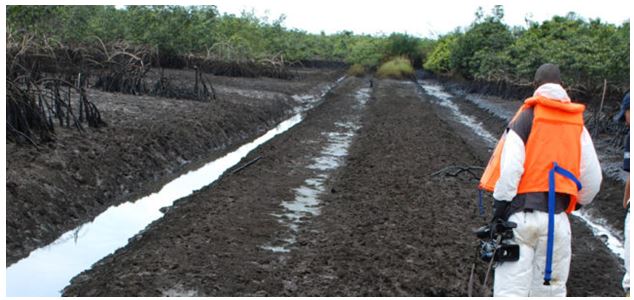
The British Deputy High Commissioner to Nigeria, Ms. Gill Atkinson says she is elated at the level of work done so far in the on-going clean of Ogoniland in line with the recommendations of the United Nations Environment Programme, UNEP Report on the Ogoni environment.
Gill stated this when she led some officials of the High Commission on a working visit to some sites in Ogoniland being remediated by the Hydrocarbon Pollution Remediation Project, HYPREP.
“It is really good to see some strong progress happening here and genuine implementation of the project which has taken time to plan, but as we can see, there is a real productive work going on now. Congratulations to them for work well done”.
She gave assurance of Britain’s support politically and also offering long term expert support for the project through the Department for International Development (DFID).
The Project Coordinator of the Hydrocarbon Pollution Remediation Project (HYPREP), Dr. Marvin Barinem Dekil while briefing the British Deputy High Commissioner on the progress of work, reiterated the commitment of the Federal Government to implementing the recommendations in the United Nations Environment Project (UNEP) Report to the letter in the Ogoni clean-up project.
He said HYPREP has carried out several engagements with various stakeholders at the community level to get their buy-in to enable them take ownership of the project. He added that the sensitization provided a platform for HYPREP to harvest ideas and suggestions from the people which have yielded positive results.
“The project is enjoying full support from the traditional rulers, youth groups and women groups in all the communities that the clean-up is currently taking place.”
He explained that the bio-remediation option adopted by HYPREP for the clean-up is a slow process but the most effective. He informed the Deputy High Commissioner that a total of 21 contractors are currently at different levels of remediation works on 21 lots across the 4 Local Government Areas of Ogoni.
The HYPREP Coordinator also said that the Project has provided huge employment opportunities for youths of Ogoni while business opportunities have also sprung up as a result of the ripple effect of activities in the communities.
He disclosed that HYPREP had gone into partnerships with the Rivers State Ministry of Water Resources to be able to provide water to more communities in Ogoniland; Rivers State Ministry of Health to carry out assessment of all medical facilities in Ogoniland; the International Institute of Tropical Agriculture (IITA) and the Stakeholder Democracy Network (SDN) to provide training to Ogoni youths under the Sustainable Livelihood Program.
The Deputy High Commissioner and her team were later led by Dr. Dekil to pay a courtesy visit to the King of Eleme Kingdom, Emere Philip Obele in his palace where she was decorated and conferred with the title of Egbere Owa Ekoo, Eko of Eleme (Big woman and friend of Eleme Kingdom).
“MTN Nigeria strongly condemns hate, prejudice and xenophobia and reiterates our unequivocal condemnation of all violence.
We seek to connect people, bring people together and provide a platform for everyone’s voice to be heard. We are against all forms of bigotry and discrimination; they should have no place in society.
Everyone has the right to a world where their rights and freedoms are respected — the right to live and earn a living, freely, safely and protected by the law.”
Nigeria might be facing another financial crisis as a result of government failing revenues, BudgIT has warned.
In an analysis of the federal government 2018 budget performance, released on September 2, 2019, the civic-tech organization points out that the government spent a sum of N7.51tn based on total revenue of N3.86tn, creating a deficit of N3.64tn. It also noted that while FG planned to earn N7.16tn in 2018, it was only able to reach N3.85tn, which represents 54% revenue performance.
According to BudgIT’s examination, the government is also spending more on debt servicing at the same time its debt profile is growing astronomically. Although it recorded a revenue of N3.86tn, FG spent N5.86tn on recurrent expenditure, meaning that N2tn was borrowed to fund recurrent expenses.
“In 2018, FG spent N2.09tn on servicing public debts, a figure that grew from N1.63tn in 2017. As it is, FG is spending so much on servicing debt while it plans to even borrow more. The government borrowed a total of N1.74tn in 2018, yet, the sources for additional deficit (borrowing) of N1.90tn was not stated in its report” says BudgIT analysis.
However, oil accounts for 51% of 2018 public revenues, while independent revenue from government agencies grew from N295bn to N395bn. CIT also had an impressive 21% growth, reaching N660bn.
We have seen the growth in oil revenue (due to higher prices and more stable production) that shot up from N1.12tn in 2017 to N1.96tn in 2018, FG’s revenue grew from N2.66tn in 2017 to N3.86tn in 2018. Worthy of note, however, is the fact that the federal government did not record any earned income from recovered assets or sales of oil and gas assets in this year.
According to the document released by the Federal Government, the revenue breakdown goes thusly: Oil Revenue: N1.96tn; Non-Oil Revenue: N1.12tn; FG Independent Revenues: N395bn; Other Financing Sources: N385bn; Special Accounts: N306bn; and Exchange Rate Differential: N79bn.
On further details, BudgIT analysis reads:
“The total recurrent expenditure shot up to N5.39tn in 2018, a N800bn growth in one year without new minimum wage implementation.
The government spent N5.86tn on recurrent expenditure and statutory transfers (78% of the total expenditure), while 22% of total expenditure was spent on capital expenditure.
A sum of N329bn was utilized for power, works and housing projects, N139bn for transport projects, N52bn for health projects, N47bn for education projects, N71bn for water resources and N135bn for agriculture projects respectively. Health and education are still poorly invested in.
FG personnel costs rose from N1.8tn in 2017 to N2.1tn in 2018, without the full implementation of the new minimum wage plan.”
The government claims that it spent N1.65tn on capital expenditure in 2018. In his reaction, Gabriel Okeowo, BudgIT Principal Lead, said that BudgIT will ask for details of these expenditures for proper verification and public accountability.
“While we wonder why other financing sources are not explained by the government, it is clear that Nigeria has a huge revenue problem and the current pace of recurrent expenditure growth (mainly salaries and debt servicing) is not sustainable,” Okeowo submits.
Dr Pius Apere (PhD/FCII)
(Actuarial Scientist and Chartered Insurer)
Introduction
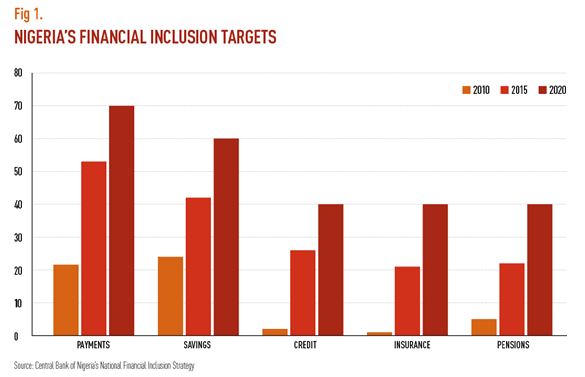
There is no universally accepted definition of financial inclusion (FI) and thus, each country has its unique way of interpreting financial inclusion depending upon the stage of its development. In Nigeria, CBN’s National Financial Inclusion Strategy (NFIS) launched in October 2012definedfinancial inclusion as being“ achieved when adult Nigerians have easy access to a broad range of formal financial services that meet their needs at affordable costs”. The overall target of NFIS is 80% financial inclusion (FI) for adult Nigerians by 2020.
For pension as a financial product, the NFIS targets 40% financial inclusion (FI) for adult Nigerians by 2020. However, the 2018 FI report by EFInA revealed that only 8% FI has been achieved inthe pension sector. Furthermore, the pension penetration rate (PPR), the ratio of pension assets to GDP, is 6.69% in 2018.
The micro-pension plan launched in March 2019 is expected to cater for the informal sector workers thereby achieving the pension industry’s strategic objective of covering 30% of the working population in Nigeria by 2024. Thus, this paper critically examines the opportunities and challenges in implementation of the regulatory Guidelines for Micro-pension Plan designed by PENCOM to achieve the industry’s objectives.
Micro-pension Plan (MPP) as Financial Inclusion (FI) Tool
Section 1.2 of micro-pension guidelines defines “micro-pension plan as an arrangement for the provision of pensions to the self-employed and persons operating in the informal sector”.
Opportunities in Micro-pension Plan (MPP)
Measures to encourage participation in MPP
Dr Pius Apere (PhD/FCII) (Actuarial Scientist and Chartered Insurer)
The following measures would encourage a high proportion of the population of informal sector to participate in MPP:
Flexibility of contributions encourages contribution of small but frequent amounts resulting in high transaction costs and low benefit payouts.“Micro-pension Contributors may make contributions daily, weekly, monthly or as may be convenient to them provided that contributions will be made in any given year”, Section 6.3 (a) of MP Guidelines.
Allowing for withdrawals before retirement creates incentives. The MP Contributor may withdraw the total balance of the contingent portion of his/her RSA including all accrued investment income thereto, making the first withdrawal 3 months after the initial contribution and subsequent withdrawals once in a week from the balance of the contingent portion of the RSA, section 6.5.2 (i) – (iii) of MP Guidelines.
Develop vesting policies suitable for retirees.“The Micro-pension (MP) Contributor shall be eligible to access pensions upon retirement and attaining the age of 50 years or on health grounds..”, section 6.5.3(i) of MP Guidelines.
The Government sponsored empowerment programmes should support and/or encourage participants to save for their old age through the Thus, PENCOM needs to liaise with Government Agencies with modalities to ensure that MPP would help maintain the long term sustainability of benefits of the programmes for the participants.
The MP contributor is eligible to convert from MPP to Mandatory Contribution if he secures employment in an organization with three (3) or more employees, section 6.6.1(a) of MP Guidelines. However, can all such eligible MP contributors and their employers afford the mandatory contribution rates?
Prevention of old age poverty
People living in the informal sector have an increased risk of old age poverty and they will need more self-support because the traditional family structures no longer prevail. MPP would therefore create the culture of long term savings to secure financial future towards the prevention of old age poverty.
Impact on nation’s economy
There is no doubt that significant participation in MPP would make the long term investment funds in the private sector available to the government for critical infrastructure development(e.g. infrastructure bonds), diversification of the economy and contributing to the country’s GDP, thereby increasing the pension penetration ratio.
Unique selling proposition (USP)
The entitlement to guaranteed minimum pension (GMP)for Micro-pension (MP) Contributors, see Section 6.5.3 (ix) of MP Guidelines, will create a unique selling proposition (i.e. marketing message) for the PFAs which is likely to increase the number of MP contributors significantly, as they would like to benefit from GMP(a social safety net to enhance decent standard of living in retirement).
On the other hand, the criteria for disqualification from GMP, see section 6.5.3 (x) of MP Guidelines, may not necessarily deter the uptake of the MPP provided the USP is marketed effectively by the PFAs. However, the non-implementation of GMP by PENCOM since the inception of CPS is a major concern likely to affect sales.
Possible Challenges of Micro-pension Plan (MPP)
Alternative ways of meetings retirement needs
One of the major challenges to MPP is that potential MP contributors may already have other ways of meeting their retirement needs:
Self-employed (e.g. women) accumulate small amounts until they buy gold, land and property that they use as collateral for loans or resell them when the need for cash arises.
The culture of reliance on children for old age support is rampant in developing country. However, this has gradually broken down because of economic hardships.
Employees in the informal sector may have other investments generating income over the long term (e.g. dividends).
Consumer education and awareness
There is possible low uptake of MPP because of its voluntary nature, current low public awareness and negative perceptions (lack of confidence) about pension products and fund management resulting in low pension benefits payable(e.g. reasons for payment of enhanced pensions).
There is an urgent need for public enlightenment and sensitization on the immense benefits of MPP by both the PFAs and PENCOM. The impact of the above on micro-pension contributors’ appetite for savings will be adversely affected by the prevailing socio-economic conditions in the country.
Thus, the marketing should focus on financial education of old age risks and the distribution model should be very efficient and trustworthy, different from the approach adopted for the mandatory CPS. There is no doubt that the 40% contingent withdrawal option is a good incentive to attract and retain MPP contributors.
Administration
The implementation of MPP requires a high capital investment in IT infrastructure that is supportive of mass registration, contribution collection and database/fund management. In fact, the time limit for IT deployment by PFAs to meet the expected increase in MP contributors in the short term may be a concern.
There isa high tendency for MP contributors to operate RSA as bank savings account due to over flexibility of the contingent withdrawal option, leading to administrative hassle (i.e. high processing time and administrative costs) for the PFAs.To avoid or reduce the administrative hassle, MP contributors should complete a monthly income and expenditure plannerat registration as a guide to how much they can conveniently safe in a month.
Reputational risks
The entitlement to guaranteed minimum pension (GMP) is likely to create a high expectation for all potential MP contributors, as they hope to benefit from GMP at retirement even if their RSA balances will be too low to qualify for GMP, as in section 6.5.3 (x) of MP Guidelines. The above will lead to a reputational risk for the entire pension industry as MP retirees will be aggrieved when their expectations are not met due to frequent use of contingent withdrawal option prior to retirement age.
Strain on pension protection fund (PPF)
There is a possibility of strain on PPF being established to fund the GMP, required by section 82 of PRA 2014, because of the significant number of retirees likely to qualify for GMP than expected due to conversion from MPP to mandatory contribution option available. This may result in additional levy being imposed on both PFAs and the regulator.
Regulation
The regulation for MPP needs to be simple with less documentation. Adequate periodic reviews and monitoring the effective implementation of the MPP will be required. The implementation of GMP will also help to bring confidence in the CPS.
Conclusion
Without MP savings for old age within the informal sector (low-income socio-economic groups)may be quickly lost due to the impact of risk of old age poverty facing them.
Prof. Umar Danbatta
Executive Vice-Chairman/CEO
Nigerian Communications Commission (NCC)
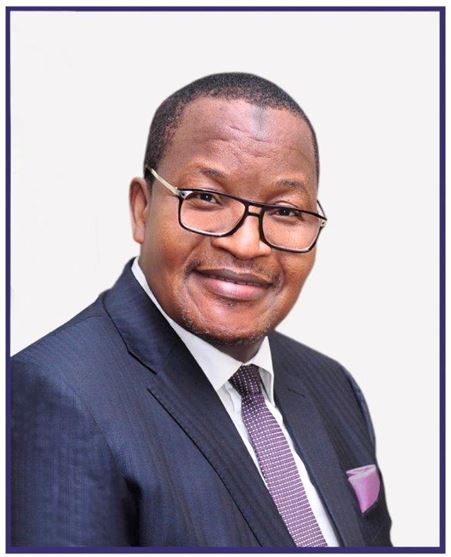
Professor Umar Danbatta, Executive Vice-Chairman, Nigerian Communications Commission (NCC) will deliver the keynote speech at the Business Journal 2nd Annual Lecture/Awards 2019 scheduled for Friday, September 20, 2019 at Sheraton Hotel, Ikeja, Lagos.
The Lecture which has DIGITAL NIGERIA: The Path to Sustainable Economic Growth as theme.
will examine the impact (opportunities & challenges) of digital disruption on various sectors of the Nigerian economy.
The event would be chaired by Mr. Tope Smart, Chairman, Nigerian Insurers Association (NIA) and also Group Managing Director/CEO, NEM Insurance Plc.
Prof. Umar Danbatta Executive Vice-Chairman Nigerian Communications Commission
The panel includes Mrs. Aituaz Kola-Oladejo, former Head of Research & Development, Nigeria Inter-Bank Settlement System (NIBSS); Aare Ganiyu Koledoye, immediate past President/Chairman of Council, National Institute of Marketing of Nigeria; Mr. Chuddy Oduenyi, Managing Director/CEO, Compact Communications Limited; Ms. Tola Adegbayi, Executive Director, Leadway Assurance Company Limited and Mr. Jide Akintunde, Publisher, Financial Nigeria.
Commenting on the 2019 Annual Lecture, Prince Cookey, Publisher/CEO of Business Journal said:
“The Business Journal 2nd Annual Lecture/Award 2019 is indeed a rare opportunity for stakeholders and professionals to critically evaluate the opportunities and challenges of digital disruption on the various segments of the Nigerian economy ranging from banking, aviation, insurance and on such professions as marketing, PR and media. It would also offer a roadmap on how Nigeria could reap bountifully from the digital transformation era to achieve sustainable economic growth.”
Explaining the objective of the Business Journal Annual Lecture Series, Cookey added:
“The Business Journal Annual Lecture Series is a platform to examine emerging issues in the Nigerian and global economy and generate workable solutions going forward. It brings stakeholders across sectors together to review the state-of-affairs in the economy through robust conversation. This year, the focus is on digital disruption in terms of opportunities and challenges it presents to various sectors and professional groups. This is the second in the lecture series and we hope to continue to provide such platform for annual conversation on factors changing the business dynamics in our country.”
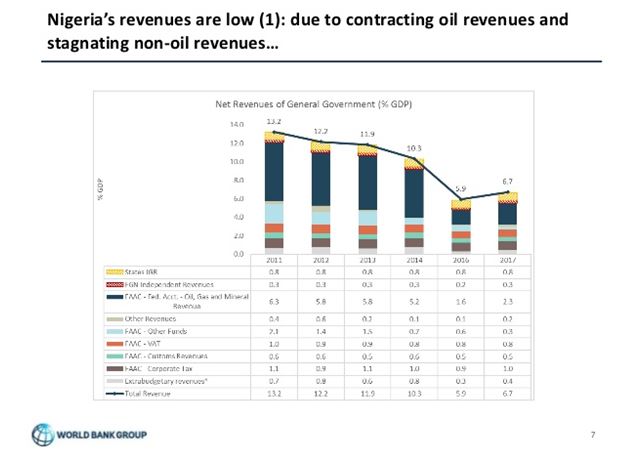
Revenue derivable in Nigeria can broadly be categorized under Oil and Non-Oil revenue. The Nigerian economy had for many years been dependent upon revenues derived from Oil and Gas hence the infamous economic meltdown led to the decline in the revenue generated from petroleum resource from the early 2000 till date.
Following the recession that ensued, alternative sources of revenue generation, particularly from the non-oil sector, became the focus of the Federal Government.
The Federal Inland Revenue Service (“FIRS”) by virtue of Section 8 (1) of the Federal Inland Revenue Service (Establishment) Act, 2007 (“FIRSEA”) provides that the FIRS shall be responsible for assessment, collection, rendering of account and enforcement of payment of taxes as may be due to the Federal Government or any of its agencies; and they shall also collect, recover and pay to the designated account, any tax charged under any provision of the FIRSEA.
Consequent upon this, the FIRS has the sole responsibility of administering Federal taxes like the Value Added Tax, Personal Income Tax as restricted under the Act, Companies Income Tax, Stamp Duties, Capital Gains Tax, Petroleum Profits Tax, and National Information Technology Development Agency Levy.
While the FIRS only has control over non-oil revenue from taxes collected, Oil revenue collection figures are subject to more external forces such as the price of oil in the international market, which itself is subject to a myriad of factors beyond the control of local fiscal policy and jurisdiction.
The Nigerian National Petroleum Corporation (NNPC) has the sole responsibility for upstream and downstream developments, and is also charged with regulating and supervising the oil industry on behalf of the Nigerian Government.
Between 2012 – 2014 oil revenue accounted for 57.28% while non-oil revenue accounted for 42.72%, whilst for the period between 2016 – 2018, oil revenue accounted for 40.65% while non-oil revenue accounted for 59.33% of collected revenues.
It is pertinent to note that the fall in price of crude oil and reduction in crude oil production were traceable to vandalisation of pipelines and the effect of the recession on the economy in the second quarter of 2016, which slowed down general economic activities in the country. However, tax revenue grew as the economy recovered in the second quarter of 2017.
The Chartered Institute of Taxation of Nigeria notes that FIRS has severally adopted unique innovative strategies and initiatives in the collection of VAT during the period (2015 – 2017) that led to approximately 40% increase over 2012 – 2014 collection figures.
The various initiatives included ICT innovations, taxpayer education, taxpayer enlightenment and evaluation, etc. CITN (” the Institute”), as the only tax professional regulatory body in Nigeria, has keenly observed that since August 2015, the FIRS target for two major non-oil taxes were increased by 52% for VAT and 45% for CIT.
This period has not only witnessed increase in absolute collection figures, but has more than ever increased Tax Payers base and has brought Tax compliance consciousness to the Nigerian populace amongst others. There has never been a time in the modern history of Nigeria that Taxation has become a serious issue for conversation.
As part of our tax review mechanism, our Institute exudes confidence that the current strategies and initiatives will improve revenue collections and meet the expectations of the Government. It is hoped that with the adoption of more tax compliance strategies, the tax base will experience further widening to include more people, sectors and businesses into the tax net for enhanced revenue generation.
The FIRS has done credibly well and needs to be commended for these great giant steps by government and all well-meaning Nigerians. The job of Tax collectors is a tough one as tax payers do loathe them.
We are convinced that we have made some progress but yet to reach our objectives as regards taxation in Nigeria.
We urge the FIRS to join hands with CITN in its avowed quest to make taxation the foremost driver of our revenue generation in Nigeria.
Issued on Friday August 30, 2019 by
Adefisayo Awogbade, FCTI Registrar/Chief Executive Chartered Institute of Taxation of Nigeria
Stanbic IBTC Holdings PLC, a member of the Standard Bank Group, has announced its mid-year audited results for the period ended June 30, 2019. The Group also announced an interim dividend of 100 kobo.
According to the Stanbic IBTC’s income statement, the Group recorded an increase in gross earnings to N117.4 billion, representing a 3% growth. The company also maintained its total operating income of N94 billion.
Profit before tax stood at N44.7 billion, while profit after tax was N36.2 billion. Other results reflect an increase in non-interest revenue which stood at N54.9 billion while net-interest income was N39.3 billion.
Stanbic IBTC’s balance sheet reflect that the Group’s total asset’s was N1,619.3 billion while the gross loans and advances was N479.7 billion, an increase in 5%, compared to last year’s figures. While customer deposit was N693.5 billion, there was an improvement in current-and-savings-accounts deposits mix which went up to 68.9%.
Speaking at the formal announcement of the results at the Stanbic IBTC Holdings PLC Headquarters, YinkaSanni, Chief Executive, Stanbic IBTC, stated that the Group’s business segments were profitable, despite the challenging business and regulatory environment.
He said: “Our financial results in the first half of 2019 reflected similar trends encountered in the first quarter. The operating environment remained muted, regulatory changes coupled with the highly competitive landscape continued to impact overall returns. Still, our diversified business model continues to set us apart. Our business segments remained profitable and resilient although at a slower pace when compared to prior year.”
Sanni disclosed that there has been a return to growth in the second quarter, mainly from the communication and oil and gas sectors. He further added that the gross non-performing loan to total loan ratio which was 3.91%, was within acceptable regulatory limits.
Speaking on other areas of the mid-year results in which the Group experienced growth, he noted that assets under custody rose to N7 trillion (representing a 42% growth) while assets under management grew by 8% to N3.5 trillion.
Sanni highlighted three areas through which Stanbic IBTC Holdings achieve growth targets as: EZ cash loan/advance, a recently launched instant credit solution; enhanced migration of customers to digital platforms and the launch of RetireWell Individual Retirement Savings Account, a retirement savings account targeted at self-employed individuals.
He shed more light on those initiatives: “To further drive credit growth, in the retail space, we launched an instant credit solution named EZ cash loan/advance, which gives access to loans in less than a minute to pre-approved customers. This, among other initiatives, will enable us achieve the targeted loan growth for the year.
“The disciplined execution of our digital strategy has seen customers increasingly adopting and transacting on our digital platforms. The number of transactions performed by customers on our digital channels was up 26% between H1 2019 and H1 2018. This translated into a year-on-year growth of 71% in electronic banking fees. Moreover, we instituted a digital academy targeted at equipping staff with digital skills at various levels while also driving collaboration with Fintech players to position us for early adoption of innovative solutions.
“Following the launch of the micro pension initiative by the government earlier in the year, we deployed the RetireWell Individual Retirement Savings Account. We have put in place strong agency network in key locations to drive growth in this area and we have made good progress in this regard.”
Following plans to meet its financial inclusion target, the Federal Government has restated its desire to capture over 36.6 million Nigerian adults, representing 36.8 per cent of the working population through the micro segment of insurance and pension sectors.
The figure includes self-employed Nigerians that are yet to officially embrace any form of financial services product.
Speaking at the 4th National Insurance and Pension Correspondents (NAIPCO) National Conference in Lagos state on Thursday, stakeholders in both sectors said majority of Nigerians in the informal sector were yet to be aware of the numerous benefits in embracing financial services products.
To ensure that every Nigerian have access to financial services, they said the Federal Government came up with micro insurance and micro pension products to penetrate the grassroots and also get to those not currently registered in the Contributory Pension Scheme [CPS] nor covered by any form of insurance.
To achieve the agenda, the Acting Director-General, National Pension Commission (PenCom), Mrs Aisha Dahir-Umar, said the commission planned extending pension coverage to 30 million contributors by 2024, thereby ensuring that 40 per cent adult Nigerians are covered under the CPS.
Dahir-Umar, who was represented by the Head, Benefit Administration Unit, PenCom, Babatunde Philips, said President Mohammadu Buhari, in March, 2019, launched the micro pension scheme to provide the informal sector with a veritable means of securing old age income.
According to her, “the commission has put in place requisite infrastructure to facilitate seamless implementation of MPP. The Enhanced Contribution Registration System (ECRS) has been deployed to facilitate seamless operations of the MPP. This system has so far aided the smooth registration of micro pension contributors.”
Speaking in the same vein, the Acting Commissioner for Insurance, Mr. Sunday Thomas, said the National Insurance Commission (NAICOM) had been doing a lot in terms of financial inclusion in the past eight years.
The acting commissioner, who was represented by the Director, Governance Enforcement and Compliance, Leo Aka, said it required collective efforts to ensure that Nigerians in the informal sector embrace financial services.
Looking at the demographic of Nigeria, Thomas said one would notice that unemployment rate in Nigeria was quiet high, adding that this was a signal that the industry needs to move fast to capture the people in the informal sector.
He said the insurance commission had issued some guidelines to ensure that those not in the formal sector embrace financial services.
Thomas added that while establishing the micro insurance guidelines, the commission ensured that the micro insurance products are very simple, easy to understand, affordable, valuable in that it should be able to address needs and remains efficient.
Following the successful award of a Super-Agent License, Y’ello Digital Financial Services, “YDFS,” a subsidiary of MTN Nigeria has opened its doors, announcing the launch of its super-agent network service named ‘MoMo Agent’at an event in Abuja on August 29, 2019.
The extensive network of MoMo Agents will immediately begin providing safe and accessible money transfer services to under-banked and unbanked people across Nigeria. With this, the company joins ongoing efforts to accelerate the Central Bank of Nigeria’s drive for financial inclusion.
Speaking at the launch, the Chief Executive Officer of MTN Nigeria, Ferdi Moolman said: “I am excited by the possibilities. We are fortunate to be part of the telecoms industry which underpins the digital economy and is critical to inclusive development and the future economic growth of this great nation. The launch of the YDFS MoMo Agent is especially significant to us. It further demonstrates our commitment to remain focused on enhancing Nigerians’ access to financial services and in so doing connect them to what is most important to them.”
The MoMo Agent Network compliments existing banking services by extending access to simple money transfer services and other financial services nationwide.
YDFS Director, Usoro Usoro noted: “Our MoMo Agent network opens up a host of opportunities, creating employment and facilitating business in rural and urban areas. Leveraging MTN’s extensive distribution network and capabilities, we are putting financial services within easy reach.
“Going forward, anyone, anywhere in Nigeria can send and receive money through a MoMo Agent in their neighbourhood. We intend to expand the range of financial services offered once the Central Bank grants approval for a Payment Banking license.”
Y’ello Digital Financial Services plan to rollout about 500,000 Agents spread across all states and the Federal Capital Territory.
Ecobank Transnational Incorporated (ETI) announces that IFC and the funds managed by the IFC Asset Management Company (AMC) have completed the sale of their c.14.1 percent stake in ETI to Arise B.V. (Arise). Accordingly, Arise has become a shareholder of reference in ETI with a c.14.1 percent stake.
Following the completion of the transaction, Paolo Martelli, Senior Advisor at IFC said: “As part of its ordinary asset portfolio rotation, IFC has divested its shareholding in ETI to Arise B.V, a highly reputable Investment House with a strong developmental mandate for Africa. IFC invested in Ecobank for more than ten years and our investment has helped to increase access to credit for entrepreneurs and SMEs in Sub Saharan African Countries (including in IDA countries) in which the bank operates, achieving the development impact we sought when we made the investment. IFC maintains its strong commitment to the development of the Sub Saharan African Region and is continuing to invest in other projects in these countries.”
Deepak Malik, Chief Executive Officer of Arise said: “In line with our core business mandate of investing in Africa’s local prosperity we are excited to have acquired c.14.1 % shareholding in Ecobank Transnational Incorporated (ETI). Arise aims to collaborate with local Financial Service Providers (FSPs) in Sub – Saharan Africa to boost economic growth through strengthening the local banking sector. This transaction with ETI will see Arise collaborate with Ecobank to advance financial inclusion on the continent”.
Ade Ayeyemi, Chief Executive Officer of ETI said: “We welcome Arise as a shareholder of ETI and believe that there would be a strong synergy in our core objectives especially in ensuring and enshrining financial inclusion and the potential for the development of our continent. We must also take the opportunity to extend our deep appreciation to IFC for its commitment to and support for Ecobank in the last 10 years. We made meaningful progress with the strong collaboration and look forward to continuing to work with IFC in other areas in the future”.
Paxful planning to expand presence in South Africa. Plans Africa-wide recruitment drive with a focus on women; The global bitcoin marketplace also becomes the first bitcoin peer-to-peer marketplace to launch an app.
While looking into expanding its presence in South Africa, Paxful is hoping to nurture as much female talent as possible. Almost 40% of Paxful’s employees are women and the company is set to further increase female appointments in its offices across the globe, located in New York City, Hong Kong, Estonia, and the Philippines.
While overall female participation in the broader crypto-economy, according to several sources including WEF is estimated at between 1% – 5% globally, Paxful believes that growing female participation in crypto will be key to the sector’s continued innovation and success. “Women are critical to the future of the crypto-economy and we are committed to fostering more diversity and supporting efforts to attract more women to make their mark in the industry” says Ray Youssef, co-founder and CEO of Paxful.
Youseff adds: “We’ve already seen the incredible contribution that women have made to the technology sector overall as founders, developers, product managers, investors and more. The crypto-economy could greatly benefit from the rich diversity of skills, perspectives, experiences and many other unique resources that women can offer. Further, in my opinion, women are decidedly better community builders, which is a very important factor in driving a peer-to-peer economy like the crypto space. At Paxful globally, many of our senior leadership roles are held by women.”
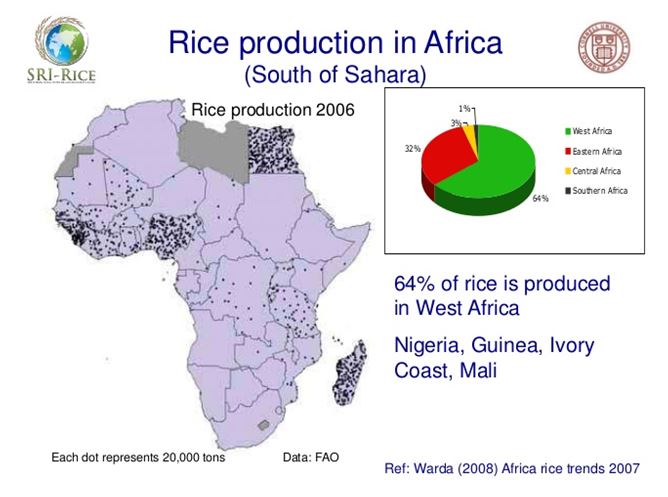
The Sasakawa Association will work with the Japan International Corporation Agency (JICA) to help double rice production to 50 million tonnes in Africa by 2030. Japanese Prime Minister Shinzo Abe made the announcement at the Sasakawa Africa Association (SAA) symposium held on Wednesday during TICAD7.
“Japanese technology can play a key role in innovation which is key to agriculture,” Prime Minister Shinzo Abe told delegates.
“We’ve always believed in the agriculture potential of Africa,” said Yohei Sasakawa, Chairman of the Nippon foundation. “We are paying more attention to income-generating activities. We want to help shift the mindset of small-holder farmers from producing-to-eat to producing-to-sell. We are hopeful that Africa’s youth can take agriculture to a new era, and that they can see a career path in agriculture,” he added.
In a keynote address, African Development Bank Group President, Akinwumi Adesina, called for urgent and concerted efforts to “end hunger”.
“In spite of all the gains made in agriculture, we are not winning the global war against hunger. We must all arise collectively and end global hunger. To do that, we must end hunger in Africa. Hunger diminishes our humanity,” Adesina urged.
According to the FAO’s 2019 State of Food and Security, the number of hungry people globally stands at a disconcerting 821 million. Africa alone accounts for 31% of the global number of hungry people – 251 million people.
L-R: Mitchell Elegbe, Founder/GMD, Interswitch Group, Joseph Hurley, Snr. Vice President, Payment Services, Discover Financial Services, Francis Gbenga Shobo, Deputy Managing Director, First Bank, Olubusola Osilaja, Divisional head, eBusiness, Access Bank, Martins Izuogbe, Divisional Head, Operations, Fidelity Bank, Diane Offereins, Executive Vice President, Payment Services, Discover, Chuma Ezirim, Group Executive, Retail & E-Business, First Bank, and Mike Ogbalu, Divisional CEO, Verve, at the Verve Global Card Launch in New York.
Verve, a leading payments technology and card business in Africa and Discover Global Network, the payments brand of Discover, today held an event to launch the Verve Global Card.
Cardholders will now have the ability to use their Verve Global Cards on the Discover Global Network which provides acceptance in more than 190 countries and territories. This will expand Verve’s existing suite of tailored payment products and solutions for its customers.
The first transaction occurred today at Swarovski in New York City. Senior executives from First Bank, Access Bank and Fidelity Bank purchased various items from Swarovski using their Verve Global Card on the Discover Global Network.
The agreement with Discover Global Network will facilitate new international and cross border transaction capabilities for Verve Global Card customers, meeting the needs of its increasingly global customer base.
L-R: Mitchell Elegbe, Founder/GMD, Interswitch Group, Joseph Hurley, Snr. Vice President, Payment Services, Discover Financial Services, Francis Gbenga Shobo, Deputy Managing Director, First Bank, Olubusola Osilaja, Divisional head, eBusiness, Access Bank, Martins Izuogbe, Divisional Head, Operations, Fidelity Bank, Diane Offereins, Executive Vice President, Payment Services, Discover, Chuma Ezirim, Group Executive, Retail & E-Business, First Bank, and Mike Ogbalu, Divisional CEO, Verve, at the Verve Global Card Launch in New York.
Holders of the new card can make payments outside Africa on the Discover Global Network which includes anywhere Discover, Diners Club International and Pulse and affiliate network cards are accepted. Verve Global Card also delivers additional benefits to cardholders including broad reward and loyalty schemes; benefits that are available both locally and internationally.
Mitchell Elegbe, Interswitch Group Managing Director, commented on the announcement: “The agreement with Discover Global Network will enable Verve to compete with other global card offerings, providing cardholders with an enhanced customer experience when transacting globally outside Nigeria. Creating a solution which facilitates international payments for our consumers will help to eliminate existing barriers and simplify the process when transacting abroad.”
“It is important to us that we are working with groups around the world to extend acceptance for their cardholders,” said Ricardo Leite, senior vice president of international markets at Discover. “At Discover, we recognize the importance of being able to use your card of choice no matter where you are traveling.”
Mike Ogbalu III, Verve International Divisional Chief Executive Officer, also commented on the announcement saying, “The launch of the Verve Global Card, provides consumers with the ability to transact globally across the US and other countries, addressing challenges that many Nigerians have experienced while travelling abroad. Our partnership with Discover Global Network will help us to optimize the overall experience of every Verve Global card holder by guaranteeing consistent and efficient payment solutions regardless of where they are in the world.”
About Verve
Verve is Interswitch Group’s innovative card scheme offering products and solutions that enable consumers to transact all over Nigeria and across international markets. As the first African card scheme to be recognized as a valid, globally accepted e-payment gateway, we have built a world-class value chain ecosystem that benefit from the services that we provide.
About Interswitch Group
Interswitch is a digital payment company of African Origin focused on providing convenience and real value for consumers. We facilitate the seamless electronic circulation of money as well as value exchange on an ongoing, real-time basis.
We began in 2002 as a transaction switching and electronic payment processing business, building and managing payment infrastructure, delivering innovative payments solutions and driving transactions across the African continent and other international markets. We provide secure, solutions and services that facilitate convenience and real value for consumers, businesses, governments and other organizations, helping to reduce costs, improve operational efficiency and drive sustainable revenue growth.
French President Emmanuel Macron and G7 leaders on Sunday approved a package totalling $251 million in support of the African Development Bank’s AFAWA initiative to support women entrepreneurs in Africa.
“I am particularly proud, as the current G7 president, that the programme we are supporting today, the AFAWA initiative, comes from an African organisation, the African Development Bank, which works with African guarantee funds and a network of African banks,” Macron stated at a press conference at the G7 Summit in Biarritz, France.
“African women are the backbone of the continent. I’m thrilled to bring their voice to the G7. AFAWA is essential for our continent,” said Beninese artist Angelique Kidjo, a guest at the press conference in her role as programme ambassador.
The Bank’s president Akinwumi Adesina applauded the “extraordinary support of all the G7 heads of state and government, which will provide incredible momentum” to the AFAWA programme.
“This is a great day for African women,” Adesina said. “Investing in women entrepreneurs in Africa is important, because women are not only Africa’s future, they are Africa’s present”.
“Currently, women operate over 40% of SMEs in Africa, but there is a financing gap of $42 billion between male and female entrepreneurs. This gap must be closed, and quickly,” he added.
Coscharis Motors, exclusive distributor of Ford vehicles in Nigeria, is pleased to announce an improvement in the warranty period of Ford vehicles*, 2017 model year and upwards, to 3 years or 100,000km for owners in Nigeria.
This new warranty is only applicable to 2017 models and upwards.
“This is another way Ford has responded to the yearnings of numerous Ford customers in Nigeria, some of whom are long distance travellers who cover more than 60,000km within the given 3 years warranty period. Warranty coverage on Ford vehicles in Nigeria used to be for a period of 3 years or 60,000km, whichever came first.” says Abiona Babarinde, General Manager, Marketing and Corporate Communications at Coscharis Motors.