Saturday, March 28, 2026
25.5 C
Lagos
Home Blog Page 225

NDIC Liquidates 425 Financial Institutions

0

As at December 31, 2019, the Nigeria Deposit Insurance Corporation (NDIC) has liquidated a total of 425 financial institutions in Nigeria.

Mr. John Abiodun, an Assistant Director in NDIC listed the financial institutions as 51 Deposit Money Banks (DMBs), 325 Micro-Finance Banks (MFBs) and 51 Primary Mortgage Banks (PMBs).

He listed challenges facing NDIC in this regard to include legal action by owners of distressed banks, recovery of debts owed the failed banks, creditor apathy and delays in revocation of the licence of distressed banks.

Interswitch Partners American Express to Broaden Acceptance of Amex Cards in Nigeria

0


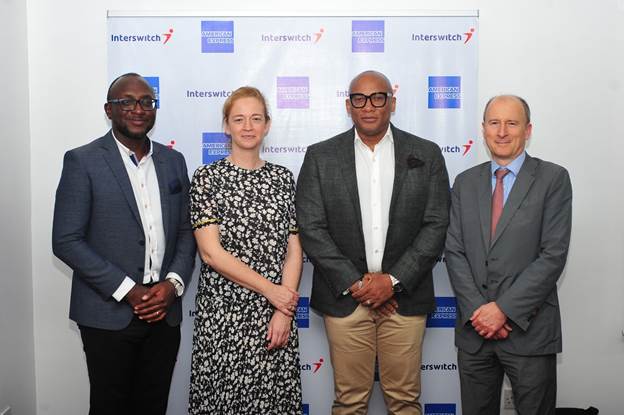
(L-R) Akeem Lawal, DCEO, Payment Processing, Interswitch; Vivi Galani, VP & GM, Business Development GNS EMEA; Mitchell Elegbe, GMD and Founder, Interswitch Group; Jonathan Curtis, Director, Business Development East & West Africa at the launch of Interswitch and AMEX partnership in Lagos recently.

Interswitch Limited, a leading technology-driven company focused on the digitisation of payments in Nigeria and other countries in Africa, and American Express (AmEx), are pleased to announce a new partnership to expand the usage and acceptance of American Express Cards across Nigeria.

The partnership with Interswitch will enable American Express Card members to transact using a wide range of merchants, who process payments through the Interswitch platform, for a range of travel, retail, hospitality and dining expenses, as well as ATM withdrawals.

The partnership will also allow Interswitch to integrate its network of merchants in Nigeria into the global American Express network.

As part of the agreement, Interswitch will assume responsibility for managing American Express merchants in Nigeria, while bringing new merchants onto its platform. Previously, American Express Card members could only use their cards at select locations across the country. This new partnership broadens that acceptance to Interswitch merchants, ATMs and websites nationwide.

Akeem Lawal, Divisional Chief Executive Officer for Payment Processing at Interswitch said: “AmEx and Interswitch are aligned in our desire to provide fast and secure payment solutions and transactions across Nigeria. With this new partnership, we are improving AmEx Card member access to a convenient and secure network, which also benefits our merchants who will gain new opportunities presented by an expanded user base. By remaining card scheme neutral, Interswitch will continue to explore innovative partnerships that will benefit consumers and retailers alike.”

Lawal also reiterated the commitment of Interswitch to reliably cater to its valued merchants, to reinforce the Company’s mantra of ‘Transaction solutions you can depend on’. He recommended new merchants join the Interswitch platform, highlighting that the addition of American Express cards can help to expand their businesses.

Vivi Galani, Vice President & General Manager, Global Network Partnerships EMEA for American Express stated that the new partnership reinforced American Express’s role as a leading global network. She said: “We are excited to be partnering with Interswitch, a well-respected pan-African financial technology company, to continue to grow our presence in Nigeria. As we partner with leading banks and financial institutions around the world, we are bringing the powerful backing of the American Express network to Card members and merchants by expanding acceptance of our Cards.”


‘Recapitalisation will Strengthen Banks in Nigeria’

0


The International Monetary Fund (IMF) says recapitalisation will strengthen the resilience and capacity of banks in Nigeria, especially in view of systemic vulnerabilities in the banking sector.

After its recent mission to Nigeria, the IMF team issued the following statement:

“Banking system vulnerabilities should continue to be addressed. The mission welcomed recent efforts to reduce legacy non-performing loans. The introduction of risk-based minimum capital requirements would also help strengthen bank resilience. Notwithstanding the significant increase in lending, concerns about shortened maturity, asset quality and conflicting monetary policy signals call for revisiting the minimum lending to deposit ratio directive.

Further tightening of monetary policy—albeit through more conventional methods—is needed to contain domestic and external pressures arising from large amounts of maturing CBN bills. The mission reiterated its advice on ending direct central bank interventions, securitizing overdrafts to introduce longer-term government instruments to mop up excess liquidity and moving towards a uniform and more flexible exchange rate. Removing restrictions on access to foreign exchange for the 42 categories of imported goods would be needed to encourage long-term investment.

On border closure, the IMF said: “Nigeria’s border closure will continue to have significant economic consequences on the country’s neighbors. It is important that all involved parties quickly resolve the issues keeping the borders closed—including to stop the smuggling of banned products.”

IMF: ‘Nigeria Growth Forecast is 2% in 2020, Outlook Challenging’

0
Flag of Nigeria. Full frame, loopable and realistic. High Definition 1920x1080 Format.


The International Monetary Fund (IMF) says its growth forecast for 2020 for Nigeria was revised down to two (2) percent to ‘reflect the impact of lower international oil prices.’

It also says that ‘Inflation is expected to pick up, while deteriorating terms of trade and capital outflows will weaken the country’s external position.’

A team from the IMF led by Amine Mati, Senior Resident Representative and Mission Chief for Nigeria, visited Lagos and Abuja from January 29-February 12, 2020.

At the end of the visit, Mati issued the following statement:

“The pace of economic recovery remains slow, as declining real incomes and weak investment continue to weigh on economic activity. Inflation—driven by higher food prices—has risen, marking the end of the disinflationary trend seen in 2019. External vulnerabilities are increasing, reflecting a higher current account deficit and declining reserves that remain highly vulnerable to capital flow reversals. The exchange rate has remained stable, helped by steady sales of foreign exchange in various windows.

“High fiscal deficits are complicating monetary policy. Weak non-oil revenue mobilization led to further deterioration of the fiscal deficit, which was mostly financed by Central Bank of Nigeria (CBN) overdrafts. The interest payments to revenue ratio remains high at about 60 percent.”

Stanbic IBTC Partners Afreximbank on N300bn Domestic Bond

0


Stanbic IBTC Capital Limited, a subsidiary of the Stanbic IBTC Holdings PLC, has established a ₦300 billion Domestic Bond Programme for the African Export-Import Bank (Afreximbank). The signing ceremony which held in Lagos marked the official kick-off of the initiative.

Afreximbank, a multi-product partner of Stanbic IBTC and the Standard Bank Group, is one of Africa’s largest Developmental Finance Institutions and a seasoned issuer in the international capital markets.

The establishment of the debt issuance programme in the Nigerian capital market by Afreximbank makes it the third supranational ever to join an elite group of Nigeria’s development partners, enabling the domestic capital market. It is vital to establish the Bond Programme in local currency, considering the strong liquidity and current low yields in the domestic market.

This initiative by Afreximbank aligns with global best practice in treasury management and innovation to stay abreast of evolving market conditions. It will aid in stimulating the expansion and development of Nigeria, through the intervention in various sectors of the Nigerian economy.

The transaction was consummated in the presence of members of the Stanbic IBTC team, members of the Afreximbank Executive management team, representatives from the Nigerian Stock Exchange and FMDQ OTC Plc, amongst others.

Stanbic IBTC Capital Limited remains fully committed to developing the Nigerian capital markets and has been at the forefront of driving financial innovation and advising clients on staying ahead of changing times.

AIG to Invest $1.3bn by 2023 on Technology, Services

0


American International Group (AIG) says it will invest $1.3 billion over the next three years in its massive AIG 200 initiative to revamp and improve technology infrastructure and services.

AIG President and COO, Peter Zaffino said work on the identified “10 core operational programs” would kick-start this year.

Zaffino said: “We have been carefully planning operational road maps for each program, with a focus on resource and investment prioritisation, as well as disciplined execution.”

AIG CEO, Brian Duperreault explained the AIG 200 concept as “a marathon and not a sprint” and “will require significant investment” over time to reduce the company’s cost structure.

Law Union, WAPIC Losses Drag Insurance Index Down by 0.8%

0


A report by Afrinvest Research says sustained losses yesterday by Law Union & Rock Insurance Plc

(-9.6%) and WAPIC Insurance Plc (-9.1%) dragged the Insurance Index lower by 0.8% at the Nigerian Stock Exchange (NSE).

Consequently, both Law Union and WAPIC led the bearish run at the market.

Afrinvest says it expects the bearish sentiment at the stock market to persist in the near term.

AIICO Holds Board Meeting on February 20, 2020

0


 Babatunde Fajemirokun

Managing Director/CEO

AIICO Insurance Plc

AIICO Insurance Plc will hold its Board Meeting on February 20, 2020 to review and approve the company’s financials for the year ended December 31, 2019 and also consider the payment of dividend to shareholders.

The notice was contained in a statement to the Nigerian Stock Exchange (NSE) issued by Mr. Donald Kanu, Company Secretary, AIICO Insurance Plc.

NIGERIA Set to Host 47th AIO Conference 2020

0

Tope Smart

Chairman

Nigerian Insurers Association

The Federal Republic of Nigeria is set to host the 47th African Insurance Organisation (AIO) in Lagos, from 31st May to 03rd June, 2020.

The Conference would be organised by the Nigerian Insurers Association (NIA), under the Chairmanship of Mr. Tope Smart, who is also the Group Managing Director/Chief Executive Officer of NEM Insurance Plc.

The organisation of the conference would be in collaboration with NCRIB – Nigerian Council of Registered Insurance Brokers, ILAN – Institute of Loss Adjusters of Nigeria and   CIIN – Chartered Insurance Institute of Nigeria.

The Theme of the Conference is: “The African Insurer in the face of Digital Disruption.”

Verve Launches ‘Live the Good Life Campaign’

0


Verve, the largest domestic card scheme in Africa, recently launched a new campaign themed “Live the good life”. The campaign reiterates the essence of the brand, affirming its versatility and the brand’s ability to enable cardholders to live the good life they so desire.

The campaign, anchored on the brand’s Television Commercials (TVCs) uses humour, wittiness, and fun. The communication is upbeat, expresses the energy of the African people and plays on humour and emotive cues to drive home the message that everyone could live the good life; the campaign also dials up the role of Verve as an enabler of the Good Life and “the rewarding way to make payment”.

To deliver this message effectively, the TVCs features Nollywood celebrities, Beverly Naya, Odunlade Adekola and Sanni Musa Danja.

Speaking on the idea behind the TVCs and the campaign, Adewole Adedeji, Group Head, Verve Marketing, stated that the campaign is in furtherance of Verve’s commitment to enable seamless payment experience for its cardholders. “We are the rewarding way to make payments and it is very important to us at Verve to ensure that however you desire to live the good life, we are there with you and for you to make it happen in an easy and memorable way.

“Verve is not only a payment card, it is also a cardless payment gateway. Verve has become a lifestyle, an embodiment of our identity. As expressed in Verve’s new communication, this is the card that truly “gets us” as Nigerians.  It is the way we pay at home and abroad, at the cinema, shopping mall, the gym, local restaurant, etc. Verve is defining the way we interact with each other and at everyday touch-points. Verve is the only card scheme in Nigeria that is domestically African and also truly international,” he added.

The new Verve brand campaign seeks to inspire conversation about what the good life means to us as a people. This implies that the good life means different things to different people.  The brand has thus used storytelling to express this in its four executions/TVC versions: Omnibus: featuring a collation of good life experiences; Music of the soul: featuring Odunlade  Adekola and Sanni Musa Danja; Amala: featuring Beverly Naya and Yoga moves: featuring Odunlade  Adekola.

Verve is the largest domestic card scheme in Africa.  With a commitment to making payment seamless, safer and rewarding, Verve has a bouquet of products which include: Verve Classic card and Verve Global card had over 19 million cards activated on Verve’s network as of March 2019 and is currently accepted in over 190 countries globally, Verve e-Cash and paycode.


About Verve

Verve is the largest domestic card scheme in Africa. Verve provides a compelling and cost-effective alternative to international card schemes, offering local currency settlement, widespread payment acceptance in Nigeria and in 190 other countries worldwide.

Verve Launches ‘Live the Good Life Campaign’

0


Verve, the largest domestic card scheme in Africa, recently launched a new campaign themed “Live the good life”. The campaign reiterates the essence of the brand, affirming its versatility and the brand’s ability to enable cardholders to live the good life they so desire.

The campaign, anchored on the brand’s Television Commercials (TVCs) uses humour, wittiness, and fun. The communication is upbeat, expresses the energy of the African people and plays on humour and emotive cues to drive home the message that everyone could live the good life; the campaign also dials up the role of Verve as an enabler of the Good Life and “the rewarding way to make payment”.

To deliver this message effectively, the TVCs features Nollywood celebrities, Beverly Naya, Odunlade Adekola and Sanni Musa Danja.

Speaking on the idea behind the TVCs and the campaign, Adewole Adedeji, Group Head, Verve Marketing, stated that the campaign is in furtherance of Verve’s commitment to enable seamless payment experience for its cardholders. “We are the rewarding way to make payments and it is very important to us at Verve to ensure that however you desire to live the good life, we are there with you and for you to make it happen in an easy and memorable way.

“Verve is not only a payment card, it is also a cardless payment gateway. Verve has become a lifestyle, an embodiment of our identity. As expressed in Verve’s new communication, this is the card that truly “gets us” as Nigerians.  It is the way we pay at home and abroad, at the cinema, shopping mall, the gym, local restaurant, etc. Verve is defining the way we interact with each other and at everyday touch-points. Verve is the only card scheme in Nigeria that is domestically African and also truly international,” he added.

The new Verve brand campaign seeks to inspire conversation about what the good life means to us as a people. This implies that the good life means different things to different people.  The brand has thus used storytelling to express this in its four executions/TVC versions: Omnibus: featuring a collation of good life experiences; Music of the soul: featuring Odunlade  Adekola and Sanni Musa Danja; Amala: featuring Beverly Naya and Yoga moves: featuring Odunlade  Adekola.

Verve is the largest domestic card scheme in Africa.  With a commitment to making payment seamless, safer and rewarding, Verve has a bouquet of products which include: Verve Classic card and Verve Global card had over 19 million cards activated on Verve’s network as of March 2019 and is currently accepted in over 190 countries globally, Verve e-Cash and paycode.

About Verve

Verve is the largest domestic card scheme in Africa. Verve provides a compelling and cost-effective alternative to international card schemes, offering local currency settlement, widespread payment acceptance in Nigeria and in 190 other countries worldwide.


‘Digitalisation is Transforming Insurance for Consumers, Suppliers’

0

Tope Smart

Chairman

Nigerian Insurers Association (NIA)

Digital transformation empowers consumers to be more informed and independent than ever before, and equips insurers with the tools to cater to customers’ current and future needs. This leads to the development of new data-driven business models, impacting the entire insurance value chain, the latest sigma “Data-driven insurance: ready for the next frontier?

While consumer-supplier touch-points will become predominantly digital, human interaction will continue to play a role: through consumer feedback and analysis, insurers will be able to identify where in-person engagement is most effective. To date, insurers in emerging markets lead the way in optimising the potential offered by digitalisation, as in many of these markets, the starting point is digital rather than analogue.

The availability of internet-enabled devices and universal connectivity has changed consumer behaviours and expectations, particularly among younger generations. Empowered with digitally-facilitated information, consumers expect rapid access to information, transparency, and more personalised purchase experiences relevant to their lifestyles.

“As a result of digitalisation, insurers now have direct connection to their customers“, says Jeffrey Bohn, Chief Research & Innovation Officer at Swiss Re Institute. “With the availability of granular data, insurers can better segment customers enabling them to develop new tailored products & services, and refine existing ones in real time. This benefits customers and insurers alike.

With the growing granularity of insights into customer behaviours, the role of insurance is evolving from indemnification of losses to a broader consultative service on risk prevention and mitigation covering both private and commercial clients’ changing needs over time.

For example, digital data sources signal changes in an individual’s life circumstances such as marriage, a new home or job. In response, insurers can direct personalised guidance to the client on predictive and prescriptive next-step risk mitigation actions.

The direct relationship with customers will evolve as new touchpoints and channels become normalised, and back-office processes like marketing/sales, underwriting and claims administration are increasingly automated.

To complement the efficiencies of digitalisation, insurers will be able to make most effective use of the insights and target human engagement to circumstances where consumers expect empathetic response, such as a health crisis or death in the family. The personal touch in sensitive areas will bring a human face to insurance.

More and more, insurers will operate in an environment where they have continuous access to different data sources including from connected objects and platform providers, and behavioural insights from consumer and environmental data. This will see the evolution of new-data driven business models taking insurers beyond their existing value chain. True leverage will come from partnerships with key data suppliers.

“Innovation will continue to transform the insurance industry“, says Thierry Léger, Chief Executive Officer of Swiss Re Life Capital. “Changing risk environments, shifts in customer attitudes and accelerating advances in technology will be the key drivers of the next few years. We will need to leverage insights from our data and partnerships to upgrade our business practices.”

To date, insurers in emerging markets lead the way in optimising the potential of access to different data sources and consumer touch-points. They are partnering with established digital platforms and ecosystems to combine features typically offered by standalone incumbent firms into a one-stop-shop service.

Insurers bring underwriting expertise, while platforms and ecosystems offer access to customers through their ability to target specific segments and mine user behaviour, as well as offer multiple touch-points to capture user attention.

Regulation will play an important role in supporting the integration of new technology and data into insurance business across different jurisdictions. In monetising the potential of digitalisation, insurers will need to manage local data protection and privacy requirements.

Longer-term, successful insurers will be those that can leverage insights from their investments and partnerships in data and analytics, and develop compelling risk protection solutions aligned with evolving regulations.


Africa, ME Banks Spent $13bn on ICT in 2019

0


Africa and Middle East’s banking and finance industry spent $12.68 billion on information and communications technology (ICT) in 2019, according to the latest insights from International Data Corporation (IDC).

The global technology research, consulting, and events firm forecasts this figure will reach $13.23 billion this year and continue rising at a compound annual growth rate of 4.7% over the coming years to reach $15.24 billion in 2023.

“The banking and finance industry is becoming increasingly reliant on emerging digital technologies to attract and retain customers,” says Nagia El Emary, IDC’s Senior Consultant for the Middle East and Africa.

“The sheer magnitude of financial technology (fintech) products and services on the market today is staggering, and financial institutions are increasingly embracing 3rd Platform technologies and innovation accelerators such as cloud, mobility, and Artificial Intelligence (AI) to increase their market penetration rates, enhance customer satisfaction through the delivery of personalised services, and streamline operations to cut costs and maximize efficiencies. As such, these technologies are becoming an inextricable part of the sector as a whole, and this is only the beginning.”

The increasing reliance on cloud across the industry has given rise to cloud marketplaces. Similar to an app store for smartphones, these cloud marketplaces provide banks with access to third-party IT systems and fintech products and services.

And like any other marketplace, cloud marketplaces have the power to negotiate better terms with fintech providers than banks alone. Consequently, IDC expects that by 2024 around 80% of banks globally will be purchasing and integrating fintech solutions from cloud marketplaces.

The use of artificial intelligence is also becoming pervasive across the BFSI industry. Indeed, IDC expects that by the end of this year, 85% of banks will have implemented AI applications to enable intelligent decisions and automated processes for corporate know-your-customer procedures, drastically reducing the time it takes to approve enrollments for new corporate accounts. IDC also forecasts that by 2023, 40% of insurers will be automating claims processes with AI technologies and conversational interfaces to improve the speed of response, efficiency, and personalization.

All these trends and more will be discussed during a dedicated banking and finance session that will take place at the upcoming IDC Middle East CIO Summit 2020. The annual event has served as a beacon of ICT thought leadership across the region since 2008, and this year’s edition will be hosted at Dubai’s Atlantis, The Palm on February 26-27 under the theme ‘The Race to Reinvent: Connecting to Leaders to Empower Digital Transformation’.

Combining informative presentations, interactive panel discussions, and dedicated focus groups, the IDC Middle East CIO Summit 2020 will provide more than 500 senior C-Suite executives from a broad range of industries with the expert guidance required to benchmark the digital transformation progress of their organizations.


Saudi Vision 2030: Driving the Economy via Insurance

0


Saudi Vision 2030 is an inclusive plan for reforming Saudi Arabia’s overall economic structure, aiming to develop various industries and sectors, and drive the economy forward. It is therefore expected that Saudi Vision 2030 will lead to opportunities in the insurance sector.
Mr. Abdullah AltowaijriDirector General, Insurance Control Department, Saudi Arabian Monetary Authority (SAMA) who will keynote the 15th Annual World Takaful & Insuretech Conference (April 6, 2020-Dubai) will discuss insurance sector growth under Saudi Vision 2030, and opportunities & challenges in the Saudi Arabian Insurance Market

In order to buffer the fluctuations on Tadawul precipitated by global and regional economic headwinds, the stock exchange is aiming for (or attracting) more listing of international insurance brokers.
Accordingly, SAMA has compelled insurance companies to review and restructure their businesses and ultimately undergo M&A. SAMA has suspended several insurance companies from issuing new insurance contracts in the past few months until they increase their capital and meet the solvency requirements.
Although insurers still prefer to raise the capital instead of undergoing mergers or acquisitions to support financial solvency, the M&A scenario provides ideal strategic solutions for insurance companies to overcome financial problems and establish strong entities that enable them to compete and make profits, especially if the two companies have comparative advantages that vary from each other.


ITU: AI 2020 Summit to Tackle Global Problems

0

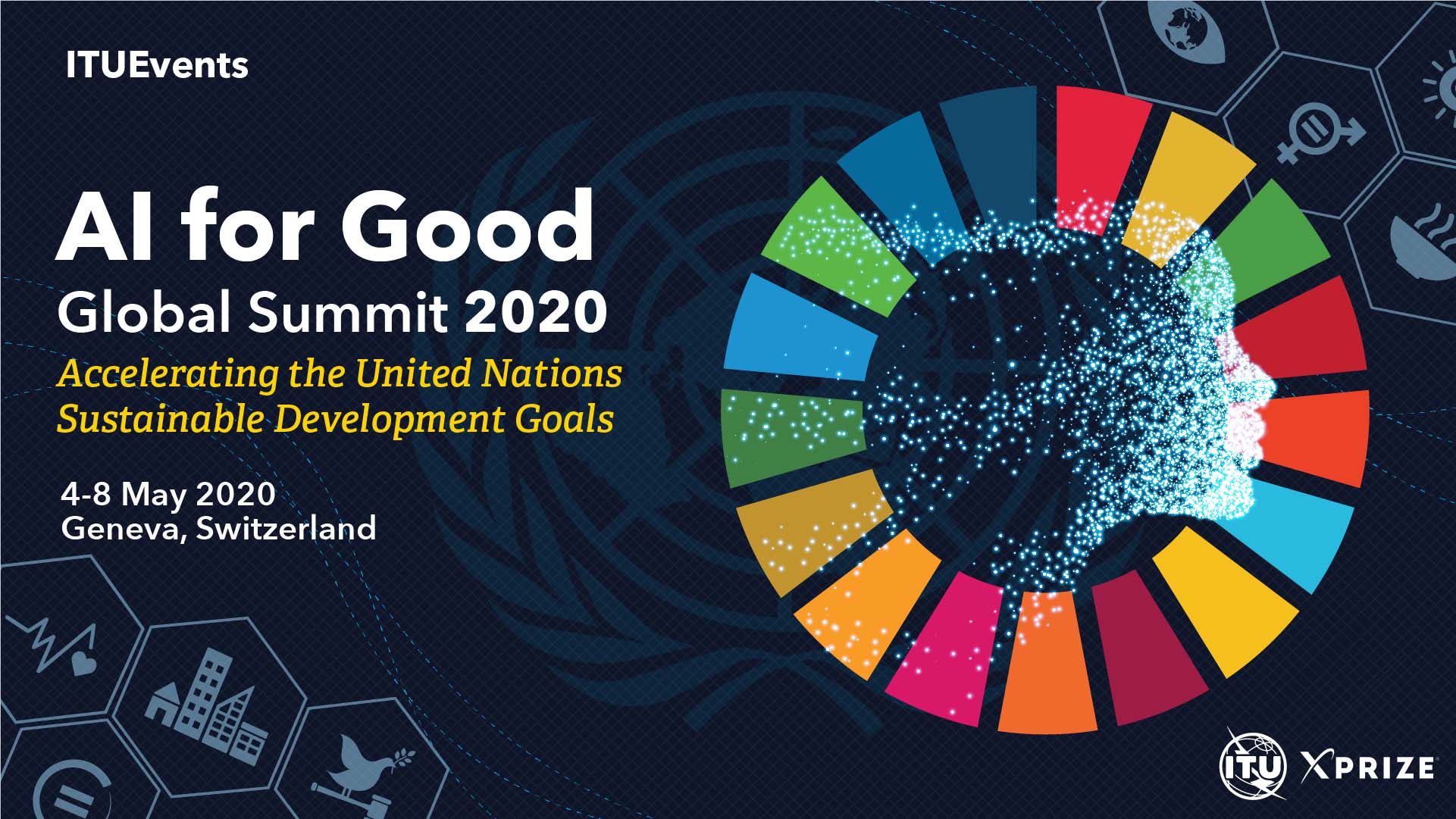
Ten years remain to achieve the United Nations Sustainable Development ​Goals (SDGs). Leaders in AI and humanitarian action will convene at the 2020 AI for Good Global Summit with strong intent to ensure that ‘AI for Good’ solutions achieve a scale matching that of the ambitions captured by the SDGs.

The AI for Good Global Summit is the leading United Nations platform for inclusive dialogue on AI. The summit identifies practical applications of AI to accelerate progress towards the SDGs and builds collaboration to assist these applications in achieving global impact.

Now in its fourth edition, the 2020 AI for Good Global Summit in Geneva, 4-8 May 2020, will continue to connect AI innovators with public and private-sector decision-makers in the interests of stimulating the discovery and delivery of ‘AI for Good’ solutions for all.

The 2020 summit is co-organized by the International Telecommunication Union (ITU) – the United Nations specialized agency for information and communication technologies (ICTs) – and the XPRIZE Foundation, in partnership with Switzerland, the Association for Computing Machinery (ACM) and a wide variety of sister United Nations agencies.

The 2017 summit marked the beginning of a global dialogue on the potential of AI to act as a force for good. The action-oriented 2018 and 2019 summits gave rise to numerous ‘AI for Good’ projects including an ‘AI for Health’ Focus Group led by ITU and the World Health Organization, an ITU Focus Group on ‘AI for Autonomous and Assisted Driving’, and an open framework for collaboration in ‘AI Commons’.

The pursuit of global impact will be the defining feature of the 2020 summit.

“Three editions of the AI for Good Global Summit have recognized the significance of the leap from AI promise to global impact,” said ITU Secretary-General Houlin Zhao. “We see renewed resolve within the AI for Good community to create the conditions necessary to make this leap and accelerate progress towards the achievement of the SDGs.”