

In its quest to foster educational development, Stanbic IBTC Trustees Limited, a subsidiary of Stanbic IBTC Holdings Plc has created the Stanbic IBTC“Education Trust” (SET) scheme.SET is a convenient and flexible investment plan with long term benefits, designed to support parents and guardians as they strive to provide quality education for their children and wards.
With the outbreak of COVID-19, the importance of preparing for unprecedented situations cannot be overemphasised. This investment plan helps parents and guardiansprepare for rainy daysto ensure their children and wards haveaccess to excellent learning.
Parents and guardians are also able to nominate SET as a beneficiary for their insurance policies as this can help cushion the effect of a parent or guardian’s death or permanent disability on the education of the child or ward.
Speaking on the rationale behind SET, Charles Omoera, Chief Executive, Stanbic IBTC Trustees Limited,stated that the organisation understands the importance of quality education on individuals and the country’s economic growth.
“We understand the major role quality education plays in laying a good foundation towards building future leaders. That is why at Stanbic IBTC, we encourage parents and guardians to properly plan and invest in educational trusts like SET to avoid occurrences that might bring their children or wards’ education to a halt,” he said.
According to him, an education trust helps smoothen the rough financial edges when adverse circumstances occur and makes the attainment of family goals and aspirations seamless to achieve. One unique benefit of SET is that payments are effected directly to the institution of learning thereby ensuring there are no diversion of funds.
He added thatparents owe their children and wards quality education to help them unlockthe unique opportunities that quality education offers.
“With smart investments, attaining a great future is more achievable for our child. Whether it is primary, secondary, tertiary or post-graduate education, parents and guardians now have an opportunity to make contributions towards funding the education of their children and wards,” he added.
Stanbic IBTC Unveils Education Trust to Support Parents

Ecobank: How Banks, Telcos, FinTechs, Regulators Can Grow Economy
The Managing Director, Ecobank Nigeria, Patrick Akinwuntan has advocated a closer collaboration between banks, Telcos, Fintechs and industry regulators to enhance savings and lending in the financial landscape.
This development according to him will generate activities in the economy and expand wealth creation. Akinwuntan who was speaking at the ‘Fintech in Nigeria: State of Play’ event based on the research and moderation of the Economist Intelligence Unit, stated that the Fintech industry is currently more active in payments as against wealth creation, which is the ultimate goal for financial inclusion.
He noted that the Central Bank of Nigeria (CBN) has been proactive in providing a regulatory environment for the collaboration of players with emphasis on customer protection which has improved customers’ trust in using digital channels.
Akinwuntan who commended the role fintechs play in facilitating payment, said “there is need to deepen their presence in lending and savings. This is why I maintained that collaboration between Fintech and banks is valuable. We are not at the stage of competition yet; we are at a situation where although we have our profitability interests, we will actually gain much more by collaborating.”
He added that “in the area of savings and lending, be it to the agriculture sector, the creative sector or the young graduates setting out to be entrepreneurs directly, the ability to save even in little bits creates a profile that would be able to attract lending that you can translate into economic value.
Specifically, the Ecobank Managing Director stated that the Fintech industry rose to the situation especially in the payment space and increasingly in lending and savings during the Covid 19 pandemic lockdown in the country.
He noted that “between March and April, the number of transactions in the payment space for Fintech grew in multiples of close to 800%. We saw significant participation of the Fintech industry in actually reaching more of the underserved in the market by reducing cost of access and making these services available all the time ether by using traditional banks or in collaboration with government agencies.”
Akinwuntan explained that Ecobank had uninterrupted banking services for its customers through its digital platforms and agency banking during the lockdown, “we had invested significantly in our digital platforms; given the nature of Ecobank as a pan African institution, the only way we could reach every household was to leverage the digital platform. We saw a marked growth in the number of digital based transactions as our customers continued in their way of life depending on these platforms. And most importantly is the use of our social media to drive advocacy with the stay safe campaign where we educated the masses on safety guidelines. We were ready for the situation giving the nature of our franchise. And with our agency banking push, people do not need to go beyond their neighborhood to do transaction.”
Also speaking, Director, Payment System Management, CBN, Musa Jimoh said the apex bank’s regulation is driven by innovation.
“We have come up with regulations that will enable all the participants to behave symbiotically. Our payment system directive will be driven by the innovation in the banks. We don’t know what will happen in the future in terms of technological development, therefore we follow innovations and prepare a ground for all the participants to work symbiotically. A new innovation is studied before we provide the needed intervention in terms policy derivative that will help everybody to participate”.
He observed that Covid 19 lockdown provided opportunity for banks to sell digital products, test their back up and business continuity processes and explore the technological services available and push for their financial services, noting that CBN is backing up these areas with relevant regulations to ensure all the participants with the payment and financial service space can actually conduct their service responsibly.
On priorities in the regulatory space especially those championing Fintech, Jimoh said the apex bank currently operates both sandbox and the open bank regulation. “the sandbox provides a regulated environment for startups who don’t have the financial strength to take an authorization from CBN to go through the entire process of licensing to test their innovation. We are working hard to show case an environment where startups can come to the regulatory sandbox to test their innovation and services without having the license yet,” adding that “Open banking regulation is a principle that will allow third party to leverage on the existing bank accounts with the banks to get information and provide services. More like democratizing financial services where a person chooses the service provider that will provide services and the kind of services provided. As a Fintech, you will be able to connect to banks to provide value added services.”
Fintech in Nigeria: State of Play: is an Economist Intelligence Unit Research which examines key trends in the fintech sector in Nigeria and assesses both industry drivers and impediments to further growth. This report combines extensive desk research and insights from in-depth interviews with industry experts and executives at regulatory bodies and Fintech firms.
Key findings of the report showed that Nigerian Fintechs are moving from payments into lending, micro-investment, wealth management, peer-to-peer transfers and insurance.
Secondly, Nigeria’s regulatory environment balances innovation and consumer protection but must continually evolve to respond to market dynamics and lastly, Nigerian Fintech needs to address shortcomings in the broader ecosystem to develop and flourish.
African Trade Exchange Highlights Growing Demand for U.S. Agricultural Products in Region

The U.S. Soybean Export Council (USSEC), the American Soybean Association’s World Initiative for Soy in Human Health (ASA/WISHH) and the U.S. Grains Council (USGC) co-hosted the African Trade Exchange to strengthen trade with the African continent and discuss partnership opportunities to build demand for U.S. Soy.
In total, nearly 300 U.S. Soy customers and soy industry representatives from more than 30 countriesregistered, and the conference’s virtual platform will allow participants to access sessions on-demand following the event.
The two-day virtual conference took place November 9-10 and showcased globally renowned and highly regarded speakers on the international grain trade, the future of the African feed industry and long-term commercial trade development.
“Africa continues to be a region that holds tremendous potential. It is a great example of where we see a future for U.S. Soy, and our goal is to expand engagement with customers and remain a consistent supplier to this region,” said Jim Sutter, USSEC CEO. “This virtual conference is more evidence of our long-term commitment to the African region in partnership with WISHH and USGC and our optimism on building long-term relationships.”
Sub-Saharan Africa is currently the sixth largest destination of U.S. feed and grain exports, with Nigeria being the largest destination within the region. According to the USDA, soybean and soybean meal feed use in the region are projected to increase by 59% and 35%, respectively, until 2029. These numbers represent an opportunity for boosted demand of U.S. Soy.
“The need for a high-quality protein product like U.S. soybean meal will be vital as this region’s population continues to grow,” said Monte Peterson, Chairman of USSEC, board member of the American Soybean Association and soybean farmer in Valley City, N.D. “Our farmers are prepared to meet this need and show how U.S. Soy delivers proven, consistent quality, reliability and value to earn its role as a trusted partner around the globe.”
Earlier this year, a new comprehensive study reinforced U.S. Soy’s reputation as a global leader in nutrient density and economic value. A meta-analysis of eighteen different studies with 1,944 samples quantified the relationship between country of origin of the bean and the chemical composition and nutritive value of the soybean meal. The analysis provesthat U.S. soybean meal not only has an advantage relative to higher sucrose levels, an excellent amino acid profile, higher digestibility, increased metabolizable energy and lower fiber content (when compared to other origins) but it also has a price advantage. All of which can be beneficial to the sub-Saharan Africa region.
“Identifying new and growing markets in sub-Saharan Africa is part of the long-term strategy to build a strong pipeline of demand for U.S. Soy. The population of this region exceeds 1 billion people, with predictions to double by 2050, making it one of the most substantial frontier markets in the entire world,” said Kevin Roepke, USSEC’s Regional Director for South Asia and sub-Saharan Africa.“Holding virtual meetings like the African Trade Exchange will help us grow and sustain these markets where there is significant future potential due to factors such as large populations, improving economic conditions and low protein consumption.”
Attendees had the opportunity to learn more about the processes of securing credit, hedging risk, formulating rations and many other facets of the international soy and feed grain supply chain. Other topics included: the state of the West African market, a U.S. Soy industry spotlight, aquafeed production, animal feed production and industrial feed compounding.
“Providing technical, economic and logistical assistance is at the heart of the U.S. Grains Council’s long-term strategy in Africa, where the United Nations estimates demand for meat, milk and eggs will quadruple by 2050s,” saidKurt Shultz, Senior Director of Global Strategies for USGC.“Events like the African Trade Exchange are also an important part of our plan to solidify and build relationships in the region.”
The conference also provided an exclusive networking opportunity for USSEC and USGC members to engage importers through the U.S. Grain and Soy Spotlight. The spotlight allowed attendees to participate in a one-hour roundtable, encouraging relationship-building and educational opportunities to learn more about these organizations committed to sub-Saharan Africa.
“Delivering to Africa’s growing protein demand was a priority for U.S. soybean growers when they founded WISHH in 2000. WISHH has 20 years of proven experience working with African entrepreneurs who join us in recognising the importance of protein for Africa’s food security, as well as the economic opportunities it provides for businesses,” said Liz Hare, Executive Director of WISHH. “This conference was testament to U.S. soybean farmer commitment to supplying high-quality protein to the African continent.”
Sessions were held over two days and noteworthy speakers included:
• Clay Hamilton, Associate Administrator and General Sales Manager for the Foreign Agricultural Service
• John Coumantaros, Chairman of Flour Mills of Nigeria
• Emily French, Managing Director at ConsiliAgra
• Andrew Moore, soybean farmer in northwest Georgia and American Soybean Association board member
• Mac Marshall, Vice President, Market Intelligence for the United Soybean Board and U.S. Soybean Export Council
Event Highlights
Clay Hamilton, Associate Administrator and General Sales Manager for the Foreign Agricultural Service, delivered a welcome address to kick off the conference, in which he spoke about the U.S. agriculture’s dedication to the African region.
“We have re-dedicated ourselves to the African continent. This is a tremendous region. It continues to grow and there is so much opportunity here. For us, there are three areas we are focused on: trade policy, technical support, and market development. There is a lot going on with Africa, and this venue is a great opportunity to learn about that and how we can make trading productive.”
In a Q&A with Kevin Roepke, USSEC’s Regional Director for South Asia and sub-Saharan Africa, John Coumantaros, Chairman of Flour Mills of Nigeria, spoke about the development and change he has seen over the past six decades in the region.
“We are celebrating our 60th anniversary not only in Nigeria as a country but Flour Mills is also 60 years old. When we began in 1960 the country was only 35 million people and today it is over 200 million and growing at around5 million people per year. So there lies great opportunity and great challenge here. There has been a large movement of people from the rural sector to the urban sector. In Nigeria it has gone from 62% rural to 48% rural. There is great movement to the urban sector which means there is great necessity for food security. Demographics and the median age have also changed. Currently, 60% of the population the median age is 18,so we have a huge young population which means the need for jobs and investment is also strong.”
Dr. Ayoola Oduntan, Managing Director of Amo Farms in Nigeria, spoke about the demand for protein in the region, during a panel on the state of the West African Market.
“There is a definite demand for protein. Now, it’s very clear that animal protein can’t do it alone. First of all, we use a lot of soybeans in the animal feed space. Soy has become the protein source of choice in animal feed. In order to meet the rising demand for animal protein, we have to consume a lot of soybeans. In addition, there is an effort to increase human consumption of soybeans to augment what is consumed through the animal proteins. We have realized that the need for us to continue to grow this space has led to a significantly higher demand for maize and soybeans.”
Matthew Clark, of FeedGuys and founding member of Genesis Feed Technologies, led a breakout session on maximizing the value of soy in animal feed protection where he discussed the Nutrient Value Calculator (NVC).
“The NVC allows you to look at the economic impact of using different types of soybean meal. Data from Dr. Gonzalo Mateos and his team in Spain sheds more light on the comparative nutrient value of soybean meals from different countries of origin. The NVC processes this data to turn the nutrition information into financial data to make the right purchasing choice. With NVC, you can buy the best soybean meal for your business and reduce your feed costs.”
Verve Rewards 1,250 Customers in ‘Good Life’ Promo

L-R; Morolake Dairo; Product Marketing Manager, Verve Digital Tokens & Verve Life, Ajagbe Oluwaranti Isaac and Gideon Nnaji during the Verve Good Life Dummy Card presentation in Lagos State
Verve International has rewarded 1,250 customers so far, after its sixth weekly draws in the on-going Verve ‘Good Life’ promo for Verve cardholders across the country.
The lucky 1,250 cardholders’ winnings amount to a total of N11.5 million out of the over N27 million in cash and airtime allotted for over 2,500 cardholders nationwide in the ongoing Verve ‘Good Life’ promo.
The Verve Good Life Promo which was initially slated to run from September 1, 2020 till November 29, 2020 has now been extended by two weeks, till December 13, 2020, to give more Verve cardholders the opportunity to participate and win cash prizes and airtime.
For the September monthly raffle draws, Verve rewarded 50 lucky cardholders with N50,000 cash prize each. Similarly, 300 Verve cardholders also emerged winners of the N10,000 cash prize in the weekly raffle draws, while another set of 300 cardholders emerged winners of airtime worth N5,000.
Among the 50 lucky cardholders that won N50, 000 cash prize in the first monthly raffle draws were Anita Iwunze, an account holder with Zenith Bank and Raheem Olatayo Ibrahim, an account holder with Wema bank from Lagos state. Iboro Henry John, an account holder with Skye Bank from Akwa-Ibom State and Idris Yakubu Galadima, an account holder with First bank from Nassarawa State also emerged winners.
Having rewarded 1,250 customers out of the over 2,500 targeted customers, there is a pool of an equal number of customers to be rewarded. Banking customers without Verve cards are advised to visit their respective banks to request for a Verve card. This in turn, will avail them the opportunity to be among the over 1,250 more to emerge winners in the ongoing promo.
Speaking during the draws, Cherry Eromosele, the Group Chief Marketing and Communications Officer, Interswitch Group, remarked that rewarding and making Verve’s esteemed cardholders happy is underpinned by the company’s core values.
She said:“We pride ourselves in empowering our loyal cardholders to enable them achieve their dreams. We understand these are indeed challenging times across the globe. For this reason, the Verve Good Life Promo is targeted at enhancing the living standards of our loyal cardholders and we will continue to champion this cause.
“In addition to the invaluable experience we provide our numerous cardholders, we will continue to provide innovative, tailor-fit products and services to our loyal cardholders”, she added.
She further pointed out that Verve is changing the narrative of how to reward loyalty through the Verve Good Life Promo. She opined that Verve has been able to deepen brand love and consumer loyalty by putting its cardholder’s satisfaction at the nexus of its operations as well as providing seamless, secure, and fast payment solutions.
The Verve ‘Good Life’ Promo was launched on September 1, 2020 and will run till December 13, 2020. The promo seeks to enable Verve’s loyal cardholders to live the good life, whatever the ‘good life’ means to them.
Cardholders are expected to use their Verve cards frequently to stand a chance to win. Specifically, to qualify for the weekly categories, new and existing cardholders are expected to transact with their Verve cards for as many as three times in a week.
For the monthly wins, cardholders will have to use their cards 12 times to do any of these: transfer funds, pay bills, recharge airtime, withdraw cash, etc.
For the Grand prize of N1 million, cardholders will have to use their cards 36 times within the next five weeks, across PoS terminals, ATMs, Web, and agent banking centres.
‘Diabetes is not a Death Sentence’- Ecobank Day 2020 Medical Experts, Patients
Medical experts and patients living with Diabetes have submitted that the dreaded disease is not after all a death sentence but with proper management, those affected could survive and live long.
They expressed this view at a webinar to commemorate this year Ecobank Day. Ecobank Day is a special day set aside every year by the Ecobank Group, for management and staff of the bank to embark on Corporate Social Responsibility (CSR) activities that impact its immediate environment and people. This year’s theme is ‘Take Action Against Diabetes’.
Dr. Mazeedat Erinosho, Public Health Practitioner and Director, Saving One Million Lives Programme, Ministry of Health, Lagos in her presentation titled “Diabetes mellitus and living healthy” opined that Diabetes can be properly managed through healthy living, regular exercise, appropriate medication, eating healthy and keeping blood sugar levels as close to normal, among others.
She defined Diabetes as a metabolic disease that causes high blood sugar, noting that untreated high blood sugar from diabetes can damage nerves, eyes, kidneys and other organs. She listed common symptoms to include frequent urination, increased thirst and increased appetite, adding that if left untreated, diabetes can cause cardiovascular disease, stroke, chronic kidney disease, foot ulcers, damage to the nerves, damage to the eyes and cognitive impairment and death.
Speaking in the same light, Dr. Mosunmoluwa Obafemi Adio, Consultant Endocrinologist, Presidential Emergency Plan for AIDS Relief (PEPFAR) at University College Hospital, Ibadan, listed different types of Diabetes and some common symptoms such as frequent urination, excessive thirst, weight loss, extreme hunger, vision changes, numbness in the hands or feet, feeling very tired most of the time and dry skin.
Dr. Adio who is currently a Consultant Endocrinologist with Evercare Medical hospital made a case for regular medical check-up particularly sugar level, eating fruits and vegetables and managing weight loss.
In his testimonial, Alhaji Abdulwahab Dauda, Chairman, Diabetes Association of Nigeria, Lagos Chapter and the South West Region, who has managed Diabetes for 30 years, commended Ecobank for organising the awareness programme, stressing that the life threatening disease is not a death sentence, as it could be managed.
The 74 year-old Diabetes patient linked his survival to discipline and strict adherence to medical prescriptions.
“For those of us that are diabetic, the first fact you should know is that it is not a death sentence. Accept the fact and tackle it. Follow doctor’s medications religiously; do not skip your recommended drugs and meals; take your medical kits along with you at all times. I am a living witness that you can survive the disease.”
Also sharing his experience, United States based, Edwin Velarde canvassed for regular exercise, strict adherence to medication and regular check-up.
Building a Legacy – A Lot on My Table
By Nonso Okpala
“You have less than 100 years to make a mark.”
Three years ago, I started searching for a table based on two basic considerations.
First, I wanted a functional table to get work done-one that wasn’t too high or too low but would lend support to my posture and allow me work for long hours easily. The second consideration was more complicated but can be summarized in a single word — Legacy.
Legacy means what you inherited from the people before you — your dad, mum, relatives or loved ones. The flip side, seldom contemplated, is that legacy also means what you bequeath to people after you — your children, wife, siblings etc.
When I started searching for a table, I had three people work individually on the task. I was certain that they would deliver but unfortunately, none of the options made the cut. So my search continued until last Friday.
Over three years later, and I finally found the table for me-a table with such immense beauty.
For the purpose of context, let me create a clearer picture for you. Post my midlife crisis (check my medium article re “Midlife Crisis”), I came up with 21 core rules to mitigate the effect of midlife crisis. In this article, I will dwell on one of those rules, which is the “legacy script”.
Legacy is a consolation prize for our inability to achieve immortality — if you can’t live forever, try to be remembered forever or at least for some time after you leave (die).
Following this core rule, I started searching for ways to build my legacy. Before I turned 40, it was all about making money. I never really thought about what I would do with all that cash when I finally made it but I just knew that I wanted to be insanely successful. Some people equate this to having insane amounts of cash but I think otherwise. Very few men have been immortalized by purely amassing wealth. We see instances where after men like this die, their wealth is scavenged and they quickly become forgotten once that well runs dry.
But a legacy built on more than just cash can endure. It is easy for exceptionally talented folks to build a legacy on their bodies of work but men of capital and wealth don’t easily achieve that status, hence my quagmire. It meant that even if I succeeded in making enormous wealth, there was no guarantee that I’d also have a legacy that endures.
The legacy script is the definition or outline of what you want to leave behind or how you want to be remembered when you are gone. It is more or less what becomes your brand, post existence. I dare say that life is an art form and like artists, we all have the opportunity to paint the picture of our lives, our legacy, and the first step to achieving that is articulating your legacy script and ensuring the following:
1. It is relevant to and serves humanity — Functional
2. It is acceptable to most — Acceptance
3. And can be built into the consciousness of humanity — Consciousness
Let’s evaluate one of the greats with a remarkable legacy, Nelson Mandela. He served humanity by advancing the course of freedom and equality (Functional). The concept was acceptable to most, though progressively in the course of the struggle (Acceptance). And the entire story of his life has been summarized in a powerful way makes his brand endure (Consciousness). In the moment of victory, he was gracious enough (or wise enough) to show compassion and opt for reconciliation, not retaliation.
Another person with a powerful legacy is our very own Fela. He had the benefit of making remarkable music — of course as a result of talent and extraordinary hard work, which grabs the consciousness of humanity. But he applied his gift and resultant attention to advancing the course of humanity and freedom for his people.
The last component of this legacy script, “consciousness” requires a bit more explanation. You may achieve a great deal, but if it doesn’t grab the consciousness of humanity, it blunts the impact of your legacy. The significance of your legacy is reduced, because the lack of consciousness prevents the legacy from contributing to moulding and influencing society’s ideas/ideals and truly inspiring the next generation.
For musicians and truly talented individuals, the task of legacy consciousness is easy. Burna Boy, who in my view became the biggest African Artist ever, has grabbed the consciousness of humanity and the question now is what he does with it. On the other hand, mere mortals like us, regardless how much you are worth, you have to first check the “functional” and “acceptance” boxes and then push for consciousness. This is direct opposite for a talented individual, e.g. a musician.
The art of building consciousness can be mostly achieved through the following:
1. By telling compelling stories. Authentic stories based on “functionality” and “acceptance”
2. Creating symbolisms through visual arts and acceptable mediums
3. Music and all forms of entertainment that can hold and project your message
The list above is not exhaustive, but the ideas border on symbolism and the Arts, which brings me back to my story of the “Table”. I aspire to build and support companies that will collectively form the basis of Nigeria’s economic emergence. I am positive that with VFD Group Plc and its associated subsidiaries, we will achieve this. It is a compelling story thus far and it will be way more compelling as we go along but that in itself doesn’t grab the consciousness of humanity.
“Being a mere billionaire is boring and holds no consciousness; you have to combine it with something more humane, something more impactful on humanity and inspires generations.”
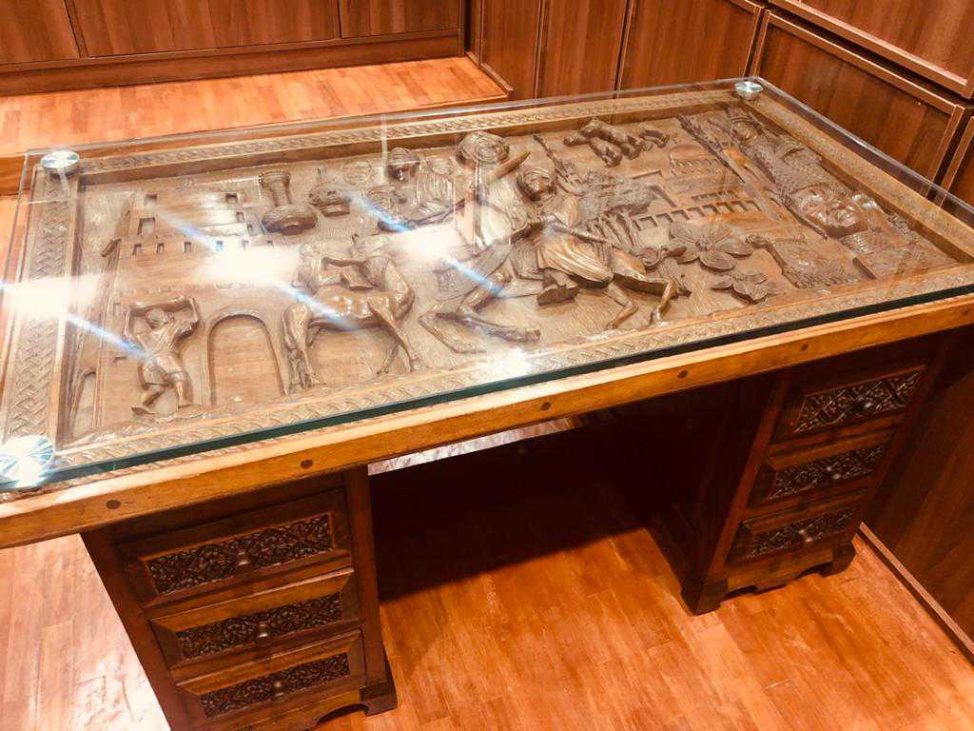
What this quote is basically saying is, you have to lace your actions with symbolism to truly make it a legacy. The table is one of such attempts. The table is functional, acceptable as a means of getting the job done but the artistic dimension is what loads it with the right type of message to, alongside other things, grab the consciousness of humanity with the aim of inspiring.
It is not just an ordinary table; it is an assemblage of works by various artists that was fused to form a functional table. The core of it, the surface, was crafted in 1987 by Owie S. E. and it depicts the culture and history of Nigeria and its various ethnic groups-a stunning beauty but now a symbol of a possible Nigerian economic emergence.
The consciousness of legacy is deeply rooted in arts thus any society that doesn’t reverence artists, living or dead, loses the opportunity of projecting their individual and collective legacy. This a story for another day as I have been told that my last article was “way too long”.
The concept of a “legacy script” is based on the fact that if we all, individually and collectively, strive for a higher purpose that serves humanity, the world, our continent, countries and immediate communities will be better off.
What is your legacy script?
Nonso Okpala is the GMD/CEO of VFD Group (Viadaz FD Limited), a financial services holdings company in Nigeria with interests in foreign exchange, debt investment, international remittance, real estate and payment businesses.
‘AIICO Will Meet 1st Phase Recapitalisation Deadline’
AIICO Insurance Plc has restated its commitment in ensuring a deliberate and sustained collaborative partnership with members of the National Association of Insurance and Pension Correspondents (NAIPCO) to actualise the company’s objectives, ensure the industry’s growth and contribute to the nation’s economy.
The Managing Director and Chief Executive Officer of the firm, Mr Babatunde Fajemirokun, made the disclosure while giving opening remarks to flag-off a one-day training workshop organised by NAIPCO for its members in Lagos on Tuesday.
The AIICO MD/CEO who was represented at the occasion by the firm’s Head, Strategic Marketing and Corporate Communication Department, Mr. Segun Olalandu, commended the efforts of NAIPCO in creating awareness and educating the public on the benefits and advantages of insurance as a risk mitigating mechanism and a tool for poverty alleviation and wealth creation.
While stressing the prime place of the Media in nation building, he described NAIPCO as a “very important association and strategic” for the nation’s insurance industry.
Assuring NAIPCO of his company’s continued supports, Mr. Fajemirokun implored the journalists to redouble their efforts and remain committed to their professional ethics and conduct in order to take the industry to the next level.
On recapitalisation, he said the company is doing everything possible to meet the National Insurance Commission’s deadline of December 31, 2020 set for all insurance and reinsurance companies in the country to meet the first phase of the two-phase segmented recapitalisation plan.
Commenting on the firm’s 2020 third quarter operating results, Mr. Fajemirokun said it achieved a 27 per cent year-on-year growth in gross premiums written from N37.0 billion in Q3 2019 to N47.2 billion in Q3 2020, noting that the global and local macroeconomic headwinds have continued to test the resilience of the firm’s business, and operating models as well as its business continuity plans and the strength of its relationships with customers and partners.
According to him, “the increased contribution to profits from our general insurance and our asset management businesses highlight the strengths as a group. Our general business continues to enjoy the confidence and support of our customers, despite the effects of the pandemic. Our asset management business, AIICO Capital, continues to grow its client base while investing judiciously on behalf of its clients. Overall, profit before taxes reduced seven per cent year-on-year, from N5.0 billion in Q3 2019 to N4.7 billion in Q3 2020.
“Profit-after-taxes increased 17 per cent year-on-year to N5.2 billion for the interim period ended September 30, 2020 from N4.5 billion in the corresponding period in 2019,” he said. The total assets, he said increased 55 per cent year-to-date to N245.8 billion from N159.5 billion in December 2019 driven by an increase in financial assets, including cash and cash equivalents,” he added.
He noted that the financial assets increased because of the decline in investment yields and judicious investment of funds received for policies sold, maintaining that total liabilities increased 63 per cent to N212.6 billion from N130.6 billion in December 2019 driven mainly by increases in insurance contract liabilities (from the decline in yields and reserving for new businesses) and fixed income liabilities (3rd party funds under management) in our asset management business.
Total equity, he said grew 15 per cent year-to-date to N33.2 billion from N28.9 billion in December 2019.
“Our 3rd quarter results demonstrate that our business remains steady, despite the changing client preferences and risk exposures that have accompanied the COVID-19 pandemic. We have recorded strong top-line growth year-on-year as well as improved contribution from subsidiaries in our Group, especially our asset management business.
“In our core insurance business, we will continue to offer innovative products that help our customers create and protect their wealth while leveraging the latest technology to meet our clients where they are. In addition, strong asset-liability management remains a pillar of our operating model. As a diversified financial services group, we will continue to ensure that businesses across our Group offer attractive products that enable us create value for all stakeholders,” he said.
Experts to Deliberate on Protein-centered Nutrition Policy for Nigeria

Barring any unforeseen development, seasoned public health and nutrition professionals will meet on Thursday, November 26, 2020, to deliberate on the urgency of a protein-centred national nutrition policy for Nigeria. The forum is the Protein Challenge Webinar Series 6 via zoom with the theme – The Case for a Protein-Centered National Nutrition Policy.
The session seeks to draw attention to the urgent need for increased attention to the place of protein in the growing, but fragmented, efforts to combat and curtail the rising incidence of protein deficiency and general malnutritionacross the country.
The keynote address for the webinar will be delivered by Dr. Adepeju Adeniran, a clinical and public health physician. She is also the Co-founder and National Chair of the Nigerian Chapter of Women in Global Health, a multi-national movement of women in health care, devoted to global health improvement.
Other speakers on the panel include: Dr Omadeli Boyo, a public health practitioner and Medical Director, Pinecrest Specialist Hospital and Dr. Beatrice Oganah-Ikujenyo, Nutritionist and Chief Lecturer in the Department of Home Economics, Adeniran Ogunsanya College of Education, Oto/Ijanikin, Lagos.
The session will be moderated by Mrs. Louisa Olaniyi, a multiple award-winning Broadcast Journalist, Tech enthusiast, TV host, and Head of Presentation Unit at RAVETV.
Protein Challenge is the tag of the on-going Nigeria Protein Awareness Campaign, a Protein Pull media campaign that seeks to create awareness about the prevalence, status and impact of protein deficiency in Nigeria.
In Nigeria, protein deficiency poses not only a major health problem, but also an economic and a social burden. It is the most important risk factor for illness and death, with millions of pregnant women and young children particularly affected.The goal of the campaign is to encourage and indeed help Nigerians from all walks of life to embrace regular consumption of proteins.
The campaign aligns with the Sustainable Development Goal (SDG) 2 – Zero Hunger – which seeks to end hunger, achieve food security and improved nutrition and promote sustainable agriculture.
Crown Flour Mill Reiterates Commitment to Food Security on World Whole Grain Day

As the global community celebrates the World Whole Grain Day on November 19, Crown Flour Mill Ltd has reiterated its unrelenting commitment to national food security through consistent focus on food safety, innovation and cost efficiencies especially along its wheat-milling value-chain.
The company which produces a wide range of quality flour, pasta noodles, biscuits, semolina and confectionery from wheat has made a major investment in milling plants and technical innovations across its subsidiaries. Crown Flour Mill’s product range comprises Mama Gold Flour, Crown Premium Pasta, Crown Pasta, Supreme Semolina and Crown Tuwovita.
Ashish Pande, Managing Director, Crown Flour Mill Ltd said that the companyis focused on meeting the Nigerian consumers’ yearning for consistent access to quality, healthy and affordable food staples. He said: “Based on a deep understanding of the Nigerian consumers, our food brands are produced under the highest safety standards; and we have developed a robust distribution and redistribution network that are tailored to the market landscape.These efforts ensure that our portfolio of wheat-based products such as flour used atbakeries and confectioneries; and packaged pasta and noodle brands which are consumed frequently in Nigerian households, are made available across retail shops andmarketplaces across Nigeria.”
The Crown Flour Mill Limited Managing Director further reiterated the company’s commitment to quality food standards and production models that add nutritional value to the consumers and economic benefits to the nation.
Pande further stated: “With our major investments in modern milling plants,we have been able to develop an efficient milling process. The investment in our production process is a further demonstration of our focus on food safety, consumer nutritional health and cost efficiencies.”
Ecobank Nigeria Holds Awareness Webinar on Diabetes
Ecobank Nigeria has concluded plans to step up awareness on non-communicable diseases particularly diabetes to commemorate this year Ecobank Day.
Ecobank Day is a special day set aside every year by Ecobank Group, for management and staff of the bank to embark on Corporate Social Responsibility (CSR) activities that impact its immediate environment and people.
This year’s theme is ‘Take Action Against Diabetes’ It is scheduled for Wednesday 18th November at 11am Join live event .
Two specialists on Diabetes, Dr. Mosunmoluwa Obafemi Adio, Consultant Endocrinologist, Presidential Emergency Plan for AIDS Relief (PEPFAR) at UCH, Ibadan, & currently a Consultant Endocrinologist With Evercare and Dr. Mazeedat Erinosho, Public Health Practitioner & Director, Saving One Million Lives Programme, Ministry of Health, Lagos State, who will speak on how best to maintain a healthy lifestyle as a Diabetic patient and new breaks on the dreaded disease.
Also, a survivor will share his life experience. 2020 Ecobank Day events are being held virtually, to ensure safety from Covid-19.
Patrick Akinwuntan, Managing Director, Ecobank Nigeria, said: “At Ecobank we take great pride in our commitment to ‘giving back’ to our communities and since 2013 we have held our annual Ecobank Day as our flagship event to do so. It is a day on which Ecobankers voluntarily give up their free time to help deserving causes and is also a focus for the Bank to make donations. Each year, a specific cause is supported, and these include education, maternal healthcare, safe water supplies, malaria prevention and cancer screening.”
He noted that the pan African bank last year decided to focus on raising awareness and helping to prevent Non-Communicable Diseases as a three-year campaign with this year focusing on Diabetes.
Biyi Olagbami, Chief Risk Officer, Ecobank Nigeria, said: “We all need to do everything that we can to raise awareness to help prevent Diabetes and the other NCDs in Nigeria. Regrettably, most people don’t know that they have it. It can cause all sorts of complications, including kidney damage, sight loss, amputation of feet and even premature death.”
Olagbami, who also doubles as the lead CSR champion for Ecobank Nigeria, disclosed that planned activities aimed at raising awareness about Diabetes, include informational webinars and controlled screening in strict adherence to measures outlined by the government to combat the spread of Covid-19.
He added that donations will also be extended to credible organisations for training healthcare professional, equipping care structures, field monitoring and evaluation, advocacy.
African Energy Chamber Forecasts Increased Gas Monetisation in 2021 Outlook

In its latest Africa Energy Outlook 2021 released earlier this week, the African Energy Chamber forecasts increased gas monetization across the continent on the back of decarbonisation and industrialisation drive.
The African Energy Chamber has notably found that while not insulated to COVID-19, gas markets have been less exposed than that of oil to the shocks of 2020, notably because the transportation industry has been the most affected by the COVID-19 pandemic and is more oil-demanding than gas. The global gas market was nevertheless already facing a glut of LNG before COVID-19, resulting in even more depressed prices as the pandemic’s impact on demand started to manifest in the spring of 2020. As a result, key reference prices in Europe, North America and Asia all have experienced negative pressure since the start of 2020.
Looking forward, the African Energy Chamber’s expectations for the global gas market fundamentals are to remain loose through 2021 on the back of weak COVID-19 induced demand and continued high supply of LNG before prices tighten significantly as LNG demand growth will outpace liquefaction capacity due to more delays in project sanctioning.
The forecast notably points to a tight LNG balance between 2023 and 2025, and along with it, a price spike. Following this period, there is a downside risk in prices for 2026 and 2027 driven by the potential of seeing a new wave of sanctioning activity during 2021 and 2022. Such future projects are expected to include ExxonMobil and Eni’s 15.2 mtpa Rovuma LNG terminal in Mozambique and expansions of BP and Kosmos Energy’s Greater Tortue Ahmeyim (GTA) FLNG project in Mauritania and Senegal.
Given the gas glut on global markets with corresponding depressed prices, the Chamber notes that there may now be an opportunity to stimulate to more domestic gas consumption in Africa. Expanding infrastructure to displace diesel, increased use of gas in the power mix and gas for industrial purposes are all initiatives that would benefit from the current low cost of gas. Thankfully, African officials and regulators have increasingly seized the importance of natural gas and pushing for its adoption across industries, especially in key hydrocarbons market in West, Central and Southern Africa. Nigeria for instance has declared 2020 the Year of Gas and adopted a new gas transportation network code this year, and Senegal embarked this year on a gas pipeline network project to construct a 155km national gas grid.
Monetizing gas makes even more sense in Africa given the continent’s very high flaring intensities. While Africa benefits from conventional and easy to extract hydrocarbons, the inability to prevent gas flaring nevertheless catapults the continent to the overall least carbon efficient continent at about 31 kilogram CO2 emitted per barrel of oil equivalent produced according to the Outlook.
While 2018 is currently the last year with high quality data, projections towards 2025 nevertheless points to Africa overall not improving its position with emissions remaining above 30 kilograms CO2 per barrel of oil equivalent. Only stronger monetization of gas at home could justify using Africa’s gas reserves for industrial and power generation purposes instead of burning and wasting them. In doing so, Africa would not only reduce its carbon intensity, but also become more attractive to global investors seeking to allocate capital to the least carbon intensive projects possible.
The Africa Energy Outlook 2021 gives a special focus on all such gas markets trends within the continent, providing stakeholders with unique insights into production and consumption forecasts.
Orange Strengthens Connectivity Leadership in Africa with Djoliba Network
At the AfricaTech Festival (international trade fair, Orange and its subsidiaries announced the commissioning and commercial launch of Djoliba, the first pan-African backbone. This infrastructure is based on a terrestrial fibre optic network, coupled with undersea cables, offering secure connectivity abroad from West Africa. This investment aims to support the digital ecosystem and meets the growing needs for connectivity in the region.
Djoliba is the first unified superfast broadband network that provides seamless connectivity, with better availability thanks to network redundancy and security, and excellent quality of service. Operated and maintained from Dakar for greater efficiency, responsiveness and proximity, it has a dedicated supervision centre.
This new backbone covers 8 countries: Burkina Faso, Côte d’Ivoire, Ghana, Guinea, Liberia, Mali, Nigeria and Senegal. Natively interconnected with the domestic networks within the countries, this broad coverage will generalise access to connectivity for operators and companies.
Until now, telecommunications networks in West Africa were built inside each country, up to its borders: there was no cross-border network. To provide a service between two capitals, operators had to integrate the offers of several providers and join several different networks which were interconnected at the borders. This new network is a true innovation that simplifies the interconnection processes between countries.
Djoliba is the first network that offers complete security in West Africa with more than 10,000 km of terrestrial fibre optic network, coupled with 10,000 km of undersea cables, superfast broadband provision (up to 100 Gbit/s) and a 99.99% availability rate. This network covers 16 points of presence with a grid of nearly 155 technical sites, and connects 300 points of presence in Europe, America and Asia.
It is based on Orange’s Tier 1 network and therefore provides a seamless connection to the Group’s international networks.
By using the Djoliba network’s superfast broadband transmission, the network’s new customers will be able to access the Group’s platforms and benefit from the whole range of offers marketed by Orange in Africa: IP transit, mobile service platforms, hosting in Orange datacentres in Africa, VPN, etc.
Thanks to Djoliba, Orange meets the needs of companies and telecoms players in West Africa, to serve a potential 330 million inhabitants. This network is a key factor of future internet growth in West Africa, because it will promote fair access to digital technology between West African countries and help stimulate the countries’ digital economy.
Alioune Ndiaye, CEO Orange Middle East and Africa: “Orange is actively contributing to the development of undersea and terrestrial infrastructure which enable the African continent’s digital transformation, by investing 1 billion euros each year. With Djoliba, local populations will be able to access healthcare or educational services more easily, as well as the applications offered by cloud computing. Development of access to digital technology is a key challenge for Africa and I would like to congratulate our teams in all the countries for their remarkable work that has enabled the Djoliba project to come to fruition.”
Jérôme Barré, CEO Orange Wholesale & International Networks: “With Djoliba, Orange is once again confirming its expertise and leadership in the deployment and operation of international terrestrial and undersea networks. Consequently, all the operators, companies and institutions in West Africa now benefit from seamless connectivity that is open to the whole world, thanks to a single customer point of contact and unparalleled service availability. Djoliba is the fruit of a group effort, and thanks to a fully mobilised cross-functional team, we have been able to meet this sizeable challenge. This human adventure illustrates the Orange Group’s strength, both due to its local presence through its subsidiaries and its capacity to build shared international assets.”
Orange is currently present in 18 African countries, and has more than 120 million customers. The Group is continuing its investment on the continent to offer reliable, secure and high-quality connectivity, and contribute to the populations’ digital inclusion.
P+ Measurement Services, PR Intelligence Firm Celebrates 5th Anniversary

P+ Measurement Services, Nigeria’s foremost Independent Public Relations (PR) measurement and evaluation agency, marks its fifth-year of successful operation in Nigeria with qualitative offerings that surpasses clients’ expectation.
The leading agency with expertise in Media Monitoring, PR Measurement and Audit, CEO Media Performance and Advisory, has offered services to over 45 brands and 15 Public Relations agencies in its five years of operation in the country.
As the only AMEC Member in Nigeria, P+ has strong partnerships with the Nigerian Institute of Public Relations (NIPR) and Reelforge Media Monitoring; the biggest media monitoring agency in the East African region covering more than five countries.
Speaking on its business portfolio, the Chief Insights Officer, Philip Odiakose, said every client media data has a story to tell and it depends on how strategic you are in flogging the data to yield meaningful results.
He avowed that P+ services with state-of-the-art technology and highly skilled media analysts has greatly enhanced clients’ businesses to immeasurable heights, exceeding their expectations, thus making P+ unique in the industry it operates.
“Our Measurement and Evaluation report is in-depth, robust and flexible to accommodate valid metrics that brands desire to see reflected in their reports, and it is also based on the AMEC Standard in accordance with the Barcelona Principle 3.0. We deploy the P+MCA (media content analysis) methodology for media evaluation and analysis based on qualitative and quantitative metrics in analysing media exposure,” Odiakose affirmed.
On the agency’s portfolio, the Chief Operating Officer, Olufunke Mohammed, points out that P+ understands the value of valid PR metrics to its clients’ media performance audit report.
Since inception, the agency has been able to provide media monitoring, measurement, evaluation and performance audit services for brands, agencies and government bodies that operates in various industries and organisations ranging from Banking, Telecom, Insurance, Airlines, Tourism, Government, Non-Governmental Organisations (NGOs), Pensions, Health Management Organisations (HMOs), Tobacco and Lifestyle.
Attesting to P+ capabilities and unique offerings, the Regional Executive Head, Marketing and Corporate Communication, Standard Bank Group, Nkiru Olumide-Ojo, said they are strategic in their input, futuristic in their outlook, and that the agency is an amazing partner on managing upheavals in the media management value chain. “I would recommend them easily,” she said.
Also, the Principal Lead/ Chief Executive Officer, BudgIT Foundation, Gabriel Okeowo, put forward that P+ has been of great support to the Foundation, as it serves as a media crawler and auditor for its PR activities.
He further stated that P+ is relevant for impact tracking and more importantly for quickly identifying negative vibes around the work of BudgIT, thus giving the Foundation the opportunity of responding swiftly to issues. He therefore recommends the agency to other organisations for optimum efficiency.
Emirates Rated World’s Safest Airline on the Planet

Emirates which just resumed its daily flights to Lagos, has been rated the safest airline in the world in its response to the COVID-19 Pandemic according to the Safe Travel Barometer.
The airline, which has set industry-leading safety standards since the resumption of its operations back in May, has topped the ranks with a ‘Safe Travel Score’ of 4.4 out of 5.0 among 230+ airlines evaluated worldwide. The score is based on an independent audit of 26 health and safety parameters evaluating safety protocols, traveller convenience and service excellence announced by airlines.
Safe Travel Barometer is the world’s most comprehensive solution to monitor and benchmark supplier initiatives in the travel, tourism and hospitality industry for the post-COVID world. Its rating mechanism considers safety measures and hygiene standards across all touchpoints of a traveller’s journey which Emirates has consistently delivered on. At every step of the journey, Emirates has spared no effort to prioritise the care, health and safety of its customers, employees and communities.
Enhanced biosafety measures taken by the airline include the distribution of complimentary hygiene kits, protective barriers at check-in desks and immigration counters, personal protective equipment and new safety protocols for cabin crew and airport employees in customer facing roles, and elevated aircraft cleaning procedures including the frequent cleaning and disinfecting of aircraft lavatories every 45 minutes during flights, amongst many other measures.
Emirates has also led the way in traveller convenience which was another sub-category considered by the Safe Travel Barometer. The airline was first in the industry to offer its customers free Covid-19 cover to help them travel with more confidence, knowing that medical expenses of up to EUR 150,000 and quarantine costs of EUR 100 per day for 14 days will be covered if they are diagnosed with COVID-19 during their travel, while they are away from home. Emirates’ booking policies also offer customers great flexibility and confidence to plan their travel. Customers have options to change their travel dates, or extend their ticket validity for 2 years. In addition, the airline launched initiatives to help its loyal Emirates Skywards members retain their tier status and introduce new ways for them to earn and spend their Miles.
The Safe Travel Barometer was launched in 2020 to monitor global traveller health and safety measures, traveler convenience initiatives and overall traveler experience which influences traveler’s decision-making and the actual journey in the new normal. The Safe Travel Score is an industry-first COVID-19 rating initiative, created in the wake of recovery from the pandemic.
Safe Travel Barometer is a B2B solution by Safe Travel Technologies, an independent subsidiary of VIDEC, a travel industry advisory and consulting firm. The coverage includes more than 2,000 companies across 10 industry categories, 50 parameters, and traveller arrival information on more than 80 destinations.
Emirates resumed its daily service to Lagos from 1 November. The expanded schedule of daily services offers enhanced connectivity for Nigerian customers to Emirates’ growing destination network via Dubai of close to 100 destinations.
Ecobank Partners Ogun State on Agric, Empowerment, Health
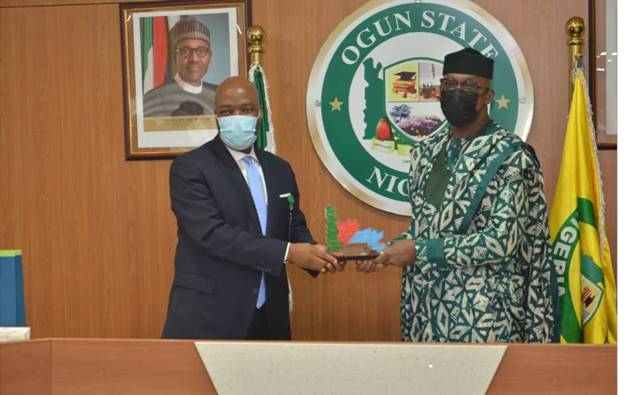
Ogun State Governor, Prince Dapo Abiodun (r) and Managing Director, Ecobank Nigeria, Patrick Akinwuntan
The management of Ecobank Nigeria has made a firm commitment to partner and collaborate with Ogun state government in the various sectors of the economy. Managing Director, Ecobank Nigeria, Patrick Akinwuntan made the pledge at the Executive Council chambers of the Governor’s office, Oke-mosan, Abeokuta during a courtesy visit on Governor Dapo Abiodun last week. At the event, the bank also donated rural health tricycle ambulances to the state, to assist in primary healthcare delivery.
Akinwuntan, who hinged the bank’s visit to the state on partnering with the state government on the policy thrust and developmental strides of the Dapo Abiodun led administration, said “For us as a bank,we appreciate what your government is doing. When we look at the specific components of your vision and strategy as encapsulated in ISEYA, which represents Infrastructure, Social welfare and health, Education, Youth empowerment and Agriculture, we decided to come over to explore areas of partnership and collaboration. Your government has not left the vision as an acronym but the execution is a testimony to the greatness of this state. We believe the outcome of this collaboration will benefit not just indigenes of Ogun state alone, but our dear country Nigeria and the Africa continent.”
Specifically, the Ecobank managing director reiterated that Ogun state is one of the leading lights in ease of doing business amongst all the states in the federation, assuring that the bank will help attract funding for long term projects. “I want to also commend your government in terms of peaceful environment of doing business. Ogun state is one of the leading lights in ease of doing business and a place to invest in.” “I will like to reiterate that we stand ready to support you in attracting investments to fund the long-term infrastructure projects that you have rightly embarked on.” “We understand that such projects will require long-term financing, the history and rating of Ogun state places it in a unique position to leverage on the capital market for long term instruments like bonds. We stand ready to collaborate and support you on this journey,” he said.
He commended the state government’s Private Public Partnership (PPP) approach of handling projects, assuring that the bank is ready to deploy its expertise and support in the areas of empowering women businesses, Micro, Small and Medium Enterprise (MSMEs), agriculture, health and other strategic sectors of the state’s economy.
The governor, His Excellency Prince Dapo Abiodun, in his remarks called on Ecobank and other financial institutions in the country to join hands with the state government to fix the Lagos/Agbara and Ota/ Abeokuta federal roads. He disclosed that his administration was on the verge of getting federal government’s approval to embark on the rehabilitation of the roads through the PPP model.
“Let’s see what you can do for us in terms affordable housing through mortgage schemes, advertising on our job portal, Infrastructure. I am sure you are aware of the Agbara corridor which is the biggest industrial hub in this country; the road leading from Lagos to Agbara is a nightmare; that road is a federal road, but we have decided to take on it as a State.” “We have decided to take it over and construct it under a PPP arrangement.” “We hope Ecobank will perhaps be interested in this PPP model in partnership with other banks. The same goes for the Ota-Abeokuta road,” the governor said.
Abiodun also noted that his administration was looking at supporting vulnerable groups in the society through the provision of single digit or zero interest loans. He called on Ecobank to partner with the state government in providing loans that would help the beneficiaries improve on their businesses.
“We are looking to support our vulnerable groups in the society, our women who are basically the strength of the society, they are very hard-working, and all they need is little capital.” “We aim to provide loans for them at single digit or zero interest rate and we know that they will pay back. They are religious about paying back. Let’s see how we can work with Ecobank to design a model that will allow us to support them,” he stated.
Other members of the bank’s visiting Executive Management Team include the Executive Director, Commercial Banking, Carol Oyedeji ; Head, Consumer Banking, Korede Demola- Adeniyi; Segment Head, Public Sector/AgriBusiness, Mojisola Oguntoyinbo; Regional Head, South West/Mid-West, Christopher Olusola; Regional Manager, Public Sector, South West/Mid-West, Victor Inyang and Business Manager, Abeokuta branch, Olusegun Makinde.