Saturday, December 27, 2025
26.6 C
Lagos
Home Blog Page 198

NMMA Calls for Entries for 2020 Media Awards

0

The Nigerian Media Merit Award (NMMA) has called for entries from media professionals for works published or broadcast in 2019 for the NMMA Award 2020.

According to the NMMA, the award would be in various categories: Print A, Print B, Print C, Radio and Television.

The submission of entries for the award commenced on August 25 and has September 25 as closing date.

In addition to its prestige, each award winner is presented a trophy (The Golden Gong of Excellence) and a specific prize money.

CBN Vs NESG: Expert Warns of Negative Impact on Economy

0

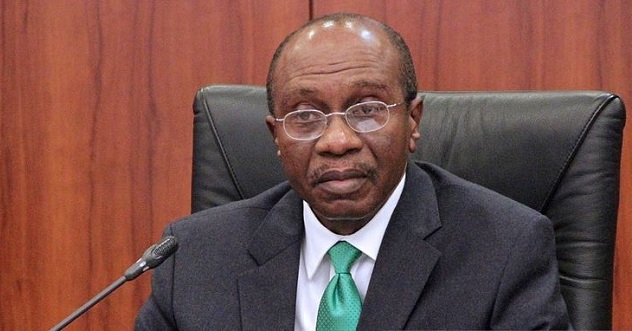
Mr. Godwin Emefiele

Governor

Central Bank of Nigeria (CBN)

The raging feud between the Central Bank of Nigeria (CBN) and the Nigerian Economic Summit Group (NESG) is sure to generate negative impact on the Nigerian economy.

An Executive Director in one of the first-tier banks told Business Journal on the condition of anonymity that he was shocked to see two sister bodies that should complement each other to grow the economy fighting dirty in the public domain.

The banker said: “Ordinarily, both the CBN and NESG should be working together in terms of idea generation and implementation to tackle various issues in the nation’s socio-economic space. The NESG could serve as a think-tank to offer advisory notes to the apex bank for the good of the nation. It is therefore quite unfortunate to see them quarrelling like babies in public. I foresee negative impact of this rather curious feud for the economy considering their roles in our environment.”

Just last week, the NESG released a Report detailing its position on various policy measures taken so far by the CBN, a decision which prompted a damning response from the apex bank.

To worsen the situation, three bank chiefs on the Board of the NESG namely Mr. Adesola Adeduntan of First Bank of Nigeria Limited, Mr. Kennedy Uzoka of UBA Plc and Mr. Abubakar Suleiman of Sterling Bank Plc resigned from the Board of NESG in protest over the Group’s criticism of CBN policies.

How Malnutrition Hinders Women Empowerment

0

Systemic malnutrition hinders the empowerment of women in many societies and denies such nations and families the opportunity of reaping the benefits of empowered women.

Professor Ibiyemi Olayiwola, who was the Keynote Speaker at the Protein Challenge Webinar Series 3 under the theme “Empowering Women to Break the Cycle of Malnutrition in Nigeria” said the solution is to break the vicious cycle of malnutrition amongst women through ending hunger by women, reduce food insecurity with nutrition sensitive agriculture, improve nutrition and food safety in families while focusing on the first 1000 days of life.

She also emphasized the key importance of improving maternal health and fetal growth, as well as providing sustainable support for child nutrition and growth.

“To break the cycle of malnutrition, women must be at the centre of development and governance while Sustainable Development Goals (SDGs) need women to break the cycle of malnutrition at the community level.”

Olayiwola said the reasons for women empowerment in any given society include:

  • Women lead and participate in decision-making at all levels of life
  • When women are economically empowered, it advances the health, education and economic security of their family
  • Women and girls live a life free from violence
  • Women empowerment benefits the nation, especially in nutritional status of all Nigerians
  • Poverty reduction, improved national economic performance and nutrition
  • Peace and security and humanitarian action actions are shaped by women’s leadership and participation
  • More than 350, 000 women die from preventive complications related to pregnancy and childbirth each year (UN, 2010)

She lamented the dominance of men in the decision-making process in Nigeria to the detriment of women.

“Empowerment of women is necessary where there is inequality in terms of access to resources. This is because power has been gendered in Nigeria. In Nigeria, there is over-concentration of power in the hands of men. Thus, men have greater access to resources of the country.”

The keynote speaker was emphatic that empowering women will generate positive result for nations and families in terms of economic situation and poverty reduction given that female-headed households on average have lower poverty, higher education, higher income; constitutes 16 percent of total households and more importantly, women spend more time on domestic tasks in rural and urban areas than men.

She listed some of the household tasks performed by women as complementary food preparation, education support, provision of water, breastfeeding, shopping, income generation by working women and taking care of family health.

Olayiwola said the way forward for women is to break the inter-generational cycle of growth failure with nutrition which will effectively address the challenges of:

  • Child Growth Failure
  • Early Pregnancy
  • Small Adult Women
  • Low Birth Weight Baby
  • Low Weight and Height in Teens

According to her, the Call for Action to achieve women empowerment should include development communication by appropriate messages and packages to facilitate behavioural change at individual level, household level and community levels (woman to woman training).

This would be in addition to implementation of policies that address improved nutrition knowledge, attitude and practice which must involve women while academics are to provide accurate information required to create awareness and develop appropriate intervention programmes for women.

The major areas of women empowerment include health, nutrition, household economy, education

and agriculture.


Banks Leveraging Digital Tech to Drive Customer Satisfaction – Akinwuntan

0

Mr. Patrick Akinwuntan

Managing Director/CEO

Ecobank Nigeria

Chairman of the Chartered Institute of Bankers (CIBN) Consultative Committee organizing the13th Annual Bankers Conference and Managing Director, Ecobank Nigeria, Mr. Patrick Akinwuntan has said banks in Nigeria are leveraging Digital technology to drive customer satisfaction, especially in response to the demands of COVID-19.

According to Mr. Akinwuntan, the evolution of digital banking is visible in the use of Automated Teller Machines (ATM), Point of Sales Services (PoS), Mobile banking services, Unstructured Supplementary Service Data (USSD) amongst several others.

He said bank customers in Nigeria now have the ability to open bank accounts remotely and this was made possible by the forward thinking of the Central Bank of Nigeria (CBN) that established the tier 1, 2 and 3 accounts, to enable first level account opening by customers via their phones or through the internet.

The “tier 1 account, he noted is a basic account that operates like a wallet and can be opened straight from the mobile phone. With Ecobank for instance, you can just dial *326# to open an account. He stated that as you climb up the value chain, the account can then be upgraded to either tier 2 or 3, which would require a Bank Verification Number (BVN).

The BVN is a biometric registration of customers in the financial system which allows a customer to have a single identity within the financial system. Its introduction is intended to tackle cybercrime and ATM fraud. This according to the bank Managing Director is a revolutionary step credited to the banking industry.

Akinwuntan was speaking during an interview session on Arise TV to sensitize the public on the annual Banking and Finance Conference slated for the 15th  and 16th of September, 2020. The conference themed; “Facilitating a Sustainable Future: The Role of Banking and Finance” will bring together prominent bankers; major economic players; captains of industry; regulators; policy makers; members of the academic community and other stakeholders in the banking and finance industry.

Mr. Akinwuntan, also noted that Nigerian banks are determined to take financial services to every household so that everyone can participate effectively in the growth of the largest economy in Africa. In his words “the thinking amongst the larger populace pre-COVID-19 was that one must go to the physical bank branches to transact. Today the case is different with the introduction of Agency Banking. Agency banking refers to our branchless banking model that allows us , the traditional banks to extend our network of branches and services in a cost-efficient manner through authorized agents. This is part of our distribution strategy to take banking service to the doorstep of the customer. We are extending our banking services to consumers’ neighborhood to offer even greater convenience and accessible financial services in a cost effective and secure manner through the use of technology. Agency location can be a beverage location, a supermarket, barber shop, tailors shop, a nearby vendor etc. This is the product of forward thinking of both the regulators, the telecoms and the participants that have embraced this.”

He maintained that “this is the major reason for the banking and finance conference coming up on the 15th and 16th of September, 2020, where we will be talking about facilitating a sustainable future and the role of banking and finance. It is a forum that provides the platform for all the stakeholders, be it the policy makers, the analysts, the participants, business men and women, millennials and the banks to come together to deliberate on how best to leverage the platform, policies and trust that exist in our country, leveraging digital and to take the country into its rightful place in the committee of nations.”

The President and Chairman of Council of the CIBN, Mr. Bayo Olugbemi in a previous media interview had said the Institute for the first time is adopting a hybrid approach to the conference which will take place simultaneously at the Transcorp Hilton Hotel, Abuja and the Bankers’ House, Adeola Hopewell Street, Lagos and through Zoom teleconferencing.

He emphasized that “in line with the theme, participants will evaluate the role of the Banking and Finance Industry in engendering an inclusive sustainable growth as well as offering a direction on how to reposition the Industry for relevance in the new world order, by leveraging on digitalization to boost Nigeria’s economy.

Stanbic IBTC Bank Appoints Oyedeji as Independent Non-Executive Director

0

Mr. Wale Oyedeji

The Board of Directors of Stanbic IBTC Bank PLC (“the Bank”) is pleased to announce the appointment of Mr. Wale Oyedeji as an Independent Non-Executive Director with effect from 08 September 2020, following the receipt of all required regulatory approvals.

Oyedeji holds a Bachelor of Science in Agricultural Economics from the University of Ibadan and a Master of Science in Financial Economics from the University of London. He is also a Fellow of the Institute of Chartered Accountants of Nigeria (ICAN) and an associate of the Chartered Institute of Taxation.

Oyedeji has over 25 years of banking experience across Corporate Banking, Treasury, and Commercial Banking. He served as Managing Director of Guaranty Trust Bank UK between 2008 and 2011. He was appointed to the Board of Guaranty Trust Bank PLC in October 2011, where he served as Executive Director for the Corporate Bank Group and contributed immensely to the growth of their business until his retirement in August 2018. Prior to joining GTBank in 1994, he worked with Ernst & Young, Lagos, for two years. He is an alumnus of the Advanced Management Program of Harvard Business School.

Speaking on this appointment, Mr. Wole Adeniyi, Chief Executive of the Bank stated that “the Board is pleased to welcome Mr. Wale Oyedeji to the Board of the Bank and will undoubtedly benefit immensely from his wealth of experience.”

Emirates, Huawei Partner on Enhanced Mobile App Experience to Users

0

Emirates has announced a collaboration with Huawei, one of the world’s top smartphone brands, to promote the Emirates app to Huawei phone users and build a more convenient and rewarding experience for passengers as travel demand recovers in the post-pandemic era.

Since January 2020, Emirates passengers have been downloading the Emirates app (Android version) at AppGallery and benefiting from its rich range of functions. The recent enhanced collaboration between the two parties extends the shared platform to include SmartCard

Integration, providing a quick booking option for Emirates app users in the Chinese mainland and the UAE, as well as the ability to easily access their travel and flight information. Emirates-themed wallpapers, icons and fonts will also be created for travel enthusiasts to download and inspire their next travel plans and to customize their mobile experience.

Commenting on the partnership with Huawei, an Emirates spokesperson said: “It’s our pleasure to build a collaboration with Huawei in order to provide the best possible customer experience, not only onboard and on the ground, but also online.

Considering Huawei’s strong market position in the Chinese mainland and the UAE, we are proud to collaborate with them on promoting our app. The engaging tools that are available on the Huawei AppGallery can help us create closer bonds and experiences with more customers, especially in China, which is a significant market for us.

The next phase of our collaboration will roll out soon and is aimed at benefitting passengers at every step of their journey, from trip planning to arriving at their destination.”

Subsequent phases of the joint cooperation will see Emirates and Huawei planning to expand features available to the airline’s customers by integrating the Emirates app with the Huawei Wallet platform. The new features will enable Skywards members to store membership details and loyalty points, in addition to boarding passes and vouchers in the Huawei Wallet.

Furthermore, Emirates customers will also soon be able to enter any of its worldwide lounges by simply tapping their Huawei device at the door.

The collaboration may also extend in the near future to include payment options and rewarding experiences, allowing easy redemptions of Skywards Miles and the ability to earn Huawei points. Users can also earn rewards points from designated banks in the UAE, to be used for the purchase of Emirates tickets or Huawei phones and accessories.

The shared platform will also allow redemptions with car rental companies, telecommunication providers as well as airport taxi partners to bring more benefits to Emirates passengers and Huawei users.

Mr. Lu Geng, Director, Middle East and Africa Partnerships and Eco-Development at Huawei Consumer Business Group, added: “Innovation is part of our DNA and in Emirates we have found a like-minded partner whose desire and ability to continuously be at the forefront is integrated into their culture. In this era, where consumer behaviour has changed as we emerge from the pandemic, people rely more than ever on their smartphones to make decisions, including travel-related ones.

This encouraging collaboration paves the way for us to explore future solutions and bringing even more inspiration to travellers and making their travel more convenient and rewarding.”

To date, the Emirates app has had more than half a million downloads from AppGallery. The Emirates app provides easy access to a range services and functions from flight search and air ticket booking, to check-in, seat and meal selection, as well as Skywards login and account information.

The most recent innovative functions of the Emirates app also include ice playlist creation and syncing to aircraft seats and the Airport Wayfinder for directions at Emirates’ hub, Dubai International Airport.

Dubai, as the hub of Emirates, is one of the most popular global destinations for leisure, MICE and business travellers.

The city re-opened to tourists on 7 July, and in the immediate three weeks after that, Emirates saw more than 1.6 million searches for destination Dubai on emirates.com, and an increase in bookings with travellers coming from more than 30 countries.

With safety as a priority, Emirates is gradually expanding its passenger services to over 80 cities in September, allowing travellers to connect safely and conveniently to the Americas, Europe, Africa, Middle East, and Asia Pacific via Dubai.

As one of the top three app marketplaces globally, AppGallery is available in more than 170 countries and regions and connects 700 million users to Huawei’s smart and innovative ecosystem. Not only does AppGallery ensure user privacy and security, it also provides unique functional experiences and enhanced app discovery. It aggregates quality popular applications worldwide, with apps across 18 categories including news, social media, and more.

Ecobank Digital Series: Educators Seek Private Sector Role, Funding

0

Stakeholders in the Nigerian Education sector have advocated more private sector investment, tax concession, import duty waivers for educational equipment and special intervention funds to revamp the sector in the face of the negative impact of the COVID-19 pandemic.

The stakeholders comprising public and private sector participants who spoke during the Ecobank Digital Series titled “Education in Nigeria – The role of private investment” noted that education is a critical sector that contributes to human capital development and sustainable future for the country and must therefore not be overlooked.

They called on the private sector to invest more in education  in the form of corporate social responsibility (CSR), scholarships, provision of palliatives, support to reconstruction and rehabilitations of schools across the country.

Key participants at the event included the Honourable Minister of Education, Mallam Adamu Adamu, represented by the Assistant Director & Head, PPP/NGOs, Elizabeth Afape; The Honourable commissioner of Education, Lagos State, Mrs. Folasade Adefisayo; The Honourable commissioner of Education, Katsina State, Prof. Badamasi Lawal Charanchi; The Deputy Executive Secretary, National Universities Commission (NUC), Dr. Suleiman Ramon-Yusuf; Director General, Lagos Chamber of Commerce and Industry (LCCI), Dr. Muda Yusuf and Keynote speaker and Pro-Chancellor Achievers University, Dr. Olabode Ayorinde, and also the National President, Association for Formidable Educational Development (AFED), Mr. Orji Kanu Emmanuel amongst others.

In his presentation, Professor Olabode Ayorinde, stressed the need for government at all levels to place high priority on the education sector when providing intervention funds, urging commercial banks to also lend more to this sector at low interest rate.

According to him, “The private sector has played a significant role in education development. However, funding has been a major issue. A critical analysis shows inadequate infrastructure, lack of equipment and teaching aids, high teacher to student ratio, all of which requires a loan facility to solve. Regrettably, we see the government and its agencies providing intervention funds to the aviation sector, agriculture, creative sector without considering the education sector.”

On his part, Dr. Suleiman Ramon-Yusuf, of the NUC, attributed the poor  state of the nation’s economy to the inability of the private sector in making the right impact on the education sector, noting that endowments, scholarships and bursaries would create access for schools to admit more students.

He disclosed that the NUC will continue to provide an enabling environment for education and learning to thrive in the country, urging the private sector to invest more in human capital development, while limiting undue interference from the investors.

Also on the Ecobank Digital series platform, Dr. Muda Yusuf of the LCCI, called for government’s intervention in the education sector, especially at the foundation level, maintaining that it was not easy to sustain the education sector with loans from the commercial banks because of high interest rates.

He canvassed for tax concession for private investments in education, adding that “Licensing for private universities should be made easy to enable inclusiveness and a model that will include scholarships and bursary should be enacted.”

In her contribution, Mrs. Folashade Adefisayo, Commissioner for Education, Lagos State, said there are more private schools in the state than public schools and most of them may not survive the grueling effects of the Covid-19 pandemic.

According to her, “Land and access is the main hinderance to building of more schools in Lagos State. Currently, the government is working on synergy between the public and private sectors, reviewing and optimizing the school curriculum, improving the quality of primary education, investing in teaching aids for schools and much more.”

Towing the same line, Prof. Badamasi Lawal, Commissioner for Education, Katsina State, posited that “Initiatives for teachers development, public and private sector partnership, better and favorable legislation, corporate social responsibility like scholarship, bursary and tax concession would go a long way in providing the enabling environment for education sector to thrive in the country.

Segment Head, Public Sector, Ecobank Nigeria, Mrs. Annabel Ikuenobe, stated the readiness of the bank to keep supporting the growth of the education sector in the country. She enumerated the bank’s several products and initiatives available for Ecobank customers.

According to her, one of our products to serve the education sector is the “Ecobank School Bundle. The bundle comprises of a current account, which runs at a zero maintenance fee. We also have in place digital banking services, which include PoS, corporate card and Omnilite for easy disbursement of funds; E-billspay, to support collections and administration of the school portal, which promotes remote learning for students, receipt generation and the school’s communication management. Loans are also available for Ecobank customers.”

Welcoming guests earlier to the Ecobank Digital Series, Carol Oyedeji, Executive Director, Commercial Bank noted that private sector participation in the education sector cannot be overemphasized. She stated that education ensures a brighter future for our generation. She enjoined all stakeholders to proffer ways forward for the sector.

She noted that the Ecobank Digital Series is a virtual programme organised by Ecobank to educate and enlighten the public on crucial issues of public interest, especially as it relates to their financial freedom.


E-Payment Transactions Hit N264tn in Q2 2020-NBS

0

The National Bureau of Statistics (NBS) says a total volume of 2,160,436,659 transactions valued at N263.78 trillion were recorded in Q2 2020 as data on Electronic Payment Channels in the Nigeria Banking Sector revealed.

Online Transfer transactions dominated the volume of transactions recorded. 1,317,621,686 volume of Online Transfer transactions valued at N72.25 trillion were recorded in Q2 2020.

In terms of credit to private sector, the total value of credit allocated by the bank stood at N18.82 trillion as at Q2 2020. Oil & Gas and Manufacturing sectors got credit allocation of N3.62 trillion and N3.07 trillion to record the highest credit allocation as at the period under review.

As at Q2 2020, the total number of bank staff decreased by -2.55% QoQ; from 96,975 in Q1 2020 to 94,498.

Data source: National Bureau of Statistics

Nigeria’s Debt Profile Hits $86bn-DMO

0

The Debt Management Office (DMO) has released information on the Public Debt Stock as at June 30, 2020. The data shows that in Naira Terms, the Total Public Debt Stock which comprises the Debt Stock of the Federal Government, the 36 State Governments and the Federal Capital Territory stood at N31.009 Trillion or USD85.897 Billion.

The corresponding figures for March 31, 2020 were N28.628 Trillion or USD79.303 Billion. The increase in the Debt Stock by N2.381 Trillion or USD6.593 Billion was accounted for by the USD3.36 Billion Budget Support Loan from the International Monetary Fund, New Domestic Borrowing to finance the Revised 2020 Appropriation Act including the issuance of the N162.557 Billion Sukuk, and Promissory Notes issued to settle Claims of Exporters.

The DMO expects the Public Debt Stock to grow as the balance of the New Domestic Borrowing is raised and expected disbursements are made by the World Bank, African Development Bank and the Islamic Development Bank which were arranged to finance the 2020 Budget.

It will be recalled that the 2020 Appropriation Act had to be revised in the face of the adverse and severe impact of COVID-19 on Government’s Revenues and increased expenditure needs on health and economic stimulus amongst others.

Additional Promissory Notes are expected to be issued in the course of the year, this, and new borrowings by State Governments are also expected to increase the Public Debt Stock.


CBN Slams NESG over Forex Transaction Transparency Allegation

0

Mr. Godwin Emefiele

Governor

Central Bank of Nigeria (CBN)

The Central Bank of Nigeria (CBN) has forcefully disagreed with the Nigerian Economic Summit Group (NESG) over the Group’s allegation of transparency gaps in forex allocation and management by the apex bank.

A statement by Mr. Isaac Okorafor, Director, Corporate Communications at the CBN read in part:

“The attention of the Central Bank of Nigeria (CBN), has been drawn to a recent press release titled “Matters of Urgent Attention” by the Nigerian Economic Summit Group (NESG), which calls into question some of the measures taken by the CBN to support the stability of our financial system and enable faster recovery of our economy, following the negative impact of the COVID-19 pandemic on Nigeria.

With respect to foreign exchange, the CBN operates two windows: wholesale and retail. In the wholesale window, banks are allocated FOREX weekly, which is meant to be allocated to their customers at their discretion, reflecting customer size and distributive efficiency, for final sale to parents paying school fees, patients settling medical bills abroad, SME traders importing small-scale inputs and raw materials, and general travelers for business and personal trips.

The CBN also allocates a certain amount of FX to licensed BDCs per week, who resell to small-scale users. In both categories, the CBN does not know the final buyers of this FX. In the retail window, banks submit a detailed list of applicants who are then allocated foreign exchange based on availability. Given that these submissions are first scrutinized by the banks and are accompanied by the provision of significant documentation, we do not understand the extra transparency being called for by the NESG.

Although the NESG, under its current leadership, has fallen short of its own standards and become a shadow of its old self, we believe there are better ways to resuscitate the Group’s brand other than through cheap popularity and tarnished attention using ambushed press statements made up of contrived allegations. Given that the NESG should know better, we believe that these allegations are reflective of sinister motives and malicious intent.”


IATA: Time to Prepare for COVID-19 Vaccine Air Transport is Now

0

The International Air Transport Association (IATA) urged governments to begin careful planning with industry stakeholders to ensure full preparedness when vaccines for COVID-19 are approved and available for distribution. The association also warned of potentially severe capacity constraints in transporting vaccines by air.

Preparedness
Air cargo plays a key role in the distribution of vaccines in normal times through well-established global time- and temperature-sensitive distribution systems. This capability will be crucial to the quick and efficient transport and distribution of COVID-19 vaccines when they are available, and it will not happen without careful planning, led by governments and supported by industry stakeholders.
“Safely delivering COVID-19 vaccines will be the mission of the century for the global air cargo industry. But it won’t happen without careful advance planning. And the time for that is now. We urge governments to take the lead in facilitating cooperation across the logistics chain so that the facilities, security arrangements and border processes are ready for the mammoth and complex task ahead,” said IATA’s Director General and CEO, Alexandre de Juniac.
“Delivering billions of doses of vaccine to the entire world efficiently will involve hugely complex logistical and programmatic obstacles all the way along the supply chain. We look forward to working together with government, vaccine manufacturers and logistical partners to ensure an efficient global roll-out of a safe and affordable COVID-19 vaccine,” said Dr Seth Berkley, CEO of Gavi, the Vaccine Alliance.

Facilities: Vaccines must be handled and transported in line with international regulatory requirements, at controlled temperatures and without delay to ensure the quality of the product. While there are still many unknowns (number of doses, temperature sensitivities, manufacturing locations, etc.), it is clear that the scale of activity will be vast, that cold chain facilities will be required and that delivery to every corner of the planet will be needed. Priorities for preparing facilities for this distribution include:

  • Availability of temperature-controlled facilities and equipment – maximizing the use or re-purposing of existing infrastructure and minimizing temporary builds
  • Availability of staff trained to handle time- and temperature-sensitive vaccines
  • Robust monitoring capabilities to ensure the integrity of the vaccines is maintained

Security: Vaccines will be highly valuable commodities. Arrangements must be in place to keep ensure that shipments remain secure from tampering and theft. Processes are in place to keep cargo shipments secure, but the potential volume of vaccine shipments will need early planning to ensure that they are scalable.

Border Processes:  Working effectively with health and customs authorities will, therefore, be essential to ensure timely regulatory approvals, adequate security measures, appropriate handling and customs clearance. This could be a particular challenge given that, as part of COVID-19 prevention measures, many governments have put in place measures that increase processing times. Priorities for border processes include:

  • Introducing fast-track procedures for over-flight and landing permits for operations carrying the COVID-19 vaccine
  • Exempting flight crew members from quarantine requirements to ensure cargo supply chains are maintained
  • Supporting temporary traffic rights for operations carrying the COVID-19 vaccines where restrictions may apply
  • Removing operating hour curfews for flights carrying the vaccine to facilitate the most flexible global network operations
  • Granting priority on arrival of those vital shipments to prevent possible temperature excursions due to delays
  • Considering tariff relief to facilitate the movement of the vaccine

Capacity
On top of the transport preparations and coordination needed, governments must also consider the current diminished cargo capacity of the global air transport industry. IATA warned that, with the severe downturn in passenger traffic, airlines have downsized networks and put many aircraft into remote long-term storage.

The global route network has been reduced dramatically from the pre-COVID 24,000 city pairs. The WHO, UNICEF and Gavi have already reported severe difficulties in maintaining their planned vaccine programs during the COVID-19 crisis due, in part, to limited air connectivity.
“The whole world is eagerly awaiting a safe COVID vaccine. It is incumbent on all of us to make sure that all countries have safe, fast and equitable access to the initial doses when they are available. As the lead agency for the procurement and supply of the COVID vaccine on behalf of the COVAX Facility, UNICEF will be leading what could possibly be the world’s largest and fastest operation ever. The role of airlines and international transport companies will be critical to this endeavour,” said Henrietta Fore, UNICEF Executive Director.
The potential size of the delivery is enormous. Just providing a single dose to 7.8 billion people would fill 8,000 747 cargo aircraft. Land transport will help, especially in developed economies with local manufacturing capacity. But vaccines cannot be delivered globally without the significant use air cargo.
“Even if we assume that half the needed vaccines can be transported by land, the air cargo industry will still face its largest single transport challenge ever. In planning their vaccine programs, particularly in the developing world, governments must take very careful consideration of the limited air cargo capacity that is available at the moment. If borders remain closed, travel curtailed, fleets grounded and employees furloughed, the capacity to deliver life-saving vaccines will be very much compromised,” said de Juniac.


Egypt’s Smartphone Market Defies COVID-19, Reports 2.2% Growth in Q2

0

Egypt’s smartphone market grew 2.2% quarter on quarter (QoQ) in Q2 2020 to total 2.88 million units, according to the latest research conducted by International Data Corporation (IDC). While most markets in the Middle East and Africa suffered declines during the quarter, the pandemic did not hurt smartphone sales in Egypt as badly as expected.

This growth was spurred by vendors focusing on pushing affordable phones into the market, while vendors also accelerated their shipments before new import taxes were introduced at the end of June.

Samsung was the market leader in Q2 2020 with 23.8% unit share, followed by Oppo in second place and Xiaomi in third.

In terms of price bands, the quarter saw a remarkable shift to the ultra-low-end, with devices priced below $100 growing their share of the market to 30.5%. In terms of screen size, the 6.5–7.0” band gained 12.4 percentage points QoQ to account for 45.4% unit share.

“While COVID-19 did not halt demand for smartphones in Egypt, it certainly led to a change in market dynamics on both the supply and demand sides,” says Taher Abdel Hameed, a senior research analyst at IDC. “The price band and screen size trends indicate that consumers were opting for more affordable phones due to tighter budgets, while vendors supplied affordable models with higher specs to cope with challenging sales conditions during the pandemic.”

Looking at 2020 as a whole, IDC forecasts smartphone shipments to Egypt to increase 2.9% year on year. “Consumer demand continues to be resilient in the second half of 2020 despite certain inhibitors at play in the market,” says Yavuz.

“The new taxes on mobile phones, exchange-rate fluctuations, and a general decline in the economy due to COVID-19 will definitely have an impact, but the Egypt smartphone market remains dynamic. Global vendors are focused on the country and marketing spend is expected to continue, which will help the market overcome the barriers.”

ITU Unveils Connect2Recover to Protect Digital Infrastructure in COVID-19-Affected Countries

0

Professor Umar Danbatta

Executive Vice-Chairman

Nigerian Communications Commission (NCC)

The International Telecommunication Union (ITU) has launched Connect2Recover with the support of the Ministry of Internal Affairs and Communications of Japan and the King Salman Humanitarian Aid and Relief Centre of Saudi Arabia to help countries recover from COVID-19 by expanding access to affordable and reliable connectivity. Connect2Recover will initially focus on selected countries in Africa which are some of the least well connected countries and likely to be hit hard by the pandemic in socio-economic terms.

COVID-19 has highlighted that digital infrastructure is not just a convenience but an essential requirement for fully-fledged participation in society and the economy. Broadband connectivity has proved vital in helping countries’ businesses and citizens adapt and respond to the pandemic, enabling them to access the latest health information and continue working, learning and socializing remotely.

Connect2Recover seeks to expand access to affordable and reliable connectivity, which is an essential aspect of countries’ COVID-19 recovery strategies.

“ITU, and the wider international community, is transitioning from aiding countries with their immediate response to COVID-19, to helping countries prepare for and adjust to a ‘new normal’,” said ITU Secretary-General Houlin Zhao. “As the United Nations is calling on its Member States to ‘build back better’, Connect2Recover represents ITU’s contribution by facilitating socio-economic recovery through the use of digital infrastructure, services, and applications, thanks to the generous support of the Japanese government and the Kingdom of Saudi Arabia.”

Connect2Recover will consist of three key elements.

First, Connect2Recover will develop a methodology for identifying gaps and bottlenecks in the use of digital networks and technologies at country level: to respond to and mitigate the consequences of the COVID-19 pandemic as well as preparedness for any similar emergencies in the future: and to enable recovery and readiness for the “new normal”.


Second, on the basis of this methodology, Connect2Recover will assist countries in assessing their needs, gaps and bottlenecks, and develop strategies to ensure that the digital infrastructure and ecosystems adequately support recovery efforts and the “new normal.” These strategies will be designed in line with global best practices, as well as with other relevant policy tools developed by ITU and other relevant organizations.

Third, Connect2Recover will conceptualize and implement pilot projects to test specific technological solutions in line with national country strategies and policies. The project will also undertake deep-dive studies in specific areas of digital policy as prioritized by the selected countries, such as digital finance, e-education, e-health, e-government, or tele-working.

“Japan recognizes the importance to continuously work together with countries to strengthen their digital broadband infrastructure for adapting to the ‘new normal’, which provides a base of tele-working and remote activities,” said Minoru Terada, State Minister for Internal Affairs and Communications of Japan. “Digital technology is playing a vital role to respond to and mitigate the COVID-19 pandemic. Under these circumstances, our project aims at improving the connectivity through the development of resilient broadband networks to respond to the COVID-19 pandemic, especially among African countries.”

“The pandemic has affected the global economy, financial markets, trade, and global supply chains. Saudi Arabia recognizes its devastating impact, which has hampered growth and development and reversed the gains accomplished in the previous years. This human crisis requires a global response as the virus respects no borders, humanitarian situation or needs,” said Dr. Abdullah Almoallem, Director of Health and Environmental Assistance at the King Salman Humanitarian Aid and Relief Centre. “During this pandemic, we heavily depend on ICTs to carry out our daily life needs under the new norms of social distancing. As it assumed the presidency of the G20, Saudi Arabia continued its humanitarian aid to other countries in order to help them to respond to the COVID-19 pandemic, and through this project we aim to enhance connectivity and leave no one behind in this digital age.”

“COVID-19 has demonstrated the vital importance of meaningful connectivity and it has also served as a wake-up call to the global community to renew efforts to connect the 3.6 billion people still offline,” said Doreen Bogdan-Martin, Director of the ITU Telecommunication Development Bureau. “Connect2Recover represents a first step in our journey to recovery and preparedness. I applaud the commitment of Japan and Saudi Arabia, and I invite all stakeholders to join this initiative to help advance real and rapid progress for all.”

In addition to ITU’s existing COVID-19 activities and work programmes in Africa, Connect2Recover reinforces the organization’s long-standing efforts to accelerate digital transformation on the African continent and thus achieve long-term development goals.

Out of the 25 least connected countries in the world, 21 are in Africa. According to the African Union’s Digital Transformation Strategy for Africa, nearly 300 million Africans live more than 50 km from a fibre or cable broadband connection. Access to high-speed Internet thus remains out of reach for many Africans, hindering their ability to fully harness the potential of digital transformation.


3 Ways to Connect the Dots of Nutrition in Nigeria

0

Food is a universal language. It knows no barrier. Living things need food for sustenance. Human beings, however, have taken it up a notch. Today, humans eat not just for sustenance, but also recreation, sports and even hobby.

Food is important to the body. The body needs it to grow, function and repair itself. Food provides the body with nutrients. To know the right nutrients for the body, we must first understand nutrition.

Nutrition is the study of nutrients in food, how the body uses them and the relationship between diet, health, and disease. Nutrients are divided into two types, macronutrients and Micronutrients. Macronutrients such as proteins, carbohydrates and fats are nutrients needed by the body in large quantities, while micronutrients such as iron, sodium, potassium etc. are nutrients that the body needs in small quantity.

The World Health Organisation (WHO) argues that nutrition is a critical part of health and development, with better nutrition related to improved infant, child and maternal health, stronger immune systems, safer pregnancy and childbirth, lower risk of non-communicable diseases (such as diabetes and cardiovascular disease) and longevity.

In Nigeria, there is a huge nutrition gap. There is a disconnect between available food and proper combination, and even preparation, for the best nutrition. The gap is widening every day.

To move forward, the country must explore how to close the gap and connect the dots. The recent Protein Challenge webinar themed: “The UN Decade of Action on Nutrition – Connecting the Dots for Nigeria” provided plenty of clarity on the issue.

The session brought together nutrition and SDG experts to discuss the adverse effects of malnutrition, Sustainable Development Goals (SDGs) and the pivotal role nutrition has to play in achieving these goals. For Nigeria to improve its nutrition status, here are three ways that it can connect the dots:  

#1: Food Security: Food security, as defined by the United Nations’ Committee on World Food Security, means that all people, at all times, have physical, social, and economic access to sufficient, safe, and nutritious food that meets their food preferences and dietary needs for an active and healthy life.

Essentially, food security refers to the availability of food and one’s access to it. Nigeria has a food security problem. The food security challenge is compounding the nation’s nutrition crisis. Farmers continually have to contend with security challenges on the farms, logistic bottlenecks in the supply chain and huge wastage due to unavailability of proper storage for produce.

Besides, the COVID-19 pandemic and the resulting lockdown measures have disrupted production, impacted incomes and reduced access to food.

The government must assert itself. It must improve access to farmlands via improved security nationwide, partner with interested private sector organisations to establish urgently storage facilities and work to improve the agriculture value chain.  

#2: Increase Nation’s Budget on Health and Nutrition:  Healthy citizens make a healthy nation. An important way to ensure that the citizens are healthy is through the dedication of appropriate portions of the budget to the health sector. It is only common sense.

The government needs to urgently review budgetary allocations to health and nutrition. Sadly, over the last couple of years, the health budget has seen a sharp decline from N71.11 billion naira in 2018 to N46 billion in 2020. In a country where the population is increasing rapidly, a critical look into the health budget is imperative if we are to meet up with the 2030 timeline of achieving ‘zero hunger’.

The health budget allocation must increase, with particular emphasis on the nutrition budget line item.

#3: Nutrition Education: Meal planning is an essential ingredient for maintaining a healthy lifestyle. Of course, it is impossible to plan meals without good nutrition education.

The reason is obvious; a lot of people just eat without considering the nutrition needed by the body. Educating people across all social classes is needed so they can know the combination of nutritious foods to have on their plates. For instance, people need to know that contrary to popular belief, beans is not the only source of affordable protein as other plant-based foods are available and packed with protein.

Foods such as soybeans, egusi, vegetables and groundnuts are great examples of plant-based protein-rich food sources. Crayfish, snails and fish are equally sources of protein that are easily accessible and affordable to have on healthy plates.

Nutrition is essential for good health. Nigeria must work to bridge the nutrition gap. To start with, three things must be done: work to achieve food security, increase health budget and nutrition education. These are the right steps to connecting the dots.

Swiss Re Forecasts Positive Outlook for Insurance Renewals

0

Mr. O. S. Thomas

Commissioner for Insurance

National Insurance Commission (NAICOM)

Following rate improvements in many markets, and particularly in loss-affected segments, Swiss Re expects further rate hardening across all lines of business.

At the same time, the reliance on underwriting profits increases in the low interest rate environment. Swiss Re also expects more opportunities for re/insurers due to a combination of improving insurance demand and growing exposures.

Despite the cancellation of the Rendez-Vous de Septembre 2020 in Monte Carlo, Swiss Re continues to host its established media events, but in a virtual format. Today, Swiss Re shares its view on the upcoming renewals season.

Swiss Re expects prices to continue to increase driven by the combination of lower interest rates and the need for prices to cover increasing loss trends as demonstrated by recent experience across the world.

Hurricanes are frequently affecting areas where exposures have grown as a result of wealth accumulation.

This leads to increasingly severe losses, as demonstrated in the past few years. 2020 is forming up to be no better. The current Atlantic hurricane season is the first on record to see nine tropical storms forming before August and 13 before September.

The situation is further aggravated by the higher frequency and severity of secondary perils, such as floods and wildfires, leading to rising claims and highlighting the need for insurance protection.

While low interest rates have been affecting the industry’s profitability since the global financial crisis, further rate cuts aimed at fighting the economic impact of COVID-19 will only exacerbate this problem.

In “Low interest rates: the new norm and what it means for insurers“, Swiss Re Institute concludes that, to achieve a reasonable return on equity through 2021, non-life insurers in G7 markets need to improve underwriting margins by as much as 7-12 percentage points to compensate for lower interest rates.

Swiss Re’s Chief Executive Officer Reinsurance Moses Ojeisekhoba said: “Even before the COVID-19 crisis, most major markets were operating at below-average profitability. To be able to address the growing need for insurance protection in a sustainable way, further price increases across all lines of business are clearly needed.“

Against the background of ensuring pricing adequacy, underwriting fundamentals such as risk selection and costing, portfolio steering, appropriate terms and conditions, and contract wordings will be critical to writing future business.

A move to a more scientific, technology-driven approach will continue to strengthen underwriting. Advanced data analytics are already available to enable real-time views, market awareness, portfolio analytics and dynamic feedback loops to improve risk selection.

Swiss Re is making use of advanced technology to lead the way in underwriting. This includes enriching client exposure information with geospatial data to improve both the accuracy and speed of risk and loss assessments. In contracts, natural language processing complements human contract reviews, which helps to flag favourable vs potentially problematic clauses and generate new wording insights.

Swiss Re’s Group Chief Underwriting Officer Thierry Léger said:

”At Swiss Re, we have accelerated digitisation and the use of more and better data sources across the entire underwriting process. With these capabilities and the risk insights from Swiss Re Institute, we can improve our own decision-making and effectively support our clients in their underwriting.”