Saturday, December 27, 2025
28.6 C
Lagos
Home Blog Page 180

West African Stakeholders Embrace Universality of Internet

0

Mr. Tony Ojobo

President

African ICT Foundation

Stakeholders of the ICT sector in West Africa have agreed to embrace the universality of the internet with the aim of deepening internet penetration across the region and ensuring safe internet.

UNESCO and the African ICT Foundation jointly organised a knowledge sharing session on how to mainstream Internet Universality and ROAM principles (Rights, Openness, Access and Multi-stakeholder approach).

The session, which was held on the occasion of the West African Internet Governance Forum 2021, focused on how to encourage more countries to use ROAM-X indicators for improving national Internet development and digital policies in West Africa.

The session was moderated by the Regional Director, West Africa, African ICT Foundation, Dr Kossi Amessinou, who underlined the main objective to engage an extended partnership with the Internet community of West Africa by mobilizing them to participate in Dynamic Coalition and provide the necessary tools to conduct national assessments in all ECOWAS countries.

Our work on Internet Universality seeks to identify and close digital divides, foster digital inclusion, protect rights including freedom of expression, access to information and privacy, as well as to contribute to strengthening resilience and development.

In her opening remarks, Marielza Oliveira, UNESCO’s Director for Partnerships and Operational Programme Monitoring in the Communications and Information Sector, stated: “Our work on Internet Universality seeks to identify and close digital divides, foster digital inclusion, protect rights including freedom of expression, access to information, privacy, and contribute to strengthening resilience and development”.

Tony Ojobo, President of the African ICT Foundation commended the collaboration with UNESCO and highlighted the need to carry out periodic evaluations in African countries to enable the improvement of national Internet governance.

The ROAM principles and indicators go beyond the traditional rational of physical access. They contribute to comprehensively advancing digital inclusion, focusing on multiple dimensions of human rights, open Internet, quality of access and inclusive multi-stakeholder governance for building resilient West Africa and achieving SDGs.

Dorothy Gordon, Chair of UNESCO’ Information for All Programme, reaffirmed the need for strong advocacy from national and regional stakeholders to implement the national assessment of IUIs across the West-African countries. She further called for more engagement from civil society to represent vulnerable and marginalized groups, such as disabled people, women or the youth.

Professor Alain Kiyindou pointed out that the ROAM-X indicators assessment in countries like Benin and Niger offers tremendous opportunities to push forward the development of Internet in West Africa. This framework empowers national stakeholders to gain a better understanding of their digital landscape and engage in the digital transformation and inclusion process.

Representing Development House, Kafui Aheto introduced the initial findings of the ongoing national assessment of ROAM-X indicators in Ghana. He highlighted the importance of multi-stakeholderism in guiding the overall assessment process and building policy development in Ghana.

ROAM-X indicators assessments have been progressing in 28 countries, including the following African countries: Benin, Senegal, Kenya, Ghana, Niger, Ethiopia, Cote d’Ivoire, Cabo Verde, Burkina Faso. All participants agreed on the importance for African countries to mainstream ROAM principles and the urgent need to expand advocacy, capacity-building, resource mobilization and multistakeholder partnerships to scale up national assessment projects across the region.

UNESCO encourages all countries in the West-African subregion to continue using the ROAM framework and join the Dynamic Coalition on Internet Universality Indicators and join the Dynamic Coalition on Internet Universality Indicators (IUIs) to bring Internet forward in the region. (IUIs) to bring Internet forward in the region.


NDIC CEO: “Greater Collaboration with Media Critical in Addressing Challenges in Reportage”

0

Managing Director/Chief Executive, Nigeria Deposit Insurance Corporation (NDIC) Bello Hassan (centre) poses for a group photograph with the President Nigerian Guild of Editors (NGE) Mustapha Isah (2nd right), NGE Deputy President, Ali M. Ali (5th right), NGE General Secretary Iyobosa Uwugiaren (1st Left) and NGE Member Standing Committee, Gbenga Adeshina (2nd left) during a courtesy call by the Guild to the Executive Management of the NDIC in Abuja.

The Managing Director/Chief Executive of the Nigeria Deposit Insurance Corporation (NDIC), Mr. Bello Hassan stressed the need for the media to ensure accurate and factual coverage of the banking industry especially in terms of reporting on the perceived impact and threats on depositors’ funds and the activities of financial system supervisors like the NDIC.

He made the call while receiving a delegation of the executive members of the Nigerian Guild of Editors (NGE) led by the Guild’s President Mr. Mustapha Isah on a courtesy visit to the Corporation.

While commending the media for their co-operation in enhancing public awareness about the activities of the Corporation, Mr. Bello Hassan, expressed concern about the instances of inaccuracies and misinformation observed in some media reports by less professional media practitioners that need to be addressed.

He informe members of the Guild that it was in recognition of the media’s critical role in promoting public awareness that the Corporation implements initiatives for sustained interactions with media practitioners such as the annual “NDIC Editors’ Forum” for Publishers and Media Executives and “The Finance Correspondents Association of Nigeria (FICAN) Workshop” for Business Editors and Finance Correspondents.

He explained that these initiatives are aimed at capacity building and providing updates on the current activities of the Corporation to deepen the knowledge of journalists on issues in the financial sector. He further stressed the need for closer collaboration with the media to enhance the quality of the reportage to promote factual and accurate information.

The NDIC Boss, therefore, assured the NGE’s President that the Corporation would support and strengthen partnership with the Guild in order to address the challenges and successfully achieve mutually beneficial objectives of enhancing public awareness.

In his remarks the NGE President, Mustapha Isah, described the Guild as the NDIC’s partner in progress and commended the NDIC on its achievements. He stated that depositors had increased confidence in the safety of their savings in banks due to the Corporation’s continuous diligence in its successful implementation of the Deposit Insurance System in Nigeria.

While soliciting for the Corporation’s support for the Guild’s upcoming conference in September, he expressed the NGE’s commitment towards greater partnership and collaboration with the NDIC to achieve its public awareness goals.


NDIC CEO: “Greater Collaboration with Media Critical in Addressing Challenges in Reportage”

0

Managing Director/Chief Executive, Nigeria Deposit Insurance Corporation (NDIC) Bello Hassan (centre) poses for a group photograph with the President Nigerian Guild of Editors (NGE) Mustapha Isah (2nd right), NGE Deputy President, Ali M. Ali (5th right), NGE General Secretary Iyobosa Uwugiaren (1st Left) and NGE Member Standing Committee, Gbenga Adeshina (2nd left) during a courtesy call by the Guild to the Executive Management of the NDIC in Abuja.

The Managing Director/Chief Executive of the Nigeria Deposit Insurance Corporation (NDIC), Mr. Bello Hassan stressed the need for the media to ensure accurate and factual coverage of the banking industry especially in terms of reporting on the perceived impact and threats on depositors’ funds and the activities of financial system supervisors like the NDIC.

He made the call while receiving a delegation of the executive members of the Nigerian Guild of Editors (NGE) led by the Guild’s President Mr. Mustapha Isah on a courtesy visit to the Corporation.

While commending the media for their co-operation in enhancing public awareness about the activities of the Corporation, Mr. Bello Hassan, expressed concern about the instances of inaccuracies and misinformation observed in some media reports by less professional media practitioners that need to be addressed.

He informe members of the Guild that it was in recognition of the media’s critical role in promoting public awareness that the Corporation implements initiatives for sustained interactions with media practitioners such as the annual “NDIC Editors’ Forum” for Publishers and Media Executives and “The Finance Correspondents Association of Nigeria (FICAN) Workshop” for Business Editors and Finance Correspondents.

He explained that these initiatives are aimed at capacity building and providing updates on the current activities of the Corporation to deepen the knowledge of journalists on issues in the financial sector. He further stressed the need for closer collaboration with the media to enhance the quality of the reportage to promote factual and accurate information.

The NDIC Boss, therefore, assured the NGE’s President that the Corporation would support and strengthen partnership with the Guild in order to address the challenges and successfully achieve mutually beneficial objectives of enhancing public awareness.

In his remarks the NGE President, Mustapha Isah, described the Guild as the NDIC’s partner in progress and commended the NDIC on its achievements. He stated that depositors had increased confidence in the safety of their savings in banks due to the Corporation’s continuous diligence in its successful implementation of the Deposit Insurance System in Nigeria.

While soliciting for the Corporation’s support for the Guild’s upcoming conference in September, he expressed the NGE’s commitment towards greater partnership and collaboration with the NDIC to achieve its public awareness goals.


Improving Digital Economy through AI and IoT

0

By Elvis Eromosele

The world has gone digital. From the news, politics, finance, health, mobile phones and on to education; everything has some form of a digital footprint.

Today, people have access to abundant data and information on virtually every subject on this planet. The advent of the internet and computer technologies over the past century, has led to the digitisation of all sectors and all affairs of human life, including the economy.

The economy of any country is pivotal to its inherent progress, and Nigeria is no exception. Nigeria, a country with vast resources, is only beginning to look to harness the power of modern technology.

The country has an expanding economy with ample human capital and the economic potential to lift millions out of poverty.

Some experts believe that to reduce the ever-widening gap, and bridge the digital divide, Nigeria needs to switch fully to a digital economy, with the adoption of A.I and IoT. This was the core of submissions at the Titans of Tech 2021 Roundtable, aptly themed: “Harnessing the potential of AI, IoT for Transformation of the Digital Economy.”

A.I (artificial intelligence) refers to the simulation of human intelligence in machines and technological applications that are programmed to think like humans and mimic their actions. IoT on the other hand, denotes the network of physical objects (things) that are embedded with sensors, software, and other technologies for the purpose of connecting and exchanging data with digital devices and systems over the internet.

These devices range from ordinary household objects to sophisticated industrial tools. With more than 7 billion connected IoT devices as at 2018, experts projected this number to grow to 10 billion by 2020 and 22 billion by 2025.

A tech expert, Mr. Olatayo Ladipo Ajai, Manager, Country Head InfoBip Nigeria, stated that IoT has become one of the most important technologies of the 21st century. He said “human beings can now connect everyday objects—light bulbs, kitchen appliances, cars, thermostats, televisions—to the internet via embedded devices, and conversational A.I., which enables the seamless communication between gadgets, people, and processes.”

He noted that the world is gearing towards digital trade, digital health, digital education, digital agriculture, digital security and Nigeria needs to grow in these aspects, so that it is not left behind.

Mr. Lare Ayoola, CEO of IoT Africa and Tranter IT Infrastructure services, stated that the combination of mobile computing, analytics, and cloud services, all of which are fueled by A.I and the Internet of Things (IoT), is going to transform the digital economy.

He said “by means of low-cost computing, the cloud, big data, analytics, and mobile technologies, physical things can share and collect data with minimal human intervention. In this hyperconnected world, digital systems can record, monitor, and adjust each interaction between connected things. The physical world meets the digital world—and they cooperate.”

Mr. Lare Ayoola, outlined the impact of IoT on the various supply chains in Nigeria, and how IoT management will transform inventory, logistics, manufacturing, distribution, construction, agriculture, security companies, and more.

He cited examples of how IoT can signal agronomists and farm owners on the state of livestock, how crops are faring on a farm site, or a rise or decrease in temperature of a storage grain silo.

He noted that “the applications of IoT are limitless. It saves time, eliminates waste, maximizes profits, reduces anxiety, monitors environments, enhances security, and optimizes businesses to achieve maximum profits. It will save Nigerians from agricultural losses, post-harvest losses, financial, operational and resource losses. The adoption of A.I and IoT, is the gateway to the future of a sustainable digital economy.”

Another tech professional, Engineer Ikechukwu Nnamani, the CEO of Medallion Communications, remarked on the potential A.I and IoT has to offer Nigerians.


“A vast majority of Nigerians are not aware of the tremendous benefits A.I and IoT have, and its diverse applications. A decade ago, people had to commute for hours before reaching their workplaces, and commute for long hours back to their homes. Technology has devised easier, more convenient ways to work from home, attend virtual meetings and conduct financial transactions on the go.”

“With just a click, you can order food, purchase items online, buy stocks, etc. No need to go physically. Cool right? This is because Nigeria is gradually transitioning from a traditional position to a modern viewpoint on conducting business activities, a shift to a digital economy.”

“However, the pace at which this transition is taking place is slow, hindered by several impediments. Lack of digital infrastructures is a major challenge towards growth in the digital economy.”

Engineer Ikechukwu stated that “for digital technologies to impact the digital economy, appropriate policies must be put in place to eliminate the obstacles preventing emerging markets from fully engaging in the digital economy and optimising the benefits.”

“The digital economy runs on digital infrastructure. The more digital infrastructure that is deployed, the faster the country can make the transition from the traditional economy to the digital economy. Priority should be given to the improvement of infrastructures, like power development, data centres, and solar energy explorations among others.”

In her remarks, Mrs. Tinuade Ogunfuyi, Head, Core Networks and Solutions, at Information Connectivity Solutions Limited (ICSL) stated that “the benefits of IoT the digital economy for emerging markets like Nigeria, are potentially large. This is because these technologies offer productivity-boosting opportunities, increased access to digital products and services that help optimise processes and production, reduce transaction costs, and transformation of supply chains.”

She noted that “increased reach to millions of consumers, encourage investment and adoption of digital technologies. This drives firms to participate in global value chains and directly access customers in foreign markets in ways previously only feasible for large and established companies from advanced economies.”

If the goal is to improve the digital economy, A.I and IoT must be on the front burner. And it must be adopted in all sectors and industries pertaining to the digital economy.

Experts who spoke at the Titans of Tech Roundtable conceded that SMEs, MSMEs, businesses, organisations, telecommunications, information systems, cloud services and the government, must put these solutions in place to improve the digital economy.

The government can generate revenue from the sale of the internet spectrum and other licenses. The government must now take the lead to digitalise its own services. It can start by urgently setting up an IoT working committee, training centres for youths, and institutions for tech learning.

Undoubtedly, an improved digitalised economy will positively impact the gross domestic product (GDP), reduce costs and provide operational efficiencies to a multitude of businesses across all states in Nigeria.

With its potential for good, Dr Chris Uwaje posited that it is now imperative to institute an IoT Working Group to help the country optimize these technologies.

A.I and IoT will lead enable economic progress and lead Nigeria to the future it seeks.

Anchor Insurance: N437m Profit, N7bn Premium, N14bn Total Assets

0

Mr. Augustine Ebose

Managing Director/CEO

Anchor Insurance Company Limited

Anchor Insurance Company Limited has reported Gross Written Premium of N6.8 billion in the financial year ended December 31, 2020 as against N4.2 billion recorded in the same period of 2019. This represents a performance of 61 percent over the result of 2019 despite the challenges of the COVID-19 pandemic.

The company’s Profit After Tax also recorded a 98 percent increase from N220.2 million in 2019 to N436.5 million in 2020 just as its total assets experienced an 87 percent appreciation from N7.2 billion in 2019 to N13.5 billion in 2020.

These details were disclosed by the company’s Chairman, Dr.  Elijah Akpan, during the organisation’s 31st Annual General Meeting held virtually in Lagos.

He noted that the company responded to claims demands from its affected genuine policyholders to the tune of N1.3 billion in 2020 as against N929.6 million paid in 2019, stating that “as a tradition at Anchor Insurance Company Limited, we recognise the crucial role which regular payment of claims plays in keeping any serious insurer strong in the Nigerian insurance market.”

The Chairman told the owners of the company that the Board and Management have done well so far in pursuing the recapitalisation exercise as ordered by the National Insurance Commission (NAICOM).

According to him, “based on the level we are at with the exercise, it is our strong belief that we will sail through. This feat, when achieved, will go a long way in catapulting the Company to a more vantage position where it can retain more big-ticket businesses in its port-folio than it is currently doing.”

While thanking God for seeing the company through the harsh economic weather in 2020, the Managing Director, Mr. Ebose Augustine, disclosed that the shareholders have approved the 4kobo dividend per share recommended by the Board of Directors to be paid to them.

According to him, “it is our standing practice to put smiles on the faces of the owners of the company every year for their investment in the organisation. It is our belief that when you sow, you deserve to reap.”

He assured the shareholders that “with the way business is looking up year to date, we are sure of beating our 2020 records on all indices.”

He further explained to the shareholders that “our workforce have been very wonderful. I can safely say that the ownership spirit they have continued to bring into the discharge of their duties is directly responsible for the rise of the company,” promising that “we will ensure, on our part, that appropriate rewards are extended to every deserving staff.”


CIIN: The Muftau Oyegunle 12-Month Milestones

0

 Sir Muftau Oyegunle

President/Chairman of Council

Chartered Insurance Institute of Nigeria (CIIN)

Sir Muftau Oyegunle, the President/Chairman of Council of the Chartered Insurance Institute of Nigeria (CIIN) recently outlined the journey of the Institute under his leadership in the past 12 months.

Oyegunle tells his story:

Our presence here today therefore, is to share with you some of the milestones we have crossed and the next level we are preparing for.

It is also very important that the Institute parleys with the press since we both have vital roles to play in spreading the gospel of insurance to our people. Your role in the sensitization of people on the importance of insurance and changing their perceptions and beliefs that insurance companies do not pay claims when they suffer losses is of greater importance.

Hence the need for careful reporting of insurance events knowing the impact which this may bear on the image of the insurance industry.

My first year as President of the Institute has been eventful, while a lot of inventiveness were accomplished in accordance with my agenda as the 50th President of the Institute.

The activities of the Institute and indeed the College of Insurance and Financial Management (CIFM) have been completely transformed through digitalisation in consonance with growing trends, and to remain relevant in today’s business. The Institute’s activities are being completely reengineered through computerisation and this has improved the quality of its service offerings.

  • Professional Examination – The professional examination remains the pivot of all other functions of the Institute. We have maintained the sanctity of the examinations while not losing focus of the need for regular review of its machinery and curriculum. The Institute’s reviewed syllabus became operational in the April 2021 examination diet with the foundation stage while later stages would be conducted in October 2021. Despite the raging COVID-19 pandemic, we were able to successfully conduct two examination diets i.e., October 2020 and April 2021. The Institute would continue to strive hard in updating and improving both the processes and the contents of the professional examinations with integrity while ensuring global best practices are met. Professional Forum and MCPD programmes –
  • The Insurance Professionals’ Forum, which is the largest gathering of insurance professionals in Nigeria since 1991 to deliberate on topical issues in the insurance industry, was successfully help last year and plans are on for 2021 edition. It also affords our members the opportunities to review activities, share ideas and expertise while also proffering solutions to operational challenges. However, there are also several activities of the Institute that members could attend to develop their skills and expertise during and after the completion of the qualifying examinations.
  • These Mandatory Continuous Professional Development (MCPD) programmes, (some of which had been ceded to the College of Insurance and Financial Management) has been of great impact in the capacity building of our members in various insurance organisation.

The knowledge acquired at these educational and other programmes organised for members goes beyond those of the professional examinations but also covers topics that enable members maintain high professional standards as required in the Insurance Industry’s Code of Ethics.

There has also been a reinforcement of the relevance of Professionalism. The Institute through its professional examinations ensures that only sound individuals become insurance professionals. Furthermore, senior professionals upon retirement are being encouraged to participate in the Institute’s activities through their involvement in seminars, CIIN examination processes (i.e. setting and moderation of examination questions), lecturing at the CIFM and serving in various Committees of Council.

  • CIIN Secretariat – The Institute’s administrative structure and processes are being re-energized through an on-going reorganisation in the secretariat which has led to staff redeployment in some cases. Job descriptions of Institute’s staff are being reviewed to improve service delivery while appropriate training programs have been identified and being provided.

Similarly, a staff audit exercise by Ernst & Young Professional Services is underway to ensure that the Institute is adequately staffed to meet all members’ needs, deliver on its mission and vision, while improving the quality of its service offerings. The Institute’s insurance awareness initiative has been sustained through different processes.

The tradition of enlightening secondary school students in the country about Insurance profession and practice to inspire them to select insurance as one of the subjects to be written either in Senior Secondary School and/or NECO examinations continues to record positive results.

The Institute’s insurance textbook for senior secondary schools launched some years back was recently reviewed and the new version is already being distributed. We are happy to report that over twelve thousand (12000) copies of this textbook have been distributed to various geopolitical zones of the country either through the ministry of education or directly to schools.

During the year under review, all the tertiary institutions offering insurance in Nigeria, Cameroon and Gambia that had been reaccredited by the Institute received donations of two sets of the CIIN course books to support and encourage the student members to take our examination.

In recognition of the importance of including millennials in the Institute’s activities, annual youth boot camp initiated a few years ago was held virtually while the mentoring of young professionals under the CIIN Youth Mentorship program kicked off in March 2021.

In the same vein, the maiden edition of the Institute’s Quiz Competition for Secondary Schools also took place on the 3rd of June 2021 at the University of Lagos.

  • The College of Insurance and Financial Management – The Institute’s training subsidiary, the College of Insurance and Financial Management (CIFM), continues to achieve giant strides in human capital development in the insurance industry. All CIFM training programmes are now online, and this has facilitated extensive collaborations with subject experts from all over the world.

The College cutting-edge training programs for various arms of the industry also include the annual Insurance Directors Conference. The last edition held in November 2020 was a huge success while plans for the 2021 edition is on-going. The CIFM also commenced the NAICOM CAA (Certified Actuarial Analyst) Scholarship programme during the year under review.

This scholarship is open to staff of all regulated insurance entities in the industry i.e., insurance companies, broking and loss adjusting firms. 29 candidates passed the qualification assessment for the scholarship out of which 22 commenced the CAA examinations in May 2021.

We are happy to report that about 70% of our awardees passed the examinations while plans are in place to register more students for the October CAA 2021 examinations. In recognition of the standards of the College, the CIFM was appointed as the External Examiner for the Insurance Training College in Uganda, and it continues to perform this role till date. Furthermore, it is currently planning the insurance training for staff of the Petroleum Authority of Uganda (PAU).

As part of the infrastructural development of the College, its N304 million auditorium named NAICOM Hall was commissioned in March 2021. The magnificent 1500-seater edifice would host the Induction Ceremony of the Institute this year. Other Developments – Going forward, we are poised to do more at the Institute and the College therefore, the Director General and the Rector are geared to deliver optimally.

This year, there would be greater efforts towards the insurance awareness programmes and initiatives to other parts of the country, developing young talents in the insurance industry through the mentoring program and ensuring that the Institute and CIFM deliver all programmes in line with global best practices.

While the vision of CIFM is to be the ‘insurance training college of choice in Africa’, the Institute is also focused on reinventing itself, with the vision “To remain a world class professional body committed to the provision of an efficient and effective manpower for the insurance industry.’’


CIIN Donates 12, 000 Insurance Textbooks to Secondary Schools Nationwide


The Chartered Insurance Institute of Nigeria (CIIN) has distributed more than 12, 000 insurance textbooks to senior secondary schools across the six geo-political zones of the country through the various ministries of education and directly to such schools.

Sir Muftau Oyegunle, the President/Chairman of Council of the CIIN, said in Lagos that all tertiary institutions offering insurance in Nigeria, Cameroon and The Gambia also received two sets of CIIN course books to support and encourage the student members of the Institute to take their professional examinations.

“We have domesticated all our insurance textbooks but we still maintain a very healthy relationship with the Insurance Institute of London because insurance is a global business.”

On the importance of insurance to the national economy, Oyegunle said: “Insurance helps the economy to grow. It is a business that builds national wealth. A business that helps people to beat poverty. Insurance is in the interest of our future. It is our collective responsibility to take insurance to the level of higher percentage of penetration like what obtains in other countries.”

CIIN Donates 12, 000 Insurance Textbooks to Secondary Schools Nationwide

0

The Chartered Insurance Institute of Nigeria (CIIN) has distributed more than 12, 000 insurance textbooks to senior secondary schools across the six geo-political zones of the country through the various ministries of education and directly to such schools.

Sir Muftau Oyegunle, the President/Chairman of Council of the CIIN, said in Lagos that all tertiary institutions offering insurance in Nigeria, Cameroon and The Gambia also received two sets of CIIN course books to support and encourage the student members of the Institute to take their professional examinations.

“We have domesticated all our insurance textbooks but we still maintain a very healthy relationship with the Insurance Institute of London because insurance is a global business.”

On the importance of insurance to the national economy, Oyegunle said: “Insurance helps the economy to grow. It is a business that builds national wealth. A business that helps people to beat poverty. Insurance is in the interest of our future. It is our collective responsibility to take insurance to the level of higher percentage of penetration like what obtains in other countries.”

Nigeria Re Names Gbenga Falekulo as New CEO

0


Mr. Gbenga Falekulo

Managing Director/CEO

Nigeria Reinsurance Corporation

Mr. Gbenga Falekulo has been appointed the new Managing Director/CEO of Nigeria Reinsurance Corporation (Nigeria Re) following reorganisation of the Corporation by the Asset Management Corporation of Nigeria (AMCON).

The coming of Falekulo signals an era of transparent and accountable management of the reinsurance firm.

With over 25 years cognate experience in the insurance sector, the new CEO of Nigeria Re is set to bring his wealth of experience and expertise to bear on the day-to-day operations of the reinsurer.

Falekulo says he and his management team are poised to drive Nigeria Re in a new direction of sustainable and strategic growth across various parameters.

He holds a B.Sc in Insurance, Masters in Business Administration and is a member of the Chartered Insurance Institute of London. His industry work experience includes NICON Insurance, Great Nigeria Insurance Plc and Continental Reinsurance Plc, where he rose to the executive management level of Executive Director before retiring to run his own private firm.

Nigeria Reinsurance Corporation was established by Act No 49 of 1977 and commenced operation on January 1, 1978 as a wholly-owned Corporation of the Federal Government of Nigeria.

The Corporation was privatized in 2002 with some level of shareholding retained by the federal government.

NCC Seeks Partnership with Judiciary to Protect Telecom Infrastructure

0

In a bid to further protect telecoms infrastructure in the country, the Nigerian Communications Commission (NCC) has restated its commitment to continue to strengthen collaboration with judicial institutions in Nigeria.

The Executive Vice Chairman (EVC) of the Commission, Prof. Umar Garba Danbatta, gave the assurance during a courtesy visit by a high-powered delegation of the Kano State Judiciary to the chief telecom regulator at the NCC Kano Zonal Office, in Kano, over the weekend.

Addressing the judicial delegation, Danbatta said, while the Commission is doing everything within its regulatory mandate to enforce compliance among licensees as well as collaborating with stakeholders to protect telecom infrastructure, some individuals indulge in willful damage of telecom infrastructure, vandalism, telecoms facility theft, and fibre cuts, among other crimes.

He said these criminal acts conspire to degrade the quality of service (QoS) in the country, and since the NCC has no prosecutorial power, the need to strengthen collaboration with the judicial arm of the government at all levels has become expedient.

“NCC does not have prosecutorial power in criminal acts committed by the citizens and licensees which are inimical to the progress of the sector; and we appreciate the ways and manners such criminal cases are being dispensed by the judiciary. This is a testimony to the kind cooperation NCC has been enjoying from the judiciary,” he observed.

According to Danbatta, the Commission will never fold its arms while unscrupulous citizens cause havoc on telecommunications infrastructure since that affects the quality of service innocent citizens enjoy.

“Therein lies the importance of the judiciary in the work that we have been assigned by the government to do. We very much appreciate this cooperation with the judiciary and we are committed to ensure that the cooperation grows stronger and stronger going forward,” he said.

According to him, the recently-concluded NCC Judges Workshop held in Abuja, was a very important initiative of the Commission to continuously collaborate with members of the judicial arm of government through updating them with the trends and regulatory dynamism of the sector with a view to improving their knowledge for effective dispensation of justice.

Earlier in his address, the Chief Registrar of Kano State High Court of Justice, Abdullahi Ado Bayero, who led the delegation, commended the efforts of Prof. Danbatta and NCC in fast-tracking digital transformation of governance and other sectors of the economy, adding that Judiciary, as a whole, has recognised the necessity and inevitability of digital justice system as well as full integration of ICT-based court system in the administration of justice.

He said this position is well entrenched in the National Judiciary Information Technology Policy (NJITP), 2021 and is consistent with the NCC’s objective and strategic intervention to advance ICT knowledge and training for various public institutions in Nigeria.

“It is in line with the above that the Kano State Judiciary is determined to explore all necessary avenues and opportunities to integrate ICT-based court systems as well as digitised justice delivery systems for efficient and effective administration of justice in the state and we request NCC’s intervention in this regard,” he said.


VBank Continues Dominance in Sports Development

0

The V Shitsuke Flag Football league championship (Season 5) came to a climax recently with the Titans lifting the trophy for the season.

The defending champions, Titans, had defeated (Lagos) Rebels 61 to 41 in a spectacular outing that was every inch a final after nine consecutive Sundays of nine teams going head-to-head.

Title sponsors of the game, VBank, was present to cheer the players and colour the occasion. For the second season in a row, VBank, Nigeria’s digital banking platform and Banking app of the year 2020, has supported the V Shistsuke Flag Football league. For the last one year, the platform, powered by VFD Microfinance bank, has sponsored one sporting event after the other.

Speaking on this, Efeturi Doghudje, Head of Marketing and Corporate Communication, VFD Group said, “VFD as a corporate establishment believes in promoting social cohesion in our local environments and that is why sponsoring sporting activities will remain an attraction for us. In addition to keeping people fit, team sports like flag football encourage more people to bond either by watching and cheering their favourite teams or by playing in the games. The Shitsuke league in particular is doing a great job of making flag football more popular in Nigeria and VBank will continue to support innovations.”

As the Titans cemented a second win that allows them to retain the trophy for another season, individual brilliance was recognized when Odunayo Komolafe and Vivienne John were awarded the Male & Female Most Valuable Player (MVP) plaques respectively for the V Shitsuke Flag Football league Season 5.

Last April, VBank had partnered with Lagos Country Club to host a 2-week snooker & billiards tournament where winners won a total of six hundred thousand naira in cash. Prior to that the digital bank had sponsored its maiden snooker tournament which held at eBar in Lekki, Lagos steadily building its footprints in Nigeria’s sporting scene.

Titans of Tech Awards: Konga, Medallion Shine at 2021 Edition

0

Leading technology solutions providers, entrepreneurs and advocates in Nigeria gathered at the 2021 Titans of Tech Hall of Fame Awards in Lagos, weekend to celebrate the best of the best in the nation’s burgeoning ICT industry.

Titans of Tech Hall of Fame Awards is designed to celebrate Hi-tech most important movers and shakers; pioneers, Innovators, men, women, organisations and institutions who blazed the trail and used ICT to improve the way of life in our society. It is a recognition of overall excellence, of unflinching commitment and a lifetime of efforts in the service of ICT, humanity and Nigeria.

The TOT Awards is the authoritative yardstick to measure performance in the West African ICT sector. It is also an avenue to influence policy, network and connect with key industry players.

Infobip Nigeria, a global leader in omnichannel communication emerged as one of the top gainers at the Titans of Tech Awards 2021 as it carted away the prestigious “Outstanding Business Communication Platform Provider of the Year Award.”

Mr. Olatayo Ladipo-Ajai, the firm’s Country Manager was on hand to receive the award. Mr Olatayo is an astute information technology executive with over fifteen years of experience in guiding blue-chip, multinationals and Small-scale businesses in West Africa to acquire cutting-edge technologies and implement new ideas on the path to the future.

He expressed profound appreciation to the organiser of the event noting that the recognition would spit the firm to continue to seek for and deploy the best solutions to have businesses thrive in the country.

Emerging electronic commerce giant, Konga, received the Most Innovative eCommerce Company of the Year Award.

Konga is today a clear leader in the highly competitive Nigerian e-commerce market showing that eCommerce can be profitable. The firm’s omnichannel structure in which it operates both online and offline is one of the advantages that has placed the company upfront and ahead of other players.

The firm has also expanded its reach with its logistic platform Kxpress, established to resolve the perennial challenges of logistics in the industry and indeed the country and KongaPay to ease payment.

Konga was equally conferred with the Hero of COVID-19 Pandemic Award for its high-level emergency readiness and proactive actions during the thick of the pandemic that kept it in business, with both staff and customers interacting safely.

The “Telecom Company of the Year Award” went to Medallion Communications; “Most Innovative Fibre Optics Operator of the Year”, IPNX and the “Most Innovative Cloud Storage Provider of the Year” was Cloud flex.

Other winners included Fibre One for “Most Innovative Internet Service Provider of the Year”; TranterIT, “Outstanding loT Provider of the Year” and ICSL, “Most Innovative Broadband Infrastructure Provider of the Year Award”.

Trefoil Networks carted home the “Most Innovative ICT Solutions Provider the Year”; Cedarview Communications, “Enterprise Solutions Provider of the Year” and TechEconomy, “Most Innovative Digital Media Platform of the Year”.

The top individual award, “Information Security Personality of the Year”, went to Favour Femi-Oyewole, Group Chief Information Security Officer at Access Bank Plc and “Outstanding Humanitarian of the Year” was conferred on Engr. Anthony Onyokoko, Director Civil/New Lines, Nigerian Railway Corporation.

There were also several special awards to recognise individual contributions to the nation’s ICT space. It was tagged Outstanding Contributions to ICT For National Development Award. The recipients included Engr. Ikechukwu Nnamani, Yomi Soyinka, Onochie Amasiani, Aderemi Adejumo, Tinuade Oguntuyi and Martins Amos.

Industry leaders, captains of Industry and the media were on hand to witness the processing. Chris Uwaje, Oracle of the IT Industry, Engr. Ikechukwu Nnamani, President, Association of Telecommunications Companies of Nigeria (ATCON), Amos Emmanual, Chairman, Information Technology Association of Nigeria (ITAN), Lagos chapter and founder Innovationbed Africa, Lare Ayoola, Founder, TranterIT Group, Wale Kalejaiye, CEO, Impulse Technologies, Onochei Amasiani, CEO Trefoil Networks, Wale Owoeye, CEO, Cedarview Communications, Engr. Anthony Onyokoko, Director new lines, Nigeria Railway Corporation, Martins Amos, President, CoopEast, Ministry of Commerce, Rivers State Government, Olatayo Ladipo-Ajai, Country Manager, Infobip Nigeria, Favour Femi Oyewole, Group head, Information Security department, Access Bank PLC, and Hon. Dele Fasan, representative from the Lagos State government among others.


PenCom to Test Run Automated Enrolment Scheme Aug 2

0


         Introducing the Enrolment Application

The National Pension Commission (PenCom) has developed an online application which will automate the Annual Pre-Retirement Verification and Enrolment Exercise. The Application has the capabilities to register, verify and enrol prospective retirees of Treasury-funded Federal Government MDAs.  Accordingly, the online Enrolment Application would be hosted on PenCom website www.pencom.gov.ng

Pilot Run on the Enrolment Application

As a prelude to the formal deployment of the online Enrolment Application, PenCom would commence a Pilot Run of the exercise from 2nd to 20th August 2021 with selected MDAs in the six Geo-Political Zones and the Federal Capital Territory (FCT) in order to test-run the application with real-time data.

The application would GO-LIVE after the conclusion of the pilot run on a date to be announced by PenCom in due course.

Pre-Requisite for Enrolment

Affected retirees/prospective retirees are required to undergo the data recapturing exercise with their respective Pension Fund Administrators (PFAs) as this is a pre-requisite for the online Enrolment. This entails updating their personal details and providing their National Identification Number (NIN).  However, retirees/prospective retirees who have already undergone the data recapture excercise with their PFAs are not required to repeat the exercise.

What Is The Future of Real Estate in Nigeria?

0

By Dennis Isong
Within the last decade, a significant number of buildings have sprung up in Nigeria especially in the areas of Lagos, Abuja, Port Harcourt, and Ogun states. Property investments have heightened with the increase in economic development around the country. And thanks to the increasing population, there are still property gaps yet to be filled. However, certain concerns are beleaguering real estate investments in Nigeria, an entity still considered a developing country. These problems range from untamed inflation to political uncertainties. What then is the outlook of real estate investment in Nigeria despite these challenges? This is extensively discussed below.
• Nigeria Remains A Fertile Ground For Real Estate Investments – Property Gaps Yet Unfilled
Nigeria is a middle-income country with over 200 billion citizens. Not only is the country the most populous black nation, but it also has the biggest economy with an estimated gross domestic product (GDP) figure at $514.076 billion (2021). Real Estate investment is one of the easiest means its citizens get to partake in this wide economy.
The population has increased the need for improved properties. Personal preferences which are inclined to technological advances are yet to be met. Due to changes in traditional living conditions, youths look onto developers for residential buildings that meet their likings; citizens prefer apartments with modern adaptation to modern security frameworks. Locations near university sites are the markets with an insistent need for safe housing units. Students prefer safe and secured housing options near their institutions or at least a major business district. This is however yet to be actualized.
There are also gaps left unbridged in the office and retail property markets. Demands for luxurious office buildings have motivated developers toward developing state-of-the-art structures in business districts. The challenge of securing rights to properties in busily astir locations is certainly a restraint. However, there are other strategic business locations with no presence of property investments.
• The Influence of Bureaucracy and Technological Deprivation
The real estate industry in Nigeria might be flourishing due to the increased need for properties. However, the future looks cold considering the bureaucratic challenges prominent of which is the restrained participation of foreigners in the industry. Foreigners’ participation in real estate in Nigeria is discussed under a separate subsection below. Limiting their participation, locals are faced with difficulty in getting the necessary documents and documentations to start property investment. The financial capability to fulfill the required registration might not be available for most people.
Aside from the challenges of government approval, technology is yet to be fully utilized in the real estate industry. Unlike similar industries internationally which are powered by technology during purchase, management, and leasing, the Nigerian real estate market is outweighed by drawbacks hampering an effective use of technology. One such drawback is the poor supply of electricity. The few regions in the country where power supply is fairly available have the active presence of real estate investments. Given the global inclusion of technology in the property sector, the growth of the real estate industry in Nigeria hinges on overcoming barriers to technological strides. And once these challenges are overwhelmed, then will the future of real estate in Nigeria become more promising to accommodate many.
• Foreigners Participation in Nigeria’s Real Estate Industry

Citizens have the right to invest in a country, and so are foreigners. However, there are restrictions to the business participation of foreign individuals and firms by some countries. One such country is Nigeria. In Nigeria, investors have to wade across stiff rules to meet eligibility. One of such rules is the Acquisition of Lands by Alien Laws, ALAL, of each thirty-six states of the country and the Federal Capital Territory, Abuja.
The law regulates the possession of landed property by foreign entities classified as ‘aliens’. These aliens are persons who are not native of Nigeria or corporate entities whose stakes are not majorly owned by Nigerians. Foreigners under this law have rights to landed properties but not without the approval of the governor of such state where the property lies. This consent which must be in written form precedes a statuary fee charged by the state.
By this law, a foreigner is only permitted to own and develop upon the land for a maximum term of 25 years. There’s however a clause allowing Governors to adjust the terms. Summarily, as a foreigner, the procedure towards having an ownership right to real estate in Nigeria involves foremostly obtaining the lease documents, as the Governor only grants rights to lands for a duration under his discretion rather than an outright sale. After payments, the consent of the governor should be sought after through the state government’s land management department. The burden of going through all documentation greatly hinders foreigners’ participation in the country’s real estate industry.
• The Influence of Inflation and Political Uncertainty in Nigeria’s Real Estate Industry
The rapid increase in prices of goods and services is known as inflation. In Nigeria, the struggles brought about by the inflating economy are very apparent. Individuals, government, and corporate bodies groan daily of their inability to meet costs. As of May 2021, the Nigerian Bureau of Statistics estimates Nigeria’s inflation rate at 17.93%. Prices of properties are not immune to these changes; they obey market conditions but to the benefit of investors. Given that in Nigeria the value of the real estate increases regularly, investing in them today generates wealth for the future.
Another influence on real estate investment in the country is the political environment. However, its negative influence in the industry is minimal compared to other facets of the economy. Recently, there have been agitations for regional Independence. If the motive of these agitations peradventure comes into fruition and the country has a need to divide, foreigners are entitled to see out the term of their property agreement. If the right to an acquired property is trampled upon, redress can be sought at a competent international court.
• Final Word
Like most countries of the world, Nigeria has been faced with challenges ranging from insecurity and economic downturn to political agitations. The effect very much is noticeable in the real estate industry. There have been occasional ups and downs, and as with businesses, gains have been reaped during these periods.
With technological advances expected in the industry hopefully in the near future, various subsectors of it would be harnessed. And with the full harness of them, the margin of gains from the industry will only be on the increase.

Dennis Isong Helps Individuals Invest Right In Real Estate.For Questions On This Article Or Enquiring About Real Estate Email: [email protected] or Whatsapp/Call +2348164741041

Oriental Energy Resources Names Mustafa Indimi as New MD

0

Mustafa Indimi has been appointed the new Managing Director of Oriental Energy Resources Limited, a leading indigenous oil exploration and production company in Nigeria. Mustafa takes over from Mr. Ignatius Ifelayo who served the company meritoriously for seven years.
Prior to the new appointment, Mustafa was the Executive Director (Technical) and a member of the company’s Board of Directors. He brings with him an in-depth knowledge of the business and he is well-positioned to drive the company forward.
A master’s degree holder in petroleum production engineering from Robert Gordon University Aberdeen, Mustafa has an impressive track record of leading teams to deliver outstanding performance and results.
On his new challenge, Mustafa commented: “It is an exceptional privilege to be appointed as Managing Director at a time that provides great opportunity to take the company to new heights. I am looking forward to working with the Board, Management and Staff to strengthen and grow the company by building on the solid foundation to generate significant value for all stakeholders.”
“Underpinning everything is my commitment to the company’s vison to set the standards that all other E&P companies in the Nigerian oil and gas industry will be compared against.’’

About Oriental Energy Resources
Oriental Energy Resources Limited is an indigenous oil exploration and production company founded in 1990 by Alhaji (Dr.) Muhammadu Indimi, OFR. It operates two marginal fields in offshore Akwa Ibom, Ebok (OML 67) and Okwok (OML 67), as well as one oil mining lease OML 115.

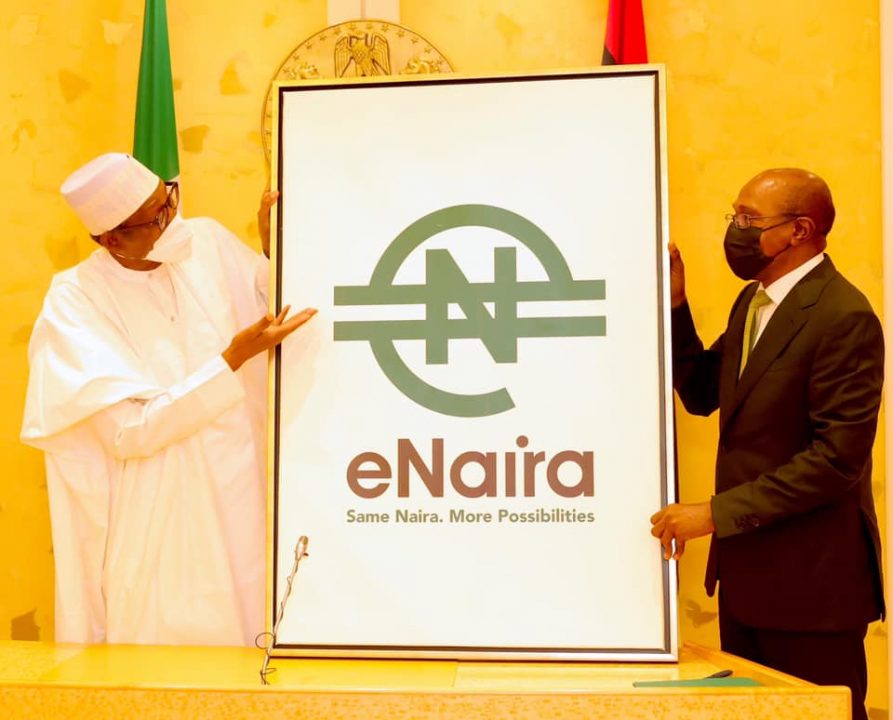
CBN Plans Digital Currency by October 1, 2021

0

The Central Bank of Nigeria (CBN) will unveil its digital currency on October 1, 2021 under the code name ‘Project GIANT.’
Mr. Godwin Emefiele, Governor, Central Bank of Nigeria, had earlier promised to deliver a digital currency to the Nigerian financial system.
Emefiele says the initiative will target remittance management, financial inclusion, revenue collection, payment efficiency and also ensure effective monetary policy management etc.