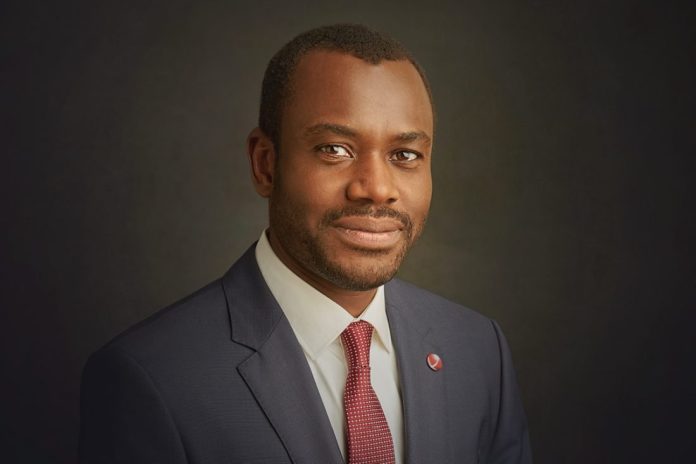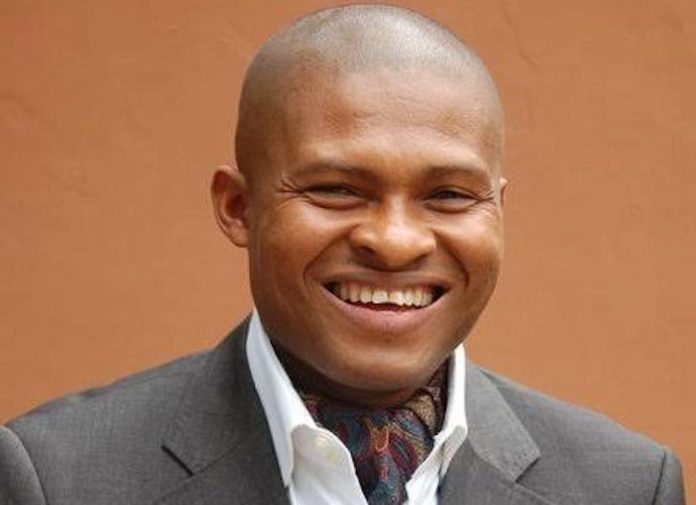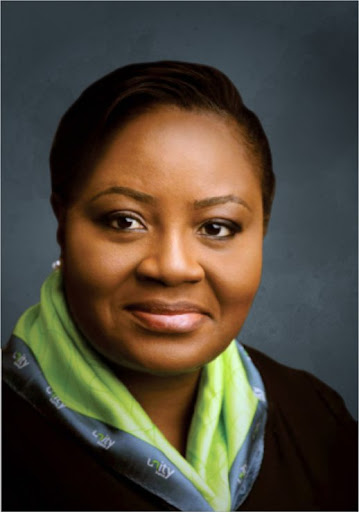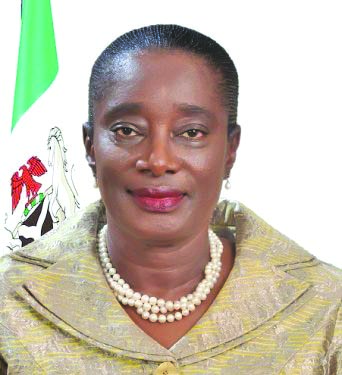
Barrister Oluwarotimi Edu is expected to become the 21st president of the Nigerian Council of Registered Insurance Brokers (NCRIB).
His investiture, which will take place in Lagos will be attended by relevant stakeholders from the financial and insurance sectors of the economy as well as players in government and private sector.
The president-elect, before now, was the deputy president of the council and he worked assiduously with the out-going president. Dr. Bola Onigbogi, to deepen insurance awareness through improved education and sensitisation exercise across the nooks and crannies of the country, including, at the states and federal levels.
Born over six decades ago in Lagos, Barrister Oluwarotimi Edu is a Lagosian, born into the families of Late Alhaji Salaudeen Edu.
He began his early education at the Surulere Baptist Primary School in Lagos, before he later proceeded to the Lagos Clerical Training College which was a famous school for the training of would-be white- collar jobbers at the time.
Oluwarotimi later switched to Premier College, Yaba, for his West Africa School Certificate, which he bagged with flying colours.
The quest for higher scholarship propped the young Oluwarotimi to secure admission with the famous Lagos State Polytechnic, Isolo, Lagos for his National Diploma and Higher National Diploma Certificates in Insurance.
He secured his first job with Security Insurance Company under the tutelage of Late Mr. Idowu Silva of blessed memories where he horned his skills in Insurance Marketing.
Though he had a flourishing career in the Insurance Industry, starting his career at the defunct Mulumba Assurance Company Limited where he was employed as a Senior Manager, Oluwarotimi briefly left for banking and later returned to the famous Industrial General Insurance Limited where he exited as Deputy Director (Marketing).
He later became the acting Managing Director of International Health Management Services before he ventured into establishing his own Brokerage firm, Quicklink Insurance Brokers Ltd, which has remained one of the leading Insurance Brokerage firms in Nigeria today.
His foray into NCRIB was when he was appointed as the Auditor of the council under its first female President, Barrister (Mrs.) Laide Osijo.
From that point, there had been no turning back for Oluwarotimi Edu as he rose meteorically on the council’s leadership ladder through his valued and qualitative contributions to become Hon Treasurer, Vice-President, Deputy President and today ascending the number One position as 21st President.
Conforming to the belief of Sir Ian Mc Gregor that “No one dies from hard work but a lot of people die when they refrain from it”, Oluwarotimi Edu’s insatiable appetite for learning even when it was most inconvenient prodded him to enroll
His thirst for knowledge made him apply for a degree in Accounting; crossing in his 2nd year to Law at the University of Lagos where he bagged his Bachelors of Laws degree, and was called into the Nigerian Bar after completing his Law School.
He still went back to study for his Master’s Degree in Law specialising in Secured Credit, Family Law and he later became a Notary Public of the Federal Republic of Nigeria thereafter. These battery of certificates and knowledge he has brought to bear on his profession and the NCRIB in several capacities.
A Chartered Insurance practitioner from the Chartered Insurance Institute London, Barr Oluwarotimi Edu is a proud product of the famous National Institute of Strategic Studies, Kuru, Jos. He was a one-time speaker at NIPSS (SEC 41) and a strong advocate of agricultural insurance development in Nigeria.
As one of the Past Presidents of the famous Lagos Lawn Tennis Club, Barrister Oluwarotimi Edu left impressionable footprints on the Club. Aside from enhancing its financial vibrancy, Barr Edu is remembered for re-energising the Club through aggressive membership drive and drawing more attention of the powers that be to the Club, making it a primus interpares amongst its peers nationally.
Similarly, he is a Chartered member of the Nigerian Institute of Chartered Arbitrators (CIArB); Current Chairman of the Insurance Brokers Forum of the West African Insurance Companies Association (WAICA); Member of the 9th Governing Council of Lagos State Polytechnic (LASPOTECH); Past President of the Lagos State Polytechnic Alumni Association); Member, Institute of Directors (MIoD); Principal Partner of Rotimi Edu & Co. a firm of Estate Managers, among others.
Rotimi Edu Becomes 21st President of NCRIB
INEC Seeks More Powers on Use of Tech for Elections
INEC Chairman, Prof. Mahmood Yakubu (left) and some Senators at the event
GOODWILL REMARKS BY THE CHAIRMAN OF THE INDEPENDENT NATIONAL ELECTORAL COMMISSION (INEC), PROFESSOR MAHMOOD YAKUBU, AT THE MEETING OF THE SENATE AND HOUSE OF REPRESENTATIVES CONFERENCE COMMITTEE ON THE ELECTORAL ACT AMENDMENT BILL 2021 AT TRANSCORP HILTON HOTEL, ABUJA, ON THURSDAY 21ST OCTOBER 2021
• On behalf of the Independent National Electoral Commission (INEC), I would like to extend our appreciation for the invitation to deliver Goodwill Remarks at this very important harmonisation meeting. For almost two years, the Commission has interacted with the Senate Committee on INEC and the House of Representatives Committee on Electoral Matters, including a retreat in Lagos, to consider our extensive proposals to amend the Electoral Act 2010 (as amended). The Commission was invited to join the technical committee that reviewed the draft Bill before the clause-by-clause consideration by the National Assembly. Clearly, we are now at the last stage before the passage of the Bill by the National Assembly and submission to the Executive for assent.
• The Electoral Act is one of the most important laws in any democracy. Election is a process anchored on a legal framework. First is the Constitution, followed by the Electoral Act. In all jurisdictions, the Electoral Act provides more detailed provisions to govern the conduct of elections and the electoral process. One of the unique aspects of the current amendment of the Electoral Act is that it started well ahead of the forthcoming General Election, unlike previous exercises which came too close to elections. The importance of starting early is that it allows for a thorough debate by citizens on aspects of the Bill long after the conventional public hearing as witnessed recently. Clearly, the Electoral Amendment Bill 2021 is one of the most extensively debated Bills in Nigeria.
• Understandably, the issue of technology in elections has dominated recent public discussions in Nigeria. The Commission appreciates the decision of the National Assembly to empower INEC to determine and deploy appropriate technology in future elections. For us in INEC, this is one of the progressive decisions by our National Assembly. As you finalise on the Electoral Amendment Bill, I urge you to continue to endow the Commission with power to determine what technology to deploy in our elections at the appropriate time. One way of doing so is to make broad provisions of the law that will empower the Commission to continue to innovate without restricting us to a specific technology such as the Smart Card Reader which could in due course become obsolete, inapplicable or irrelevant as is already the case following the recent introduction of the Bimodal Voter Accreditation System (BVAS) by the Commission.
• The Commission looks forward to the conclusion of the process without which we cannot make the Regulations and Guidelines to give effect to the provisions of the law. Without the Regulations and Guidelines, we cannot finalise on the manuals for the training of officials that will conduct elections. There are extensive provisions in the current Bill that require clear guidance by the Commission. With only 484 days to the 2023 General Election, time is of the essence. In addition to the Anambra State Governorship election holding on 6th November 2021, the Commission has already scheduled three major elections to be conducted next year. First is the Area Council election in the Federal Capital Territory (FCT) holding on 12th February 2022, followed by the Ekiti Governorship election on 18th June 2022 and the Osun Governorship election a month later on 16th July 2022. The Commission also has five pending bye-elections made up of three Federal Constituencies and two State Constituencies to contend with.
• I want to assure you that in a proactive manner, the Commission has been studying aspects of the amendment Bill and identifying areas that require the formulation of regulations and guidelines as well as the review of prescribed forms for implementation. This will enable the Commission to test-run procedures and pilot innovations ahead of the 2023 General Election. The speedy passage of the Bill will be in the best interest of our electoral process.
• INEC will continue to work closely with the National Assembly and I thank you for the opportunity to speak to you on this occasion. God bless.
NDIC Targets Risk-Based Premium by Banks in Deposit Insurance
KEYNOTE ADDRESS BY THE MANAGING DIRECTOR/CHIEF EXECUTIVE, NIGERIA DEPOSIT INSURANCE CORPORATION (NDIC), MR. BELLO HASSAN AT THE OPENING CEREMONY OF THE 18TH EDITION OF THE WORKSHOP FOR BUSINESS EDITORS AND FINANCE CORRESPONDENTS’ ASSOCIATION OF NIGERIA (FICAN) ON WEDNESDAY 20TH OCTOBER, 2021 HELD AT PREMIER HOTEL, IBADAN
Protocols
It is my great pleasure to welcome all the distinguished participants to the 18th edition of the NDIC Workshop, for Business Editors and members of the Finance Correspondents Association of Nigeria (FICAN).
I am extremely thrilled that this will be my maiden meeting with the group, along with the opportunity to address all the esteemed members of the organization since my assumption of duty, as the new Managing Director/Chief Executive of the Nigeria Deposit Insurance Corporation (NDIC).
I recall that on Wednesday 30th June 2021, I had the singular honour and privilege, of hosting the joint executives of the Lagos and Abuja Chapters of FICAN, who paid a courtesy visit to the Management of the Corporation. We recall also that FICAN leadership in its wisdom, conferred an Award of Special Recognition on the NDIC, for its supports and efforts to sustain the growth of Financial Journalism in Nigeria, during the 30th Anniversary Conference held in Lagos on the 25th of September, 2021.
These are indications of the harmonious working relationship that exists between the Corporation and the body of Business Editors and Finance Correspondents since the establishment of the Corporation.
Distinguished ladies and gentlemen, let me reiterate at this juncture, that this workshop, has always been an important part of our capacity building initiative for the media, towards ensuring their better understanding of the Corporation’s role in ensuring financial system stability.
It is also aimed at strengthening and broadening their ability to interrogate and interpret current developments in the financial services sector in general. I am extremely delighted that in the Nineteen (19) years of this laudable engagement, the objectives of the workshop are continuously being met, judging by the knowledge imparted on participants, as demonstrated by the high quality of reportage that we read in the media on a daily basis.
The choice of the theme of this year’s workshop: “Enduring Extreme Disruptions: Resilience & Reinvention for Banking System Stability & Deposit Insurance” was apt.
As economies across the globe continue to grapple with the devastating impact of the COVID-19 Pandemic, it has become expedient and highly desirable, for supervisors to come up with appropriate strategies that are required to build resilience into our financial system as we seek to provide the much-needed support to the Federal Government’s economic recovery agenda.
The workshop theme, as well as the papers to be deliberated upon along with the quality of the resource persons, were carefully selected to achieve the same objective.
Distinguished participants, permit me to reiterate the determination of the current management of the NDIC, to work harmoniously with all stakeholders, to enhance the capacity of the Corporation in the discharge of its statutory obligations towards the fulfilment of the public policy objectives for which it was established.
Our key focus is therefore to scale up the deposit insurance framework; provide timely support to insured institutions as and when required; ensure faster and orderly resolutions of liquidated insured institutions; as well as continue to assist the Central Bank in promoting the stability of the banking system
In the area of Deposit Insurance, as a key mandate of the Corporation, we have evolved a strategy which accentuates our existing framework. The initiative, strives to ensure that the insurance cover is adequate to support this objective within the banking sector.
In addition, considering the importance of the optimum Funding Ratio in deposit insurance, we are developing an effective methodology for determining a realistic Target Funding Ratio for the Corporation.
Additionally, we have commenced the review of our approach to the determination of premium by banks to make it more risk-based, such that, the probability of the risk crystallizing, becomes a major factor in the pricing methodology of our premium going forward.
Furthermore, there have been recent calls on the Corporation to enhance the provision of support, to insured institutions that are facing financial difficulties.
To this end, we have identified the need to reconsider our framework, to provide realistic terms and conditions that will enable qualifying insured financial institution promptly access technical and or financial support, in line with S.(2)(1)(b) of the NDIC Act, whilst also protecting the Corporation from possible downside risks.
We are equally collaborating with relevant stakeholders, to ensure that the Corporation discharges its responsibilities efficiently without hindrances, following revocation of licenses of any insured institution by the CBN.
This has become more important to us, giving the need to improve on our processes in resolving liquidated financial institutions. Some of the obstacles bedevilling the efficient and timely resolutions of liquidated institutions, such as slow recovery and realization of assets, as well as litigation by erstwhile shareholders and creditors of closed banks can only be addressed through effective collaboration.
In all these collaborative efforts, the media, the civil society groups, along with the insured financial institutions that are represented at this workshop, will remain the most strategic and critical stakeholders that we cherish the most.
Through the better understanding of our programmes and policies, it is hoped that you will not only be better informed in the coverage of our activities, but also be well-equipped to contribute to our advocacy and mobilisation for a resilient financial system.
I therefore call on you, to continue to support the Corporation in its resolve to fully deliver on its core mandates. On our part, we promise to keep our doors open to your suggestions and observations, while partnering with you on capacity building and other areas of mutual benefit.
Finally, Ladies and Gentlemen, I profoundly thank you all for honoring our invitation while wishing fruitful deliberations and warm stay in the ancient city of Ibadan. Thank you for your attention and God bless.
Bello Hassan, FCA
Managing Director/Chief Executive
Nigeria Deposit Insurance Corporation
Wednesday 20th October, 2021
CBN, UBA, Glo, NNPC Boost Editor’s Conference on Security
All is now set for the 17th All Nigeria Editors’ Conference, starting on Thursday, with Publisher of Premium Times, Mr. Dapo Olorunyomi; Editors-in-Chief of LEADERSHIP Newspaper, Azu Ishiekwene; Minister of Works, Mr. Babatunde Fashola; Group Managing Director, Nigerian National Petroleum Corporation (NNPC), Malam Mele Kyari; Chief of Defence Staff, Gen. Lucky Irabor, and other security chiefs, scheduled to lead discussions at the conference.
Some state governors with security challenges, including Dr Ifeanyi Okowa (Delta); Malam Nasiru El-Rufai (Kaduna); Alhaji Yaya Bello (Kogi); Seyi Mankide (Oyo); Alhaji Bello Matawalle (Zamfara); Prof Babagana Umara Zulum (Borno), and Chief David Nweze Umahi (Ebonyi) have also been scheduled to be part of the conversation.
Other state governors expected at the event include, Oluwarotimi Odunayo Akeredolu, SAN (Ondo); Adegboyega Oyetola and others.
The conference with the theme, ‘’Media in Times of Crises: Resolving Conflict, Achieving Consensus’’, will bring together editors and media owners across the country as well as their foreign colleagues to discuss the security challenges in the country and agree on the solution to the raging strife.
The conference, which is being supported by corporate organisations, including Central Bank of Nigeria (CBN), United Bank for Africa (UBA), Glo, Zenith Bank, Access Bank, Air Peace and Trustfund Pensions Limited, will take place at the Nigerian Airforce Conference Centre, Kado area of Abuja.
Other promoters are Nigeria Deposit Insurance Company (NDIC), Federal Inland Revenue Service (FIRS) and the Yobe State government.
Olorunyomi, an accomplished internationally acclaimed investigative journalist and journalism teacher, would give the keynote address that would be discussed by security chiefs, including Monguno; Irabor; Director-General, Department of State Services (DSS), Mr. Yusuf Bichi; and the Inspector-General of Police, Mr. Usman Baba.
In a statement issued yesterday in Abuja by the President, Mustapha Isah and the General Secretary, Iyobosa Uwugiaren, the Nigerian Guild of Editors (NGE), said Kyari would be the Special Guest of Honour, while the President, Newspapers Proprietors Association of Nigeria (NPAN), Malam Kabiru Yusuf, would be the Guest of Honour.
‘’A doyen of the media, Mr. Ray Ekpu, would chair the opening session with Fashola and others, including President, Nigeria Union of Journalists (NUJ), Mr. Chris Isiguzo, and foreign ambassadors giving goodwill messages.
‘’Besides the opening session, the conference would have three others; the second session for the Day 1 of the conference has a paper titled, ‘’Conflict Reporting: The Editor as a Mediator’’, to be delivered by the Editor-in-Chief, Leadership Newspapers, Mr. Azu Ishiekwene.
‘’The paper would be discussed by Editor-in-Chief, 21st Century Chronicle, Dr. Mahmud Jega; Director-General, Federal Radio Corporation of Nigeria (FRCN), Mr. Mansur Liman; and another leading journalist, Mr. Emmanuel Yawe. Noted broadcaster, Ms. Kadaria Ahmed, would chair the session’’, the statement added.
The statement said that the morning session of the Day 2, Friday, October 22, would have Managing Director, Nigerian Incentive-Based Risk Sharing System for Agriculture Lending (NIRSAL), Mr. Aliyu Abdulhameed, presenting a paper, ‘’Accessing Capital for Alternative Career Development for Editors.’’
Discussants at the session to be chaired by the Managing Director/CEO, Access Bank Plc, Mr. Herbert Wigwe, are former NGE President, Mrs. Funke Egbemode; Managing Director of New Telegraph Newspapers, Mr. Ayodele Aminu; and Executive Director (News), FRCN, Mr. Sani Sulieman.
The afternoon session with the theme, ‘’Security Challenges: Recovering Lost Grounds’’, which the statement explained, would be attended by state governors, will be chaired by the Minister of Defence, Maj-Gen. Bashir Magashi.
“The conference is to be rounded off in the evening with the induction of new fellows and members of the Guild,” the statement said.
Over 300 editors and media owners – from print, broadcast stations and online newspapers have registered for this year conference.
Fidelity Bank Wins Citigroup Excellence Award for Superior Payment Efficiency
Nneka Onyeali-Ikpe
Managing Director/CEO
Fidelity Bank Plc
In recognition of its excellent operational efficiency in foreign currency payments, leading financial institution -Fidelity Bank Plc -has been presented the Straight-Through Processing (STP) Excellence Award by Citigroup.
Every year, Citigroup, a leading global bank headquartered in New York and present in more than 160 countries, rewards a select number of banks and financial institutions that showcase the highest rates of efficiency in terms of foreign currency payments.
Essentially, STP refers to transactions processed diligently and without human intervention – which results in a more cost-effective and timely process. Fidelity Bank, which has consistently won the award for several years, successfully achieved an STP rate of 99% for 2020.
An elated Managing Director/CEO of Fidelity Bank Plc, Mrs. Nneka Onyeali-Ikpe, in a chat with journalists attributed the award to the confidence reposed in the bank by its customers and the team’s hardwork.
“This award is yet another affirmation of the significant investments we are making in our Innovation Drive, Performance Discipline, Digital Transformation, Service Excellence and Workforce Transformation as we gun for tier one status as bank by 2025. It is no secret that we go the extra-mile not only to satisfy but to delight our customers and this award clearly shows that. I am grateful to our customers for keeping faith in us and our staff for stepping to the plate to delight them at every opportunity,” said Mrs. Onyeali-Ikpe.
Commenting on the awards, Global Head of Correspondent Banking & Financial Institutions, Bharat Sarpeshkar; and Head of Global Clearing & FI Payments, Mark McNulty both of Citigroup said: “At Citi we aim to deliver stellar service through operational excellence for all our clients. The annual Performance Excellence Award is a prestigious designation presented to the leading financial institutions worldwide which have achieved high rates of STP.”
Established in 1988, Fidelity Bank is a full-fledged commercial bank, with over 5 million customers who are serviced across its 250 business offices in Nigeria and various digital banking channels.
The bank is focused on a servicing a diverse customer base and is rapidly implementing a digital based retail banking strategy which has resulted in exponential growth in savings deposits over the last three (3) years, with 40 percent customer enrollment on the Bank’s flagship mobile/internet banking products.
NPHCDA: Population Immunity Behind Vaccine Mandate for Civil Servants
By Tajudeen Kareem
Dr. Faisal Shuaib
Executive Director/CEO
National Primary Health Care Development Agency
The quest for population immunity is the underlying reason for the vaccine mandate Nigeria rolled out on October 13, 2021 for federal civil servants to increase the number of persons immunised against Covid-19.
Secretary to the Government of the Federation and Chairman, Presidential Steering Committee on COVID-19, Boss Mustapha announced the requirement for federal employees to vaccinate or ensure they bring negative vaccine tests from three-days-prior validity. It seemed like a tall order pointing in only one direction. The regulation would take effect from 1 December 2021, more than six weeks from now.
Mustapha’s words stated: “With effect from 1st December 2021, Federal Government employees shall be required to show proof of COVID-19 vaccination or present a negative COVID-19 PCR test result done within 72 hours, to gain access to their offices, in all locations within Nigeria and our Missions. An appropriate service wide advisory/circular will be issued to guide the process.”
Officials explained that the vaccine mandate for civil servants is necessary owing to the nature of their job that requires constant interface with citizens from various walks of life. They are thus a priority for control efforts.
Dr. Faisal Shuaib, Executive Director of the National Primary Health Care Development Agency (NPHCDA), the agency in-charge of vaccination, stated at a press briefing that the measure is not punitive but seeks the protection of the larger populace. Nigeria is following global best practice, aspiring to acquire herd immunity when 70 per cent of the population is vaccinated.
Shuaib gave a clarification: In making a pronouncement that by 1st December, all federal government employees would have to show proof of vaccination or negative PCR test. We are clearly aware that we have to put in place all of the machinery, all of the processes and allow federal government employees access to get these vaccinations in locations that are nearest to them.
“You should also be mindful of the fact that a lot of these federal government employees have already gotten the vaccine anyway, but of course this is a small fraction, a minority of these employees that are not taking the vaccine, continue to pose a risk to other colleagues. These are the people that we need to be sure are negative before they have access to the institution. So, we have to emphasize the fact that there is an option for people to take.
“It is not that people are being forced to take the vaccine. You have the option of not taking the vaccine but actually showing negative PCR test so that you cannot be among the people that are infecting others.”
Mustapha added an advisory and caution as citizens prepare for large religious observances by both Muslims and Christians.
“The PSC wishes to put Nigerians on notice that two major religious festivities (Salah and Christmas) are approaching, and we shall be experiencing increased passenger traffic in and out of the country. Similarly, events of large gatherings are likely to hold. While the PSC prepares to escalate surveillance and other control activities, we urge the States and all Nigerians to also increase their vigilance and take measure to moderate activities”, Mustapha cautioned.
Nigeria had by 13 October 2021 vaccinated four million citizens. Two million six hundred thousand (2,645,020) persons have received the first dose of AstraZeneca vaccine and 1,407,736 eligible persons got the first dose of Moderna vaccine.
Shuaib stated: “To end this pandemic, we must achieve enough level of population immunity when the virus essentially becomes a nuisance and no longer a threat. The only way to achieve this is if eligible persons come out for vaccination and observe the non-pharmaceutical interventions. The COVID-19 vaccines remain the most effective tool against this virus.”
He noted that vaccine mandates have become a global practice. “With the increasing number of cases of COVID-19 globally, we are beginning to see countries instituting vaccine mandates. Some countries have begun asking workers to either present a proof of vaccination or provide weekly COVID-19 PCR negative results to be allowed into public offices”, he stated.
The NPHCDA boss points to science and empirical data in support of the measure. “A recent study by the United States Centre for Disease Control which examined 600,000 COVID-19 cases, revealed that people who were unvaccinated were about four and a half times more likely to contract COVID-19. It further showed that those who are not vaccinated against COVID-19 were eleven times more likely to die of the disease and ten times more likely to be hospitalized with the disease. We should also be mindful of the long-term effects of COVID-19 infection, which is characterized by blood clotting disorders, lung, and kidney problems”.
Federal health officials tread carefully in managing Covid-19. They are careful to dispel any doubts about the efficacy and necessity for vaccination against the backdrop that nature has spared Nigeria from a feared tsunami.
Shuaib emphasised the necessity for the vaccination. He also asked officials at all levels of the chain and citizens to be careful with the vaccines available. For one, do not mix the vaccines for the first and second doses. If you take AstraZeneca for the first dose, officials must ensure that the second dose is also AstraZeneca.
“Let me emphasise that all COVID-19 vaccines are safe and capable of protecting people against the disease. We do not promote preference of one vaccine brand over the other, and we strongly discourage mixing of vaccine brand for first and second doses”, said the NPHCDA boss.
The Federal Government urges states to take full control of the vaccine doses they receive and ensure compliance with regulations. Foremost is the fact that vaccination is free to all citizens. No state should charge for vaccination. States also need to ensure they do prevent situations where medical personnel circumvent procedures to sell vaccines or vaccine certificates.
Shuaib issued the Riot Act. “Any State found to be condoning acts of corruption will no longer be allocated vaccines. We have received reports of people trying to procure cards from health workers. These reports are being investigated and anyone found wanting would be prosecuted. It is important to emphasize that it is in the interest of public safety and collective well-being of Nigerians that the Federal Government has made available these vaccines free for all eligible persons”.
The NPHCDA boss also informed Nigerians that corporate vaccination had be instituted to make it easier for workers who are too busy at their workplace to receive the vaccination at their office premises.
He stated that the corporate vaccination for Ministries, Departments, Agencies, public and private corporate organisations will be provided free of charge.
States and Local Governments are also reminded that no fees/levies should be demanded from the corporate bodies when teams are sent to provide these services.
Great Nigeria Insurance: Commitment to Customer Service Translates to Financial Gain
Mrs. Cecilia O. Osipitan
The Managing Director/CEO
Great Nigeria Insurance Plc
The Managing Director/CEO of Great Nigeria Insurance (GNI) Plc, Mrs. Cecilia O. Osipitan, has said that the underwriting firm recorded significant improvement in its operations and financial performance as a result of its unflinching commitment towards exceptional service delivery.
In a statement, Oyinkansola Sobande, Head, Corporate Communications & Brand Management at GNI posited that the underwriting firm is on the trajectory of achieving and even surpassing its target for the financial year, adding that its focus on delighting its customers remains at the fore front of all its business activities and interventions.
According to her, there is no comprise to exceptional service delivery in Great Nigeria Insurance Plc because the major focus of the company is to ensure that our esteemed customers get to enjoy top notch service at every touch point of the brand.
Osipitan stated that despite the challenging business and economic environment that emerged from the slow pace of activities following the global lockdown occasioned by the coronavirus pandemic; the organisation is optimistic of actualising its enterprise goals.
In her words: “We remain committed to prudent growth of our business, responsible risk appetite, quality of our balance sheet and the overall wellbeing of our organization; our commitment to uphold our Vision and Mission has made the company one of the country’s most relevant and responsive insurance companies in the country.”
She further mentioned that, customer satisfaction remains the guiding strategy for business continuity; Great Nigeria Insurance Plc is poised to ensure the delivery of exceptional quality service to all its valued customers.
Whilst expressing optimism that the insurance industry and the broader economy will continue to recover and rebound from the negative impact of the global pandemic in the last quarter of 2021 all the way into 2022, Mrs. Osipitan assured all stakeholders of the company’s pledge to maintain professionalism and continue to ensure strict compliance with the rules and regulations guiding its business operations. Conclusively, she mentioned that the intention of the organisation is to uphold its corporate ethos and to continually strive to make good its promise at all times.
“Great Nigeria Insurance Plc is no doubt a formidable force to reckon with in the Nigerian Insurance landscape with a network of branch offices spread across the country buoyed by cutting-edge technology in delivering seamless and convenient insurance service to all teeming customers in the country and beyond.
Our over 60 years’ experience of insurance underwriting, risk management and financial advisory have enabled us to exclusively master the business terrain that give us an edge in service delivery and total customer delight.”
UNDP Africa Director Seeks New Approach to Accelerate Nigeria’s Development
Concluding an eight-day official visit to Nigeria today, the United Nations Assistant Secretary-General and United Nations Development Programme (UNDP) Assistant Administrator and Regional Director for Africa, Ms. Ahunna Eziakonwa, emphasised the urgency in seizing critical opportunities to accelerate Nigeria’s sustainable development.
During her visit, Ms Eziakonwa met with H.E. President Muhammadu Buhari, H.E. Vice-President Yemi Osinbajo, and other senior leaders at both Federal and State Government level – emphasising the importance of leveraging wealth creation through investing in women, youth, the creative industry and the private sector. The mission included a multi-city visit to the north-east, Abuja, Owerri and Lagos.
Starting with crossing the Cameroon-Nigerian border by foot into Borno State, the Assistant-Secretary General witnessed firsthand the impact that Federal Government and Borno State – led stabilisation efforts have had on the most vulnerable people in north-east Nigeria – where Ms Eziakonwa inaugurated infrastructure serving borderland communities in the Lake Chad Basin ( both in Cameroon and in Nigeria), such as a police station, barracks and new immigration and border control offices as well as housing for immigration officers.
“Stabilisation efforts are working. I was in Banki less than a year ago and being there again last week I was struck by the transformation the town and people living there have undergone,” explained UNDP’s Regional Director.
“Police and customs officers were proud to be back to serve people in the community, who, in turn, have expressed they now feel more secured. Through our joint stabilization work, we can reduce needs and strengthen support to humanitarian action.”
In Abuja, Ms Eziakonwa met with H.E. President Buhari, to reinforce UNDP’s support to Nigeria’s recovery from the COVID-19 pandemic and its plans to speed up sustainable development in the Decade of Action – focused on climate change, wealth creation, youth employment, and women’s participation in politics.
“Nigerian authorities and people have immediately responded to the pandemic and we are proud to have supported the procurement of forty percent of the equipment needed for the response as a ‘One UN’ effort,” highlighted Ms Eziakonwa.
“However, the pandemic is not over yet, and we must now redouble efforts to address the global inequality evident in vaccine famine. Vaccines must be available to all those who wish to take it.”
Ms. Eziakonwa commended the Federal Government for launching the National Poverty Reduction with Growth Strategy (NPRGS), mandated to lift 100 million Nigerians out of poverty in the next 10 years – emphasizing the fundamental role the private sector plays in Nigeria.
In Owerri, in partnership with both Imo and Abia State Governments, Ms Eziakonwa launched a socio-economic revitalisation project to support 11,000 people across both regions to strengthen economic capacities of communities affected by the pandemic. Support will go to livelihoods support, business continuity, improving food security and social cohesion as well as support for start-ups companies.
In Lagos, Ms Eziakonwa inaugurated Nigeria’s first Accelerator Lab, which will offer opportunities for young people to accelerate and scale up home – grown solutions to Nigeria’s development challenges. With the private sector, she witnessed a renewed commitment to support youth entrepreneurship and empowerment including through the Jubilee Fellowships Programme.
“What I have witnessed in Nigeria, and last week in Cameroon, is a dynamic Africa. Empowering people, particularly women and youth, facilitating their endeavors, and scaling up the transformative innovations they develop, is the only way to support Nigeria and its people in their unique development path towards a more inclusive and sustainable future.”
CIIN Honours Muhammadu Buhari as Grand Patron
The Chartered Insurance Institute of Nigeria (CIIN) has officially honoured President Muhammadu Buhari as Grand Patron of the Insurance Industry in Nigeria during a courtesy visit to the President at the Presidential Villa, Abuja.
Nigeria Scores High on Enforceability of Standard Agreement-ABSA Report
Nigeria, Ghana and South Africa top 20 other African countries under the enforceability of standard master agreements pillar in the latest African Financial Markets Index presented by Absa, a leading financial services provider.
The insight was delivered recently during the presentation of its Absa-OMFIF Financial Markets Index.
The top financial services provider also revealed that innovations in sustainable finance, digital transformation, alongside important initiatives in transparency and regulation, will help reinvigorate Africa’s financial markets as they recover from the impact of Covid-19.
The latest African Financial Markets Index which was produced by a joint research effort of ABSA and OMFIF measures financial market development in 23 countries from across the African continent, highlighting economies with the most supportive environment for effective markets.
The aim of the index is to show how economies can improve the market framework to bolster investor access and sustainable growth, and act as a benchmark for investors and policy-makers.
As a reflection of the global push towards sustainability, this is the first year that the index has included ESG indicators.
The availability of sustainable finance products, such as green bonds and equities, now contributes to countries’ scores for Pillar 1: Market depth. The index also scores countries on policies that promote ESG initiatives in financial markets for the first time.
The introduction of these sustainability-focused indicators weighs down the scores for many countries in the index as developments in this area are often at an early stage. The average score in the index fell to 46.4 out of 100 in 2021 from 50.8 in 2020, reflecting markets’ muted performance in these new indicators. However, the new measures serve as targets for countries to work towards.
Charles Russon, Chief Executive of corporate and investment banking, Absa, said of the index’s findings:” While some might find it disheartening to see the average score across the board drop, Africa is navigating an extremely tricky economic atmosphere. Recovery from the Covid-19 pandemic has not been as straightforward as we would have hoped last year, and this has had a large impact on the twin challenges the continent faces in reinvigorating financial markets post-pandemic while strengthening market infrastructure.”
He continued, “However, we’ve seen a lot of positive progress in countries’ efforts to upgrade market infrastructure and regulatory support through the development of technology-based tools which will help future-proof Africa’s financial markets. With countries using innovation to boost local markets and build a broader investor base, there are plenty of reasons to be hopeful about the future of Africa’s macroeconomic landscape.”
The ABSA African Financial Markets Index tracked performances in key markets on the continent. Divided into six pillars, the report measured all 23 countries against these pillars. In Pillar 1: Market depth, scores dip by an average of 1 point to 40.5 from 41.5 in 2020 due to lower equity market turnover, which has persisted since the onset of the Covid-19 pandemic.
While market capitalisation rose in almost all of the countries in the index, it was not enough to offset weak trading activity. Only nine countries have introduced financial products that can be classified as ‘green’ or ‘sustainable’, with green bonds available in seven countries, either on exchanges or over the counter. Kenya and Morocco score highest in this indicator for having green or sustainable bonds, equities and mutual funds in their markets.
Foreign exchange reserves grew by 24% in Pillar 2: Access to foreign exchange, with South Africa coming first and Eswatini moving up 11 places. However, a lack of liquidity in the FX markets, as measured through interbank figures, weakened across almost all countries.
Nearly all countries’ scores declined in Pillar 3: Market transparency, tax and regulatory environment due to lower marks in capital market development. Poor performance on the new indicators that look at incentives for issuance of sustainable financial instruments, integration of sustainability factors in financial market standards and adoption of climate stress testing also contributed to the decline.
Namibia tops Pillar 4: Capacity of local investors once again, earning full marks for having a deep pension market relative to the size of its population and securities market. However, the weak potential on the part of the domestic pensions market meant that 19 countries failed to score over 50.
Countries generally performed best in Pillar 5: Macroeconomic outlook, achieving an average score of 62. Egypt regains the lead – which it lost to South Africa last year – propelled by strong gross domestic product growth in 2020. The macro impact of the pandemic continues to be felt in this sector with economic growth for many countries subdued and public finance showing the strain.
Ghana, Nigeria and South Africa earn full points in Pillar 6: Enforceability of standard master agreements. Mauritius, Uganda, Zambia and Malawi miss out on joining these countries at the top of the pillar by not yet fully adopting standard master agreements.
“The index is evolving to stay relevant, recognising the greater role that sustainability plays in market development, as well as the importance of mitigating climate-related risks to the financial system, especially for African countries that are more vulnerable to the effects of environmental deterioration,” said David Marsh, chairman of OMFIF.
“Innovations in sustainable finance and market infrastructure will be critical to ensuring that African markets remain competitive and future-proof”, he added.
NCC Reports 97% Readiness Level for 5G Deployment in Nigeria
The Nigerian Communications Commission’s (NCC’s) plan for Fifth Generation (5G) technology deployment in the country continues to gather momentum with the Commission confirming that its readiness to begin full implementation is at 97 per cent.
The Executive Vice Chairman of NCC, Prof. Umar Garba Danbatta, re-affirmed the status of the Commission’s 5G technology deployment at the annual African Tech Alliance Forum (AfriTech 2021) held in Lagos on Wednesday, October 13, 2021 with the overarching theme: “Embracing Changes and Digital Transformation in the New Normal.”
Focusing his presentation on “NCC as a Digital Transformation Crusader and Nigeria’s in-Road to 5G Deployment,” Danbatta stated that, following the advent of COVID-19 pandemic, there has been a change in the dynamics of people’s interaction, especially on the Internet. According to him, almost every means of communication has become virtual in one way or the other.
Danbatta, however, stated that this paradigm shift in communication has led to significant increase in network connectivity requirements as a result of unprecedented upsurge in Internet traffic, occasioned by the use of a plethora of web applications such as Zoom, Microsoft teams, WebEx, Goto, Webner and so on. He said this has made remote work, virtual meetings, virtual studies and virtual healthcare delivery, among others, the new normal.
According to Danbatta, even though, the network infrastructure in Nigeria has demonstrated some capacity to contain the surge in internet traffic, a lot of work is being done by the Commission to boost network capacity, sensitise the public and ensure accessibility to affordable connectivity during the period of the pandemic and beyond.
Due to the network traffic demand, the EVC said the NCC is working with operators to implement a number of initiatives to ensure network expansion. These, he said, include ongoing plan to auction spectrum in 3.5 gigahertz (Ghz) band to operators for the deployment of 5G network in Nigeria.
“Consistent with our mandate as enshrined in the Nigerian Communications Act 2003 (NCA-2003) and other guiding legislations, we have been working to ensure the penetration of broadband services in line with Federal Government’s targets, as contained in Nigerian National Broadband Plan (NNBP), 2020 to 2025.
“Already, we are set for the auction some spectrum slots in 3.5GHz band. The other day I was at the National assembly, I informed the senate that we were 95 per cent ready for 5G. Today as we speak, I am delighted to tell you that we are already at 97 per cent completion,” Danbatta said.
“The Committee set up to auction the Spectrum has already developed and Information Memorandum (IM) which is already published for inputs and comments from all industry stakeholders. Prior to this, a 5G deployment plan was developed and we have since secured Federal Government’s approval,” he said.
He said this is in addition to a lot of other initiatives being put in place by the Commission to improve broadband connectivity in Nigeria, adding that the surge in Internet traffic induced by Covid-19 has continued to challenge National Regulatory Authorities (NRAs) and other arms of governments to ensure deployment of adequate resources such as spectrum and other forms of support to increase network resilience and accessibility to telecommunication services.
“Emerging technologies such as 5G, which NCC is driving aggressively in Nigeria, Internet of Things (IoT); Cloud Computing; Quantum Computing Augmented/Virtual Reality, and similar emerging technologies are playing a critical role in improving remote communication over the internet with great user experience. The NCC is committed to promoting this inevitable change and enhance user experience through effective regulation of the telecoms sector,” the EVC said.
The EVC was represented at the event by Engr. Oluwatoyin Asaju, Director, Spectrum Administration. Also in attendance was The Director, Public Affairs, Dr. Ikechukwu Adinde.
Other key industry stakeholders participated at the one-day Forum, which also featured exhibition by some sector players.
COVID-19 Led to Higher Profitability for Corporate Institutions – Soyewo
The Executive Chairman, Prestige Insurance Brokers Limited, Prince (Dr) Feyisayo Soyewo has said that the COVID-19 pandemic has helped corporate institutions to retool their operational strategies, leading to higher profitability and easier ways of doing things virtually and getting results.
Soyewo stated this while delivering an opening remark as the Conference Chairman of the 6th National Insurance and Pension Correspondents (NAIPCO) with the theme: COVID-19 Impact on Financial Inclusion: Opportunities for Insurance and Pension Sectors.
He said that it was heartwarming that many individuals and operators have taken the whole pandemic experience as an opportunity for a paradigm shift in all undertakings.
” The theme of the conference cannot be more apt than now, when the entire world is just heaving a sigh of relieve from the ruinous impact of the pandemic.
” It makes little news that the pandemic disrupted the usual work culture and affected every facet of human endeavors ever experienced in recent history,” Soyewo said.
According to him, the financial services sector of which the insurance and pensions are critical players also had their fair share of the impact of the pandemic.
The Insurance broker chairman noted that for the insurance industry, aside from the long cessation of work, necessitating remote working conditions, the pandemic led to the need to review rates and revisit some of the policy conditions and exclusions earlier permissible for some insurances.
“I want to believe that the pension sector also had its own side of the pandemic which they would be able to relate to us more explicitly at this auspicious forum.
” We must all come to terms with the fact that change is the only permanent thing in life and those who are resistant to change would be changed by change ultimately, ” the broker said.
Soyewo commended NAIPCO for its very effective reportage of events, particularly relating to the insurance industry, as he has watched the association grow over the years.
He noted that NAIPCO has continued to record phenomenal leap in its quest to create relevance for its members, as well as become a strong voice in issues of advocacy, particularly in the nation’s financial ecosystem.
The Chairman, NAIPCO, Mr Chuks Okonta said that the conference, which is in its 6th edition, is one of those avenues the association is contributing its quotas to the growth and development of the two critical sectors it covers, which are; insurance and pension sectors.
” Today, we, as journalists, are not only watching and reporting, but participating actively in reshaping the two industries and propelling them to growth.
“The last two years have been extremely hard for Nigerians, Africans and the world at large due to the invasion of the deadly coronavirus pandemic across the world and Nigeria inclusive rewrites the business environment template. Human interface was limited, most operations went online and those who were not technologically savvy were left in the dustbin of the past, as the world matches on with full speed. Though businesses closed shops, people died and sources of livelihood shrank as a result of the pandemic, but it opened up several opportunities in other areas of businesses that may not have been explored if not for the Covid-19. Financial sector operations become more sophisticated as face-to-face interaction went into oblivion, hence, projecting the human and machine interactions,” Okonta said.
According to the NAIPCO Chairman, the development created an opportunity for both sectorial players to increase their awareness and widened their tentacle to capture this niche market.
Okonta said to this end, the association assembled experienced human capital to do justice to the theme of the conference.
He however appreciated all members of the 2021 Conference and Editorial Committees who were both instrumental to put the conference together, sponsors who made the August gathering a reality and resources persons and eminent personalities who gave their time in spite of their tight schedule.
Sovereign Trust Insurance: N2.5bn Claims Payment in 9 Months
Olaotan Soyinka
Managing Director/CEO
Sovereign Trust Insurance Plc
Sovereign Trust Insurance Plc has again shown avowed commitment to claims settlement.
The underwriting firm recently released its third quarter claims record detailing total claims paid between January and September 2021.
In the published statement, the claims figures reveal that the sum of N2,515,004,405.67 (Two billion five hundred and fifteen million, four thousand, four hundred- and five-naira, sixty-seven kobo only) had been paid in the period under review.
A rundown of the claim’s composition paid during the nine months period shows Energy/Oil & Gas Insurance having the highest figure of N774 million, (seven hundred and seventy-four million), Fire and Allied Perils accounted for N505.5 million while N460 million was paid as claims under Motor Insurance.
Other figures as released by the organization are, N355 million for General Accident, N215 million for Engineering/Contractors’ All Risk Insurance and N203 million for Marine & Aviation Insurance.
While commenting on the claim’s payment, the Executive Director, Technical, Jude Modilim, said “there is no compromise to claims settlement in Sovereign Trust Insurance Plc because that is the barometer for our customers to determine whether we are delivering on our promise or not. We do not intend to fall short of this obligation and we will continually strive to make good our promise at every point in time as long as the claims are genuine and treated accordingly.”
While commenting further, Modilim stated that the company has put in place a friendly-claim-process which ensures that claims are settled within the shortest period possible.
“The processes involved from the moment a claim is reported and the period the customer receives the cheque have been made as seamless as possible” he concluded.
In the same vein, the Managing Director/CEO of the organisation, Olaotan Soyinka stated that “one of our means of advertisement in Sovereign Trust Insurance Plc is prompt claims settlement and it has helped to strengthen the relationship with our customers. We do not allow them to go through distasteful experience in the process of getting their claims settled. Our processes are hinged on professionalism, ethics and promptness.”
Sovereign Trust Insurance Plc is fast emerging as a reckoning force in the Nigerian Insurance Industry with a network of eighteen (18) locations spread across major commercial cities in the country.
With Shareholders fund in excess of N8.6 billion, Sovereign Trust Insurance Plc towers high above its peers in the industry. It will be recalled that Sovereign Trust Insurance was recently awarded the “Outstanding Insurance Company of the Decade” by Marketing Edge, a renowned Marketing Communications outfit in the country.
UNDP Unveils Accelerator Lab to Generate Solutions to Nigeria’s Dev Challenges
Today, the United Nations Development Programme (UNDP) officially launched the Accelerator Lab to help catalyze local solutions to some of the most complex development challenges in Nigeria. Funded by the German Cooperation, the Italian Government and the Qatar Development Foundation, the Lab will serve as a facilitator, helping to connect grassroot innovators and policy makers, to develop new approaches that fit the complexity of Nigeria’s current development trajectory.
The Accelerator Lab was unveiled in Lagos by UNDP’s Assistant Administrator and Regional Director for Africa, Ms. Ahunna Eziakonwa, Special Advisor to the Governor of Lagos State on Sustainable Development Goals (SDGs), Ms. Solape Hammond and UNDP Nigeria Resident Representative, Mr. Mohamed Yahya, among others.
The speed, dynamism and complexity of challenges, like climate change, poverty, insecurity, and rising inequalities, that Nigeria continues to face requires a new way of thinking, as well as a radical shift in the way that solutions are developed and deployed.
The Accelerator Lab presents an opportunity for the innovation ecosystem within the country to re-imagine a new future, while leveraging local solutions for inclusive and accelerated development.
“We are seeing a different narrative in Nigeria, which is the face of remarkable innovation, cutting edge development ideas, and an excitement about the future” said Ms. Ahunna Eziako, UNDP’s Assistant Administrator and Regional Director for Africa. “The Accelerator Lab will help innovators across the country look at challenges through the lens of opportunity and develop the true potential of this country’s innovation and ingenuity.”
The complexities of development in the 21st century means the UNDP must play a role in finding faster and more sustainable solutions to transform our world. The Accelerator Lab offers the Nigerian innovation ecosystem a platform to develop human centered solutions, at the speed and scale required by the needs of the region. The goal is to help close the gap between the current practices of international development in an accelerated pace of change.
The Accelerator Lab in Nigeria will help to identify development problems which will be solved together with local and national partners by offering support in the areas of solutions mapping, testing, experimenting, and more.
Launched globally by the UNDP in 2018, a worldwide network of 90 Accelerator Labs serving 78 countries have been established to re-imagine development for the 21st century.
The UNDP Accelerator Labs globally works to build the world’s largest and fastest learning network to reach Agenda 2030 and the attainment of the SDGs.