Sunday, December 28, 2025
28.3 C
Lagos
Home Blog Page 162

Mutual Benefits Assurance: 26 Years of Thanksgiving to God!

0

L-R: Ambassador Babatunde Ajisomo; his wife, Ronke Ajisomo, Director, Mutual Benefits, Liberia; Dr Akin Ogunbiyi, Chairman, Mutual Benefits Group; his wife, Dotun; Femi Asenuga Managing Director/CEO, Mutual Benefits Assurance; his wife, Adebowale, and Biyi Ashiru-Mobolaji, Executive Director, Operations, cutting the Anniversary Cake during the Mutual Benefits’ 26th annual thanksgiving service in Lagos on Saturday.

Mutual Benefits Assurance Plc over the weekend celebrated its 26th Annual Thanksgiving with a firm commitment to remain rooted in God to appreciate divine favour on the company since inception 26 years ago.

Dr. Akin Ogunbiyi, Group Chairman of Mutual Benefits Assurance Plc said the insurance entity owes its incredible success story and growth over the years to the Hand of God in its day-to-day operations.

“We have to thank God. To worship God and give glory to God. Despite the challenges, the Lord has stood firmly with Mutual Benefits Assurance for 26 solid years.”

Ogunbiyi said his main objective in creating Mutual Benefits was for the company to add value to the insurance sector in Nigeria, provide quality jobs to Nigerians and to outlive him.

“In that regard, l wish to thank and appreciate the entire management, staff and clients of the company for sustaining the dream for this long.”

Mr. Femi Asenuga, the Managing Director/CEO of Mutual Benefits Assurance Plc added that the insurer which would clock 27 in the Nigerian insurance market in October 2022, owes its achievements and attainments to God.

“God made it possible for Mutual Benefits to attain such age. God is our source and strength. We thank our customers for their role in the success and growth of the company. We appreciate them immensely. Mutual Benefits has created subsidiaries within and outside Nigeria and has provided thousands of jobs to Nigerians.”

During the Annual Thanksgiving, long-service awards were given to deserving  members of staff, ranging from five to 25 years of service to the company.


Stanbic IBTC to Empower Customers with Smart Loan Digital Solution

0

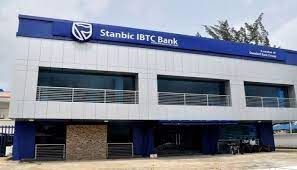
Stanbic IBTC Bank, a subsidiary of Stanbic IBTC Holdings PLC, has introduced a Smart Loan digital solution to enable customers who have an account with their Asset Management arm access a loan to enable them meet their medium-term financial obligations.

According to the bank, the devaluation of the naira due to the global economic downturn has reduced disposable income as more naira is required to maintain the current level of expenditure and consumption. This is more so, given that the economy is largely import driven and there is a need for people to access funds seamlessly from their financial partners.

It stated that the Smart Loan, a digital, paperless loan facility will come in handy for many Nigerians, especially those in dire need. The solution will support Nigerians by giving them access to funds while also contributing to economic growth.

The Smart Loan digital facility is available to customers with a mutual fund investment with Stanbic IBTC Asset Management. This enables them to access the instant and quick paperless loan facility of up to N10 million. The lending solution empowers them to meet their financial needs while also maintaining a healthy cash flow.

Oladele Sotubo, Chief Executive, Stanbic IBTC Asset Management, said, “The Smart Loan product is designed to help provide our customers with the necessary financial support of up to N10 million to meet their medium-term financial responsibility, while also positioning them on a path to long-term financial stability. We understand the need for constant cash flow and its relevance to our livelihoods and households.”

Bunmi Dayo-Olagunju, Head, Client Solutions, also said Stanbic IBTC Holdings will continue developing innovative financial solutions to enable customers to achieve stable financial freedom through simple and quick banking solutions accessible to them at their convenience. We are delighted that we can further serve our customers in positive ways that improve their finances through our arrays of financial products.”

Bunmi also stated that the firm is committed to leveraging technology to help accelerate economic development and improve the standard of living amongst its customers.

ASUS Presents Incredible Unfolds at CES 2022

0

KEY POINTS

  • Zenbook 17 Fold OLED, Zenbook 14X OLED Space Edition and Zenbook 14 OLED combine distinctive designs, latest-gen performance and stunning displays
  • ASUS Chromebook Flip CX5 and ExpertBook B5 series deliver expansive visuals, brilliant performance and modern capabilities to enterprises and SMBs
  • ProArt Display PA169CDV empowers professional creators with Wacom EMR technology for ASUS ProArt Pen, stunning 4K resolution and top-notch color
  • ASUS TUF Gaming F15 and TUF Dash F15 laptops bring 12th Gen Intel CPUs, MUX Switch and refined chassis design to a broad range of gamers

ASUS today announced the latest lineup of innovations at the Incredible Unfolds virtual launch event, continuing the brand’s legacy of pushing the PC industry into new territory with the breakthrough foldable design of Zenbook 17 Fold OLED and the commemorative Zenbook 14X OLED Space Edition. In addition, the launch event showcased Zenbook 14 OLED, ASUS Chromebook Flip CX5 and ExpertBook B5 series laptops for empowering consumers and enterprises alike; ProArt Display PA169CDV with Wacom EMR technology for giving interactive experiences to professional creators via ASUS ProArt Pen; and ASUS TUF Gaming F15 and TUF Dash F15 gaming laptops for bringing excellent performance to a broad range of gamers.

“ASUS has always been about the incredible. And we are proud of our ability to offer brilliant solutions to people everywhere, from business users to creators, gamers and more,” noted ASUS co-CEO Samson Hu as he kicked off the launch event.

ASUS is evolving the PC for a hybrid world, where computing is ubiquitous and everyone is always-on, always-mobile, and always moving across devices and contexts. The new Zenbook lineup has been created for increasingly tech-savvy users who need ever-faster and more powerful devices. With the latest 12th Generation Intel Core™ processors, these new solutions empower users with a blend of ultimate performance, innovative features and exquisite designs, all housed in highly portable, thin and light form factors.

“12th Gen Intel Core processors and the Intel Evo platform deliver leadership performance, connectivity and PC innovations, enabling the verified experiences people want across various segments,” said Michelle Johnston Holthaus, Executive Vice President and General Manager of the Sales, Marketing and Communications Group, Intel. “Our joint platform effort with ASUS to partner on this innovation elevates the laptop experience with infinite possibilities.”

During the launch event, ASUS also announced new designs on Zenbook 17 Fold OLED, Zenbook 14X OLED Space Edition and Zenbook 14 OLED. In particular, select new laptops from the Zenbook family, such as Zenbook 17 Fold OLED and Zenbook 14 OLED, will feature a refreshed ASUS Monogram that is based on the visual concept of the ASUS 30th anniversary emblem. The modernized Monogram represents everything that Zenbook espouses: world-class innovation, an ascending spirit, user-centricity and dedication to joyful experiences.

Onstage innovations

Zenbook 17 Fold OLED (UX9702)

Incredible unfolds: ASUS has worked closely with Intel and BOE Technology Group to unleash Zenbook 17 Fold OLED, the world’s first 17.3-inch foldable OLED laptop. The boundary-pushing design offers two sizes of OLED display in one device: a large 4:3 17.3-inch 2.5K touchscreen that folds in the middle to create two seamless 3:2 12.5-inch 1920 x 1280 displays. Combined with the full-size ASUS ErgoSense Bluetooth keyboard and touchpad, the folding design provides the versatility of multiple modes — PC, Laptop, Tablet, On-Screen Keyboard, Book and Extend.

For immersive entertainment, the PANTONE Validated, foldable OLED touchscreen — which is also TÜV Rheinland-certified for eye care and has a 100% DCI-P3 gamut — is accompanied by Dolby Vision HDR for ultravivid picture quality along with Dolby Atmos immersive audio and a powerful quad-speaker Harman Kardon-certified sound system.

For next-generation smart capabilities, an HD IR camera works together with Windows Hello and the new Intel Visual Sensing Controller chip to enable several new AI-powered features, including user-presence detection; an integrated color sensor for automatic adjustment of screen brightness and color temperature; and a 5 MP webcam with ASUS 3D Noise Reduction technology for clearer video calls.

To ensure effortless performance and connectivity, the laptop delivers the latest 12th Generation Intel Core i7 U-Series processors, Intel Iris Xe graphics and two USB-C Thunderbolt 4 ports, which support fast charging of the 75 Wh battery and connections to external displays.

Co-engineered with Intel, the Zenbook 17 Fold OLED design will meet the requirements of an Intel Evo laptop through Intel’s hardware specifications and key experience targets for responsiveness, instant wake, battery life, fast charge and intelligent collaboration. Zenbook 17 Fold OLED will be available for purchase in mid-year 2022.

Zenbook 14X OLED Space Edition (UX5401)

The exclusive Zenbook 14X OLED Space Edition is a prestigious special-edition laptop built to commemorate the 25th anniversary of the ASUS P6300 laptop’s 600-day space mission and to represent the ASUS ‘In Search of Incredible’ brand spirit.

Featuring unique space-themed design details and finished in a special Zero-G Titanium color, Zenbook 14X OLED Space Edition celebrates a key milestone in the history of ASUS laptops and encourages users to start their voyage of discovery and explore beyond the limits.

Exclusive to the Space Edition is its futuristic ZenVision, a 3.5-inch OLED companion display mounted externally on the lid that can show customizable messages and animations.

Built to withstand the rigors of space travel, the Space Edition complies with the ultra-tough US Space Systems Command Standard SMC-S-016A testing protocols, so it is capable of withstanding extreme temperatures (-24 to 61° C) when operational and vibration (20 – 2000 Hz).

This out-of-this-world laptop is built to deliver stellar performance, powered by up to 12th Generation Intel Core i9 H-Series processors, Intel Iris Xe graphics, 32 GB RAM, a PCIe 4.0 x4 SSD and Intel WiFi 6E. The expansive 16:10 2.8K 90 Hz OLED HDR PANTONE Validated touchscreen delivers ultra-realistic DisplayHDR True Black 500-certified visuals, with a 100% DCI-P3 gamut and TÜV Rheinland-certified eye care.

Zenbook 14 OLED (UX3402)      

The all-new Zenbook 14 OLED is a powerful, sleek and lightweight 14-inch laptop that sets a new benchmark for portable perfection. This latest generation introduces a modern look and feel to the Zenbook series, with a bold new lid design and two elegant new color options: Aqua Celadon and Ponder Blue.

The laptop blends the best visuals and audio to deliver immersive experiences: an expansive 16:10 2.8K 90 Hz OLED NanoEdge 550-nit PANTONE Validated display with a 100% DCI-P3 gamut, Dolby Atmos1 and a Harman Kardon-certified sound system with a smart amplifier for powerful spatial sound. Visuals are further enhanced by DisplayHDR True Black 500 certification for deep blacks and TÜV Rheinland certification for eye care.

Despite its compact size — a mere 16.9 mm thin and 1.39 kg light — the all-aluminum chassis houses the latest 12th Generation Intel Core processors with Intel Iris Xe graphics, up to 16 GB of RAM, ultrafast PCIe 4.0 SSDs, a long-lasting 75 Wh battery and the latest Intel WiFi 6E, delivering excellent performance and connectivity. It also features a full set of I/O ports, including two Thunderbolt 4 USB-C ports.

Co-engineered with Intel, the Zenbook 14 OLED design will meet the requirements of an Intel Evo laptop through Intel’s hardware specifications and key experience targets for responsiveness, instant wake, battery life, fast charge and intelligent collaboration.

ASUS Chromebook Flip CX5 (CX5601)

Blending expansive visuals with powerful performance, ASUS Chromebook Flip CX5 empowers modern work, learning and entertainment. Its 360° ErgoLift hinge can adjust the three-sided 16-inch NanoEdge display to any angle, delivering remarkable versatility. The panel offers a 16:10 aspect ratio for a boost in vertical space compared with 16:9 panels, and an 87% screen-to-body ratio further augments immersive viewing.

For ultimate productivity, ASUS Chromebook Flip CX5 features up to a 12th Generation Intel Core i7 processor, Intel Iris Xe graphics and 16 GB of memory, while dual-band Intel WiFi 6E (802.11ax) — including a new 6 GHz band for strong, stable signals and superfast speeds — and ASUS WiFi Master for Chrome OS deliver excellent connectivity. Cloud-first workflows and lessons can be further optimized and customized with Chrome Enterprise, Chrome Education Upgrade and the Intel vPro platform versions that are available.

For supreme sound to match stunning visuals, an innovative Harman Kardon-certified audio system offers four built-in high-quality speakers that have extra-large resonant chambers, generating high-fidelity audio on par with much larger laptops. To enhance videoconferencing and picture taking, an FHD webcam ensures high-quality visuals and can be easily hidden behind a retractable cover for privacy when not in use. With robust performance, connectivity, visuals and audio, ASUS Chromebook Flip CX5 brings incredible experiences to cloud-based work and entertainment.

ASUS ExpertBook B5 series (B5402C and B5402F)

ASUS ExpertBook B5 is an ultralight laptop series available in both traditional clamshell and 360° convertible forms for the ultimate in portability, flexibility and clarity. The new ExpertBook B5 (B5402C) and ExpertBook B5 Flip (B5402F) models feature expansive 14-inch displays — complementing the existing popular 13-inch B5 models to deliver a comprehensive lineup for business.

The precision-crafted, minimalist chassis is hewn from pure aluminum and magnesium-aluminum alloy to push the limits of lightness. An Intel Core i7 processor with Intel Iris Xe graphics delivers serious computing power, supported by 48 GB of RAM and the latest Intel WiFi 6E.

B5 Flip’s 360°-flippable hinge enables it to be used from Tent to Tablet mode for instant collaboration, sharing content or presentations. An optional garaged stylus is always within reach.

The new B5 series also offers all-day battery life and is engineered with many cutting-edge technologies to improve on-the-go work efficiency. These include AI noise cancelation for clear calls and conferencing, dual-SSD RAID support for versatile high-speed storage and ASUS NumberPad for rapid data entry.

User privacy, business security protection and everyday resilience are also cornerstones of the B5 series, with a built-in fingerprint sensor, optional face-login IR camera, TPM 2.0 chip and durability that adheres to the exacting MIL-STD 810H US military standard.

ASUS ProArt Display PA169CDV

ASUS ProArt Display PA169CDV is a 15.6-inch 4K UHD IPS display that includes Wacom EMR technology for compatibility with the bundled ProArt Pen. Built for professional creatives, it offers stunning 4K resolution and targets the specifications for DisplayHDR 400 certification. Its innovative design includes two kickstands for versatile use — the upper kickstand tilts PA169CDV slightly for drawing and sketching, while the lower kickstand props it up to an ideal angle for use as a secondary display.

PA169CDV is PANTONE Validated and Calman Verified, making it the first portable monitor that is dual certified. It is factory pre-calibrated to Delta E < 2 color difference, and features 10-bit color, 100% sRGB and 100% Rec.709 color gamut.

ProArt Pen uses Wacom EMR technology to provide a natural handwriting feel. The lightweight pen is battery-free and is compatible with ASUS Dial, giving users shortcuts when working with supported Adobe software for a smoother workflow.

ASUS TUF Gaming F15 and F17

TUF Gaming F15 and F17 laptops offer the 12th Generation Intel Core i7-12700H processor and up to an NVIDIA GeForce RTX 3070 Laptop GPU with 140 W max TGP — a potent combination that delivers incredible gaming performance. For added power and control, a hardware MUX Switch gets around a performance drawback of gaming laptops, which tend to route the GPU’s frames via the CPU’s integrated graphics to the display. Gamers can use Armoury Crate to fire up a direct GPU mode that reduces latency and improves performance by 5-10% on average. To match these performance gains, the laptops’ Arc Flow Fans have an updated 84-blade design. Each individual fan blade has varying thickness and a 0.1 mm tip, which reduces turbulence while improving airflow. The overall design is quieter yet offers 13% more airflow than the last generation. For gaming-grade visuals, all 2022 TUF laptops are equipped with high-refresh-rate display options, including up to FHD at 300 Hz for the fastest FPS gameplay or QHD at 165 Hz for more immersive experiences. To top it all off, F15 and F17 feature new mecha anime-inspired designs and meet MIL-STD-810H specification to ensure their durability on the go.

TUF Dash F15

Originally launched in 2021, TUF Dash was created to present a thin and light form factor that was infused with TUF Gaming DNA. Continuing this legacy, TUF Dash F15 — the 2022 model — has been updated and upgraded with the latest hardware, while keeping the thickness of the chassis under 20 mm.

Featuring a 12th Generation Intel Core i7-12650H processor and up to an NVIDIA GeForce RTX 3070 Laptop GPU with MUX Switch, TUF Dash F15 is an exceptionally capable gaming machine in a thin, light chassis. Brand-new DDR5 memory running at 4800 MHz easily breezes through even the most intense multitasking, and dual PCIe 4.0-capable SSD slots enable more than enough high-speed storage while on the go. For stunning visuals, a QHD 165 Hz panel with 100% coverage of the DCI-P3 color space keeps gamers immersed and provides a color-accurate space for content creation. With Thunderbolt 4 support, adding an external dock or a high-speed storage drive is simple and straightforward. Plus, for peace of mind while on the move, TUF Dash F15 also supports USB Type-C Power Delivery up to 100 W, enabling top-ups through a wide variety of compatible chargers and battery packs.

Real Madrid Lands in Emirates Super Jumbo for Spanish Super Cup

0

Although all eyes are on the African Cup of Nations, there’s Spanish Cup action in Europe and Real Madrid is all set for their epic match against rivals, Barcelona.

The Emirates A380 emblazoned with the blue Expo 2020 “mobility” livery lifted one of the most popular clubs in global football all the way from Madrid, Spain, to defend their title at the Spanish Super Cup semi-finals on July 12.

Onboard this special charter flight, guests and players from the Spanish club experienced the airline’s signature inflight services to rest and unwind in complete comfort ahead of their much-anticipated match.

This included exquisite onboard gourmet meals and full flatbeds with premium bedding in First and Business Class, over 4,500 channels of the latest movies, TV shows and music on Emirates’ ice inflight entertainment system, and Emirates’ famous shower spa at 40,000 ft. above ground.

Emirates’ friendly and professional crew ensured the well-being of all onboard, with enhanced health and safety measures and the observance of protocols such as the wearing of masks.

Emirates is the world’s largest operator of the iconic double-decker A380 aircraft which attracts excitement from aviation enthusiasts and plane spotters wherever it flies. Customers also love the Emirates A380 experience for its spacious cabins and award-winning inflight products in all classes.

Since 2011, Emirates has been Real Madrid’s official main sponsor, bringing together two of the world’s most globally recognised brands in aviation and football.

With a global fan base of 500 million, the Spanish Club has established itself as a major force in sports, and has consistently played in the top division since its inception.

As the world’s largest international airline, Emirates continues to connect Real Madrid with fans and spectators from every corner of the globe, through various events that create moments of inspiration and joy.

Absa: ‘We ‘re Focused on Tackling Access to Finance for SMEs Through Digitisation’

0

Absa, a pan-Africa financial institution, has reiterated its commitment to driving trade financing across Africa by providing digital solutions that would help remove impediments to accessing financing products, especially by SMEs on the continent.

The top financial institution delivered its digitization projection in a recent article monitored in the media. First, it identified trade financing as critical financial issue as it has the capacity to deliver higher impact in Africa in particular. The bank advocates for increased value proposition around trade financing and likened it to the oil that greases supply chains and ensures that buyers are sellers fulfil their obligations.

However, the bank further opined that digitisation is a key enabler in democratising trade finance and the pandemic has accelerated the need for wider adoption of digital trade finance solutions by SMEs and corporates.

In the article, Oladapo Adeigbe, Head, Trade Finance and Financial Institutions Trade Sales, Absa, expatiated on some of the impediments to accessing financial products by SMEs. He said, while technology-driven solutions are becoming more and more relevant, much of the trade finance sector is still very paper-driven with manual processes slowing down access to finance.

According to him, “Financial inclusion across Africa is yet to peak as most SMEs operate in the informal sector and are largely unbanked. Hence, their viability cannot be ascertained or assessed directly by financial institutions.”

QUESTIONS TO ASK BEFORE BUYING OFF-PLAN PROPERTY

0

BY DENNIS ISONG

Purchasing a property off-plan is a good method to get a property for less than its true market worth, making it a fantastic investment option.

However, it can be challenging to choose the ideal off-plan property with so many possibilities on the market. How will you know if you are receiving the value for your money?

The following simple questions in this article will assist you in selecting the greatest units, obtaining the best entry pricing, and obtaining guaranteed profits from off-plan investment properties as an investor. Let’s start with knowing the meaning of off plan property.

What Is the Definition of Off-Plan Property?

Buildings that are not yet finished are known as off-plan properties. Purchasing a complex before the actual building is completed is known as an off-plan property investment. It’s deciding on a course of action before seeing the ultimate product. You make your option based on the property’s initial drawings, blueprints, and the artist’s idea of what the finished project would look like. They are purchased with the understanding that they would be finished in the future, usually within one to five years.

Because their worth is expected to improve after they are built, off-plan structures can be purchased for less than market value.

Purchasing an off-the-plan house is a fantastic way to get a great deal on a home while waiting for development to be completed. Regular house buyers may find that purchasing off-plan is the only option to ensure a home in a market where demand exceeds supply. Buy-to-let investors are particularly interested in such properties because they have a great potential for yielding a large return on their initial investment.

What Are the Advantages of Off-Plan Property?

One of the most significant advantages of this form of property investment is the pre-construction or early construction sales price. Buyers who choose to make an early commitment to acquire a unit or home in a “Off Plan” project typically receive a discount on their new home or unit.

Individual purchasers and property investment buyers who purchase a unit in a conversion project or multi-unit project at the start of the development phase are frequently offered these discounted sales prices.

Because a builder or developer in a larger project sometimes needs certain commitments from buyers before the banks can extend any of the financings, the initial few units may be sold at a discounted pricing. This permits them to get enough buyers to secure more construction funds from the bank.

People that buy a new construction unit early in the process can see a significant increase in profits.

While profit is one of the most compelling reasons for people to become early property investors in these types of ventures, it is not the only advantage.

Buyers who invest early in an “Off Plan” project also have the advantage of selecting the most perfect and suitable areas for their home or unit from the planned development. They frequently get the option to choose the greatest prime location inside the complex or neighborhood for their property investment because the project is new and there are few units sold.

How Can I Ensure That the Off-Plan Property Is Completed to A High Standard?

Off-the-plan properties are frequently sold before construction is completed, and it can be difficult to determine whether the developer has a solid reputation unless you deal with an agent who knows the property industry inside and out. Before you buy an off-the-plan property, get a comprehensive assessment and make sure the developer has an excellent track record.

What Is the Procedure for Making a Purchase?

Purchasing an off-the-plan home is a simple process. Buyers should get legal guidance from an independent legal solicitor who specializes in that area’s Real Estate. If the project requires staged payments, be sure you understand how much is due when and when it is due. In terms of payment specifics on your contract, your solicitor should be able to advise you properly. As an investor, you should ensure that the legal contracts between contractors and developers are customized to safeguard the interests of investors.

The legal advice provided by your chosen legal advisor will have a significant impact on the success of your transaction. The solicitor’s job is to safeguard your interests, so ask as many questions as you need to be sure you’re covered. Ensure that your legal representative examines all contracts. This will increase the chances of the project being finished on time and on budget. You should also put in place legal safeguards in case the development is delayed.

How Can I Be Sure the Job Will Be Completed on Time?

Award-winning developers and companies that obtain annual plaudits for delivering on their promises are easy to spot. When purchasing an off-plan property, the developer’s experience and skill are important factors to consider.

Who Will Be in Charge of My Property Management?

If you acquire an off-plan buy-to-let property in a new development, a management firm is usually tasked with overseeing day-to-day maintenance as well as rental returns. A reputable property management company can assist you in reducing the time between rent payments and ensuring that the complex is well maintained throughout each tenancy.

What Are the Disadvantages of Purchasing Off Plan?

Due to different risks, off-plan purchases are not guaranteed to be lucrative. The biggest one is that the property may not be ready when you want to move in, or it may be ready but at a considerably higher cost than you paid for it. It also excludes any additional costs that may develop after the purchase, such as higher building material supply chain costs. There is a chance that the economy or the area where construction is taking place might be permanently damaged. The developers on the other hand, are well aware of these dangers and make every effort to stick to the schedule in order to avoid disappointing the clients

Dennis Isong Helps Individuals Invest Right In Real Estate. For Questions On This Article Or Enquiring About Real Estate. Follow him on Youtube https://www.youtube.com/LandPropertyNG/ or Whatsapp/Call +2348164741041


Microinsurance: Tool for Insurance Penetration in Africa

0

The concept of microinsurance to deepen insurance penetration amongst the rural population in Africa was once a novel idea at industry seminars and fora. Today however, microinsurance has become a driving tool for the market to reach a larger segment of the population in terms of retail insurance services in Africa. Prince Cookey reports.

A study by the International Labour Organisation (ILO) in 2009 stated that about 14.7 million people or about 2.6% of the population living under $2 per day in 32 countries are covered by microinsurance products in Africa.

“Of these, South Africa alone, where funeral insurance is pervasive throughout even the poorest areas, represents 8.2 million, or almost 56% of the total. Also, of the total 14.7 million, 10.3 million are covered by products other than credit life. The total microinsurance premiums received in 2008 amount to about $257 million, out of which 88% was collected by regulated insurers.”

The 2018 Landscape of Microinsurance in Africa study conducted by Micro Insurance Network also stated that only 2% of Africa’s low-income population are currently served by micro-insurers.

‘And with more than 700 million low-income citizens, Africa is considered a major market for micro-financial offerings, including microinsurance.’

The study identified low competition and significant insurance gap as the two major factors driving operators and success of the microinsurance market in Africa.

It identified four types of microinsurance products thriving on the continent:

  • Credit life and life insurance, which respectively represent 26.2% and 15.1% of the total premium collected in 2017, are considered as the original microinsurance products developed in Africa.
  • Funeral insurance products, accounts for 17.4% of the total premium collected in 2017 in Africa, and are particularly successful in Southern African countries, including Zambia, Namibia, South Africa, Malawi, and Zimbabwe.
  • Health insurance is another forefront microinsurance product which represents 25.5% of the total premiums collected.
  • Crop and livestock insurance’s percentage of total premiums collected in 2017 stood at 4.9%.

Intissar Mounaji, a Senior Analyst at Infomineo argued that microinsurance distribution channels in Africa are highly reliant on partnership models with 68% using brokerage and agency channels to distribute their products while 22% partner with microfinance institutions to either directly sell the individual microinsurance policies or bundle them with other micro-financial products.

In Nigeria, the National Insurance Commission (NAICOM) on January 1, 2018 released a comprehensive guideline on the licensing and operation of microinsurance firms in the country.

In the guideline, NAICOM defined microinsurance as “insurance developed for low -income populations, low valued policies, micro and small -scale enterprises provided by licensed institutions, run in accordance with generally accepted insurance principles, and funded by premiums.”

Already, NAICOM has licensed GOXI Microinsurance Company Limited and CHI Microinsurance while 12 applications are still going through the licensing process.

Reflecting on the license granted his firm, Mr. Eddie Efekoha, the Group Managing Director/CEO, Consolidated Hallmark Insurance (CHI)Plc described microinsurance as the future of the insurance industry:

“We are set to take off with a robust network of retail and agency team that have contributed and continue to contribute immensely to the growth of the parent company. The future is in retail business and micro-insurance, if we are to reach the mass of the Nigerian people with quality, reliable and affordable insurance solutions. This low-income segment has remained largely untapped and we are ready to give it our best shot.”

Mr. Olorundare Sunday Thomas, the Commissioner for Insurance/CEO of NAICOM said the Commission is supporting the growth of microinsurance, especially at the rural areas of the country to help reduce the risk of losses by businesses in the Micro, Small and Medium Enterprises (MSMEs) segment of the economy.

The EFInA Access to Financial Services (A2F) in Nigeria 2016 survey highlighted that – of 96.4 million adults, only 0.3 million use microinsurance products.

The findings also suggested that while uptake is currently low, 32.1 million adults will be interested in using microinsurance. This presents a significant opportunity for microinsurance operators to develop products that meet the needs of adult Nigerians.

In essence, the opportunities and barriers identified by the survey include:

Opportunities:

  • Large Adult Population of 96.4m (2016)
  • Expanding Distribution Channels
  • Favourable Regulatory Environment
  • Mature Financial Services Sector

Barriers:

  • Sustainability of Microinsurance Schemes
  • Low Awareness of Microinsurance in Nigeria
  • Weak Customer Value Proposition and Products Bundling
  • Insufficient profiling and understanding of the Nigerian Microinsurance market
  • Inadequate/inefficient Distribution Channels

The microinsurance market in Africa represents a step forward for the insurance industry in terms of penetration if operators are willing to scale the challenges and tap into the opportunities.

NB: First published by same author (Prince Cookey) in Africa Ahead.

Stanbic IBTC Insurance Covers Super Eagles as Nigeria Battles Egypt Today at AFCON

0

Stanbic IBTC Holdings Plc, a member of Standard Bank Group, has taken the bold step to ensure the Super Eagles of Nigeria wins the on-going African football tournament, the African Cup of Nations (AFCON), in Cameroun.

Late last year, Stanbic IBTC and the Nigerian Football Federation (NFF) announced a meaningful partnership that would see Stanbic IBTC, through its insurance subsidiary, Stanbic IBTC Insurance Limited, provide Group Life Insurance cover worth N1.73 billion and Total Personal Accident insurance cover for each player of the national team, to the tune of N583 million annually for the next three years.

By this development, Stanbic IBTC becomes the official insurance sponsor of the Super Eagles as the MoU signed between the financial organisation and the NFF came into effect officially this year, 2022. According to Dr. Demola Sogunle, Chief Executive, Stanbic IBTC Holdings PLC, the partnership is predicated on youth empowerment, which is one of the pillars of the institution, and football development.

Amaju Pinnick, President of NFF, further explained that the partnership is in huge favour of the players.

The partnership also entails empowering female journalists by sponsoring them to cover matches played by the Super Eagles.

Stanbic IBTC, as a foremost gender-balanced zealot, has sponsored four female sports correspondents: Funmilayo Adeyemo, Justina Aniefiok, Janefrances Nweze, and Faith Meregbunam to AFCON 2021.

The 2022 AFCON tournament has 24 participating teams. Nigeria bringing home the cup is currently the most anticipated expectation.

Unlike previous years, the Super Eagles will go head-to-head with the Pharaohs of Egypt in the anticipated match, knowing that Stanbic IBTC Insurance fully covers them.

Digital Banking: ‘eNaira Will Succeed, Cash is No Longer King’

0

As smartphone ownership continues to grow across the entire continent, digital banking is set to become the primary form of money management. The effect on the future of the sector and the economy is huge, says Roy Zakka, CEO and Founder of Layer in an exclusive interview with Business Journal.

What is responsible for the rise of digital banking in Nigeria and Africa?

When it comes to telecommunications, much of Africa simply bypassed landlines and went straight to mobile. Mobile penetration is much larger than landlines, and that includes computing using a desktop and fixed-line. When you factor banking into that, we see that internet banking is immediately one of the most convenient things a person can do using their smartphone, so it really has been embraced large swathes of the population for that reason. Around half of the population in Sub-Saharan Africa now have a mobile phone subscription. Currently, just 1 in 6 of these users have access to 4G, but that number is forecast to double to 28% of the population by 2025. Nigeria has roughly 170 million mobile phone users, but only 10 to 20 percent of these are smartphones while the rest rely on more traditional mobile phones.

What was the current scope/volume of digital transactions in Nigeria and Africa in 2020 and 2021?

There’s two ways of putting this. Because much of Africa’s population is largely unbanked, if you drill down into those who do use banks, and then further into those whose customers use smartphones, then you can see that a very high percentage of those transactions will be mobile money and not traditional banking. But because those banks are still in the minority, for now, as are the number of users with the smartphone capability, but that is set to rise sharply in the next few years.

Does Nigeria/Africa possess the technical/technological expertise to sustain the digital trend?

At Layer, when we were building our platform for the United Bank for Africa, we developed a team of highly skilled engineers in Nigeria, including CIOs, CTOs and more. The platform now serves 22 million UBA customers across 20 countries, so there is an enormous talent pool in Africa. There are also a large number of multinational companies, that are helping to train a new generation that will be vastly more technologically aware and capable than the one that came before.

In addition to this, the FinTech scene is exploding in Africa, including a thriving ecosystem for investment, that is creating jobs skilled jobs and allowing young companies to expand beyond their borders. There is enormous opportunity and potential in the region, for indigenous companies as well.

What are the key challenges of sustaining and growing digital transactions in Nigeria/Africa?

Mobile transactions in Nigeria alone grew by 83% in 2020, so African banks are currently locked in a race to position themselves as innovative and frictionless, in order to secure market share. One interesting development is the Nigerian government launching eNaira, Africa’s first digital currency. This will enable further access to banking, enable more remittances and help grow the economy by billions of dollars.

At the same time, Nigeria’s young and tech-savvy population has eagerly adopted digital currencies, including cryptocurrencies, despite the Central Bank’s skepticism. To answer your question, innovation isn’t always about a complex solution, it’s about identifying what a customer base wants and needs, and being in a position to provide it to eliminate those pain points before they occur.

What do you believe is the right regulatory framework for digital banking in Nigeria?

That’s something that is a real opportunity for the operators. There are a lot of Neobanks emerging across Nigeria and Africa, three or four in the last year alone. Going back to the smartphone growth, these banks have direct access to new customers in a way the traditional banks do not. As a result, the traditional banks are facing huge competition, and the regulator needs to be in a position to ensure that competition remains fair, especially as the price of individual smartphones gets lower and lower.

In this rising era of digital transactions, what is the fate of cash going forward?

I believe that due to the pandemic and those other factors we’re talking about here, cash is no longer king. We have seen in Singapore, for example, the government introduced a central database where everybody just had to go on once and verify their name and phone number, and transferring money from one person to another became completely frictionless in a system managed by the state, as opposed to any neobank or fintech app. I have no doubt that this is the future, sending money via the phone. Whether that is through a certain app or some other way, I can’t tell, but the days of cash are in decline and they are not going to come back.

How should regulators respond and counter cybercrime in the digital banking space?

Well, at Layer we provide very tight security, which includes digital onboarding, identity verification and two-factor authentication. All this goes towards anti-theft, fraud and money laundering, which in the new era of online banking is the most important way to build customer confidence and loyalty. Of course, cybercriminals are always evolving in their sophistication too, so there is a big onus on companies like ours to never rest. That said, it is of utmost importance that African nations continue their work in passing digital privacy and data protection laws, so individuals have cast-iron rights to be protected in the first place.

What is the level of investment on digital banking in Nigeria by operators?

Well, that depends on how much drive a financial institution has to drive a full digital transformation for their customers. In the case of our work with UBA, we built their entire digital platform from the ground up, and this of course required significant investment. But one of the biggest things holding banks back is the perception that the process will take years and vast levels of investment. Following significant digital transformation, annual operating expenses can go in the other way, falling by up to 40% in the first year alone. So- it’s not about investment, it’s about the value that it brings, long-term.

What is the future of digital banking in Nigeria/Africa?

Well, this is what we’ve been discussing all along isn’t it. I can’t stress enough that the government issuing banking licenses to fintech startups and neobanks is opening up the field completely. The playing field is now so large, and suddenly the ability for non-traditional banks to enter into the market to provide financial services is huge. I believe that what we’re going to see is a lot of partnerships happening, whether it’s between traditional banks and mobile operators, fintechs and traditional banks, mobile operators, fintechs and traditional banks. We’ll see is all these parties coming together, and that’s where we come in. We can stand things up within just six months, whereas the traditional core banking systems to replace them can take three to five years.

The Central Bank of Nigeria recently launched a digital currency called eNaira. What is the prospect and challenges of eNaira in the short and long terms?

Well, yes- we played a role in this by building and deploying the eNaira wallet for Zenith, and because the Layer platform is built on Open architecture, the UBA team was able to add eNaira capability in record time. It’s still early stages for the eNaira, but I believe that due to the growth we’re seeing in other areas, it will be a huge success.

Roy Zakka is CEO and Founder of Layer, which facilitates digital transformation for traditional banks and financial institutions, enhancing the customer and back-office experience.


5 Things That Could Impact the Nigerian Economy in 2022

0

By Elvis Eromosele
Each year is peculiar. The start, the end and everything in between are unique for each year. So, we can almost confidently say, 2022 will be a different year.
But as humans, we naturally like to have a sense of what the year will look like. It is supposed to help planning, enable anticipation and strengthen hope.
Here are my thoughts on the five big things that will impact the Nigerian economy in 2022.
Do feel free to debate the points and if possible do add yours.

• COVID-19 Pandemic
The coronavirus will remain a menace. The world cannot wish the COVID-19 pandemic away. It will remain a reference point for policy and business decisions for at least another year – its third year.
The ability of the virus to mutate is the biggest factor in the fight to curtail its spread and impact.
Through the first quarter, airlines are expected to continue to cancel thousands of flights as the Omicron variant cases cause global travel disruptions. This is not surprising as crews test positive, or are forced to self-isolate to stem the spread.
Reports indicate that while Omicron is milder than other variants (read Delta) but the huge number of infections is cause for concern.
Advanced countries are talking of the second round of vaccine booster jabs while developing countries are struggling to get the first jab to go round. It is not a pretty picture.
Throughout 2022, countries will continue to impose measures to keep the virus in check in direct response to emerging realities. For most countries, the policy will shift from a containment strategy to one of mitigation including self-monitoring, mask-wearing, social distancing and strict rules concerning private gatherings but life will go on despite COVID-19.
Production and more equitable distribution of vaccines and the availability of treatment drugs will further help stem the spread.
Expectation: The politics around the virus will be reined in with the focus on containment.

• Push for Equities
Equities are pieces of a company, also known as “stocks.” When you buy stocks or shares of a company, you’re purchasing an ownership interest in that company. In 2021, MTN called on Nigerians to own a share of the company. There was a stampede.
MTN showed that despite reports to the contrary Nigerians still have an appetite for investing in shares.
Granted, the company ran a tight and relatable campaign but the result was truly impressive.
Of course, MTN is fundamentally a solid and well-run company. It is a leader in the Nigerian telecommunications space, owner of a payment service bank (PSB) license and one of the only two companies with 5G license.
40 per cent of telecommunications subscribers are on the MTN network. With the increasing quest for connectivity data usage and voice calls expected to remain high over the next decade, expectations are high.
One expects that with Nigeria’s me-too type business environment, many other firms are likely to try and reach out to Nigerians in 2022.
Some will succeed, many will struggle. There are no guarantees, each must justify its quest to raise funds.
Expectation: A number of firms will seek to fuel growth and diverse their investors base by offering equity.

• Financial Inclusion
Financial inclusion, according to the World Bank, is access to valuable and affordable financial products and services delivered responsibly and sustainably. These services include payments, savings, credit, insurance, and transactions.
In Nigeria, the Central Bank (CBN) has since 2012 stated its goal to deepen financial inclusion in the country. It has actively pursued this objective over the decade, howbeit in fits and stops. The granting of provisional PSB licenses to MTN and Airtel in 2021 is viewed as a massive step forward in the right direction.
PSBs can accept deposits from individuals and small businesses, carry out payment and remittance services within the country, issue debit and prepaid cards, operate electronic purses, and other activities prescribed by the CBN.
Analysts talk of it as a game-changer.
With the final approval, they will join OPay and Paga as major players in that space.
The license to telco is significant because of their wide coverage of the country, especially in rural areas where most of the unbanked population reside.
This will, no doubt, help fast-track the CBN’s financial inclusion goal.
2021 was a good year for fintechs in Nigeria. Three unicorns emerged, several agreements partnerships were reached and new players joined the market. Fintechs are equally at the forefront of deepening financial inclusion in Nigeria.
Expectation: More wins. More partnership. More Financial Inclusion. A fintech will move to acquire a bank.

• Politics
Politics will be the elephant in the room in 2022. No one and nothing can hide from its impact. 2022 is the eve of the election year, the almighty 2023.
Political parties will seek to hold their primaries to decide candidates for the various offices, INEC will intensify the registration of voters and distribution of permanent voter’s cards (PVCs) and governance will essentially ground to a halt as politics takes over the activities of government.
The gladiators for the national prize will struggle to outspend each other, hasten to distribute the usually branded rice, garri and noodles combo and form/rework alliances.
Naturally, hidden secrets will come to the fore with accusations and counter-accusations flying in the media both traditional and new. Politics in 2022 will be peculiar.
Expectation: The youths will find their voice by aligning with the old guards.

• Forex /Inflation
The Nigerian economy is largely import-dependent with import bills in steady increase over the last couple of years. Naturally, this puts undue pressure on the Naira precipitating greater outflow of Forex and creating a trade deficit that weakens local production of imported goods. It is a vicious cycle.
In simple English, we don’t produce or export enough to gain enough forex to do the things we need to do as a country. Businesses scramble and scraper to find dollars to carry on operations. It is a vicious cycle.
In Nigeria, Omicron is just another word but inflation is feared. This is not surprising.
The rising prices of consumer goods are worrisome. The price of rice, garri and beans have gone through the roof and cooking gas has more than doubled in the last 14 months. It is a scary situation.
Expectation: The economy would continue to stagger under the strain of inflation
Nigerians are naturally resilient people. We’ll find a way to overcome the odds and do something extraordinary in the year. And of course, the Principle of Impotence provides a good excuse for action in spite of insufficient data.
Happy New Year!

Elvis Eromosele, a Corporate Communication professional and public affairs analyst lives in Lagos.

Stanbic IBTC Bank Records 69% LDR, N855bn Loan Growth by Sept 2021

0

In its circular, BSD/DIR/GEN/LAB/12/070, to banks dated January 07, 2020 on the regulatory measures to improve lending to the real sector of the Nigerian economy, the Central Bank of Nigeria (CBN) directed banks to maintain a minimum 65% Loan to Deposit Ratio (LDR) with a further requirement that an average daily 65% LDR compliance be maintained by banks.
Since the issuance of the regulatory directive and in line with its key strategic objective of driving economic growth in Nigeria, Stanbic IBTC Bank has increasingly focused on the growth of its credit exposures to the real sector of the economy.
The focus and concerted efforts of the Bank’s management to ensure compliance with the regulatory directive of improving lending to the real sector of the Nigerian economy have been responsible for the growth in the risk asset portfolio for Stanbic IBTC Bank over the last two years.
The loan book increased by 18% from FY 2019 position of N556.4bn to N655.3bn as at 31 December 2020. The Bank also recorded an increased loan growth by 30% from the 31 December 2020 position to a gross risk asset position of N854.9bn recorded as at 30 September 2021. It is important to note that the risk asset growth of 18% and 30% recorded by the Bank in FY 2020 and as at Q3:2021 remain significantly higher than the industry average growth of 18% and 8% in FY 2020 and as at Q3:2021, respectively.
Consequent upon the significant growth recorded in the Bank’s risk asset growth in 2020 and YTD 2021, the Bank has remained compliant with the CBN’s daily minimum LDR requirement of 65% with a FY 2020 daily LDR average of 65.84% and 2021 YTD daily average of 69.86%. It is important to note that the Bank suffered no CRR debits by the CBN for non-compliance with the regulatory LDR directive over the period.
For good record, it is also noted that the growth in the Bank’s Cash Reserve Requirement (CRR) position from N369.0bn as at 31 December 2020 to N462.6bn as at 30 September 2021 has been largely on account of the monetary policy actions introduced by the CBN to rein in inflationary and exchange rate pressures in the economy.
In line with its price stability and monetary policy mandates, the CBN is saddled with the responsibility of managing surplus liquidity in the system and at various times over the period, the CBN has introduced special CRR debits to sterilize surplus market liquidity.
These special CRR debits which are over and above the minimum regulatory cash reserving requirement of 27.5% of customer deposit growth have indeed been responsible for the growth in Stanbic IBTC Bank’s total and effective CRR positions which stood at N462.6bn and 60.09% respectively as at 30 September 2021.
Notwithstanding the financial constraints arising from the sterilised liquidity from the CBN, Stanbic IBTC Bank remains very liquid and adequately capitalised with liquidity ratio and capital adequacy ratio standing at 96.2% and 15.7% respectively as at 30 September 2021 and above the regulatory minimum of 30% for liquidity ratio and 8% for capital adequacy ratio.

Stanbic IBTC Bank: Nigeria PMI Hits 2-year High on Stronger Output, New Order Growth

0

The final month of 2021 revealed a robust expansion in Nigeria’s private sector with the PMI improving to a 24-month high. Quicker uplifts in output and new orders as well as record inventory building were central to the improvement.
Despite the surge in new orders, firms added to their headcounts at the softest pace for 11 months but were still able to keep backlogs at bay.
Meanwhile, purchase cost inflation accelerated to a fresh series high, and for the fourth month running. Output price inflation followed suit, also quickening to a new survey peak in December. The headline figure derived from the survey is the Purchasing Managers’ Index (PMI.
Readings above 50.0 signal an improvement in business conditions on the previous month, while readings below 50.0 show a deterioration. At 56.4 in December, up from 55.0 in November, the latest expansion pointed to a robust overall improvement in business conditions.
Moreover, the latest quarterly reading was at 55.2, the highest since the final quarter of 2019. A key driver of growth was the quickest rise in new orders for over two years. Firms mentioned fruitful marketing efforts and a general improvement in domestic and international demand.
Subsequently, firms boosted output for the thirteenth month running, and at the quickest rate since August 2020. Subsector data revealed expansions across the board, although manufacturers recorded by far the strongest increase. Wholesale & retail, services and agriculture followed, respectively.
Despite robust expansions in output, firms added to their headcounts at only a slight pace. Panel comments suggested that whilst sales had increased, firms were able to keep up with demand leading to a marked reduction in backlogs.
Meanwhile, historically elevated rates of new order growth led firms to engage in stockpiling strategies during the month. In fact, inventories increased at the quickest rate in eight years of data collection. Buying levels also increased substantially, and at the fourth-most marked rate in the series.
As for prices, purchase costs rose at a survey-record rate for the fourth month running. Higher raw material prices, fuel costs and unfavourable exchange rate movements drove the increase. Favourable demand conditions allowed for costs to be passed on to clients at a record rate in December.
Finally, firms were optimistic for output growth in 2022 amid plans to broaden product offerings, increase advertisements and expand operations to new locations.

NDIC Condolence Visit

0

L – R: Prof Mohammad Sani Bello of Economics Department, Kaduna State University; NDIC MD/CE, Bello Hassan; Emir of Zazzau, Alhaji Ahmed Nuhu Bamalli; Deputy Director, MD’s Office, NDIC and deceased’s son, Ilyasu Sani; and Marafan Kuda, Mal Sanusi Mohammed during NDIC Management’s condolence visit on the passing of Ilyasu’s father, late Alhaji Ibrahim Sani in Zaria.

Union Bank Core Investors to Transfer 89.39% Equity to Titan Trust Bank

0

The Board of Union Bank of Nigeria Plc (Union Bank) today notified the NGX and Securities Exchange Commission (SEC) that its investors, Union Global Partners Limited, Atlas Mara Limited and other shareholders have reached an agreement with Titan Trust Bank Limited (TTB) to divest their shareholding in Union Bank to TTB.
The agreement, which is subject to regulatory approvals and other financial conditions, will upon completion transfer 89.39% of Union Bank’s issued share capital to TTB.
Commenting on the transaction: Chair, Union Bank, Mrs. Beatrice Hamza Bassey said:
“On behalf of the Board, we congratulate all the parties involved in reaching this phase of the transaction and the Board looks forward to supporting the next steps to ensure a seamless completion of the process following regulatory approvals. We are grateful to our current investors whose significant and consequential investments over the past nine years facilitated the transformation of Union Bank, one of Nigeria’s oldest and storied institutions. Today, the Bank is well-positioned with an innovative product offering, a growing customer base of over six million and consistent year on year profitability. This is a solid foundation for our incoming investors to build on as we move into a new era for the Bank.”
Chair, Titan Trust Bank, Mr. Tunde Lemo, OFR said:
“The Board of Titan Trust Bank and our key stakeholders are delighted as this transaction marks a key step for Titan Trust in its strategic growth journey and propels the institution to the next level in the Nigerian banking sector. The deal represents a unique opportunity to combine Union Bank’s longstanding and leading banking franchise with TTB’s innovation-led model which promises to enhance the product and service offering for our combined valued customers.”
Chief Executive Officer, Union Bank, Mr. Emeka Okonkwo said:
“This transaction marks a significant milestone in the journey of our 104-year-old Bank. Whilst thanking our current investors for their unwavering commitment to the Bank over the years, we welcome our new core investor, TTB. We recognize the strategic fit between the two institutions and expect that this deal will deliver the best outcome for our employees, customers and stakeholders. We look forward to collectively writing the next exciting chapter for Union Bank.” Chief Executive Officer, Titan Trust Bank, Mr. Mudassir Amray said:
“After completing over two years of operations with aggressive organic growth, we are excited to have an opportunity for a significant leap forward in market share. UBN’s widespread presence, state of the art technology platform, quality staff and strong brand loyalty fits well with our synchronized modular strategy. We look forward to delivering superior results for the benefit of our staff, customers, shareholders, and stakeholders.”
Rothschild & Cie acted as financial adviser and White & Case LLP and Banwo & Ighodalo acted as legal advisers respectively, to the selling shareholders of Union Bank. Citigroup Global Markets Limited acted as financial adviser, Pricewaterhouse Coopers as due diligence partner, Norton Rose Fulbright LLP, Drew Law Practise and G. Elias & Co. acted as legal advisers respectively to TTB.

Business Journal Named in Top 20 Nigeria Business Blogs Ranking

0
Business Journal Nigeria

The Business Journal online (www.businessjournalng.com) platform has been named in the Top 20 Nigeria Business Blogs ranking by Feedspot, a News and Blog Reader used by over four (4) million users globally.
In an email to Business Journal, Mr. Anuj Agarwal, the Founder of Feedspot said:
“I would like to personally congratulate you as your blog Business Journal has been selected by our panelists as one of the Top 20 Nigeria Business Blogs on the web. I personally give you a high-five and want to thank you for your contribution to this world. This is the most comprehensive list of Top 20 Nigeria Business Blogs on the Internet and I’m honoured to have you as part of this!”
Speaking on the criteria for the ranking, Agarwal added that the ‘Feedspot editorial team extensively searched on Google and social media websites to find the best Nigeria Business Blogs and ranked them based on several factors such as:”
• Blog Content Quality
• Post Consistency
• Age of the Blog
• Average Number of Shares on Social Sites for your Blog Posts
• Traffic of your Blog and More
He added that Business Journal continues to ‘keep posting quality content regularly and get more shares on social sites, your rank will improve with time for sure.’
The Feedspot Founder said his firm, which is based in the United States of America (USA) is a place where users can read all their favourite websites in one place.
Commenting on the ranking, the Publisher/CEO of Business Journal, Prince Cookey said:
“We are indeed delighted by the incredible recognition of our digital platform by no less a body as Feedspot, which has a wonderful reputation of critical assessment of news websites around the world for ranking. This is yet another testimony of the work we are doing at Business Journal as a team to deliver intrinsic value to various stakeholders in the market. This recognition will no doubt spur us to greater commitment and achievement in the field.”