

From left: Group Managing Director/CEO, NEM Insurance Plc, Mr. Tope Smart; Chairman of the Board, Dr. Fidelis Ayebae, and Company Secretary, Mrs. Olajumoke Philip-Akede during the 53rd Annual General Meeting (AGM) of NEM Insurance Plc held in Lagos.
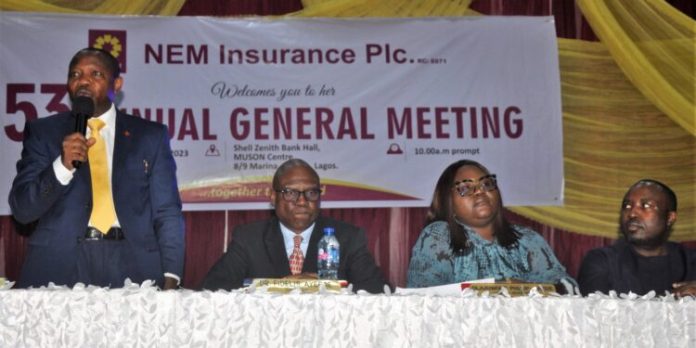
From left: Group Managing Director/CEO, NEM Insurance Plc, Mr. Tope Smart; Chairman of the Board, Dr. Fidelis Ayebae, and Company Secretary, Mrs. Olajumoke Philip-Akede during the 53rd Annual General Meeting (AGM) of NEM Insurance Plc held in Lagos.

The Nigerian Communications Commission (NCC) and Internet Exchange Point of Nigeria (IXPN) have expressed support for the 2023 Nigeria DigitalSENSE Africa Forum (NDSF) series on Internet Governance for Development (IG4D) slated for Thursday, June 8 in Lagos.
Disclosing this at the weekend, the Lead Consulting Strategist, DigitalSENSE Africa and Group Executive Editor, ITREALMS Media, Mr. Remmy Nweke said this year’s NDSF comes with the theme: 5G: Data Governance, Safety and Security.
This, he said, has become important due to the recent licensing of Fifth Generation (5G) in the country, just as experts will be lined up to address various sub-themes during the Forum.
Nweke said plans are in top gear to ensure the Forum holding at Welcome Centre Hotels, along the Murtala Mohammed International Airport Road, Lagos is successful.
NDSF series on IG4D, he said, is hosted by DigitalSENSE Africa, an At-Large Structure (ALS) certified by the Internet Corporation for Assigned Names and Numbers (ICANN), in collaboration with the Nigerian Communications Commission (NCC) together with top industry stakeholders like the Internet Exchange Point of Nigeria (IXPN), among others.
As said by Nweke, the 2023 NDSF series on IG4D will open for registration by 9am and is free entrance as it comes at no charges to the participants.
He recalled that NCC is the apex regulatory authority for the telecommunications industry in Nigeria and was created under Decree number 75 by the Federal Military Government of Nigeria on 24 November 1992, with the mandate under the Nigerian Communications Act 2003, to properly carry out its regulatory functions and activities, including but not limited to consulting with consumers, commercial and industrial organisations; delegating its functions to a Committee constituted by it, summoning persons to appear before the Commission, establishing and maintaining subsidiaries to enable the discharge of its functions, licensing to name a few.
In addition, he noted that NCC during the recent licensing of telcos for 5G pledged to develop the requisite strategies, standards, guidelines, and frameworks for the successful deployment of the 5G.
IXPN on the other hand, he said, is a neutral and not-for-profit Internet Exchange Point (IXP) founded in 2006 to reduce connectivity costs in millions of dollars in offshore internet bandwidth payments, reduce latency from 900 milliseconds to 30 milliseconds for local content, serve as the central point for connecting Higher Educational Institutions (HEIs) towards the development of National Research and Educational Network (NREN).
Nweke noted that as at April 2022, IXPN has become the 5th largest IXP in Africa by number of peers, and 3rd in Africa by traffic according to Packet Clearing House’s IXP directory.
Stressing that IXPN is reputed as the West Africa’s Regional Internet Exchange Point (WARIXP) that is keen beyond localising a single country-based local internet traffic, and he noted that as an African Regional Internet Exchange Point (RIXP), it extends further to localise local internet traffic within a designated African region.
Even as IXPN was chosen by African Union to be the Regional Internet Exchange Point for West African Region, it offers regional traffic localisation, faster internet within West Africa region, lower cost and reachability between network operators in different countries and allows more optimal use of existing connectivity infrastructure in the region.
The Nigeria DigitalSENSE Africa forum is hosted annually by the international award-winning ITREALMS Media under its DigitalSENSE Africa Forum series, and an At-Large Structure (ALS) at the Internet Corporation for Assigned Names and Numbers (ICANN); as part of efforts for shaping the future of the Internet.
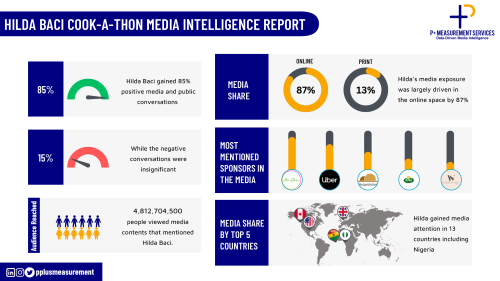
Leading Media Intelligence Consultancy, P+ Measurement Services, conducted a media performance audit on Hilda’s Baci (Hilda Bassey Effiong) Cook-a-thon, which got her into the Guinness World Records, making her the world’s longest-cooking champion.
The audit critically examined and revealed the media sentiment, media reach, media share by countries, and sponsorships of Hilda Baci’s Cook-a-thon.
According to the analysis, the positive sentiment garnered 85%, which can be leveraged by Hilda Baci to build brand loyalty and increase engagement with her audience; while the negative sentiment of 15% suggests that any issues or concerns raised during the event were addressed promptly and effectively.
The analysis of media share by country highlights the top five countries with the highest earned media coverage of Hilda Baci. 67% of the media coverage emanates from Nigeria, followed by the USA with 15%. The United Kingdom with 4%, Ghana with 3%, and Canada with 1%. The remaining countries had a relatively lower media share, indicating varying degrees of interest and coverage.
Hilda Baci’s Cook-a-thon was analysed using data harvested from traditional and digital media. These media types provided significant insights on the reach, impact, and characteristics of the event, with 87% generated from digital media and 13% from traditional media, providing a sense of credibility and authenticity to the event.
The audience reach of 4,812,704,500 is a testament to the popularity and success of the Cook-a-thon media engagement. The traditional media gained 13% and the digital media gained 87% based on the media type analysed. The high percentage of online media mentions also suggests that digital media played a significant role in driving awareness and engagement about the event.
The Amore Gardens, the top sponsor, received 18% of the media attention, followed by Uber with 14%, BaigeWallet in third with 13%, and Arla and Woodscope in lower positions with 10% and 9%, respectively.
Noting that media prominence doesn’t necessarily equate to the level of financial or logistical support provided by each sponsor. It reflects the volume of media exposure and visibility they received during the event period.
About P+ Measurement Services
P+ Measurement Services is Nigeria leading independent media intelligence consultancy that focuses on delivering detailed media monitoring, measurement, evaluation, and analysis across all media channels.
P+ is internationally recognised as a PR measurement and evaluation consultant in Nigeria with activities being governed/regulated by AMEC (International Association for the Measurement and Evaluation of Communication).
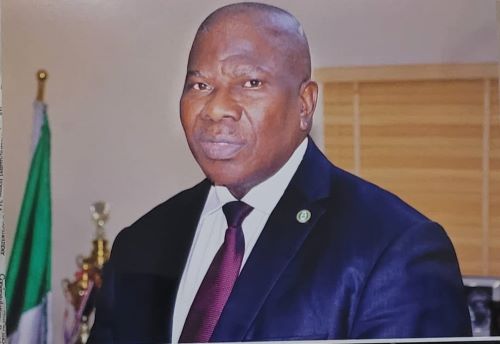
As the nation waits anxiously for the inauguration of a new president on Monday, May 29, 2023, there is palpable concern in the insurance industry that President Muhammadu Buhari may not assent to the long-awaited Consolidated Insurance Bill 2020 before he leaves office.
The exclusion of the Consolidated Insurance Bill 2020 from the list of 15 bills passed last week to President Muhammadu Buhari for assent, less than one week to the end of his administration means that the Insurance Bill might not be passed into law in this dispensation.
If it happens, it will be quite unfortunate that despite all efforts put into coming up with the bill by the various arms and industry stakeholders, will just go down the drain.
Although this may not be new judging from the fact that the same scenario happened to the Revised Insurance Bill in 2014 under the administration of the ex-President Goodluck Jonathan.
However, the implication of non-passage into law of the Consolidated Insurance Bill 2020 is grave because the sector will need to embark on another fresh process with the new set of lawmakers making up the 10th National Assembly members.
And as it stands, it seems there is no light at the end of the tunnel for the bill, unless a miracle, which sometimes happens, takes place before May 29.
Although insurance operators had high hopes that the bill would definitely be signed into law against all odds, events in the last few days may have dashed such hope.
This is because the industry operators and stakeholders who were hopeful that the Muhammadu Buhari-led administration will sign the long-expected bill into law before leaving office, has come to realise that it is now mission impossible, less than 7 days to the inauguration of a new administration.
This has remained a source of concern for experts who strongly believed that the bill, if signed into law, will better the lot of the insurance industry and position it for sustainable growth.
Although the industry has in recent time shown resilience in business expansion and growth, looking at the end of fourth quarter 2022, there are more that could be done with the bill becoming an Act.
The industry, for the record, reported significant improvement on various key indices, including gross premium, claims payment, total assets, improved market regulation, awareness and consumer confidence in the 4th quarter of 2022.
According to the National Insurance Commission (NAICOM) fourth quarter 2022 report, the insurance industry recorded gross premium of N726.2 billion, representing a growth of 36.3 percent over the same quarter of the preceding year, while it paid claims worth N318.2 billion in the same period, representing a 31.2 per cent growth.
Though the sector was able to record these milestones, it is still plagued by a lot of challenges which experts said could be addressed if the Insurance Act 2003 is amended.
Insurance Act 2003: Need for Amendment
The 20-year-old Insurance Act 2003 deserves amendment. To market observers, it is true that there is no perfect law in the world but the Act needs to be amended to align with current realities, not only in the country but also in the international market.
The call for review of the Insurance Act 2003 dated back to 2008 following a period of economic recession which significantly presented among others, the need for amendment.
Interestingly, within the period the Federal Government through the Federal Ministry of Finance set up a Professor Joe Irukwu-led committee to review all insurance laws and as well as pursue amendment of stale laws that culminated in the 2008 Insurance Bill. Unfortunately, this bill did not see the light of the day.
Similarly, in 2016, Kemi Adeosun, then Minister for Finance inaugurated an insurance review committee chaired by Dr. Omogbai Omo-Ebo, which was saddled with the responsibility of reviewing all existing insurance laws, market problems and making recommendations that will form the basis for the amendment draft for Insurance Bill 2018. This bill was not signed into law.
Unarguably, the Consolidated Insurance Bill 2020, which has remained source of hope for the industry, is still treading the same path of earlier ones. History has repeated itself again. Thus, for the past 20 years, the regulatory law of the risk-bearing industry has not been successfully reviewed nor amended.
No doubt, so much time, energy and resources were put into the review exercise done for the aborted 2008, 2016, 2018 and now 2020 bills.
For stakeholders, this does not augur well for the industry, judging from the fact that the sister industry- pension sector- successfully reviewed its 2004 Pension Reforms Act in 2014 and it’s preparing for another review that may be done this year or in 2024.
The problem is the bureaucracy in government.
Consolidated Insurance Bill 2020: Issues to Address
The bill seeks to address many of the industry headwinds by rectifying shortcomings of the Insurance Act 2003.
One of the improvements would be in the area of recapitalisation. The bill has settled the definition of capital in the insurance domain, building on the framework in the Finance Act 2021, ending the incongruity between operators and regulators in the sector, which previously led to the cancellation of several proposed recapitalisation attempts by the regulator.
It’s worthy of note that the last recapitalisation exercise in the industry took place in 2007 while subsequent attempts to carry out another round of recapitalisation has proved abortive.
The bill will also introduce harsher penalties for fake insurance certificate perpetrators, improve public trust and reintroducing the risk-based supervision capital model to align the industry with international best practices.
Insurance industry Effort
The immediate past Chairman of the Nigerian Insurers Association (NIA), Mr Ganiyu Musa, had disclosed last year that insurers were closely monitoring developments on the Consolidated Insurance Bill 2020 and will continue to pursue same doggedly until it is finally passed into law.
NIA, he said, participated in all the processes thus far and will continue to monitor developments in respect of the bill as it receives legislative attention, adding that the bill, if passed into law, is expected to have positive impact on the insurance space in Nigeria and align it with global best practices.
“We must acknowledge the co-operation received from the Speaker, Federal House of Representatives, Rt. Hon. Femi Gbajabiamila; Chairman and members of the House Committee on Insurance and Actuarial Matters, National Insurance Commission (NAICOM) and other stakeholders in the journey thus far.
“We remain cautiously optimistic that the Bill will be signed into law before the tenure of the 9th National Assembly lapses.”
Benefits of The Bill
Experts in the industry are excited that provisions of the Bill in consideration when finally passed into law will have positive impact on the country’s insurance space, strengthen the weaknesses of the Insurance Act 2003 and align with global best practices.
According to the President, Chartered Insurance Institute of Nigeria (CIIN), Edwin Igbiti, the Insurance Bill translation to an Act, would be the best legacy President Muhammadu Buhari’s administration would bequeath the insurance industry.
He implored all insurance practitioners to come together and push for the signing of the bill in law.
Implication of Exclusion of the Bill
The exclusion of the Consolidated Insurance Bill from the other bills passed for presidential assent means that the industry will wait a while before the next administration could sign it into law, that is, if it gets to the table of the incoming President.
This delay may give room for weak capitalisation of the industry, unabated weaknesses of the moribund Insurance Act 2003. At the international level, the risk bearing industry may not be able to play a leading role. Thus, the urgent need to strengthen the laws of the industry which the Consolidated Insurance Bill 2020 would have done if signed into law at such a time as this.
Decrying the exclusion of the bill amongst the 15 bills passed to President Muhammadu Buhari for an assent before leaving office, Chairman of Session, Chartered Insurance Institute of Nigeria (CIIN) Year 2023 Fellows’ Event, Mr. Dan Okehi, called on Fellows in the insurance industry to arise to their responsibilities as it is their obligation to collaborate with NAICOM in ensuring that the bill becomes an Act.
Okehi stated that Fellows should note that the burden of growth and development of the sector rests on their shoulders as the industry’s policy makers.
On his part, a past President of the CIIN, Olusola Ladipo-Ajayi, said: “There is supposed to be a synergy between the regulatory body and operators in the industry. The industry doesn’t have much visibility in the public space. This means we are not in government’s contemplation. The way we operate the industry has not given us visibility. It should be our priority.”
Corroborating, the Hon. Lanre Laoshe, an insurance professional and former member of the House of Representatives, explained that, with the exclusion of the bill among the 15 passed to the President for assent, it means that the process start again from the beginning when NASS resumes on June 4th, 2023.
“If they really want to change their law, let them work or why didn’t the bill go far? Some may not want the bill to get there”, he said.
Also, the Managing Director, Peninscope Professional Warranty Limited, Mr. Taiye Adediji pointed out that such omission will hinder development in the industry, cut the time frame that would enable the players acclimatise with the new law if signed into law now in terms of developing consciousness about it while delaying it has put the players on suspense.
Similarly, the Managing Director, Risk Sift Consultant Limited, Mrs, Janet Omoniyi, said the industry cannot act on it until the president signs the bill into law.
She said: “It means we will continue to use the obsolete law. The industry will have to wait till a new set of NASS comes onboard, brings it up and works on it, then sends it to the President. Something must have gone wrong along the line. Maybe, it still needs to be fine-tuned.”
Also, the Vice President, Association of Registered Insurance Agents of Nigeria (ARIAN), Mr Jegede Kehinde, regretted that not signing the bill will hinder insurance penetration which is yet to reach the 0.5 percent mark in Nigeria. According to him, a bill that is acceptable to all players will promote sense of belonging among insurers and bring about healthy competition.
“It means NAICOM needs to be empowered. There are a lot of innovations it wants to bring about in the industry.”
In the same vein, the President, Independent Shareholders Association of Nigeria (ISAN), Mr. Moses Igbrude, stated that, “when we visited NAICOM last week, the Commissioner for lnsurance, Mr. Sunday Thomas, promised that the Commission has done some work to enhance the insurance industry. If the industry bill does not get the assent of the present administration, the question is – ls it that the bill is not ready? If yes, why is it not ready? It means there will be delay. The bill will start all over again. Its supposed effect would be postponed. It means it will further delay the enhancement of the industry.”
Way Forward
Speaking on the way forward, Ladipo-Ajayi said all contending issues should be looked into. On behalf of the industry, he stressed that, there must be someone monitoring the movement of the bill. At every stage, somebody must be on ground, he noted.
Similarly, Laoshe noted that the industry should go back to the drawing board and find out why the bill didn’t go far.
In the same vein, Adediji stated that, “there is need to find out the reason why the bill has not got to the table of the president for his assent. Is it human error or the content of the law? Was it a mistake – intentional or sabotage? Is there another opportunity for the bill to get to President Buhari before he leaves office? These are some of the things the industry regulator and operators should find out. Even though the president has few days left, as long as he is still in the office, there is still hope, if all necessary things are timely done.”
Omoniyi as well suggested there is need for the industry to agree together on how to move the industry forward.
Conclusion
Stakeholders believe it would be unfortunate if by May 29, President Buhari did not give assent to the bill. The industry, they said, might have to start the process all over again.
While market observers expect insurance operators to look inward on the need to have representatives at the National Assembly, they urged them to think seriously about the importance of being proactive.
It would be recalled that it was when Hon. Lanre Laoshe was a member of the House of Representatives that the lnsurance Act 2003 was signed into law. They said there is need for strategic lobbying and resistance against bureaucracy in government.
It is hoped that when the incoming National Assembly kicks off, the lnsurance Bill will receive speedy attention so that it will be among the first set of bills to be signed into law by the incoming administration to enable the industry begin to tap into the opportunities provided by the new law.
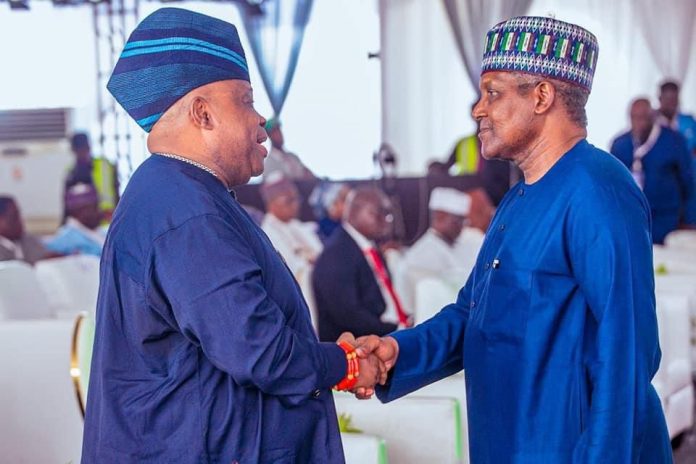
The Executive Governor of Osun State, Senator Ademola Adeleke has described the just completed Dangote Refinery as “a continental game changer with huge capacity to positively transform Nigeria and African economy.”
In a congratulatory message to the Chairman of Dangote Holdings, Alhaji Aliko Dangote, Governor Adeleke noted that the completion of the refinery within such a record time signals a new era of energy sufficiency for Nigeria and Africa, noting specifically that “the new facility will service Africa and boost local and continental GDP.”
Praising Dangote’s ingenuity behind the conception and implementation of the project, the Governor testified that the successful completion is an affirmation of the business acumen and integrity of the Chairman of Dangote Holdings, a personality he said has become “a major propeller of the African Continental Free Trade Area (AFCTA).
“By his extensive investment across Africa and by his latest accomplishment with this biggest refinery on the continent, Alhaji Dangote is unarguably the patron of AfCTA, a facilitator of intra and inter African trade, an enabler of Africans trading with Africans and mobiliser of African capital serving Africa”, Governor Adeleke declared.
Governor Adeleke who described Alhaji Dangote as a blessing to the black world, said the refinery project remains a landmark initiative, a gift of Africa to world business and a declaration of Nigeria’s emergence as a global player in the old and new business order.
Seplat Energy Plc has petitioned the National Judicial Council (NJC) to sanction Hon. Justice I.E Ekwo of the Federal High Court, Abuja for ‘unethical, gross misconduct and abuse of judicial power” in granting ex-parte orders in several cases involving Seplat and some of its shareholders.
In a 6-page petition dated 15th May, 2023 and signed by Seplat’s Acting CEO/Chief Operating Officer, Samson Ezugworie, and addressed to the Chief Justice of the Federation and Chairman, National Judicial Council, Abuja, the oil firm asked the NJC to dispassionately investigate its complaint and ensure appropriate disciplinary action against the Hon Justice Ekwo.
The petitioner stated that the orders granted in SUIT NO: FHC/ABJ/CS/626/2023 between Juliet Ebere Nwadi Gbaka & 2 Ors.V Seplat Energy Plc & 13 Ors are designed to cripple Seplat operations.
It explained further that the orders granted by His Lordship in the above suit on 11th May 2023 in ‘very questionable circumstances are designed to hinder the affected Directors and Secretary of Seplat in the performance of their contractual and statutory duties to Seplat”.
Seplat stated that the SUIT NO: FHCIABJ/PET/8/2023 BETWEEN BONIFACE OKIEZIE & 3 ORS V. SEPLAT ENERGY PLC & 9 ORS filed on 13th April 2023 by some shareholders of Seplat whose shareholding is less than 0.0005% of Seplat’s entire share capital had cited alleged unfairly prejudicial conduct in the management of the affairs of Seplat.
Justice Ekwo was accused of making far-reaching orders and side-lined all these processes and ordered that directors of Seplat and its secretary should desist from further acting in their official capacities, and also ordered SEC to appoint some other persons to replace them on the 11th of May even though similar orders sought in the April petition have not been granted by His Lordship, and the various applications in SUIT NO: FHCIABJ/PET/8/2023 BETWEEN BONIFACE OKIEZIE & 3 ORS V. SEPLAT ENERGY PLC & 9 ORS, have been adjourned to 31st May 2023.
“It is evident that the approach of His Lordship will compromise the fair hearing of the applications in the April Petition. It is also amazing that the above Suit which was filed on the
8th of May 2023, and which was not listed on the cause list on the 9th and 11 of May 2023 respectively, was heard by His Lordship”, the petition added
“We believe that this can only be possible because of prior direct communication between His Lordship and Counsel to the Plaintiffs in the above Suit. This, we believe, is highly unethical’, it stated.
Seplat also believes that it is an act of gross misconduct on the part of His Lordship
to gloss over various applications filed by Seplat and some of its directors and
Secretary, on 10’h of May 2023, challenging the competence of the Suit and the
jurisdiction of the Court to entertain the Suit.
“As it were, the orders made by His Lordship on 11th May 2023 will compromise the fair hearing of these pending applications filed by Seplat and other Respondents.”
Seplat said it “has every reason to believe that all the steps taken by His Lordship in the
above Suits are designed to favour the Plaintiffs and disfavour Seplat, its directors
and secretary. Seplat, its directors and Secretary’s position is corroborated by
other cases and events.”
Seplat also disclosed that the Final Judgment in Suit No: FHCIABJ/PETI7/2023 BETWEEN AKINDURO ERIC AKINNIFESI & ANOR V SEPLAT ENERGY PLC was wrongly ignored by Hon Justice I.E. Ekwo
Some shareholders of Seplat were genuinely worried about the likely stalling of the Company’s 2023 AGM scheduled for 10t May 2023 and instituted the above suit, praying for mandatory orders for the meeting to be held.
They also sought an order that the directors and company secretary should not be removed from office or hindered in the performance of their duties by any person or authority. Final
judgment was delivered by Hon. Justice A. R. Mohammed of the same Abuja
Judicial Division of the Federal High Court.
The Petitioners succeeded in the Suit and the court ordered that Seplat’s AGM be held as scheduled and that the directors and company secretary should neither be removed from office nor hindered in the performance of their duties. A copy of the judgment is attached as
SEPLAT 11.
It is noteworthy that the above judgment was brought to the attention of His Lordship, Hon. Justice I. E. Ekwo by some of the Counsel representing the Respondents in Suit No: FHCIABJ/CS/626/2023 Between Juliet Ebere Nwadi Gbaka & 2 Ors. V Seplat Energy Plc & 13 Ors, via various processes filed by them on 10th May 2023. The exhibited judgment of Hon. Justice A. R. Mohammed alongside letters and processes notifying His Lordship of the subsisting judgment are attached as SEPLAT 12.
Notwithstanding his Lordship’s attention being directed to the subsisting judgment
of a more senior Judge (Hon. Justice A. R. Mohammed) of the same Federal High
Court, His Lordship made orders on 11th May 2023, which contradict and indeed
have the capacity of overruling the judgment of Hon. Justice A. R. Mohammed
Seplat believes that it is improper for His Lordship, whose attention had been drawn
to the existing final judgment of a Brother Judge, to sit as an appellate court over such
judgment through the rendition of an interlocutory ruling which conflicts with the
said final judgment.
On the strength of the above Seplat invites the NJC to dispassionately investigate his
complaint and ensure appropriate disciplinary action against the Hon Justice Ekwo.
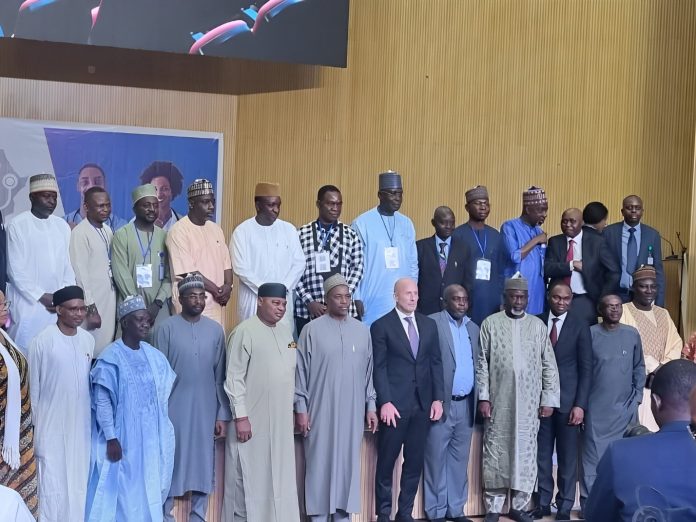
Centre, James Christoff, the Canadian High Commissioner to Nigeria, with Director General, NIMC, Tukur Lawal, the Managing Director NigComSat, Kashifu Inuwa, Director-General, NITDA and a host of others at the event.
Nigeria Communications Satellite Limited (NigComSat) in partnership with Ethnomet, a Canadian leading firm in healthcare technology recently launched ‘NigComHealth’, a telemedicine platform that will allow millions of Nigerians to have access to quality healthcare.
‘NigComHealth’ will transform the way patients and healthcare providers connect will transform the way patients and healthcare providers connect country by providing convenient and accessible medical consultations by licensed healthcare professionals anytime, anywhere via mobile app.
The Minister of Communications and Digital Economy, Prof. Isa Pantami unveiled NigComHealth in Abuja. The Minister, who was represented by his Chief of staff, Professor Sahalu Junaidu, said the platform would promote a “more efficient and effective healthcare system that could be accessible to all Nigerians.”
The minister also added that the current situation is worsening, with “each physician attending to more than 5,000 patients. This represents a stark contrast with WHO’s recommendation of 1 doctor to 600 patients. And with 218 million people to cater for, he said that Nigeria requires at least 363,000 additional doctors to meet this target,” which he believes NigComHealth will help achieve.
The new telemedicine platform combines innovative technology with advanced medical tools and pre-vetted licensed healthcare practitioners, enabling virtual medical visits that are secure, efficient, and personalised.
The Federal Government and Ethnomet have partnered with indigenous tech implementation company Sawtrax to implement the platform across Nigeria. This will make it possible for Nigerians in any part of the country, including rural and remote areas, to book and attend appointments with qualified and specialised doctors.
‘NigComHealth’ Multi-tenant Virtual Healthcare Service Platform is designed for all hospitals to be able to integrate their healthcare professionals and offer digital health services to the Nigerian population.
The Honourable Minister continued, ‘To bridge the gap, there is urgent need to leverage on the disruptive technology to improve access to healthcare services and quality medical practitioners available within Nigeria and across the globe. Therefore, NigComHealth Platform is a timely solution that could ensure that quality healthcare services are available to all Nigerians, irrespective of their locations.” He further encouraged “stakeholders in the health sector, both public and private to onboard into the initiative.”
Mr. James Christoff, the Canadian High Commissioner to Nigeria said the platform will be a game changer in improving health outcomes especially in underserved and remote areas.
“The technology has been developed with the vision and strategic objective of having over 80 Federal and State-owned Government hospitals coexist on the platform. The platform is also meant to provide digital health services to 1.7 million public sector workers and their families in Nigeria,” he said.
He applauded both the Federal Ministry of Communication and Digital Economy and the Federal Ministry for Health, for their vision, and unparalleled commitment to the promotion, technology and health innovation in Nigeria.
Engineer Tukur Lawal, the Managing Director of NigComSat Limited said that the platform will reduce the massive capital flight spent by Nigerians on medical tourism annually.
He opined that the platform will provide Nigerians with the opportunity to access affordable and world-class services from professionals regardless of their geographic location, without the need to travel to urban areas.
Ethnomet CEO, Ms. Garnette Weber, who joined the event virtually, described the digital health solution as a demonstration of the Nigeria Government’s commitment to leveraging innovative technologies to provide quality and accessible healthcare for Nigerians in all regions.
Weber said that “Telehealth has proven to be very effective in addressing these healthcare challenges as indicated in the Commonwealth Fund’s International Health Policy Survey of Primary Care Physicians. In 2022, General Practitioners from 10 different countries reported that 52% of encounters would have been clinically appropriate through video interactions with patients. Telehealth services improve health resource utilisation and access to care. ”
Mike Amanyi, Product Director for Ethnomet, presented and demonstrated the technology’s capabilities. In addition to booking and attending appointments with doctors and specialists, the opportunity also exists for community virtual health centers, and integrating health data from smartwatches and other wearable devices.
NigComSat and Ethnomet have scheduled training for industry stakeholder leaders in days to come.
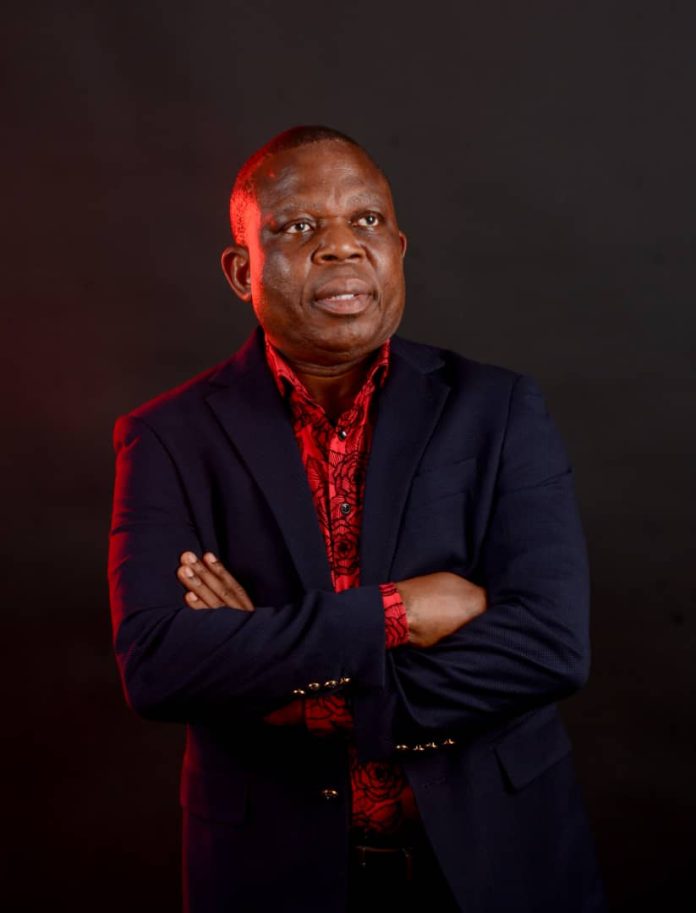
Tim Akano
Click-click-click-click-click-click-click-click-click-click-click is the loud, weird, grinding vroom reviving up the engine as the in-coming class captain turns on the ignition key of Nigeria’s bus, in readiness for his May 29 voyage.
Another voyage, another time, different driver, same old bus.
By any reckoning, this May 29 is different: eight years ago, on May 29, 2015, there were massive expectations and excitements in the air, a Cathedral -size hope inspired by the 63-point agenda of the outgoing captain.
Many Nigerians are now feeling conned that politicians took them to cloud 9 by an airborne parachute and dropped them in the middle of the Atlantic Ocean where everyone is struggling to swim out without a life jacket.
This May is carrying multiple pregnancies: anxiety and uncertainty, hunger and anger, probabilities and possibilities. Most citizens have lost hope, only a few have synthetic hope in the capacity of the political elites to walk their talks. Whenever you see the military repeatedly issuing warnings and threatening to deal decisively with some faceless enemies, rest assured: all is not well. This is a dangerous junction for any country to find itself at a time when the world, too, is going through The Great Reset.
However, in 1861, America looked exactly the way Nigeria of 2023 looks. On the eve of Abraham Lincoln’s inauguration as America’s 16th President on 4th March. 1861, America was on the brink just as Nigeria is today. There were no visible signs Abraham Lincoln could seize the moment. As Nigeria’s 16th president gets sworn- in on May 29, 2023, will Nigeria’s unpromising start begets a promising future?
A deeper interrogation of the presidential elections of February 25th revealed an unusual voter apathy with only a 20% turnout. Turkey’s May 14th, 2023 Presidential election recorded 86% voter turnout. Meanwhile, in a democracy, there is strength in number- forming a quorum strengthens legitimacy, which begets confidence and confidence begets peak performance.
Is Nigeria running out of luck? Who is eating our lunch? The last 15 voyages ended in the wilderness of habitual abortion of hopes, leading to the collapse of the social contract between the governors and the governed.
The outgoing class captain missed the road from the start by trading off the national franchise certificate issued to him for an ethnic franchise as he slaughtered meritocracy on the altar of mediocrity and provinciality.
He put square pegs in round holes. His economic policies are anti-civilisation, anti-people, and anti-breakout, as he drove the nation’s bus perpendicularly straight to the brink.
Nigeria’s bus has been a victim of considerable cannibalisation in the hands of the past class captains and their cabals. The bus has become a carcass, the engine so weak that it can blow anytime. While the older generations accepted the calamity as the ‘’will of God’’, the GENZ seems determined to stop paying homage to calamity.
Rain has been beating Nigeria since the 1960s, which could be described as the era of thieving with the ‘fear of God’. Today, however, the thieves have graduated to tin gods! The New Nigerian newspaper of Tuesday 4th January 1966, criticized the government for financial rascality. The bus parts like seat cover, steering cover and foot mats were looted, including windscreen wipers by the Class 1960s political elites. The nation’s vision became blurred since then. The former Singaporean Prime Minister, Lee Kuan Yew in his autobiography, ‘From 3rd World to 1st World ‘ on Pages 351-357, gave graphic details of the nature of corruption in the first republic based on his close interaction with some of the Nigerian leaders then. There was a Minister in the first republic, according to LKY, who deliberately killed a national company so that his own private company producing similar products could dominate the market. And that is the template that is still in use today. In the 1960s political elites were nicknamed ’Ten percenters’, (10 %).
In the 1970s, looting passed its ‘O’ level exams with straight ‘’A’s’’ and moved to ‘A’ level. In a jiffy, the steering arm, steering box and the headlights of the bus, including fire extinguishers were looted.
The elites stepped up their game to become ‘’thirty percenters’’ (30%).
In the 1980s, looting finally graduated from the university with two degrees – BA and MSc back-to-back as an art and science graduate. Nigeria’s stolen money became the lubricant that oils most of Switzerland and European banks.
The Khaki folks looted the air-conditioning cooling units, removed 50% of the tyres and even went away with the bus’s roof. Little wonder, one of the rulers in khaki uniform then exclaimed publicly that ‘’It defies logic why Nigeria has not collapsed.’’
In the book, ‘The King of Oil’, on page 100, Marc Rich, the undisputed global King of oil and himself the Don of corruption, confirmed that Nigeria became ‘’the global capital of corruption’’ courtesy of the Khaki folks. Those who are asking for an interim government under the military arrangement, therefore, need to see their neurologist.
Looting went mainstream in 1999, from a limited liability corporation, it became a plc. Snakes and monkeys are competing with humans in a race to determine which is best at swallowing money!
Billions of dollars were paid to IPP contractors (1999-2007) who pocketed the money without generating one megawatt of electricity. In 2017, one federal cabinet member alleged that contracts worth $ 25 billion were awarded under the table without proper authorisation in NNPC.
In May 2023, Nigeria’s Auditor General confirmed that over one trillion naira fraud was perpetuated by various MDAs. EFCC told us over N109 billion were stolen by Accountant General, another N340 billions meant for the Zungeru power project was swallowed by just 6 permanent secretaries, another sitting governor was alleged to have stolen N70 billion, another N10 billion was looted by the secretary of the supreme court in 2022, N200 billion was wasted on CENSUS 23.
The billions of dollars squandered on ‘’turn around maintenance projects’’ in the oil sector could have built 10 new refineries! Indeed. It is so bad that the outgoing-class captain was reported to have expressed disappointment about the volume of looting that happened under his watch.
As the Class of 2015-2023 graduates on May 29, 2023, they probably would have broken the previous record set by the Class of 2011-2015 in ‘’Looting & Applied Corruption (LAC)’’. When the results eventually become public knowledge, we will know how many made a First Class in looting (these are public servants who became Trillionnaires between 2015.2023), how many made a 2nd class, upper division (i.e.the billionaires), how many in 2nd class lower division (i.e. millionaires).
Grapevine has it that one young person without a portfolio who was a recharge card seller until 2014 was the overall best-graduating student with a 5.0 GPA in looting!!! The whole 220 million regular Nigerians were the losers.
The ‘Maradona’ of Minna complained publicly that the military folks are like angels when compared with the class of 1999-2023 politicians in corruption. The elites’ labour of hate for Nigeria yielded a golden trophy after all: the World’s Poverty Capital in 2019, home to 133 million multidimensional poor people. No parallel in history!
All the 220 seats inside the Nigeria’s bus together with the rear and front windshields, including the dashboard have been looted. Worse still, the seat belts meant for the captain’s safety are equally looted. To the political class, all snakes are delicacies, including making a fortune out of the misfortune of stranded Nigerians in war-torn Sudan!
This is why the incoming driver has zero LIFELINE, no 50:50, no seat belts, nothing is left. The bridge of trust between the people and the government is broken.
Everyday, since last year, the crowds at the Ikeja immigration passports office were bigger than the ones at Atlanta Airport. Those are Nigerians applying for passports to JAPA. Investors and corporations, too, are not left out in the JAPAdemic. Unilever, among others, has scaled down its operation drastically in Nigeria as a result of harsh economic conditions.
Instead of fixing the challenges, the elites are behaving like the ostrich, acquiring second nationality and foreign passports which they carry about daily with their credit cards in their pockets, the same way an asthma patient goes about with an inhaler.
The political elites are ‘’flight-ready’’, anywhere, anytime. But who says foreign passports, Private jets or even the airport will be useful once the people say ‘’this far, no further’’?
Nigeria can be likened to Goldbach’s Conjecture, the oldest and best-known unsolved problem in mathematics: simple, but notoriously difficult to solve. For instance, ‘’every even natural number greater than two is the sum of two prime numbers, e.g. 18 is 13+5, and 42 is 23+19’’. And every odd number greater than 7 is the sum of three odd primes: 13=3+3+7, 17=3+3+11. Nigeria’s equation remains unsolved three scores and three years after independence. Who shall we send?
The exam for the in-coming driver as the sky turns dark in the middle of the desert, is how to drive the nation’s bus away from the brink, back to the main roundabout from where it was hijacked at gunpoint on January 15th, 1966 by the Khaki folks?
This is no mean task with N80 trillion public debt (still rising), sagging oil revenue, and evaporating FDIs, at the same time the debt servicing ratio and earnings are approaching 100% parity. Besides, the ‘’borrowing window’’ is closing against Nigeria as it finds itself in a political cul-de-sac and economic ‘’roforofo’’! Leading a hopeless population is more tasking than forcing a horse to drink water from the river. Nigerians have lost hope, Big Time.
Corruption: Who’s Picking the Bills?
Nigeria’s P&L shows the country is technically bankrupt, if it were an American corporation, it would file for Chapter 11. While corruption contributes 30%, insecurity contributes 20% and structural deformity 35% to Nigeria’s failure. Any administration desirous of making a difference, therefore, must tackle those three devils squarely with fresh thinking. Prime Minister David Cameroon knew what he was talking about when he described Nigeria as ‘’fantastically corrupt.’’
Corruption is not a people’s problem, though, rather it is a symptom of a decadent system. Corruption would always thrive in every self-help society, where social security, effective credit facilities and an independent judiciary system are absent. Variables like greed, poverty, fear of tomorrow, unreasonable societal expectations from public officeholders, wasteful culture, and gross moral bankruptcy also help to fertilise corruption.
As long as private schools, private hospitals, bullet proof vehicles, private NEPA, and private water works, including private cemeteries and private armies are ‘’must-haves’’ for the middle class to survive, due to the total collapse of public infrastructure and institutions, so long will corruption remain the inevitable elephant in the room.
All workers deserve living wages, especially the Judiciary, Teachers, the Police and Journalists. They need to be insulated against corruption. For instance, Judges should not be earning less than $7000 (N5m) per month. In the UK, judges are paid from $100,000-$300,000 per annum.
How other countries are taming corruption? The 5+1 models.
1 China: Death penalty.
2 Europe: effective social security package plus credit facility
3 Scandinavian: egalitarianism, wealthy citizens and businesses pay up to 50% income tax which is used in developing efficient public infrastructure that serves all. Public utilities work excellently and they are free. Huge income inequality is an anathema. Little wonder why it is only cockroaches that inhabit the prisons built for humans in Scandinavian countries.
4 Traditional Model: Swearing an oath of office using ‘’snake’’ or ‘’Cutlass’’ instead of the Holy Books.
5 Turkey Model: 65-year-old wages for life that are inflation sensitive. This removes the fear of inflation and what to eat when tomorrow comes.
6 Ali Baba &The 40 THIEVES Model: Ali Baba was a wise man: he took a census of the number of thieves in his organisation and he arrived at 40 and made budget provisions for each of the 40 thieves.
Nigeria, too, can identify Major Corruption Charging Points (MCCPs) and budget for CORRUPTION INOCULATION JAB allowances for the Heads of such places, ab initio. Rough estimates show that every new administration comes with about 5000 ‘’new troublers of Nigeria.’’
They are found in the Presidency, National Assembly, Governor’s offices, Local government Councils, Judiciary, Military, Para- Military and MDAs etc.
The Nigerian corruption variant seems to be an untreatable and incurable disease. This means each administration should make a budget provision for a maximum of 5000 VIPS entitled to a Corruption Inoculation jab allowance of N250,000 per day for life. This is in addition to the 65-year-old wages for life (double jabs)!
Right now, some Governors are coming up with ridiculous pension allowances for themselves to further impoverish their people. Probably, standardisation and legalisation of limited corruption in a transparent manner will reduce ad-hoc unregulated corrupt practices. After all, Marijuana was once banned in America, now it is legalized.
A peculiar problem, the saying goes, requires a peculiar solution.
Here is why Nigeria needs fresh ideas to tame corruption: Nigeria sells 20% of Saudi Arabia’s Oil quota presently. And Shell Oil Plc. recently submitted that Nigeria can sell 4mbd of crude (i.e. 40% of the Saudi quota).
Meanwhile, ARAMCO made a net profit of $161 billion in 2022. Nigeria is supposed to have made 20% of that (ceteris paribus), I.e. $ 32 billion. Sadly, NNPC had only made profits twice in 45 years which was nothing to write home about. Going by ARAMCO RoI, when Nigeria begins to sell 4mbd, the bottom line will show about $65 billion net profit yearly. The question is what do we do as a nation, first, to realise a $32 billion net profit yearly on what we currently sell, and second, increase our daily production to 4mbd as suggested by Shell oil in order to make $65 billion net profit yearly?
The average age of the incoming VIPs is 60 years. Assuming they all live to be 80 years on the average age. This means they will be entitled to corruption inoculation jab allowances for an average of 20 years each at the rate of N250,000 per day.
Therefore: N250, 000×365 days in a year x5000 MCCPs x 8years= $ 4.684 billion (about $ 5 billion for the next 8 years or $ 100 billion for 20 years.
When corruption is tamed, from NNPC alone, Nigeria will earn about $32 billion net profits yearly. In 8 years it will be $256 billion or $640 billion in 20 years. Spending about $5 billion on ‘’transparent’’ corruption inoculation jab allowances would make financial sense to any economist anywhere in the world, including Adams Smith and Karl Marx in their graves.
We can challenge Norway or ARAMCO that the KPI is 4mbd oil sales and $65 billion yearly net profit to be shared 80:20 in favour of Nigeria, plus a performance bonus. Who says Norway or Aramco cannot give Nigeria a $ 100 billion ‘’sweetener’’ in advance to stabilise the country if we appoint either to manage our entire oil business 100%? Norway is not in OPEC and they have $ 1.3 trillion in savings!
The oil business is too oily and tempting for the Nigerian elites to run. Outsourcing the entirety of the oil business is the way to go.
The oversight function by National Assembly members in the oil sector is a euphemism for corruption while the turnaround maintenance projects are like free ”jollof rice and ‘’dodo’’ for the boys”. Oil will soon lose relevance: let us make the next 30 years count, having wasted the last 45 years!
“What if, after collecting the corruption inoculation jab allowances and wages-for-life, they still put their hands inside Nigeria’s chocolate jars’’, I can hear someone soliloquizing. That question is for the whole house to discuss!
But, without taming corruption, fixing insecurity and restructuring Nigeria, we aren’t going anywhere as a nation.
On May 29, Nigeria needs a ’Chef’ with Abraham Lincoln’s wisdom, Nelson Mandela’s integrity, Deng Xiaoping’s capacity and Lee Kuan Yew’s ruthlessness who will bake a new, bigger, sweeter cake for all from the ashes of N80 Trillion public debt. Food is finished and we have a debt to pay.
Like Arsenal FC, Like Nigeria:
In the English Premier League, Arsenal FC is different- both in potential and sequential failures. It is one club that raises fans’ hope to cloud 9 and dashes it at the 11th hour.
Arsenal and Nigeria on that account: on five different occasions, the world invested high hopes in Nigeria thinking she would win the Transformation league table, only to end up in the relegation zone each time.
In the 1960s, the United Nations listed Nigeria as part of the seven countries tagged ‘’Medium Power’’ to witness transformation: Singapore, Malaysia, South Korea, Hong Kong, Taiwan and Thailand. While the Asian Tigers’ bread got baked within 20 years, Nigeria’s bread is still in the oven 63 years after.
Then the BRICS train of transformation came (Brazil, Russia, India, China and South Africa: Nigeria missed out.
Then the MINT train arrived: Mexico, Indonesia, Nigeria and Turkey: MINT turned to MIT, and Nigeria was missing.
The fourth train of transformation was tagged PIN (Philippines, Indonesia and Nigeria). The other two countries boarded the train, and Nigeria locked itself up in the ‘other room’!
Fifthly, when the Russia-Ukraine war broke out in February 2022, most analysts globally expected Nigeria to leverage the Great Oil Boom to transform like the Saudis are doing. As of today, Nigeria is missing out on a rare global oil boom opportunity. Nigeria is now classified as a ‘’non-League nation’’- i.e. countries at the bottom of civilisation that are not in the first four League divisions.
Meanwhile, I can see the 2nd Arabs civilisation coming on the horizon, which I tagged ORYXCAM (Oryx is the symbol of most Arabs countries while Camel represents Saudi Arabia). With the ongoing rapprochements among the Arab nations: Syria, Iran, Saudi Arabia, UAE, Turkey etc, the Arabs seem to have found their lost mojo (unity) and are poised to take the world by storm. I predict the establishment of an Arab common currency sooner than later to compete with USD and Yuan.
How should Nigeria and Africa respond? I propose a new transformation paradigm tagged AFRICA LIONS consisting of seven African countries: Nigeria, Egypt, Kenya, Rwanda, Ethiopia, Ghana, and Morocco, which I code-named NEKREGM- for want of a better acronym. Since the world is gradually going back to Regionalization, let birds of the same feather flock, and trade, together in Africa. Let the seven of them adopt a single currency, single passport, and single taxation regime. Other African countries in AfCFTA will join one after the other when they see ‘’light’’. NEKREGM can work.
After all, in 1957, when the European Union was formed, only six countries agreed to work together. Then it became 15 countries in 1972 and today 27.
Can We Get Serious or Stop Playing from May 29 in the Name of GOD?
From $ 500 billion to $1Trillion GDP within 48 months!
Honestly, I am convinced Nigeria can be transformed within 10 years, UAE did it in 10 years, and Nigeria is 200 times richer than UAE in human, natural and material resources. South Korea has a population of 52 million and an economy of $2 Trillion. Why not Nigeria? What must change if we are to become a Trillion dollar economy within the next four years?
1 National re-orientation/rebirth:
On June 5th 1959, Lee Kuan Yew and his 8 Ministers took their oaths of office wearing simple white shirts and trousers, no suits, no ties, thus sending a strong signal that it would not be business-as-usual, but hard work, purity, integrity, and simplicity.
Symbolism works: General Tunde Idiagbon was a symbol of War–Against–Indiscipline (WAI) in Nigeria in 1984 from his first day in office. The event of May 29 should reflect the mood of the nation: death of hope. Hope is dead! Flamboyant ‘’barbara’’ or Cloud 9 women headgear would send wrong signals to the mourning population.
More importantly, the first 100 days should be devoted exclusively to national re-orientation, focusing on bringing back the traditional African values of love, beauty, hard work, integrity, decency and discipline. Nigerians have completely lost their moral compass: the way we talk at the international airports on top of our voices, and we like to show off and talk big unnecessarily (which is the genesis of Xenophobia in South Africa, Kenya, Ghana, Malaysia etc against Nigerians), we frequently exhibit crookedness tendency (99% of artisans and civil servants etc cheat).
We are a people deeply religious but scarcely godly and grossly unpatriotic. The incoming class captain should lead from the front as of noon, May 29. The Jewish people knew something positive had changed when SAUL became PAUL, and they followed Paul and forgave Saul’s monumental past shortcomings! The new government needs to seek the assistance of religious instructors (Christians, Muslims and Traditionalists) to stop preaching about money for 90 days and concentrate sorely on teaching repentance, righteousness, love, patriotism, good citizenship and heavenly virtues. The excessive love of money is at the root of Nigeria’s embarrassing under-development.
Also, the government needs the media- radio, TV stations, newspapers editors and social media influencers and bloggers to help drive the new re-orientation campaign. Before the 2006 World Cup in Germany, Germans went through a re-orientation on how to smile at visitors. The Japanese are currently going through a national smiling re-orientations as l write. A national re-orientation program to be led by the Class Captain himself should be the first project to launch on May 29.
2 Census of abandoned Projects & a new Stock Taking of all the mineral resources in Nigeria:
As I write this article, pen-in-hand, the hotel I am staying in Abuja is directly opposite the abandoned National Library, a gigantic building wasting away after gulping about N18 billion.
What Nigeria urgently needs is not the Nigeria Population and Housing Commission but the National Commission for Abandoned Projects (NCAP). Ajaokuta Steel is another one. There are probably thousands of such projects around the country. NCAP should be set up on June 1st 2023 to enumerate and do the market valuation of each project based on the current value as is. Government should not waste time in selling them off on or before October 1st 2023 to corporations that can turn them around for commercialisation.
This will boost liquidity and inject fresh blood into the economy that is dangerously low on blood. In another vein, foreigners (especially Chinese) are the ones looting Nigeria’s mineral resources with reckless abandon.
From May 29, there should be a suspension of mining activities pending the completion of the work of the Mineral Resources Review Commission (MRRC). The late Tanzania President, John Magufli was quoted as saying ‘’Only mad African leaders would take Chinese loans.’’
Magufli rejected the $10 billion Chinese loan and went ahead to build modern infrastructure in Tanzania without borrowing by setting up MRRC. He re-negotiated all the licenses issued by the past leaders that were anti-Tanzania economic development. This is one veritable source of fresh liquidity for the new government: over $20 billion can be realised from this exercise.
3 Prioritisation:
One outgoing governor, a Professor for that matter, admitted on a national TV show on 17th May 2023 that his state’s supposedly biggest Chicken farm/factory in Africa has become moribund because he couldn’t get chicken feed. (Laughable!).
Where is the feasibility study he did before going into the chicken business, the TV anchor person fired back. None.
Nigeria should set up priorities and build an ecosystem of success around 5 or 6 key opportunities, where she has a competitive edge and comparative advantage that will make her N01 in Africa or NO2 or N03 in the world. South Korea, Malaysia, Taiwan, Singapore etc each focus on a maximum of 6 priorities.
What are my 6 picks?
Education Hub, Financial Hub, Energy Hub, Food Hub, Industrial/Technology Hub and Entertainment Hub.
3a Education Hub:
UK model is suggested. Nigeria should strive to become an N01 Higher education provider in Africa (Britain made over $2 billion from Nigerians alone in 2022 on Higher education, Ghana, Mauritius, Ukraine, Malaysia etc are all collecting Nigeria’s education feeding bottles.
Meanwhile, Cameroonians, Ugandans etc used to come to Nigerian universities in the 1980s. What went wrong? We have to urgently retrace our steps by upgrading 10 federal universities to World class standards and giving them full autonomy- abolish the quota system.
Every state has a university which makes the quota system outdated today. In the UK, the Gross Added Value (GVA) of the education sector is 117.8 billion British pounds in 2022. In Nigeria, for a start, education internationalisation can add fresh $ 20 billion to the economy plus the multiplier effects on the overall economy with proper branding and marketing.
3b Financial Hub:
Singapore model is recommended here. Lagos is better placed than Johannesburg, Nairobi and Cairo to become Africa’s number one financial hub. Singapore positioned itself as the East Asia Financial hub in the 1970s and it worked hugely in her favour.
To pull it through and compete with New York, Zurich, and London, Singapore carried out major reforms. Judiciary became 100% independent, created a good working and living environment, efficient infrastructure, and pool of skilled and adaptable professionals labour, removed foreign exchange control restrictions and abolished withholding tax on interest earned by non-resident depositors. Singapore created the first Asian Dollar Market (ADM).
Lastly, LKY ran an honest government that pursued sound macroeconomic policies. Lagos can replicate all those things which Singapore did accordingly. This is a $500 billion value-adding hub to Nigeria’s economy, in Singapore, the value is put at $447 billion (2023).
Energy Hub:
Nigeria has 30 more years to milk fossil fuel. This is the time to re-work the energy portfolio mix to include huge investments in LNG, Green energy, EVs, hydrogen power, and limited coal. From this, a revenue of $100 billion yearly is possible within the next 48 months.
The market value of Electric vehicles is put at $740 billion. Nigeria is one of the few countries globally that has all the 8 mineral resources required for the manufacturing of electric vehicle batteries.
If China needs those 8 mineral resources, the incoming President should invite China CATL (the World’s N01 for EVs, energy storage systems and battery management systems) to set up its factory in Nigeria in the middle Belt where most of these mineral resources are located, except one that is in Kano. This will create about 1,000,000 direct and indirect jobs within 4 years.
Food Hub:
Netherlands and Thailand models should be examined. Thailand partitioned the country into different zones, each zone specialises in different crops. There is a palm oil plantation in the south, a Rubber plantation in Surat Thani which accounts for 60% of natural rubber production in Thailand, cassava plantations are located in the Central plains etc.
In 2022, The Dutch economy earned an estimated 50 billion euros from agricultural exports. Nigeria has an arable land of 6.5 million hectares while the Netherlands has one million hectares, meaning Nigeria can build a $350 billion Agribusiness with proper planning, technology, training discipline and seriousness.
Industrial and Technology Hub:
South Korea and Israel should be xeroxed. The new technology is 4.0 and no country has a monopoly yet. China, India, South Korea, America and Israel are working hard to dominate but there is no 4.0 Premier King yet. The crown is floating. Everything in the future will have artificial intelligence, Big Data and blockchain inputs. The new Business Process Outsourcing is $260 billion and the growth rate is 10%. Nigeria can build a $50 billion economy around NBPO. India is making over $100 billion from her talents scattered all over the world on remittance.
Nigeria’s new class captain needs to travel to Asia and Europe to attract at least 100 top companies and FDIs in the six key focus sectors and give them incentives to establish their factories within the 8 new Industrial Parks to be set up which must exclude Lagos. Indeed, Lagos should be strategically de-industrialised and focus on becoming a Financial Hub and tourist centre. Monopoly should be terminated and discouraged, even the existing monopolists in Nigeria should be broken.
Entertainment Hub:
We are entering an Ai-Age, there will be plenty of idle time because Ai cook will render house-wife jobless. Now with the new Elon Musk Ai-wife, the whole world is in trouble. Therefore, humans would have ample time for fun, dancing, movies, and music. Nigeria has an unambiguous leadership in this sector. Why not build a complete entertainment ecosystem in Calabar and Badagry similar to Hollywood in California? Everything should be privately funded except the land and policy by the government. The Nigerian government should exit business completely, including the proposed Nigeria Air- we don’t have the discipline yet to run a profitable business.
4 New World Order & Nigeria:
There are major forces that shape societies globally which are likely to influence the future of Nigeria in the next four years.
For instance, capitalism is in a wheelchair while rent-seeking takes over, the epidemic of fake news, the rise of Putin, the clash of civilisations among West, East and Islam, global warming and terrorism and a crisis of liberal democracy.
Also, Artificial intelligence will create 69 million jobs and destroy 83 million jobs resulting in a net loss of 14 million jobs between today and 2027 according to WEF. Nigeria needs a THINK TANK to have a holistic perspective of how all these would affect Nigeria, especially the youths.
5 Removal of Fuel Subsidy: To Be or Not to Be?
Yes, the figures of 11 Trillion naira (s) spent in 8 years by the outgoing government are embarrassingly staggering.
However, the Great Chinese leader, Deng Xiaoping’s counsel should be considered by the incoming Class Captain. Deng said ‘’If you have tough economic and political decisions to make, focus on the former first, when the stomach is full, and mouth is busy, people would not resist your tough political decision.’’ Removal of fuel subsidy is not just an economic decision but a political and social decision. Once it is removed, the impacts would ricochet in every home, prices of commodities will hit the rooftop, and even ‘the other room’ will not be spared.
No leader has a full grip on Nigerians as of today to be able to take such a fundamental necessary but painful decision. It will amount to committing class suicide if it is done in June. The incoming class captain’s franchise is fragile, there is wisdom in aiming before shooting. There is strength in number: 9 million versus 220 million Nigerians! Listen to Deng: get people gainfully employed, put food in their stomachs, and restore hope within the first 120 days. Furthermore, embark on a massive sensitisation and awareness roadshow, explaining to Nigerians why mathematically, economically and socially, fuel subsidy is a deadly virus.
By October, the government can do away with the Frankenstein Monster called fuel subsidy. Sharing N5k each to citizens as a way of spending the $800 million subsidy palliative is, to put it mildly, dumb. $200 million can create 50,000 quality technopreneurs that will employ 250,000 youths within the first 120 days of the incoming administration. Other innovative socialpreneur ventures that would add huge RoI to the economy exist.
Conclusion
May 29 is more than a day, the event is not the final, it is not a call to ‘’come and chop’’, it is not a call to sit down and be served as a guest, it is a call to serve as a waitress.
The question for the incoming Class Captain is: who will you serve between the people who are hurting badly and the state’s captors who are overfed? Abraham Lincoln, America’s 16th president managed to solve America’s Goldbach’s Conjecture mathematical equation, will Nigeria’s 16th president do likewise? Nigeria is in a peculiar chaos today like America was in 1861.
Abraham Lincoln, the wise ONE, though born poor, lost his biological mother when he was a child, a hard worker, with only 18 months of formal education and a self-taught lawyer transformed America.
On Monday, March 4th 1861 when he was sworn in, there was zero clue that he would become the greatest. Abraham Lincoln restructured America’s political system by pushing the 13th Amendment which led to the emancipation of slaves and abolition of slavery.
He also was the architect of the possibility of civil and social freedom for African-Americans freedom. Finally, he ended the civil war and preserved the union. Will Nigeria’s 16th president put an end to the multidimensional cold wars among the different nationalities in Nigeria? Can he build a multi-racial society that would give equality and equity to all citizens regardless of ethnicity, language or religion, where there will be abundance?
A smart, honest, competent and visionary leader can upgrade Nigeria’s economy to $1Trillion GDP (2023-2027) and $2 trillion in 8 years using some of the fresh ideas above, By 2031, we should be in a position to launch the BOOK titled: “From 4th World to First World- The Story of Nigeria’s Transformation in 3000 Days”!
Great Britain did it in 100 years, China did it in 30 years, UAE did it in 10 years: who says Nigeria’s transformation in 8 years is impossible? There are templates to copy and paste now. More importantly, there is Artificial intelligence today, besides the fact that all the ingredients needed for transformation are available in Nigeria!
Is Nigeria getting a waitress-servant-leader on May 29, i.e. Abraham Lincoln or another rent-seeking, ‘’baby’’ like the past 15 rulers? Leaders who transform their societies by changing the course of history permanently for good like Ben Gurion of Israel and Mohammed bin Rashid Al-Maktoum of UAE become immortal.
Whoever can solve Nigeria’s Goldbach’s Conjecture mathematical equation will equally become Nigeria’s first and authentic national hero. Are you the ONE? History beckons. Take a deep breath in And out…. in…… out…… in….. out…. It can be.
May the ONE, who rules over Waves and Seas keep HIS blessed hand over the in-coming class captain and grant him the fortitude and mental magnitude to exercise wisdom with a calm mind even when under pressure as he embarks on his maiden voyage on May 29.
Nigerians?
Fair Winds and Following Seas!
Tim Akano
www.timakano.com
The Nigerian Communications Commissions (NCC) says the contribution of the telecom sector to the nation’s Gross Domestic Product (GDP) rose to 13.55 percent as at 4th quarter of 2022 compared to 10.88 percent in the first quarter of 2020.
In its latest industry report, the NCC also put subscriber numbers at 226.1 million as at March 2023, representing a teledensity level of 118.48 percent over the figure of 201.6 million recorded in April 2022.
The report also states that Internet subscription in Nigeria has risen to 157.5 million as at March 2023.
NCC is the regulator of the telecom industry in Nigeria.
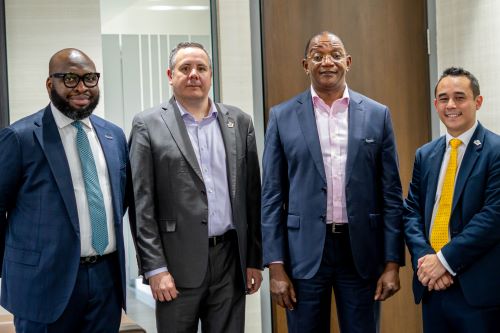
Continental Reinsurance Plc, in partnership with Afro Asian Insurance Services based in London, successfully conducted a comprehensive training session on New and Emerging Risks specifically tailored for the Nigerian market.
Held on May 10th and 11th, 2023, at the Continental Reinsurance Center in Lagos, the event garnered widespread participation from over 30 insurance companies and brokers.
Under the expert guidance of Ryan Phillips, Managing Director, and Andrew Hodget, Business Development Manager of Afro Asian Insurance Brokers in London, the training delved into the pressing demands for emerging risk solutions in Nigeria.
With a focus on crucial areas such as Cybersecurity, Kidnap and Ransom, and Blockchain, the session provided valuable insights into the escalating risks prevalent in our current environment.
In response to the industry’s need for updated knowledge and expertise, the training shed light on the core offerings of insurance covers related to emerging risks. Furthermore, it provided a global perspective, equipping insurers and brokers with a comprehensive understanding of the evolving landscape.
As dedicated reinsurers, Continental Reinsurance and Afro Asian Insurance Services remain committed to the continuous education of professionals within the insurance industry. By empowering insurers and brokers with the necessary tools and insights, they aim to enhance their ability to navigate and address emerging risks effectively.
In a rapidly changing world, the partnership between Continental Reinsurance and Afro Asian Insurance Services serves as a testament to the proactive approach taken by industry leaders in ensuring the resilience and adaptability of Nigeria’s insurance sector.
Through collaborative efforts, they are paving the way for a more secure and risk-conscious future.
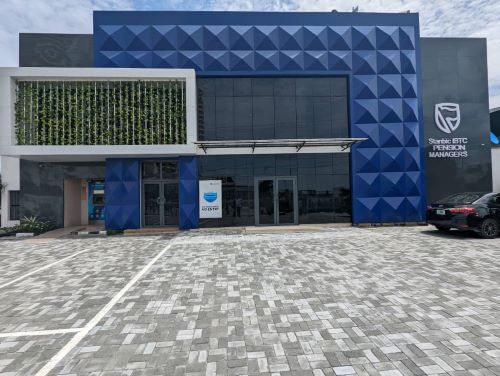
Stanbic IBTC Pension Managers Limited, a subsidiary of Stanbic IBTC Holdings Plc, has received an Initial Management Quality Rating of MQ2(NG)(mq) with a Stable Outlook from Global Credit Ratings (GCR).
The rating demonstrated the company’s commitment to excellence in all aspects of its operations.
GCR, the rating agency, gained expertise in assessing the creditworthiness of financial institutions, corporates, and government entities, and had established itself as a leading rating agency in Africa.
GCR adopted a Management Quality (MQ) rating system that ranked from the highest rating of ‘MQ1’ to the lowest rating of ‘MQ5′.
These ratings served as indicators of an entity’s organizational structure, risk management capabilities, and operational controls. They also hinted at markets of the overall quality, management characteristics, and operating practices of organisations.
The MQ2 rating assigned to Stanbic IBTC Pension Managers was an indicator of the institution’s strong management team with robust organisational structures, adequate controls, and sound risk management practices. It also accentuated the company’s clear strategy and solid financial position.
In a statement, Dr. Demola Sogunle, Chairman, Board of Directors of Stanbic IBTC Pension Managers, expressed delight in the rating. He stated that it was evidence of the company’s dedication to achieving excellence in all areas of its operations.
“We are very delighted to have received this rating from GCR, which recognises our concrete efforts to maintain the highest standards of corporate governance, risk management, and financial performance,” Demola said.
Demola noted that the rating would boost confidence among Stanbic IBTC Pension Managers’ clients and stakeholders and would affirm the company’s dynamic capability to manage risks and deliver on its commitments.
Olumide Oyetan, Chief Executive, Stanbic IBTC Pension Managers, attributed the rating and success of the organisation to its commitment to better serve customers without compromising operational excellence.
He said: “We are a member of the Standard Bank Group, Africa’s largest banking group by assets, totaling $170 billion, as of 31 December 2022. This feat has enabled us to leverage the Group’s resources for our portfolio management functions. Our sister company, Stanbic IBTC Bank, is also the only AAA-rated Bank in Nigeria today, lending further credence to the Group’s strength and stamina, especially in its leadership and governance structures’”
“We deliver pension fund administration and management services to over 1.9 million private and public sector Retirement Savings Accounts (RSA) holders under the Contributory Pension Scheme) through our extensive network of 29 branches and ten service centers nationwide.”
Olumide said the organisation also managed defined benefit plans for large corporates and provided value-added services, including retirement planning advice and personal financial planning. He described Stanbic IBTC Pension Managers as an organisation equipped with a stable and experienced management team with sound management experience to keep the organisation ahead of the pack in its operations and practices.
“Our portfolio management is sound, and our investment style is value-based with a long-term bias. We implement a top-down approach in securities selection, which is monitored monthly by the executive committee. We also offer our clients transparency and ease of account access through channels such as our secure web portal, 24/7 multilingual contact center, telephone, email, SMS, and our growing loop of client experience centers,” Olumide said.
The PFA’s Chief Executive noted that the company maintained an adequate operational risk management framework.
He said: “We manage cyber, and data privacy risks using internal controls reviewed annually by independent third parties to reassure all our stakeholders of our commitment to doing business correctly and safely.”
Stanbic IBTC Pension Managers is committed to maintaining the highest professional and operational standards in delivering exceptional services to its growing clientele.
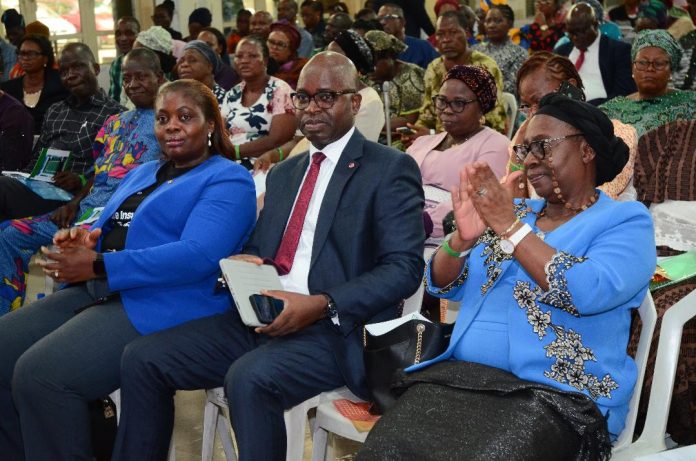
L: R: Tosin Bayo-Yusuf, Executive Director/COO, Heirs Life Assurance; Niyi Onifade, MD/CEO, Heirs Life Assurance; and Mrs. Yetunde Ilori, Director-General, Nigerian Insurers Association (NIA) at the NIA Retirement Readiness Workshop held in Lagos.
At the recently concluded Retirement Readiness Workshop organised by the Nigerian Insurers Association (NIA) at Lagos State Secretariat in Lagos, Mr. Niyi Onifade, MD/CEO, Heirs Life Assurance (HLA), charged employees of the Lagos State Government to adopt Annuity Plans as a pension-regulated option that pays a stream of regular income throughout one’s retirement life.
Speaking on the topic “Annuities: What They Are, The Types, How They Work,” Onifade emphasised the significance of subscribing to a holistic retirement planning that provides financial backing throughout life for peace of mind and a comfortable future. He also stressed the necessity of being prepared for retirement, while sharing Annuity options available to retirees.
He said: “At Heirs Life Assurance, we recognise the need for individuals to secure their financial future and we believe that our Heirs Life Annuity Plan offers a robust solution that aligns with your retirement goals.”
The NIA Retirement Readiness Workshop provided a platform for the intending retirees to enhance their knowledge and better prepare for retirement.
The Heirs Life Annuity Plan is designed to provide individuals with a steady stream of income during retirement, ensuring financial security and peace of mind. With flexible options tailored to meet diverse needs, the plan offers a reliable solution for retirees seeking financial stability in their post-working years.
Heirs Life Assurance Limited (HLA) is a specialist life insurance company that is challenging traditional insurance with 21st-century digital tools and technology to provide simple, quick, reliable, and accessible financial security plans to individuals and businesses.
Heirs Life Assurance is a subsidiary of Heirs Holdings, a pan-African investment group with presence in 24 countries across 4 continents.
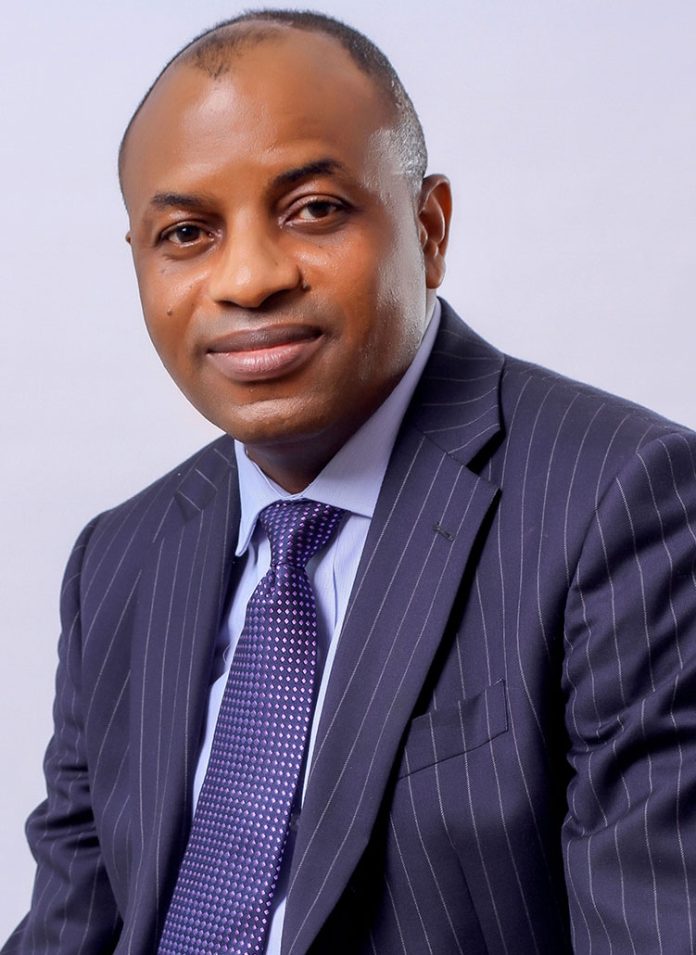
Sovereign Trust Insurance Plc, (the Company) recently released its 2022 audited financials to the general public having gotten the requisite approval from the Industry’s Regulatory Authourity, National Insurance Commission, NAICOM.
Inspite of the challenging operating environment that characterized operations of most businesses in the country in 2022, the Underwriting Firm maintained its growth trajectory remarkably in the period under review when compared with the performance of year 2021.
The Managing Director and Chief Executive Officer of the Underwriting Firm, Mr. Olaotan Soyinka said the performance of the company in 2022 is quite encouraging considering the various business challenges that the insurance Industry had to deal with in the past year. He said there is definitely room for improvement in the days ahead and that, the Underwriting Firm is poised to take advantage of the opportunities that are inherent in the insurance marketplace.
Sovereign Trust Insurance Plc, (the Company) recorded a total of N15.2b Gross Premium Written in 2022 as against the sum of N12.7b that was written in 2021, representing a 20% growth rate for the year. It is quite interesting to note that the Company also recorded a 9% increase in its Profit Before Tax of N962m as against N885m recorded in the year 2021. Equally of note is the increase in the company’s Total Equity which also grew by 9% from N9.6b in 2021 to N10.4b in 2022.
The Managing Director/CEO while briefing newsmen in Lagos said the Management of the Company is committed to meeting and surpassing the expectations and aspirations of its shareholders and stakeholders alike.
“These performance levels are a confirmation of the management’s determination to effectively and strategically position the Company as one of the leading and vibrant insurance companies in the country while also making conscious efforts at propelling the Company to a profitable height for shareholders’ delight” in the years ahead.
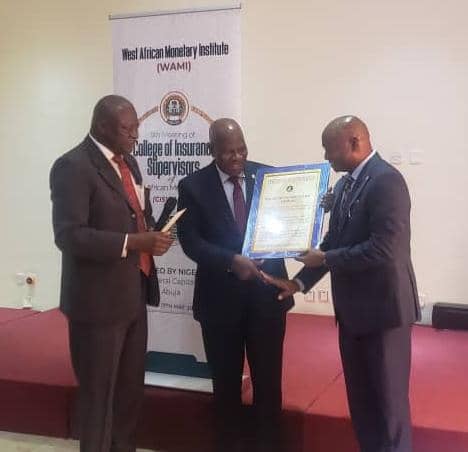
From left in the picture is the Commissioner of Insurance, The Gambia, Pa Allieu Sillah, who doubles as current Chairman of WAISA and CISWAMZ, CFI Nigeria, OLORUNDARE SUNDAY THOMAS and the Director-General of WAMI, Olorushola Olowofeso.
Commissioner for Insurance and Chief Executive Officer of the National Insurance Commission (NAICOM), Nigeria OLORUNDARE SUNDAY THOMAS receiving an award from the College of Insurance Supervisors of West African Monetary Zone (CISWAMZ) at the ongoing 5th meeting of the College in Abuja.
The award is in recognition of Mr. Thomas’s pioneering role in the establishment and eventual take-off of the college as Chairman of the West Africa Insurance Supervisors Association (WAISA).
Also honoured was Mr. Pius Agboola, the Director Inspectorate at NAICOM who served as the pioneer Chairman of the College.
Stanbic IBTC Holdings Plc, a leading provider of financial services in Nigeria, is pleased to announce the commencement of operations of its wholly-owned financial technology subsidiary.
Having received all required regulatory approvals and licenses to commence operations, the subsidiary will operate under the name Stanbic IBTC Financial Services Limited. It will function primarily as a Payment Solutions Provider (PSP), focusing on developing innovative technology solutions to enhance Stanbic IBTC’s existing financial services offerings.
The launch of Stanbic IBTC Financial Services Limited marks an important milestone for Stanbic IBTC as the company seeks to remain at the forefront of the rapidly evolving financial services industry.
The subsidiary will leverage cutting-edge technology and expertise to provide customers with new and improved ways for businesses to manage their finances, sell online and collect payments via innovative payments and eCommerce solutions.
Speaking on this development, the Group Chief Executive of Stanbic IBTC Holdings Plc, Dr. Demola Sogunle indicated that the establishment of a Fintech business would provide Stanbic IBTC with the opportunity to penetrate further into the payments and Fintech markets and thus contribute to the growth of the overall business of the Group.
“This development is exciting for our company as we continue to invest in new technologies and solutions that will allow us to serve our customers better and remain a leader in the financial services industry.”
Stanbic IBTC Holdings Plc’s strategic intent is to be Nigeria’s leading end-to-end financial solutions provider. In furtherance of this objective, Stanbic IBTC Financial Services Limited will facilitate payments processing, eCommerce, consumer lifestyle payments, and other value-added services, thus complementing other businesses currently being operated by the Group.
Stanbic IBTC Financial Services Limited will operate as a separate legal entity under the Stanbic IBTC umbrella, with its management team and dedicated resources to drive innovation and growth. The subsidiary will work closely with the Group’s existing teams to identify new opportunities and develop customised solutions to meet the unique needs of its customers.
“We believe that Stanbic IBTC Financial Services Limited has the potential to revolutionize the financial services industry by leveraging the power of technology to provide customers with new and innovative ways to manage their finances,” said Stanley Jacob, Chief Executive, Stanbic IBTC Financial Services Limited. “We look forward to driving true platform orchestration that delivers robust payment solutions to businesses, consumers, and Government.”
Enhancing the Group’s overall operations and contributing to the growth of the Nigerian financial technology industry, Stanbic IBTC Financial Services Limited will leverage agile practices and innovation to drive financial inclusion, enhance user experiences, improve service delivery, and promote economic growth.
Business Journal
Professional - Freedom - Enterprise
Your source for business news.
CONTACT US @
Suite B2, Glory Shopping Complex,
229, Ikotun-Idimu Road, Council B/Stop, Idimu, Lagos – Nigeria.
Tel: +234 802 308 8874, 705 891 9138
E-mail: [email protected] [email protected]
Get important news delivered directly to your inbox and stay connected!
© 2026 Business Journal Nigeria. Website Designed by Frandimore