The African Development Bank has approved a $9 million equity investment (approximately 12% of the fund’s capitalisation) in the Fund for Agricultural Finance in Nigeria (FAFIN) to provide expansion capital to agricultural small and medium-sized enterprises (SMEs).
FAFIN is a first-generation private equity fund that provides financial, capacity-building and technical assistance to commercially viable SMEs in the Nigerian agribusiness sector, through a unique value chain-centric approach, and using a combination of equity, quasi-equity and convertible loan instruments.
FAFIN implements its strategy and constructs its portfolio through a bifocal lens consisting of the twin objectives of competitive financial returns and measurable positive social impact.
The Fund is jointly sponsored by the German KfW Development Bank and the Government of Nigeria, through the Federal Ministry of Agriculture and Rural Development (FMARD).
The Fund Manager is Sahel Capital (Mauritius) Limited, a fund management firm incorporated in Mauritius in 2013.
The project is expected to deliver strong development outcomes from (i) household benefits and employment through the creation of a large number of jobs and the provision of certain agricultural products; (ii) positive gender and social effects through the implementation of out-grower schemes and supporting rural development; and (iii) private sector development through alleviation of financial constraints faced by agribusinesses and enhancing agricultural value chains.
The project’s contribution to inclusive growth is expected to be significant, given the large numbers of jobs to be created and out-growers to be reached at the level of sub-projects. Its contribution to green growth is expected to be low, because the Fund targets the agribusiness sector with some expected negative effects on the environment.
The Fund’s primary focus will be on SMEs across the agricultural value chain with crop value chain and geographic diversification. It aims at fixing broken value chains to increase efficiencies, reduce post-harvest loss, and increase smallholder farmer incomes and SME agribusiness profitability.
Investment instruments will be primarily quasi-equity (convertible bonds, preference shares and structured royalties) and direct equity. The ticket size ranges from $500, 000 to $5 million.
The Fund is aligned with the Bank’s Ten Year Strategy focusing on inclusive growth, strengthening agriculture and food security, and access to local SME finance; which is encapsulated in the Bank’ High Five Development Agenda for Africa, specifically Feed Africa and Industrialise Africa.
It is also in line with the Bank’s Strategy for Agricultural Transformation in Africa (2016-2025), Strategy on Jobs for Youth in Africa (2016-2025) and the Bank’s Country Strategy Paper for Nigeria (2013-2017), which supports an enabling environment for agriculture.

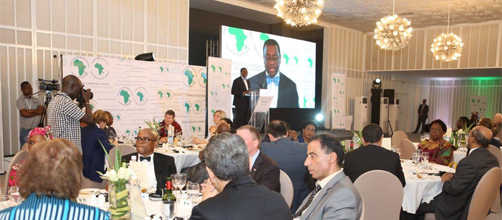
AfDB Commits $9m for Agricultural Finance in Nigeria







Popular Categories


Previous article

Next article