
The social status of one’s parents is as influential today as it was 50 years ago in determining a person’s future, according to early findings from an upcoming World Bank report, Fair Progress? Educational Mobility Around the World. Marking the 25thanniversary of the International Day to Eradicate Poverty, the institution sounded the alarm on a lack of progress since the 1960s in an area that is crucial for reducing poverty and inequality and promoting growth.
The preview paper, released yesterday, helps put together the first pieces of the economic mobility puzzle, focusing squarely on how one generation’s education can make or break the next generation’s success. This highlights the important role of public policy in providing a level playing field, so that every child, regardless of parental background, can reach his or her full potential. The full report, to be released in early 2018, will broaden the scope and examine the drivers of income mobility, including the role of markets and the broader forces of economic transformation.
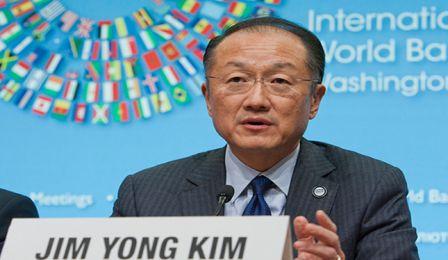
“We are living in the middle of a human capital crisis and need to do everything we can to create a world where children everywhere have the opportunity to become whatever they want,” said World Bank Group President Jim Yong Kim. “The potential of hundreds of millions of people is being wasted, as their chances remain too closely tied to the previous generation. We have to invest in young children so they are hardwired to succeed, encourage and meet the aspirations of young people, and act at all levels – especially locally – to ensure that tomorrow’s generation can thrive regardless of where they are born.”
Increases in education from generation to generation have stalled over the last half-century. About half of people born in an average developing economy in the 1980s have more education than their parents – showing no improvement when compared to those born in the 1960s. If the world does not alter the way it invests in its children, particularly those coming from less advantaged backgrounds, there is little reason to believe that this assessment will be different 10 years from now, making an end to extreme poverty by 2030 an even bigger challenge.
\Low levels of upward mobility are particularly pronounced in the developing world, especially in Sub-Saharan Africa. For example, only around 12 percent of today’s young adults (born in the 1980s) in some Sub-Saharan African economies have more education than their parents, compared to more than 80 percent of the same generation in parts of East Asia. All of the 15 economies where people’s education level is most closely tied to their parents’ education level are developing economies.
The study points to three broad pathways forward to increasing economic mobility from generation to generation.
Equal opportunities for children: Investments in early childhood development, education access and quality, maternal and child health, nutrition, infrastructure, water and sanitation, and other key services in the earliest years are critical to improving mobility and building human capital. For example, economies that have lower stunting (low height for age, a sign of chronic malnutrition) rates for children at age five and those that invest more of their public resources in education are likely to have higher mobility.
The recent World Development Report on Education makes a strong case for investments in learning and better-quality education as a pathway out of poverty, and the World Bank Group has recently announced the Human Capital Project— an accelerated effort to help countries invest more, and more effectively, in their people—as a critical step to boosting inclusive economic growth and ending extreme poverty.
Aspirations: When people perceive that they cannot move out of poverty, they are less likely to take the necessary steps to do so – their perceptions impede their aspirations, keeping them trapped. It is critical to incorporate behavioral insights into policies and programs, to better reach those who have been left behind in the development process.
Local action: The environment a person is born into matters, alongside the social status of one’s parents. Actions at the local level, from regions down to neighborhoods, are crucial to breaking the cycle of poverty. Poorer people are likely to live in poorer areas with worse schools, crumbling infrastructure, low access to and quality of services, and higher crime, which can impact a child’s ability to learn, grow, and thrive.
End Poverty Day
The world is making progress toward the goals of ending extreme poverty by 2030 and boosting shared prosperity everywhere. By focusing our resources on three areas – promoting sustainable and inclusive economic growth, investing in human capital, and fostering resilience to shocks – and by measuring progress – we can get the rest of the way.
End Poverty Day presents the global community with an opportunity each year to focus on our goals and to work with government and citizens, civil society, private sector and development organizations to build support for the action needed to achieve those goals.