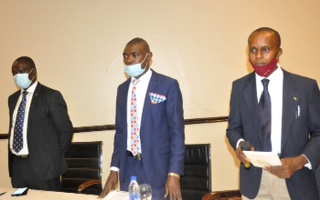
The independent Africa Regional Certification Commission (ARCC), the body responsible for certifying the eradication of wild poliovirus in the WHO Africa Region (WHO-Afro), has granted the region ‘wild poliovirus free’ status.
This follows after Nigeria, the last wild poliovirus endemic country in the region, recorded no new cases in three years–the requisite period–since it last reported cases of wild poliovirus.
Sanofi Pasteur, the world’s single largest producers of vaccines, is proud to be associated with this major milestone for Nigeria, WHO Africa Region and the overall global efforts to free the world of polio.
In Nigeria, Sanofi Pasteur has been working in collaboration with stakeholders such as the National Primary Healthcare Development Agency (NPHCDA), WHO, UNICEF and several multi-lateral and non-governmental organizations in the national immunization programmes for children under 5 years ofage.
Charles Wolf, Vaccines Head for Africa, said:“The ambition to eradicate polio from the world has been a long journey. The recent declaration by ARCC certifying the WHO Africa region as free of wild poliovirus is a watershed for the WHO and all partners in the Global Polio Eradication Initiative (GPEI).For over three decades, we at Sanofi Pasteur have been supporting the global public health coalition on polio through our expertise and the provision of innovative vaccines to support national, regional and global immunization programs for children under 5 years of age”.
Polio is a highly infectious viral disease that is transmitted from person to person, mainly through a fecal- oral route or, less frequently, through contaminated water or food and multiplies inside the intestines. Onein200infectionsleadstoirreversibleparalysis,usually in the legs.
Amongthoseparalyzed,5 to 10 per cent diewhentheirbreathingmusclesbecomeimmobilized.Poliomainlyaffectschildrenunder5yearsofage.
There is no cure for polio but the disease can be prevented through administration of a simple and effective vaccine, given multiple times. This is why efforts are underway across every country to rapidly boost immunity levels in children and protect them from polio paralysis.
Wild poliovirus cases have decreased by over 99 per cent since 1988, from an estimated 350,000 cases in more than125 endemic countries then to 33 reported cases in2018. Of the three strains of wild poliovirus (type1, type2andtype3), wild polio virus type2 was eradicated in 1999 and no case of wild polio virus type3 has been found since the last reported case in Nigeria in November2012.
In 1988, the Global Polio Eradication Initiative (GPEI) was launched by several stakeholders involved in global public health and led by the World Health Organization. At that time, polio was endemic in 125 countries with more than 350,000 children paralyzed each year. Since then, thanks to the strong collaborations across the GPEI, there has been a 99.9% decrease in paralytic cases.
The fight against polio worldwide is not yet over. Sanofi Pasteur remains committed to supporting the GPEI until the disease is eradicated worldwide. Once polio is eradicated, the world can celebrate the delivery of a major global public good that will benefit all people equally, no matter where they live. By then, no child will ever again suffer the terrible effects of lifelong polio-paralysis.