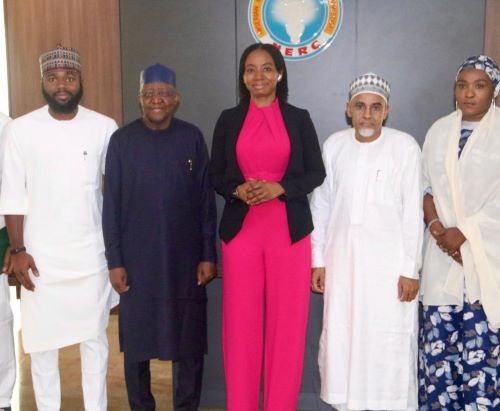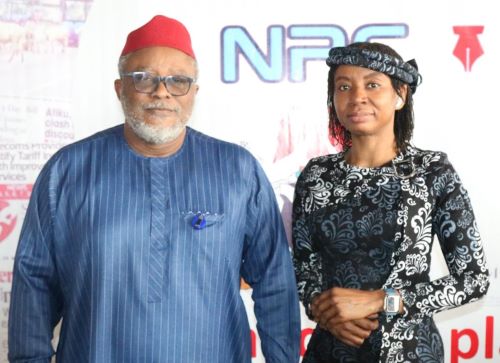

From left: Dr. Dili Ezughah, Executive Secretary, Nigerian press Council and the Director General of the National Pension Commission, Ms. Omolola Oloworaran during a recent working visit to the Council.
The National Pension Commission (PenCom) has stated that newspaper organisations are owing over ₦1.3 billion in unpaid pension contributions for journalists in Nigeria.
This was disclosed by the Director General of PenCom, Ms. Omolola Oloworaran, who led a delegation to the Nigerian Press Council in Abuja. Ms. Oloworaran expressed concerns over widespread non-compliance with the Pension Reform Act 2014 (PRA 2014) among media establishments.
Consequently, PenCom and the Nigerian Press Council have entered into a strategic collaboration to prevail on newspaper organisations to settle the huge pension liabilities owed to their employees.
The PRA 2014 mandates that employers remit monthly pension contributions into employees’ Retirement Savings Accounts (RSAs) no later than seven days after salary payments.
According to the PenCom DG, many media houses have failed to adhere to this requirement, prompting the Commission to assign Recovery Agents to audit and determine their outstanding pension debts and applicable penalties.
Recently, the PenCom DG has been leading an aggressive enforcement drive, building strategic partnerships with regulatory agencies aimed at recovering unpaid pension contributions from organisations running into billions of Naira.
However, the focus on the media sector is highly significant being the first time of conducting such high-level engagements towards resolving the lingering issue.
Oloworaran said journalists deserve to retire with dignity as they play a vital role in ensuring accountability across the public and private sectors. Media organisations, in turn, must lead by example by fulfilling pension obligations to their employees.
She appealed to the Nigerian Press Council for support in advocating compliance within the media sector, emphasising that pension contributions are a critical safeguard against old age poverty. “Pension is a vital component of our social security system, and even the government has begun to take it more seriously,” she added.
In response, the Nigerian Press Council Executive Secretary, Dr. Dili Ezughah, pledged the Council’s support and commitment to addressing the issue.
Dr. Ezughah said the Nigerian Press Council would escalate the matter to relevant stakeholders, including the Nigeria Union of Journalists (NUJ) and the Nigerian Guild of Editors, highlighting the significant impact of unpaid pensions on journalists’ welfare.
He decried the failure of media organisations to remit pension contributions as a significant challenge in the Nigerian media industry.
The discussions culminated in the establishment of a joint working group of PenCom and the Nigerian Press Council tasked with ensuring a speedy resolution of the issue.