Friday, April 10, 2026
26.8 C
Lagos

NSE, DMO Hold Workshop on Fixed Income

In line with its commitment to improve the capacity of its members and deepen investors’ participation in bonds,
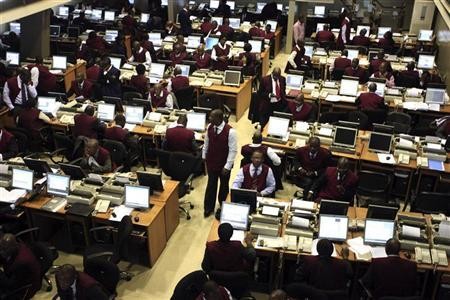
the Nigerian Stock Exchange in conjunction with the Debt Management Office (DMO) and Stanbic IBTC Stockbrokers Limited (SISL) is set to organise the 2016 edition of its Fixed Income Workshop on Saturday, March 5, 2016 at the NSE.

This year’s workshop themed “Auctions, Trading and Settlement of Debt Instruments in Nigeria”, will bring together about 200 stockbrokers, regulators and other key capital market stakeholders to explore technical and factual information in the bond’s market.

Specifically, experienced facilitators will moderate discussions on FGN Bond Auction process and methodology, settlement, as well as on the fundamentals of bond instruments, valuation and portfolio application.

According to the Executive Director, Capital Markets Division, NSE, Mr. Haruna Jalo-Waziri, “the Fixed Income Workshop is one of the broker education initiatives of the NSE aimed at empowering Dealing Members with the necessary tools to aid their client’s investment decision making process. This workshop is designed to enhance brokers’ understanding of the basics of investing, trading and valuation of debt instruments. The workshop will also involve trading simulations which explores the impact of economic indicators on fixed income trading and investment decisions.”

ABOUT THE NSE
The Nigerian Stock Exchange, a company limited by guarantee, services the largest economy in Africa and is championing the development of Africa’s financial markets.

The Exchange offers listing and trading services, licensing services, market data solutions, ancillary technology services, and more. The Nigerian Stock Exchange continues to evolve to meet the needs of its valued customers, and to achieve the highest level of competitiveness.

It is an open, professional and vibrant exchange, and the Entrepreneurial Growth hub of Africa. The Nigerian Stock Exchange aspires to be Africa’s foremost securities exchange, connecting Nigeria, Africa and the world.


spot_img
spot_img
spot_img

Hot this week

Mutual Benefits Highlights Power of Structured Financial Planning as Nigerians Struggle to Save

A growing number of Nigerians are struggling to build...

APC Chairman: Party is Nigeria’s Only Tested Vehicle for Stability, Progress, National Renewal

The National Chairman of the All Progressives Congress (APC),...

RHUCE Taps into Africa’s $3b Creator Economy with New Monetisation Platform 

RHUCE, a new social platform designed for African creatives,...

FG Tasks PenCom on N28tn Pension Assets at Board Inauguration

The Federal Government has inaugurated the Governing Board of...

Inspenonline Retirement Summit 2026: Experts to Brainstorm on Turning Dreams into Reality for Workers

How to turn dreams into reality through insurance; pension...

Topics

The N200bn ICT Bank, Strategies to Rescue Nigerian Telecom Sector 

By Elvis Eromosele The Nigerian telecommunications sector must have nine...

Global Airlines Financial Monitor: March 2018

The final data for Q4 2017 confirms the...

NIMC, FMAFS Partner on Farmer Registry, G2P Card Project

Preamble The Federal Ministry of Agriculture and Food Security (FMAFS)...

SEC, Capital Market Community Holds Q3 CMC Meeting Nov 16

The Securities and Exchange Commission (SEC) is set to...

TECNO SPARK 4: Speed, Functionality, Affordability

In the world of internet-of- everything, speed defines the...

P+ Measurement Wins Double Laurels at The Industry Award

Micheal Effiong James, Editor, Ovation Magazine, Philip Odiakose Chief Insights Officer P+ Measurement Services...

HP Unveils New High-Performance HP Z6 G5 A

HP has unveiled the newest addition to the Z...

‘Cost of Finance Too Expensive in Africa’

“I would say the biggest challenge companies face is the cost of finance. Funds are very expensive in Africa,” says Jonty Levin, a Partner at financial advisory and structuring specialist, Alkebulan. There are two main reasons why the cost of finance generally remains high across the continent, according to Levin. One is the perceived risk associated with investing in African companies, and another is the shallow financial markets, where limited supply is rationed through higher costs.
spot_img

Related Articles

Popular Categories

spot_imgspot_img