Tuesday, December 23, 2025
25 C
Lagos

Nigeria Seeks World Bank Support to Recover $320m Abacha Loot

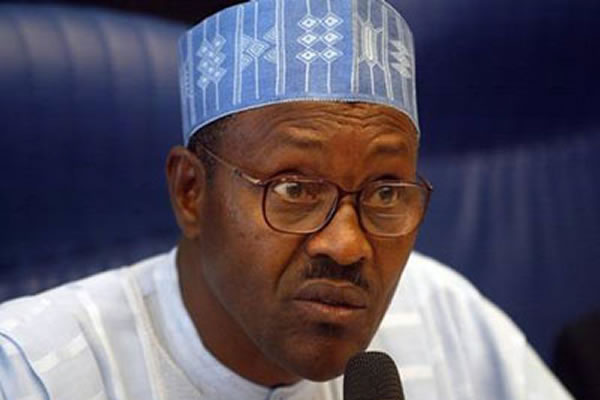
President of Nigeria, Muhamadu Buhari, asked World Bank’s help to rapidly recover $320 million stolen under General Sani Abacha’s rule and hidden in Swiss accounts.

Buhari made the appeal to the Bank’s Chief Operating Officer, Sri Mulyani Indrawatito as she was visiting Nigeria, after stopping by Cameroon.

“We need the support of the World Bank for the repatriation of the funds. If such repatriated funds have been misapplied in the past, I assure you that the same will not happen with us,” Buhari said. Swiss authorities agreed to send back the funds on the condition that they are used to finance development projects, under the aegis of World Bank.

The visit of the COO was also the occasion for a direct dialogue regarding Nigeria’s economic status. Truly, Africa’s top economy suffers from a drop in quantity and prices of the crude it produces.

It is a situation which led to external and public revenues falling, deficit widening and Naira devaluating.

Indrawatito talked about various ways to support Nigeria, but none of the executives present came back on the $2.5 billion and one billion dollar loans that Nigeria asked World Bank and African Development Bank respectively at the beginning of 2016.

Regarding the World Bank loan, it was to be approved by IMF.

However, the latter like many international investors, wished for Nigeria to float its currency, or at least, officially devaluate it.

This constitutes today the stumbling block between Nigeria and its various western economic partners.

Buhari stands firm on his position which is that devaluating Naira is not adequate, referring to past and risk of inflation. Also, he signed with China various agreements, leaving a margin in case of a separation with his Western partners.


spot_img
spot_img
spot_img

Hot this week

Fidelity Bank Enhances Maternal and Child Healthcare Delivery at ESUTH

L-R: Public Relations Officer, Enugu State University Teaching Hospital...

Polaris Bank Champions Girls’ Hygiene Awareness with Female Hygiene Essentials in Schools

Polaris Bank has continued its commitment to empowering the...

Sterling Bank Champions Collective Action to Accelerate Nigeria’s Renewable Energy Transition

L-R: Mr. Ayo Ademilua, President, Renewable Energy Association of...

BUA Foods Hosts Minister of State for Industry, NSDC on Tour of LASUCO Sugar Company  

  BUA Foods Plc recently hosted the Hon. Minister of State for Industry,...

PenCom Unveils PenCare Initiative for Retirees Across Nigeria

The National Pension Commission (PenCom) has established the PenCare...

Topics

Pan-African Varsity Holds 2nd Media Roundtable on Media Engagement in Governance

Pan-Atlantic University (PAU) held the second edition of its...

ITU Unveils New Report on Artificial Intelligence in Broadcasting

ITU has just published a new report that lays out how...

Sovereign Trust Insurance Wins Enactus Catalyst Award

From L-R: Victor Akinfala, Head Partnerships & Special Projects,...

CBN Dissolves, Appoints New CEOs, EDs for Union, Keystone, Polaris Bank

The Central Bank of Nigeria (CBN) has dissolved the...

Vice President, Kashim Shettima, Commissions National Assets Restoration Programme

L-R: The Executive Vice Chairman/CEO NASENI, Mr. Khalil Suleiman...

Interswitch Drives Healthcare with Innovative Solution

Interswitch Transnational, Africa’s leading digital payments and commerce provider...

Stanbic IBTC Bank PMI: New Order Growth Hits 19-month High

Growth in the Nigerian private sector continued to gain...

World Bank Report: Banks Provided $28bn in Climate Finance in 2014

The leaders of the powerful G7 countries made headlines in June when they committed to a low-carbon growth path and formally recognized the need to reach zero net emissions globally before the end of the century. They know it will require shifting trillions of dollars from carbon-intensive investments to low-carbon, resilient growth, and they called on the six big multilateral development banks (MDBs) to use "to the fullest extent possible" their balance sheets and their capacity to mobilize partners to increase climate finance for developing countries.
spot_img

Related Articles

Popular Categories

spot_imgspot_img