NEXIM: ‘Nigeria Must Rethink Oil Dominance to Achieve Economic Growth’

Mr. Bashir Wali, Acting MD/CEO, NEXIM Bank receiving a plaque of honour from Mr. & Mrs. AdegboyegaAwomolo (SAN) at the 3rd Edition of AdegboyegaAwomolo& Associates Annual Colloquium, which held on October 4, 2016 at Shehu Musa Yar’Adua Centre, Abuja

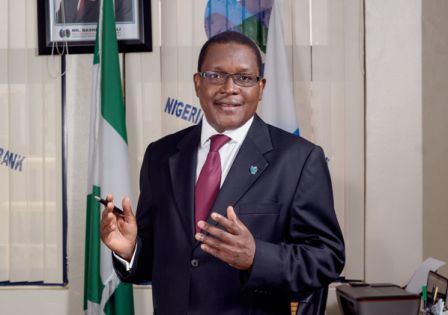
Mr. Bashir Wali, Acting managing Director, Nigerian Export-Import Bank (NEXIM) says Nigeria must move away from the dominance of oil in order to achieve sustainable economic growth and development.

Wali said at the 3rd edition of AdegboyegaAwomolo Annual Colloquium in Abuja that the International Monetary Fund (IMF) has also advised that given that oil is an exhaustible resource, oil producing countries need to develop other sectors to take over as oil and gas resources dwindle.

‘The key lesson from the foregoing is that Nigeria must move away from the dominance of oil to ensure sustainable growth and development. Besides the problem of revenue volatility, the oil sector, being an enclave, is incapable of generating the required jobs to address the growing problem of unemployment – particularly among the youth. Nigeria must therefore redouble its steps towards economic diversification by promoting increased production and exports in other key sectors, particularly agriculture, solid minerals and other sectors that have been identified as key drivers of economic growth.’

The full text of the Speech by Mr. Bashir Wali is reproduced below under FOR THE RECORDtitle.

spot_img
spot_img
spot_img
spot_img
spot_img

Hot this week

Nigeria’s Private Sector Launches Gender Country Program to Unlock Inclusive Growth

Senior government officials, regulators, development finance institutions and business...

SERAP Sues INEC over ‘Failure to Probe Alleged N800bn FAAC Diversion for Campaign Funding’

Socio-Economic Rights and Accountability Project (SERAP) has filed a lawsuit...

PTAD: Harmonisation Reforms Designed to Advance Pension Equity

The Pension Transitional Arrangement Directorate (PTAD) says implementation of...

How Babies N’ Stuffs is Building the Future of Parenting Commerce in Nigeria

Nigeria's baby products industry is undergoing a quiet transformation. Driven...

NGX Leadership Engages Global Community on T +1 Policy to Strengthen Nigeria’s Capacity to Attract FDI

Dr. Umaru Kwairanga, Group Chairman, Nigerian Exchange Group (NGX)...

Topics

GTBank Fashion Weekend 2018 Set for November 10

From Saturday, the 10th to Sunday, the 11th of...

NESG to FG: Hunger is Ravaging Nigerians, Overhaul Agric Policy

The Nigerian Economic Summit Group (NESG) has raised alarm...

NCC Fine Impacts MTN Result Ending June 2016

MTN, a leading emerging markets mobile operator, connecting 233...

Stanbic IBTC PMI: Economic Rebound Continues in August

The recovery in the Nigerian private sector gathered momentum...

Boeing, Qatar Airways Ink $18.6bn 100 Aircraft Deal

Boeing and Qatar Airways announced an order for 30...

Nigeria’s Advertising Industry Valued at ₦605.2bn- PwC Report

A new report commissioned by the Advertising Regulatory Council...

WIMBIZ Co-Founder Charges Olashore School Graduates on Excellence

The Co-Founder of Women in Business, Management, and Public...

We, The Prisoners of DStv

Once upon a time, there was a homegrown payTV network in Nigeria named HiTV. Established in 2007, it later won the rights to the English Premiership League (EPL) which was the icing on the cake for it and its rising clientele. Unfortunately, the romance did not last. By 2010, the Toyin Subair-led HiTV was unable to renew and retain the EPL deal in a $100 million duel with Multichoice, the South African-owned operator of DStv. HiTV lost. DStv snatched the deal. But as we now know, HiTV was not the only loser. Nigerians also lost!
spot_img

Related Articles

Popular Categories

spot_imgspot_img