Saturday, March 7, 2026
27.6 C
Lagos

NAICOM: ‘Investors, Consumers Happy with Tier-Based Capital Policy’

The National Insurance Commission (NAICOM) says that investors and consumers of insurance products and services in the country are applauding the Tier-based Minimum Solvency Capital (TBMSC) policy introduced recently by the Commission in the insurance industry.

Mr. Mohammed Kari, Commissioner for Insurance, NAICOM, said in Abuja that the new TBMSC policy did not change the capital base of insurance companies operating in Nigeria, even though the regulator did not introduce new capitalisation over the past 13 years due to the economic situation in the country.

He therefore expressed surprise at the alleged negative reaction of the industry towards the TBMSC policy.
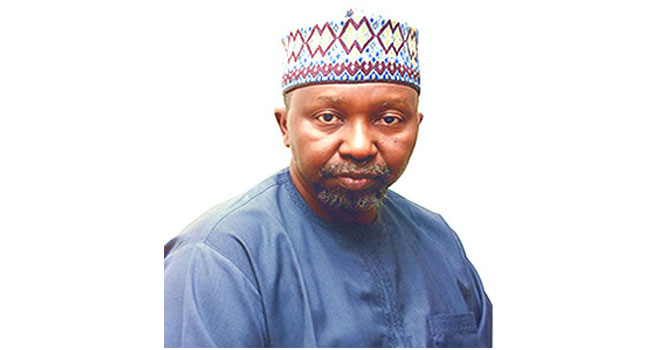
Mohammed Kari, Commissioner for Insurance, NAICOM
Mohammed Kari,
Commissioner for Insurance, NAICOM

“It is the convention of the insurance industry to resist. That is what has kept the industry the way it is today. Unless we change, we cannot grow like other sectors of the economy. Today, the insurance industry is at a crossroad of failure and survival. Our objective is to help the industry to consolidate strategically and help our industry and economy not to suffer when the next recession comes. The good side is that the insurance sector is now the growth area in the economy.”

Kari emphasised that NAICOM has not asked any insurance company to raise capital.

“We have not asked any insurance company to raise capital. It (TBMSC) is not a capitalisation policy or project. We are also warning insurers not to de-market other operators over the tier-based policy.”

On the court process instituted against the Commission over the policy by a group of shareholders, the NAICOM chief said the regulator has not been served with any court order.

“We have not been served with any court order. We cannot comment on the litigation until we have such documents. We only read about in the papers.”


spot_img
spot_img
spot_img

Hot this week

IWD 2026: Ecobank Nigeria Unveils Enhanced ‘Ellevate’ Programme to Accelerate Growth for Women Entrepreneurs

Ecobank Nigeria, a subsidiary of the leading pan-African financial...

‘Winning with Strategic Communications’ Launch, Targets Real-World Impact

Godfrey Adejumoh, a seasoned top-performing Global Business Communications Strategist...

IWD 2026: Why Women’s Inclusion is Central to Nigeria’s Democratic Future

As the global community commemorates International Women’s Day 2026...

CBN: N4tn Capital Raised, Verified in Sector Recapitalisation as at Feb 19

The Governor, Central Bank of Nigeria (CBN), Mr. Olayemi...

Tinubu: Oyedele In, Uzoka-Anite Out as Minister of State for Finance

President Bola Ahmed Tinubu has nominated Mr Taiwo Oyedele...

Topics

Sovereign Trust Insurance at the 2025 CIIN Insurance Week

Members of staff of Sovereign Trust Insurance Plc flanked...

GNI: MotorFlex Insurance Will Generate Premium Customer Experience

Cecilia O. Osipitan Managing Director/CEO Great Nigeria Insurance Plc One of the...

Great Nigeria Insurance Targets Top 5 Ranking via Optimal Performance

Cecilia Osipitan Managing Director/CEO Great Nigeria Insurance Plc To position it for...

How to Save up to 5% on Your Next Gift Card Purchase on PalmPay

We’re excited to announce that purchasing gift cards in...

Market Statistics: Monday, 18th December 2017

Market Cap (N'bn)                13,516.0 Market...

NSE Reveals Results of Biannual Review of Market Indices

The Nigerian Stock Exchange (NSE) has announced the results...

PalmPay Named Among Top 250 Fintech Companies in the World by CNBC, Statista

PalmPay, a leading Africa-focused fintech platform, has been included...

Non-payment of Salaries: Matters Arising

At first, it was a rumour. Then, the rumor became stronger. And then, the rumour became political allegation that the federal and state governments could no longer pay salaries because public funds were deployed by the two major political parties to prosecute the 2015 general elections. Today, the situation has become a national embarrassment that Nigeria cannot pay its civil servants-from federal government to state governments. While actual figures of the total indebtedness at the federal and state levels is difficult to ascertain, various media reports quoted N110 billion as the total sum due to the unfortunate government employees.
spot_img

Related Articles

Popular Categories

spot_imgspot_img