Thursday, January 15, 2026
25.1 C
Lagos

N4bn Oil Theft: BudgIT Tasks Regulators in Oil Sector

Nigeria Extractive Industries Transparency Initiative (NEITI) – a body that shoulders the task of improving transparency and accountability in the management of revenues from natural resources – released last December the audit report of the oil and gas industry for 2016.

Followingly, BudgIT has critically assessed the report and come up with salient analysis, demanding actions from regulatory bodies in the sector.

From the report, there were three cases of under-remittance in the first quarter of 2016 in which unit prices and crude values on the sales invoice were higher than the recorded figure in the sales profile, amounting to an aggregate revenue loss of $7.82 million. From our analysis, this revenue loss, alone, can be used to build and equip almost 500 hospitals in oil-rich but devastated communities in the Niger Delta region.

In the same vein, NNPC failed to apply market rate as advised by the CBN to convert the sales proceeds received in US dollars for domestic crude sales, which resulted in a revenue loss of N260.43 million. An under-remittance of N4.02 million was also observed in 2015 due to similar practices.

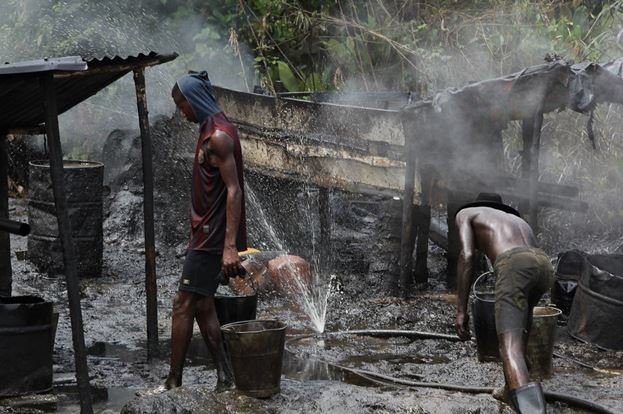
BudgIT also found that losses arising from crude oil theft and sabotage in the upstream and downstream sectors amounted to $869.02 million and $3.55 billion respectively. Similarly, in 2016, twenty-three companies incurred a liability of $3.63 million on gas flare penalty. This can actually be expended on four research and development projects in the oil and gas sector.

Worried by this spate of losses, BudgIT called on all entities that have been identified with outstanding issues to resolve them immediately. We note with dismay that some of the issues have not only persisted but have also escalated over the years.

“We are charging all regulatory bodies of government to wake up to their responsibilities in ensuring compliance with the rules of engagement,” said Gabriel Okeowo, BudgIT’s Principal Lead. If properly structured back into the economy, the huge amount that goes down the drain, courtesy of these issues, will go a long way in contributing to the economic recovery and growth plan of the federal government, he added.


spot_img
spot_img
spot_img

Hot this week

WEF: Cyber-Enabled Fraud Now One of the Most Global Threats

Artificial intelligence, geopolitical fragmentation and a surge in cyber-enabled fraud...

SanlamAllianz Takes Financial Education to Lagos Markets

Insurance giants, SanlamAllianz has launched a financial education campaign...

GOCOP Condoles with Former President on Death of Her Sister

The Guild of Corporate Online Publishers (GOCOP) has expressed...

Seven Issues That Will Define Nigeria’s Telecom in 2026

By Elvis Eromosele  In 2026, Nigeria’s telecommunications sector can no...

Heritage Bank: NDIC Declares N24.3bn 2nd Liquidation Dividend for Depositors

Following the revocation of the banking license of Heritage...

Topics

Gartner Lists Top 10 Corporate Technology Trends for 2016

Gartner defines a strategic technology trend as one with the potential for significant impact on the organisation. "Gartner's top 10 strategic technology trends will shape digital business opportunities through 2020," said David Cearley, Vice President and Gartner Fellow. "The first three trends address merging the physical and virtual worlds and the emergence of the digital mesh. While organisations focus on digital business today, algorithmic business is emerging. Algorithms - relationships and interconnections - define the future of business. In algorithmic business, much happens in the background in which people are not directly involved.

Stanbic IBTC Urges SMEs to Digitise Products, Services

Stanbic IBTC Holdings Plc, a member of Standard Bank...

Dangote Grants 115 Scholarships to Students in 15 Host Communities

In a major boost to its Corporate Social Responsibility...

Reps Commend NEXIM over Ladgroup Shea Butter Initiative

“…the interest of NEXIM Bank in Shea Nut processing...

Independents to Account for 25% Oil Production by 2020

Independents are projected to account for about 500kbpd by the year 2020, representing 25% of crude oil production in Nigeria, from the current level of 10%. The development is seen as a reflection of the changing landscape of the oil and gas industry in Nigeria. Key Recommendations: • Integration of the upstream to other parts of the value chain may eventually be driven by the independents. • Challenges such as security, especially for independents operating in shallow waters. Local companies reiterated that security and community challenges have greatly altered their cost of production which cannot be fully ascertained. When coupled with Government take and interest from loans the cost per barrel increases. • Government is to ensure that an enabling environment is created - independents need to be able to deliver on capacity growth and funding.

Infrastructure & Economic Growth: The Insurance Perspective

The text of the paper presented by Mr. Tope...

Coscharis, Ford Unveil Sponsorship for Season 5 of The Next Titan

(L-R) Mr. Abiona Babarinde, General Manager Marketing and Communications...

Wema Bank Named ‘Best Performing Financial Stock in 2022’ – Report

Wema Bank Plc emerged as the best-performing financial stock...
spot_img

Related Articles

Popular Categories

spot_imgspot_img