








COMMUNIQUÉ ISSUED AT THE END OF THE 10TH ANNUAL CONFERENCE OF THE GUILD OF CORPORATE ONLINE PUBLISHERS (GOCOP) held at Radisson Blu Hotel, Ikeja GRA, Lagos | 7-8 October, 2026.
PREAMBLE
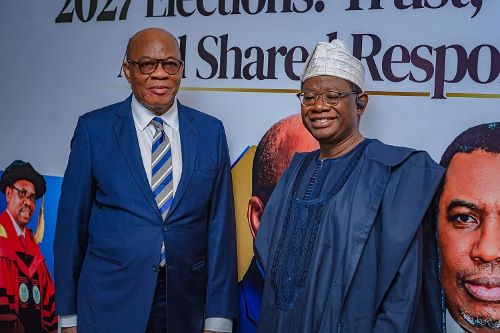
The Guild of Corporate Online Publishers (GOCOP) held its 10th Annual Conference on October 7 and 8, 2026 at the Radisson Blu Hotel, Ikeja GRA, Lagos, with the theme: *”2027 Elections: Trust, Transparency and Shared Responsibilities.”*
The conference was chaired by Dr. Olisa Agbakoba, SAN, former President of the Nigerian Bar Association. The keynote address was delivered by the Chairman of the Independent National Electoral Commission (INEC), Prof. Joash Ojo Amupitan, SAN.
The panel of discussants comprised:
– CP Abayomi Shogunle, PhD, Commissioner of Police, Election Planning, Monitoring and Evaluation, Force Headquarters, Abuja;
– Prof. Tayo Popoola, Head, Department of Mass Communication, University of Lagos;
– Dr. Adaora Onyechere Sydney-Jack, Creative Director, Gender Agenda and Founder, WEWE Network Afrique; and
– Mr. Lanre Arogundade, Executive Director, International Press Centre (IPC), Nigeria.
Day One was devoted to capacity-building for members on newsroom sustainability, artificial intelligence in online publishing and monetisation of digital media, followed by the Guild’s Annual General Meeting. Day Two was the public conference attended by publishers, media executives, policymakers, academics, security officials, civil society leaders and partners.
In his welcome address, the President of GOCOP, Danlami Nmodu, mni, urged politicians to put the people first and ensure government policies improve citizens’ welfare. He charged journalists to hold government and opposition accountable through accurate, fair, balanced and objective reporting, and called on government to sustain partnership with GOCOP and the Nigerian Press Organisation to safeguard the media and protect the interests of publishers and journalists in the digital age.
After exhaustive deliberations, the conference observed and resolved as follows:
OBSERVATIONS
- Trust is the decisive issue of the 2027 General Elections. It is neither inherited nor conceded; it is earned through consistent, verifiable and transparent execution.
- Public confidence in elections remains low. A survey cited at the conference showed only 38 per cent of Nigerians believe in the credibility of elections. Technology cannot substitute for institutional credibility.
- INEC has outlined substantial preparations, including structural, technological and logistical reforms, upgraded result-integrity systems, AI data-auditing tools and multi-layered cyber defences developed with partners including Google and Microsoft.
- INEC has expanded voter education to include women and youth, braille ballot guides, tactile posters, sign-language support for persons with disabilities, and local-language broadcasts and town halls for rural and riverine communities.
- With nationwide collection of Permanent Voter Cards (PVCs) commencing on October 9, 2026, the countdown to the general elections has begun.
- The media can make or mar the elections. Objectivity is therefore a national obligation. The media cannot be gagged and will report what happens, including any malpractice.
- The law on reporting results remains unsettled. Section 60 of the Electoral Act 2026 governs announcement of results by INEC, while Section 39 of the 1999 Constitution guarantees freedom to receive and impart information. How both apply to exit polls, projections and independent tallies is yet to be judicially determined.
- No right is absolute. Freedom to disseminate information carries a duty to verify first.
- Information disorder — fake news, unverified leaks, synthetic media and AI-generated deepfakes — is a direct threat to the polls. It inflames division and depresses turnout, and retractions rarely repair the damage.
- Commercial and ownership pressures distort coverage. Clickbait economics rewards speed over accuracy, while proprietorial interests compromise election reporting.
- Electoral laws exclude many citizens by language. With about 250 ethnic groups, Nigeria still publishes electoral laws and guidelines only in English.
- Election security has improved. The Nigeria Police Force reported relatively peaceful polls since February 2026 with no shootings, attributing this to intelligence-led operations.
- Accountability remains weak. Electoral offenders are seldom prosecuted, emboldening impunity.
- Inclusion of women remains largely performative. Opaque consensus arrangements in candidate selection systematically exclude women, and current trends suggest fewer women may be elected in 2027.
- Citizens are shareholders in Nigeria. Yet many abstain on election day and protest afterwards.
- The cost of living is the leading issue on the ballot, but conflicting narratives on fuel subsidy removal have left voters unclear about candidates’ positions. The conference noted Executive Order 9 on NNPC Limited and the argument that Nigerian crude should cost Nigerians less than external buyers.
- Elections are national infrastructure. Botswana’s 2024 transition, where the Botswana Democratic Party handed over power after 58 years, shows what trusted institutions make possible in Africa.
RESOLUTIONS AND RECOMMENDATIONS
- To the Independent National Electoral Commission (INEC):
- Match assurances with verifiable delivery by publishing clear, timely information on logistics, technology tests and result management at every stage.
- Immediately activate the proposed Digital Media Fact-Verification Channel to give editors real-time access to confirm field reports, security incidents and technical issues before publication.
iii. Translate the Electoral Act, regulations and voter guidelines into major Nigerian languages and sustain accessible formats for persons with disabilities.
- Work with prosecuting authorities to prosecute electoral offenders and make outcomes public.
- To GOCOP Members and the Wider Media:
- The Guild welcomes the three-point pact proposed by INEC on fact-verification, editorial self-regulation and voter education. The Executive Council will engage INEC on implementation without prejudice to editorial independence.
- Members shall publish only verified election information. Unverified polling-unit results, altered result sheets and inflammatory speculations have no place on GOCOP platforms. Breaches will be sanctioned under the Guild’s code.
iii. Members shall prioritise accuracy over speed, reject clickbait, and insulate election coverage from proprietorial and partisan interests.
- Where operational delays occur, members shall report them with context and official verification, not as proof of systemic collapse.
- Members shall actively support voter education, starting with accurate information on PVC collection venues, hours and requirements.
- The Nigeria Union of Journalists, GOCOP and other media bodies should seek judicial interpretation of Section 60 of the Electoral Act 2026 vis-à-vis Section 39 of the Constitution on what the media may lawfully report regarding exit polls, projections and results.
- To the National Assembly and Federal Government:
- The National Assembly should enact legislation that deliberately increases women’s participation and representation in the electoral process.
- The Federal Government and relevant agencies should provide a clear, authoritative account of fuel subsidy policy and domestic crude pricing to enable informed voter decisions.
- To Political Parties and Candidates:
- Parties should conduct open and transparent candidate selection and end opaque consensus arrangements that exclude women.
- Candidates should campaign on issues, particularly the cost of living, and refrain from disinformation and incitement.
- To Security Agencies:
The Police and sister agencies should sustain lawful, intelligence-led and non-partisan election security through the 2027 polls.
- To Citizens:
- Nigerians should collect their PVCs, vote, and clearly define what they want their representatives to stand for.
- Citizens should verify information before sharing and hold institutions and officeholders accountable throughout the electoral cycle.
CONCLUSION AND APPRECIATION
The conference affirmed that credible elections in 2027 are a shared responsibility of INEC, security agencies, political actors, the media and citizens. GOCOP commits its 127 member publications to verified, fair and responsible coverage before, during and after the polls.
The Guild thanks the keynote speaker, the conference chairman, the Governor of Imo State and panelists for their contributions, as well as partners and sponsors in the public and private sectors for supporting a decade of the GOCOP Annual Conference.
Issued in Lagos on 10th October, 2026.
Signed:
Danlami Nmodu, mni
President, Guild of Corporate Online Publishers (GOCOP)
Sufuyan Ojeifo
General Secretary, Guild of Corporate Online Publishers (GOCOP)
















