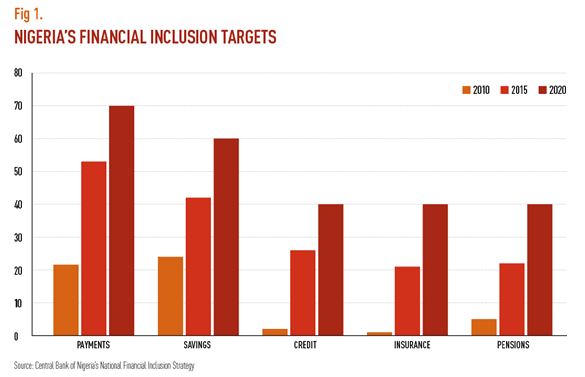

Following plans to meet its financial inclusion target, the Federal Government has restated its desire to capture over 36.6 million Nigerian adults, representing 36.8 per cent of the working population through the micro segment of insurance and pension sectors.
The figure includes self-employed Nigerians that are yet to officially embrace any form of financial services product.
Speaking at the 4th National Insurance and Pension Correspondents (NAIPCO) National Conference in Lagos state on Thursday, stakeholders in both sectors said majority of Nigerians in the informal sector were yet to be aware of the numerous benefits in embracing financial services products.
To ensure that every Nigerian have access to financial services, they said the Federal Government came up with micro insurance and micro pension products to penetrate the grassroots and also get to those not currently registered in the Contributory Pension Scheme [CPS] nor covered by any form of insurance.
To achieve the agenda, the Acting Director-General, National Pension Commission (PenCom), Mrs Aisha Dahir-Umar, said the commission planned extending pension coverage to 30 million contributors by 2024, thereby ensuring that 40 per cent adult Nigerians are covered under the CPS.
Dahir-Umar, who was represented by the Head, Benefit Administration Unit, PenCom, Babatunde Philips, said President Mohammadu Buhari, in March, 2019, launched the micro pension scheme to provide the informal sector with a veritable means of securing old age income.
According to her, “the commission has put in place requisite infrastructure to facilitate seamless implementation of MPP. The Enhanced Contribution Registration System (ECRS) has been deployed to facilitate seamless operations of the MPP. This system has so far aided the smooth registration of micro pension contributors.”
Speaking in the same vein, the Acting Commissioner for Insurance, Mr. Sunday Thomas, said the National Insurance Commission (NAICOM) had been doing a lot in terms of financial inclusion in the past eight years.
The acting commissioner, who was represented by the Director, Governance Enforcement and Compliance, Leo Aka, said it required collective efforts to ensure that Nigerians in the informal sector embrace financial services.
Looking at the demographic of Nigeria, Thomas said one would notice that unemployment rate in Nigeria was quiet high, adding that this was a signal that the industry needs to move fast to capture the people in the informal sector.
He said the insurance commission had issued some guidelines to ensure that those not in the formal sector embrace financial services.
Thomas added that while establishing the micro insurance guidelines, the commission ensured that the micro insurance products are very simple, easy to understand, affordable, valuable in that it should be able to address needs and remains efficient.