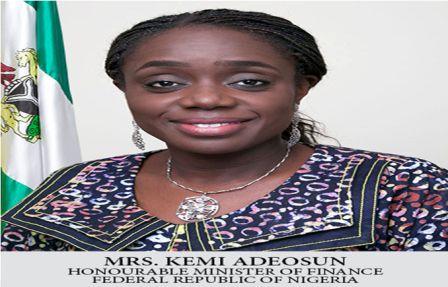

Mrs. Kemi Adeosun, Minister of Finance has unveiled a 10-Point Fiscal Roadmap to grow the Nigerian economy in 2017 and beyond. The roadmap is presented below:
Fiscal Roadmap 2017
| Fiscal Policy Initiative | Expected Impact | |
| 1. | Recognise inherited debt profile after a robust audit process:
§ Introduce promissory note program to finance verified liabilities § Issue debt certificates to contractors, Ministries, Departments & Agencies (MDAs), and State Governments |
§ Improve cash flow of businesses
§ Improve Banks’ Non-Performing Loans § Free up Banks’ balance sheet for lending to private sector § Improve Government’s business interaction with the private sector
|
| 2. | Mobilise private capital to complement Government spending on infrastructure:
§ Roads Trust Fund § Family Homes Fund § Extend infrastructure tax relief to a collective model to attract clusters of corporate entities
|
§ Expand the provision of infrastructure
§ Drive growth of non-oil sector. § Drive economic growth |
| 3. | Strengthen fiscal/monetary handshake:
§ Replace administrative measures on list of 41-items with fiscal measures to reduce demand pressure in parallel market § Encourage domestic food production through specific incentives e.g. accelerated depreciation on food manufacturing equipment and Zero (0%) duty on green houses § Planned revitalisation of refineries § Increase Diaspora remittances via participation in the buyer support scheme for the Family Homes Fund
|
§ Reduce demand for US Dollars
§ Increase supply of US Dollars
|
| 4. | Incentivise exports:
§ Restructure the Export Expansion Grant (EEG) to a tax credit system § Rationalise tariffs and waivers in key export sectors
|
§ Encourage/incentivise non-oil exports
§ Drive import substitution |
| 5. | Encourage investment in specific sectors through fiscal incentives:
§ Accelerated depreciation on equipment in strategic sectors e.g. food processing, mining and power § Rationalise tariffs and waivers in priority sectors
|
§ Drive investment in strategic sectors
|
| 6. | Continue expansion of fiscal space through revenue enhancement and cost consolidation:
§ Customs Single Window (being implemented through a Private Public Partnership (PPP) scheme) § Template for non-allowable expenses for Government Agencies. § Overhead cost control by the Efficiency Unit § Continuous risk based audit by the Presidential Initiative on Continuous Audit
|
§ Revenue enhancement
§ Cost containment |
| 7. | Improve fiscal discipline at Sub-National level:
§ Extension of efficiency unit at Sub-National level § Fast track municipal bond issues to deepen the bond market § Conversion to International Public Sector Accounting Standards by all State Governments.
|
§ Improved fiscal position at Sub-National level
|
| 8. | Enable and accelerate Recoveries process:
§ Whistle-blower scheme § Centralised database on recovered assets § Asset tracing § Professional management of recovered assets
|
§ Increased efficiency of Recoveries process
§ Increased budgetary funding availability from Recoveries
|
| 9. | Rebalance debt portfolio to extend maturity and optimise debt service cost:
§ Rebalance public debt portfolio with increased external borrowing (60:40 target) § Extend maturity profile of public debt portfolio § Deploy long-term debt instruments including Infrastructure and Retail Bonds § Maximise use of concessionary loans
|
§ Rebalanced debt profile withimproved debt service to revenue ratio |
| 10. | Catalyse Micro, Small and Medium Enterprise (MSME) growth through specific measures to improve capacity and access to finance:
§ Development Bank of Nigeria (US$1.3bn) § Increase share of business awarded to MSMEs from Government contracts § Tax harmonisation and tax incentives § Accelerated depreciation
|
§ Acceleration of MSME growth |