
Emirates is proud to enlighten the world about the misconceptions and the reality of human trafficking and exploitation happening globally by supporting It’s a Penalty’s campaign’s newest global film “What is Human Trafficking?” which is now available on ‘ice’.
Launched in collaboration with actor Liam Neeson, the films creates awareness about human trafficking so that suspected cases can be identified and reported, thereby protecting and preventing those at risk from becoming victims.
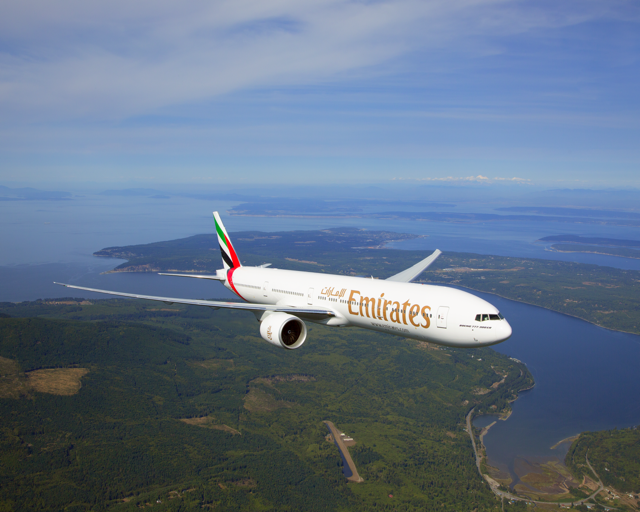
Hence, Emirates will be airing this on its ‘ice’ inflight entertainment system on all flights from October, with the hope to shine a light on this global problem and help more people understand what human trafficking is. Nigerian travellers can watch this film while on board as one of world’s largest connector of people and places, Emirates is committed to play its part to help stem this crime against humanity.
Human trafficking involves the movement of persons within a country or across borders into conditions of exploitation against their will by means of force, threats, abduction, or deception. In 2017, the International Labour Organization (ILO) estimated that there were 24.9 million people trafficked globally (equivalent to the population of Australia), of which 75% are women and children.
The Emirates Group has an anti-slavery and human trafficking policy, and publishes transparency statements on the Modern Slavery Act annually as part of its ongoing commitment to combat this crime.
Through its security division, Emirates works with government agencies and organizations including the International Air Transport Association (IATA), the US Overseas Security Advisory Council (OSAC), and United Nations Office on Drug and Crimes (UNODC) on efforts to improve awareness of human trafficking and co-operate on effective response strategies within the air transport industry.
Recognizing that frontline employees at the airport and onboard flights are uniquely placed to look out for this type of crime, Emirates has for several years invested in training programmes to help its airport and crew workforce to be aware of this crime, and give them the tools to identify and report suspected cases of human trafficking to the appropriate law enforcement organizations.
At Emirates’ hub at Dubai International Airport, a team of aviation security personnel receive special training from embassy partners on how to spot potential human traffickers while checking travel documents and conduct passenger profiling and behavioural analysis.
Since 2017, Emirates’ crew and customer facing ground staff have been accessing an e-learning module specially developed with the UK Home Office on the ‘Prevention of on-board Crime’. One of the first airlines to roll out this type of training, which encourages employees to be more observant of customer behaviour, in particular behaviours associated with someone who might be engaged in human trafficking or someone who could be a victim. The course provides scenarios of what crew might encounter onboard and guidance on how they should respond.
Since 2014, it’s a Penalty has been working to disrupt the fastest growing and second largest criminal industry in the world: human trafficking and exploitation. It’s a Penalty raises awareness and educates the community by providing a platform – equipping people with the tools to protect those who are being exploited or trafficked. The Campaign’s incredible impact is a result of collaboration with strategic stakeholders, such as high-profile sporting athletes, the travel and tourism industry – including airlines, hotels, and transportation companies – sporting governing bodies/hosting committees, NGOs, governments, and corporations.