Thursday, February 26, 2026
26.9 C
Lagos
Home Blog Page 90

Stanbic IBTC Bank Nigeria PMI: Softest Rise in Selling Prices for a Year

0

The May 2024 data pointed to a pick-up in growth in the Nigerian private sector, with both output and new orders increasing at sharper rates than in April.

Rates of expansion remained slower than the respective series averages, however, as high prices continued to limit demand. That said, there were further signs of inflation leveling off, with both purchase costs and selling prices rising at the slowest rates for a year.

The headline figure derived from the survey is the Stanbic IBTC Purchasing Managers’ Index (PMI). Readings above 50.0 signal an improvement in business conditions on the previous month, while readings below 50.0 show a deterioration.

The headline PMI posted 52.1 in May, up from 51.1 in April and the highest since January. The latest reading signaled a modest improvement in business conditions in the Nigerian private sector, but one that was still less pronounced than the historical trend. New orders increased solidly in May, extending the current sequence of growth to six months. Business activity was also up, and to the largest extent since January.

Muyiwa Oni, Head of Equity Research West Africa at Stanbic IBTC Bank commented: “The Stanbic IBTC headline PMI increased to 52.1 points in May from 51.1 in April – its highest level since reaching 54.5 points in January. This implies that Nigeria’s private sector activity maintained a better footing in May even as the rate of expansion remained slower than the series average as high prices continued to limit demand. Nonetheless, the purchase costs and selling prices increased at their slowest rates in a year, thereby supporting a sharper increase in both output and new orders relative to April.

The Nigerian economy grew moderately by 2.98% y/y in Q1:24 from 3.46% y/y in Q4:23. From a structural perspective, the services sector remains the growth engine of this economy, contributing 83.2% to the real GDP growth rate, with industries and agriculture contributing 15.5% and 1.3% respectively to the real GDP growth. As expected, the interest rate sensitive sectors experienced a slowdown in growth safe for the Manufacturing sector whose growth improved modestly, to 1.49% y/y, from 1.38% y/y in Q4:23 – albeit still lagging the 3-year average growth (2.40% y/y). “The April and May headline PMIs point to a slight improvement in private sector activity in Q2:24, although still underwhelming compared to Q2:23. We expect domestic demand to remain weak relative to historical average, exacerbated by inflationary pressures which may likely peak in May. Besides, interest rates at unprecedented highs will continue to have a negative passthrough impact on the non-oil sector. However, because of an expected favorable base-effect induced oil sector’s growth, the overall economy is on course to grow by 3.51% y/y in real terms in Q2:24.”

Growth was recorded across all four monitored sectors, with the sharpest rise in manufacturing. Anecdotal evidence pointed to improving customer demand amid signs of inflationary pressures easing. Although purchase costs continued to increase rapidly in May, largely due to currency weakness, the rate of inflation eased to a one-year low.

This was also the case with regard to selling prices. Staffing levels were broadly unchanged again, but efforts to help existing workers with higher living costs meant that employee expenses increased at a solid and accelerated pace midway through the second quarter. The improvement in customer demand seen in May encouraged companies to expand their purchasing activity. This, allied with positive expectations for future workloads, also led to an increase in inventories. Both input buying and stocks of purchases rose more quickly than in April. Despite efforts to secure additional inputs, still high prices for materials meant that firms sometimes struggled to accumulate the necessary items to complete projects.

As a result, backlogs of work increased for the third consecutive month. Suppliers’ delivery times continued to shorten, with improved vendor performance linked to a range of factors including prompt payments and good arrangements with vendors in a competitive environment. Lead times have shortened in each month since March 2023. Despite stronger expansions in output and new orders in May, business confidence waned and was the lowest since the survey nadir posted in February.

More than 43% of respondents remained optimistic in the year-ahead outlook for output, however, linked to plans for investment and business expansions, including the opening of new branches.

IG4D 2024: Edetaen Ojo to Chair NDSF on Internet Governance

0

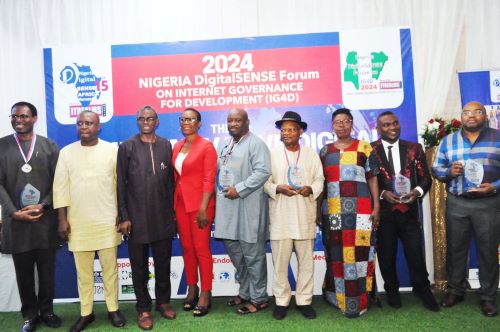
One of the top 10 digital change makers in Africa and Executive Director of Media Rights Agenda (MRA), Mr. Edetaen Ojo would preside over the 2024 Nigeria DigitalSENSE Forum on Internet Governance for Development (IG4D).
The Lead Consulting Strategist, DigitalSENSE Africa, a project of ITREALMS Media group, Sir Remmy Nweke, made this disclosure, saying that Mr. Ojo, a renowned internet freedom advocate on the continent has been confirmed to chair this year’s forum on the theme “IG4D: Innovative Digital Economy & Safer Civic Space in Nigeria.”
He also said that this year marks the 15 years of Internet and domain name advocacy in Nigeria by DigitalSENSE Africa and would be held at Welcome Centre Hotels, along international Airport Road, Lagos.
As said by Nweke, the Nigeria DigitalSENSE Forum (NDSF) series on Internet Governance for Development, made a debut in 2009 and has remained a rallying point for Internet stakeholders and eco-system in the country.
Stressing that some recognition has been lined up for corporates and individuals who distinguished themselves in deepening Internet penetration across access, openness, affordability, connectivity, advocacy and empowerment of the citizenry on the use and application of the internet for good.
NDSF series on IG4D, powered by ITREALMS Media group is hosted by DigitalSENSE Africa, an At-Large Structure (ALS) certified by the Internet Corporation for Assigned Names and Numbers (ICANN), in collaboration with relevant stakeholders including Internet Society (ISOC), Nigeria chapter, Nigerian Communications Commission (NCC), Internet Exchange Point of Nigeria (IXPN), Digital Realty Nigeria, among others.
Nweke recalled that Mr. Ojo holds a Bachelor’s degree in English Studies from the University of Ife (now Obafemi Awolowo University) and a Master’s degree in International Journalism from City University in London, where he was a British Chevening Scholar.
He also has a diploma in NGO Management from Galilee College in Israel and was a Visiting Media Fellow at DeWitt Wallace Center for Communications and Journalism at Duke University, North Carolina, in the United States.
Mr. Ojo currently serves as a member of the Advisory Network of the Freedom Online Coalition (FOC), a partnership of 39 governments around the world working to advance Internet freedom; a member of the National Media Complaints Commission (NMCC) of Nigeria, and as Chair of the Board of the International Press Centre (IPC) in Lagos.
He has sat on the boards and governing bodies of numerous organisations around the world. He served as inaugural Co-Chair of the National Steering Committee of the Open Government Partnership (OGP) in Nigeria from 2016 to 2019 with then Attorney-General of the Federation and Minister of Justice, Mr. Abubakar Malami (SAN). He has also been Chair of the Steering Committee of the African Freedom of Expression Exchange (AFEX), a network of freedom of expression organisations in Africa; Chair of the Working Group of the African Platform on Access to Information (APAI); Convenor (Chair) of the governing Council of the International Freedom of Expression Exchange (IFEX), a global network of freedom of expression organizations based in Toronto, Canada; Chair of the Board of Directors of the Media Foundation for West Africa (MFWA) in Ghana; Chair of the Africa Freedom of Information Centre (AFIC); a member of the Board of International Media Support (IMS) in Denmark; a member of the Steering Committee of the Global Forum for Media Development (GFMD); a member of the Task Force of the UN Economic Commission for Africa (UNECA) that coordinated the Strengthening Africa’s Media (STREAM) process; a member of the Advisory Group of the Africa Media Development Initiative (AMDI); and a member of the Steering Committee of the Web We Want, a global campaign for Internet freedom; among others.
From 2004 to 2007, Mr. Ojo was UNESCO’s Technical Adviser to the Government of Liberia in the post-war reconstruction of the media sector in Liberia. He was also Coordinator of the International Partnership on Media and Conflict Prevention in West Africa, an alliance of UN agencies, international, regional and national non-governmental organisations.
In 2013, he was a member of the International Advisory Committee for UNESCO’s project on “The Safety of Online Media Actors Doing Journalism” and was also in 2013 named an Internet Freedom Fellow by the U.S. State Department.
Ojo received several honours including the 2018, “Defender of Press Freedom Award” by the Nigeria Union of Journalists (NUJ) among others.
In January 2024, Mr. Ojo was named by the Collaboration on International ICT Policy for East and Southern Africa (CIPESA), based in Kampala, Uganda, as one of 10 digital rights experts across Africa who have played a pivotal role in shaping the continent’s digital and Internet freedom advocacy landscape over the past 10 years.

SEC DG to Speak on Green Economy, Infrastructure Transformation at Oriental News Nigeria Summit

0

The Director General (DG) of the Securities and Exchange Commission, SEC, Dr. Emomotimi Agama, would be x-raying key policies and options available in the country’s drive to strengthen her national economy while aligning with global push towards promoting green economy.

This will be the high point at the 3rd National Conference being put together by Oriental News Nigeria, coming up on July 25, 2024, at Radisson Blu GRA Ikeja, Lagos at 9am.

Oriental News Nigeria, a leading digital media platform would gather key policy makers, government and non -governmental organisations, industry experts in Nigeria’s financial sector to the conference which revolves around Nigeria’s Green Economy Initiative.

The theme of the 2024 Conference: ” Green Economy, Sustainable Growth and Infrastructure Transformation” considers various options available for Nigeria to sustain economic development and growth.

Sub-themes of the conference include, Green Finance, marketing, and supply chain, Strategies and Policies for a green economy, Renewable energy and Ecosystem for a green economy and Digital economy Entrepreneurship.

Agama, who has confirmed his attendance, expressed the belief that opportunities in terms of green economy are linked to the enormous possibilities for sustainable agriculture, renewable energy, ecotourism, and coastal development.

Also, other stakeholders have highlighted that Nigeria’s commitment to harnessing its natural resource potential could make the country a pioneer in promoting green economy development, hence the choice of the theme of the conference.

In a statement, Mrs. Yemisi Izuora, Publisher, Oriental News Nigeria Online said the conference is segmented into two main broad areas, with the opening programme to address the key thematic topic through the guest speaker’s intervention and chairman’s remarks with comments from participants which centers around the conference theme.

The second segment is round-table discussion through wider engagement by select professionals to discuss the main theme and sub-themes of the conference.

In recent years, economies all around the world have been experiencing a protracted slowdown driven by structural, global, and cyclical factors. Economic strategies that have been implemented to tackle recession and achieve rapid economic development have endangered sustainable growth by contributing to environmental degradation, global warming, and other negative repercussions.

Changing the paradigm to a green economy will boost natural capital stocks, safeguard the environment, and ensure social justice by providing practical tools and approaches to achieve sustainable growth while reducing environmental risks and ecological scarcities. A transition to a green economy, however, faces challenges such as a lack of an appropriate policy framework, inadequate capital expenditure, varying levels of development, and resource endowments.

Therefore, for green sustainable development, newer business models, strategic changes and innovation in the use of resources, responsible and cleaner business practices, and green technologies are needed.

The conference will draw together and engage researchers, eminent practitioners, and policymakers from across the country who will form part of the plenary (Round-Table) session that will deliberate on the latest findings on practices and policies for a green economy and sustainable growth through strategic change and identify priorities for action by stakeholders to pursue the most promising policies and practices.

The conference will also serve as a venue where academic peers may exchange information, share experiences, collaborate, and develop management answers to pressing business issues.

NNPC Sustains March Towards Regulatory Excellence, Bags NIMASA Compliance Certification

0

The NNPC Limited has reiterated its commitment to sustain the company’s march towards process improvement, regulatory compliance and performance excellence.

NNPC’s Executive Vice President, Business Services, Mr. Inuwa Danladi, disclosed this while speaking on the recent certification of the International Ship and Port Facility Security (ISPS) Code Compliance obtained by the Company, from the Nigerian Maritime Administration and Safety Agency (NIMASA).

The ISPS certification, issued in April 2024 and covering all NNPC jetties nationwide, is crucial for the Company’s business continuity as it prevents potential operational disruptions and financial losses.

Beyond demonstrating NNPC’s continuous adherence to regulatory compliance, Inuwa said the certification also grants the Company entry into the Global Integrated Shipping Information System (GISIS), enhancing its reputation as a safe and reliable business destination and potentially reducing the company’s insurance premiums.

Inuwa listed some of the rigorous processes followed in obtaining the certification to include the upgrading of relevant security facilities at the nation’s ports and jetties; the establishment of the ISPS Code Command Center; as well as the engagement of NIMASA Recognised Security Officer (RSO), who played a crucial role in managing key regulatory processes.

Inuwa added that the development of Port Facility Security Assessment (PFSA) & Port Facility Security Plan (PFSP), coupled with the meticulous Verification Inspection Exercise (VIE) from NIMASA have also underscored NNPC’s commitment to ensuring adherence to the highest standards of maritime security in the Company’s operations.

“This achievement is a testament to our consistent dedication, and we pledge to continue striving towards attaining regulatory excellence in all our operations,” Inuwa noted.

Fidelity Bank Outperforms Banks, Stock Market with 507% Gain in 5 Years

0

Investors in Fidelity Bank Plc have earned more than 507 per cent in capital gains over the past five years, ranking above all other major return benchmarks at the Nigerian stock market and the entire banking sector.

Trading reports at the Nigerian stock market for the five-year period between May 31, 2019 and May 31, 2024 showed that Fidelity Bank outperformed all key indices at the stock market.

Fidelity Banks share price rose by 507.14 per cent over the period, representing average annual capital gain of 101.43 per cent.

These returns underscore Fidelity Banks immense value as a stock for all times, helping investors to hedge against inflation while preserving significant long-term value.

With 507 per cent capital gain in five years and average annual gain of more than 100 per cent, the return analysis implies that investment in Fidelity Bank is more attractive than other class of assets, including fixed-income securities such as government and corporate bonds; real estate investment and mutual funds among others.

The high divisible nature of shares investment and high free float of Fidelity Bank, which makes the banks shares easily available, underline the bank as a most attractive investment option for all cadres of investors- small, medium and high networth; retail and institutional investors.

Comparative analysis showed that Fidelity Bank outperformed all other major market indices with the banks average annual return for the period twice the average return by the overall market and almost four times of average return in the banking sector.

The All-Share Index (ASI) – the common, value-based index that tracks all share prices at the Nigerian Exchange (NGX), which is widely regarded as Nigerias benchmark for equities market, recorded a five-year return of 219.61 per cent, an average annual return of 43.9 per cent.

Contrary to the significantly above average performance of Fidelity Bank, the NGX Banking Index-which tracks the banking sector, doubled by 120.53 per cent over the five-year period, representing average annual return of 24.11 per cent, more than 77 percentage points below Fidelity Banks average return.

Two other major price indices- the NGX 30 Index and NGX Main Board Index, recorded five-year cumulative return of 185.73 per cent and 265.6 per cent respectively, representing average annual gain of 37.15 per cent and 53.1 per cent respectively.

The NGX 30 Index tracks share prices of the 30 largest companies at the stock market while the NGX Main Board Index represents the largest and most diversified group of listed companies at the stock exchange. Fidelity Bank is quoted on the main board, like most other major banks and companies at the stock market.

The average annual return of 101.43 per cent underlines that Fidelity Bank provides substantial return for investors, even where such investors had borrowed money at the ruling interest rate and the invested fund was adjusted for impact of inflation rate.

Nigeria’s inflation rate peaked at a high of 33.69 per cent in April 2024 while the Central Bank of Nigeria (CBN)s Monetary Policy Committee (MPC) recently increased the Monetary Policy Rate (MPR), otherwise known as benchmark interest rate, to 26.25 per cent.

Fidelity Banks share price, which closed May 31, 2019 at N1.68 per share, rose successively to N10.20 per share by the end of May 2024. The ASI had, during the period, rose from its opening index of 31,069.37 points to close weekend at 99,300.38 points. The NGX Banking Index rose from 361.57 points to 797.37 points. The NGX 30 Index, which opened the period at 1,286.68 points, closed the period at 3,676.44 points. The NGX Main Board Index appreciated from 1,267.54 points to close weekend at 4,634.31 points.

Market analysts are unanimous that share prices are illustrative of the fundamental values of quoted companies.

Managing Director, HighCap Securities Limited, Mr. David Adonri, said the price of any stock in the market is a correct reflection of the market value for the stock.

Managing Director, Globalview Capital Limited, Mr. Aruna Kebira, explained that the market price of a stock represents the disposition of the investing public to the stock at a given period, noting that there should be consideration for both the market value and the book value or fundamentals of a stock.

It could be summarized that the market price of a stock is premised on the psychology of the market, the markets mood as well as market sentiments, Kebira said.

Chief Executive Officer, Sofunix Investment and Communications, Mr. Sola Oni, said the stock market shows both the current and future prospects of shares.

Share price reflects the current value of a company but also reveals the future prospects, Oni said, noting that investment analysts traditionally combine market price and book values to determine the possible outlook of a stock.

Five-year review of the audited reports and accounts of Fidelity Bank showed strong correlation between the banks upwardly share pricing trend and expansive growth in its business operations.

The banks pre-tax profit had risen from N30.35 billion in 2019 to N124.26 billion in 2023, an increase of 309.4 per cent. Net profit after tax also grew by 203.3 per cent from N42.80 billion in 2019 to N129.80 billion in 2023. Earnings per share has risen successively from 98 kobo in 2019 to N3.11 per share in 2023.

The banks balance sheet had expanded by 195.26 per cent from N2.11 trillion in 2019 to N6.23 trillion in 2023, within the fastest growth in the industry. Customers deposits, which underlines the competitive market share, more than tripled from N1.225 trillion in 2019 to N4.01 trillion in 2023, an increase of 227.35 per cent. Shareholders’ funds had also grown from N234.03 billion to N437.31 billion.

Market pundits expected Fidelity Banks share price continue to rise, citing several factors that illustrated the upside potential for the stock.

Independent investment research reports by many market pundits showed that Fidelity Bank was assigned buy ticker, a recommendation to investors to consider the potential attractive returns of the bank.

The research reports were based on the historical and current operational performances of the bank as well as the clear-sighted implementation of the bank’s growth plan. The reports also considered the quality of board and management and the general human capital and resources of the bank.

The investment advisory reports included those of Afrinvest Group, FSDH Capital and CardinalStone among others.

Analysts were unanimous that Fidelity Banks share price could double in the period ahead given professional assessment of top traditional performance parameters including the companys operational reports, investors preference and projections.

Already, interim report and account of the bank for the first quarter ended March 31, 2024 showed that the bank started the current business year on stronger footing with three-digit growths across key performance indicators.

The three-month report, released at the NGX, showed that gross earnings increased by 89.9 per cent to N192.1 billion in first quarter 2024.

The banks top-line performance continued to be driven by broad-based growths across income lines with interest income rising by 90.7 per cent and non-interest income growing by 84 per cent in first quarter 2024.

Growth in interest income was primarily spurred by a higher yield environment and strong earning assets base, while the increase in non-interest income was led by double-digit growth in account maintenance charges, foreign exchange (forex)-related income, trade, banking services, and remittances, supported by increased customer transactions.

Profit before tax doubled by 120 per cent to N39.5 billion in first quarter 2024 as against N17.9 billion in first quarter 2023. The banks performance was driven by expanding market share with total deposit rising by 17 per cent within the three months to N4.7 trillion, compared with N4 trillion recorded at the end of 2023. The bank also increased its supports for national economic growth with net loans and advances rising by 21 per cent from N3.1 trillion at the end of 2023 to N3.7 trillion by March 2024.

CBN Revokes Licence of Heritage Bank over Financial Incompetence

0

The Central Bank of Nigeria (CBN), in accordance with its mandate to promote a sound financial system in Nigeria and in exercise of its powers under Section 12 of the Banks and Other Financial Act (BOFIA) 2020, hereby revokes the licence of Heritage Bank Plc with immediate effect.

This action has become necessary due to the bank’s breach of Section 12 (1) of BOFIA, 2020. The Board and Management of the bank have not been able to improve the bank’s financial performance, a situation which constitutes a threat to financial stability.

This follows a period during which the CBN engaged with the bank and prescribed various supervisory steps intended to stem the decline. Regrettably, the bank has continued to suffer and has no reasonable prospects of recovery, thereby making the revocation of the license the next necessary step.

Consequently, the CBN has taken this action to strengthen public confidence in the banking system and ensure that the soundness of our financial system is not impaired.

The Nigeria Deposit Insurance Corporation (NDIC) is hereby appointed as the Liquidator of the bank in accordance with Section 12 (2) of BOFIA, 2020.

We wish to assure the public that the Nigerian financial system remains on a solid footing.

The action we are taking today reflects our continued commitment to take all necessary steps to ensure the safety and soundness of our financial system.

Hakama Sidi Ali (Mrs.)

Ag. Director, Corporate Communications

Presidential Fiscal Policy Committee Proposes 8 Single Digit Taxes

0

Mr. Taiwo Oyedele

Chairman

The Presidential Fiscal Policy and Tax Reforms Committee

The Presidential Fiscal Policy and Tax Reforms Committee has proposed eight single digit taxes in Nigeria as against the estimated 200 taxes existing within the three-tiers of government (federal, states and local governments).

Mr. Taiwo Oyedele, the Chairman of the Committee said at a workshop for journalists in Lagos that the proposal on the eight taxes (Income Tax, Value Added Tax (VAT), Property Tax, Customs Duties, Excise Tax, Stamp Duties, Special Levy and Harmonised Levy) will form part of the draft national fiscal policy for the country.

Oyedele added that the committee has equally recommended suspension of Value Added Tax (VAT) on diesel to reduce financial burden on the productive sector, tax waivers on CNG vehicles and promotion of export of goods, services and intellectual property amongst others.

“There are over 200 taxes across the three tiers of government in Nigeria. We strongly propose single-digit taxation because the poorest people and small businesses carry the burden of taxation in Nigeria.”

He suggested that 95 percent of operators in the informal sector should also be exempted from any form of taxation given that the informal sector constitutes the bulk of socio-economic activities in any economy and secondly, to empower them to grow sustainably.

On the outcome the committee expects at the end of its exercise in terms of tax reform, Oyedele listed five expectations:

  • Collect Better
  • Budget Better
  • Spend Better
  • Manage Better
  • Report Better

He said the issue of taxation in the country is a difficult terrain because only 31 percent of businesses consider tax evasion as wrong while only 17 percent of individuals believe they should pay tax and does not see anything wrong on the issue of tax evasion.

And while businesses complain of multiplicity of taxes and high frequency of tax audit, individuals blame lack of trust in government and tax officials, as well as complex tax process as reasons for their apathy towards payment of tax.

The committee chairman listed the three pillars of its mandate as fiscal governance (modern, simple and adaptive), revenue transformation (growth enabling and competitive) and economic growth and competitiveness (no taxing of investment, capital, production, poverty or seed).

Oyedele listed the current socio-economic realities in the country as slow economic growth, high inflation, widespread poverty, declining investment, low revenue, high public debt and rapid increase in the rate of emigration.

He however, stated that the positive indicators include balance of trade/current account surplus, rising crude oil production and pricing, commencement of local crude oil refining, capital market performance, declining budget deficit by the federal government and States and positive outlook reports by rating agencies.

Union Bank Commemorates International Children’s Day with Barnyard Children’s Fiesta 

0

Yetunde Oni, Managing Director, Union Bank of Nigeria; (Centre) and other senior bank executives commemorating International Children’s Day with various kids at Union Bank’s Children’s Barnyard Fiesta held in Lagos recently.

Union Bank of Nigeria, as part of activities marking this year’s celebration of International Children’s Day and further to the financial institution’s support for the growth of the Nigerian child, recently hosted kids to a special Barnyard Fiesta at its multiple-purpose Sports complex in Lagos.

The Barnyard Children’s Fiesta, held on Saturday, May 25th, 2024, entertained kids of various ages with video games, face painting, dancing, and singing contests.

The program also organised a talent show that showcased the creativity of the children who were in attendance on the day.

The event, which was also well attended by parents and other fun seekers, played host to some of the Bank’s senior executive team, including Yetunde Oni, the Managing Director and Chief Executive Officer, who was on hand to cheer and interact with various children as they engaged in the different fun activities lined up for them.

Speaking on the sidelines of the fiesta, the Managing Director and Chief Executive Officer of Union Bank, Yetunde Oni, re-emphasised the bank’s commitment to empowering and supporting Nigerian Children.

She said: “As a responsible corporate organisation, we recognise our obligations to support the next generation of Nigerian youths, who are represented by our current set of intelligent and talented children, in achieving their full potential through effective and sustainable positive engagement, even at this early stage of their development. Our ultimate goal is to continue being lifelong partners in facilitating success for our future great Nigerian citizens, as well as advocates for empowering and encouraging positive growth in our communities all around.”

Over the years, Union Bank has consistently championed and advocated for the rights of children within the country through its special interventions, such as the Edu360 initiative, the Awarri Innovation programme, and various products and services that have equipped them with the necessary knowledge, skills, and tools to thrive in the present global environment.

Union Bank pledges to continue to assist Nigerian children in achieving and fulfilling their dreams.


About Union Bank Plc.

Established in 1917 and listed on the Nigerian Stock Exchange in 1971, Union Bank of Nigeria Plc is a household name and one of Nigeria’s long-standing and most respected financial institutions.

The Bank is a trusted and recognisable brand with an extensive network of over 300 branches across Nigeria

The Bank currently offers a variety of banking services to both individual and corporate clients including current, savings and deposit account services, funds transfer, foreign currency domiciliation, loans, overdrafts, equipment leasing and trade finance.

The Bank also offers its customers convenient electronic banking channels and products, including Online Banking, Mobile Banking, Debit Cards, ATMs and POS Systems.

Fidelity Bank Gets Highest Corporate Governance Rating on Stock Market

0

Fidelity Bank Plc complies with the highest corporate governance standards as the leading commercial bank adheres promptly to all full disclosure requirements and global best practices.

Fidelity Bank is awarded CG+, the highest rank under the Corporate Governance Rating System (CGRS), which screens quoted companies against prescribed best practices and standards.

A review of the latest compliance report showed that Fidelity Bank sustains its highest-ranking rating of CG+, with shareholders and market pundits commending the high corporate standards of the bank.

Head, Listings Regulation Department, NGX Regulation (NGXRegco), Mr. Godstime Iwenekhai, explained that the CGRS was designed to strengthen the governance structures of listed companies and provide a valid basis for discerning investors to differentiate between listed companies on the basis of their compliance with acceptable standards of corporate governance.

“In our view, corporate governance promotes ethical business practices, transparency and fair competition,” Iwenekhai said.

He pointed out that the special character combination “CG+” underlined compliance with best practices and highest corporate governance standards, which entitle the rated companies to special privileges at the stock market.

Corporate governance compliance at the stock market includes prompt submission of detailed operational results from period to period as required by the market rules, full disclosures of all material and regulated information and accurate rendition of reports and accounts.

Also, compliance includes ensuring that the company’s shares are not encumbered in a way that impinges on free float or number of shares available to the general investing public for efficient price discovery, compliance with all investor-protection safeguards in communication with shareholders and organising statutory meetings as required among others.

The Nigerian Exchange (NGX) noted that compliance tracker was aimed at maintaining market integrity and protecting the investors, noting that listed companies are required to adhere to high disclosure standards.

“Financial information which is periodic disclosure and on-going material events disclosure should be released to NGX in a timely manner to enable it efficiently perform its function of maintaining an orderly market,” NGX stated, referencing some of the criteria for its corporate governance rating.

Market experts and shareholders agreed that corporate governance compliance is a major factor in deciding on investing in a public and the safety of such investment.

Managing Director, Arthur Steven Asset Management, Mr. Olatunde Amolegbe, said corporate governance compliance rating is “extremely important” as it indicates to the investing public the quality of compliance of a company to listing requirements.

“As you know, stock prices are driven primarily by available information and the NGX has a minimum level of disclosure expected of quoted companies. This disclosure helps the public make qualitative decisions as to the state or performance of the companies they are seeking to invest in. These markers are therefore the initial indicators as to whether the companies are meeting their disclosures and other regulatory obligations or not,” Amolegbe, a former president of Chartered Institute of Stockbrokers (CIS), said.

Managing Director, APT Securities & Funds, Mallam Garba Kurfi, said the corporate governance rating “shows the extent companies are in compliance with corporate governance”.

“High rating means very good in doing right thing timely while low rating discourages foreign investors from investing in such companies,” Kurfi, a leading market operator and member of the board of Securities and Exchange Commission (SEC) said.

Managing Director, HighCap Securities, Mr David Adonri, noted that “CG+ means excellent corporate governance rating”.

“When a company is organised and uphold good corporate governance, the benefit to stakeholders is maximized,” Adonri said.

Investors said its high corporate governance was one of the compelling reasons they chose to invest in Fidelity Bank.

President, Association for the Advancement of Rights of Nigerian Shareholders (AARNS), Dr. Faruk Umar said Fidelity Bank has a very good corporate governance structure that reassures investors of the safety of their investments.

According to him, while the bank has good succession plan, the calibre of the independent non-executive directors on the board gives shareholders strong confidence of the kind of board oversight they will be expecting.

National Co-ordinator, Independent Shareholders Association of Nigeria (ISAN), Mr. Moses Igbrude, said Fidelity Bank’s impressive performance over the years had been built on good corporate governance.

“My appeal to the board is to continue to imbibe good corporate governance in order to sustain this growth,” Igbrude said.

National Co-ordinator, Pragmatic Shareholders Association of Nigeria, Mrs. Bisi Bakare, said Fidelity Bank has created a “very excellent impression” in the minds of shareholders.

According to her, the bank has continually showcased exemplary leadership with continuous impressive results, with successive growths over the past five years.

“Fidelity Bank is a very good bank that shareholders are very happy with their investments and we have never regretted buying into Fidelity Bank,” Bakare said.

National Co-ordinator, Progressive Shareholders Association of Nigeria, Mr. Boniface Okezie said good corporate governance was the cornerstone of Fidelity Bank’s sustained growth and impressive returns over the years.

“Fidelity Bank remains one of the best stocks that investors should look forward to invest in for better returns. I’m very optimistic of the bank’s healthy strong assets. With its good corporate governance and excellent customers’ service, there is every reason to hope for more promising future,” Okezie said.

The NGX tags defaulting companies for poor corporate governance and also applies various monetary and non-monetary sanctions, including fines ranging between N100,000 to N100 million, partial or full suspension of trading, naming and shaming with a red alert tag and compulsory delisting in extreme cases.

NCDMB ES Visits Pipe Coating Firms, Pledges Support for Local Capacities

0

The Nigerian Content Development and Monitoring Board (NCDMB) has reassured oil and gas stakeholders that  service companies and other manufacturers that have established capacities in the country will continue to enjoy patronage through the award of contracts from operating companies in the sector.

The Executive Secretary NCDMB, Engr. Felix Omatsola Ogbe made this commitment in Port Harcourt, Rivers State when he led officials of the Board and Shell Petroleum Development Company of Nigeria (SPDC) to visit companies that deliver pipe coating and related services.

The team visited Brightwaters Energy Limited, formerly known as Willbros Nigeria Limited, Solewant Nigeria Limited and Pipe Coaters Nigeria, managed by Tenaris Nigeria Limited.

The Executive Secretary said the visits were to assess the companies’ facilities and determine how the Board can galvanize the industry to patronise them. He underscored the importance of getting first-hand information on in-country capabilities before making key decisions on oil and gas projects. He insisted that operating companies must support and patronise local oil and gas service companies in compliance with the provisions of the Nigerian Oil and Gas Industry Content Development (NOGICD) Act.

Ogbe emphasized that activities in the Nigerian oil and gas industry must be used to create employment opportunities for the nation’s teeming youths and help to resuscitate the economy, in line with the aspirations of President Ahmed Bola Tinubu.

The Chief Executive Officer of Brightwaters Energy Limited, Mr. Scott Gregory thanked the Executive Secretary for leading the visit while highlighting that Brightwaters, formerly Willbros carried out Nigeria’s first pipe coating in 1962.

He recalled that the facility had 3,000 employees some years back, executing various spheres of oil and gas projects. He conveyed the management’s aspiration to return the firm to those high-performance levels and sought the Board’s support to win oil and gas projects that would resuscitate the sprawling facility. “We feel that we can be a positive contributor to Nigeria through the capacities that we have. We want to bring real, true value to the table,” he added. He admitted that the coating facility had suffered downtime, but assured that the plant would be up and running within 60 days of the award of a new contract.

The Chairman of Tenaris Nigeria, Dr. Ernest Nwapa welcomed the NCDMB’s team to PCNL’s facilities. He commended the efforts made by the agency to push local content in the industry, attributing it to the good culture that had been established at the Board over the years.

Nwapa, who was the pioneer Executive Secretary of NCDMB expressed delight that some of the oil and gas projects that had been pending for nearly ten years were now being developed and expressed hope that existing local capacities would be maximised in the execution of those projects.

The team was taken around the company’s facilities and shown the various equipment of PCNL in readiness for the award of new contracts. Nwapa pledged the commitment of the company to meet the expectations of clients as well as allow them to participate in the supervision of the work in their factory.

The PCNL facility covers an area of 160,000 m2 in the Onne Free Trade Zone. The company offers Anticorrosion, CWC, Thermal Insulation, Internal and Bends Coating plants as well as Double Jointing and Anode Installation Facilities.

At Solewant Group, an EPCI and Pipe Coating Company, the NCDMB delegation was shown round the company’s facilities as well as the new investments, such as the 5mega watts generators, procured to guarantee power supply to the facility.

Accompanying Engr. Ogbe on the facility visits were the Director Projects Certification and Authorization Division (PCAD), Engr. Abayomi Bamidele, General Manager PCAD, Engr. Maurice Iwhiwhu, Special Technical Assistant (STA) to the Executive Secretary, Engr. Mofe Megbele, Deputy Manager, Corporate Communications, Mr. Obinna Ezeobi, and other staff members of the Board.

Rising Stars Shine at Ecobank’s National Schools Team Chess Championship

0

Right: Vice President, Nigeria Chess Federation, Prince Adeyinka Adewole; Managing Director/Regional Executive, Ecobank Nigeria, Bolaji Lawal with one of the winning schools.

University of Lagos (UNILAG), DaySpring School, Lagos and Marvelvine Montessori School, also in Lagos, have emerged winners in the tertiary, secondary and primary schools’ categories of the 2024 Ecobank National Schools’ Teams Chess Competition at the Pan African Centre in Lagos over the weekend.

The Chess Competition which has been described as the largest gathering of chess players in Africa attracted over 1200 players from over 250 schools across 18 states in Nigeria and the Federal Capital Territory (FCT).

Speaking at the closing ceremony, Vice President, Nigeria Chess Federation (NCF), Prince Adeyinka Adewole, expressed excitement that the Championship which was introduced last year when the International Chess Federation (ICF) started the World Schools Team Chess Championship has grown in leap and bounds. He noted that the 2024 edition attracted over 1200 participants, describing NCF’s partnership with Ecobank as a shining example of the public-private partnership needed for the advancement of sports in Nigeria.

“118 primary schools, 86 secondary schools, and 42 tertiary institutions participated and jostled for prizes of over N15 million at the three-day tournament which took place between Friday 24th and Sunday 26th at the Ecobank Pan African Centre (EPAC) in Victoria Lagos. At the end of the highly competitive tournament, University of Lagos came tops in the tertiary school category and was followed by University of Benin and Chess in Slums Africa (CISA) while DaySpring School, Platforms School, Ireti Senior Grammar School came first, second and third respectively in the secondary school category. For the Primary school category, Marvelvine Montessori School came first while Scholars Academy, Ibadan was second best and followed by Okikioluwa Junior in the third position.”

Further, he said: “When we introduced this Championship last year, only 15 schools participated but today we have over 250 schools. This is a remarkable accomplishment for us in the Nigeria Chess Federation, and we wouldn’t have been able to achieve this without the unwavering support of Ecobank. We’re deeply grateful for Ecobank’s generous support and unwavering commitment to empowering young minds and fostering intellectual growth. Your sponsorship has made this event possible, and your dedication to the development of chess among Nigerian youth is truly commendable.”

He reiterated the Federation’s delight in providing a platform for young participants to horn their skill and become world champion, stating that the championship is a celebration of strategic thinking, the relentless pursuit of excellence, and the future of Nigerian chess.

Managing Director/Regional Executive, Ecobank Nigeria, Bolaji Lawal, said the decision of the bank to sponsor the Chess competition was to further showcase Ecobank’s commitment to supporting intellectual and sports development in Nigeria, being part of Ecobank’s strategic human capital development drive.

“The winners here today are ‘rising stars. And I must say this is in line with our objective of supporting children and youths as the next-generation of changemakers. This sponsorship aligns with our overall long-term vision of building a world class Pan African bank that contributes to the economic and financial integration of the continent. We are also using the opportunity of this competition to introduce and empower them with convenient, affordable, and accessible digital financial services they can access anytime and anywhere they are.  Arrangements are in place to make our partnership an annual event, as it is exciting and fulfilling for both the children and undergraduate students”. He stated.

In his comment the Minister of Sports Senator John Owan Enoh, represented by the Director, Federal Ministry of Sports Liaison Office in Lagos, Ms. Ikana Mbora, said the ministry is proud of the NCF. He commended the students for their resilience and determination to win as “this represents the Nigerian can do spirit.”

It would be recalled that Platform Schools, Ikeja, Lagos emerged as the national champion at the first National Schools Team Chess Championship held last year earning the honor to represent Nigeria at the World Schools Team Chess Championship in Kazakhstan.

The Nigeria Chess Federation (NCF) is the national governing body for chess in Nigeria. It was established in 1975 and is responsible for promoting, regulating and developing chess in Nigeria.

The NCF is a federation under the Federal Ministry of Sport Development, and it is affiliated with the International Chess Federation (FIDE) and follows its rules and regulations.

The objectives of the NCF include organising national and international chess tournaments, training and selecting chess players to represent Nigeria in international competitions, and promoting the game of chess at all levels, from grassroots to elite.

The NCF organises various chess events throughout the year, and has also been successful in producing strong chess players who have represented Nigeria in international tournaments. These players have achieved notable successes, including winning medals in African Chess Championships and participating in Chess Olympiads.

Fueling Young Minds & Big Dreams: AIICO Celebrates Children with Heartwarming Gifts

0

Right: Mrs. Abimbola Shobanjo, Manager, Corporate Responsibility and Sustainability, AIICO Insurance Plc, distributing gift packs to pupils of Best Legacy Nursery and Primary school, Lagos, to celebrate the 2024 International Children’s Day.

As the world commemorates International Children’s Day to celebrate and promote the well-being of children, AIICO Insurance Plc has tailored this year’s celebration to honouring and rewarding school children, making the day a memorable and remarkable one for hundreds of school pupils in Lagos, Nigeria.

AIICO Insurance, leveraging partnership with Lagos Food Bank, a non-governmental organisation, donated packs of school supplies, and refreshments to hundreds of pupils in four low-cost nursery/primary schools. The schools visited include Best Legacy Nursery and Primary School, Victory Nursery and Primary School, Learners Guide Nursery and Primary School, and Debbie Frank Nursery and Primary School, all within Agege, Ikeja areas of Lagos.

A statement released by the underwriter quotes the company’s Corporate Responsibility & Sustainability Manager, Mrs. Abimbola Shobanjo, as saying that AIICO Insurance prioritizes the well-being and happiness of children who are the leaders of tomorrow.

“We deeply care about the well-being of these children, and it is important to demonstrate our commitment, especially on a day like this. They are the future leaders of our generation, and we are dedicated to finding ways to positively impact their lives, ensuring they have every opportunity to thrive and succeed in their education. By providing essential supplies and support, we aim to inspire and empower them to achieve their dreams and make a positive impact on the world.”

“We would also like to extend our heartfelt appreciation to Lagos Food Bank, our esteemed partner in this CSR activity. Their invaluable collaboration and dedication have been instrumental in making this initiative a success. Together, we are making a meaningful difference in the lives of these young minds, fostering a brighter and more promising future for all”, Shobanjo said.

International Children’s Day is a special day that celebrates and promotes the well-being of children and emphasizes their importance in society as the future of our world.

This special day highlights their rights to receive affection, love, understanding, food, medical care, education, and protection from all forms of exploitation, regardless of race, colour, gender, religion, or social origin.

AIICO Insurance is a leading composite insurer in Nigeria, with a 60-year record of accomplishment in delivering quality service to its clients.

Founded in 1963, AIICO provides life & general insurance, health insurance, and investment management services to create and protect wealth for individuals, families, and corporate customers.

NNPC, JV Partners, NDDC Commission N24.5bn Ogbia-Nembe Road

0

L-R: Deputy Governor of Bayelsa State, Sen. Lawrence Ewhrudjakpo; Minister of Niger Delta, Hon. Abubakar Momoh; MD/CEO NDDC, Dr. Samuel Ogbuku; SPDC MD and Country Chair, Shell Companies in Nigeria, Mr. Osagie Okunbor; Rep of the CUIO NUIMS, Obinna Aralu; His Eminence, King Edmund Daukoru, Mingi XII, Amanyanabo of Nembe Kingdom and His Eminence, King Dumaro Charles Owaba, The Obanobhan III of Ogbia Kingdom during the commissioning of the 25.7km Ogbia-Nembe Road in Bayelsa State.

As part of activities to mark the one-year anniversary of the President Bola Ahmed Tinubu administration, the NNPC Limited and its joint venture partners – Shell Petroleum Development Company (SPDC), TotalEnergies, Nigeria Agip Oil Company (NAOC) – in collaboration with the Niger Delta Development Commission (NDDC), have commissioned the 25.7km Ogbia-Nembe Road in Bayelsa State.

The project, valued at N24.5 billion, traverses mangrove forests with seven bridges and five culverts, and connects 14 communities.

Speaking at the commissioning ceremony which held at Nembe on Monday, the Minister of the Niger Delta, Engr. Abubakar Momoh, who represented President Bola Ahmed Tinubu, said the project was in alignment with the President’s “Renewed Hope Agenda” for sustainable development in the Niger Delta region in particular and Nigeria in general.

“This project is evidence of what good partnerships can bring to communities,” the President said, urging other oil companies to collaborate with the NNPC and the NDDC to deliver transformative projects.

Earlier in his remarks, the NNPC Chief Upstream Investment Officer, Mr. Bala Wunti, who was represented by Mr. Obinna Aralu, expressed satisfaction with the completion of the road, describing it as “a testament to the power of collaboration and shared vision”.

He said the road was more than just infrastructure as it symbolises progress, connectivity, and opportunities for the Nembe people through seamless transportation, increase in economic activities and general improvement in the quality of life.

Wunti also thanked all the partners and stakeholders for their contributions to the successful delivery of the project.

On his part, the Managing Director of SPDC and Country Chairman of Shell Companies in Nigeria, Mr. Osagie Okunbor, highlighted the transformative impact of the project, stressing that it “will connect communities to the city center, boost economic activities, and reduce risks associated with river transport.

Okunbor reiterated Shell’s commitment to partnering with government agencies to deliver projects that are beneficial to the people of the Niger Delta region and Nigeria.

Also speaking, the Managing Director of NDDC, Dr. Samuel Ogbuku, said the commission was dedicated to completing projects across the Niger Delta region that serve the urgent needs in the communities.

The Bayelsa State Governor, Senator Douye Diri, who was represented by his Deputy, Senator Lawrence Ewhrudjakpo, commended the NDDC, NNPC and its partners for the project.

The epoch-making event was highly attended by top government officials and traditional rulers from Bayelsa State, including the Senate Committee Chairman on Niger Delta, Sen. Asuquo Ekpeyong; Chairman of the House of Representatives Committee on the Niger Delta, Hon. Erhiatake Ibori-Senu; Chairman of NDDC Governing Board, Mr. Chiedu Ebie; the Amayanabo of Nembe Kingdom, King Edmund Daukoru, Mingi XII and the Obanobhan of Ogbia Kingdom, King Dumaro Charles Owaba III.

The completion and commissioning of the Ogbia-Nembe Road mark a significant milestone in the on-going efforts by the NNPC Limited and its partners to enhance infrastructure and promote sustainable development in the Niger Delta region.

CII UK Visits Sovereign Trust Insurance in Lagos

0

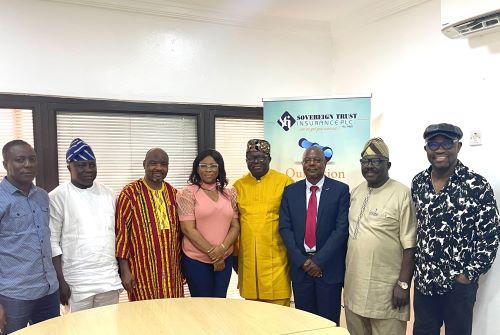
L-R: Tajudeen Rufai, Consultant, STI Plc, Emmanuel Anikibe, Executive Director, (Technical Division), STI Plc, Funmi Babington-Ashaye, Fellow, CII UK & MD/CEO, Risk Analyst Insurance Brokers, Olaotan Soyinka, MD/CEO, Sovereign Trust Insurance Plc, Isaac Olubitan, Member, CII UK, with the responsibility of developing markets in the area of manpower development for the Institute in the USA, Africa, Asia, Europe and the Caribbean. Others are, Olajumoke Olatubosun, DGM, Marketing Division, STI Plc, Akinwunmi Akinrinmade, AGM/Head, Energy, STI Plc and Segun Bankole, DGM/Head, Corporate Communications & Investor Relations, Sovereign Trust Insurance Plc, during the courtesy visit of CII UK to the Head Office of the Underwriting Firm in Lagos.

Shareholders Throw Weight Behind Fidelity Bank’s Recapitalisation Plan

0

Shareholders have expressed readiness to massively support and mobilise for the on-going recapitalisation of Fidelity Bank Plc amid commendations for the impressive performance of the bank over the years.

The shareholders were unanimous that Fidelity Bank has shown strong resilience over the years and demonstrated its investors’ friendliness with significant dividends and capital gains.

Shareholders, under the auspices of Nigeria’s leading shareholders’ associations, said they would buy into any share offering by Fidelity Bank as the bank holds exciting future for above-average returns.

The sundry shareholders’ endorsements underlined market pundits’ expectations that Fidelity Bank would easily raise additional funds and retain its status as one of Nigeria’s leading commercial banks with international authorisation.

With nearly 400,000 shareholders, Fidelity Bank has the most diversified retail shareholders’ base among Nigerian banks. No single shareholder held up to 5.0 per cent of the issued share capital of the bank. Five per cent and above are considered the material shareholding under extant laws and market regulations.

The highly diversified shareholding base, while it has its challenges of corporate register management and stock volatility, shows Fidelity Bank as a popular stock. Its huge free float also underscores the pricing efficiency of the stock at the stock market, ensuring that the share price is a reflection of the bank’s fundamental and investors’ expectation.

With average annual return of more than 81 per cent over the past five years, comparative analysis shows that Fidelity Bank outperforms all other major market indices with the bank’s average annual return for the period twice the average return by the overall market and almost four times of average return in the banking sector.

Shareholders said the performance of Fidelity Bank has endeared them to the bank, expressing optimism that the bank is poised for major leap in the emerging Nigerian financial services sector.

National Co-ordinator, Independent Shareholders Association of Nigeria (ISAN), Mr. Moses Igbrude, said Fidelity Bank has shown that shareholders can trust it for sustainable growth and returns.

“Fidelity Bank is a promising bank that is growing organically, it is servicing its niche and share of the market. My appeal to the board is to continue to imbibe good corporate governance in order to sustain this growth,” Igbrude said.

President, Association for the Advancement of Rights of Nigerian Shareholders (AARNS), Dr. Faruk Umar said the performance of Fidelity Bank over the years has been very encouraging.

According to him, the bank has a very good corporate governance structure that reassures investors of the safety of their investments.

He pointed out that the successful acquisition of Union Bank UK was a testimony to the financial strength of the bank.

“The bank has since joined the league of banks paying interim dividend, which shareholders are happy with,” Umar said.

He commended the board and management of the bank “for the good results they have been posting”, noting that investors have confidence in the future of the bank.

“The appointment of Dr Nneka Onyeali-Ikpe as the Group Managing Director, after serving as Executive Director, indicates that the bank has a good succession planning in place. The calibre of the independent non-executive directors on the board gives shareholders strong confidence of the kind of board oversight they will be expecting.

“Now that the bank is coming out with a rights issue offer, we are very confident shareholders will take their rights, and we are sure the bank will meet the recapitalisation requirement set out by the Central Bank of Nigeria (CBN),” Umar said.

National Co-ordinator, Pragmatic Shareholders Association of Nigeria, Mrs. Bisi Bakare, said Fidelity Bank has created a “very excellent impression” in the minds of shareholders.

According to her, the bank has continually showcased exemplary leadership with continuous impressive results, with successive growths over the past five years.

“Despite various challenges and economic uncertainty and other unforeseen occurrences, Fidelity Bank weathers the storm with strong performances,” Bakare said.

She cited the 2023 business year when the bank doubled its pre-tax profit by 131.5 per cent to N124.2 billion on the back of 64.9 per cent growth in gross earnings to N555.8 billion. The bank’s deposits increased by an impressive 56 per cent from N2.6 trillion in 2022 to N4.0 trillion while total assets grew by 56 per cent from N3.9 trillion to N6.2 trillion.

“Furthermore, Fidelity Bank paid a dividend of 85 kobo, including interim dividend of 25 kobo and final dividend of 60 kobo. Considering the share price of Fidelity Bank, their dividend policy is very robust.

“It is evident that our bank has not only weathered the storm of economic challenges but has also managed to thrive. Fidelity Bank is a very good bank that shareholders are very happy with their investments and we have never regretted buying into Fidelity Bank.

“I believe their right issue is going to be oversubscribed considering their past performances,” Bakare said.

National Co-ordinator, Progressive Shareholders Association of Nigeria, Mr. Boniface Okezie said Fidelity Bank’s growth has been “very amazing as it has delivered good returns in terms of good dividends to shareholders”.

According to him, shareholders are proud of the bank’s balance sheet, which is something that gives shareholders hopes for better rewards in the years ahead.

“All that average investors look for in a company is the fundamental, and Fidelity Bank is very strong in this. They are poised to surpass what they have projected. I should say the sky is their limit despite the headwinds.

“Fidelity Bank remains one of the best stocks that investors should look forward to invest in for better returns. I’m very optimistic of the bank’s healthy strong assets. With its good corporate governance and excellent customers’ service, there is every reason to hope for more promising future,” Okezie said.

The interim report and account of the bank for the first quarter ended March 31, 2024 showed that the bank started the current business year on stronger footing with three-digit growths across key performance indicators.

The three-month report, released at the NGX, showed that gross earnings increased by 89.9 per cent to N192.1 billion in first quarter 2024. The bank’s top-line performance continued to be driven by broad-based growths across income lines with interest income rising by 90.7 per cent and non-interest income growing by 84 per cent in first quarter 2024.

Growth in interest income was primarily spurred by a higher yield environment and strong earning assets base, while the increase in non-interest income was led by double-digit growth in account maintenance charges, foreign exchange (forex)-related income, trade, banking services, and remittances, supported by increased customer transactions.

Profit before tax doubled by 120 per cent to N39.5 billion in first quarter 2024 as against N17.9 billion in first quarter 2023. The bank’s performance was driven by expanding market share with total deposit rising by 17 per cent within the three months to N4.7 trillion, compared with N4 trillion recorded at the end of 2023. The bank also increased its supports for national economic growth with net loans and advances rising by 21 per cent from N3.1 trillion at the end of 2023 to N3.7 trillion by March 2024.