Wednesday, February 4, 2026
27.5 C
Lagos
Home Blog Page 77

NIMC Reaffirms Commitment to Protection of NIN Database as Nigeria Commemorates Civil Registration, Vital Statistics Day

0

The DG/CEO of NIMC, Engr Abisoye Coker-Odusote, has reiterated the safety and protection of data in its National Identity Database (NIDB) as the country commemorates the National Civil Registration and Vital Statistics (CRVS) Day.

Engr Abisoye Coker-Odusote, represented by Engr Lanre Yusuf, Director, Information Technology and Identity Database (IT/IDD) at a press conference to commemorate the day in Abuja, emphasised that NIMC has put in place top-notch security architects to protect the Citizens’ Data.

She assured that the Commission will ensure that the National Identification Number (NIN) Database is safe and secure.

The NIMC DG also commended the concerted efforts of the United Nations Children’s Fund (UNICEF) and the National Population Commission (NPC) towards an inclusive digital identity system in Nigeria.

She reiterated the strategic partnership with the NPC and other Government agencies to enrol and issue NIN to all Nigerians, particularly children below the age of 16 years, adding that NIMC plans to go to the hinterland to enroll all Nigerians

Furthermore, Engr Coker-Odusote noted that over 109 million NINs have so far been issued to Nigerians and legal residents, amongst which children’s enrolment was 20 percent.

She, however, promised that the NIMC would ensure timely and accurate NIN enrolment of all Nigerians and legal residents within the shortest time possible.

Engr Coker-Odusote used the occasion to inform Nigerians that the Improved General Multiple Purpose Card (GMPC) will be launched soon to support the Federal Government’s drive for inclusivity, social safety net program and other programs targeted towards the citizens.

Union Bank Upgrades to PCIDSS v4.0 Certification

0

Union Bank, one of Nigeria’s most noteworthy and trusted financial institutions, has received another significant recognition with its recent attainment of the Payment Card Industry Data Security Standard (PCIDSS) version 4.0 certification.

This notable achievement, which is an upgrade from the previously awarded Payment Card Industry Data Security Standard (PCIDSS) version 3.2, recognises the Bank’s adherence to the highest data security standards and diligent compliance with industry guidelines regarding payment card fraud prevention and reduction in unauthorised card usage.

The PCI-DSS is the premier Information Security standard for payment cards. It aims to improve the controls of cardholder data and related payment systems to reduce unauthorised use and fraud.

Commenting on the Bank’s latest attainment, Chief Information Security Officer at Union Bank, Francis Mojoyinola, said:

“Union Bank is delighted that we have again been acknowledged for the considerable work we have put into attaining better controls and card payment standards. This certification once again demonstrates our ability to provide top-of-the-line cybersecurity standards and solutions that help us manage and reduce risk exposure. All of this could not have been achieved without the Bank’s collaborative, dedicated, and competent team of IT and data security experts.

Our esteemed customers will continue to be our focus as we strive to build a secure data security structure that enables safe, simpler, and straightforward innovative banking services.”

Union Bank was given this certification by CyberCube Services Pvt. Ltd., a leading technology firm that specialises in providing cutting-edge cybersecurity solutions to businesses across various industries.

Their extensive work in cybersecurity services, including cybersecurity compliance management and vulnerability management, has distinguished them as a leading cybersecurity firm serving clients across multiple industries.

The company’s commitment to innovation and excellence has earned it a reputation as a trusted partner in the fight against cybercrime.

This, along with other of the Bank’s certifications, like the MSECB information security management systems ISO/IEC 27001:2022, ISO 22301:2019, ISO/IEC 20000-1:2018, and the International Organisation for Standardisation ISO/IEC 27001:2013, reiterates Union Bank’s commitment to upholding data and cyber security standards and maintaining its reputation as one of Nigeria’s most trustworthy financial institutions.


About Union Bank Plc

Established in 1917 and listed on the Nigerian Stock Exchange in 1971, Union Bank of Nigeria Plc. is a household name and one of Nigeria’s long-standing and most respected financial institutions.

The Bank is a trusted and recognisable brand with an extensive network of over 300 branches across Nigeria.

The Bank currently offers a variety of banking services to both individual and corporate clients, including current, savings and deposit account services, funds transfer, foreign currency domiciliation, loans, overdrafts, equipment leasing and trade finance.

The Bank also offers customers convenient electronic banking channels and products, including Online Banking, Mobile Banking, Debit Cards, ATMs, and POS Systems.

Veritas Kapital Assurance Reports N5bn Profit in H1, Targets Top 5 in 2025

0

Veritas Kapital Assurance Plc has reported profit after tax of N4.908 billion in the first half of 2024, as against N672.4 million in the same period of 2023, representing an increase of 630 percent.

The company also achieved claims payment record of N1.3 billion as at June 30, 2024.

Dr. Adaobi Nwakuche, the Managing Director/CEO of Veritas Kapital Assurance Plc said at a media parley in Lagos that the insurer also achieved a 41 percent rise in the total assets of the group from N24.641 billion in 2023 to N34.828 billion in 2024 and N16.369 billion in shareholders’ funds in 2023 to N21.553 billion in 2024, representing an increase of 32 percent. In the same period of H1 2024, the Gross Written Premium (GWP) went up by 330 percent to N12.574 billion compared to N2.921 billion in H1 2023.

The insurance revenue also rose from N2.201 billion in H1 2023 to N9.908 billion in H1 2024, an increase of 350 percent while the net insurance and investment income had a growth rate of 425 percent to N6.523 billion in H1 2024 from N1.243 billion in the same period of 2023.

Nwakuche attributed the performance of the company in H1 2024 to the company’s people development program in terms of competence and productivity, enhanced retail platform, enhanced brand visibility, robust technology infrastructure deployment and the enduring culture of corporate excellence at the firm.

On the drivers of its corporate growth, the CEO said: “The implementation of our strategies, support from customers and the Board are the key drivers of our growth trajectory in H1 2024. All our businesses have recorded tremendous growth. We are deliberate in growing all our lines of business. We set our targets and pursue them accordingly.”

She added that Veritas Kapital Assurance has a roadmap for raising and operating with adequate capital to drive its businesses profitably.

The future plans of the company according to Nwakuche is to rank amongst the top five quoted general insurance firms in Nigeria, sustainable growth in premium income, excellent customer delivery and global brand reputation.

The Veritas Kapital Assurance MD emphasised that the core objective of the media engagement is to consolidate the existing relationship between the media and the company, brief members of the Press on the current operational performance of the firm and enhance its brand visibility and reputation in the insurance market.

“We have a passionate team that is driven by resilience and synergy to achieve and surpass our corporate goals.”

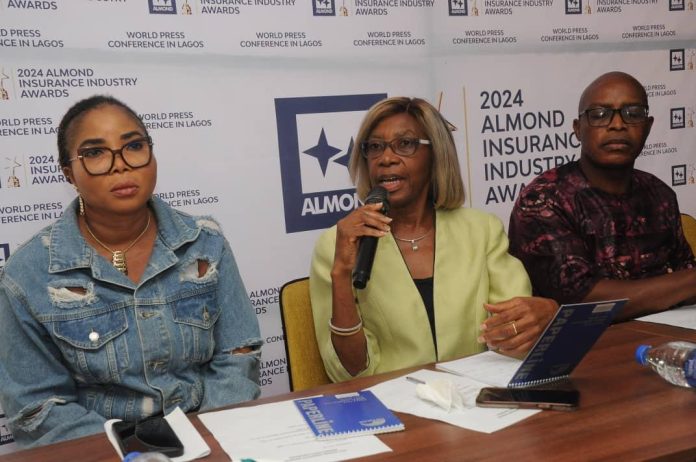
Almond Insurance Industry Awards Unveils Nominees for Nov 1 Event

0

The Nominees for Voting in the Various Categories

INSURANCE CEO OF THE YEAR

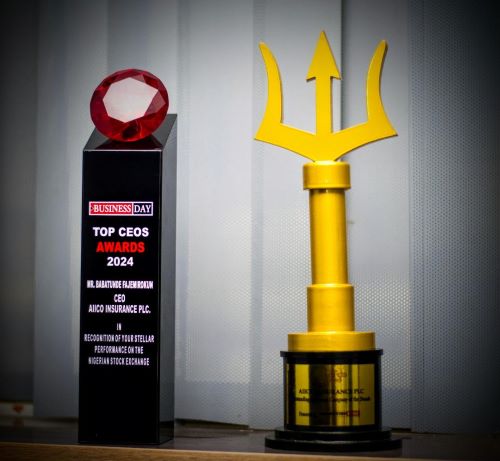
Tunde Fajemirokun                         MD/CEO      AIICO Insurance Plc.

Ebelechukwu Nwanchukwu          MD/CEO      REX Insurance Ltd.

Olufemi Asenuga                             MD/CEO      Mutual Benefits Assurance Plc.

Akinjide Orimolade                        MD/CEO      Stanbic IBTC Insurance Limited

Austin Osegha Ebose                      MD/CEO      Anchor Insurance Company Limited 

INSURANCE WOMAN OF THE YEAR

Ebelechukwu Nwanchukwu                      MD/CEO      REX Insurance Ltd.

Funmi Omo                                                  MD/CEO      Enterprise Life Assurance Company

(Nigeria) Limited

Margaret Nkechi Moore                            MD/CEO       Mega Trust Insurance Brokers Ltd.

Ekeoma Ezeibe                                            MD/CEO       Crystal Trust Insurance Brokers Ltd.

LIFE INSURANCE COMPANY OF THE YEAR

AIICO Insurance Plc.

Coronation Life Assurance

Sanlam Life Insurance Nigeria Limited

Custodian Life Assurance Limited

Capital Express Assurance Limited

GENERAL INSURANCE COMPANY OF THE YEAR

Leadway Assurance Company Ltd.

Consolidated Hallmark Insurance Plc.

NEM Insurance Plc.

Sovereign Trust Insurance Plc.

International Energy Insurance Plc.

INSURANCE BROKER OF THE YEAR

Kayode Awogboro                          MD/CEO      ARK Insurance Brokers

Adeyinka Falade                              MD/CEO      ATIAT Insurance Brokers

Funmi Babington – Ashaye            MD/CEO      Risk Analyst Insurance Brokers

Enitan Solarin                                   MD/CEO      YOA Insurance Brokers Ltd.

INSURANCE BROKING COMPANY OF THE YEAR

SCIB Nigeria & Co. Ltd.

Hogg Robinson Nigeria Limited

ARK Insurance Brokers Limited

YOA Insurance Brokers Limited

Insurance Brokers of Nigeria (IBN)

TAKAFUL COMPANY OF THE YEAR

Noor Takaful Insurance Limited

Jaiz Takaful Insurance Ltd.

Salam Takaful Insurance Company Ltd.

Hilal Takaful Nigeria Limited

MICRO INSURANCE COMPANY OF THE YEAR

CHI Microinsurance Limited

Goxi Microinsurance Co. Ltd.

Casava Microinsurance Limited

Lifeguard Microinsurance Ltd.

Prudent Choice Microinsurance Ltd.

MOST VALUABLE INSURANCE CUSTOMER OF THE YEAR

Dangote Group

NNPC Limited

Oando Plc.

Air Peace Limited

Office of Head of Service of the Federation (OHCSF)

BUA Group

INSURANCE LIFE ACHIEVERS AWARD

Sir Ogala Osoka

Valentine Ojumah

Prof. Ahmed Salawudeen


FG: Gas Dev ‘ll Lead to Nigeria’s Prosperity, Lower Cost of Living

0

L-R: Minister of State for Petroleum Resources (Gas), Hon Ekperikpe Ekpo arriving the Nigerian Content Tower, Yenagoa, Bayelsa State with the Executive Secretary of Nigerian Content Development and Monitoring Board (NCDMB), Engr. Felix Omatsola Ogbe, during the Minister’s visit to the NCDMB’s headquarters and other facilities.

Amidst the clamour for good governance and reduction in the cost of living in the country, the Minister of State for Petroleum Resources (Gas), Hon Ekperikpe Ekpo has asserted the Federal Government’s firm determination to advance the nation’s gas resources as the surest pathway to economic prosperity.

The Minister stated this in Yenagoa, Bayelsa State when he visited the facilities and projects of the Nigerian Content Development and Monitoring Board (NCDMB), where he serves as the co-chair of the Governing Council.

He stated that Nigeria is endowed with vast natural gas resources of about 209 trillion cubic feet of proven gas reserves, emphasising the necessity to harness these resources effectively to drive economic development.

He underlined President Bola Ahmed Tinubu’s unalloyed support to the gas sector, with initiatives extending to the entire value chain, notably gas development, distribution and penetration. Federal Government’s drive according to him is geared to lower the cost of transportation, the cost of living and impact every part of the country positively.

He listed some of the key initiatives his ministry is pursing to include investments in critical gas infrastructure development to support the transportation and distribution of natural gas across the country, promotion of domestic gas utilization for power generation, industrial applications, and transportation as well as strengthening NCDMB’s capacity to build capacity and enforce local content policies.

Other laudable initiatives reeled out by the Minister include encouraging and supporting gas-to-power projects to ensure a reliable and sustainable supply of electricity, expanding Nigeria’s capacity to export liquefied natural gas (LNG) to international markets, to generate revenue and position Nigeria as a key player in the global gas market and strengthening the policy and regulatory frameworks governing the gas sector to create an enabling environment for investment and innovation.

The Minister remarked that 60 percent of NCDMB’s investments are gas based and advised that new projects by the agency should focus on Compressed Natural Gas (CNG) because of the direct impact on transportation and cost of living.

He lauded NCDMB for the remarkable strides it had made in promoting local content and for constructing the magnificent 17-storey headquarter building, which signifies the impressive growth and depth of local capacity.

Ekpo added that the visit provided him an opportunity to meet with management and staff of the Board, learn more about the agency’s operations, and discuss how to continue driving local content development in our nation’s gas sector.

In his welcome remarks, the Executive Secretary of NCDMB, Engr. Felix Omatsola Ogbe thanked the Minister for visiting the Board’s facilities and assured him of the commitment of the management and staff of the Board to supporting the Federal Government’s economic aspirations.

The Minister and his entourage toured NCDMB’s facilities, including the Technology Innovation and Incubation Centre (TICC) and listened to presentations from three incubates on their technology solutions and how NCDMB is supporting them from concept to commercialisation. The team also visited the NCDMB Conference Hotel project, which is undergoing construction, the NCDMB gas hub at Polaku, Yenagoa as well as the 10 megawatts gas-power plant, which supplies electricity to the Nigerian Content Tower and selected offices of the Bayelsa State Government.

The Minister also made a brief visit to the Deputy Governor of Bayelsa State, Senator Lawrence Ewhrudjakpo, who welcomed the Minister to the state and solicited for key investments in the gas sector. He argued that since Bayelsa State supplies a substantial percentage of the gas feedstock used by the Nigeria Liquified Natural Gas (NLNG) plant, it deserves to host one of the company’s gas processing facilities. He also demanded for accelerated development of the Brass methanol project as a plank for enhanced economic development of the state.

Protest: GOCOP Condemns Attacks on Journalists by Security Agents, Says Act Undemocratic

0

The Guild of Corporate Online Publishers (GOCOP) condemns, in very strong terms, the serial attacks on journalists covering the #EndBadGovernance nationwide protest, describing the act as undemocratic and repressive.
GOCOP notes that journalists are partners in national development as well as critical stakeholders in the advancement of democracy and civil liberties and therefore deserve to be protected, and not suppressed as the security agents tried to do during the protest.
The body of online publishers specifically calls on relevant authorities in Nigeria, especially security agencies, to see journalists as partners and voices of the voiceless rather than treat them as meddlesome interlopers and enemies of the people.
Citing growing harassment of journalists including the denial of their fundamental right to life in the course of discharging their duties, GOCOP appeals to Nigerian security agencies to ensure the safety of all journalists especially during protests, riots and elections.
GOCOP says the media has the capacity to support peace and reconciliation processes among political actors, between leaders and their followers and among the various ethnic nationalities in the country, hence should be allowed to play its constitutional role.
Aggregating statistics from various media reports, GOCOP says over 30 journalists had been attacked across the country during the protest which commenced on August 1.
Media houses which have had their staffers attacked with their tools (phones and cameras either seized or destroyed) include Premium Times, Daily Independent, Punch, TVC News, Guardian, Pointer newspaper, among others.
GOCOP acknowledges the right of citizens to protest but cautions that on no account should any protest go beyond the bounds of peace and turn violent thereby creating opportunity for looters and hoodlums to hijack what was intended to be a peaceful show of anger against bad governance.
While GOCOP condemns the violence that attended the protests in some parts of the country, it urges the security agencies to investigate, arrest and prosecute those found culpable in visiting mayhem and destruction on the nation and the citizenry.
GOCOP also strongly condemns the subversive actions of some disgruntled Nigerians in cahoots with foreigners who during the protest sewed, distributed and flew Russian flags in some States and called for unconstitutional change of government.
GOCOP sees such act as not only subversive but a direct affront on the sovereignty of the nation.
It calls on the Federal Government to ensure the diligent prosecution of those involved in such act that impugns the territorial integrity and sovereignty of Nigeria.
GOCOP appeals to President Bola Tinubu who for most part of his life championed the cause of democracy and independence of the media to prevail on the Service Chiefs and the Inspector General of Police to stop forthwith any form of harassment, intimidation, attack and arrest of journalists legitimately discharging their constitutionally assigned duties.
Media suppression does not only project Nigeria in bad light, it portrays the Tinubu government as a dictatorship in a democracy.
In a statement by Ms. Maureen Chigbo (President) and Mr. Collins Edomaruse (General-Secretary), GOCOP urged journalists to remain steadfast in the discharge of their duties by operating within the ambit of professionalism, fairness and factuality.

Recapitalisation: Investors Scramble for Fidelity Bank’s Offers

0

Investors are literally scrambling for shares of Fidelity Bank Plc as the leading commercial bank’s capital raising continues to gather momentum among all categories of investors.

Investors’ appetite for Fidelity Bank is shown in massive subscriptions to its on-going rights and public offers and voluminous trading at the stock market.

Current weekly report shows that Fidelity Bank was the most active stock at the stock market, outperforming the banking sector and the overall market.

Fidelity Bank recorded a turnover of 1.73 billion shares worth N18.27 billion in 1,579 deals to emerge atop the activities chart for the week.

This implies that Fidelity Bank accounted for 51 per cent and 35 per cent of total volume and value traded during the week. Total turnover for the week at the Nigerian Exchange (NGX) stood at 3.39 billion shares worth N52.30 billion in 44,814 deals.

In what underlined the fact that transactions in Fidelity Bank was driven by positive investors’ sentiment, the bank’s share price combined the huge turnover with appreciation.

Contrary to the overall negative performance of the market and the banking sector, Fidelity Bank’s share price rose by 0.05 per cent to N10.75 per share. The benchmark index that measures pricing trend for the equities market, the All-Share Index (ASI) of the NGX, closed the week down by 0.46 per cent. The NGX Banking Index, the sectoral index that measures the performance of the banking sector, had closed lower by 0.48 per cent.

The secondary market trading on Fidelity Bank’s shares underscored investment experts’ general view on the attraction of the bank’s ongoing rights and public offers. Experts have categorised Fidelity Bank as a most attractive offer, with the bank carrying the “buy” recommendation in most investment research reports.

For instance, at the on-going offer prices, Fidelity Bank is locking in immediate double-digit gain of between 11 to 18 per cent for investors in the on-going rights and public offers, a substantial immediate return that’s unique to the bank among other competitors.

Fidelity Bank had started with a N127.1 billion hybrid offer including a rights issue of 3.2 billion ordinary shares of 50 kobo each at N9.25 per share and a public offer of 10 billion ordinary shares of 50 kobo each at N9.75 per share.

With massive subscriptions and the offers clearly heading to huge over-subscription, the bank has received approvals to issue additional 8.2 billion ordinary shares to absorb potential oversubscription. Thus, the rights issue size was doubled with additional 3.2 billion shares while 5.0 billion shares were added to the public offer.

Application list for the offers closes on August 12, 2024. A minimum subscription of 1,000 shares or N9, 250 for rights issue and N9, 750 shares for public offer ensures that the generality of the people can benefit from the bank’s on-going offers.

Experts at Afrinvest West Africa said subscribing to the rights and public offers is a cheaper way as the issuing company bears the cost of transaction compared to the secondary market where the buyer pays transaction charges and levies.

Afrinvest categorised Fidelity Bank as an “opportunity” for the investing public, citing the bank’s impressive historical capital gain and performance records.

Investment experts at Arthur Steven Asset Management said investors in Fidelity Bank’s ongoing rights and public offers stand to reap about 57 per cent in capital gain over a shor- term period, putting the bank’s shares as valuable inflation-hedging assets.

Analysts at Arthur Steven Asset Management outlined that with a return on equity of 23 per cent, Fidelity Bank has consistently increased dividend payouts for the past three years, rising from 35 kobo per share in 2021 to 40 kobo and 60 kobo in 2022 and 2023 respectively.

Analysts noted that the bank has a long-to-deposit ratio of 75 per cent, which underlines Fidelity Bank’s strong commitment to supporting businesses and national economic development. Debt-to-equity ratio stands at 1.34 times, showing that the bank has no significant debt burden and thus easily, aggressive growths translate to higher returns to shareholders.

Fidelity Bank has delivered an average annual capital gain of more than 100 per cent over the past five years and ranked among the elite stocks with the highest corporate governance rating at the Nigerian stock market.

The secondary or stock market performance has been driven by massive expansion in business operations and strong growth in profitability. Fidelity Bank has recorded an average annual profit growth of 64 per cent over the past three years.

The bank has also seen rapid expansion in customer base and assets as total balance sheet size leapt from N2.1 trillion to N6.2 trillion, the sixth largest in the Nigerian banking industry. The balance sheet was driven by a hefty total deposit of more than N4 trillion, equally the sixth biggest in the industry.


Agricultural Productivity: NIRSAL Empowers over 2,000 Farmers in 4 States

0

NIRSAL’s Ibrahim Suleiman taking the first Lecture in Owerri, Imo State location

NIRSAL Plc has completed a midyear training programme for lead farmers and extension agents in the Aquaculture and Cassava value chains across locations in Imo, Sokoto, Kwara, and Oyo States. The programme, aimed at boosting farmers’ capacities to access and repay commercial loans, had over 2,000 participants, with state government representatives also in attendance.

As it continues to promote the Agro Geo-Cooperative approach to primary production, NIRSAL primarily targets lead farmers with the experience and skill to share new knowledge with members of their various co-operatives for its training programmes.

In Imo State, where no less than 500 participants assembled in two locations—one urban and one rural, the focus was on efficient models for fish production. It was the same in Sokoto State, while the Oyo and Kwara outings focused on cassava.

Mr. Uche Agabige, Imo State House Committee Chairman on Agriculture, lauded NIRSAL for including Imo in this round of the capacity building programme, with the belief that it would complement local efforts aimed at boosting agricultural productivity in the state.

Head of Value Chain Capacity Development at NIRSAL Plc, Mr. Ibrahim Suleiman, said that the capacity development programme, which is part of the Technical Assistance offered by NIRSAL to agricultural value chain actors under its Technical Assistance pillar, was happening simultaneously in three other states spanning four Geo-political zones.

According to Mr. Suleiman, lead farmers and extension agents in aquaculture and cassava were similarly gathered at two urban and rural locations in Sokoto, Oyo, and Kwara States, and they are expected to cascade the training to an estimated 6,000 farmers across the states.

The NIRSAL teams received warm reception and commendations in locations, including from the Commissioner for Agriculture and Rural Development and the Akinyele Local Government Chairman in Oyo State, and the Special Adviser to the Kwara State Governor on Farmers’ Interventions, among others.

In addition to the formation of functional cooperatives with proper governance structures, the training programme also discussed readiness for possible protocol breaches and early warning systems. Participants who spoke after the lectures said that they were delighted at the new insights they gained, pledging to share same with members of their various cooperatives.

NIRSAL Plc is an initiative of the Central Bank of Nigeria (CBN) established to de-risk agriculture and agribusiness financing in Nigeria, with a view to stimulating the flow of finance and investment into the Agricultural Value Chain from multiple sources. Logic for the Imo training exercise is provided by one of the five pillars of NIRSAL—Technical Assistance, under which value chain fixing initiatives are researched, developed, and promoted.

Stanbic IBTC Bank PMI: Business Activity Falls for First Time in 8 Months

0

The Nigerian private sector moved back into contraction territory in July as steep price pressures hit demand and resulted in renewed reductions in both business activity and new orders.

Input costs and selling prices continued to rise rapidly, although there were some signs that efforts to secure sales resulted in a softer pace of output price inflation.

Meanwhile, confidence hit a new record low. The headline figure derived from the survey is the Stanbic IBTC Purchasing Managers’ Index (PMI). Readings above 50.0 signal an improvement in business conditions on the previous month, while readings below 50.0 show a deterioration.

The headline PMI posted 49.2 in July, down from 50.1 in June and below the 50.0 no-change mark for the first time in eight months. The index signalled a slight deterioration in business conditions as the second half of the year got underway. The renewed worsening in the health of the private sector mainly reflected the first reductions in output and new orders since November last year.

In both cases, rates of decline were only modest, however. Anecdotal evidence continued to highlight the negative impact of sharp price increases on customer demand, with clients often unwilling or unable to commit to new projects.

Three of the four broad sectors covered by the report saw business activity decrease in July, the exception being manufacturing where production increased. Selling prices continued to increase sharply at the start of the third quarter as companies passed higher input costs through to their customers. This was despite the rate of inflation easing to the slowest since May 2023 amid reports from some panellists that they had lowered charges as part of efforts to secure sales.

Muyiwa Oni, Head of Equity Research West Africa at Stanbic IBTC Bank commented: “The Stanbic IBTC headline PMI declined for the second consecutive month to 49.2 points in July – its lowest level since November 2023. Anecdotal evidence continued to highlight the negative impact of sharp price increases on customer demand, resulting in renewed reductions in both business activity and new orders. Notably, output and new orders printed below 50.0 thereby ending a seven-month sequence of expansion and reinforcing a renewed worsening in the health of the private sector. Even as output and new orders declined, companies continued to expand their staffing levels during the month.  Moreover, the rate of job creation picked up to the strongest in 2024 so far. Meanwhile, overall input prices continued to rise sharply in July with the rate of inflation quickening for the third month running and was the fastest since March.  Although output prices continued to rise rapidly during July, the pace of inflation eased from that seen in June and was the slowest since May 2023. Where selling prices increased, panelists linked this to higher input costs. On the other hand, some companies lowered charges as part of efforts to attract customers. That said, companies remained confident overall that output will increase over the next 12 months, reflecting business expansion plans including efforts to start exporting and open more branches. On a year-on-year basis, headline inflation may have peaked in June, with moderation expected in H2:24 as the year-on-year effects of PMS subsidy removal (which induced higher fuel prices) and significant currency depreciation (which accompanied the FX unification) fade.  This, in addition to the commencement of the primary harvest season in September, is likely to provide some respite for consumers, thereby likely supporting a slight improvement in domestic economic activities in H2:24.”

Further increases in purchase prices and staff costs were registered in July. Purchase price inflation quickened to a four-month high, often due to currency weakness but also higher raw material costs.

Meanwhile, the rise in employee expenses was broadly in line with that seen in June as companies continued to help workers with higher living costs, particularly those related to transportation.

The renewed decline in output was accompanied by a reduction in business confidence, with firms at their least optimistic since the survey began. That said, business expansion plans meant that firms still expect output to rise over the coming year. Companies scaled back purchasing activity, with reduced demand for inputs and prompt payments helping lead to a further shortening of suppliers’ delivery times.

Meanwhile, stocks of inputs increased. Employment also continued to rise slightly, with the pace of job creation quickening to the fastest in 2024 so far. Higher staffing levels and a drop in new orders meant that backlogs of work were cleared for the second consecutive month.

NAICOM, NDPC to Partner on Data Protection

0

The Commissioner for Insurance/CEO NAICOM Mr. Olusegun Ayo Omosehin received in his office, the National Commissioner/CEO National Data Protection Commission (NDPC), Mr. Vincent O. Olatunji on a courtesy visit.

In his welcome remarks, the CFI assured Mr. Olatunji and members of his team of NAICOM’s readiness to collaborate with the NPDC towards the attainment of the mandates of the respective Agencies.

He highlighted the key functions of NAICOM. And areas of mutual benefits.

In his response, Mr. Olatunji thanked the CFI for the warm reception and stated that the NPDC being one of the agencies newly created by the Federal Government, was at NAICOM to create awareness on the data protection law as well as seek the cooperation of NAICOM and collaboration to entrench data protection policy among its regulated entities.

The National Commissioner stated that the NDPC is first taking the step to create awareness and build capacity before full enforcement of the law on protection of data privacy in the court.

CAMCONIA Holds Annual Retreat August 22 in Abeokuta

0

The Corporate Affairs Managers Committee of the Nigerian Insurers Association (CAMCONIA), the elite body of Brand, Marketing and Corporate Communications professionals in the Nigerian Insurance industry, is set to hold its annual Retreat from August 22 to 24, 2024 in Abeokuta, Ogun State. The Retreat, first in recent time, seeks to herald a new beginning for the Association.

A team of outstanding facilitators with demonstrated experience in Public Relations, Marketing Communications, Advertising Regulations and Human Resources have been shortlisted to deliver various papers on the theme: “Leading the Narrative: Shaping the future of our Industry.”

They include Lara Yeku, Performance Coach and HR Expert who is also the Head of HR, Food Commercial Division, Flour Mills of Nigeria; Tope Adaramola, Public Speaker, PR professional and Executive Secretary, Nigerian Council of Registered Insurance Brokers of Nigeria (NCRIB); and Dr Lekan Fadolapo, Director General, Advertising Regulatory Council of Nigeria (ARCON).

Commenting on the event, Segun Bankole, Chairman, CAMCONIA, and Head of Corporate Communications and Investor Relations at Sovereign Trust Insurance, said:

“Since the inauguration of the current CAMCONIA executives, there has been a remarkable upsurge and renewed interest amongst members in what we stand for. Our industry has been constantly faced with various wrong narratives, as professionals charged with telling the Nigerian insurance story, it is time we took the lead as we shape the overall perception of our industry. This is why this retreat could not have come at a better time. It is time to tell the right stories, stories of protection, trust, hope and belief in a beautiful today and a better tomorrow.”

The Director General of the Nigerian Insurers Association, NIA, Mrs. Adebola Odukale, urged participants at the forthcoming Retreat to ensure that they fashion out an enduring roadmap in promoting the insurance industry while at the same time, make it a pride to behold in the comity of financial institutions in the country.

The 2-day event will hold at the Park Inn Hotel, Abeokuta, Ogun State. In addition to robust engagements with the facilitators, activities lined up for the CAMCONIA Retreat include but not limited to the following, excursion to the popular Olumo Rock, the Adire Market, Aerobics sessions while a black-tie Gala and Awards Night rounds off the event.

NNPC Denies Allegation of Economic Sabotage in Nigeria

0

GCEO, NNPC Limited, Mr. Mele Kyari flanked (from his right) by the Minister of State for Petroleum Resources (Oil), Sen. Heineken Lokpobiri and (from his left), the Chief Executive, Nigerian Upstream Petroleum Regulatory Agency (NUPRC), Engr. Gbenga Komolafe during an interactive session by the Senate ad-hoc committee investigating alleged economic sabotage in the Nigerian Petroleum Industry, held at the National Assembly on Wednesday.

The Group Chief Executive Officer of NNPC Limited, Mr. Mele Kyari has said the company has not breached any of the enabling laws guiding its dealings with partners, hence should be counted out of any claims of economic sabotage.

Kyari, who was addressing the Senate Ad-Hoc Committee investigating alleged economic sabotage in the Nigeria Petroleum Industry at the National Assembly on Wednesday, stated that refining business is a straightforward business which any investor should know before coming into the market.

“Refining business is a straightforward business. You must secure (a source for) your feedstock and you must find a market. This is basic and this determines what happens in any refinery anywhere in the world. That is the business of refining. We have done nothing to sabotage any domestic refinery,” Kyari stated.

According to the GCEO, the law is very clear on domestic crude oil supply obligation and also on providing for local refineries. However, Kyari added, the same law also said that there must be a willing buyer and a willing seller.

On alleged importation of sub-standard products into the country, Kyari said the NNPC Limited has nothing to do with that as the relevant regulatory agencies will, by law, not allow any sub-standard product into the country.

The GCEO also supported calls for the Ad-hoc Committee to beam the interactive sessions live on national television to prevent misinforming Nigerians.

He explained that there is enough infrastructure to produce two million barrels of crude per day but the challenges of crude oil theft, pipeline vandalism and absence of investment in the upstream are the major factors hindering the sector.

He said as a company owned by the over 200 million Nigerians, the NNPC Limited has grown from a loss-making position to a profit-making entity.

While pledging full co-operation towards the Committee in its efforts to unravel the allegations being investigated, Kyari said the NNPC Limited, its entire board, management and staff remain loyal, faithful and committed to Nigeria and will continue to act in line with the provisions of the Petroleum Industry Act (PIA), the Company & Allied Matters Act (CAMA) and other enabling laws and regulations governing the nation’s energy Industry.

“We are faithful, loyal and committed to the progress and development of this country. It is our duty to protect the overall interest of this great nation. We are not in breach of any rules,” Kyari concluded.

Agricultural Productivity: NIRSAL Empowers over 2,000 Farmers in 4 States

0

NIRSAL’s Ibrahim Suleiman taking the first Lecture in Owerri, Imo State location

NIRSAL Plc has completed a midyear training programme for lead farmers and extension agents in the Aquaculture and Cassava value chains across locations in Imo, Sokoto, Kwara, and Oyo States. The programme, aimed at boosting farmers’ capacities to access and repay commercial loans, had over 2,000 participants, with state government representatives also in attendance.

As it continues to promote the Agro Geo-Cooperative approach to primary production, NIRSAL primarily targets lead farmers with the experience and skill to share new knowledge with members of their various co-operatives for its training programmes.

In Imo State, where no less than 500 participants assembled in two locations—one urban and one rural, the focus was on efficient models for fish production. It was the same in Sokoto State, while the Oyo and Kwara outings focused on cassava.

Mr. Uche Agabige, Imo State House Committee Chairman on Agriculture, lauded NIRSAL for including Imo in this round of the capacity building programme, with the belief that it would complement local efforts aimed at boosting agricultural productivity in the state.

Head of Value Chain Capacity Development at NIRSAL Plc, Mr. Ibrahim Suleiman, said that the capacity development programme, which is part of the Technical Assistance offered by NIRSAL to agricultural value chain actors under its Technical Assistance pillar, was happening simultaneously in three other states spanning four Geo-political zones.

According to Mr. Suleiman, lead farmers and extension agents in aquaculture and cassava were similarly gathered at two urban and rural locations in Sokoto, Oyo, and Kwara States, and they are expected to cascade the training to an estimated 6,000 farmers across the states.

The NIRSAL teams received warm reception and commendations in locations, including from the Commissioner for Agriculture and Rural Development and the Akinyele Local Government Chairman in Oyo State, and the Special Adviser to the Kwara State Governor on Farmers’ Interventions, among others.

In addition to the formation of functional cooperatives with proper governance structures, the training programme also discussed readiness for possible protocol breaches and early warning systems. Participants who spoke after the lectures said that they were delighted at the new insights they gained, pledging to share same with members of their various cooperatives.

NIRSAL Plc is an initiative of the Central Bank of Nigeria (CBN) established to de-risk agriculture and agribusiness financing in Nigeria, with a view to stimulating the flow of finance and investment into the Agricultural Value Chain from multiple sources. Logic for the Imo training exercise is provided by one of the five pillars of NIRSAL—Technical Assistance, under which value chain fixing initiatives are researched, developed, and promoted.

Union Bank Announces Graduation of 2024 New Management Trainees

0

Union Bank of Nigeria, one of Nigeria’s foremost financial institutions, has added to its growing list of qualified personnel with the recent graduation of the 2024 set of Management Trainees.

The ceremony, which was held at the Bank’s multiple-purpose sports complex, ‘The Stable, ’in Surulere, Lagos, included the financial institution’s senior management officials and other staff, as well as the 166 Management Trainees graduates who successfully concluded their training programme.

After collecting their certificates, the newly graduated Management Trainees were encouraged to imbibe the technical and soft skills they learned to help them settle quickly into their new roles within the bank while upholding the tenets and core values of Union Bank.

Speaking during the event, Omayuli Wale-Ajayi, Chief Talent Officer at Union Bank, also urged the graduates to remain focused and committed to the ideals expressed in the Bank’s vision and mission statement.

Addressing the graduates, she said:

“Union Bank is always on the lookout for the best and brightest to join our existing team of highly motivated and competent employees to deliver on the strategic goals of this financial institution. We believe you represent the next generation of exceptional talent that will help the bank grow exponentially over the years to come.

“As you embark on the first steps of what I know will be a fruitful career within the bank, I encourage you to constantly keep your eyes on the big picture of helping our institution become Nigeria’s most reliable and trusted banking partner, keeping in mind also to strive to make our customer’s lives better by delivering the simplest, smartest solutions.”

The Union Bank Management Trainee Program is a comprehensive training program designed to prepare high-performing young talents to become well-rounded bankers and future leaders of the Bank.

This program is targeted at building a team of multifaceted and extraordinary individuals who are fully prepared and equipped to take on new challenges, make an impact, and work across the different aspects of the bank’s business units.


About Union Bank Plc.

Established in 1917 and listed on the Nigerian Stock Exchange in 1971, Union Bank of Nigeria Plc. is a household name and one of Nigeria’s long-standing and most respected financial institutions. The Bank is a trusted and recognisable brand with an extensive network of over 300 branches across Nigeria.

The Bank currently offers a variety of banking services to both individual and corporate clients including current, savings and deposit account services, funds transfer, foreign currency domiciliation, loans, overdrafts, equipment leasing and trade finance.

The Bank also offers its customers convenient electronic banking channels and products, including Online Banking, Mobile Banking, Debit Cards, ATMs and POS Systems.

Unity Bank, ProvidusBank Announce Merger Approval from CBN

0

We are pleased to announce that the Central Bank of Nigeria has approved the framework for the merger between Providus Bank Limited and Unity Bank Plc, marking a significant milestone in the evolution of our respective institutions. 

This proposed merger represents a strategic and complementary union that will leverage the strengths of both banks to create a leading financial institution in the industry with footprints in retail, corporate, commercial, and digital banking.

Unity Bank Plc, with its rich legacy of over 18 years, has established a robust retail banking network, comprising more than 220 branches nationwide. With a strategic niche in the agricultural business, our commitment to delivering exceptional customer service and a comprehensive range of financial products has earned us the trust and loyalty of millions of customers.

Providus Bank Limited, on the other hand, is renowned for its innovative approach to banking, boasting a strong digital footprint, innovative products, high quality service culture and strong focus on helping customers grow. As a fast-growing new-generation bank, ProvidusBank has consistently pushed the boundaries of technology to deliver cutting-edge financial solutions that cater to the evolving needs of modern consumers.

The combination is driven by a shared vision to provide an unparalleled banking experience to our customers. By combining Unity Bank’s extensive branch network and deep-rooted customer relationships with Providus’s digital prowess and innovative spirit, we aim to deliver a seamless blend of traditional and modern banking services.

Our customers will benefit from an expanded suite of products and services, greater convenience, and improved access to banking solutions across various channels. The integration of our digital platforms will offer enhanced security, faster transactions, and a more personalized banking experience.

As we embark on this journey together, we remain committed to maintaining the highest standards of corporate governance, financial stability, and customer satisfaction. Our united team of dedicated professionals will work tirelessly to ensure a smooth transition and continued tradition of excellence in all our operations.

This combination signifies the beginning of a new chapter in our shared history, one that is filled with promise and potential. We are confident that the combined strength of both entities will create a formidable force in the banking sector, driving innovation, growth, and prosperity for our customers, employees, and stakeholders.

We extend our heartfelt gratitude to the Central Bank of Nigeria for their consideration and approval and to our customers, employees, and partners for their unwavering support.

Completing the proposed merger is subject to the final approvals of the respective Boards, shareholders, and relevant regulatory approvals. 

Signed By Management: Providus Bank Ltd and Unity Bank Plc.