Thursday, February 5, 2026
27.5 C
Lagos
Home Blog Page 54

BudgIT Alleges Irregularities in 2025 FG Proposed Budget

0

BudgIT, a leading civic-tech organisation promoting transparency, accountability, and effective service delivery in Nigeria, has observed certain legacy issues with the 2025 Federal Government Proposed Budget and calls on the National Assembly to proactively address the irregularities, exercise its “Powers of the Purse” responsibly, allow robust public participation in the budget review process, and ensure that the approved budget reflects the needs and preferences of Nigerians through job creation, poverty reduction, and inclusive broad-based economic growth.

A review of the performance of the Federal Government budget over recent years has revealed that the Federal Government often falls way off the mark in its macroeconomic assumptions, which pose serious fiscal risks leading to severe budget financing challenges, additional unforeseen government obligations, and a significant increase in public debt. The government’s inflation projection of 15% in the 2025 fiscal year appears grossly unrealistic, considering that inflation, which stood at 34.6% as of November 2024, has been driven not only by monetary factors such as exchange rate and money supply but also by the constant increase in food and energy prices—both of which the government has not created a clear roadmap to resolving in the short term. While the oil price projection of $75 per barrel appears feasible given the global outlook of $70 to $73 per barrel, we strongly advise the National Assembly to resist the urge to increase the oil price benchmark to create fiscal space for their budgetary insertions, a practice observed in previous years.

Recall that in previous years, BudgIT has identified several budgetary insertions made by the National Assembly that deviate from the federal government’s constitutional mandate and priorities and are assigned to MDAs that have neither the capacity nor the mandate to implement the inserted projects. In 2021, BudgIT observed that 5,601 capital projects were added to the Appropriation Bill during the review process by the National Assembly. In 2022, it increased to 6,462 projects across 37 Mother Ministries and 340 MDAs, while in 2024, 7,447 insertions amounting to a staggering N2.24 trillion were found in the budget. While the Constitution grants the National Assembly the authority to appropriate funds, it often modifies the Executive’s proposed budget to distort its original intent and disconnect it from the nation’s long-term development agenda. Many inserted projects usually lack proper conceptualisation, design, and cost estimation, undermining their effectiveness and feasibility. We believe that the legislature must exercise this power with the utmost responsibility. This responsibility, which cannot be overstated, entails ensuring resource efficiency, eliminating waste, and aligning budgetary decisions with the nation’s long-term economic development goals.

Also, we have observed that the 2025 proposed budget breakdown submitted to the National Assembly for review and approval and published on the Budget Office website omits the breakdown of some MDAs, commissions, and councils, such as the National Judicial Council (₦341.63 billion), and TETFUND (₦940.5 billion). The budgets of over 60 government-owned enterprises (GOEs), including the Nigeria Ports Authority, Nigeria Customs Service, Nigerian Maritime Administration and Safety Agency (NIMASA), etc., were conspicuously absent from the 2025 Proposed Budget.

Furthermore, a combined ₦2.49 trillion has been allocated to five regional development commissions (Niger Delta: ₦776.53 billion; South West: ₦498.40 billion; North East: ₦290.99 billion; North West: ₦585.93 billion; and South East: ₦341.27 billion) under the umbrella of personnel costs. This approach obscures the true nature of these commissions’ operational expenses. For context, the Ministry of Interior, responsible for overseeing the Nigeria Immigration Service, Nigeria Correctional Service, Nigeria Security and Civil Defence Corps (NSCDC), Federal Fire Service, and their governing board, has a significantly lower recurrent non-debt expenditure allocation of N648.84 billion. This amount covers personnel and overhead costs for the entire ministry and its agencies. Lumping development commission budgets under personnel costs raises concerns about transparency and accountability. It hinders proper scrutiny of how these funds are utilised and whether they effectively achieve their intended development objectives.

More worrisome is the fact that the 2025 budget notably omits funding for the Lagos-Calabar Coastal Road, a capital-intensive infrastructure project. This omission implies that if funding for this project materialises, it will likely necessitate reallocating funds from other critical projects, potentially hindering their implementation and impacting the budget’s credibility. It is worth noting that President Bola Ahmed Tinubu’s recent pronouncement regarding the retirement package of military generals, which includes the provision of a bulletproof SUV, fully paid foreign medical treatment, $20,000 as estacode for medical trips, and payments for domestic help, contradicts his previous commitments to reduce the cost of governance and welfare packages to top-ranked public officials and civil servants. Such provisions not only inflate the budget and widen the fiscal deficit but may also demoralise lower-ranking military personnel, who lack adequate health insurance and retirement benefits despite their higher exposure to combat risks.

As the National Assembly reviews the 2025 Proposed Budget, BudgIT appeals to the 360 Honourable Members of the Federal House of Representatives and 109 Distinguished Senators of the Nigerian Senate to prioritise national interest over personal or parochial considerations and ensure that the approved budget stimulates economic activities and macroeconomic stability, allocates resources to foster economic growth and development, equitably distributes resources to reduce poverty and inequality, and caters to the most vulnerable Nigerians.


Veritas Kapital Assurance Recognised for Outstanding Customer Engagement, Leadership Excellence at 2024 Awards

0

L: Mr. Godwin Agbonaye, the Regional Head of Lagos and South, Veritas Kapital Assurance Plc and Mr. Arinze Adigwe, the Head of Marketing and Corporate Communications at Veritas (R) receiving the award in Lagos from Mr. Abidemi Adesanya (M), representing the award organisers.

Veritas Kapital Assurance Triumphs at the 2024 Customer Service Excellence Awards.

Veritas Kapital Assurance Plc has emerged victorious at the prestigious 2024 Customer Service Excellence Awards, clinching the highly coveted titles of Insurance Brand of the Year and Best Customer Care Insurance CEO of the Year.

The gold and diamond awards were presented today, January 10th, 2025, by Customer Service Standard Magazine, in recognition of the company’s exceptional customer engagement and leadership in the insurance sector.

Dr. Adaobi Nwakuche, the Managing Director and CEO of Veritas Kapital Assurance Plc, was honored with the Diamond Award for Outstanding CEO Leadership. Her transformative leadership and focus on enhancing customer service have positioned the company as a leader in the industry.

The Gold Award for Outstanding Customer Engagement was presented to the company, with Mr. Godwin Agbonaye, the Regional Head of Lagos and South, accepting the award on behalf of Dr. Nwakuche.

Mr. Arinze Adigwe, the Head of Marketing and Corporate Communications, also took to the stage to collect the Gold Award for Insurance Brand of the Year, further underscoring the company’s strong brand presence and customer-centric approach.

Mr. Abidemi Adesanya, representing the award organisers, praised Veritas Kapital Assurance for its outstanding customer engagement, noting that the company and its leadership emerged as the winners after thorough and meticulous research. He commended the firm for placing customers at the center of its business strategy, which has greatly contributed to its continued success.

In his acceptance speech, Mr. Agbonaye expressed deep gratitude to the organisers for the recognition. He emphasised Veritas Kapital Assurance’s unwavering commitment to customer satisfaction and highlighted the integral role that customer engagement plays in driving the company’s growth and success. He further noted that this award reaffirms their dedication to consistently enhancing their service delivery and products.

This momentous win for Veritas Kapital Assurance not only solidifies its position as an industry leader but also reinforces its dedication to setting new benchmarks in customer service excellence.

Fidelity Bank Supports Improved Maternal Health in Lagos

0

Leading Financial Institution, Fidelity Bank Plc, has donated maternity kits to 30 pregnant women at Mushin Primary Health Centre (PHC), Lagos.

The donation, organised by the Great Minds Inductees Class, was made possible through the Fidelity Helping Hands Program (FHHP), a Corporate Social Responsibility (CSR) initiative by Fidelity Bank Plc aimed at promoting staff involvement in community development.

Through the FHHP, staff across the bank’s business locations identify projects that benefit their immediate community and gather funds to implement them. The bank’s management then matches this contribution with an equivalent amount and allocates it for the chosen projects.

Speaking at the handing over ceremony, the Divisional Head, Brand and Communications Division, Fidelity Bank Plc, Dr. Meksley Nwagboh, noted that, “the project was borne out of the need to support pregnant women by providing them with essential materials for a safe delivery.”

Nwagboh noted that, “Maternal mortality remains a significant public health challenge in Nigeria, with the country accounting for a substantial proportion of global maternal deaths. In fact, a 2023 United Nations report indicate that nearly 28.5% of global maternal deaths occur in Nigeria. This is an alarming statistic and as a bank given to improving the welfare of our host communities, we deemed it fit to support initiatives to address this challenge in the Mushin community with this donation.”

Appreciating the bank’s gesture, the Medical and Health Officer for Mushin Local Government Area, Dr. Kayode Odufuwa, noted that, “this intervention by Fidelity Bank will help reduce maternal mortality and encourage more women from less-privileged backgrounds to register for antenatal care.”

“On behalf of the Chairman of Mushin LGA, Mr. Emmanuel Bamgboye, we want to express our heartfelt gratitude to Fidelity Bank for extending its donation of maternity kits to pregnant women at this center. We appeal for continued collaboration with the Bank to further strengthen healthcare services within the area,” he stated.

On her part, the Apex Nurse and Deputy Director of Nursing Services in Mushin LGA, Mrs. Bolanle Odunlami, poured encomiums on Fidelity Bank for their generosity while noting that, “the donation is a much-needed relief for many mothers who are unable to afford essential delivery kits. Fidelity Bank has truly shown empathy by coming to the aid of our patients, and for that, we are extremely grateful.”

One of the beneficiaries, Mrs. Mary Olusanya, expressed her heartfelt appreciation for the bank’s support. “I appreciate Fidelity Bank for helping us. Many pregnant women cannot afford these kits, but this donation ensures that we can have safe deliveries and better healthcare,” she said.

Ranked as one of the best banks in Nigeria, Fidelity Bank is a full-fledged customer commercial bank with over 8.3 million customers serviced across its 251 business offices in Nigeria and the United Kingdom, as well as on digital banking channels.

The bank has won multiple local and international awards, including the Export Finance Bank of the Year at the 2023 BusinessDay Banks and Other Financial Institutions (BAFI) Awards, the Best Payment Solution Provider Nigeria 2023, and Best SME Bank Nigeria 2022 by the Global Banking and Finance Awards; Best Bank for SMEs in Nigeria by the Euromoney Awards for Excellence 2023; and Best Domestic Private Bank in Nigeria by the Euromoney Global Private Banking Awards 2023.

STI CEO, Olaotan Soyinka, Emerges ‘Most Outstanding Auto Insurance CEO of The Year 2024’

0

The Managing Director and Chief Executive Officer of sovereign Trust Insurance Plc, Olaotan Soyinka has emerged the ‘Most Outstanding Auto Insurance CEO of the Year’ in 2024.

The award was presented to him at the Business Excellence Award organised by Beta Media Group in Lagos. Soyinka’s nomination and eventual victory has been highly commended by watchers of the industry. A very dedicated professional and one who is highly committed to the growth and development of the insurance industry in Nigeria and beyond.

In his appreciation speech, Soyinka expressed gratitude to the organisers of the event with every sense of humility and equally applauded the initiative of recognising individuals and organisations who are helping in promoting the Nigerian story in every facet of the economy.

He stated that this recognition was a testament to the hard work, dedication, and unwavering commitment of the entire team. He dedicated the award to every member of the organisation and reiterated their commitment to strive for excellence and serve customers with the utmost integrity.

Olaotan Soyinka is an erudite and well-grounded Underwriter with over 30 years cognate experience. He is a Graduate of Insurance from the University of Lagos and also holds an MSc degree in Marketing from the same university. He is an Associate of the Chartered Insurance Institute of Nigeria, AIIN. He joined Sovereign Trust Insurance Plc in March 1998.

A seasoned Professional who has plied his trade in both Marketing and Technical Divisions over the years. He has been very instrumental in the transformation and consistent growth of Sovereign Trust Insurance Plc since he became the MD/CEO.

He has brought to bear his overwhelming wealth of experience in providing instructive leadership to the company while taking it to the next phase of its growth stage.

Soyinka is an alumnus of the Lagos Business School having successfully completed the Senior Management Programme of the Institution.

He is also a member of the prestigious Ikoyi Club 1938.

Addressing The Alarming Surge in Financial Fraud in Nigeria

0

By Elvis Eromosele

The financial sector is the backbone of any economy, driving transactions, investment, and growth. In Nigeria, the financial sector is under siege.

The recent report from the Financial Institutions Training Centre (FITC) confirms this. The report reveals a shocking escalation in fraudulent activities, leaving banks and customers vulnerable in the first nine months of 2024.

This rising tide of financial fraud raises critical questions: Why is fraud surging, and what can be done to stem the tide?

The FITC Fraud and Forgery Report for Q3 2024 paints a grim picture. Fraud cases reported by Nigerian banks jumped by an alarming 65 per cent from 11,532 in Q2 to 19,007 in Q3. The monetary figures are equally disturbing. In Q3, fraudsters attempted to steal an eye-watering N115.9 billion—more than double the N56.6 billion recorded in the previous quarter.

While the actual losses in Q3 were curbed at N10.1 billion—a significant drop from N42.8 billion in Q2—this still marks a troubling year. In the first nine months of 2024, Nigerian banks lost an estimated N53.4 billion to fraud, a steep increase from the N9.4 billion lost in the entire 2023.

The report attributes this surge to the increasing digitisation of financial transactions, which, while enhancing convenience, has also provided fraudsters with a wider playing field. It is now clear that as banks race to adopt advanced technologies, they must contend with an evolving landscape of cyber threats.

We’ll need to look closer to understand the numbers. For instance, despite the surge in fraudulent attempts, the losses incurred have decreased significantly in Q3, indicating improved detection and prevention mechanisms by banks.

In addition, the N53.4 billion lost so far in 2024 dwarfs the N9.4 billion lost in 2023, underscoring an urgent need for strengthened fraud prevention strategies.

Besides, the report indicates that fraud is escalating across all platforms, with digital transactions emerging as a significant area of concern. This is not surprising, for as more Nigerians adopt online banking, the potential for cybercrime has grown exponentially.

This trend is driven by several factors. Many banks lack advanced cybersecurity measures capable of countering sophisticated fraud schemes.

Internal collusion remains a significant issue, with some bank employees aiding fraudsters. Moreover, a lack of public awareness about basic cybersecurity practices makes customers vulnerable to scams like phishing. Regulatory gaps further compound the problem, as the speed at which fraud tactics evolve often outpaces existing measures.

Notwithstanding the challenges, there is a glimmer of hope. The reduction in losses in Q3 suggests that banks are improving their detection and prevention mechanisms. However, this progress needs to be scaled up and sustained. Addressing the fraud epidemic will require concerted efforts from all stakeholders, including financial institutions, regulators, and customers.

First, banks must strengthen their cybersecurity infrastructure. Advanced fraud detection systems powered by artificial intelligence and machine learning can help identify unusual transaction patterns and flag them before significant losses occur.

Second, employee training and accountability must be prioritised. Bank staff should be regularly trained on fraud prevention techniques, while stricter penalties and internal monitoring systems can help deter insider threats.

Third, public awareness campaigns are essential. Customers need to be educated about protecting their financial information and recognising potential scams. Simple actions, such as not sharing sensitive banking details or ignoring unsolicited messages, can make a significant difference.

Furthermore, collaboration is another key element. Banks and regulatory bodies should share data on emerging fraud trends, creating a unified database to help institutions stay ahead of criminal tactics. Regulatory frameworks also need to evolve, ensuring stricter penalties for fraud and keeping pace with technological advancements.

The FITC report serves as a wake-up call for stakeholders in Nigeria’s financial sector. While commendable progress has been made in reducing actual losses, the overall increase in fraud attempts underscores the need for a more proactive approach. This is not just a banking issue—it is a national economic threat.

It is clear that Nigeria can turn the tide against financial fraud by prioritising cybersecurity, fostering collaboration, and empowering citizens with knowledge. For banks, customers, and regulators alike, the message is clear: the time to act is now.


Eromosele, a corporate communication professional writes via: [email protected]

Portugal Football Club Signs on 19-Year-Old Nigerian- born Yaqub Usman-Malah

0

L-R: President, Brito Sport Club, Jose de Castro Dias and Nigerian-born young footballer, Yaqub Usman-Malah during the official contact signing in Portugal recently.

Brito Sporting Club of Portugal, a football club founded in 1956, has signed an official contract with a United Kingdom-based highly-talented, young Nigeria-born footballer, Yaqub Usman-Malah.

The official unveiling of the young promising footballer was carried out on Saturday, January 4, 2025.

Yaqub, born in Nigeria in 2006, is a budding Nigerian talent with unquantifiable promise and potential.

Prior to his official contract with Brito Sporting Club of Portugal, he was a student and a trainee player with the Brooke College Football Academy in the United Kingdom.

At Brooke College Football Academy, Yaqub had an impressive goal average of 17 goals in 32 matches with no injuries in 116 training days, cumulating into 2, 270 minutes of on-field action.

A clear testimony of his outstanding performance at the Academy was provided by the lead coach of the Under-17B team Yaqub played with.

The lead coach, Tomasz Wasylik, described Yaqub as a ‘well-liked person’ and a role model to his teammates due to his professionalism and unmatched work rate.

The Lead Coach further stated that Yaqub has played in National School Cup competitions against other colleges and programmes in the 2023/2024 session and is a good ‘tactical player’, ‘technically good” and can ‘play in multiple positions on the field’.

It is expected that Yaqub will live to the potential and promise identified by Coach Tomasz Wasylik of the Brooke College Football Academy and achieve greatness in his new club.

“While looking forward to the display of his unarguable skills and boundless stamina, we wish Yaqub a successful career and a place in the halls of football greatness across the globe,” Yaqub’s father, Mr Usman Malah said in a statement issued to the media, on Wednesday 8, 2025.


Sovereign Trust Insurance Wins “Most Outstanding Auto Insurance Company of the Year 2024’

0

The journey to greatness has a lot of hard work and sense of purpose attached to it. For Sovereign Trust Insurance Plc, consistency, professionalism, integrity, creativity and an uncompromising stance for providing far-reaching retail products and services has earned the organisation another Award at the 2024 Business Excellence Awards organised by Beta Media. The underwriting firm won the ‘Most Outstanding Auto Insurance Company of the Year Award in 2024.

In recognition of the company’s creativity and adaptability in product development with regards to retail and affordable insurance products to the insuring public, the organisers of the annual Award through its Award Committee nominated Sovereign Trust Insurance Plc as one of the possible recipients of the award and at the end of it all, the company emerged the winner of the Award for year 2024.

The event was gracefully attended by captains of industries, brand management and marketing practitioners, the media and members of the public.

The criteria for the Award as given by the Technical/Award committee included, efficiency in service delivery, creativity in product development, branch network, the use of technology, media presence of the Brand, adherence to Ethics and Corporate Governance and the quality of Human Resources available to the organisation within the period of the nomination and the screening process.

According to the organisers of the Award, the screening process for the companies nominated for the award was carried out by a group of seasoned Brand Management and Marketing Consultants and some notable members of the Public.

“It was a very rigorous process in determining the eventual Winner for the award but at the end of the day, Sovereign Trust Insurance Plc was adjudged by all as the Winner for the award category in question.”

The CEO of Beta Media, Clarisse Ndinge further reiterated that insurance companies still need to do a lot of work in terms of product development that will impact positively on the lives of the average Nigerian as insurance in the country is still viewed by many as a service for only the rich.

It will be recalled that Sovereign Trust Insurance Plc introduced the Enhanced Third-Party Motor Insurance Policy, (E3P), a hybrid of the conventional Third-Party Cover and Comprehensive Motor Insurance with a premium of N25,000 per annum with accompanying compensation of N3million to the third party and N500,000 respectively to the insured in the event of a road crash.

while receiving the Award on behalf of the organisation, the Head of Corporate Communications and Investor Relations, Segun Bankole thanked the organisers of the event for the honour they have bestowed on the organisation and promised that the company will not rest on its oars in ensuring that the insurance Industry find a credible voice in the Financial Service sector in the country and beyond.

In his words, “we will continue to provide top-of-the-range insurance products and services that will delight our customers anytime they come in contact with our Brand.  We are open to new ideas from members of the public in as much as those ideas will add value to what we do as an organisation.”

He also used the occasion to enjoin the gathering to embrace insurance if they have not yet been exposed to one form of insurance or the other. In his parting words, “Insurance is a sure guarantee for the continued existence of any commercial enterprise and a sure mainstay for the continuous wellbeing of any individual or Family.”


KPMG Recognises PalmPay for Excellence in 2024 West Africa Banking Industry Customer Experience Survey

0

PalmPay, a leading Africa-focused fintech platform, has been recognized in the 2024 KPMG West Africa Banking Industry Customer Experience Survey for delivering exceptional customer experiences and surpassing traditional banks in key areas of service delivery.

The survey highlights PalmPay’s strong performance across multiple stages of the customer journey, with customers praising the platform’s seamless transaction processing, reliability, and innovative features.

PalmPay achieved a notable Customer Experience (CX) score of 81.6, ranking among the top fintechs in the region and cementing its position as a leader in Nigeria’s fast-evolving digital financial services landscape.

The KPMG survey evaluates customer experience across six key pillars of excellence:  Integrity, Resolution, Expectations, Time & Effort, Personalisation, and Empathy. PalmPay excelled in delivering seamless experiences, streamlining processes to reduce customer effort, and fostering trust through proactive and transparent communication.

“We are honored to receive this recognition from KPMG, which underscores our unwavering commitment to providing accessible, reliable, and innovative financial solutions to Nigerians,” said Chika Nwosu, Managing Director at PalmPay.

“At PalmPay, we continuously strive to redefine the banking experience by addressing customer pain points, streamlining transactions, and ensuring that our customers can trust and rely on us for their everyday financial needs.”

According to the survey, PalmPay was commended for its minimal network downtime, swift issue resolution, and proactive communication with users. Customers highlighted the platform’s ability to notify them in advance of scheduled maintenance, reinforcing trust and reliability.

A customer featured in the report stated, “PalmPay hardly has network issues and they have saved me from embarrassment”, reflecting the platform’s reliability and user satisfaction.

PalmPay’s recognition aligns with the company’s mission to drive financial inclusion by offering user-friendly, tech-driven solutions that meet the needs of underserved communities.

Through strategic partnerships and continuous innovation, PalmPay remains dedicated to enhancing the customer journey and expanding access to financial services across Nigeria.

Is There a Hidden Liquidity Crisis in the Nigerian Banking System?

0

By Elvis Eromosele

The Nigerian banking system, once celebrated as the backbone of the nation’s economy, is facing a glaring paradox. Customers walk into bank branches daily to access their funds, only to be told that cash is scarce.

The situation, which began following the Naira redesign exercise under former President Muhammadu Buhari, has become a troubling norm. Bank tellers now ration cash withdrawals, often imposing arbitrary limits like N20,000 per person, without detailed explanations. This raises an unsettling question: is there a hidden liquidity crisis in the Nigerian banking system?

The central function of a bank is to provide customers with seamless access to their deposits, yet this appears to be failing.

The scarcity of cash at bank branches stands in sharp contrast to the availability of cash through Point of Sale (POS) operators, who always seem to have more than enough to meet demand. This discrepancy is baffling and has fueled widespread speculation about the health of the banking system.

When customers encounter these restrictions, the frustration is palpable. Imagine the indignity of being denied access to your funds, with no clear justification. Attempts to probe deeper are met with shrugs or vague statements about system limitations.

This state of affairs is unacceptable in a modern economy. A teller in a bank branch told me last week, “People don’t deposit cash like they used to.”

The Central Bank of Nigeria (CBN) introduced the Naira redesign exercise with lofty objectives: reducing inflation, tackling corruption, and promoting a cashless economy.

However, its implementation was riddled with missteps, creating chaos across the financial landscape. Banks struggled to replace old notes with redesigned ones, leading to widespread shortages that have yet to abate 24 months later.

One of the most curious aspects of the crisis is the role of POS operators. While banks ration cash, these operators maintain steady supplies, albeit at exorbitant rates. Are they benefiting from a parallel system of cash distribution? Or are they simply more agile at navigating the inefficiencies in the formal banking system? Either way, their dominance underscores the inability of banks to fulfil their basic responsibilities.

Many have written extensively about this problem, but the Central Bank of Nigeria appears powerless to resolve it. As the regulator, the CBN’s primary responsibility is to ensure the stability and liquidity of the financial system. Yet, the persistent cash shortages suggest either an unwillingness or inability to act decisively.

If the issue is systemic—a result of poor monetary policy, weak oversight, or strained interbank liquidity—then the CBN’s inaction becomes even more concerning. A regulator that cannot enforce its mandate risks eroding public trust, not just in the banking sector but in the economy as a whole.

Yes, Nigerians should be deeply concerned. A liquidity crisis, if left unchecked, could spiral into a full-blown financial crisis. When people lose confidence in banks’ ability to provide cash, they may resort to hoarding or bypassing the formal banking system altogether. This would undermine financial inclusion, destabilise the economy, and make it harder for businesses to thrive. These are already all manifesting.

The current state of affairs also raises broader questions about accountability. Who will hold banks responsible for their failure to serve customers? And who will ensure that the CBN fulfils its duty to oversee and stabilise the financial system?

Several critical steps must be taken immediately to address this crisis. First, banks must ensure cash is available for customers who need it. Where there is a shortage, they must equally prioritize transparency by providing clear explanations and implementing consistent policies to reassure their customers. Without this openness, trust in the system will continue to erode.


The Central Bank of Nigeria (CBN) also needs to enhance its regulatory oversight to ensure that banks maintain adequate liquidity to meet withdrawal demands. This would require stricter monitoring and enforcement to prevent the recurrence of such issues.

Furthermore, POS operators’ activities warrant closer scrutiny. Their ability to consistently access cash while banks struggle raises questions that demand a thorough investigation.

Understanding their role in the cash distribution ecosystem is essential to resolving the crisis.

Equally important is public communication. The CBN must take proactive steps to engage with the public, offering clear updates on the measures implemented to resolve the crisis. Effective communication will be key to rebuilding public trust and confidence in the system.

Finally, the banking sector requires long-term reforms to address systemic inefficiencies. These reforms should aim to modernise operations, enhance overall efficiency, and prevent similar challenges in the future. Only through these measures can the ongoing crisis be resolved and the Nigerian banking system restored to stability. The National Assembly must step up to the plate here.

The persistent cash shortages in Nigerian banks may point to deeper structural issues that require urgent attention. I don’t know, whether it is a hidden liquidity crisis or a symptom of broader inefficiencies, but the situation is untenable. Nigerians should not have to wonder whether their money is safe or accessible.


Eromosele, a corporate communication professional writes via: [email protected]

Nigerians Should Expect N2000 to $1 Exchange Rate in 2025

0

Cheta Nwanze, Founder of SBM Intelligence says Nigerians (individuals and businesses) should expect Naira to Dollar exchange rate of N2000 to $1 in 2025.

Nwanze made the projection in an interview with Semafor Africa on his expectation for the Nigerian economy in 2025

“I expect the economy to grow by 3.5%, driven by services. I also expect inflation to remain high, around 28%, and the Naira may depreciate to above $1 to ₦2000. That combination is likely to fuel social unrest.”

Esther E. Okafor, Renowned Educationist, Author for Burial Jan 4

0

The remains of renowned educationist and author, Mrs. Esther E. Okafor, is set for burial in her own town Oko, in Orumba North LGA of Anambra State on January 4, 2025.

Mrs. Okafor, who was a onetime head of the department of language arts at Fedpoly Oko, is the author of many prominent and influential books, including Basic Course in English Grammar for Schools and Colleges (2000), Essential Communication Skills in English (2002), among others, in addition to many publications in theology and spiritual purity.

Born in 1941 to the royal family of Nsetuk Essien Nsien of Eket LGA of Akwa Ibom State, she was married to a renowned pianist, Engr. Benard Okafor, an avid reader who curated a library collection of over 3,000 books with whom she built a life rooted in education, culture, and intellectual pursuit. Her academic foray began from Eket Primary School, and Ogoja Secondary School, to the College of Education, Uyo, before she moved to Ahmadu Bello University, Zaria, where she graduated with an UpperClass Division in Language Arts.

Her passion for education led her to a distinguished career as an educationist, teaching at various institutions including National Secondary School, Nike, Enugu; Federal Government College, Kano; Oko Girl’s Secondary School, Oko, before she joined the Department of Language Arts at Fedpoly Oko where she rose to the rank of a senior lecturer during which she was appointed head of the department.

During her illustrious career which saw her retained by the Polytechnic after her retirement, she also pursued her theological interests, enrolling at the Redeemed Christian Bible College for a Diploma in Theology and passed with Distinction in 2008. She later enrolled at Word of Faith Bible Institute, Winners Chapel Awka, where she earned distinctions in both the Basic Certificate Course and Leadership Certificate Course.

An active member of the Evangelical Fellowship of the Anglican Communion (EFAC) and a leader in the evangelism division, she also founded the Soul Winning Ministry in Oko, Anambra State, through which she authored notable evangelical books; including “And He Sought To See Jesus” (2013), “Simple Ways of Winning Souls Successfully” (2016), and “Evangelism Strategies Simplified” (2016).

According to her son, Chief (Sir) Obi Okafor (Obichiliuzo Oko), Mrs. Esther Okafor left behind a legacy of dedication, faith and scholarly excellence and will be remembered and cherished by all who knew her.

Tinubu Commends NNPCL over the Re-opening of Warri Refinery

0

President Bola Tinubu has expressed his profound joy at the re-opening of the Warri Refining and Petrochemical Company by the Nigerian National Petroleum Company Limited, describing it as another remarkable achievement in 2024 that has strengthened Nigerians’ hope in his administration.

Today, the Warri Refinery returned to operation weeks after NNPC Limited restarted the 60,000 Barrels per day at the Port Harcourt Refinery in November.

With Warri Refining and Petrochemical Company (WRPC) going into operation after several years of inactivity, President Tinubu has once again expressed his administration’s determination to ramp up local refining capacity and make Nigeria a hub for downstream industrial activities in Africa.

The AllProgressives Congress-led administration of President Muhammadu Buhari awarded the contract for the complete rehabilitation and overhaul of the four state-owned refineries.

President Tinubu noted with confidence that with the 125,000 (bpd) Warri Refinery now operating at 60% capacity, his administration’s comprehensive plan to ensure energy efficiency and security is entirely on course. He praised the Mele Kyari-led management of the NNPCL for working hard to restore Nigeria’s glory and pride as a major oil-producing country.

“The restart of Warri Refinery today brings joy and gladness to me and Nigerians. This will further strengthen the hope and confidence of Nigerians for a greater and better future that we promised. This development is a remarkable way to end the year following the feat recorded earlier with the old Port Harcourt Refinery. I am equally happy that NNPC Limited is implementing my directive to restore all four refineries to good working condition.

“I congratulate Mele Kyari and his team at NNPCL for working hard to restore our national pride and make Nigeria a hub for crude oil refining in Africa,” President Tinubu said.

President Tinubu enjoined NNPCL to accelerate repair work on Kaduna Refinery and the 150,000 (bpd) second refinery in Port Harcourt to consolidate Nigeria’s position as a global energy provider.

WRPC will focus on producing and storing critical products, including Straight Run Kerosene (SRK), Automotive Gas Oil (AGO), and heavy and light Naphtha.

Leadway Holdings Champions Festive Safety with the ‘December On-Lock Campaign’

0

Leadway Holdings, one of Nigeria’s leading non-banking financial services groups, is once again prioritising the safety of its customers and the risk protection of their belongings through its annual December On-Lock campaign. Now in its third year, this initiative reaffirms Leadway’s dedication to safeguarding lives, assets, and wellbeing during a season renowned for heightened activity and celebration.

The festive period is undoubtedly a time of joy, connection, and memories. However, it is also laced with increased risks to personal safety and risks to belongings and assets. Recognising this, Leadway has anchored the December On-Lock campaign on the central message that “protection is better than loss.”

This goes beyond rhetoric, reflecting the organisation’s dedication to equipping individuals with the tools and required knowledge to enjoy the season while safeguarding their belongings and wellbeing.

Commenting on the initiative, Aishat Bello-Garuba, Head, Corporate Services, Leadway Holdings, stated: “Festive celebrations should not come at the cost of personal safety or loss of belongings. At Leadway, we understand the importance of the festive season and are equally aware of the risks associated with this period, hence the need to be proactive than reactive.”

“The December On-Lock campaign is our way of ensuring that while Nigerians embrace the vibrancy of the season, they do so with peace of mind. Through our comprehensive range of products, including gadget insurance, householder insurance, motor insurance, pension management, health coverage among others, we provide practical solutions to safeguard what matters most—lives, assets, and wellbeing. This campaign represents our unremitting commitment to walking every step of the financial journey and risk management with our customers, especially at significant moments such as this.”

“Our message is simple yet profound: protection is not just a precaution but an assurance of joy during the most wonderful time of the year. For three years, this campaign has directly addressed the importance of safety during festive gatherings, exemplifying our vision to be more than a financial service provider. We are a trusted partner, ensuring our customers feel secure, supported, and valued. Our success is not just in the products we deliver but in the assurance of peace of mind we instill in those who rely on us,” Bello-Garuba concluded.

This year’s campaign has seen Leadway collaborate with premier events to embed the ethos of safety into the heart of the festive experience. It will showcase Leadway’s tailored insurance solutions designed to offer confidence and security during the season.

As Nigeria celebrate the festive season, Leadway Holdings invites everyone to join the December On-Lock movement. With innovative offerings and a steadfast commitment to excellence, this campaign aims to redefine what it means to celebrate safely and responsibly.

Polaris Bank, Partners Support 16,000 Students to Reduce Out-of-School Children in Nigeria

0

Polaris Bank, in partnership with key stakeholders, has reaffirmed its commitment to combating the alarming rate of out-of-school children in Nigeria.

Through its targeted interventions, the Bank has ensured continuous education for over 15,000 students, providing them with the opportunity to learn, thrive, and contribute to a better future.

While the initiative primarily focuses on empowering the girl child, male students in the targeted schools were not left out reflecting the project’s inclusive approach.

Polaris Bank’s collaboration with strategic partners has further strengthened its efforts to combat the scourge of out-of-school children in Nigeria. Since 2020, these collaborative efforts have ensured continuous education for 16,000 students, showcasing the transformative impact of teamwork in fostering positive societal change.

The initiative which includes empowering young learners with brain training techniques and emotional intelligence education alongside making and distributing school essentials (bags, uniforms, sandals, books, and pens) aligns with the United Nations (UN) Sustainable Development Goals (SDG) 4 which ensures inclusive and equitable quality education for all, is targeted at Nigeria’s most vulnerable communities, where over 20 million children lack access to basic education, according to UNESCO.

This phase of the initiative targeted schools across diverse regions of the country, providing needed school essentials such as; school bags, sandals, uniforms, books, and pens to students. Research has shown that the lack of one or two of these basic school essentials has been a significant barrier to school enrolment, contributing to the alarming number of the scourge of out-of-school children in Nigeria.

Polaris Bank’s Managing Director/CEO, Kayode Lawal speaking on the education initiative charged students to embrace opportunities that education offers saying that the intervention is in line with the Bank’s ongoing sustainability efforts aimed at reducing Nigeria’s current out-of-school children population and increasing access to quality education, especially for the girl-child.

As part of its broader mission, Polaris Bank between November and December 2024 visited eight schools across various states, including Opebi Junior Grammar School in Lagos, National High School Arondizuogu; Iheme Memorial Secondary School; Akokwa High School in Imo State, Government Girls Secondary School, Kundila in Kano, Fortune Secondary School in Kogi, and Government Day Junior Secondary School, Maitama in Abuja, with that of Gbaja Junior and Secondary School, both in Surulere, Lagos moved to mid-January 2025.

The program aims to support 50,000 students by 2028, building on its current impact of 16,000 students across nine states.

Beyond the provision of school essentials to indigent students of public schools, the initiative also embeds the Brighter Minds Programme, a transformative project bringing innovative brain-training techniques and emotional intelligence education to young learners.

This program has achieved remarkable milestones, expanding access to a holistic learning approach that builds resilience, focus, and confidence in students.

Each pilot group represents a new step in the journey of empowering young minds with life skills, made possible by the unwavering support of Polaris Bank, partners like EvolveCSR, schools, and parents.

Complementing this educational intervention, is the Inspire Teachers Training Program, a 3-day value-based education initiative aimed at equipping teachers with critical soft skills and alternative teaching methodologies.

This program explores topics such as heartful teaching, facilitation techniques, heterogeneous learning strategies, effective communication, heart-centered education, self-connection, and moral skill development.

Teachers who complete the program receive certificates and are encouraged to share their knowledge by training peers, fostering a ripple effect that promotes a soft-skills-driven approach to education.


While the initiative has made significant strides, the final batch of schools to be visited—Gbaja Girls Junior and High Secondary School, Surulere, Lagos — has been postponed to January 2025. This adjustment highlights the Bank’s commitment to ensuring no child is left behind in its drive to provide access to quality education.

Polaris Bank remains resolute in its mission to bridge educational gaps, ensuring a brighter future for Nigeria’s youth through impactful and sustained interventions.

By empowering students and supporting educators, the Bank continues to lead efforts to transform the lives of Nigeria’s future leaders.

Stanbic IBTC Pension Managers Recognised for Excellence in Financial Inclusion

0

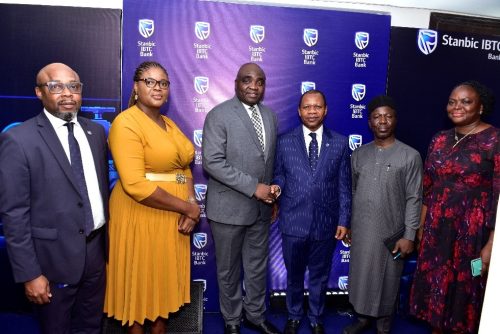
Stanbic IBTC Pension Managers, a leading pension fund administrator in Nigeria, is proud to announce that it has been awarded the prestigious title of ‘Most Financially Inclusive Pension Company of the Year’ at the recently held International Financial Inclusion Conference (IFIC’24).

This significant recognition was presented during an event organised by the Central Bank of Nigeria (CBN) and attended by key stakeholders in the financial sector, including regulatory authorities, financial institutions and development organisations.

This is coming at a time when financial inclusion has become a critical focus in Nigeria; seeing that a significant portion of the population remains unbanked or underbanked. With the country’s diverse economic landscape and varying levels of access to financial services, initiatives aimed at bridging these gaps are essential. The International Financial Inclusion Conference serves as an impactful platform for sharing best practices, innovative strategies and collaborative ideas aimed at enhancing financial accessibility. This year’s conference emphasised the importance of tailored financial products and services that cater to different demographics, particularly the economically disadvantaged.

This accolade marks a significant milestone for Stanbic IBTC Pension Managers, as it continues to advocate for financial education and empowerment; striving to create a secure future for individuals through effective pension management. The recognition not only reflects the company’s efforts but also serves as motivation to pursue further advancements in financial inclusivity in Nigeria, contributing to the overall economic growth and stability of the nation.

While receiving the award, Olumide Oyetan, Stanbic IBTC Pension Manager’s Chief Executive, said, “IFIC’24 serves as a vital platform for financial sector stakeholders to collaborate and discuss strategies for enhancing financial inclusion, and we are proud to be recognised among key industry players. The conference highlighted the critical role of innovative solutions in achieving financial inclusion goals, aligning perfectly with Stanbic IBTC Pension Manager’s vision for accessible and equitable pension services.

We believe that financial inclusion is not merely a goal; it is a fundamental right that empowers individuals, enhances economic stability, and fosters sustainable growth in communities. Our commitment to providing accessible and innovative pension solutions has always been at the forefront of our operations. This award is not just an acknowledgement of our efforts but a validation of our continuous endeavours to make pension services available to every Nigerian, irrespective of their socioeconomic status.”

Olumide elaborated further that several initiatives aimed at expanding access to pension services have been rolled out as part of Stanbic IBTC Pension Manager’s strategy. These include mobile applications that simplify the pension enrollment process, workshops that promote financial literacy and tailored pension products designed for informal sector workers and low-income earners. In collaboration with various community organisations and Non-Governmental Organisations (NGOs), the organisation is also actively engaging underserved populations to raise awareness about the importance of retirement planning.

“By prioritising accessibility, we are breaking down barriers and ensuring that more individuals can secure their future through reliable pensions. This recognition motivates us to continue innovating and expanding our outreach, Olumide concluded”.

Stanbic IBTC Pension Managers will continue to champion inclusive policies, innovate financial solutions and work together with regulatory bodies to ensure that pension scheme benefits reach every part of the country. In its pursuit of excellence, the organisation aims to raise the standards of pension management in Nigeria while guaranteeing that every Nigerian can enjoy a secure retirement.