Friday, March 27, 2026
27.7 C
Lagos
Home Blog Page 30

Access Holdings: Innocent Ike Comes on Board as Group MD/CEO

0

Access Holdings has announced the appointment of Mr. Innocent Ike as the substantive Group Managing Director/Chief Executive Officer of the Company, effective August 29, 2025, following the receipt of regulatory approval.

Mr. Ike will succeed Ms. Bolaji Agbede, who has served as the Company’s Acting Group Managing Director/Chief Executive Officer for the past 18 months and has played a vital role in driving the Company’s performance. Due to regulatory stipulations on the required years of experience for a Financial Holding Company’s Managing Director, Ms. Agbede will revert to her substantive role as the Company’s Executive Director, Business Support.

During Ms. Agbede’s tenure, Access Holdco achieved significant milestones, including ensuring workforce stability and seamless transition following the demise of the former Group Chief Executive Officer; successful execution of the Company’s N351 Billion Rights Issue and seamless hosting of two Annual General Meetings of the Company. Her leadership and strategic vision have not only maintained the Company’s momentum but also strengthened its competitive position in the industry.

Commenting on the development, the Company’s Chairman, Mr. Aigboje Aig-Imoukhuede, said:

“We are thrilled to welcome Mr. Innocent Ike as we move forward. At the same time, we want to express our deepest gratitude to Ms. Bolaji Agbede. Her outstanding contributions over the past 18 months have been invaluable, and we appreciate her dedication in navigating the Company through challenges and opportunities. While regulatory requirements necessitate this change, we are grateful for the strong foundation that has been laid.”

Mr. Ike graduated from the University of Lagos with a BSc (Hons) in Accounting in 1988, receiving recognition as the Best Graduating Student. He is a Fellow of the Chartered Institute of Bankers of Nigeria (CIBN), a Fellow of the Institute of Chartered Accountants of Nigeria (ICAN), and a Certified IFRS expert.

He has over three decades experience in banking and financial services, ten years of which were spent at Access Bank, where he rose to General Manager, overseeing portfolios in corporate, commercial, and public sectors.

He served as the Managing Director/Chief Executive Officer of Polaris Bank from 2020 to 2022, during which he launched VULTe, the bank’s digital banking platform, earning several industry awards including the BusinessDay BAFI Digital Bank of the Year Award and the Nigerian Fintech Digital Bank of the Year Award in 2021 and 2022, respectively.

Speaking on the appointment, Mr. Ike said:

“I am honoured to take on the role of Group Managing Director /Chief Executive Officer and excited to work alongside the talented team at Access Holdings. I look forward to building on the strong legacy established by Herbert Wigwe and Bolaji Agbede, and driving our vision forward, ensuring we continue to deliver exceptional value to our shareholders and stakeholders.”

Access Holdings remains committed to becoming the World’s Most Respected African Financial Services Group, and with Innocent Ike at the helm, the Company is well-positioned for sustained success and growth.
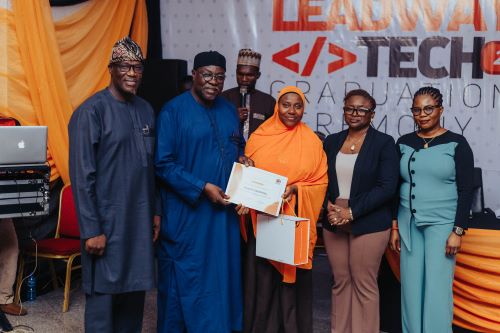
Leadway Group Graduates Young Developers to Boost Nigeria’s Tech Talent Pool

0

Leadway Group, Nigeria’s leading non-banking financial services group, has announced the successful graduation of 33 young developers from its tech programme, an intensive 13-month training designed to build next-generation experts in Frontend, Backend Programming, and Data Analytics.

Fully sponsored by Leadway, reflects its long-standing commitment to youth empowerment and its strategic investment in nurturing Nigeria’s future technology leaders.

The graduation ceremony, held on Tuesday, August 19, 2025, in Kaduna, marked a significant milestone for the participants, who received world-class training, mentorship, and hands-on industry experience, equipping them with the skills to thrive in Nigeria’s rapidly growing technology ecosystem.

Speaking on the significance of the initiative, Kunbi Adeoti, Chief People Experience Officer, Leadway Group, noted: “At Leadway, we believe that empowering young people with the right skills is one of the most powerful investments we can make in Nigeria’s future. The programme goes beyond training developers; it is about nurturing problem-solvers who will create solutions for businesses, communities, and the wider economy. We are proud to have supported this cohort of young professionals and remain committed to creating more opportunities for youth empowerment across the country.”

Also speaking on this, Celestina Okere, Head, Learning and Development, Leadway Group highlighted the role of training in bridging Nigeria’s digital gap. “Technology is redefining every industry, and our ability to stay competitive depends on how well we adapt. This initiative is a strategic investment in talent and innovation, equipping participants with in-demand technical skills and hands-on experience. We are keen on narrowing the digital skills gap, fostering a new generation of tech-driven innovators who will shape the future of our business and the economy.”

The successful execution of this program reinforces the Group’s reputation as a partner in nation-building, while demonstrating its commitment to building a workforce that is future-ready, resilient, and capable of leveraging technology for inclusive growth.


About Leadway Group

Leadway Group is a leading non-banking financial services group in Nigeria, boasting a robust insurance, investment, and financial services foundation.

With decades of industry experience, Leadway Group has consistently played a pivotal role in shaping the financial landscape of Nigeria.

The organisation strongly emphasises corporate social responsibility and community welfare, embodying a commitment to wealth creation, youth empowerment, and national development.

Guinea Insurance Holds 67th AGM as Shareholders Approve Recapitalisation Plan

0

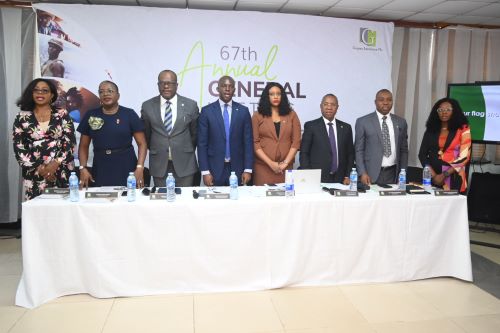
L-R:  Bernice Okosun – Non-Executive Director, Ijeoma Okoro – Non-Executive Director, Ademola Abidogun – Managing Director / CEO, Temitope Borishade – Chairman, Board of Directors, Chinenye Nwankwo – Company Secretary, Samuel Onukwue – Non-Executive Director, Pius Edobor – Executive Director, Ogonna Offor-Orabueze – Executive Director.

Guinea Insurance Plc has held its Sixty-Seventh (67th) Annual General Meeting virtually, where shareholders reviewed the company’s performance over the past year and set a clear path for its next phase of growth and transformation.

During the meeting, Mr. Temitope Borishade presided over deliberations on a range of ordinary and special business matters. As part of the ordinary business, shareholders ratified his appointment as Chairman of the Board.

They also confirmed the appointments of Mrs. Bernice Izilen Okosun, Mrs. Ijeoma Pearl Okoro, and Dr. Nkemakonam Chukwukaondinaka Okeke as Directors. Furthermore, in line with corporate governance best practices, Mr. Samuel Onukwue was re-elected to the Board following his retirement by rotation.

Under special business, shareholders granted approval for the company to raise additional capital when necessary in line with the Nigerian Insurance Industry Reform Act 2025 (NIIRA 2025). This forward-thinking resolution is designed to give the company the flexibility to strengthen its capital base, comply with upcoming regulatory benchmarks, and strategically position itself to compete more effectively and take on larger, more complex businesses as the insurance industry continues to evolve.

Despite a challenging operating environment in 2024, Guinea Insurance delivered an exceptional financial performance compared to 2023. Gross Premium Written grew by 35.6%, rising from ₦2.17 billion in 2023 to ₦2.94 billion in 2024, driven by growth across key business lines and improved product penetration. Insurance Revenue rose by 36.6%, increasing from ₦2.08 billion in 2023 to ₦2.84 billion in 2024, reflecting the company’s focus on innovative, customer-centric solutions and enhanced service delivery.

Prudent investment strategies and effective financial management generated remarkable results, with Investment and Other Income climbing 76.4%, from ₦765.20 million in 2023 to ₦1.35 billion in 2024. Profit Before Tax rose sharply by 81%, moving from ₦499.21 million in 2023 to ₦904.41 million in 2024, while Profit After Tax increased by 96%, from ₦477.55 million to ₦936.55 million, underscoring operational efficiency and disciplined cost control. Shareholders’ Funds also saw substantial growth of 49.3%, rising from ₦3.49 billion in 2023 to ₦5.22 billion in 2024, establishing a stronger financial foundation for future expansion and stability.

Speaking on the events of the AGM, the Board Chairman, Mr. Temitope Borishade, stated: “Our 2024 results reflect not only the resilience of our business model but also the collective commitment of our stakeholders and workforce. With shareholders now granting approval to raise capital in line with NIIRA 2025, the company is prepared to implement its carefully crafted recapitalisation plan. This will enhance our ability to compete, scale operations, and seize opportunities to grow bigger and deliver greater value to all stakeholders.”

The Board and Management reaffirmed their commitment to sustainable value creation, innovation, and operational excellence, pledging to further deepen customer trust and strengthen Guinea Insurance’s position as a leader in the Nigerian non-life insurance sector.

Ecobank Nigeria @ 40: Group Unveils N60m in Cash Rewards Program for Customers

0

Ecobank Nigeria, a subsidiary of the leading pan-African banking group has announced the launch of its Super Rewards campaign in celebration of the Group’s 40th anniversary.

As part of the campaign, more than ₦60 million in cash rewards has been earmarked for loyal customers. The campaign will run from September 2025 through January 2026.

Over the five-month period, a total of 914 customers will be rewarded with various cash prizes amounting to ₦61.2 million, in addition to enjoying a range of benefits that comes with banking with Ecobank.

Announcing the launch in Lagos, Victor Yalokwu, Head of Products & Analytics, Consumer & Commercial Banking at Ecobank Nigeria, explained that the campaign is designed both to commemorate the Group’s four decades of service in Africa and to reward customer loyalty.

According to Yalokwu “this year’s campaign is a special celebration of Ecobank Group’s 40 years of operations across Africa and show appreciation to our customers by rewarding their loyalty even as we deliver first-class banking services to them. The campaign is open to new and existing individuals, businesses (including SMEs and schools), and youth (students) customers nationwide, including those who reactivate dormant accounts and meet specified deposit and transaction requirements. Monthly draws will be held, ending with a grand finale draw in January, 2026.”

Customers stand a chance to be rewarded with monthly cash prizes, stipends, education scholarships, business funding, and other lifestyle-enhancing rewards. The breakdown of the rewards includes:

Individual accounts: 420 customers from the monthly draws will get ₦16.8 million, with 8 customers getting the grand prize of ₦8 million in January.

Business accounts: 420 customers from the monthly draws will get ₦16.8 million, with 4 customers getting the grand prize of ₦16 million to support their businesses.

Student accounts: 50 customers will be rewarded during the monthly draws, each receiving ₦40,000 (totalling ₦2 million), with 4 youth customers taking the grand reward, receiving education grant of ₦400,000 each (totalling ₦1.6 million).

Yalokwu emphasised the simplicity of the qualification process to encourage broad participation. New individual customers must open an account with a minimum of ₦10,000 and maintain it for 30 days to qualify for monthly draws. For the grand prize, customers must maintain a minimum deposit of ₦40,000 for 3 consecutive months.

Business customers need to open accounts with at least ₦40,000 and maintain the balance similarly, with grand prize qualifications requiring deposit growth of at least ₦400,000.

All participants must transact through Ecobank’s digital channels—including the Ecobank Mobile app, USSD (*326#), Ecobank Business app, OMNIPLUS, internet banking, or debit card. Monthly draw eligibility requires a minimum of four transactions, while grand prize qualification requires twelve transactions. Each deposit increment of ₦10,000 (individual) or ₦40,000 (business) increases chances to earn rewards.

Prospective customers can open accounts via the Ecobank Mobile app, while customers with dormant accounts can reactivate by visiting www.ecobank.com/ng/personal-banking.

“We encourage everyone to join and experience the benefits of banking with Ecobank, while getting rewarded for their loyalty,” Yalokwu concluded.

GOCOP 2025: Conference on Governance Challenges, Prospects Set for October 9

0

The Guild of Corporate Online Publishers (GOCOP) has announced that its 2025 annual conference will be held at 10:00 a.m. on Thursday, October 9, 2025 at Radisson Blu Hotel, Ikeja, Lagos.
The conference, which is the ninth edition, is themed: Reconciling Campaign Promises with Governance Realities: Challenges and Prospects.
A press statement by the Publicity Secretary, Ogbuefi Remmy Nweke, quoted the conference planning committee chairman, Danlami Nmodu as saying that the event was aimed at generating actionable strategies for bridging the gap between electoral promises and effective governance in Nigeria and Africa.
Nmodu who doubles as the Deputy President of GOCOP also revealed that the conference will feature a distinguished keynote speaker and panel discussions.
Nweke recalled that past GOCOP conferences had hosted prominent speakers including Bishop Matthew Hassan Kukah, the Bishop of the Catholic Diocese of Sokoto who delivered the 2019 lecture on “Economy, Security and National Development: The Way Forward”.
In 2021, Mr. Boss Mustapha, then Secretary to the Government of the Federation, keynoted the Conference in his capacity as Chairman of the Presidential Task Force on Covid-19. He spoke on: “Post Covid-19 Pandemic: Recovery and Reconstruction in Nigeria”.
In 2022, Professor Mahmood Yakubu, Chairman, Independent National Electoral Commission (INEC), delivered the keynote titled “2023 Elections: Managing the Process for Credible Outcome.”
The 2023 edition which held in Abuja had the theme, Nigeria: Roadmap for Socio-Economic Recovery and Sustainability, was keynoted by Professor Uche Uwaleke, a Professor of Capital Market.
GOCOP, a professional body comprising 119 member organisations, was founded to uphold the tenets of journalism in the digital age. Its members are seasoned editors and senior journalists who have transitioned from traditional media to online publishing.
The statement noted that “the conference offers unique sponsorship opportunities for brand visibility, media recognition, and networking with high-level journalists, editors, and policy influencers.
Through a partnership with GOCOP, organisations demonstrate their commitment and promotion to ethical journalism and responsible media, the statement said.

NCC Advances Cybersecurity Framework to Safeguard Nigeria’s Telecom Infrastructure

0

L-R: President, International Youth Parliament, Hon. Promise Digos; Chief Executive Officer, Megamore Wireless Limited, Amin Dayekh; Executive Commissioner, Technical Services, Nigerian Communications Commission (NCC), Abraham Oshadami; Head, Cybersecurity and Internet Governance Department, NCC, Babagana Digima; Chief Executive Officer, Cybernover, Dr. Kazeem Durodoye at the 2nd Cyber Security Stakeholder Workshop Hosted by the Nigerian Communications Commission in Abuja.

The Nigerian Communications Commission (NCC) is firming up a cybersecurity framework for securing digital infrastructure and enhancing online safety for consumers in the Nigerian communications industry.

The framework, with likely implementation timeline by telecom licensees set for 2026, will address security challenges arising from the emerging technologies towards creating a more secure digital economy in Nigeria.

During the second phase of the cybersecurity framework development meeting with relevant stakeholders, hosted by the Commission in Abuja on Wednesday, following the initial meeting held earlier in the year, NCC’s Executive Commissioner, Technical Services (ECTS), Abraham Oshadami, stressed the need for a water-tight approach to addressing the sophistication of cyber threats in the industry.

Oshadami said given the increasing digitalisation of services, the rapid growth of data exchange, and the sophisticated nature of modern cyber threats, the need for a robust, adaptive, and inclusive cybersecurity framework has never been more urgent.

According to him, as emerging technologies reshape the landscape, cybersecurity now extends beyond the traditional triad of confidentiality, integrity, and availability (CIA), adding that intensifying geopolitical tensions and increasingly sophisticated threats are heightening risks to critical infrastructure irrespective of whether they are built on interconnected devices or legacy systems.

“Both state and non-state actors are targeting essential sectors—including ours – through coordinated cyber and physical attacks. These attacks frequently target control systems and data integrity, underscoring the critical risks posed to operational technology (OT)—especially in our sector.

“As cyberthreats evolve, they endanger not only system performance but also human safety, amplifying the severity and consequences of disruptions to vital communications infrastructure. Cybersecurity now encompasses human safety and must address the real risk to people’s lives when a system is attacked or compromised,” he said.

While emphasising the need to develop the framework, Oshadami said as telecommunications industry continues to serve as the backbone of Nigeria’s digital economy, its critical role in national development, economic transformation, and societal interaction makes it a strategic asset and unfortunately, a prime target for cyber threats.

Oshadami further explained that the second stakeholders meeting on the cybersecurity framework was to present the progress made since the initial meeting, including the refined framework based on stakeholder input; and to further validate key components, design principles, and implementation strategies of the proposed framework, among others.

The ECTS stated that as the national regulator, the NCC remains committed to an inclusive and consultative process, recognising that sustainable cybersecurity outcomes can only be achieved through shared responsibility and strong public-private partnerships.

“With your continued expertise, insight, and collaboration, we are confident that we can co-create a framework that not only secures our digital infrastructure but also fosters innovation, competitiveness, and long-term industry growth,” he said.

The presentation of the proposed framework by the Chief Executive Officer of CyberNover, the consultants to the Commission on the project, Dr. Kazeem Durodoye, further provided details of the framework to stakeholders at the invents, cutting across representatives of telecom licensees and government agencies in the digital economy ecosystem.

Meanwhile, the NCC’s Head of Cybersecurity and Internet Governance, Babagana Digima, while stating that the project is supported by the World Bank, commended all stakeholders for their input, saying while it was expected that the proposed framework will be finalised by end of third quarter of 2025, its implementation is expected to take off in early 2026.

The forum provided a platform to consolidate a shared understanding of the strategic relevance of the proposed cybersecurity framework in enhancing national cybersecurity preparedness and sector resilience; and review and refine the preliminary inputs gathered during the first engagement, incorporating technical perspectives and sector-specific concerns, among others.


Northwest: The Lion’s Share of Tinubu’s Projects

0

By Tanimu Yakubu

Director-General

Budget Office of the Federation

The Lagos Illusion

The viral chart bundles together national infrastructure—federal highways, coastal transport corridors, and legacy roads—and labels them “Lagos-only projects.” By that logic, the Kano–Maiduguri expressway could be called a “Maiduguri-only project.” It is a sleight of hand that ignores the truth: these are national arteries, not local trophies.

When disaggregated, Lagos’ actual exclusive projects—airport fencing, Carter Bridge works, localized upgrades—stand at about ₦1.2 trillion.

The much-touted ₦2.7 trillion are federal highways and transport links that pass through Lagos but serve the entire federation.

In short, Lagos is not swallowing the budget; Nigeria is being stitched together through infrastructure.

The Northwest Reality

The real numbers paint a starkly different picture:

  • North West: ₦97 trillion (over 40% of all approvals)
  • South South: ₦41 trillion
  • North Central: ₦13 trillion
  • South East: ₦407 billion
  • North East: ₦400 billion
  • South West (excluding Lagos): ₦604 billion

In other words, the Northwest—not Lagos—holds the lion’s share. It is the President’s single largest beneficiary.

Correcting Propaganda

The viral infographic by Daily Trust exaggerates Lagos’ share while downplaying the North’s gains.

Tinubu’s Northwest Compact

Let us speak plainly: without the Northwest, there would be no Tinubu presidency. The President knows this. He has not forgotten, nor has he been ungrateful.

Consider the Kaduna Power Plant (255MW). Conceived under the late President Umaru Musa Yar’Adua, it languished in abandonment for years.

Today, under President Tinubu, it is being revived and put back on track. This is not just a power project—it is a symbol of continuity, respect, and reward for the North.

Add to that the Kaduna–Kano expressway, the Kano–Maiduguri highway, the Sokoto–Illela corridor, and massive investments in education and security infrastructure. These are not footnotes. They are the backbone of a deliberate Northwest-first investment strategy.

This is not neglect; it is recognition. It is gratitude made concrete, kilometre by kilometre, megawatt by megawatt.

Propaganda vs. Progress

The danger of the viral infographic is not just statistical error—it is deliberate incitement. It pits Lagos against Kano, Southwest against Northwest, as though one region’s progress must mean another’s exclusion. That is not budgeting. That is blackmail.

But Nigerians are wiser. The records show: Lagos is Nigeria’s commercial hub, rightly upgraded.

The Northwest is Nigeria’s electoral fortress, richly rewarded.

Every region receives its share, because Tinubu budgets for one economy, one country, one people.

Conclusion: Records, Not Rumors

History will not remember the viral graphics. It will remember the farmers in Katsina whose produce reaches markets in Lagos, the power that lights up Kaduna through Yar’Adua’s plant, revived by Tinubu, and the schools and hospitals springing up across Sokoto and Zamfara.

President Bola Ahmed Tinubu has not marginalized the North. He has trusted it, invested in it, and rewarded it.

That is the record. That is the fact. That is the truth.

And no infographic, however colorful, can bury it.


From Devaluation to Domination: How Tinubu’s Exchange Rate Reforms Turned the Naira into Nigeria’s Export Engine

0

By Tanimu Yakubu

When President Bola Ahmed Tinubu’s administration dismantled Nigeria’s rigid foreign exchange regime in 2024, critics were quick to call it a currency collapse. The naira plunged to ₦1,800 per dollar in March 2024, and headlines screamed of economic freefall. But beneath the noise, a deliberate, high-risk economic recalibration was underway—one that has now begun to pay off in spectacular fashion.

By August 2025, the naira had clawed its way back to ₦1,525/$1, marking a 15.28% strengthening in just five months—an annualised pace of nearly 48.9%. This wasn’t luck; it was policy. Increased oil receipts, swelling diaspora remittances, and the clearing of over $4 billion in foreign exchange backlogs restored investor trust. The unification of Nigeria’s FX windows created a single, transparent market rate—finally letting the currency find its realistic value.

Why does this matter? Because a realistic exchange rate does more than please economists—it changes the very arithmetic of trade. Nigerian goods, once overpriced in dollars due to an artificially strong naira, suddenly became bargains on global markets. A bag of sesame seeds, cocoa beans, or even processed chocolate instantly cost less in New York, Mumbai, or São Paulo, without the Nigerian farmer or factory owner earning less in naira terms.

The result was swift and striking. Non-oil exports jumped from $2.696 billion in H1 2024 to $3.225 billion in H1 2025—a 19.62% year-on-year growth. And this wasn’t just a “price illusion.” Export volumes rose from 3.83 million to 4.04 million metric tonnes, proof that foreign buyers weren’t just paying more for the same goods—they were buying more goods, period.

A perfect “sweet spot” had emerged:

  • For buyers abroad, Nigerian goods were cheaper than competitors’.
  • For exporters at home, the naira value of earnings soared, enabling reinvestment into value-added processing—turning raw cocoa into chocolate bars, raw sesame into bottled oil.
  • For the economy, the export surge pumped foreign exchange back into the system, strengthening the naira without eroding its competitiveness.

The feedback loop is textbook economics:

  1. FX Reform → Realistic Naira
  2. Cheaper USD Prices → Export Boom
  3. Export Boom → FX Inflows
  4. FX Inflows → Naira Stability
  5. Naira Stability → Investor Confidence & Long-Term Growth

What’s remarkable is that this cycle feeds itself. As Nigerian goods win more market share globally, the inflow of export dollars reinforces naira stability. That stability lowers risk for investors, inviting portfolio and capital inflows that further bolster reserves.

The critics who cried “worthless naira” missed the bigger picture: a floating currency is not a sign of weakness—it is a tool for national competitiveness. By refusing to prop up the naira with scarce reserves and instead letting market forces work, the Tinubu administration has set the stage for a sustainable, export-driven growth path.

If Nigeria stays the course, the naira’s recovery won’t just be about exchange rates—it will be the story of an economy finally learning how to turn its currency into a competitive weapon on the world stage.

Yakubu is the Director-General of Budget Office of the Federation

Stanbic IBTC Bank PMI: New Order Growth Hits 19-month High

0

Growth in the Nigerian private sector continued to gain momentum during August as customer demand improved and inflationary pressures softened. Sharper increases in output and new orders were recorded, although rates of expansion in purchasing activity and employment eased.

Meanwhile, business confidence softened but firms remained optimistic that output will increase over the coming year. The headline figure derived from the survey is the Stanbic IBTC Purchasing Managers’ Index (PMI).

Muyiwa Oni, Head of Equity Research West Africa at Stanbic IBTC Bank commented: “Business activity increased further in August and has remained above 50 points for the ninth consecutive month. The increase in business activity was driven by sharper increases in output and new orders.

Notably, output (56.8 points vs July: 56.1 points) increased in line with customers’ willingness to commit to new projects, while the growth in new orders (58.3 points vs July: 57.3 points) quickened to a 19-month high amid reports of increasing customer demand. Given these higher new orders, firms expanded their staffing levels for the third consecutive month.

The opening of new branches and marketing plans are also supporting firms’ optimism that output will increase over the coming year. Elsewhere, input cost eased to its lowest level since March 2023 even as the latest increase is still above the series average.

In line with this, the rate of increase in output prices moderated for the fourth consecutive month in August and the slowest since April 2020. The continued moderation of input and output prices still suggests that inflation is likely to remain soft in the near term, and may incentivize the MPC of the CBN to switch to an accommodative monetary policy by September from the current neutral stance.

Indeed, we estimate headline inflation to moderate further in August to 21.45% y/y – 21.63% y/y, and possibly settle at 17.19% y/y – 17.92% y/y by November.

Accordingly, we still expect up to 150 bps cumulative rate cut in 2025. Nigeria’s rebased economy shows real GDP increasing by 3.13% y/y in Q1:25 – slower than the 3.76% y/y revised growth in Q4:24 – and also the lowest since Q1:24 when the economy grew by 2.27% y/y.

At 78.6%, relative to 70.0% in Q4:24, services contributed the most to GDP growth in Q1:25, but agriculture shrank to 0.5% in Q1:25, from 19.7% in Q4:24. Industries in Q1:25 contributed an impressive 20.9%, from 10.4% in Q4:24, in line with our long-held view that industries should start contributing more to real GDP growth from 2025 amid the structural shift introduced into the sector by the operations of Dangote Refinery. Overall, the Nigerian economy is still on track to grow by 3.5% y/y in 2025 from 3.4% y/y growth seen in 2024 supported by softer inflation, improvement in FX liquidity conditions, and structural reforms.”

Readings above 50.0 signal an improvement in business conditions on the previous month, while readings below 50.0 show a deterioration.

At 54.2 in August, the headline PMI was above the 50.0 no-change mark for the ninth month running, signalling a sustained improvement in the health of the Nigerian private sector. Moreover, the latest reading was up from 54.0 in July, pointing to a solid strengthening of business conditions and one that was the most pronounced since April.

The rise in the headline index primarily reflected sharper expansions in output and new orders, with rates of growth hitting four- and 19-month highs respectively. Panelists reported stronger customer demand and a greater willingness among clients to commit to new projects. Output increased across three of the four broad sectors covered by the survey, the exception being manufacturing.

While firms continued to expand staffing levels in response to higher new orders, the rate of job creation was only slight and softer than that seen in July. Companies were nonetheless able to deplete outstanding business for the first time in five months.

A slower increase in purchasing activity was also registered in August. Nonetheless, input buying rose markedly in response to improving customer demand, with positive expectations for the future also encouraging firms to accumulate inventories.

Expectations for output growth over the coming year reflected predictions of higher new orders, the opening of new branches and advertising activity. Sentiment eased for the second month running, however, and was relatively muted. Inflationary pressures waned midway through the third quarter. The pace of increase in purchase prices slowed for the fourth consecutive month and was the weakest since March 2020. Meanwhile, the pace of staff cost inflation eased to a three-month low. Where wages increased, panelists linked this to incentives for faster project delivery and cost-of-living payments.

In line with the picture for input costs, the pace of output price inflation also eased in August, slowing for the fourth month running to the weakest in almost five-and-a-half years. The latest rise was also softer than the series average, despite remaining marked as companies passed higher costs through to their customers.

Union Bank of Nigeria Completes Merger with Titan Trust Bank

0

Union Bank of Nigeria, one of the nation’s longest-standing financial institutions, today announced the successful completion of its merger with Titan Trust Bank Limited, following final approval from the Central Bank of Nigeria (CBN).

This milestone concludes a process that began with the signing of a Share Sale Agreement in 2021 and positions Union Bank as an even stronger force within Nigeria’s financial services sector. Under the terms of the merger, Union Bank has fully absorbed Titan Trust Bank’s operations and assets.

The combined institution will continue to operate under the Union Bank brand, while Titan Trust Bank ceases to exist as a separate entity.

With an expanded footprint of over 293 service centres and 937 ATMs nationwide, supported by strengthened digital channels, Union Bank is poised to deliver enhanced value across retail, SME, and corporate segments. The merger combines Union Bank’s trusted heritage with Titan Trust’s agility and innovation, creating a platform for sustainable growth and broader financial inclusion.

Union Bank’s Managing Director and Chief Executive Officer, Mrs. Yetunde Oni, described the development as “a pivotal moment in our 108-year journey, and a launchpad for delivering greater value to our customers. By blending stability with innovation, we are better positioned to meet the evolving needs of Nigerians and to be their most trusted financial partner.”

Also speaking on the transaction, Chairman of the Board of Directors, Mr. Bayo Adeleke, said: “This is a new era of growth, collaboration, and shared prosperity. By bringing together the strengths of both institutions, we are committed to creating lasting value for our customers, shareholders, and communities while advancing Nigeria’s financial inclusion agenda.”

The Bank has assured customers that there will be no disruption to existing services. Account details remain unchanged, and customers will continue to access a full suite of products and services seamlessly, with an accelerated push towards enhanced digital solutions.

This strategic consolidation strengthens Union Bank’s market position, unlocks operational synergies, and underscores its ambition to deliver a modern, robust, and inclusive banking experience for all.


Stakeholders Seek Collaboration by Regulators, Operators to Advance Fintech, Financial Inclusion in Nigeria

0

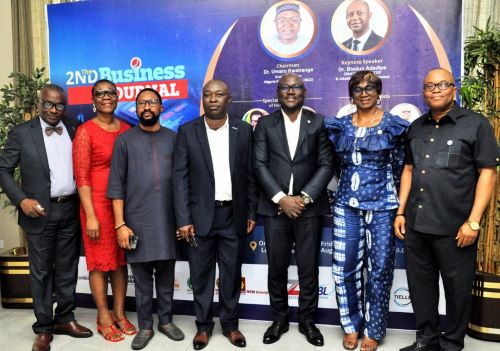
L-R: Dr. Olayinka Olutola, Director General/CEO, Association of Enterprise Risk Management Professionals; Maureen Chigbo, President, Guild of Corporate Online Publishers; Mr. Paul Ehiagbonare, Chief Digital Officer,  Accion Microfinance Bank Ltd; Prince Cookey, Publisher/Editor-in-Chief, Business Journal; Mr. Afeez Ramoni, Head, of Data and Innovation and representative of Chairman, NGX Group; Mrs. Bukola Ifemade, former Chairperson, Lagos Area Committee of the Nigerian Council of Registered Insurance Brokers and Dr. Jeff Duru, Managing Director/CEO, Universal Insurance Plc during the 2nd Business Journal Fintech & Financial Inclusion Roundtable ’25, on the theme, ‘Fintech & Financial Inclusion: The Opportunities & Challenges for Nigeria’ held in Lagos on Friday.

Stakeholders at the 2nd Business Journal Fintech & Financial Roundtable 2025 have called for collaboration by regulators and operators to advance sustainable growth of fintech ecosystem and financial inclusion in the country.

Dr. Umaru Kwairanga, Group Chairman, Nigerian Exchange Group (NGX) in his remarks as Chairman of the event, said Nigeria has emerged as one of Africa’s most vibrant fintech ecosystems in the last decade.

“We have witnessed the rise of mobile payments, digital lending platforms and wealth management applications that have transformed how Nigerians access and interact with financial services. At the Nigerian Exchange Group, we have recognised this trend not as a disruption to be resisted, but as an opportunity to be embraced. Our mission has always been to democratise access to investment opportunities and to deepen participation in the capital market. To achieve this, we have consistently opened our doors to fintech innovation.”

On the role of NGX in driving financial inclusion, Kwairanga stated:

“From deploying API-driven market data solutions that allow fintech companies to seamlessly integrate trading information into their platforms, to creating regulatory sandboxes that encourage innovation, and supporting digital trading applications that provide retail investors with direct market access, we have worked deliberately to ensure that fintech inclusion in the capital market is not just an aspiration but a tangible reality.”

During the panel session, the stakeholders agreed that harmonisation of relevant policies by such regulatory agencies as the Central Bank of Nigeria (CBN), Securities & Exchange Commission (SEC), National Identity Management Commission (NIMC), National Insurance Commission (NAICOM) and the Nigerian Deposit Insurance Corporation (NDIC) will ensure public confidence and mitigate various operational risks in the fintech space.

Dr. Olayinka Odutola, Director-General/CEO, Association of Enterprise Risk Management Professionals (AERMP) commended the rising level of fintech and financial inclusion practice in the country, insisting however that the greed factor remains a potent danger in the market.

“Fintech and financial inclusion have started very well in Nigeria but we must consider the greed factor in terms of risks and cyber breaches. People can hack into systems and engage in identity fraud. People-risk is a major risk. Prevention is still better in terms of players and institutions to contain digital fraud.”

Odutola bemoaned the regulatory fragmentation in the system and called for harmonisation of policies and information sharing by the CBN, SEC, NDIC, NAICOM and NIMC to protect both operators and institutions in the system. He lamented that data privacy and ethical hacking are still under-rated.

Dr. Jeff Duru, the Managing Director/CEO of Universal Insurance Plc stated that both fintech and insurtech provides great opportunities for the insurance market in terms of financial inclusion.

“There is little level of financial inclusion in the hinterlands but fintech and insurtech will close the gap in the area of insurance penetration. Insurance companies alone cannot handle financial inclusion. There must be collaboration to ensure reality and no longer a talking point.”

Duru added that both fintech and insurtech are tools to grow the business of insurance in Nigeria in terms of speed, which is a critical issue for operators because it builds trust.

Mrs. Bukola Ifemade, the former chairperson, Lagos Area Committee of the Nigerian Council of Registered Insurance Brokers (NCRIB), said the Council is passionate about insurance penetration through fintech and financial inclusion.

“We believe in collaboration. We are making efforts on insurance penetration through the deployment of fintech and financial inclusion.”

In her submission, Ms. Maureen Chigbo, President of the Guild of Corporate Online Publishers (GOCOP) raised the issue of credible communication in the expanding space of fintech and financial inclusion in the country.

“Communication is key in advancing financial inclusion and fintech operations in Nigeria. We need to combat the rising level of misinformation and disinformation in order to deal with the issue of trust in the system.”

Chigbo added that the emerging online publishing community stands ready to combat such communication threats and become a veritable tool for businesses to market their products and services for sustainable growth of the Nigerian economy.

“Fintech can also support human capital development through training, re-training and financial literacy programs in schools and communities.”

Inspenonline Unveils Think-tank on NIIRA, Insurance Sector Recapitalisation

0

As the insurance sector witnesses a new dawn with the enactment of the Nigerian Insurance Industry Reform Act (NIIRA) 2025, Inspenonline has unveiled a Think-tank platform to help harness the knowledge required to maximize opportunities provided in the Act.

The Publisher/Editor of Inspenonline, Chuks Udo Okonta, said the research-based initiative tagged: Insurance Industry’s Think-tank on NIIRA and Recapitalisation would help provide robust data required to accelerate the growth of the industry, adding that the data would be obtained from Chief Executive Officers of insurance companies, shareholders and policyholders.

He noted that the contributions from these stakeholders would be published on a designated page – Think-tank, adding that the contributions would be published every day, whilst a communique would be developed from the views raised by contributors and be circulated.

He submitted that the individuals would be given an opportunity to share their contributions through an interview or a questionnaire, stating that harnessed reports would be published both on print and visual channels.

He implored stakeholders to support the initiative, which was conceived to help bolster exchange of knowledge and build a robust knowledge bank for the industry.

He also maintained that the insurance industry needs research-based initiatives to enable it soar to lofty heights, stressing that no sector can grow effectively without in-depth research.

SanlamAllianz, Cornerstone, emPLE, Enterprise Life, Leadway, Lasaco Throw Weight Behind IMT 4.0

0

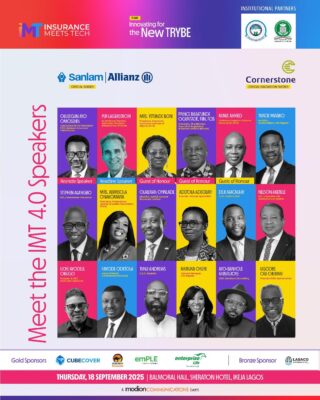
The fourth edition of Insurance Meets Tech (IMT 4.0) has garnered strong support from industry leaders, further solidifying the event’s position as the premier platform for exploring the intersection of insurance, technology, and culture.

Leadway Assurance, Enterprise Life, Cube Cover, and emPLE have signed on as Gold Sponsors, while SanlamAllianz serves as the Official Insurer. Cornerstone Insurance joins as the Innovation Partner and Lasaco Assurance lends its backing as a Bronze Category Sponsor.

Complementing these are the Nigerian Council of Registered Insurance Brokers (NCRIB) and the Chartered Insurance Institute of Nigeria (CIIN), both of which have been confirmed as Institutional Partners.

Speaking on the significance of this support, Odion Aleobua, Convener of IMT Conferences, said: “The calibre of sponsors and partners for IMT 4.0 reflects the industry’s collective commitment to shaping a future where innovation, digital adoption, and lifestyle relevance are at the heart of insurance. With this level of backing, IMT 4.0 is set to deliver its boldest impact yet.”

Themed “Innovating for the New Trybe”, IMT 4.0 will highlight the opportunities for technology-driven insurance models that resonate with today’s customers, especially Millennials and Gen Z.

A major highlight will be the Executive Dialogue to be led by the Commissioner for Insurance (CFI) Olusegun Ayo Omosehin, themed “NIIRA: A New Era Beckons”, which will dissect the recently released NAICOM Insurtech Guidelines and their implications for the future of Nigeria’s insurance sector.

Alongside executive sessions, IMT Redefined will blend culture, lifestyle, and Afrobeats to creatively position insurance as a tool for protecting aspirations, businesses, and everyday living.

The conference will take place at the Balmoral Hall, located at Sheraton Hotel, Ikeja, Lagos.

NCDMB, Coppercrux Engage South-South Youths on CNG Technologies, Opportunities in Value Chains

0

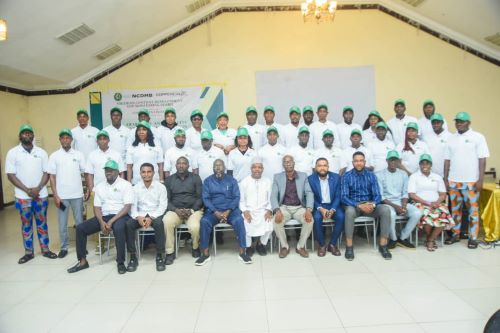
The Nigerian Content Development and Monitoring Board (NCDMB), in collaboration with Coppercrux Limited in Port Harcourt flagged off a 5-day Awareness and Capacity Building Workshop for youths in the South-South region on compressed natural gas (CNG) technologies and the associated value chains.

Areas covered on Day 1 of the training programme include “Introduction to CNG and Energy Transition: Awareness, Importance and Benefits,” “Presidential CNG Initiative: An Overview,” and “Economic Opportunities for Youths in the Green Energy Sector,” with interactive sessions during intervals for questions and answers between participants and resource persons.

In a welcome address at the event, the Executive Secretary of the NCDMB, Engr. Felix Omatsola Ogbe, said the workshop was of strategic importance to the Board in the pursuit of its core mandate of capacity building and its implementation of the Presidential CNG Initiative, a critical component of Federal Government’s programme for energy security, job creation and environmental sustainability.

He charged the 50 participants in the workshop to take full advantage of the training, pointing out that CNG as a relatively new energy source in Nigeria has enormous opportunities that could significantly transform individual lives and usher in economic growth and industrialisation in the wider society.

The Executive Secretary, represented by Mr. Kingsley Neyin, a Deputy Manager in the Executive Secretary’s Office, who said that under the specialised training being provided, participants would understudy industry experts and have sufficient exposure to industry practices as would fit them for efficient operations in the oil and gas sector.

“Some will seek employment and others could take off as entrepreneurs,” he explained, while urging them to access the Nigeria Oil and Gas Industry Content Joint Qualification System (NOGIC JQS) to register whatever skills and capacities they have acquired as individuals or as companies.

In the first presentation of the workshop, Professor Aminu Bayawa Muhammad, of the Department of Energy and Applied Chemistry, Usmanu Danfodio University, Sokoto, examined different aspects of the topic, “Introduction to CNG and Energy Transition: Awareness, Importance and Benefits,” with special focus on the global energy challenge, CNG vs. LNG vs. LPG, energy transition, as well as benefits.

He noted that the world has continually transited from one source of energy to another, beginning from the earliest times, and that the conventional fuels of the present, notably, coal, petrol, and diesel, among others, have become increasingly harmful as a result of greenhouse emissions and the associated global warming. CNG, he explained, is a transition fuel as the push for cleaner energy progresses.

According to him, “the global shift from fossil-based systems of energy production and consumption to renewable energy sources of energy like solar and wind…is a journey, not an overnight switch.”

He listed benefits of CNG to include environmental sustainability, performance (given the high-octane rating of CNG, which enhances engine efficiency), safety in terms of the strength of CNG tanks, lower fuel and maintenance costs.

In conclusion, he stated that “CNG is a proven, safe, and readily available alternative fuel,” and that it plays a crucial role as a transition fuel.

In an overview of the Presidential CNG Initiative, Dr. Dagwon Y. Wang, an Associate Professor of Accounting and Public Finance at ANAN University, Kwali, Plateau State, said the Federal Government is deliberate in its CNG programme, seeking clean energy and reduced emission to support its climate goals.

Other key targets of Government include investments, job creation, and lower transportation costs. He said trainees would carry out part of their programme in conversion centres alongside other activities to enhance their understanding of the CNG value chains.

On economic opportunities for youths in the green energy subsector, a facilitator of the workshop, Mr. Adejo Joshua, pointed out that within the value chains are manufacturing (of CNG cylinders, components, kits, etc.), conversion (of vehicle engines), equipment supply, and servicing, among others.

At the macro-economic level, he noted, the CNG Initiative would boost import substitution, infrastructure development, and innovation in transportation. According to him, entrepreneurial opportunities also abound in areas such as CNG retrofitting centres, eco-friendly product design, CNG sales and distribution, as well as Information Technology (IT) software.

In his conclusion, he stated that “green energy is more than just a climate solution; it’s a youth empowerment accelerator.”

In a vote of thanks, a participant, Mrs. Eniola Shittu, expressed profound appreciation to the NCDMB for the workshop which, according to her, “takes us through a world of possibilities.” She also thanked the facilitators and resource persons for the zeal they have demonstrated in the training.

Fidelity Bank Champions Africa’s Export Growth at FNITCC Atlanta 2025

0

Leading financial institution, Fidelity Bank Plc has announced plans to convene a high-level panel of seasoned experts to chart a strategic roadmap for promoting African exports in global markets.

The panel session, titled “Laying the Tracks: Strengthening the Institutional Infrastructure for Africa’s Trade Promotion,” is scheduled for Day 2 of the Fidelity Nigeria International Trade & Creative Connect (FNITCC)—Saturday, September 20, 2025—at the Omni Atlanta Hotel, Centennial Park, Georgia, USA.

Confirmed speakers include Nonye Ayeni, Executive Director/CEO of the Nigeria Export Promotion Council; Shaquana Teasley — Founder & CEO, Agate Solutions (U.S.); Titus Olowokere, Executive Director of the US-Nigeria Business Council; Affie Braimoh, Founder of Sac Fruits and former Commissioner of Industry, Trade & Cooperatives, Edo State; and Sebastine Osita, CEO of GIG Logistic Technologies Ltd.

Isaiah Ndukwe, Divisional Head of Export and Agriculture at Fidelity Bank Plc, stated, “As Nigeria’s leading financial institution in the non-oil export sector, Fidelity Bank Plc is driving sustainable growth and delivering measurable impact across Africa’s trade corridors. Through tailored financial solutions, market access platforms such as FNITCC, and capacity-building initiatives like our Export Management Programme, we are reinforcing our strategic role in strengthening the export ecosystem and empowering businesses to thrive globally.”

He added: “The upcoming panel session at FNITCC is a timely intervention to address the institutional gaps that hinder Africa’s full participation in global trade. For us at Fidelity Bank, strengthening our trade infrastructure is more than an economic imperative—it’s a continental priority.”

Hosted in collaboration with AFRICON—the leading global forum for African innovators and change leaders—FNITCC Atlanta is scheduled to take place from September 18 to 20, 2025. The event is expected to attract over 3,000 participants, including investors, trade agencies, exporters, and diaspora professionals. It is expected to facilitate trade and investment transactions exceeding US$500 million.

In addition to panel discussions focused on enhancing African exports in international markets, FNITCC Atlanta will offer a variety of seminars and panels featuring prominent figures such as Mustafa Chike-Obi, Chairman of Fidelity Bank Plc; Aishah Ahmad, Global Finance Leader and former Deputy Governor (Financial System Stability), Central Bank of Nigeria (CBN); Abba Bello, Managing Director of Nigerian Export Import Bank (NEXIM); and Olasunkanmi Owoyemi, Group Managing Director/Chief Executive Officer of Sunbeth Global Concepts Nigeria Ltd.

Further highlights include dedicated deal rooms, an exhibition showcasing African products and services across agriculture, extractive industries, fashion, creative sectors, and professional services; as well as targeted matchmaking sessions connecting US buyers, investors, and partners.

Interested participants are encouraged to register for the conference at www.fidelitybank.ng/fnitcc .

Fidelity Bank Plc is a full-fledged commercial bank with over 9.1 million customers who are serviced across its 251 business offices and various digital banking channels in Nigeria and the United Kingdom.

The Bank is the recipient of multiple local and international Awards, including the 2024 Excellence in Digital Transformation & MSME Banking Award by BusinessDay Banks and Financial Institutions (BAFI) Awards; the 2024 Most Innovative Mobile Banking Application award for its Fidelity Mobile App by Global Business Outlook, and the 2024 Most Innovative Investment Banking Service Provider award by Global Brands Magazine.

Additionally, the Bank was recognized as the Best Bank for SMEs in Nigeria by the Euromoney Awards for Excellence and as the Export Financing Bank of the Year by the BusinessDay Banks and Financial Institutions (BAFI) Awards.