Saturday, December 27, 2025
28.6 C
Lagos
Home Blog Page 206

Stanbic IBTC Offers Advice On Looming Post-COVID 19 Recession

0


As the impact of the coronavirus (COVID-19) continues to ravage various economies across the globe, Stanbic IBTC Holdings PLC, a member of Standard Bank Group, has advised that Nigeria and her citizens must take proactive measures needed to avoid the looming recession that is expected to follow the pandemic.

Speaking during the Stanbic IBTC ‘Blue Talk’ Webinar on YouTube, Akinbamidele Akintola, Head, Sub Saharan Africa Equity Sales, Stanbic IBTC Stockbrokers Limited, said that this year has been challenging for businesses globally, because of the impact of coronavirus, and if appropriate measures are not taken, the world may go into a global recession.

He advised the government to provide measures to stabilise the Nigerian economy, measures such as removal of fuel subsidy, curtailing recurrent expenditure, pursuing the privatisation programme, avoiding the raising of Euro Bonds and efficient port services. These are in addition to other interventions necessary  in order to avoid a recession in the country.

He said:  “Nigeria’s revenue was about N4 trillion last year and we spent N1.9 trillion on fuel subsidy, which was almost 50%. We can generate more revenue from taxation by widening the tax base to capture more people, as well as exploiting the privatisation programme to raise revenue. We also need an efficient port to move goods in and out quickly. This will help the economy grow faster.”

Akintola also recommended that the government should strategically cut down cost on recurrent expenditure, which currently stands at about 80% of the country’s income. Similarly, he encouraged Small and Medium-Sized Enterprises (SMEs) to source their materials locally in order to boost the economy.

He further advised the government against borrowing, “This is not the time to raise euro bonds, we need to focus on concessionary money, that we can earn at two to three per cent,” he said.

Nigeria Protein Deficiency Awareness Campaign Kicks Off

0


The Nigeria Protein Deficiency Awareness Campaign, tagged the Protein Challenge, has officially kicked off in Nigeria. Protein Challenge, a protein-pull media campaign supported by the United States Soybean Export Council (USSEC) and other partners, seeks to create awareness about the prevalence, status and impact of protein deficiency in Nigeria.

A key feature of the launch of the nation-wide campaign is the unveiling of the Nigeria Protein Deficiency Report. The report is the result of a nationwide survey that was conducted in 2019, to empirically determine the current status and dimensions of protein deficiency in Nigeria.

Highlights of the report indicate, as most Nigerians probably would expect, that carbohydrates are the most consumed food amongst Nigerians. Rice topped the list, with 91 per cent, closely followed by ‘swallows’ such as eba, pounded yam, fufu, amala, etc at 83 per cent.

The report also showed that the most important factors determining the choice of meal items consumed across the country are availability, 79 per cent, and affordability, 68 per cent. High cost was identified as a major disincentive for the consumption of most protein food sources. 51 per cent of respondents do not have adequate protein-rich foods, due largely to their relatively high cost.

The challenge is that when people do not get adequate amounts of protein from their diet, it leads to protein deficiency, which is today a major cause of malnutrition, especially among children.

In Nigeria, several reports indicate that protein deficiency poses not only a major health problem but also an economic and social burden. It is the most important risk factor for illness and death, with millions of pregnant women and young children particularly affected.

The goal of the Protein Challenge campaign is to create wide-spread awareness about the benefits of proteins and encourage Nigerians from walks of life to embrace their regular consumption, regardless of the source – ALL protein is good protein!

This campaign will focus on the (healthy) importance of regular intake of protein in the diet and work assiduously to contribute to efforts to improve the quality, quantity and consistency of the different types of proteins consumed across Nigeria.

It will also strive to position soybeans as the most cost-effective protein source that is available, not just for humans, but also as feed for livestock, poultry and aquaculture.

The campaign website www.proteinchallengeng.com is set up as a knowledge platform to promote the consumption of protein in general and soybeans in particular. The website will be the ‘go-to’ place for everyone interested in understanding the importance of protein to good health and well-being.

It warehouses the latest protein, nutrition, and agriculture content, news and blog posts, boasts of a wide range of protein and soybean-based recipes and a growing archives of photos and videos.

The website is augmented by the publication and regular distribution of a bi-monthly newsletter – ProteinChallengeNG – to a steadily increasing database of stakeholders and partners.

www.proteinchallengeng.com is a platform to, not just boost awareness of the importance of protein in every diet, but to equally foster collaboration among stakeholders, that would bring about positive, lasting change in Nigeria’s protein deficiency narrative.


Cool Plus Offers Innovative Acoustics, Thermal Insulation Tech to Nigeria

0


Cool Plus Limited, a leading professional HVAC company in Nigeria has reiterated that the company through its partnership with Hira Industries, provides Nigeria and the entire construction industry with the one of the most advanced and innovative acoustic and thermal insulation technologies.

This is coming on the heels of an exhibition and workshop where the company introduced the game changing product- Aerofoam XLPE/NBR to professionals in the Oil &Gas, Architecture sector, including HVAC Contractors and Technicians. At the exhibition, the company offered the participants the opportunity to witness first-hand demonstration of the products’ installation techniques, accessories and unique features.

The Africa’s foremost comfort engineering company and representatives of its partners explained that Aerofoam XLPE/NBR is of the highest quality, safe, highly resistant to fluid penetration and fire outbreaks. The company explained that the products possess fire retardant agent that enables them withstand heat to a certain temperature and is non-toxic to the human body; a critical consideration across the industries where acoustic and thermal insulation products are deployed.

Ade Awujoola, the President & CEO of Cool Plus said “Consistent with our vision to become a world class company, we are deliberate in offering cutting-edge technology and equipment to Africa. This is why we have partnered with Hira Industries, a reputable company in the UAE to provide superior quality acoustics and thermal insulation to the Nigeria market and the West Africa sub region”.

The benefits of Aerofoam XLPE/ NBR thermal insulation include; ease of installation, long-life expectancy of up to 25 years. The Aerofoam XLPE/ NBR is easy to clean and resistant to chemicals, making it ideal for chemical and pharmaceutical facilities, the food industry, as well as, the oil and gas industry. The products are cost effective as they do not require additional maintenance after installation. The Aerofoam XLPE/NBR are top-grade products with premium quality at best prices.

Other acoustic and thermal insulations available in the Nigeria market are made from open cell fibre glass materials, which have relatively shorter lifecycle, hazardous to human life and take long to install (about 57% longer time).

Cool Plus Limited is the sole distributor and Hira Industries’ technical partner in Nigeria. The partnership portends a great opportunity for the Nigeria and the West Africa sub region. The partners are working on commissioning and running a training centre in Lagos to build capacity.

All Aerofoam products are consistent with the highest quality standards globally, and pass through stringent examinations before being sold in the various markets. The Aerofoam XLPE generates less waste and Cool Plus provides accessories like tapes and foils to ensure consistency in the installation process.

Daisy Nyong, the Head of Sales at Cool Plus emphasised that “Cool Plus is the only certified distributor of Aerofoam in Nigeria. Owing to our partnership with Hira Industries, Cool Plus is revolutionising the HVAC industry. We are confident that our clients will experience a significant difference in thermal Insulation and acoustics on their facilities.”


‘Enabling Digitally-led Trade Growth is a Key Opportunity’—Standard Bank

0


Vinod Madhavan

Head of Trade

Standard Bank

The Covid-19 outbreak is set to significantly impact trade growth for the year as countries limit physical movement to curb the virus spread. While the health crisis undoubtedly has vast negative implications for global trade processes, it is one that could be turned into an opportunity as it provides the political and social impetus to accelerate trade digitization on a larger scale.

Trade services have traditionally centred around physically intensive processes involving the likes of paperwork, signatures and frequent manual data entries. Infact, it has been estimated that up to 15 per cent of the cost of shipment is paperwork in global trade. In the current environment of Covid-19 related lockdowns, many of these processes that work to facilitate cross-border and international trade have been impacted and may temporarily have been rendered obsolete to a certain degree.

Existing technological solutions are available for logistics and trade.

Rapidly implementing them out of necessity from the current environment will be an excellent step in the right direction for trade digitization. This however requires collaborative approach between governments and industries to remove barriers by amending and aligning regulatory frameworks.

In many of the 20 countries in which Standard Bank operates, there are stringent and specific requirements around the roll-out of digital solutions.

Some of the countries have taken market-appropriate approaches towards moving to digitizing trade. In certain places on the continent, if one wants to issue a guarantee, for example, the standard is to issue on a physical piece of paper.

While the core nature of trade is unlikely to fundamentally change in the near to medium term, future-financial institutions are on a journey to streamline these processes, very often through leveraging the ABCD (artificial intelligence, block-chain, cloud computing and data analytics) of disruptive technologies.

From the point of view of adoption of robotics/intelligent automation and Artificial Intelligence (AI) in trade business processing, Standard Bank has had good success in South Africa and Uganda. Ghana is not far behind in adoption. Purely by leveraging this technology, one could materially quicken up the issuance of a local guarantee, reducing the time taken to issue a guarantee, for example, by 80 per cent.

If we take it a step further and combine AI with Optical Character Recognition (OCR),we can bring increased operational efficiencies to the areas of manual document sorting and data entry, starting the journey of reducing the manual nature of trade processes.

Such technologies allow for banks to take documentation needed to validate a transaction (sometimes 50-100 pieces of paper) and evaluate or validate that documentation against the letter of credit instrument in a much shorter time period.

Standard Bank partnered with Traydstream – a fintech that leverages OCR and machine learning – in 2019 to digitize the current manual process of checking the document against the Letters of Credit for Discrepancies.

The OCR tech allows for us to get a response to a document within less than an hour in some of Standard Bank’s markets. The typical validation process could take anywhere between three to five days, in fact the international banking norms, allows for five working days for this activity to take place.

Importantly, the machine learning system will continue to learn and evolve over time improving on its benefits. It also offers value-added services such as shipping vessels tracking, which is particularly useful for our clients who are importing from around the world.

A theme that is evident currently is a desire for quantum change. Trade has traditionally been paper based; with the document of title, such as Bill of Lading (BL) being the cornerstone of trade. Even there, those who were previously hesitant to accept an electronic bill of lading, for example, are now ready to embrace and adopt the technology for its benefits. The impetus that the virus has brought to trade digitization should therefore not be underestimated.

While initiatives focusing on adoption of electronic bill of lading (or e-bills) have been around for about 10 years and adopted reasonably successfully in some developed markets, the adoption of the same in markets in Africa has been intermittent. Without the legal and regulatory framework required to support the technology, the adoption cannot be on a mass scale.  The impact of courier company’s inability to deliver trade documents to banks timeously -would have been mitigated, if e-bills had been adopted in our markets.

Another area that requires focus from regulators in our markets, is to create an atmosphere allowing industry to embrace cloud computing.

Standard Bank is currently in conversations with multiple regulators, exploring how we could go about amending regulations, even though it may be a temporary dispensation for the duration of Covid-19, to facilitate digital trade. These engagements are happening in multiple markets across our network. With the challenges brought about by the virus outbreak, there is now an exciting dialogue in markets that will help to influence some of the necessary changes.

It is hoped that by leveraging basics such as digitized signatures and documents and technological innovations such as data analytics, AI and automation to change and improve the way local and international trade is done today, we can reduce friction in the trade process, boost activity and through doing so, help to reduce the impact from reduced global trade, brought about by the global health pandemic.


.


‘Businesses Need More Than Just Money to Thrive’ –Interswitch CEO

0


Mitchell Elegbe

Founder/GMD

Interswitch Group

Mitchell Elegbe, the Founder/GMD of the Interswitch Group, has said that although money is necessary, it is not sufficient enough to make a business thrive. He explained that it was more important for entrepreneurs to identify the problems they are trying to solve before venturing into any business.

Elegbe made this call while giving the keynote address at the annual Lagos Business School MBA Entrepreneurship Expo and Contest with the theme: ‘Entrepreneurship and business innovation’.

He highlighted that the more value customers perceive, the more they are willing to pay for goods and services. He also spoke about the different types of entrepreneurs: the hustler-preneur, life-styler, dealer-preneur, maker-preneur, jack-of-all preneur, slugger-preneur, travel-preneur, side-preneur, Do-side preneur, geek-preneur, and incubator-preneur.  He noted that the knowledge you have as an entrepreneur determines the kind of problem you are expected to solve.

He concluded his session by advising business owners not to make business plans based on time, but on seasons. He said: “Do not work so hard climbing a ladder only to discover it is resting on the wrong wall. Don’t get too busy with your day-to-day activities that you forget the main reason/objectives for starting that activity in the first place. Beware of activity hype andremember that there is a lot of disruptive hype.”

After his keynote address, Mr. Elegbe answered questions from some of the over 300 participants on the online Expo, where he emphasised the direct correlation between problems and opportunities and urged budding entrepreneurs to see problems as opportunities to create solutions, businesses and employment.

The keynote address was followed by a panel session of four panelists reviewing it, sharing their business experiences as well as giving tips for new opportunities.

All the sessions of the Expo were moderated by Dr. Henrietta Onwuegbuzie who isthe Academic Director for the Owner-Manager Programme and Project Director for the Impact Investing policy initiative at the Lagos Business School.

Panelists at the LBS MBA Entrepreneurship Expo and Contest included Paul Orujiaka, CEO of Auldon; Richmond Okafor, CEO of Cleanmax Industries Limited; Stephanie Obi, Business & Marketing Strategist, ST HUB LIMITED and Lawrence Egunjobi, an Entrepreneur.

The Lagos Business School MBA Entrepreneurship Expo and Contest is a project aimed at empowering entrepreneurs across Africa with business acumen and soft skills, building sustainable businesses, giving free business advisory, providing training and pairing them with relevant life-long mentors.

This Expo ended with a pitch where some entrepreneurs pitched their business plans to selected judges and had an entrepreneurship exhibition. The criteria for participation   included: the nature of the problems being solved, quality of the solution proposed, business model, sustainability plan and operational effectiveness.

Professor Enase Okonedo, Lagos Business School Dean, in her closing remarks, disclosed that the Lagos Business School will continue to give entrepreneurship in Africa all the support it can, to tackle the looming issue of unemployment in Africa.

Right of Way: The Ekiti State Example

0

By Elvis Eromosele

Many things in Nigeria appear unfixable. Things that other countries take almost for granted we seem to struggle with, eternally. It is a characteristic that pervades nearly everything we do as a country. It continues to impact negatively on the nation’s growth.

Take communications. Almost two decades after the liberalisation of the nation’s communications sector, operators and regulatory agencies still point to the same things as hindering growth of the sector – multiple taxation and Right of Way (RoW) approvals. Right of Way is particularly contentious as it directly stalls the growth of the sector and impacts on the quality of service.

This is how it works. To extend the reach of its services, operating companies need to lay fibre optic cables to access relevant locations.To do this, they must seek and gain approval from government and relevant agencies. Governors have instituted charges for RoW. This process aside from being cumbersome and time consuming is equally quite expensive.

The RoW charge is the levy paid to state governments for the right to lay of optic fibre by telecoms operators. It is curious that the charge only applies to telecom services providers, whereas there are other players that require RoW. For instance, oil industry for the pipelines, power companies for electricity cables and maybe, water corporation for water pipes.

The sad part is that state governments now view RoW charges as money-making venture. Some have set up agencies to collect this supposed largesse and few others collaborate with private companies to collect and distribute the proceeds. It is every shade of wrong and untidy.Sadly, telecom service providers appear to be the only victims.

This was the case until the Ekiti State government decided to buck the trend.

Last week, the state governor, Dr. Kayode Fayemi announced that the government has slashed the right of way charges for telecommunications infrastructure from N4, 500 to N145 per meter.

The governor signed anExecutive Order reducing the Right of Way charges related to laying broadband or any other telecommunications infrastructures from N4, 500 to N145 per meter. He noted “This is part of the government’s strategy to create an enabling environment for businesses, ensure ease of doing business, and reduce barriers to capital investments and broadband services in the state.”

The order read in part: “The government of Ekiti State is desirous of providing all those living in Ekiti State, especially rural communities with access to reliable, affordable broadband connectivity.Broadband connectivity across Ekiti State will enhance the ability of the government of Ekiti State to increase economic prosperity; attract new businesses, enhance job growth, extend the reach of affordable, high-quality healthcare, enrich student learning with digital tools, and facilitate access to the digital marketplace.”

Ekiti State has demonstrated beyond rhetoric that it is truly committed to increasing connectivity in its domain. It has shown that honour and integrity are not mere words but action, solid actions. The Ekiti State government has, by this action, written its name in gold letters in the history of the nation’s telecom development.

Ekiti has shown beyond a doubt that it seeks the best for its citizens. It has demonstrated that it understands what it takes to compete in the digital era. By this action, the State is actively calling on operators to come and invest in the state.

Ekiti State is saying loud and clear that it is ready for business.

There are insinuations the state is only assenting to the rates agreed by the NEC to create uniform Right of Way (RoW) charge of N145 per linear meter of fibre. It is neither here nor there.

The state government has simply taken the lead. It has shown that it can be done. Other states now need to quickly follow suit. For now, Ekiti State deserves all the commendations.

The benefits of widespread connectivity are incalculable. The governor spoke of “affordable broadband connectivity.” This is precisely what this is about-widespread availability of high-speed, always-on broadband Internet connectivity.

Broadband is rightly regarded as a powerful general-purpose technology. Across the globe, it continues to drive widespread changes in the Information and Communication Technologies (ICTs) space, enabling among other things, cloud computing, Internet of things, smart homes and cities and mobile apps.

Broadband is equally influencing innovation across many other sectors including financial inclusion, tele-medicine and electronic government.

According to the World Bank, “A 10 percentage point increase in broadband penetration raised annual per capita growth by 0.9-1.5 percentage points.”

So, clearly, the government has done a good thing. It now needs to do other good things. It must seriously consider establishing ICT parks, create technology hubs, energize start-ups and precipitate. It also needs to find a way to make access to digital learning a key part of its education pillar.

Again, the Ekiti State government has taken a perennial challenge for operators in the Nigerian telecom space and made easy work of it. It has highlighted its appreciation of the importance of connectivity.

Connectivity boosts productivity. Every study supports this assertion. States interested in genuine development must reconsider their current stand on RoW charges. This is time to do the right thing and give your citizens a chance to explore and exploit the digital society.

What Ekiti has done is simple yet revolutionary. It is sort of out-of-the-box thinking that has immense potential to promote competition, drive innovation and guarantee market growth. It might have been a small step for the government but it is a huge leap towards making broadband opportunity reachable for all citizens in Ekiti state.

The goal, of course, is to deepen broadband penetration for the social and economic development of the country. Ekiti State has taken the first step. It is on the right track. Others must now follow suit.


Debtors Africa Partners Proshare on Delinquent Debtors, NPLs 

0


Debtors Africa – an independent searchable database of recalcitrant and delinquent debtors in Africa was launched into the market today, in addition a Debtors Report – a comprehensive analysis of the Debt/Non-Performing Loans Situation in the Nigerian Banking Industry was also presented for information.

The report which was done in partnership with Proshare represents a culmination of a detailed review of the credit experiences of local Nigerian banks in the last two decades and reveals the challenges of a local lending cycle that has seen lenders become victims of the tyranny of bad and delinquent debtors.

The report makes a case for a new approach to the lending cycle to ensure that integrity, professionalism and evidence-based best lending practices are strictly followed to guarantee the sustainability of the financial system and the prosperity of the larger economy.

Key highlights of the report include:

  • The Industry & its Debt Position
  • Definition of a delinquent debtor and how this has changed over the years including how banks end up with bad debtors
  • The Sectors & Regions affected & Impact on GDP
  • Provisions of the law as regards credit collection and recovery in Nigeria
  • The AMCON approach, lessons learnt, and the way for banks to adopt a revised credit recovery framework
  • Case Study of approaches adopted in recovering debt; and
  • Fresh methods a New Approach offers to banks troubled by delinquent debts


Ecobank: Building Entrepreneurs, Supporting Financial Inclusion via Xpress Point Agents  

0


Ecobank Nigeria has reiterated that its agency banking scheme, also known as Xpress Points, is building entrepreneurs and pushing financial inclusion to the large unbanked and under-banked population in Nigeria.

The Ecobank Xpress Point enables eligible Agents to carry out financial transactions on behalf of Ecobank and earn commission on every transaction  processed. The consumer experience is very good as customers can do simple deposit, payment and transfers in their own neighbourhood rather than travel for hours to a bank branch. Ecobank Xpress Points is also a channel that can be used for the deployment of national social intervention programmes of the Government.

The aim of the Xpress Point is to let every Nigerian and household have access to Ecobank services within their neighbourhood to provide easy banking services.

Speaking in Lagos, Nike Kolawole, Head, Agency Banking, Ecobank Nigeria, said unemployed and retired persons should avail themselves the opportunity to earn extra income by keying into services offered by the bank as Xpress point agents. According to her, the Ecobank Xpress point which are in various neighbourhoods across the country, are well positioned to facilitate basic financial transactions, with the process and services simplified to attend to a broad spectrum of the society.

She further disclosed that agency banking in general, brings about economic and youth empowerment by way of job creation and earning extra income, adding that small savers can easily do their savings at home or near their home. This leads to financial inclusion of the under-banked in the country.

For now, Ecobank has over 43,000 agents across Africa. The agents carry out financial transactions on behalf of Ecobank and earn commission per transaction processed. Xpress Points can also be used as a channel for the deployment of national social intervention programmes, especially at this time that we are fighting the impact of lockdowns due to the COVID-19.”

Kolawole listed the services offered by the Xpress point agents as; cash in, cash out, fund transfer, bills payment, airtime recharge, remittance and account opening, among others. She added that the services are available for “sole proprietors, partnerships, co-operative societies, microfinance banks, companies with large distribution network – like petrol stations, FMCGs, telecommunication companies, super agents, aggregators and unregistered businesses such as petty traders, hair salon and others.”

Ecobank boasts of a bouquet of digital channels comprising solutions aimed at delivering convenient, accessible and reliable financial services. For instance, users of the bank’s USSD code, *326# carry out transactions without paying session charges.

The USSD platform, *326#, makes it possible to open an Xpress account and Xpress Save account instantly. The bank’s mobile banking app, Ecobank Mobile offers the option of generating a virtual card; this comes in handy as customers are continually turning to web payments for their shopping and payments.

The Ecobank virtual card offers the flexibility and convenience of creating a shopping card that is not linked to a customer’s account but is fully capable of carrying out online payments. The virtual card can also be shared with loved ones as a gift card for their own shopping.


‘COVID-19 Reveals Importance of Insurance’-Anchor Insurance CEO

0


Mr. Ebose Augustine Osegha

Managing Director/CEO

Anchor Insurance Company Limited

The Managing Director/Chief Executive Officer, Anchor Insurance Company Limited, Mr. Ebose Augustine Osegha, has said insurance all over the world remains risk mitigating mechanism and called on Nigerians to see what COVID-19 pandemic has done to businesses, human lives and economies generally all over the world to embrace insurance.

Ebose explained that the impact of COVID-19 has created deeper awareness for insurance, noting that it has made most people who had before now regarded insurance as a “yahoo yahoo business” to come to terms with the importance of risk coverage.

He expressed optimism that with everyone now knowing the damage which situations like this could cause to businesses, economy and human lives, more people were likely to embrace insurance when the ongoing Coronavirus pandemic was over in Nigeria.

Mr. Osegha said this in a live telephone interview with Plus TV Africa during the station’s ‘News in Pidgin’ programme on the theme “COVID-19: Impact on Insurance Industry,” recently.

The Anchor Insurance boss who expressed displeasure over government’s nonchalant attitude toward insurance and welfare packages for its workers stated that some state governments have no health insurance, public liability, group personal accident or even group life policy for their staff just as he called on them to learn from the experience so far from COVID-19 to provide the necessary insurance covers for their workforce.

According to him, “early this year when an award was given to Anchor Insurance, I called on government at all levels to brace up for challenges in future by providing insurance for their workforce. It was as if I was talking as a prophet then but now, it has happened.”

According to him, “even the business community is not left out. Before now, most business concerns looked away from taking business interruption covers for their operations. Also, most employees would not see the need to pick the loss of employment insurance covers because there will be job losses after the pandemics. Whatever effects they must be feeling now would have been mitigated if they had picked policies of the types I have mentioned here.”

On claims, Mr. Ebose said the insurance sector was experiencing high ratio but added that with the adequate and necessary reinsurance plans already put in place as well as the insurance reserve, the sector has been up to its task.

On measure put in place to cushion the effect of the pandemic on the industry’s operations, he said they have to cut down on some expenditure and channel their resources to those things that are necessary now.

“Now Information Technology (IT) is taking more money because when you are cutting from one side, you use it to support the other side. Before now, face mask and hand sanitizers were not in our budget but now we have to add them. The need for social distancing has, for instance, made us in Anchor Insurance Company Limited to buy more cars for staff use to avoid getting caught up with the issues that attend to using public transport and to ensure they remain healthy and productive.”


‘COVID-19 Will Compromise Transition to Clean Energy’-WEF Report

0


The coronavirus pandemic risks cancelling out recent progress in transitioning to clean energy, with unprecedented falls in demand, price volatility and pressure to quickly mitigate socioeconomic costs placing the near-term trajectory of the transition in doubt.
Policies, roadmaps and governance frameworks for energy transition at national, regional, and global levels need to be more robust and resilient against external shocks, according to the latest edition of World Economic Forum’s Fostering Effective Energy Transition 2020 report published yesterday.
COVID-19 has forced companies across industries to adapt to operational disruption, changes in demand and new ways of working, and governments have introduced economic recovery packages to help mitigate these effects. If implemented with long-term strategies in mind, they could also accelerate the transition to clean energy, by helping countries scale their efforts towards sustainable and inclusive energy systems.
“The coronavirus pandemic offers an opportunity to consider unorthodox intervention in the energy markets and global collaboration to support a recovery that accelerates the energy transition once the acute crisis subsides,” said Roberto Bocca, Head of Energy and Materials, World Economic Forum. “This giant reset grants us the option to launch aggressive, forward-thinking and long-term strategies leading to a diversified, secure and reliable energy system that will ultimately support the future growth of the world economy in a sustainable and equitable way.”
The report draws on insights from Energy Transition Index (ETI) 2020, which benchmarks 115 economies on the current performance of their energy systems – across economic development and growth, environmental sustainability, and energy security and access indicators – and their readiness for transition to secure, sustainable, affordable, and inclusive energy systems.
The results for 2020 show that 75% of countries have improved their environmental sustainability, even as the global average score for this dimension remains the lowest of the three categories assessed. This progress is a result of multifaceted, incremental approaches, including pricing carbon, retiring coal plants ahead of schedule and redesigning electricity markets to integrate renewable energy sources.
However, this hard-won progress highlights the limitations of relying only on incremental gains from existing policies and technologies to complete the transition to clean energy. The greatest overall progress is observed among emerging economies, with the average ETI score for countries in the top 10% remaining constant since 2015, signalling an urgent need for breakthrough solutions – one threatened by COVID-19.

The Energy Transition Index 2020

Sweden (1) leads the ETI for the third consecutive year, followed by Switzerland (2) and Finland (3). France (8) and United Kingdom (7) are the only G20 countries in the top 10. They share common attributes, such as limiting energy subsidies, reducing reliance on imports (thereby improving energy security), achieving gains in energy intensity of GDP, and increasing political commitments to pursue ambitious energy transition and climate change targets.
Performance is mixed among the rest of the G20. Emerging centres of demand such as India (74) and China (78) have made consistent efforts to improve the enabling environment, which refers to political commitments, consumer engagement and investment, innovation and infrastructure, among others.

In China’s case, problems of air pollution have resulted in policies to control emissions, electrify vehicles, and develop the world’s largest capacity for solar PV and onshore wind power plants. For India, gains have come from a government-mandated renewable energy expansion program, now extended to 275 GW by 2027. India has also made significant strides in energy efficiency through bulk procurement of LED bulbs, smart meters, and programs for labelling of appliances. Similar measures are being experimented to drive down the costs of electric vehicles.
Meanwhile, the trend has been moderately positive in Germany (20), Japan (22) and South Korea (48) and Russia (80). Germany has demonstrated strong commitment in coal phase-out and decarbonization of industry through clean hydrogen, however affordability of energy services has been a challenge. Both Japan and Korea face natural disadvantages as net energy importers. However, innovative business environment, infrastructure development, and political commitment remain key enablers in both countries. In Russia, the energy sector remains a strong pillar of the economy and continues to lead globally on energy security, though progress on environmental sustainability has been moderate.
On the other hand, the ETI scores for United States (32), Canada (28), Brazil (47) and Australia (36) were either stagnant or declining. The challenges confirm the complexity of trade-offs inherent in energy transition. In the United States, the headwinds have been mostly related to policy environment, while for Canada and Australia, the challenges lie in balancing energy transition with economic growth given the role of energy sector in their economy.
The fact that only 11 out of 115 countries have made steady improvements in ETI scores since 2015 shows the complexity of energy transition. Argentina (56), China (78), India (74), and Italy (26) are among the major countries with consistent annual improvements. Others, such as Bangladesh (87), Bulgaria (61), Czech Republic (42), Hungary (31), Kenya (79) and Oman (73) have also made significant gains over time.
On the other hand, scores for Canada (28), Chile (29), Malaysia (38), Turkey (67), Nigeria (113), and Lebanon (114) have declined since 2015. The United States ranks outside the top 25% for the first time, primarily due to the uncertain regulatory outlook for energy transition.
More than 80% of countries have improved performance on energy access and security since 2015, but progress in developing countries in Asia and Africa remains a challenge. Energy access programs in these regions need to prioritize community services, such as street lighting, district heating and cooling, cold storages for food and pharmaceuticals preservation, urban sanitation and traffic management.
In advanced economies, “access” is defined by affordability. Utility bills represent growing share of household expenditure, a challenge that could be exacerbated by the economic uncertainties created by COVID-19. Furthermore, energy security is increasingly vulnerable to extreme weather events such as hurricanes, floods and wildfires – which have been rising in frequency and intensity – and cyber-attacks.
While the gaps between what is required, what is committed, and what is likely to be achieved remain large, the compounded disruptions from COVID-19 have destabilized the global energy system with potential short-term setbacks. Ultimately, greater efforts are needed to ensure that recent momentum is not just preserved, but accelerated in order to achieve the ambitious goals required.


Building the COVID-19 Word Register

0


By Elvis Eromosele

Since COVID19 burst into our consciousness in December 2019, it has grown in leaps and bounds. Today, COVID19 and news about its impact dominate every segment of the global economy. Everyone is talking about it. Everyone is affected and touched by its tentacles. Everyone wishes it will just fade away just as it appeared.

Doctors and scientists are obsessed with searching for a cure, economists and politicians are worried about the impact on the economy and the general public are either scared silly or ignorantly unbelieving. COVID19 is the most talked-about disease in over a century.

The world has spoken so much about it that there are today a whole series of words built around the COVID19. While many of these words are new and are particularly for COVID19, others are used for infectious diseases in general and have become mainstream during this period.

In almost six months of battling the COVID19 pandemic, certain words have become prevalent. A whole new register is being created. We are witnesses to this dynamic process of creating the COVID19 register. Word register refers to the grouping of words used frequently in a given field or area of study/life.

New words are being invented, new meaning given to existing words and fresh definitions are minted daily. To be regarded as knowledgeable in any field, it helps to use the right register. The secret is to know how and when to throw in the correct words.

If you want to be regarded as COVID19 Pandemic pseudo expert, here are some words to remember:

COVID19 – This is the name of the disease, as given by the WHO. The disease is caused by the novel coronavirus, SARS-CoV-2, and is short for “Coronavirus Disease 2019.”  

Covidanoid: It is the extreme fear of the COVID19. It is being paranoid of COVID19 

Quarantine – It is to separate and restrict the movement of people exposed to a contagious disease to see if they become sick. These people may have been exposed to a disease and do not know it, or they may have the disease but do not yet show symptoms.

Self-quarantine – To stay home and away from other people as much as possible after exposure.

Quarantigue: This refers to the fatigue/tiredness that result from spending too much time in isolation due to COVID19 scare or lockdown.

Covidcation: Term used for when work or school gets cancelled because of COVID19. Think compulsory stay at home precipitated by COVID19 lockdown 

Asymptomatic: This term is used to describe people who are showing no symptom of the COVID19 infection, although they can still transmit the virus to others. 

Contact tracing – This refers to the process of identifying, assessing, and managing people who have been exposed to a contagious disease to prevent onward transmission.

Covidiot: A description of persons who deliberately and flagrantly ignore the warnings regarding  COVID19 public health and safety. They are to be avoided as they put themselves and others at risk. 

Super-spreader: An individual that is highly contagious and thus infect a large number of people. A woman in South Korea gave at least 37 people, at her church, COVID-19. She was a real super-spreader. 

Lockdown: A lockdown is a protocol usually initiated by someone in a position of authority that prevents people, information or cargo from leaving an area. Across the world, several countries are currently in different levels of lockdown, partial or total.  

Community transmission/spread – Community transmission is said to occur when there is no clear source of origin of infection in a community. That is an infection case without a history of travel elsewhere and no connection to a known infection case. Nigeria has now entered the community transmission stage with COVID-19. 

Droplet transmission/spread – A mode of transmission for a contagious disease that involves relatively large, short-range (less than 6 feet) respiratory droplets produced by sneezing, coughing or talking.  

Epidemic – A disease that is “affecting many persons at the same time, and spreading from person to person in a locality where the disease is not permanently prevalent.” COVID19 was initially classified as an epidemic.  

Pandemic – An epidemic that has spread over several countries/continents, usually affecting a large number of people. This is sort of like the senior brother of epidemic. 

Flattening the curve – This is a public health strategy introduced during the COVID19 pandemic. The curve being flattened is the epidemic curve, a visual representation of the number of infected people needing health care over time.

Home isolation – Persons with COVID19 who have symptoms or laboratory-confirmed COVID19 who have been directed to stay at home until they recover.  

Isolation – Separating sick people with a contagious disease from those who are not sick.

Facemask: A face-cloth covering worn in public settings where other social distancing measures are difficult to maintain, especially in areas of significant community-based transmission. It is most effective when used along with other preventive advice. 

N95 respirator – This is a respiratory protective device designed to achieve a very close facial fit and very efficient filtration of airborne particles. It is essentially a facemask for medical and healthcare workers as they have to deal and interact closely with infected and possibly infected people.  

Social distancing – This is a measure taken to reduce person-to-person contact in a given community, to stop or slow down the spread of COVID19. The measures can include working from home, closing offices and schools, cancelling events, avoiding public transportation and keeping a minimum of six feet from each other.

Ventilator – A device that delivers air into the lungs through a tube that is placed into the mouth or nose and down into the windpipe. It helps manage breathing difficulty.

Drive through testing – Here the individuals remain in their vehicles, and medical staff in protective gear come forward to administer the swab test on them and the swabs are sent to a laboratory for testing.

This is not an exhaustive COVID19 register.

I’m sure you can think of some words not captured in this register. No need to fret, simply add them in the comment section.

Please remember that awareness of the words in the register is not enough. We must ALL continue to follow the relevant guidelines for personal protection and prevention of spread of COVID19.

Together, we would overcome COVID19.


Elvis Eromosele, a Corporate Communication professional and public affairs analyst lives in Lagos.

Post –COVID-19: Ecobank Nigeria Holds Virtual Graduation Ceremony for Trainees

0


57 trainees, who represent batch seven set of graduates being absorbed into Ecobank Nigeria as full time employees  were last week hosted to a virtual graduation ceremony by the Ecobank Academy – the first of its kind by the bank in Nigeria as it positions itself as a high quality employer ready for the opportunities of a post-COVID19 lockdown.

In attendance were notable personalities including the Registrar/Chief Executive, Chartered Institute of Bankers of Nigeria (CIBN), Seye Awojobi; Managing Director, Ecobank Nigeria, Patrick Akinwuntan; Group Executive, Human Resources, Ecobank Transnational Incorporated (ETI), Yves Mayilamene; Head, Human Resources, Ecobank Nigeria, Kunle Adewuyi and several others including the 57 graduands who joined the ceremony from various locations within and outside the country.

In his comment, the Managing Director, Patrick Akinwuntan reaffirmed the commitment of Ecobank to continue to invest in young Nigerians to boost its high quality labor force in order to better serve its customers in a convenient and accessible manner particularly as the nation rebounds from the COVID19 lockdown.

He added that Ecobank had invested in a robust technology-based model which positioned it to cope with current and future challenges including provision of convenient digital banking services to customers in a seamless manner across 36 countries on the African continent.

CIBN Registrar/Chief Executive, Seye Awojobi, said the initiative of the bank to host the event digitally is pacesetting for the industry. He commended the bank for the high premium placed on training and building the competencies of its workforce.

“The CIBN is quite impressed with the importance Ecobank attaches to training of new hires and capacity building of its staff. I have lost count of how many graduation events I attended at the state of the art Ecobank Academy last year. This is certainly the way to grow the bank and the industry to meet up with global standards. I advise the graduands to display high level of integrity. One of the truest test of integrity is its blunt refusal to be compromised. You should be ready to give your best to the bank that hired and trained you and thereby contributing your quota to the growth of the industry.”

Speaking further, the Managing Director, Ecobank Nigeria, Patrick Akinwuntan encouraged the graduands to remain ethical and diligent in the delivery of the vision of the bank to become the most preferred financial services payments brand in Nigeria to support the economic development of households and growth of trade, manufacturing and commerce in Nigeria and Africa.

Welcoming the graduands formally to the bank, Acting Head, Human Resources, Ecobank Nigeria, Kunle Adewuyi said the bank offers an enabling and conducive environment for staff to excel to the highest level, adding that its reward system remains a motivating factor for high performance and productivity.

He explained that the Ecobank Graduate Trainee program is an intensive one year of in-depth training for fresh graduates, aimed at equipping the participants who may be coming from non-financial and banking related academic backgrounds with the necessary skill set and knowledge required to work in the banking and finance industry.

Adewuyi noted that the graduation involving 57 trainees, which took place digitally due to the Coronavirus pandemic, was the first ever virtual graduation to be held in the history of the academy. He enjoined them to remain focused and apply themselves uniquely in their different roles.

Group Executive, Human Resources, ETI, Yves Mayilamene advised the graduands to be fully committed to their growth, as well as the overall growth of the organisation.


NCC: ‘No 5G Licenses Issued Yet in Nigeria’

0


Professor Umar Danbatta

Executive Vice Chairman

Nigerian Communications Commission (NCC)

“The attention of the Nigerian Communications Commission (NCC) has been drawn to a mischievous statement making the rounds on social media like Facebook, WhatsApp, Twitter, LinkedIn and other sites that the Nigerian Telecoms industry is going to switch on 5G in Lagos this Sunday 10th, Monday 11th or Tuesday 12th May 2020. 

The statement from the faceless individuals or groups cannot be further from the truth. The Commission has unequivocally stated that there is no deployment of 5G in Nigeria at the moment. The NCC back in November 2019 approved trial test for 5G for a period of three (3) months and that the trial has been concluded and installation decommissioned. 

Professor Umar Garba Danbatta, Executive Vice Chairman, NCC said that ‘’the trial among others was to study and observe any health or security challenges the 5G network might present. Relevant stakeholders including members of the security agencies were invited to participate during the trial.’’

The NCC will continue to maintain its policy of technology neutrality and will continue to encourage Service providers to deploy the best technology that will meet the needs of the society in a secured and friendly manner. 

The NCC had provided clarifications of Frequently Asked Questions on 5G in view of the recent developments in which misleading materials with no proven evidence are being circulated to link CORONAVIRUS or COVID-19 with 5G Technology and therefore refutes the claim that there will be switching on of 5G in Lagos in its entirety. The Commission also provided clarifications on the laying of fibre optic cables within Lagos and other parts of the country to the effect that the laying of additional fibre optic cables is to strengthen the existing 3G and 4G infrastructure to provide robust and pervasive telecoms infrastructure to improve network performance. 

5G is a fifth generation of mobile technology which is an improvement of today’s 4G technology with enhanced capabilities. 5G technology provides the platform for new and emerging technologies such as Internet of Things (IoT), Artificial Intelligence (AI) and Big Data to improve the way we live and work. ‘’NCC has not issued any licence for 5G in Nigeria and therefore the mobile network operators (MNOS) cannot switch on such technology. NCC is technology neutral as such we don’t license technology but assigns spectrum to operators for deployment of any service when allocated by National Frequency Management Council (NFMC), Danbatta said’’. 

‘’As the telecoms regulator, we enjoin Nigerians to get accurate information from us rather than relying on information emanating on social media by some individuals out of ignorance to misinform our people, said Danbatta.”


SIGNED 

Dr. Henry Nkemadu 

Director, Public Affairs 

Nigerian Communications Commission (NCC) 

May 10, 2020

Guinea Insurance Congratulates Sunday Thomas on Confirmation as NAICOM Boss

0
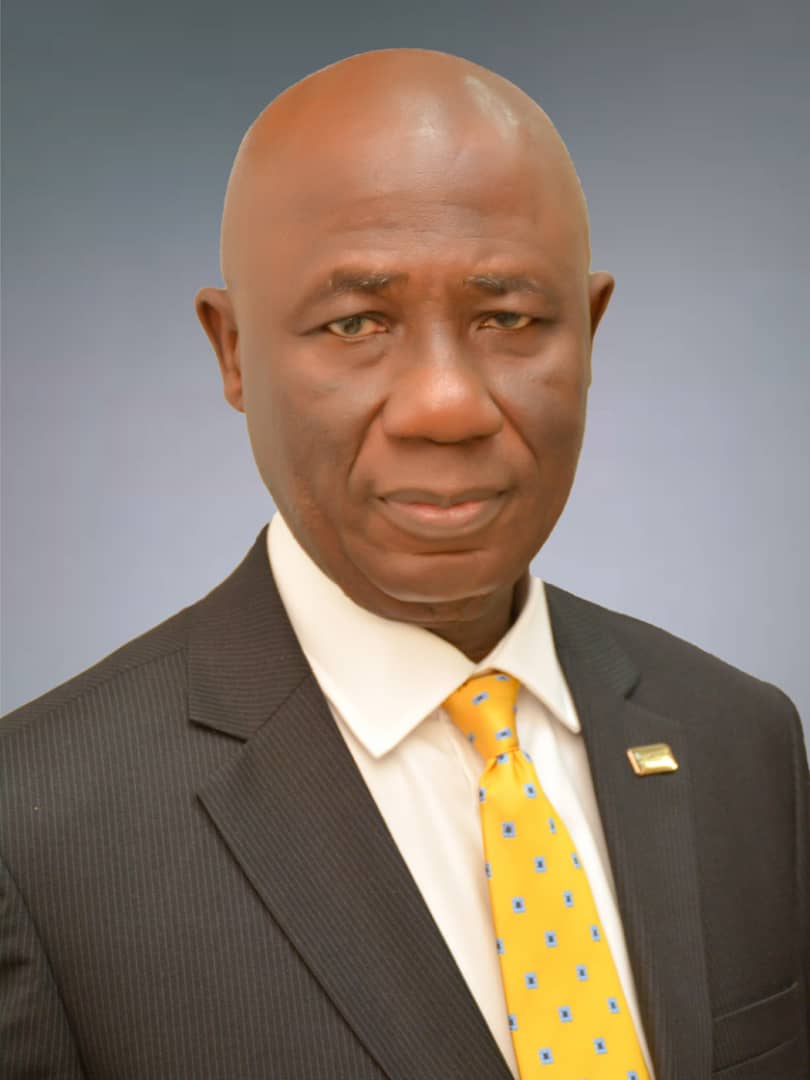
Mr. O. S. Thomas Acting Commissioner for Insurance National Insurance Commission (NAICOM)


Great Minds Indeed Achieve Great Things 

The Board of Directors, Management and Staff of Guinea Insurance join the entire insurance business community

and all professionals of repute in celebrating your confirmation as substantive Commissioner of Insurance/Chief Executive Officer of the National Insurance Commission (NAICOM) by His Excellency, President Muhammadu Buhari, GCFR.

This recognition bestowed on your distinguished self is indicative of your strength of character, high probity and capacity to re-invent and attain feats others consider impossible. Many today are beneficiaries of your years of selfless and dedicated service to humanity and the insurance industry.

We seize this momentous occasion to give glory to God for choosing you as the vessel to champion regulatory policies that meet both the insuring and investing public’s expectation and provide an enviable playing field for all Insurance professionals in Nigeria.

Congratulations again, to a distinguished Professional

Ecobank Nigeria Encourages Customers to Obey COVID-19 Rules

0


Ecobank Nigeria has encouraged its customers to obey the COVID-19 rules,  emphasizing the importance of social distancing to check the spread of the Coronavirus, especially when visiting the branches.

The bank which gave this advice in a mail to customers also thanked them for their dedication and continued patronage while confirming that more branches are being opened to decongest those already opened for business since the easing off of lockdowns across the country.

Responding to media enquiries in Lagos, Head of Branch Network, Ecobank Nigeria, Titiloye Olarinde  said  Ecobank takes the safety of customers  and staff very seriously and has therefore put in place measures to ensure they are safe when they visit the branches.

According to her, temperature checks and wearing of masks are compulsory for both staff & customers before admittance to any bank premises; provision and mandatory use of hand sanitizers before accessing the branch or ATM Gallery while regular deep cleaning of work surfaces and ATM areas is ensured.

She also stated that only 5 customers are allowed into the banking hall at a time and appealed for cooperation with security personnel as their actions are all in a bid to keep everyone safe.

“We are operating in line with the health and safety guidelines issued by the Nigeria Centre for Disease Control to mitigate the spread of coronavirus. With the opening of additional branches, we are able to meet customers’ needs in a safe and conducive environment.  Key services available at our branches include ATM services, assistance to onboard to our Digital platforms, account opening and over the counter services for essential cash and cheque transactions.  For your safety and comfort, we encourage you to continue using our 24/7 digital self-service solutions such as Ecobank Mobile App, Ecobank Online, EcobankPay, Ecobank OmniPlus, Omni Lite and the RapidTransfer App thus supporting initiatives to help curtail the spread of COVID-19. At Ecobank, we take the safety of our staff and customers very seriously and have therefore put in place measures to ensure your safety should you need to visit our branches”. She noted.

Ecobank Nigeria has being in the forefront in supporting the public and government since the commencement of the fight against  COVID-19.  The bank had initiated various public enlightenment on radio and social media, having launched the #StaySafeNigeria campaign, to educate the public about the virus and ways to curb its spread.

Ecobank has also partnered with many State Governments to provide palliatives and relief packages to indigent people. This is in addition to the bank’s contribution as a Corporate member of the Bankers Committee and the Nigerian Private Sector led Coalition to raise funds against COVID-19, being part of  the bank’s Corporate Social Responsibility activities.